

Programvare med åpen kildekode for juridisk saksbehandling gir advokatfirmaer større kontroll over hvordan de lagrer saksdokumenter, administrerer klientinformasjon og konfigurerer juridiske arbeidsflyter. Denne fleksibiliteten medfører imidlertid også ansvar, særlig ved håndtering av sensitive dokumenter, angivelse av brukertillatelser og vedlikehold av et system som driftes selv. Noen plattformer tilbyr dedikerte funksjoner for juridisk saksbehandling, mens andre krever tilpasning for å håndtere sakssporing, tidsfrister og dokumentarbeidsflyter.
I denne veiledningen sammenligner jeg programvare med åpen kildekode for juridisk saksbehandling basert på funksjonene for saksbehandling, distribusjonsalternativer, lisenskrav, tilpasningsmuligheter og løpende vedlikeholdsbehov, slik at du kan finne ut hvilken plattform som passer firmaets tekniske ressurser og daglige drift.
Hvorfor du kan stole på våre programvareanbefalinger
6,700+
Reviews
20
Industry experts
16+
Evaluation factors
14
Years
Teamet vårt har testet og anmeldt programvare siden 2012. Vi leder selv advokatfirmaer, så vi vet hvor vanskelig og hvor viktig det er å velge riktig programvare.
I denne guiden har vi vurdert verktøyene gjennom praktisk testing og uavhengig research og gitt dem poeng ut fra våre utvelgelseskriterier.
Anmeldelsene våre bygger på vår egen redaksjonelle vurdering. De er ikke et salgsargument.
Sammenlign den beste programvaren med åpen kildekode for juridisk saksbehandling
Sammenlign priser og spesifikasjoner side om side for programvaren med åpen kildekode for juridisk saksbehandling på kortlisten min.
| Tool | Best For | Trial Info | Price | ||
|---|---|---|---|---|---|
| 1 | Best for self-hosting with zero licensing fees | Free plan available; 14-day free trial | From $5/month | Website | |
| 2 | Best for GPL-licensed ERP adapted to legal workflows | Free plan + 15-day free trial + free demo available | From €5/month | Website | |
| 3 | Best for self-hosting document-heavy case archives | Free trial + free demo available | Pricing upon request | Website | |
| 4 | Best for self-hosted audit trails and SSO | Free and open source | Free | Website | |
| 5 | Best for migrating off Clio or PracticePanther | Free demo available | Free | Website | |
| 6 | Best for self-hosted client data sovereignty | 1-hour free trial | From 71.29€/user/year (billed annually) | Website | |
| 7 | Best for IT-led self-hosting with full data control | 45-day free trial | From €19/user/month | Website | |
| 8 | Best for no-code matter setup and data control | 30-day free trial | From $15/user/month | Website | |
| 9 | Best for government and court legal operations | Free demo available | Free | Website | |
| 10 | Best for MIT-licensed AI-assisted case work | Free demo available | Free | Website |


Anmeldelser av programvare med åpen kildekode for juridisk saksbehandling
Nedenfor finner du mine sammendrag av den beste programvaren med åpen kildekode for juridisk saksbehandling på kortlisten min. I anmeldelsene undersøker jeg funksjonene, driftsalternativene og lisensieringen for hvert programvarealternativ for å hjelpe deg med å finne det riktige for virksomheten din.
 Best for self-hosting with zero licensing fees
- Free plan available; 14-day free trial
- From $5/month
Visit WebsiteCustomer Rating:4.2/5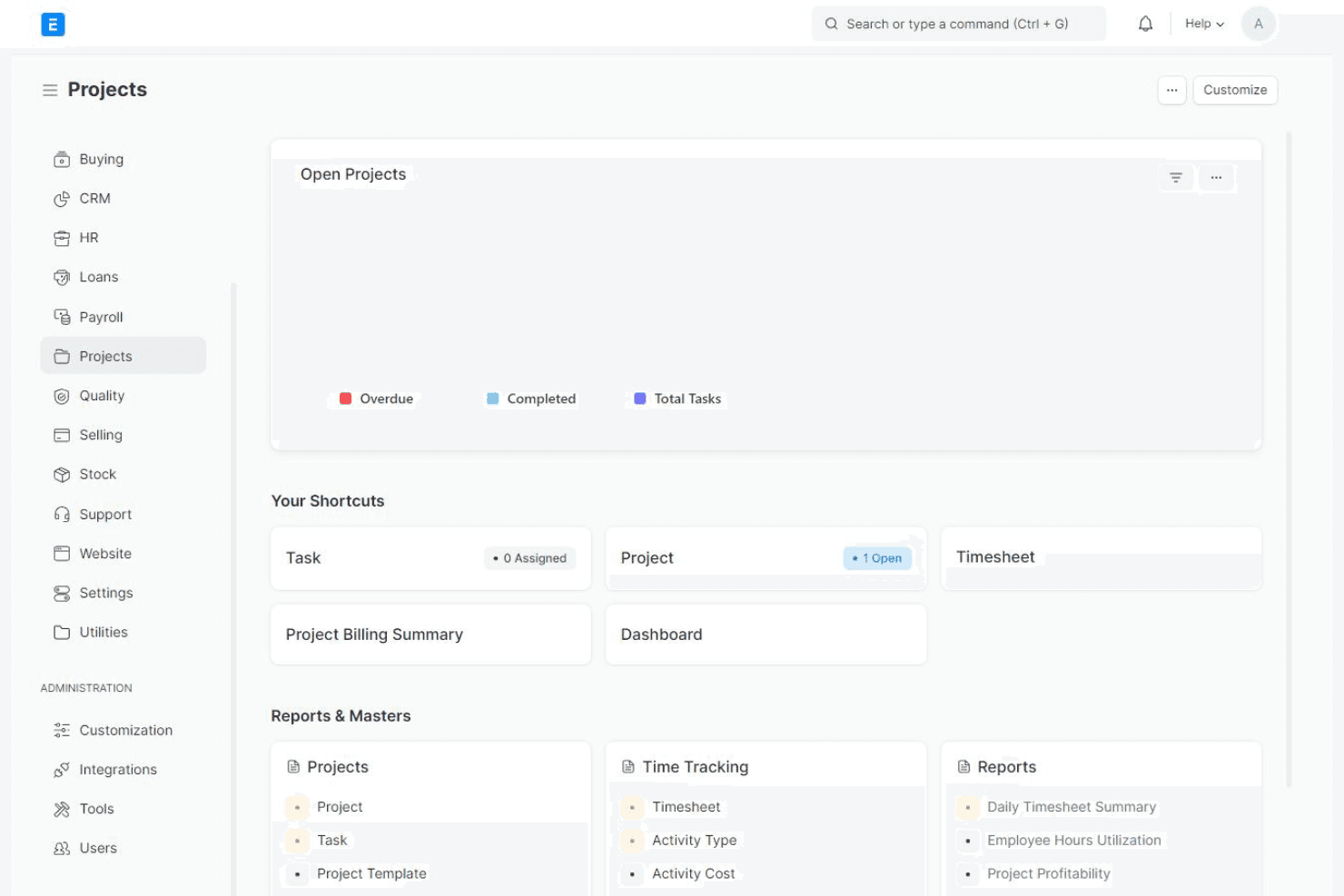
ERPNext tracks project tasks, timesheets, and billing activities. ERPNext is a GPL-3.0 open source ERP platform that law firms adapt for case management through its Projects, Contacts, Timesheets, and calendaring modules—or by layering on third-party legal apps built on the Frappe Framework.
Who Is ERPNext Best For?
ERPNext is a strong fit for firms with in-house IT or developer resources that want full control over their data without paying licensing fees.
Why I Picked ERPNext
I've included ERPNext in my top picks because it's the only option here that runs entirely on your own infrastructure with no licensing fees attached—ever. Its GPL-3.0 codebase, official Docker images, and Bench CLI mean your IT team can deploy, manage, and modify everything without touching a vendor contract. I like that custom doctypes let you model matters, parties, and workflows specific to your firm's needs rather than working around a fixed structure.
ERPNext Key Features
- Custom doctype builder: Add custom fields, forms, and record types to model matters, parties, and legal workflows that don't exist natively in ERPNext.
- Role-based permissions: Set field-level access controls, module restrictions, and login rules like session limits and IP allowlists to manage who sees what.
- Google Calendar two-way sync: Push and pull events between ERPNext and Google Calendar using OAuth, keeping deadlines and appointments in one view.
- Timesheet and billing integration: Log billable hours against projects or custom matter records and pull that data into invoices using built-in double-entry accounting.
ERPNext Integrations
Native integrations include Google Calendar, Google Drive, and Google Contacts. ERPNext also supports REST APIs and marketplace integrations for custom legal workflows.
Pros and Cons
Pros:
- Custom doctypes model firm-specific workflows
- Self-hosting supports sensitive client data control
- GPL-3.0 codebase avoids vendor lock-in
Cons:
- Requires developer support for implementation and maintenance
- No native legal matter management
Learn more about ERPNext: Best for GPL-licensed ERP adapted to legal workflows
- Free plan + 15-day free trial + free demo available
- From €5/month
Visit WebsiteCustomer Rating:4.5/5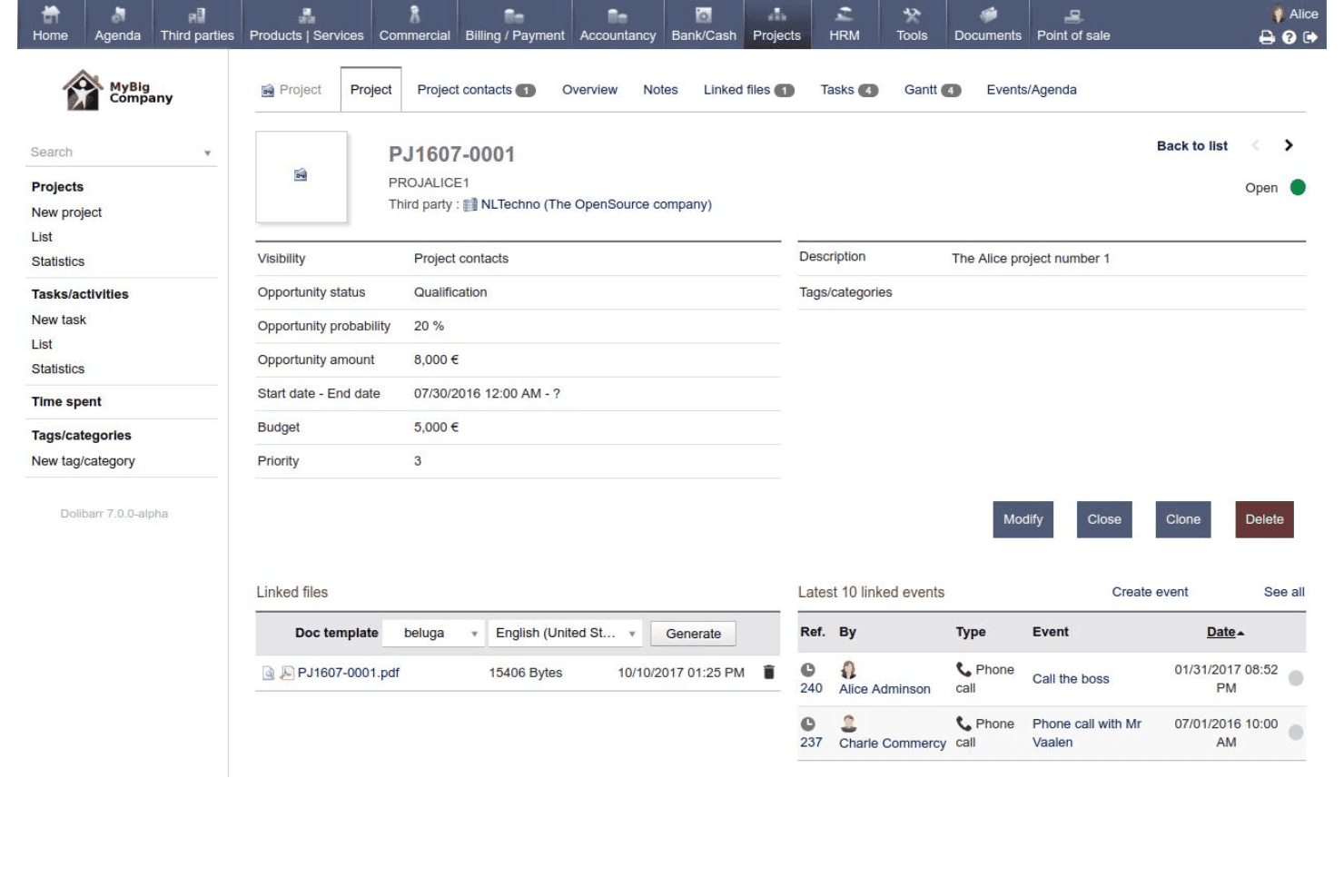
Dolibarr lets users manage projects with tasks, budgets, and linked events. Dolibarr is a GPL-licensed open-source ERP and CRM platform that covers project tracking, contact management, document handling, calendaring, and invoicing through a modular, self-hosted architecture you can extend with custom modules or a marketplace of add-ons.
Who Is Dolibarr Best For?
Dolibarr is a good fit for IT-savvy legal teams that want full control over their infrastructure and prefer building a customized tool over paying for a purpose-built platform.
Why I Picked Dolibarr
I've included Dolibarr in my top picks because its GPL v3 license means the codebase is yours to own, modify, and self-host without per-user fees or vendor lock-in. I like that the Module Builder and DoliStore marketplace (1,000+ modules) let IT-savvy legal teams retrofit a matter-tracking system using the Projects and Agenda modules. In practice, your team retains a full SQL export of your data on demand, which matters when client confidentiality requires you to control exactly where records live.
Dolibarr Key Features
- REST API access: Dolibarr's core REST API supports GET, POST, PUT, and DELETE operations with per-user API keys, so your IT team can connect external tools or build custom legal workflows on top of the platform.
- Module Builder: A built-in low-code Module Builder lets you create custom modules that survive core upgrades, giving you a structured way to add legal-specific fields, objects, or views without touching the core codebase.
- Role-based permissions: You can configure granular roles and permissions across users, controlling exactly who can view, edit, or manage records within your self-hosted instance.
- Agenda module with iCal export: The Agenda module offers day, week, and month views with support for iCal export, event-type filtering, and workflow-triggered event creation.
Dolibarr Integrations
Native integrations with legal platforms are not clearly documented. Dolibarr supports custom connections through its REST API and marketplace extensions through DoliStore; UnboxERP separately documents connectors for Shopify, BigCommerce, and PrestaShop.
Pros and Cons
Pros:
- Module Builder adapts generic legal workflows
- Self-hosting supports sensitive client data
- GPL ownership avoids vendor lock-in
Cons:
- Basic documents lack version control
- No native case or matter tracking
Learn more about Dolibarr: Best for self-hosting document-heavy case archives
- Free trial + free demo available
- Pricing upon request
Visit WebsiteCustomer Rating:3.7/5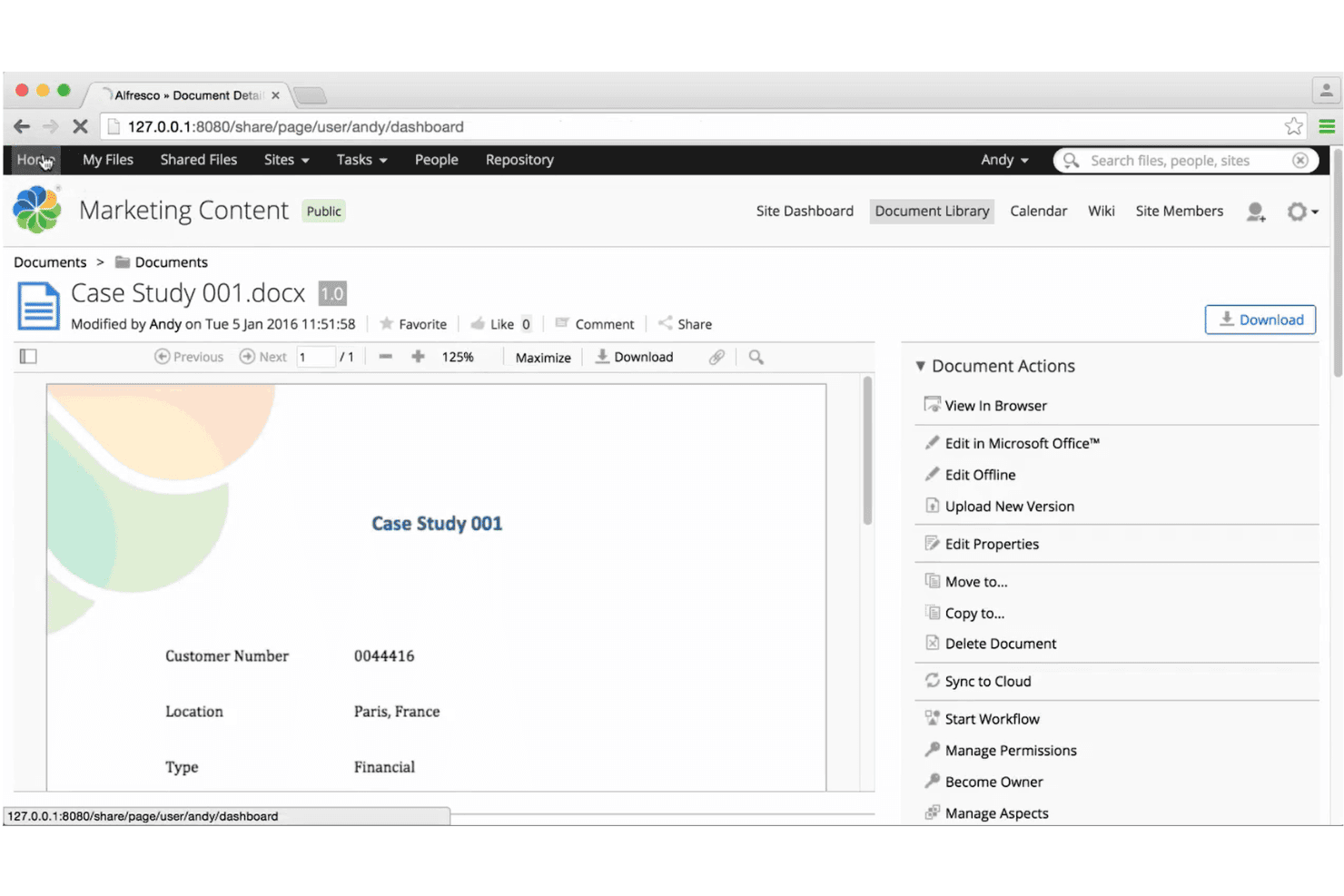
Alfresco lets users view, edit, and manage documents with built-in actions. Alfresco is an open-source enterprise content management platform built around document storage, version control, metadata modeling, records retention, and role-based access control.
Who Is Alfresco Best For?
Alfresco is a strong fit for IT-led legal teams that need full control over a self-hosted document archive and are prepared to build case tracking on top of a flexible content management foundation.
Why I Picked Alfresco
I've included Alfresco in my top picks because it's one of the few genuinely open source ECM platforms where you can self-host a full document archive without paying a licensing fee. Its LGPL-3.0 codebase, paired with Docker Compose and Kubernetes Helm chart deployment, gives IT-led legal teams complete control over where sensitive case files live. I particularly like the WORM-based retention scheduling in Governance Services, which lets you lock records against modification and automate disposition, something most open source tools don't offer out of the box.
Alfresco Key Features
- Role-based access control: Assign granular repository and site-level roles—Consumer, Contributor, Editor, Collaborator, Coordinator—or define custom roles in XML permission models.
- Site calendar: View, create, and manage case-related events across day, week, month, and agenda views, with iCal feeds for syncing to external calendar apps.
- REST and CMIS APIs: Connect Alfresco to external systems or build custom legal workflows using open-standard REST APIs, CMIS, and an event-driven SDK via ActiveMQ.
- SSO via Keycloak: Configure single sign-on with SAML identity providers through Keycloak, supporting centralized authentication across your legal team's tools.
Alfresco Integrations
Alfresco has documented integrations with Microsoft 365, Google Docs, Keycloak, and SAML identity providers. CMIS, REST, WebScripts, iCal feeds, and an event-driven SDK support custom connections.
Pros and Cons
Pros:
- Self-hosting provides extensive architectural control
- WORM retention supports defensible records governance
- Strong versioning, metadata, and audit trails
Cons:
- Party relationships require custom content models
- No native matter or case objects
Learn more about Alfresco:
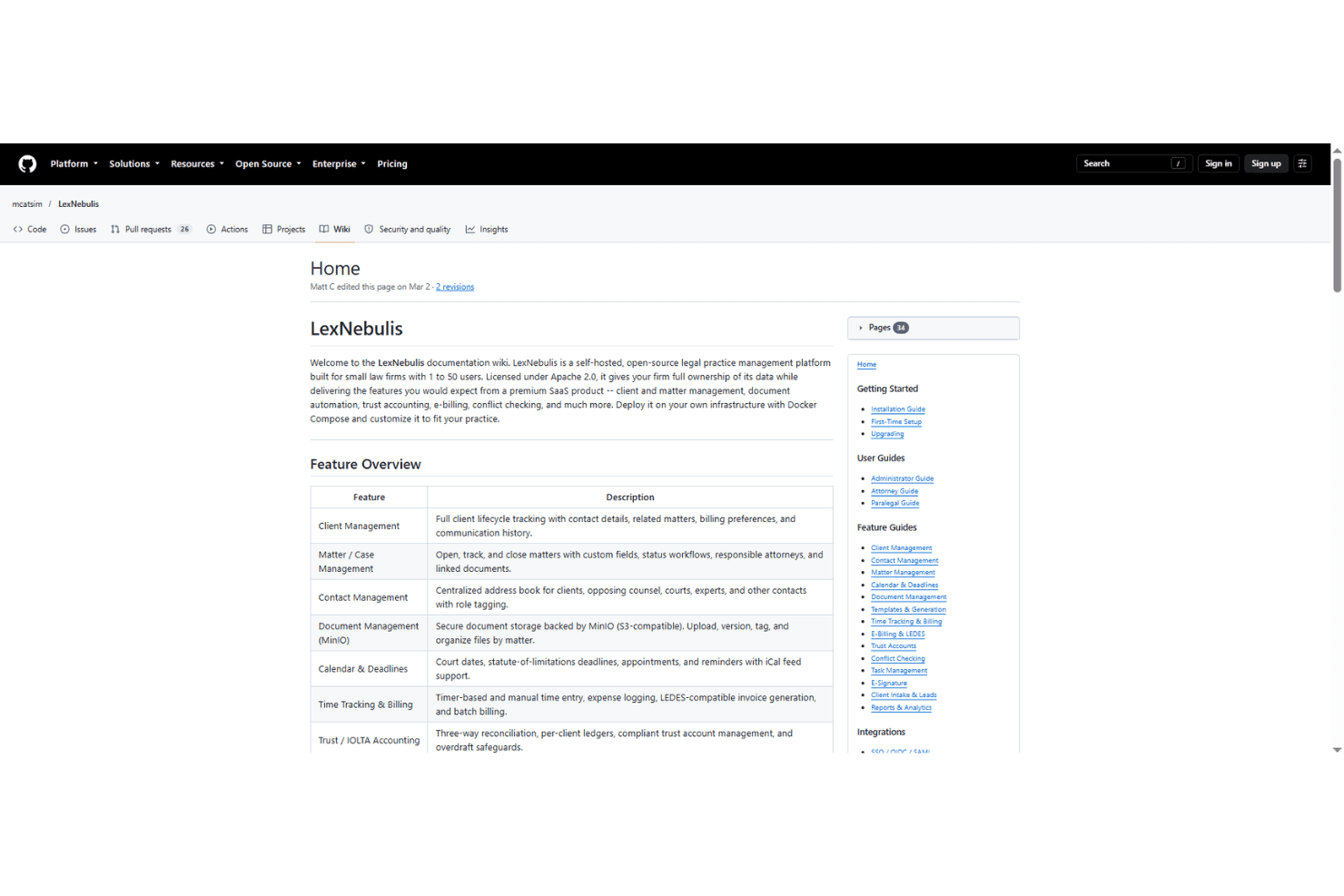
LexNebulis offers a full-featured wiki documenting its legal practice tools. LexNebulis is a self-hosted, open-source legal case management system covering matter tracking, document management, trust/IOLTA accounting, conflict checking, e-signature, and client intake—built with a security-first architecture that includes hash-chained audit logs, SSO, and SCIM provisioning.
Who Is LexNebulis Best For?
LexNebulis is a good fit for small firms with an in-house IT administrator who can manage a self-hosted Docker environment and wants full control over client data without paying licensing fees.
Why I Picked LexNebulis
I picked LexNebulis as one of the best because its hash-chained audit log is unlike anything else I've seen in open source legal tools: every log entry is SHA-256-linked to the previous one, so any tampering is mathematically detectable and verifiable via API. Pair that with SAML 2.0 and OIDC single sign-on across providers like Okta, Azure AD, and Keycloak, plus SCIM 2.0 for automated user provisioning, and you get an enterprise-grade identity and compliance layer that's fully self-hosted.
LexNebulis Key Features
- Hash-chained audit log: Every audit entry is SHA-256-linked to the previous one, making any tampering mathematically detectable via a built-in API verification endpoint.
- Trust/IOLTA accounting: Per-client ledgers with three-way reconciliation, overdraft safeguards, and LEDES 1998B/2000 e-billing with UTBMS codes.
- Conflict checking: Phonetic and fuzzy name matching using Soundex, Metaphone, and Levenshtein algorithms, with ethical-wall support to lock matters.
- Client portal: Clients can view matters, invoices, and documents, upload files, and send secure messages directly through the platform.
LexNebulis Integrations
LexNebulis supports OIDC and SAML with Azure AD, Okta, ADFS, Keycloak, and Google Workspace, plus Stripe, LawPay, Google Drive, Dropbox, Box, and OneDrive. It also offers QuickBooks exports, iCal sync, SCIM provisioning, and a REST API for custom integrations.
Pros and Cons
Pros:
- Trust accounting includes three-way reconciliation safeguards
- Self-hosted deployment preserves client data control
- Hash-chained audit logs support tamper detection
Cons:
- No migration tools for proprietary case systems
- Single-maintainer project has limited community support
Learn more about LexNebulis:
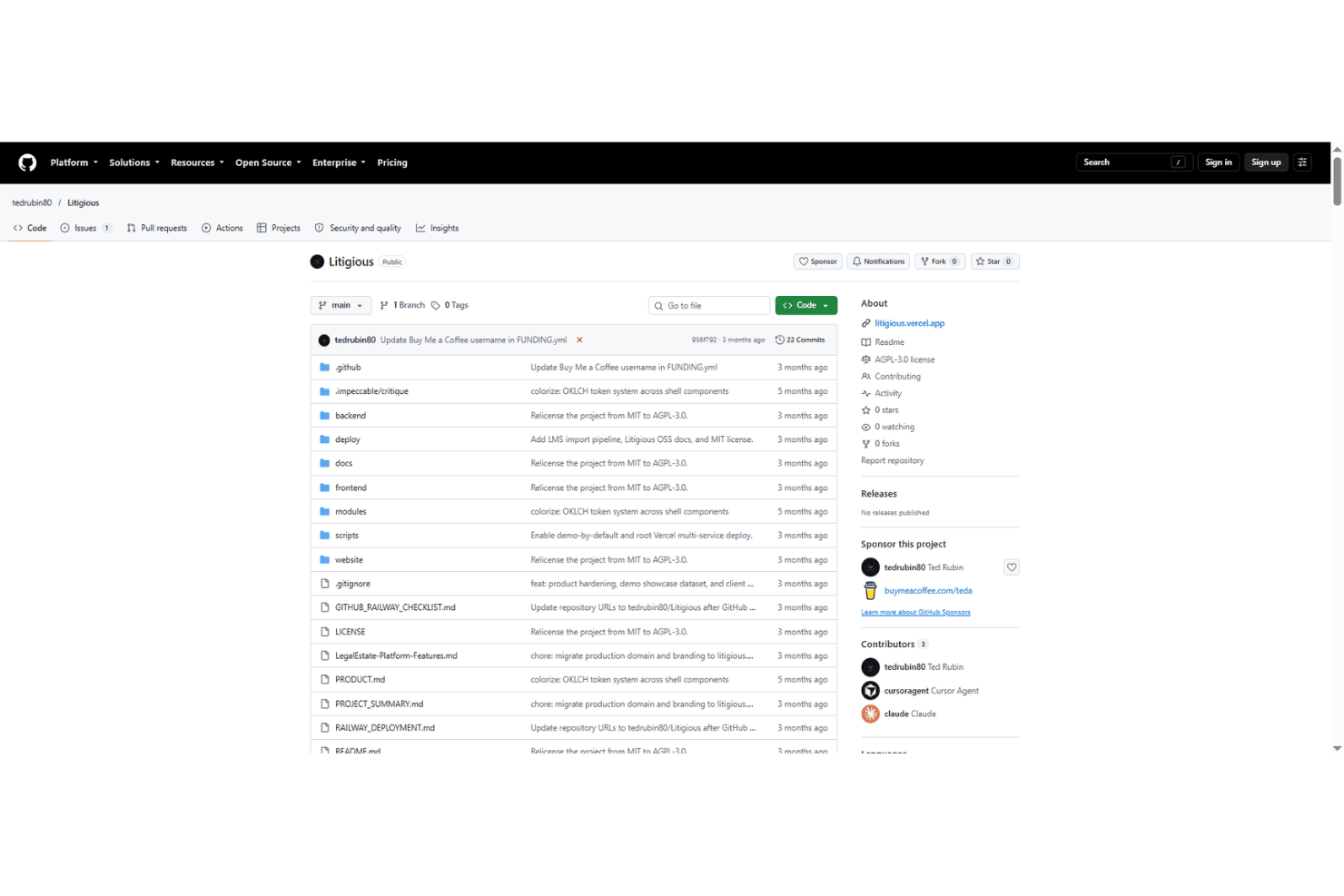
Litigious is an open-source legal platform hosted publicly on GitHub. Litigious is a self-hosted, open-source legal practice management system licensed under AGPL-3.0 that covers case tracking, document management, time and billing, a client portal, and built-in data import from Clio, MyCase, and PracticePanther.
Who Is Litigious Best For?
Litigious is a good fit for technically comfortable solo attorneys or small litigation firms that want to exit a paid platform like Clio or PracticePanther without paying licensing fees.
Why I Picked Litigious
I picked Litigious as one of the best because its built-in import tooling for Clio, MyCase, and PracticePanther is genuinely well-designed: every migration runs as a dry run first, flags duplicates, and validates records before you commit a single change. I've done platform migrations where that kind of pre-flight check would have saved hours of cleanup. The import also maps contacts to clients and matters to cases with source records retained, so you always know where your data came from.
Litigious Key Features
- Role-based access control: Six distinct roles—Super Admin, Admin, Attorney, Paralegal, Assistant, and Client—each with access limited by case and by client.
- Client portal: Clients log in separately to view their case status and any documents your team has shared with them.
- AI document drafting: Connect your own API key from OpenAI, Anthropic, Google, Cohere, or Ollama to generate legal documents directly inside the platform.
- Self-hosted deployment: Deploy via Docker Compose, Railway, or Vercel using included configuration files, keeping all client data on your own infrastructure.
Litigious Integrations
Litigious supports imports from Clio, MyCase, and PracticePanther, plus integrations with Stripe, Square, PayPal, Lex Machina, Zoom, OpenAI, Anthropic, Google, Cohere, and Ollama. Its REST API supports custom integrations.
Pros and Cons
Pros:
- Migration tooling validates imported records
- Detailed litigation lifecycle fields
- AGPL licensing supports source-level control
Cons:
- Calendar interface lacks documented usability features
- Demo mode can erase production data
Learn more about Litigious: Best for self-hosted client data sovereignty
- 1-hour free trial
- From 71.29€/user/year (billed annually)
Visit WebsiteCustomer Rating:4.5/5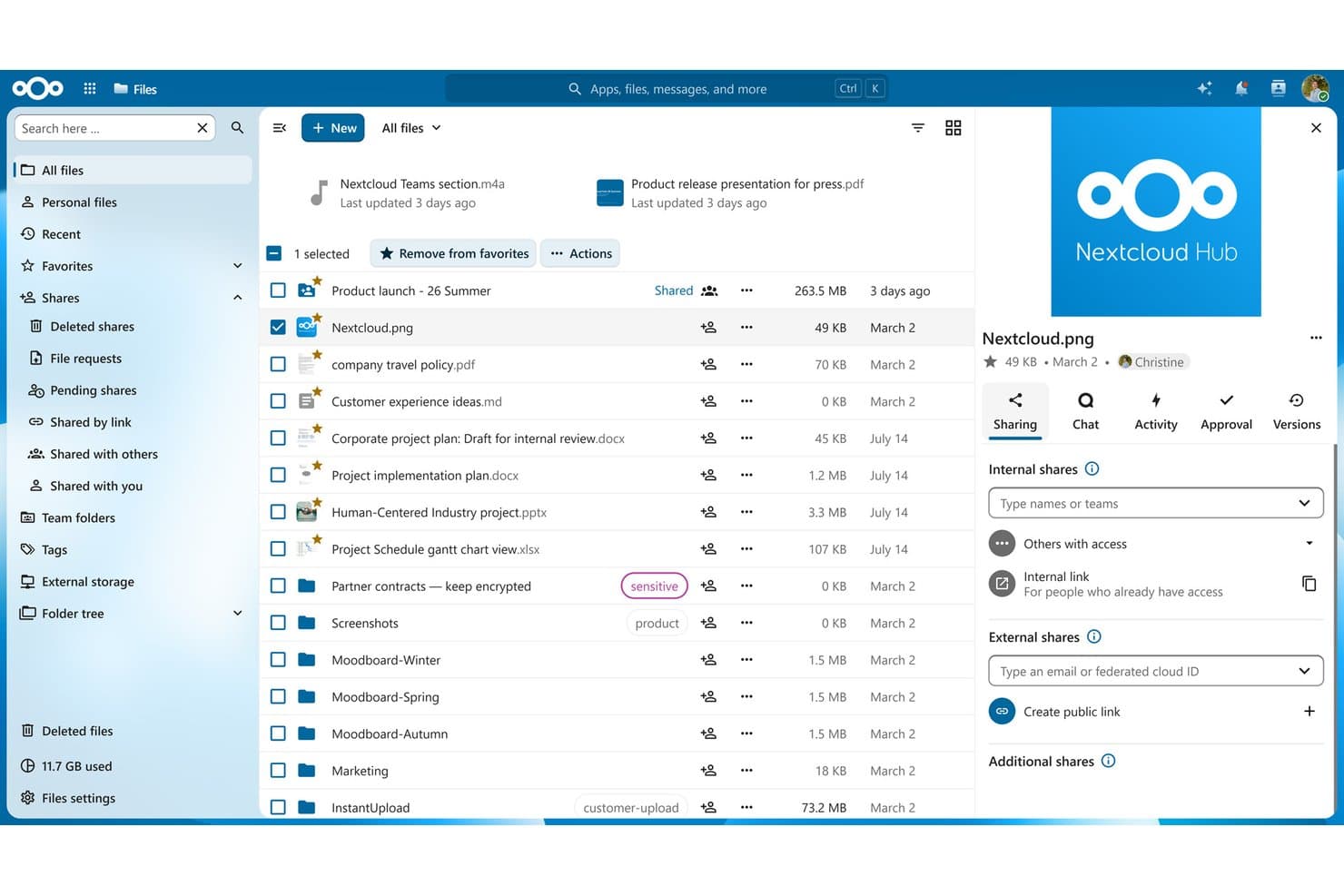
Nextcloud lets users organize, share, and manage files with granular access controls. Nextcloud is an open-source, self-hosted collaboration platform built around file management, document sharing, calendaring, and team communication—configurable as a case file repository for legal teams that need full control over where their data lives.
Who Is Nextcloud Best For?
Nextcloud is a strong fit for IT administrators at government legal departments and compliance-driven legal teams that need full on-premises control over sensitive client files.
Why I Picked Nextcloud
I picked Nextcloud as one of the best because no other open source platform on this list gives your IT team as much control over where privileged client files actually live. You can deploy it fully air-gapped, with AES-256 encryption at rest and per-folder end-to-end encryption, meaning your data never touches a third-party server. The Governance toolkit adds sensitivity labels, retention policies, and legal hold, which matters when you're managing files under strict confidentiality obligations.
Nextcloud Key Features
- Nextcloud Tables: Build structured matter records using no-code column types, relational links between tables, and filtered views you can share across your team.
- File Access Control: Set rules that restrict document access by user group, IP address, file type, tag, or time to enforce confidentiality policies on sensitive files.
- End-to-end encryption: Apply per-folder encryption backed by AES-256, with support for HSMs and hardware tokens, so file contents stay protected even from your own server admins.
- Audit-ready logging: Access activity logs, share auditing, and monitoring API integrations with tools like Splunk and Nagios across all Enterprise tiers.
Nextcloud Integrations
Nextcloud offers integrations across Microsoft 365, SharePoint, OpenProject, Slack, Jira, GitHub, GitLab, Mattermost, and Notion. Its marketplace has 600+ apps, and OCS, REST, WebDAV, CalDAV, and CardDAV APIs support custom integrations.
Pros and Cons
Pros:
- Tables and Deck support custom matter tracking
- Versioning and locking safeguard case documents
- Air-gapped deployment protects privileged client files
Cons:
- Low-end deployments can suffer slow previews
- No native matters, conflicts, or legal billing
Learn more about Nextcloud: 7Best for IT-led self-hosting with full data control
GLPI
- 45-day free trial
- From €19/user/month
Visit WebsiteCustomer Rating:4.5/5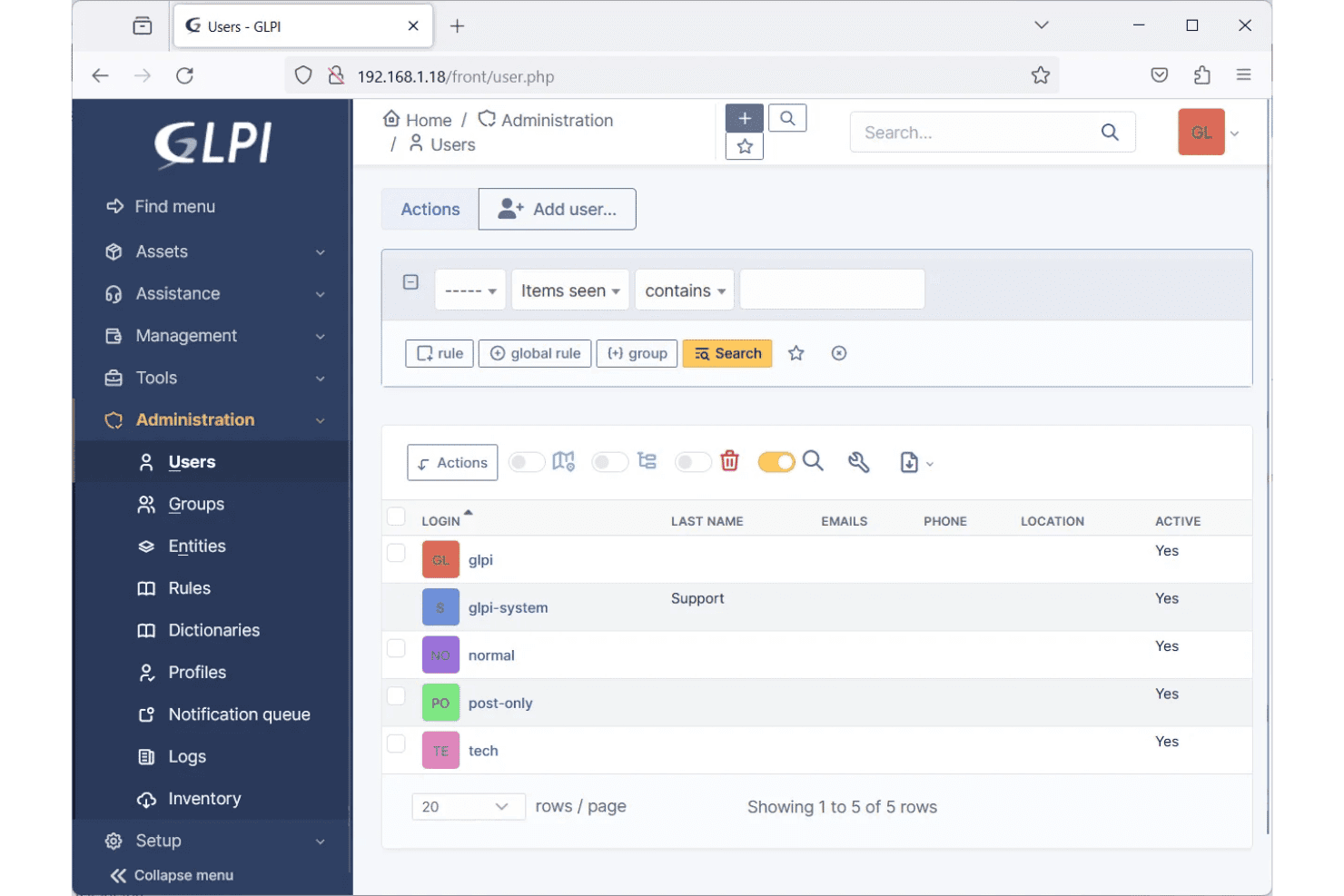
GLPI lets users manage and view all system user accounts centrally. GLPI is an open-source IT service management platform that you can self-host, offering ticket tracking, project management, document storage, custom asset types, role-based access control, and a plugin marketplace.
Who Is GLPI Best For?
GLPI is a strong fit for IT administrators at legal organizations who want full control over their infrastructure and prefer to self-host sensitive data on their own servers.
Why I Picked GLPI
I picked GLPI as one of the best because it's built from the ground up for IT administrators who want to self-host everything on their own servers, and that's exactly what makes it appealing for legal teams with strict data sovereignty requirements. The official Docker image handles auto-install and auto-update, so your IT team can spin up a fully isolated instance without touching a third-party cloud. On top of that, multi-entity access control lets you wall off data by office or matter group, with role-based profiles controlling exactly who sees what.
GLPI Key Features
- Custom asset types: Define your own object types with configurable fields to model matters, case files, or other legal records that don't fit standard ticket structures.
- Plugin marketplace: Extend base functionality through a library of add-ons, including reporting tools, data import, and notification integrations with platforms like Slack and Microsoft Teams.
- REST API v2 and webhooks: Connect GLPI to external systems using OAuth2-authenticated API calls or event-driven webhooks, enabling data exchange with tools your firm already uses.
- Multi-entity structure: Segment data and user access by office, practice group, or client matter, with permissions that cascade to sub-entities for delegated administration.
GLPI Integrations
GLPI supports integrations with Microsoft Teams, Slack, Google, Microsoft Azure, Okta, LDAP, and Active Directory through documented plugins and connectors. REST API v2, GraphQL, and webhooks support custom integrations with legal systems.
Pros and Cons
Pros:
- Entity permissions separate offices and matters
- GPLv3 avoids proprietary licensing dependence
- Free self-hosting preserves client data control
Cons:
- Generic configuration burdens small legal teams
- No native matter or conflict-check structures
Learn more about GLPI: Best for no-code matter setup and data control
- 30-day free trial
- From $15/user/month
Visit WebsiteCustomer Rating:4.5/5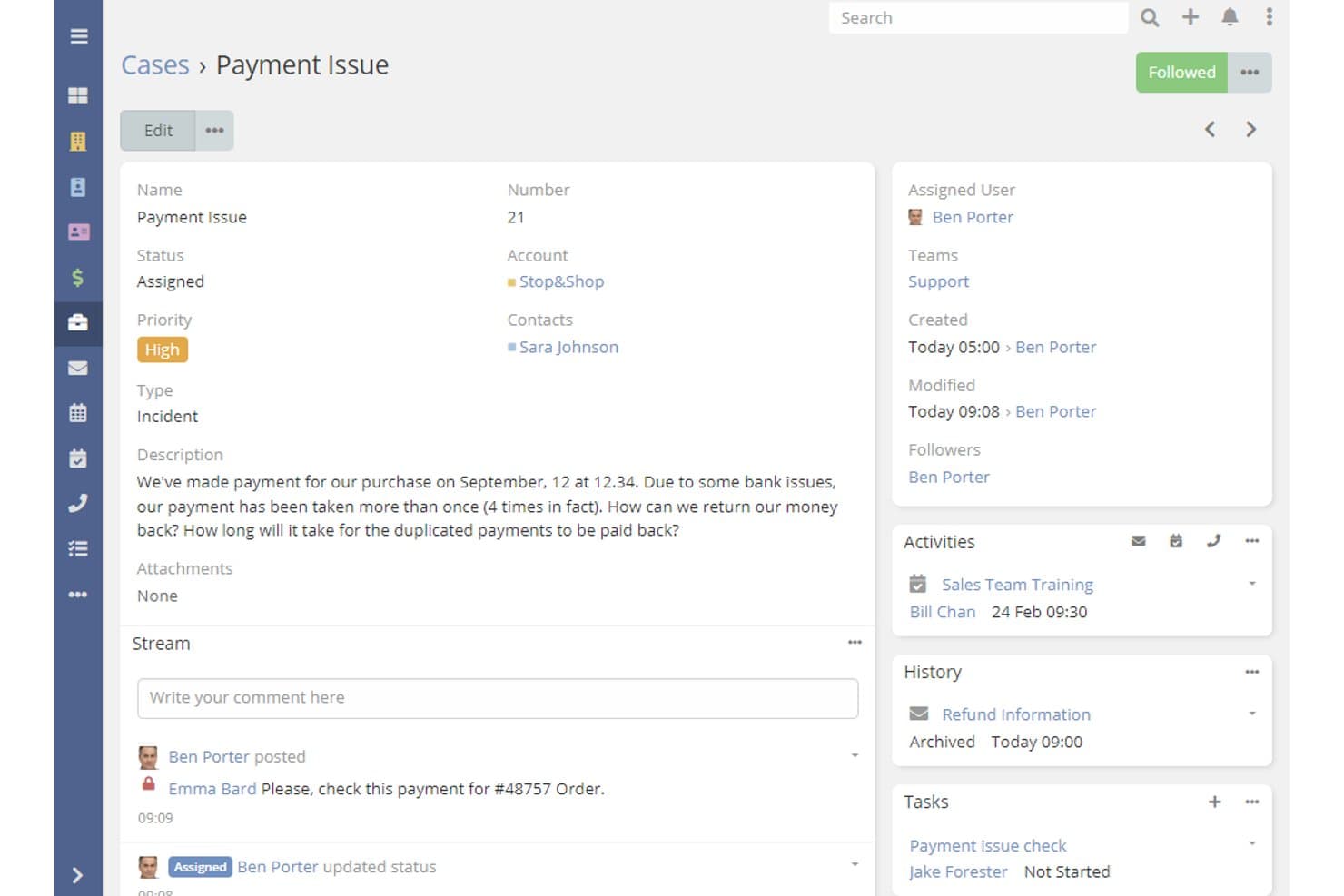
EspoCRM tracks payment case details, priority, and activity history. EspoCRM is an open-source CRM platform that law firms can configure for matter tracking, document management, client communication, and contact organization using its no-code entity builder and self-hosting tools.
Who Is EspoCRM Best For?
EspoCRM is a strong fit for law firms with in-house IT support that want full control over their data and the ability to build custom matter workflows from the ground up.
Why I Picked EspoCRM
EspoCRM earns its spot on my shortlist because its Entity Manager lets you build a proper Matter record from scratch, with custom fields, party-role relationships, and Dynamic Logic rules, without writing a single line of code. I particularly like that you can configure field-level access controls so only the right people see privileged case data. That combination of no-code matter setup and self-hosting via Docker means your firm keeps full ownership of client data, with no third-party database to worry about.
EspoCRM Key Features
- Client portal: Set up multiple portals where clients can submit and view their own cases, with internal stream posts kept hidden from portal users.
- Audit log: Track field-level and relationship changes on any record type, with a dedicated permission controlling who can view the audit history.
- Role-based access control: Assign create, read, edit, and delete permissions at the team, own, or record level, with separate field-level read and edit restrictions.
- REST API with webhooks: Connect EspoCRM to external tools or build custom integrations using an OpenAPI-documented REST API authenticated by API key or HMAC.
EspoCRM Integrations
EspoCRM offers integrations with Google Calendar and Contacts, plus Microsoft 365 and Outlook through paid add-ons. It also provides a REST API and webhooks for custom connections, with 2,000+ integrations via Zapier and Make.
Pros and Cons
Pros:
- Keeps client data under firm control
- Controls privileged fields with granular permissions
- Builds custom matter records without coding
Cons:
- Legal deadline rules require custom configuration
- Native cases resemble support tickets, not matters
Learn more about EspoCRM: Best for government and court legal operations
- Free demo available
- Free
Visit WebsiteCustomer Rating:4.6/5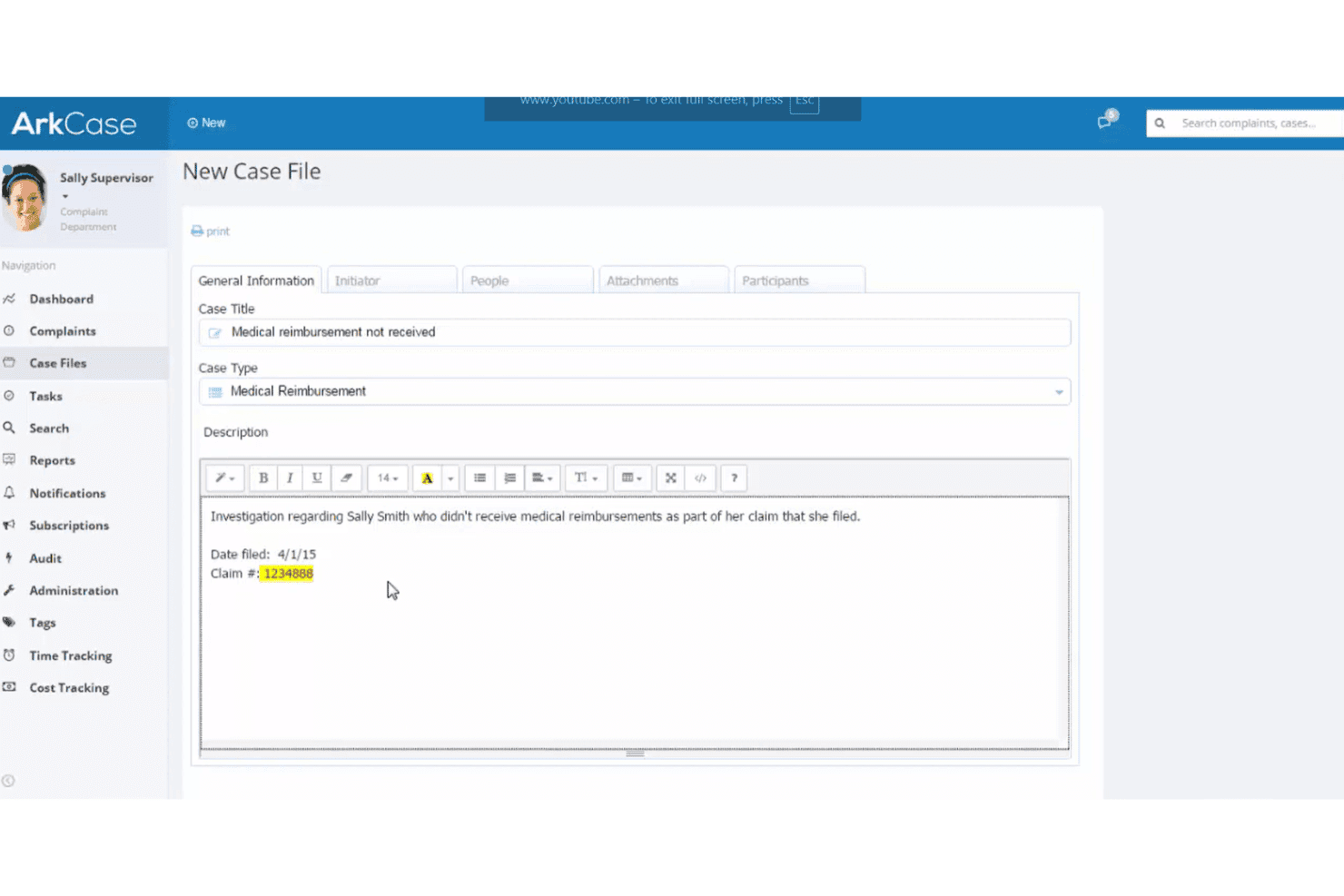
ArkCase lets users create detailed case files with rich text descriptions. ArkCase is an open-source case management platform built on a BPMN workflow engine that combines document management, contact tracking, records management, and configurable case workflows for government agencies, courts, and large legal operations.
Who Is ArkCase Best For?
ArkCase is a strong fit for government legal departments, courts, and large legal operations teams with dedicated IT staff to manage the infrastructure.
Why I Picked ArkCase
ArkCase earns its spot on my shortlist because it's purpose-built for the operational realities of government legal departments and courts, not retrofitted to fit them. I'm particularly impressed by its FedRAMP Authorization and native PIV/CAC smart card support, which are non-negotiable for many government legal teams. Its ready-made Legal Case Management solution combines a BPMN workflow engine with DoD 5015-compliant records management, so courts and agencies can handle case lifecycles and legal holds within a single system.
ArkCase Key Features
- LGPL-3.0 open source codebase: ArkCase's Community Edition is freely available on GitHub under an LGPL-3.0 license, letting your IT team inspect, modify, and extend the source code.
- BPMN workflow builder: A drag-and-drop workflow designer built on a BPMN-compliant engine lets you configure case approvals, automated tasks, and routing rules without writing code.
- DoD 5015-compliant records management: Built-in retention schedules, disposition workflows, and legal holds meet DoD 5015 records management requirements within the same system as your cases.
- Role-based and record-level access control: Combine role-based permissions with Mandatory Access Control Lists to restrict access on individual records, giving your security team granular control over who sees what.
ArkCase Integrations
ArkCase offers native integrations with Microsoft Exchange/O365, LDAP/Active Directory, Microsoft Dynamics, Salesforce, and 40+ CMIS repositories, including Alfresco, Documentum, Nuxeo, and SharePoint. Its RESTful SDK/API supports custom integrations.
Pros and Cons
Pros:
- Granular permissions protect individual case records
- DoD 5015 records management supports legal holds
- Government-focused workflows fit court operations
Cons:
- Court-rule deadline calculation remains undocumented
- Kubernetes deployment demands substantial IT resources
Learn more about ArkCase:
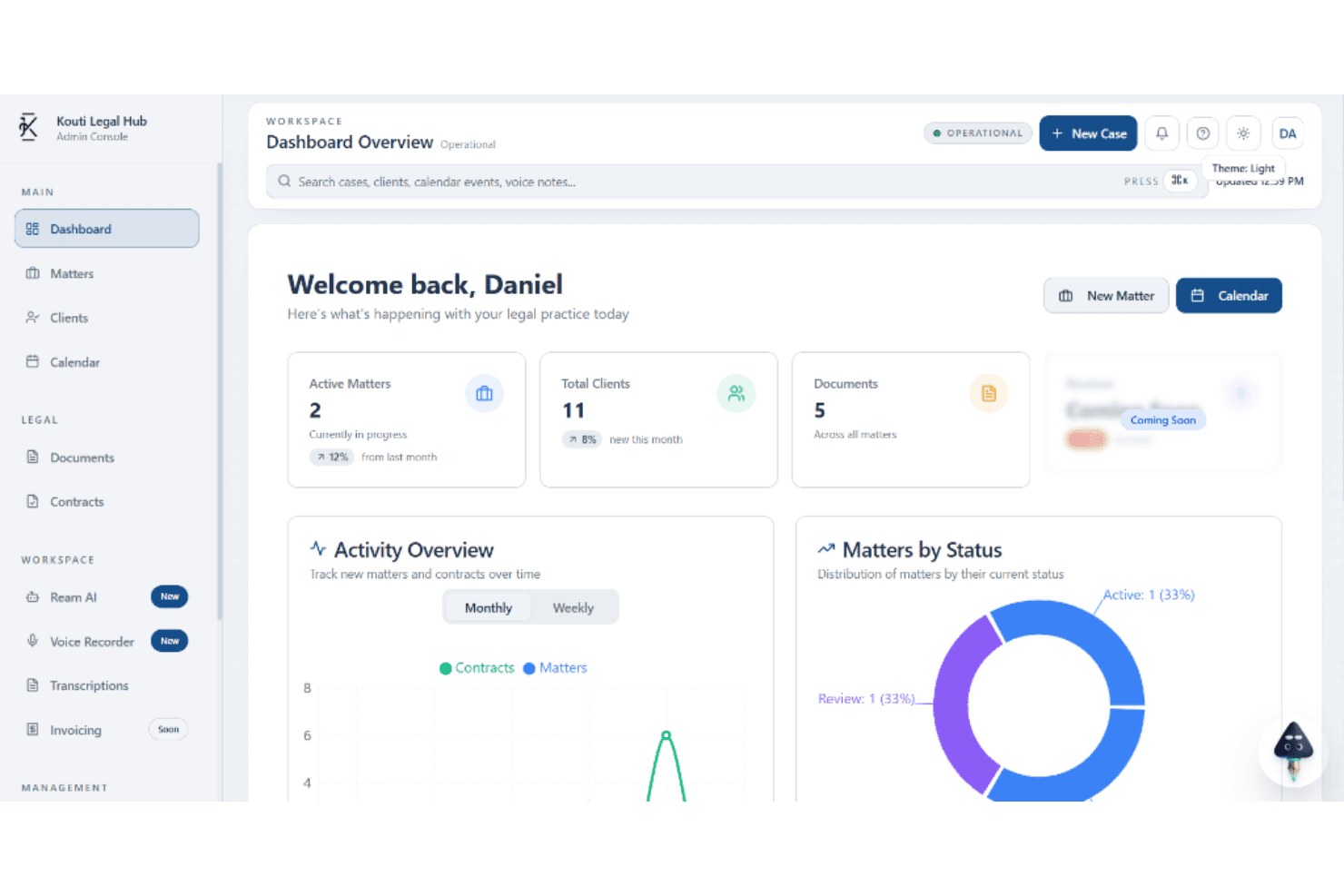
Kourti Legal tracks active matters, clients, documents, and legal activities. Kourti Legal is an MIT-licensed, self-hostable legal practice management platform built around AI-assisted case work, covering matters, documents, contracts, calendaring, invoicing, and a client portal.
Who Is Kourti Legal Best For?
Kourti Legal suits technically comfortable solo attorneys or small legal teams who want a self-hostable, MIT-licensed platform they can modify freely without paying licensing fees.
Why I Picked Kourti Legal
Kourti Legal earns its spot on my shortlist because the MIT license means you own the code outright—no licensing fees, no vendor permissions needed to modify it. I particularly like the AI Redline feature, which writes tracked-change edits directly into DOCX files with every change labeled as machine- or human-made, so attorney review stays clearly in the loop. The Tabular Review tool also stands out: ask one question across an entire folder of contracts and get a cited, page-referenced grid back.
Kourti Legal Key Features
- Client self-service portal: Clients log in with 2FA enforced, view their matter timeline, access shared documents, and message the firm directly through a dedicated portal.
- Role-based access control: Team members only see matters they've been explicitly granted access to, and new members start with zero access by default.
- Negotiation Copilot: Analyzes a counterparty's redline, estimates the risk or cost of each proposed change, and drafts a counter-position for attorney review.
- SOC 2-aligned audit logging: The platform logs authentication events, access changes, and AI recommendation actions, with security and audit logs retained for up to 24 months.
Kourti Legal Integrations
Kourti Legal integrates with OpenAI, Anthropic, OpenRouter, Google Workspace, Microsoft Entra ID, Cloudflare R2, S3-compatible storage, Resend, Brevo, Paystack, and ClamAV. Its REST API supports custom integrations.
Pros and Cons
Pros:
- Client portal supports per-matter access
- AI redlines label machine-made changes
- MIT license permits unrestricted firm modifications
Cons:
- Open-source community remains extremely small
- No court-rule deadline calculation
Learn more about Kourti Legal:
Annen programvare med åpen kildekode for juridisk saksbehandling
Her er noen flere alternativer for programvare med åpen kildekode for juridisk saksbehandling som ikke kom med på kortlisten min, men som likevel er verdt å se nærmere på:
- 11j-lawyer.orgBest for German firms self-hosting client data free
- 12ClinicCasesBest for law clinic case and conflict tracking
- 13Vtiger CRM Best for open source CRM adapted to firm intake
- 14NuxeoBest for petabyte-scale legal document retention
- 15Mayan EDMSBest for OCR-heavy document stores without case fees
- 16iTopBest for XML-driven custom matter modeling
- 17WorklenzBest for addon-extended open source project workflows
- 18OpenLawFirmBest for AI-native billing and trust accounting
- 19LCMBest for legal aid nonprofit case tracking
- 20docassembleBest for guided legal interview automation
How I Evaluate Open Source Legal Case Management Software
I split my evaluation into three parts. Core functionality carries the most weight: I look for tools that can organize and track matters end-to-end and store case documents tied directly to those matters. From there, I check for standout features like audit trail logging, then consider licensing clarity and hosting support.
Core Functionality (Table Stakes For This List)
When I'm selecting tools for my list, I score each one on a scale from 0 (does not offer the functionality) to 5 (excels in this area) for each core functionality listed below. I then convert the total into a percentage to help assess each tool's overall fit, with extra weight on any functionalities I've deemed essential.
- Open Source Codebase (Essential): I check that source code is publicly available under a recognized open source license, with visible commit history and community activity.
- Case and Matter Tracking (Essential): I evaluate how each tool handles matter creation, status workflows, custom fields, and filtering across a growing caseload.
- Document Management: Storing pleadings, contracts, and correspondence tied to specific matters is baseline. I look for version control, folder structures, and access restrictions.
- Contact and Party Management: I check whether the tool links clients, opposing counsel, witnesses, and other parties directly to relevant matters with structured records.
- Calendaring and Deadline Tracking: Court dates, filing deadlines, and statute limitations need a calendar view and reminders. I look for case-linked scheduling with alerts.
- Self-Hosting Capability: I look for clear deployment documentation, container or installer support, and evidence that firms can run the software on their own infrastructure.
Once I have a list of tools that meet the criteria, I consider what sets each platform apart.
Differentiating Factors (What Sets Vendors Apart)
Here's how I compare and contrast different vendors:
Standout Features
Audit trail and activity logging is the first thing I check beyond core functionality. When a paralegal edits a filing or an attorney reassigns a matter, I want timestamped records of who changed what. Tools like ArkCase and LexNebulis handle this differently, so I evaluate log granularity and export options. Role-based permissions matter just as much—restricting a contract attorney's view to assigned matters protects privileged data. I also look for client self-service portals, which let clients upload documents or check case status without exposing internal work product.
Beyond Features
Licensing model matters because a GPL or AGPL project like Dolibarr carries redistribution obligations that a permissive MIT-licensed tool like Kourti Legal does not. I check total cost of ownership too—self-hosting ERPNext or Alfresco means budgeting for server infrastructure, backups, and IT staff time even though the license is free. I also evaluate integration support, confirming each tool can connect with email, e-filing, billing, and e-signature platforms your firm already relies on.
Slik velger du programvare med åpen kildekode for juridisk saksbehandling
Velg en plattform ved å tilpasse kravene til datakontroll, juridiske arbeidsflyter og den interne kapasiteten for administrasjon.
| Hvis prioriteten din er | Se etter |
|---|---|
| Hvis prioriteten din erKontrollerbar lisensiering med åpen kildekode | Se etterEn anerkjent lisens og et offentlig kildekodelager |
| Hvis prioriteten din erKonfidensielle klientdata | Se etterDokumentasjon for egen drift, veiledning om sikkerhetskopiering og prosedyrer for sletting |
| Hvis prioriteten din erFlytting av saker | Se etterDokumenterte eksportformater og en prøveprosess for import |
| Hvis prioriteten din erEtterprøvbar dokumentasjon | Se etterUforanderlige aktivitetsoppføringer med tidsstempler og angivelse av bruker |
| Hvis prioriteten din erBegrenset teknisk kapasitet | Se etterInstallasjonsveiledninger, prosedyrer for oppgradering og dokumentasjon for administratorer |
Slik vurderer du kortlisten din
- Bekreft lisensen: Be om den gjeldende lisensfilen og lenken til kildekodelageret, og bekreft deretter at begge samsvarer med leverandørens påstander om åpen kildekode innen 48 timer.
- Test distribusjonen: Følg den dokumenterte installasjonsprosessen på en testserver innen sju dager, og registrer hver avhengighet, konfigurasjonstrinn og feil.
- Gjennomfør en prøvesak: Opprett én fiktiv sak, legg ved fem eksempeldokumenter, tildel to brukere og eksporter hele saken før du velger.
- Be om supportvilkårene: Opprett én teknisk supportsak og be om skriftlige svar om oppdateringsvarsler, ansvar for sikkerhetskopiering og rapportering av sikkerhetsproblemer innen fem arbeidsdager.
- Velg kompromisset: Bestem om du foretrekker et juridisk spesifikt system som krever mindre konfigurasjon, eller en bredere plattform med åpen kildekode som krever mer intern oppsett og tilpasning.
Hva er programvare for juridisk saksbehandling med åpen kildekode?
Programvare for juridisk saksbehandling med åpen kildekode er teknologi med offentlig tilgjengelig kildekode for organisering av saker, klienter, dokumenter, frister og juridiske arbeidsflyter.
Juridiske team kan drifte programvaren selv, undersøke eller endre kildekoden og koble den til eksisterende systemer. Teamet ditt er imidlertid fortsatt ansvarlig for konfigurasjon, sikkerhetsoppdateringer, sikkerhetskopier, tilgangskontroller og løpende teknisk brukerstøtte.
Funksjoner i programvare for juridisk saksbehandling med åpen kildekode
Når du velger programvare for juridisk saksbehandling med åpen kildekode, bør du se etter følgende viktige funksjoner:
Saksoppfølging: Opprett oppføringer for hver sak, og organiser deretter status, rettsområde, tildelt personale, viktige datoer og egendefinerte felt. Dette gir teamet ditt ett sted for å gjennomgå saksdetaljer og følge fremdriften.
Kontaktadministrasjon: Lagre strukturerte profiler for klienter, motparter, vitner, advokater, domstoler og andre kontakter. Når disse oppføringene kobles til saker, reduseres dobbeltregistrering av data, og hver persons rolle blir tydeligere.
Dokumenthåndtering: Last opp prosesskriv, kontrakter, korrespondanse, bevis og andre filer direkte til en sak. Mappestrukturer, forhåndsvisning av filer, versjonshistorikk og tilgangskontroller hjelper teamet med å finne riktig dokument.
Kalender- og fristoppfølging: Registrer høringer, innleveringsdatoer, foreldelsesfrister, møter og oppfølgingsoppgaver i en felles kalender. Påminnelser og sakskoblede hendelser hjelper personalet med å følge opp forpliktelser før fristene utløper.
Oppgave- og arbeidsflytstyring: Tildel arbeid til bestemte brukere, angi forfallsdatoer og følg oppgavestatus gjennom definerte arbeidsflyter. Dette hjelper advokater og støttepersonell med å se ansvarsområder uten å være avhengige av separate regneark.
Rollebaserte tillatelser: Angi tilgangsregler basert på brukerens rolle, team eller tildelte saker. Tillatelser kan begrense konfidensielle dokumenter og saksinformasjon til autoriserte brukere.
Aktivitets- og revisjonslogger: Registrer pålogginger, redigeringer, opplastinger, tildelinger og andre systemhendelser med tidsstempler og brukerdetaljer. Disse oppføringene hjelper deg med å gjennomgå endringer og støtter etterprøvbar intern journalføring.
Søk og rapportering: Søk i saksfelt, kontakter, dokumenter, oppgaver og notater ved hjelp av filtre eller nøkkelord. Rapporter kan vise saksmengder, forfalt arbeid, kommende frister og saksstatuser.
Støtte for dataeksport og sikkerhetskopiering: Eksporter saksoppføringer og tilknyttede filer i brukbare formater, samtidig som sikkerhetskopier oppbevares under organisasjonens kontroll. Dette støtter migrering, katastrofegjenoppretting og langsiktig tilgang til klientoppføringer.
Fordeler med programvare for juridisk saksbehandling med åpen kildekode
Implementering av programvare for juridisk saksbehandling med åpen kildekode gir flere fordeler for teamet og virksomheten din. Her er noen av fordelene du kan se frem til:
- Kontroll: Egen drift lar teamet ditt administrere infrastruktur, sikkerhetskopier, tilgangskontroller og datalagring i samsvar med interne krav.
- Organisering: Saksopplysninger, kontakter, dokumenter, oppgaver og frister forblir sammenkoblet i ett system i stedet for å være spredt over separate filer.
- Konfidensialitet: Rollebaserte tillatelser kan begrense tilgangen til saker og dokumenter til autoriserte brukere, noe som bidrar til å beskytte fortrolig informasjon.
- Ansvarlighet: Aktivitetslogger registrerer redigeringer, opplastinger, tildelinger og andre hendelser med tidsstempler og brukeropplysninger for etterprøvbar dokumentasjon.
- Fleksibilitet: Offentlig kildekode og konfigurerbare felt lar teamet ditt tilpasse arbeidsflyter, sakstyper og integrasjoner til den juridiske virksomheten.
- Forutsigbarhet: Anerkjente lisenser for åpen kildekode kan redusere lisensavgifter for programvare og tydeliggjøre rettighetene dine til å inspisere, endre og distribuere koden.
- Kontinuitet: Eksportverktøy og egenadministrerte sikkerhetskopier støtter migrering av saker, katastrofegjenoppretting og langsiktig tilgang til klientopplysninger.
Kostnader og priser for programvare for juridisk saksbehandling med åpen kildekode
Valg av programvare for juridisk saksbehandling med åpen kildekode krever forståelse av tilgjengelige prismodeller og abonnementer. Kostnadene varierer etter funksjoner, teamstørrelse, drift, brukerstøtte, tillegg og infrastruktur. Tabellen nedenfor oppsummerer vanlige abonnementer, gjennomsnittspriser og typiske funksjoner som inngår i programvareløsninger for juridisk saksbehandling med åpen kildekode.
Sammenligningstabell for abonnementer for programvare for juridisk saksbehandling med åpen kildekode
Disse prisintervallene er veiledende. Programvarelisensen kan være gratis, mens drift, brukerstøtte, implementering og vedlikehold medfører løpende kostnader.
| Abonnementstype | Gjennomsnittspris | Vanlige funksjoner |
|---|---|---|
| AbonnementstypeGratisabonnement | Gjennomsnittspris$0-$10/bruker/måned | Vanlige funksjonerSaksoppfølging, grunnleggende dokumentlagring, delte kontakter og brukerstøtte fra fellesskapet. |
| AbonnementstypePersonlig abonnement | Gjennomsnittspris$5-$25/bruker/måned | Vanlige funksjonerSaksoppfølging, dokumenthåndtering, kalenderverktøy og grunnleggende brukertillatelser. |
| AbonnementstypeForretningsabonnement | Gjennomsnittspris$25-$75/bruker/måned | Vanlige funksjonerTilpassede arbeidsflyter, avanserte tillatelser, revisjonslogger, rapportering og e-postintegrasjoner. |
| AbonnementstypeVirksomhetsabonnement | Gjennomsnittspris$75-$200/bruker/måned | Vanlige funksjonerSSO, drift med høy tilgjengelighet, avanserte sikkerhetskontroller, dedikert brukerstøtte og tilpassede integrasjoner. |
Vanlige spørsmål om juridisk saksbehandlingsprogramvare med åpen kildekode
Her er noen svar på vanlige spørsmål om juridisk saksbehandlingsprogramvare med åpen kildekode:
Er juridisk saksbehandlingsprogramvare med åpen kildekode sikker?
Ja, programvare med åpen kildekode kan støtte sikker juridisk virksomhet når teamet ditt administrerer den på riktig måte. Offentlig tilgjengelig kildekode gjør det mulig for teknisk personell å kontrollere avhengigheter, tillatelser og sikkerhetskontroller. Dere trenger fortsatt oppdateringer i tide, krypterte forbindelser, sterk autentisering og testede sikkerhetskopier. Konfigurer tilgangen etter rolle og sakstildeling. Gå gjennom revisjonsloggene for uvanlig aktivitet. Oppbevar klientfiler på beskyttet infrastruktur med dokumenterte regler for oppbevaring. Lisenser for åpen kildekode garanterer ikke sikkerhet i seg selv. Implementeringspraksis, leverandørstøtte og interne kontroller avgjør systemets sikkerhetsnivå.
Kan jeg migrere eksisterende saker til juridisk saksbehandlingsprogramvare med åpen kildekode?
Ja, du kan migrere eksisterende saker når plattformen støtter brukbare import- og eksportfunksjoner. Begynn med å kartlegge klienter, kontakter, dokumenter, datoer, oppgaver og saksstatuser. Fjern dupliserte poster før du importerer noe. Bevar opprinnelige filnavn og dokumentdatoer der det er mulig. Test prosessen med én fiktiv sak eller en sak med lav risiko først. Kontroller om eksporten inkluderer vedlegg, aktivitetshistorikk, tillatelser og egendefinerte felt. Oppbevar en skrivebeskyttet kopi av de gamle postene til du har kontrollert de migrerte dataene.
Hvem vedlikeholder juridisk saksbehandlingsprogramvare med åpen kildekode?
Vedlikeholdet avhenger av prosjektet, så gå gjennom prosjektets kodelager og utgivelseshistorikk før du tar det i bruk. Kontroller hvor ofte utviklerne publiserer oppdateringer, og om bidragsytere svarer på rapporterte problemer. Se etter installasjonsnotater, oppgraderingsinstruksjoner, sikkerhetsvarsler og et aktivt diskusjonsforum. En kommersiell støtteleverandør kan hjelpe med drift, tilpasning og feilsøking. Teamet ditt er likevel ansvarlig for å velge tidspunkter for oppdateringer og teste endringer. Unngå prosjekter med uklart eierskap, forlatte kodelagre eller udokumenterte krav til implementering.
Kan juridisk saksbehandlingsprogramvare med åpen kildekode kobles til andre juridiske verktøy?
Ja, tilkoblinger avhenger av plattformens dokumenterte API-er, importformater, programtillegg og e-postfunksjoner. Bekreft hver nødvendige tilkobling før du velger et system. Vanlige vurderingsområder omfatter e-post, dokumentlagring, fakturering, elektroniske signaturer, kalendere og identitetsleverandører. Spør om synkroniseringen fungerer begge veier. Bekreft hvordan plattformen håndterer mislykkede overføringer og dupliserte poster. Test én reell arbeidsflyt, for eksempel å legge en e-post ved en sak, før du forplikter deg til omfattende tilpasning eller datamigrering.