

Appara Review 2026: Pros, Cons, Features and Pricing
I’ve put Appara through its paces—here’s why it stands out for corporate legal teams seeking workflow automation, but where it still leaves power users wanting more.

We review tools independently, and commissions help fund our testing. See our transparency policy, our methodology, or suggest a tool.
Appara is a corporate legal software built for law firms managing minute books, corporate records, and entity filings across multiple clients. It automates the drafting of resolutions, registers, and corporate documents—work that otherwise takes hours to prepare manually. I'd consider it over a platform like Diligent Entities if your firm needs solid document automation without the overhead of an enterprise entity management system.
Appara Evaluation Summary
4.8/5
- Pricing upon request
- Free demo available
Why Trust Our Software Recommendations
6,700+
Reviews
20
Industry experts
16+
Evaluation factors
14
Years
Our team has been testing and reviewing software since 2012. As legal practice leaders ourselves, we know how difficult—and important—it is to choose the right software.
For this guide, we evaluated tools using hands-on testing and independent research, scoring tools using our selection criteria.
Our reviews reflect our human editorial judgment, not a sales pitch.
Appara Overview
When I compare Appara to other corporate legal software, I think its workflow automation and document assembly features are a clear strength, especially for teams handling high volumes of entity management. The interface is modern and onboarding is straightforward, but integration options are more limited than some competitors. Pricing is transparent and support is responsive, which helps when you’re judging long-term value.
I’d suggest Appara is best for midsize legal teams or firms that want to automate repetitive work without a steep learning curve. For example, entity data centralization is a real time-saver for corporate records management.
Pros
- Responsive customer support with onboarding assistance
- Centralizes entity management for multi-entity organizations
- Automates document creation with customizable templates
Cons
- Advanced features require time to fully master
- Limited integration options with third-party tools
- Occasional glitches and platform slowdowns reported by users
Is Appara Right For Your Needs?
Who Would be a Good Fit for Appara?
Appara is a strong choice for legal teams that need to automate document workflows, centralize entity management, and handle recurring corporate records. I think midsize organizations, regulated industries, and firms with high entity volumes will get the most value. Its strengths in document automation and entity tracking make it ideal for teams that want to reduce manual work and improve compliance.
If your department manages multiple subsidiaries or needs to generate complex legal documents quickly, Appara’s feature set is going to save you time and reduce errors.
- In-House CounselWorkflow tools help manage board resolutions and annual returns efficiently.
- Franchise OperationsCentralized entity management simplifies multi-location corporate governance.
- Real Estate CompaniesAutomated document assembly speeds up property transaction paperwork.
- Financial ServicesAppara’s compliance tracking helps manage regulatory filings and deadlines.
- Midsize Law FirmsThe platform supports high-volume document generation and workflow automation.
- Corporate Legal DepartmentsAppara centralizes entity data and automates recurring corporate filings.
Who Would be a Bad Fit for Appara?
Appara isn’t the best fit for teams that need deep integrations, highly specialized legal workflows, or operate in industries with unique compliance needs. If your business relies on connecting legal software to a broad tech stack or requires advanced customization, you’ll likely find Appara limiting.
Small teams with simple needs or those outside of corporate law may not benefit from its advanced features, and highly regulated sectors with niche requirements may need more tailored solutions.
- Intellectual Property TeamsAppara doesn’t offer IP portfolio or trademark management features.
- Government AgenciesPublic sector compliance and reporting needs aren’t fully addressed.
- Tech StartupsLimited integrations restrict connecting with broader tech stacks.
- Healthcare ProvidersIndustry-specific compliance features for healthcare are missing.
- Litigation PracticesAppara lacks litigation management and case tracking tools.
- Small StartupsThe platform’s advanced features are unnecessary for basic legal needs.
How We Test & Score Tools
We’ve spent years building, refining, and improving our software testing and scoring system. The rubric is designed to capture the nuances of software selection and what makes a tool effective, focusing on critical aspects of the decision-making process.
Below, you can see exactly how our testing and scoring works across seven criteria. It allows us to provide an unbiased evaluation of the software based on core functionality, standout features, ease of use, onboarding, customer support, integrations, customer reviews, and value for money.
Core Functionality (25% of final scoring)
The starting point of our evaluation is always the core functionality of the tool. Does it have the basic features and functions that a user would expect to see? Are any of those core features locked to higher-tiered pricing plans? At its core, we expect a tool to stand up against the baseline capabilities of its competitors.
Standout Features (25% of final scoring)
Next, we evaluate uncommon standout features that go above and beyond the core functionality typically found in tools of its kind. A high score reflects specialized or unique features that make the product faster, more efficient, or offer additional value to the user.
We also evaluate how easy it is to integrate with other tools typically found in the tech stack to expand the functionality and utility of the software. Tools offering plentiful native integrations, 3rd party connections, and API access to build custom integrations score best.
Ease of Use (10% of final scoring)
We consider how quick and easy it is to execute the tasks defined in the core functionality using the tool. High scoring software is well designed, intuitive to use, offers mobile apps, provides templates, and makes relatively complex tasks seem simple.
Onboarding (10% of final scoring)
We know how important rapid team adoption is for a new platform, so we evaluate how easy it is to learn and use a tool with minimal training. We evaluate how quickly a team member can get set up and start using the tool with no experience. High scoring solutions indicate little or no support is required.
Customer Support (10% of final scoring)
We review how quick and easy it is to get unstuck and find help by phone, live chat, or knowledge base. Tools and companies that provide real-time support score best, while chatbots score worst.
Customer Reviews (10% of final scoring)
Beyond our own testing and evaluation, we consider the net promoter score from current and past customers. We review their likelihood, given the option, to choose the tool again for the core functionality. A high scoring software reflects a high net promoter score from current or past customers.
Value for Money (10% of final scoring)
Lastly, in consideration of all the other criteria, we review the average price of entry level plans against the core features and consider the value of the other evaluation criteria. Software that delivers more, for less, will score higher.
Core Features
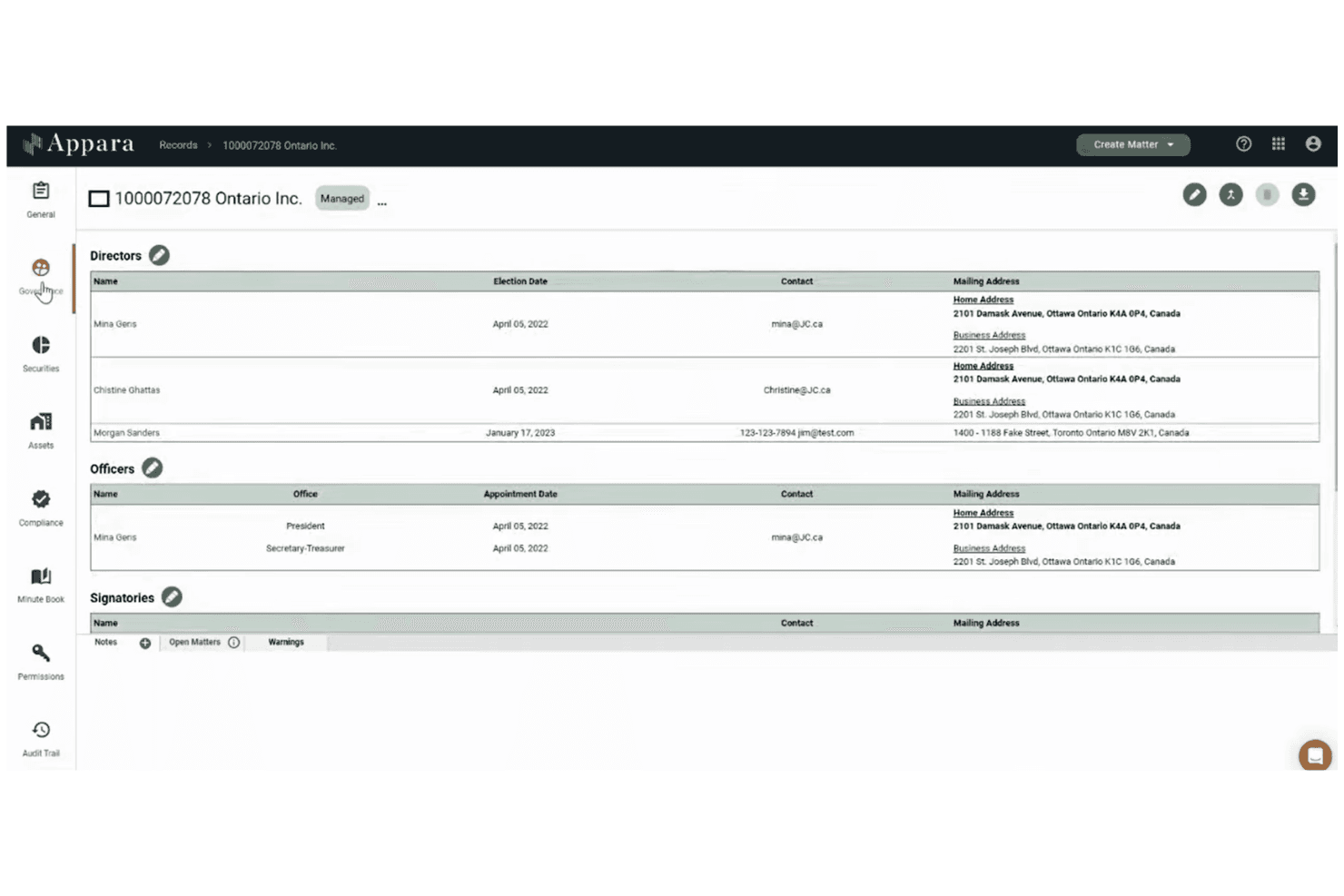
Entity Management
Store and access all corporate records in secure, cloud-based folders. Track changes and maintain a single source of truth for every entity.
Document Automation
Generate legal documents using customizable templates and AI-powered drafting tools. Create entire document packages, including indexes and board resolutions, in minutes.
Workflow Automation
Automate multi-step legal processes from drafting to closing. Assign tasks, set deadlines, and monitor progress across your team.
Compliance Tracking
Monitor regulatory deadlines and automate recurring filings for multiple entities. Get reminders and status updates to avoid missed compliance events.
Centralized Data Storage
Keep all client, entity, and transaction data in one searchable platform. Reduce manual data entry and eliminate version control issues.
User Permissions and Security
Control access with role-based permissions and ISO-accredited security protocols. Protect sensitive data and ensure only authorized users can view or edit records.
Standout Features
AI-Powered Document Summaries
Appara uses AI to generate instant summaries of lengthy legal documents. This helps teams quickly review, share, and understand key points without reading every page.
Automated Minute Book Creation
Automatically assemble and update digital minute books for every entity. This feature reduces manual work and ensures corporate records are always audit-ready.
Ease of Use
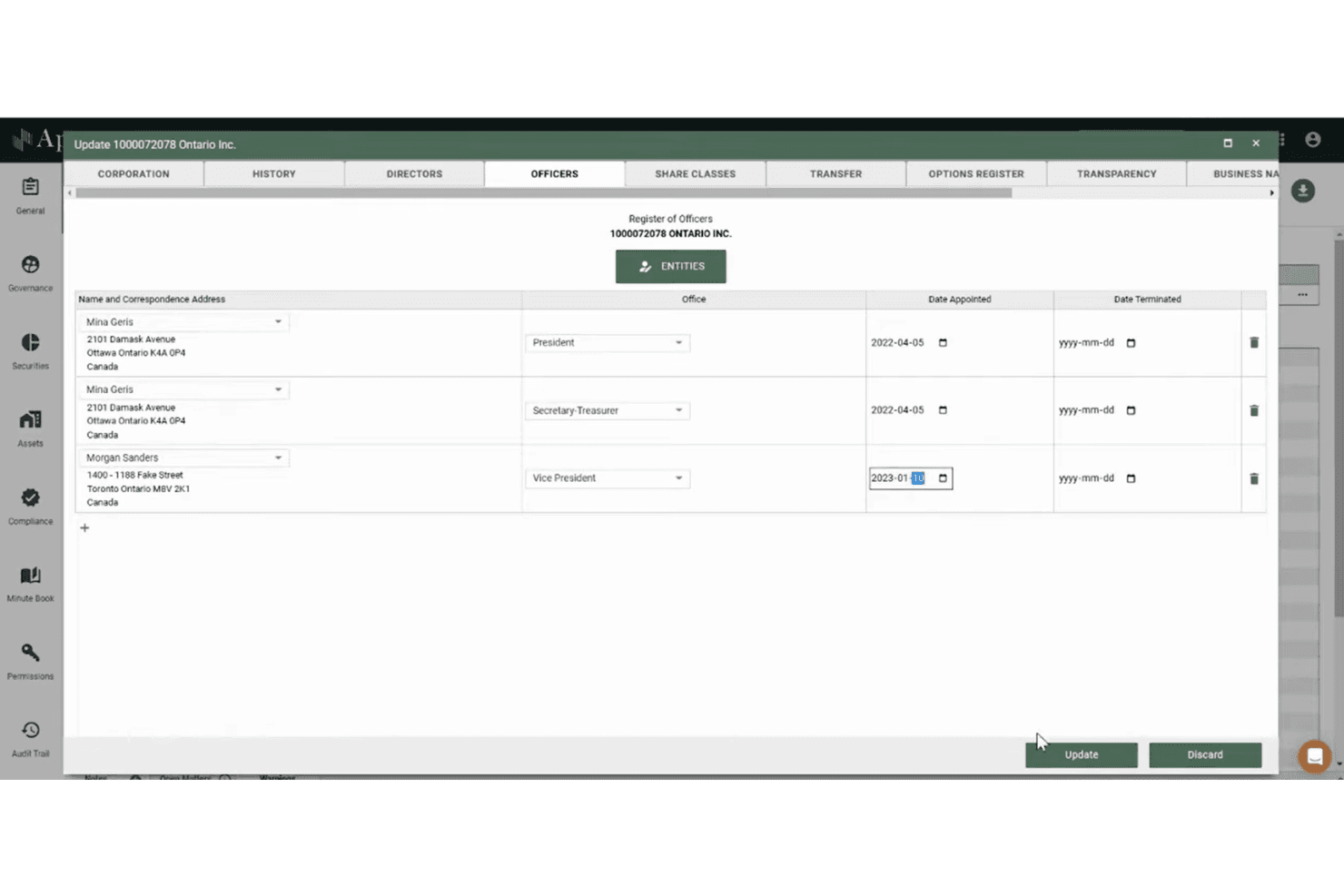
Appara’s interface is clean and intuitive, making it easy for legal teams to navigate complex workflows without feeling overwhelmed. Users often mention that onboarding is quick, with helpful in-app guidance and responsive support. Features like drag-and-drop document assembly and centralized dashboards simplify daily tasks.
While some advanced tools take time to master, most teams can get up and running fast, which is a real advantage for busy legal departments.
Onboarding
Appara offers a guided onboarding process with dedicated support, which helps new users get started quickly. Many users highlight the value of personalized training sessions and a responsive help desk for troubleshooting early questions. The platform provides clear documentation and video tutorials, making it easier to adopt advanced features over time.
I think most legal teams will appreciate how quickly they can reach full productivity, thanks to Appara’s hands-on approach and accessible resources.
Customer Support
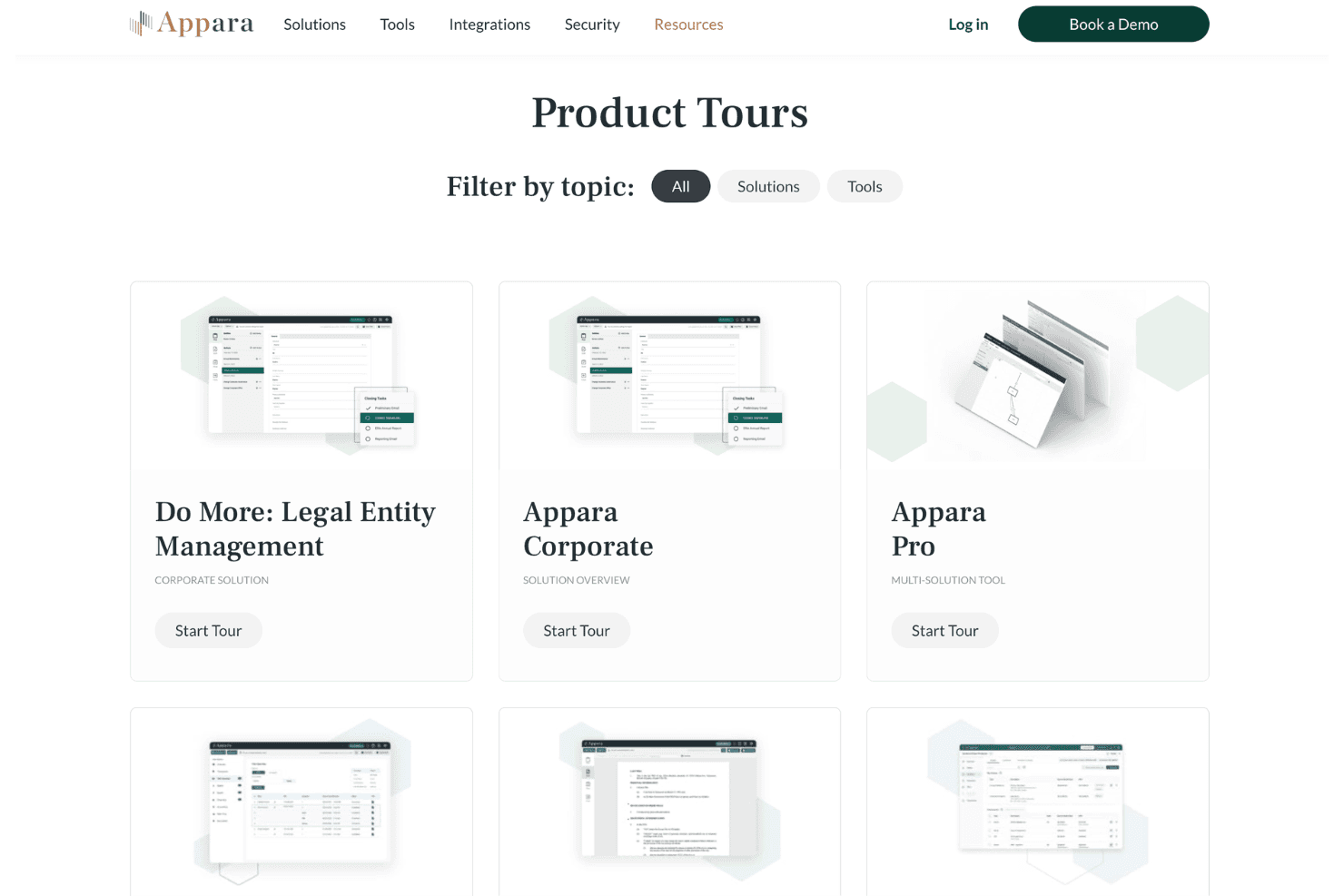
Appara’s customer support stands out for its responsiveness and willingness to resolve issues quickly. Users often mention fast replies from the support team and helpful troubleshooting during onboarding and daily use. Live chat, email, and scheduled training sessions are all available, making it easy to get answers when you need them.
I think legal teams will find the support reliable, especially when navigating new features or addressing urgent workflow questions.
Integrations
Appara integrates with tools such as Google Workspace, Microsoft 365, DocuSign, Adobe Sign, BC OnLine, OnCorp, Nuans Canada, Google Addresses, Soluno, and QuickBooks.
Appara does not publicly highlight an open API or native integrations with third-party automation platforms, though additional integrations may be available through custom setup or upon request.
Value for Money
Appara’s pricing is not publicly disclosed, so potential users need to contact the company for a custom quote. While this limits upfront transparency, the platform’s automation features and centralized data management are positioned to deliver value for midsize legal teams managing multiple entities. Its scalable setup and included support can make it a practical option as needs grow.
Appara Specs
- 2-Factor Authentication: Yes
- API: Yes
- Approval Workflows: Yes
- Audit Trail: Yes
- Calendar Management: Yes
- Compliance Tracking: Yes
- Contract Management: Yes
- Custom Reports: Yes
- Customer Management: Yes
- Data Export: Yes
- Data Import: Yes
- Document Management: Yes
- External Integrations: Yes
- Multi-User: Yes
- NDA Management: Yes
- Notifications: Yes
- Policy Management: Yes
- Scheduling: No
- Workflow Management: Yes
Appara FAQs
Appara Company Overview & History
Appara is a Canadian legal technology company specializing in cloud-based entity management, workflow automation, and document automation for law firms and in-house legal teams. The company is headquartered in Canada and serves over 1,000 legal professionals, including notable clients like RDM Lawyers LLP, Strosberg Sasso Sutts, and Watson Goepel. Appara is known for its ISO-accredited security, modern work culture, and focus on reducing administrative workload for legal professionals. There is no public information available about its workforce size, financials, or affiliations with other companies.
Appara Major Milestones
- 2016: Founded in Vancouver, Canada as a legal technology platform focused on automation and entity management.
- 2022: Expanded its product suite with AI-powered tools, including solutions for estate planning and legal workflows.