

10 Small Law Firm Software To Grow Your Practice In 2026

10 Best Small Law Firm Software Shortlist


Running a small law firm comes with its own set of challenges. You’re juggling client demands, managing case files, and staying compliant with regulations. It’s a lot to handle, and that’s where small law firm software steps in to help.
In this article, I’ll share my top picks for software that can ease your workload and keep your practice running smoothly. I’ve tested and reviewed these tools independently to provide you with unbiased insights.
You’ll find information on features, user experience, and how each tool can fit into your workflow. My goal is to help you make informed decisions that benefit your team and enhance your practice's efficiency.
Why Trust Our Software Recommendations
Our team has been testing and reviewing software since 2012. As legal practice leaders ourselves, we know how difficult—and important—it is to choose the right software.
For this guide, we evaluated tools using hands-on testing and independent research, scoring tools using our selection criteria.
Our reviews reflect our human editorial judgment, not a sales pitch.
Best Small Law Firm Software Comparison Table
| Tool | Best For | Trial Info | Price | ||
|---|---|---|---|---|---|
| 1 | Best for mobile time tracking tools | Free trial available | From $39/user/month (billed annually) | Website | |
| 2 | Best with built-in compliance controls | Free trial available | Pricing upon request | Website | |
| 3 | Best for seamless client communication | 7-day free trial | From $49/user/month (billed annually) | Website | |
| 4 | Best for document automation | Free demo available | Pricing upon request | Website | |
| 5 | Best for robust integrations and customizability | Free trial available | From £79/user/month | Website | |
| 6 | Best for advanced case analytics | Free demo available | From $79/user/month | Website | |
| 7 | Good for personal injury law firms | Free demo available | Pricing upon request | Website | |
| 8 | Best for comprehensive financial management | 10-day free trial | From $49/user/month (billed annually) | Website | |
| 9 | Best for streamlined billing and invoicing | Free trial available | From $59/user/month | Website | |
| 10 | Best for bankruptcy attorneys | Free plan available + free demo available | From $159 up to 4 cases/year | Website |
Reviews Of The Best Small Law Firm Software

Best for mobile time tracking tools
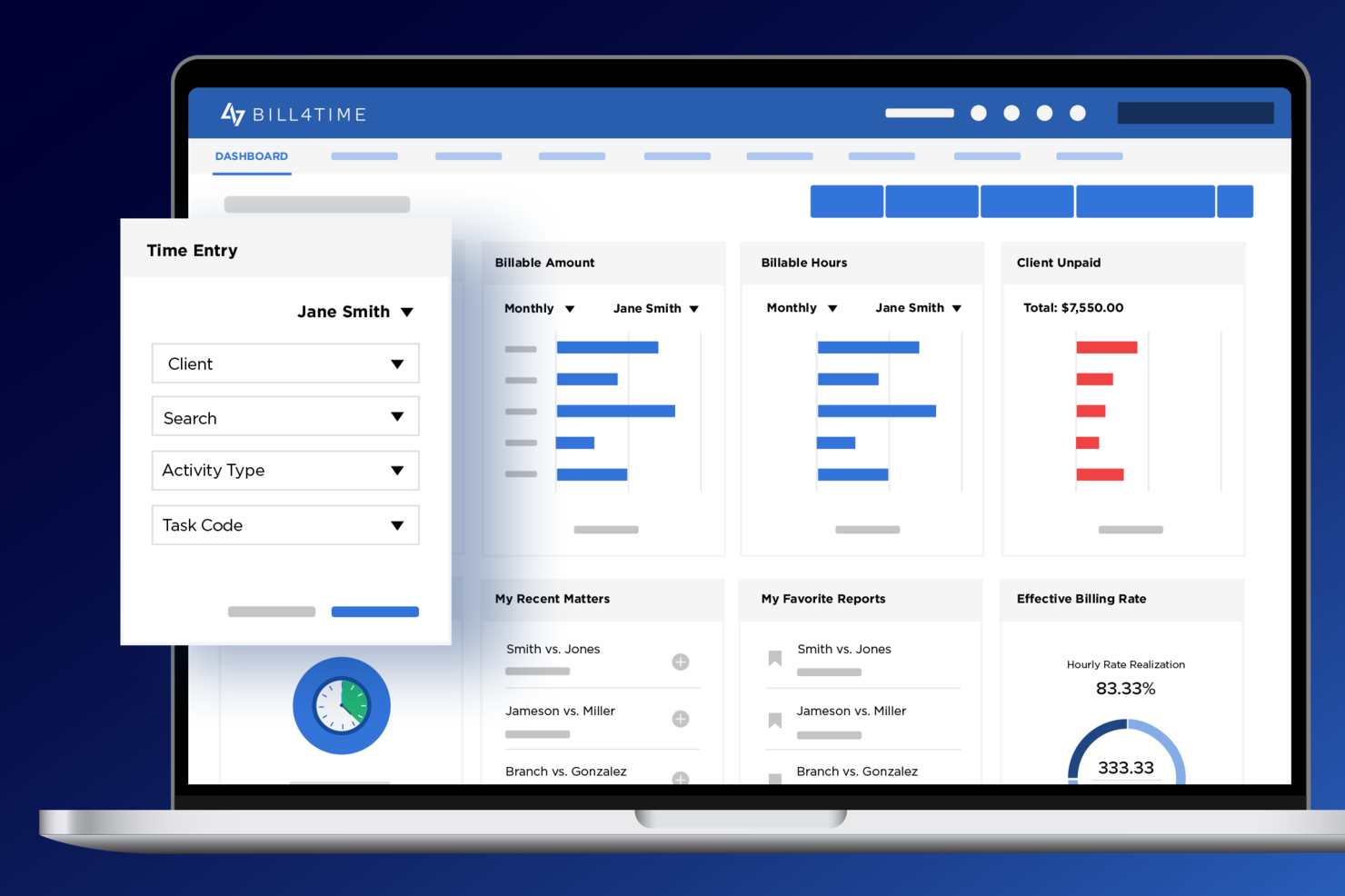
Bill4Time is a cloud-based legal billing and practice management platform built for law firms, combining time tracking, invoicing, trust accounting, expense management, and case organization in one system.
Who Is Bill4Time Best For?
Bill4Time is a good fit for solo attorneys and small law firms that need a dedicated legal billing system without the complexity of a full enterprise platform.
Why I Picked Bill4Time
I've included Bill4Time in my top picks because of how well its mobile app handles time capture in real-world legal workflows. You can run simultaneous timers across your phone, tablet, and desktop at once, and entries save offline and sync automatically when you reconnect. I also like the one-click conversion of calendar events, tasks, and emails into billable time entries, which makes it easy to capture time from court appearances or client calls without manual entry after the fact.
Bill4Time Key Features
- Trust accounting: Manage IOLTA and client trust accounts with built-in compliance safeguards aligned with ABA and state bar requirements.
- Client portal: Give clients a secure login to view invoices, make payments, and access shared documents directly from the platform.
- Conflict checker: Search across matters, clients, and contacts to flag potential conflicts before taking on new cases.
- Batch invoicing: Generate and send invoices for multiple matters or clients at once using customizable billing templates.
Bill4Time Integrations
Bill4Time offers a small set of native integrations, including QuickBooks, Box, Google Calendar, Outlook Calendar, and NetDocuments, as well as LawPay for online payment processing. An API is available that supports read operations from Bill4Time to other applications. Zapier support is not clearly documented.
Pros and Cons
Pros:
- Mobile time capture on iPhone and iPad
- LEDES invoicing with configurable reporting
- Built-in IOLTA trust reconciliation tools
Cons:
- Interface feels dated compared to competitors
- No online bank account connection support

8am
Best with built-in compliance controls
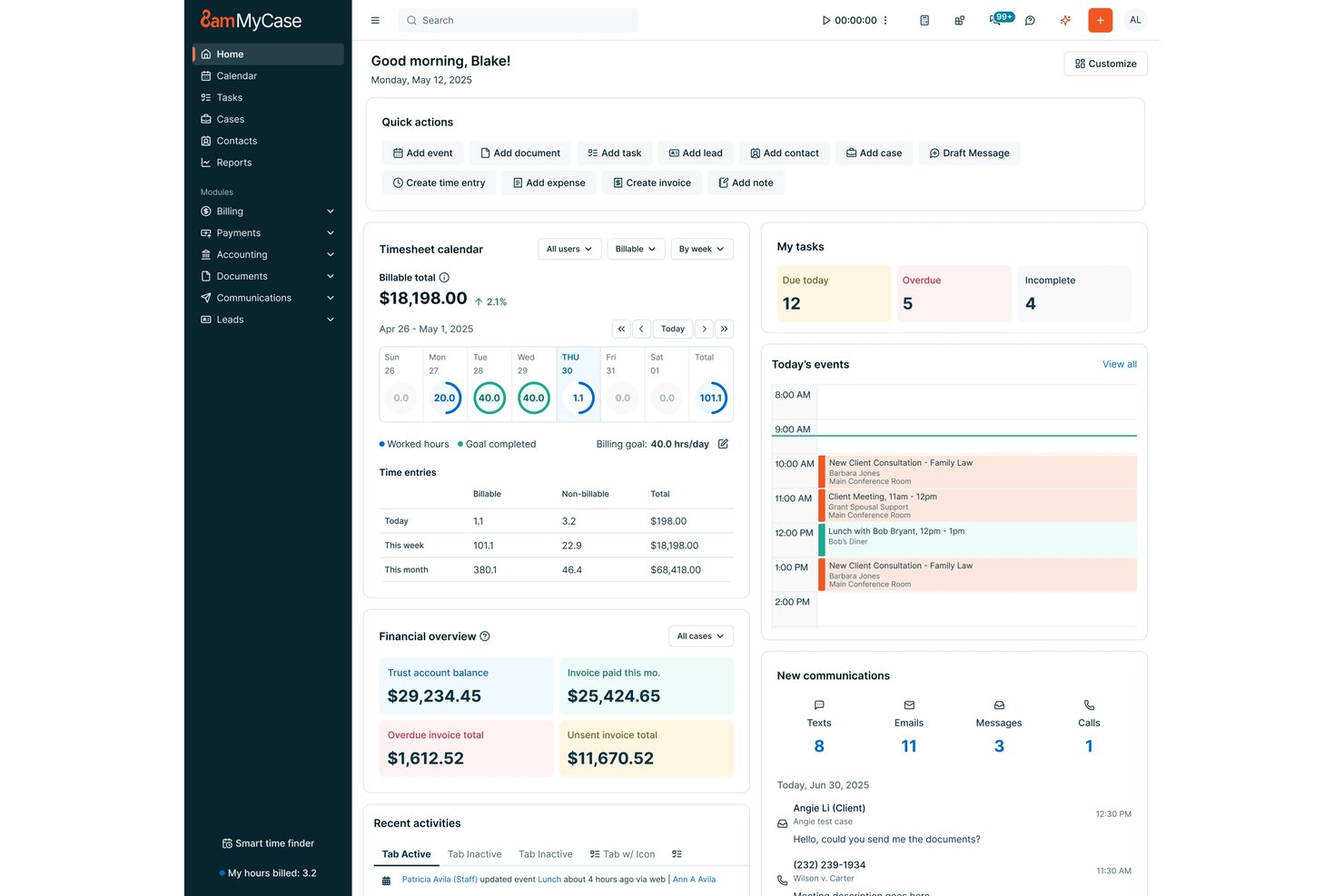
8am is a law practice management platform designed for small firms, offering case and matter management, time tracking, billing, document automation, trust accounting, calendaring, and client intake tools in a unified system.
Who Is 8am Best For?
Designed for solo attorneys and small legal teams needing built-in compliance and unified practice management.
Why I Picked 8am
I picked 8am as one of the best because I can rely on its built-in compliance controls for trust accounting and IOLTA management. In my experience, the system’s audit-ready ledgers and three-way reconciliation help keep our small practice audit-ready and ethically sound.
8am Key Features
- Matter management dashboard: Lets you organize, track, and update all matters in one place.
- Batch LEDES billing: Enables you to create and send multiple LEDES-compliant invoices at once.
- Document automation templates: Lets you generate legal documents using customizable templates and merge fields.
- Court rules calendaring: Provides deadline tracking and court rule triggers for select jurisdictions.
8am Integrations
8am offers native integrations with LawPay, CasePeer, QuickBooks, and more.
Pros and Cons
Pros:
- Document automation using templates
- Built-in legal calendaring for deadlines
- Audit-ready trust accounting and reconciliations
Cons:
- Some court rules coverage is jurisdiction-limited
- Advanced billing features require workarounds

Best for seamless client communication

PracticePanther is a comprehensive law practice management software designed to streamline a variety of legal tasks. It excels in facilitating client communication, making it a top choice for small law firms aiming to improve client relationships.
Why I Picked PracticePanther: I chose PracticePanther for this list due to its user-friendly interface and its exceptional focus on client communication. In my opinion, it stands out as the best option for law firms looking to enhance their client interactions and overall satisfaction.
Standout features & integrations:
PracticePanther offers robust features like document automation, time tracking, and invoicing. Its secure client portal allows for easy communication and document sharing, fostering trust between clients and attorneys.
It also integrates seamlessly with popular platforms like QuickBooks, Microsoft Office 365, and LawPay, ensuring a smooth experience across various tasks.
Pros and Cons
Pros:
- User-friendly interface
- Integrates with popular platforms like QuickBooks and Office 365
- Secure client portal for communication and document sharing
Cons:
- Limited customization options compared to some competitors
- Relatively expensive starting price
- No monthly billing, only annual plans available
New Product Updates from PracticePanther

PantherAccounting Plus Unveiled
PracticePanther launches PantherAccounting Plus, enhancing financial management for law firms. It enables law firms to manage trust and operating accounting directly within the platform. For more information, visit PracticePanther's official site.
 .
.
Best for document automation

Smokeball is a legal case management software that specializes in document automation, streamlining the document creation process for law firms. Its focus on automating routine tasks makes it the ideal choice for practices seeking to improve efficiency in their document management.
Why I Picked Smokeball: I chose Smokeball for this list because its document automation features differentiate it from other legal practice management tools. The software's ability to streamline document creation and management makes it the best option for law firms looking to enhance their efficiency and reduce manual work.
Standout features & integrations:
Smokeball offers robust features such as matter management, time tracking, and billing. Its document automation capabilities stand out, significantly reducing the time spent on creating legal documents.
The software integrates with popular tools like Microsoft Office, LawPay, and InfoTrack, facilitating seamless workflow across platforms.
Pros and Cons
Pros:
- Comprehensive case management features
- Integrates with widely-used tools like Microsoft Office and LawPay
- Exceptional document automation capabilities
Cons:
- May not be suitable for smaller firms with limited budgets
- No free plan or free trial offered
- Pricing information is not readily available
Clio
Best for robust integrations and customizability

Clio is a comprehensive legal practice management software that offers extensive integration options and customization. Its robust integration capabilities make it an ideal choice for law firms looking to optimize their workflows with a customizable software solution.
Why I Picked Clio: I chose Clio for this list because of its exceptional integration capabilities and customizability, which differentiate it from other practice management tools. Its ability to connect with numerous third-party applications and adapt to a law firm's specific needs makes it the best choice for those seeking a customizable and well-integrated software solution.
Standout features & integrations:
Clio offers a wide range of features, including matter management, billing, contact management, document assembly, document storage, document management, and reporting.
Some of its most valuable integrations include QuickBooks Online, Microsoft Office 365, Google Workspace, and LawPay. These integrations allow law firms to streamline their processes and improve overall efficiency.
Pros and Cons
Pros:
- Comprehensive features for practice management, calendaring, billing, and document management
- Highly customizable to suit individual law firm needs
- Extensive integration options with popular tools like QuickBooks Online, Microsoft Office 365, and Google Workspace
Cons:
- Steeper learning curve due to its extensive features and customizability
- No monthly billing option, only annual plans available
- Pricing may be prohibitive for smaller firms or solo practitioners

CasePeer
Best for advanced case analytics

CASEpeer is a legal case management software that focuses on providing advanced case analytics to law firms. Its in-depth data analysis capabilities make it the top choice for practices seeking to leverage data-driven insights for better decision-making.
Why I Picked CASEpeer: I selected CASEpeer for this list because of its comprehensive case analytics capabilities, which set it apart from other legal practice management tools. Its emphasis on data-driven insights makes it the best option for law firms looking to optimize their operations and make informed decisions.
Standout features & integrations:
CASEpeer offers powerful features such as case tracking, document management, and collaboration tools. Its standout feature is the advanced case analytics that deliver valuable insights for law firms.
The software integrates with tools like QuickBooks, Microsoft Office 365, and Google Workspace, streamlining the user experience.
Pros and Cons
Pros:
- Comprehensive case tracking and document management features
- Integrates with popular productivity tools like QuickBooks and Microsoft Office 365
- Advanced case analytics for data-driven decision-making
Cons:
- No free plan available
- Pricing may be higher compared to some competitors
- No monthly billing option, only annual subscriptions available

CloudLex
Good for personal injury law firms

CloudLex is a legal practice management software specifically tailored for personal injury law firms. It provides an array of features designed to handle the unique challenges of personal injury cases, making it the go-to choice for firms in this niche.
Why I Picked CloudLex: I chose CloudLex for this list because it's a specialized solution for personal injury law firms, offering features that cater to their specific needs. In my assessment, it stands out as the best option for personal injury attorneys seeking a tool tailored to their practice.
Standout features & integrations:
CloudLex's most notable features include case management, document management, and its built-in Referral Engine. Additionally, it offers a Matter Intake tool to streamline client onboarding and a robust reporting module for insights into your firm's performance.
CloudLex integrates with Microsoft Office 365 and various third-party applications, ensuring seamless data exchange and collaboration.
Pros and Cons
Pros:
- Matter Intake tool for efficient client onboarding
- Built-in Referral Engine for networking opportunities
- Tailored for personal injury law firms
Cons:
- Not suitable for firms handling multiple practice areas
- Limited integrations compared to some competitors
- Pricing not readily available on the website

CosmoLex
Best for comprehensive financial management

CosmoLex is a legal practice management software with a strong focus on financial management, including accounting and billing features. Its comprehensive financial tools make it an excellent choice for law firms seeking to streamline their financial processes.
Why I Picked CosmoLex: I selected CosmoLex for this list due to its extensive financial management capabilities, which set it apart from other legal practice management solutions. Its ability to handle both accounting and billing within a single platform makes it the best choice for law firms looking for an all-in-one financial management tool.
Standout features & integrations:
CosmoLex offers a wide range of features, including matter management, document management, billing software, and time tracking. Its standout financial management features include integrated legal accounting, trust accounting, and billing.
The software integrates with popular tools such as QuickBooks Online, LawPay, and Office 365, enhancing productivity and collaboration.
Pros and Cons
Pros:
- Integrates with QuickBooks Online, LawPay, and Office 365
- Trust accounting compliant with regulations
- Comprehensive financial management tools, including legal accounting and billing
Cons:
- May be too costly for smaller firms with limited budgets
- No free plan or free trial offered
- No monthly billing option, only annual plans available

Best for streamlined billing and invoicing

Rocket Matter is a legal practice management software with a strong focus on billing and invoicing features. Its robust financial capabilities make it the ideal choice for law firms looking to optimize their billing processes.
Why I Picked Rocket Matter: I chose Rocket Matter for this list because of its exceptional billing and invoicing functionalities. In my analysis, it stands out as the best option for law firms seeking to simplify and streamline their financial operations.
Standout features & integrations:
Rocket Matter offers key features such as case management, document management, and time tracking. However, its standout feature is the robust billing and invoicing module that simplifies complex billing processes.
The software integrates with platforms like QuickBooks Online, Dropbox, and Office 365, ensuring seamless data exchange and collaboration.
Pros and Cons
Pros:
- Comprehensive case and document management capabilities
- Integrates with popular platforms like QuickBooks Online and Office 365
- Robust billing and invoicing features
Cons:
- May be more than needed for firms not focused on billing optimization
- Annual billing, no monthly plans
- Relatively expensive starting price

NextChapter
Best for bankruptcy attorneys

NextChapter is a cloud-based legal practice management software specifically designed for bankruptcy attorneys. Its tailored features and functionality make it the ideal choice for legal professionals in this niche area.
Why I Picked NextChapter: I chose NextChapter for this list because it caters exclusively to bankruptcy attorneys, providing them with the specialized tools and features they require. In my comparison, it stood out as the best solution for professionals in this particular field.
Standout features & integrations:
NextChapter offers essential features for bankruptcy attorneys, such as case management, document automation, and electronic court filing. Its built-in means test calculator simplifies the process of determining client eligibility for bankruptcy.
The software integrates with tools like PACER, Clio, and LawPay, ensuring a cohesive workflow experience.
Pros and Cons
Pros:
- Integrates with essential tools like PACER, Clio, and LawPay
- Includes a built-in means test calculator
- Tailored specifically for bankruptcy attorneys
Cons:
- Customization options may be limited compared to other platforms
- No free plan available
- Limited usefulness for attorneys outside of bankruptcy law
Other Small Law Firm Software
Below is a list of additional small law firm software tool options that we reviewed, but did not make it to the top 10. Definitely worth checking them out.
- Mitratech Casecloud
For automating repetitive tasks
- Redactable
For automated redaction
- CARET Legal (Zola Suite)
For all-in-one legal management
- TypeLaw Automated Brief Formatting
For court-specific document compliance
- LEAP
Good for comprehensive practice management
- Filevine
Good for comprehensive case management
- Amicus Attorney
Good for streamlining legal workflows
- LollyLaw
Good for immigration case management


How I Evaluate Small Law Firm Software
I split my evaluation into baseline criteria—like matter management, trust accounting, and conflict checks—and the differentiators that separate the best options from the rest.
Core Functionality (Table Stakes For This List)
When I'm selecting tools for my list, I rank each one on a scale from 0 (does not offer the functionality) to 5 (excels in this area) for each core functionality listed below. Then, I calculate the tool's total score into a percentage. Each tool needs to achieve a minimum total score of 65% to be considered for inclusion.
- Matter & Case Management: I look for centralized matter records that link contacts, notes, tasks, and documents so an attorney can pull up a full case picture in seconds.
- Time Tracking & Billing: Each tool should let users capture time via running timers or manual entry and generate invoices tied directly to matters.
- Trust & IOLTA Accounting: I evaluate whether the platform supports separate client trust ledgers and three-way reconciliation to keep firms audit-ready.
- Legal Document Management: Storage and version control are baseline, but I check for template-based automation like auto-filling client names into retainer agreements.
- Legal Calendaring & Deadlines: Court-rules-aware calendaring matters here—I look for tools that auto-calculate deadline cascades from a trigger date.
- Client Intake & Conflict Checks: The intake workflow should move from web form to new matter, and conflict searches should flag matches across all existing contacts.
Once I have a list of tools that meet this criteria, I consider what sets each platform apart.
Differentiating Factors (What Sets Vendors Apart)
Here's how I compare and contrast different vendors:
Standout Features
A client portal changes the client experience—I look for ones that let clients view case updates, upload documents, and pay invoices without a single phone call. I also evaluate mobile apps, since solo attorneys and small firm lawyers spend time in court or meeting clients and need to log hours on the go. AI-assisted features are increasingly worth checking, especially tools that draft correspondence or summarize case notes to save time on repetitive work.
Beyond Features
Pricing transparency matters for small firms—I check whether trust accounting, client portals, or document storage come bundled or carry extra fees that inflate the real cost. Integrations are another key factor, especially connections with payment processors like LawPay and accounting tools like QuickBooks, since most small firms rely on these daily. I also evaluate security posture, looking for SOC 2 certification and encryption standards that meet bar association expectations for safeguarding privileged client data.
How to Choose Small Law Firm Software
It’s easy to get bogged down in long feature lists and complex pricing structures. To help you stay focused as you work through your unique software selection process, here’s a checklist of factors to keep in mind:
| Factor | What to Consider |
|---|---|
| Scalability | Will the software grow with your firm? Consider if it supports additional users, cases, and data as your firm expands. Avoid tools that limit growth with high costs or rigid plans. |
| Integrations | Does it work with your existing tools? Check for compatibility with current software like email, calendars, and document management systems to avoid workflow disruptions. |
| Customizability | Can you tailor it to your needs? Look for options that let you adjust workflows, templates, and user settings to match your firm's unique processes. |
| Ease of use | Is it user-friendly for your team? Evaluate the software's interface and navigation. Complex systems can slow down daily operations and require more training. |
| Implementation and onboarding | How quickly can you get started? Assess the setup time, available training, and support during initial use. Consider the ease of transitioning from your current system. |
| Cost | What's the total cost of ownership? Beyond subscription fees, factor in costs for additional features, support, training, and potential future upgrades. |
| Security safeguards | How does it protect your data? Ensure the software complies with legal standards and offers encryption, access controls, and regular security updates. |
| Compliance requirements | Does it meet legal industry standards? Verify that the software supports compliance with regulations like GDPR or HIPAA, depending on your jurisdiction and client base. |
What Is Small Law Firm Software?
Small law firm software is a type of law firm software designed to help small legal practices manage their operations more efficiently. Attorneys, paralegals, and office managers typically use these tools to handle tasks like case management, billing, and document organization. Features like client management, time tracking, and invoicing help with improving efficiency and organization. Overall, these tools offer valuable support in managing the daily operations of a small law firm.
Features
- Case management: Effective case management is crucial for small law firms as it helps keep track of all ongoing cases, client management upcoming deadlines, and critical documents. This feature, which is also a central function of practice management software, ensures that attorneys can easily access case information, monitor progress, and stay organized, resulting in improved efficiency and productivity.
- Document automation: Document automation simplifies the process of creating and managing legal documents by automatically generating templates, merging data, and ensuring consistency across all documents. This feature helps save time, reduce errors, and increase the overall efficiency of the firm.
- Time tracking and billing: Time tracking and billing features enable lawyers to accurately record billable hours, generate invoices, and track payments. This allows for transparent billing practices, improved cash flow, and a more streamlined process for both the firm and its clients.
- Secure client portal: A secure client portal enables safe and efficient communication between lawyers and clients. By providing a centralized platform for sharing documents, messages, and updates, the client portal enhances collaboration and ensures that sensitive information remains confidential.
- Customizable workflows: Customizable workflows allow small law firms to tailor their processes according to their specific needs. This flexibility enables them to optimize their operations and improve overall efficiency, which is crucial for the growth and success of the firm.
- Conflict checking: Conflict checking is a vital feature that helps law firms identify potential conflicts of interest before accepting new clients or cases. By ensuring compliance with ethical rules and regulations, this feature reduces the risk of legal disputes and protects the firm's reputation.
- Trust accounting: Trust accounting features help law firms manage client funds in compliance with legal regulations. This feature ensures accurate record-keeping, prevents commingling of funds, and enables transparent reporting, which is essential for maintaining trust and credibility with clients.
- Detailed reporting: Detailed reporting features provide insights on various aspects of the firm's performance, such as finances, productivity, and case progress. These reports enable informed decision-making and help identify areas for improvement, ultimately contributing to the growth and success of the firm.
- Integration with popular tools: Integration with popular tools, such as email and document management systems, allows law firms to streamline their workflows and improve overall efficiency. By seamlessly connecting different tools, attorneys can save time and focus on providing high-quality legal services to their clients.
- Responsive customer support: Responsive customer support is crucial for ensuring a smooth user experience with the law firm software. Access to a dedicated support team that can quickly address questions or concerns related to the software helps minimize downtime and ensures that the firm can continue to operate efficiently.
Benefits
Implementing small law firm software provides several benefits for your team and your business. Here are a few you can look forward to:
- Improved efficiency: Automates routine tasks like billing and document management, freeing up time for more important work.
- Enhanced organization: Keeps client and case information neatly organized, making it easy to find and update details.
- Accurate billing: Ensures precise tracking and invoicing of billable hours, reducing errors and improving cash flow.
- Better client communication: Facilitates clear and consistent communication with clients through integrated management tools.
- Data security: Protects sensitive information through strong security features, ensuring compliance with industry standards.
- Informed decision-making: Provides insights and analytics that help you make strategic choices for your firm’s growth.
- Customization: Allows you to tailor the software to fit your firm's unique processes and needs, enhancing usability.
Costs & Pricing
Selecting small law firm software requires an understanding of the various pricing models and plans available. Costs vary based on features, team size, add-ons, and more. The table below summarizes common plans, their average prices, and typical features included in small law firm software solutions:
Plan Comparison Table for Small Law Firm Software
| Plan Type | Average Price | Common Features |
|---|---|---|
| Free Plan | $0 | Basic client management, limited document storage, and email support. |
| Personal Plan | $15-$30/user/month | Client management, time tracking, invoicing, and document storage. |
| Business Plan | $40-$70/user/month | Advanced client management, custom reporting, integrations, and data security. |
| Enterprise Plan | $80-$150/user/month | Full customization, premium support, advanced analytics, and compliance tools. |
Firms trying to minimize software costs can start by exploring free law practice management options.
FAQs
Can small law firm software handle my firm's growth?
Yes, many small law firm software solutions are scalable. Look for features that support additional users, cases, and data storage as your firm expands. Verify if the pricing model accommodates growth without steep increases in cost, and ensure the software can handle increased workloads.
What security measures should I expect in small law firm software?
Expect encryption for data protection, secure user authentication methods, and regular software updates to address vulnerabilities. Make sure the software complies with legal standards for data protection, such as GDPR or CCPA, if applicable. Always ask the vendor about their security protocols.
Is training available for new users of small law firm software?
Most vendors offer training through webinars, video tutorials, and documentation. Some provide interactive product tours or direct support from a customer success team. Check if the vendor offers personalized training sessions or onboarding assistance to help your team get up to speed quickly.
What kind of customer support should I expect?
Look for vendors that offer multiple support channels, such as phone, email, and live chat. Check their support hours to ensure they align with your working hours. Some vendors provide dedicated account managers or priority support for higher-tier plans, which can be helpful for ongoing assistance.