

Reseña de Westlaw: Ventajas, Desventajas, Características y Precios
Westlaw destaca por sus potentes capacidades de investigación jurídica: aquí te explico dónde sobresale, dónde falla y cómo se compara con otras herramientas.

Revisamos las herramientas de forma independiente y las comisiones ayudan a financiar nuestras pruebas. Consulta nuestra política de transparencia, nuestra metodología o sugiere una herramienta.
Westlaw is a legal research tool built for attorneys and legal professionals who need fast, reliable access to case law, statutes, regulations, and secondary sources. I'd consider it especially if your team handles heavy litigation or transactional research and needs citation analysis that goes further than what LexisNexis offers. Westlaw's KeyCite feature delivers more granular treatment history and negative citing references, which makes a real difference when you're building arguments that need to hold up under scrutiny.
Westlaw Evaluation Summary
4.4/5
- Pricing upon request
- Not available
Por qué confiar en nuestras recomendaciones de software
6,700+
Reviews
20
Industry experts
16+
Evaluation factors
14
Years
Nuestro equipo lleva probando y evaluando software desde 2012. Como líderes de despachos jurídicos, sabemos lo difícil —y lo importante— que es elegir el software adecuado.
Para esta guía, evaluamos las herramientas mediante pruebas prácticas e investigación independiente, puntuando las herramientas según nuestros criterios de selección.
Nuestras reseñas reflejan nuestro criterio editorial humano, no un discurso de ventas.
Westlaw Overview
When I compare Westlaw to other legal research software, I think its search precision, citation tools, and depth of content set it apart. The interface is modern and onboarding is straightforward, but pricing can be steep for smaller firms. I’ve found support responsive and integrations with document management systems helpful, though some advanced analytics features lag behind competitors.
If you’re judging options for a midsize or large firm that values comprehensive research and reliable support, Westlaw is a top contender. For solo practitioners, the cost may outweigh the benefits unless you need the most authoritative sources.
Pros
- Reliable, responsive customer support for legal professionals
- Advanced AI-powered search and citation analysis
- Extensive database of primary and secondary legal sources
Cons
- Occasional delays in updating recent case law
- Some analytics features lag behind newer competitors
- Pricing is high compared to most alternatives
Is Westlaw Right For Your Needs?
Who Would be a Good Fit for Westlaw?
Westlaw is a strong choice for legal teams and professionals who need deep, up-to-date research capabilities and authoritative sources. Its advanced search, comprehensive database, and responsive support make it ideal for environments where accuracy and speed are non-negotiable.
I think midsize to large law firms, in-house legal departments, and academic institutions will get the most value, especially when handling complex litigation or regulatory work.
- Litigation Support TeamsAI-powered search and citation analysis speed up case preparation and review.
- Government AgenciesReliable updates and comprehensive statutes support policy and legislative research.
- Law SchoolsAcademic users benefit from access to treatises, journals, and teaching resources.
- Appellate PracticesThe platform’s deep archive of appellate decisions aids in precedent-heavy work.
- Corporate Legal DepartmentsIts advanced search and citation tools help manage regulatory and compliance research efficiently.
- Large Law FirmsWestlaw’s extensive case law and secondary sources support complex, high-volume research needs.
Who Would be a Bad Fit for Westlaw?
Westlaw may not be the best fit for smaller firms, non-legal teams, or organizations with limited research budgets. Its pricing and feature set are often more than what solo practitioners, startups, or non-profit legal clinics need. If your work rarely requires deep legal research or you need only basic case lookup, you’ll likely find Westlaw’s cost and complexity unnecessary.
- Real Estate AgenciesMost real estate research needs are met by more specialized, affordable tools.
- HR DepartmentsWestlaw’s legal focus doesn’t align with typical HR compliance research.
- Paralegal-Only TeamsMany features are geared toward attorneys and advanced legal analysis.
- Nonprofit Legal ClinicsBudget constraints and simpler research needs make other tools more practical.
- Small StartupsBasic legal research tasks don’t justify Westlaw’s advanced features or pricing.
- Solo PractitionersThe high subscription cost outweighs the benefits for limited research needs.
Cómo Probamos y Puntúamos las Herramientas
Hemos pasado años construyendo, refinando y mejorando nuestro sistema de pruebas y puntuación de software. El marco está diseñado para captar las particularidades de la selección de software y lo que hace efectiva una herramienta, enfocándonos en aspectos críticos del proceso de toma de decisiones. A continuación, puede ver exactamente cómo funcionan nuestras pruebas y puntuaciones en siete criterios. Esto nos permite proporcionar una evaluación imparcial del software basada en la funcionalidad principal, características destacadas, facilidad de uso, incorporación, soporte al cliente, integraciones, opiniones de clientes y relación calidad-precio.
Funcionalidad Principal (25% de la puntuación final)
El punto de partida de nuestra evaluación siempre es la funcionalidad principal de la herramienta. ¿Cuenta con las funciones y características básicas que un usuario esperaría ver? ¿Alguna de esas funciones principales está restringida a planes de precios superiores? En esencia, esperamos que la herramienta esté a la altura de las capacidades básicas de sus competidores.
Características Destacadas (25% de la puntuación final)
Luego, evaluamos características destacadas poco comunes que vayan más allá de la funcionalidad principal que normalmente se encuentra en herramientas de su tipo. Una puntuación alta refleja características especializadas o únicas que hacen el producto más rápido, eficiente o que ofrecen valor adicional al usuario. También evaluamos la facilidad con la que puede integrarse con otras herramientas típicas de la pila tecnológica para ampliar la funcionalidad y utilidad del software. Las herramientas que ofrecen numerosas integraciones nativas, conexiones con terceros y acceso API para crear integraciones personalizadas obtienen la mejor puntuación.
Facilidad de Uso (10% de la puntuación final)
Consideramos la rapidez y facilidad con la que se pueden ejecutar las tareas definidas en la funcionalidad principal mediante la herramienta. El software con alta puntuación está bien diseñado, es intuitivo de usar, ofrece aplicaciones móviles, proporciona plantillas y hace que tareas relativamente complejas parezcan simples.
Incorporación (10% de la puntuación final)
Sabemos lo importante que es la rápida adopción de una nueva plataforma por parte del equipo, por eso evaluamos lo fácil que es aprender y usar una herramienta con capacitación mínima. Evaluamos la rapidez con la que un miembro del equipo puede configurarse y empezar a usar la herramienta sin experiencia previa. Las soluciones con alta puntuación indican que requieren poco o ningún soporte.
Soporte al Cliente (10% de la puntuación final)
Revisamos cuán rápido y fácil es obtener ayuda por teléfono, chat en vivo o base de conocimientos. Las herramientas y empresas que proporcionan soporte en tiempo real obtienen la mejor puntuación, mientras que los chatbots obtienen la más baja.
Opiniones de Clientes (10% de la puntuación final)
Más allá de nuestras propias pruebas y evaluaciones, tenemos en cuenta el puntaje neto de recomendación de los clientes actuales y anteriores. Revisamos la probabilidad de que, si tuvieran la opción, eligieran nuevamente la herramienta por su funcionalidad principal. Un software con alta puntuación refleja un alto puntaje neto de recomendación de clientes actuales o pasados.
Relación Calidad-Precio (10% de la puntuación final)
Por último, considerando todos los demás criterios, revisamos el precio promedio de los planes de nivel de entrada en comparación con las funciones principales y los otros factores de evaluación. El software que ofrece más por menos obtendrá una puntuación más alta.
Core Features
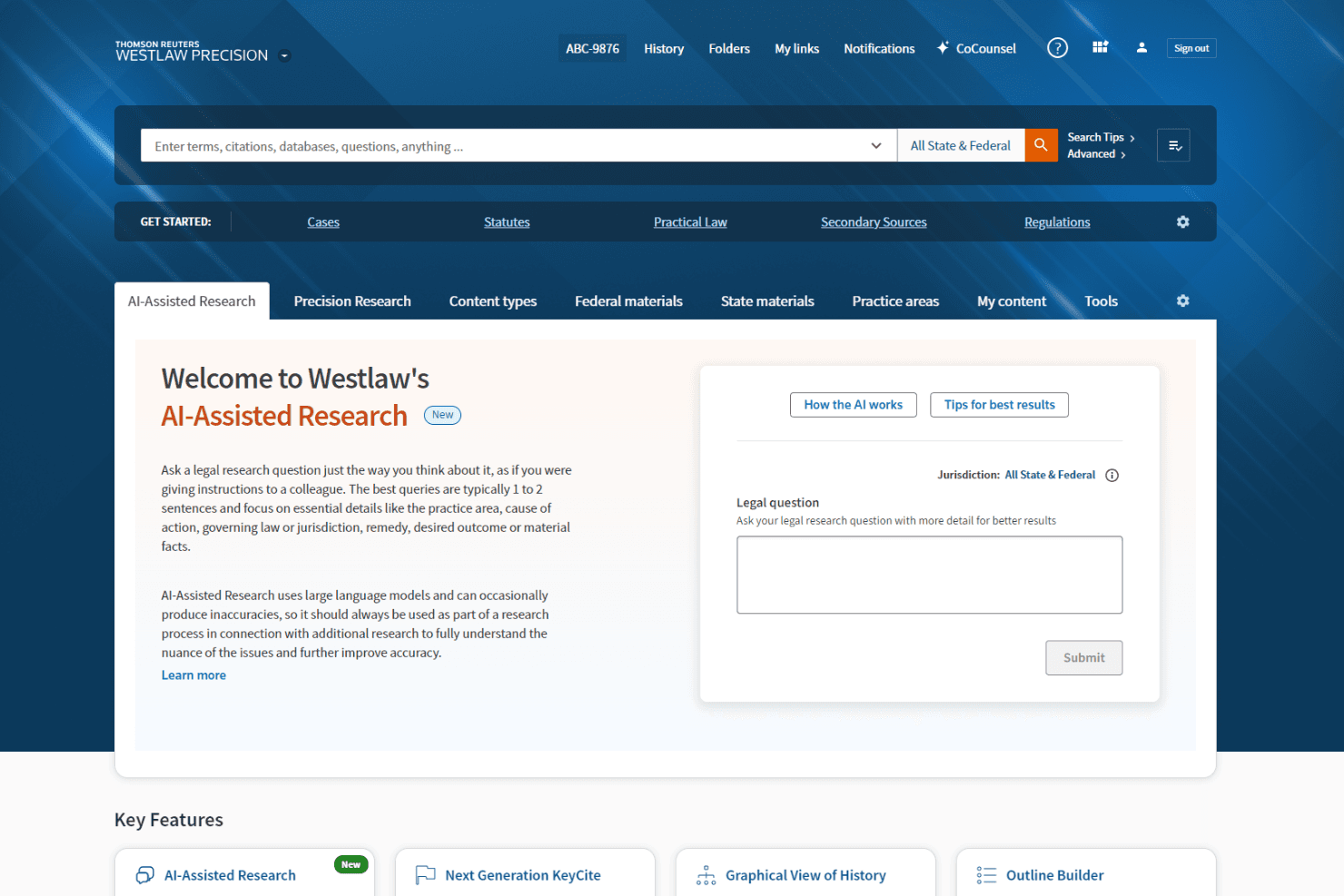
AI-Assisted Research
Westlaw uses AI to deliver fast, accurate answers to legal research questions. This helps you quickly find relevant cases, statutes, and secondary sources.
KeyCite Citation Analysis
KeyCite flags negative treatment and overruling risk for cited authorities. You can instantly check if a case or statute is still good law.
Quick Check Document Review
Upload briefs or legal documents to identify missed authorities or contrary precedent. This feature helps you strengthen arguments and spot weaknesses.
WestSearch Plus
Natural language search lets you ask legal questions and get precise, context-aware results. It’s designed to surface the most relevant answers quickly.
Statute and Regulation Comparison
Compare any two versions of a statute or regulation side by side. This makes it easy to track legislative changes and their impact.
Litigation Analytics
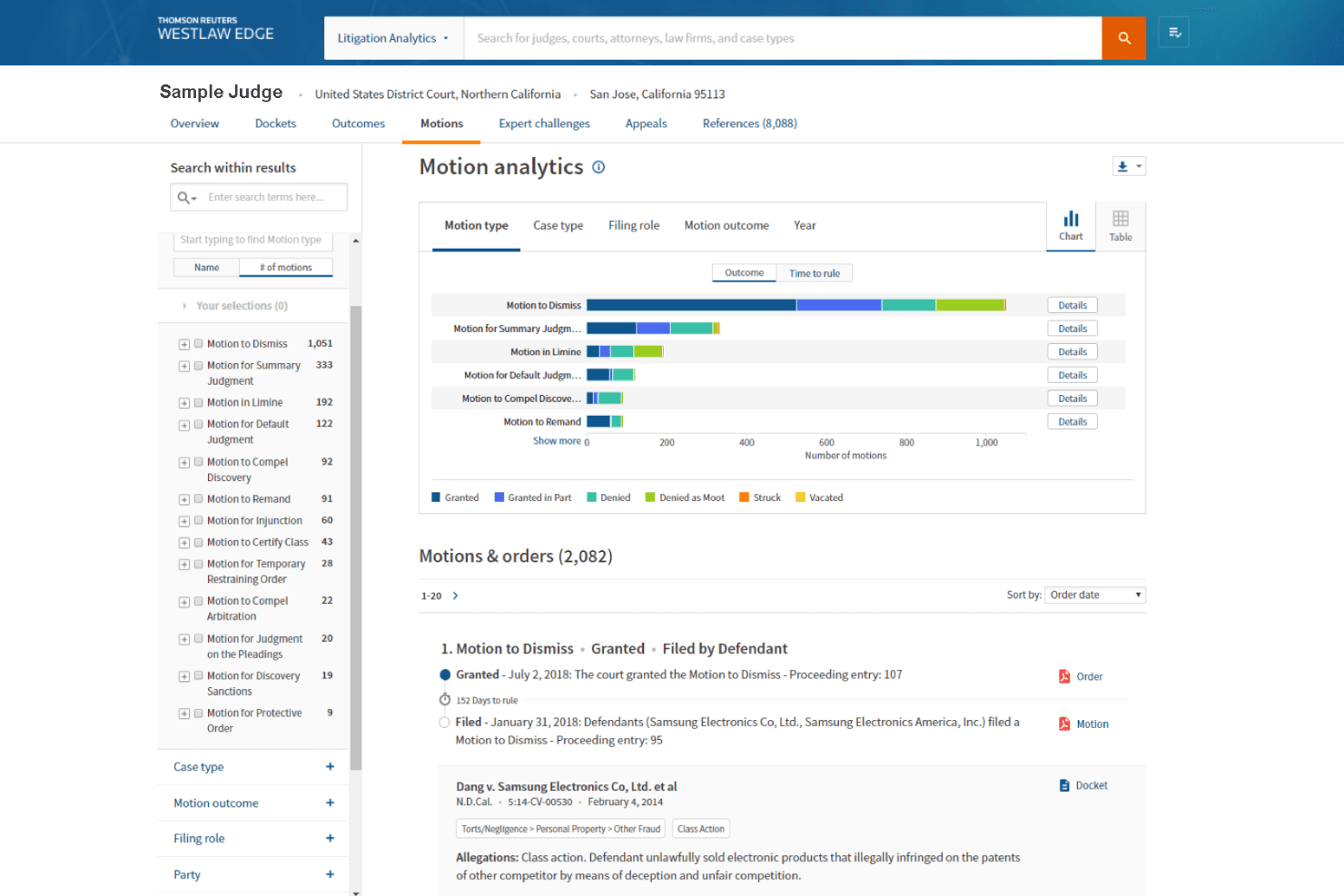
Access data-driven insights on judges, courts, attorneys, and case types. These analytics help you shape litigation strategy and predict outcomes.
Ease of Use
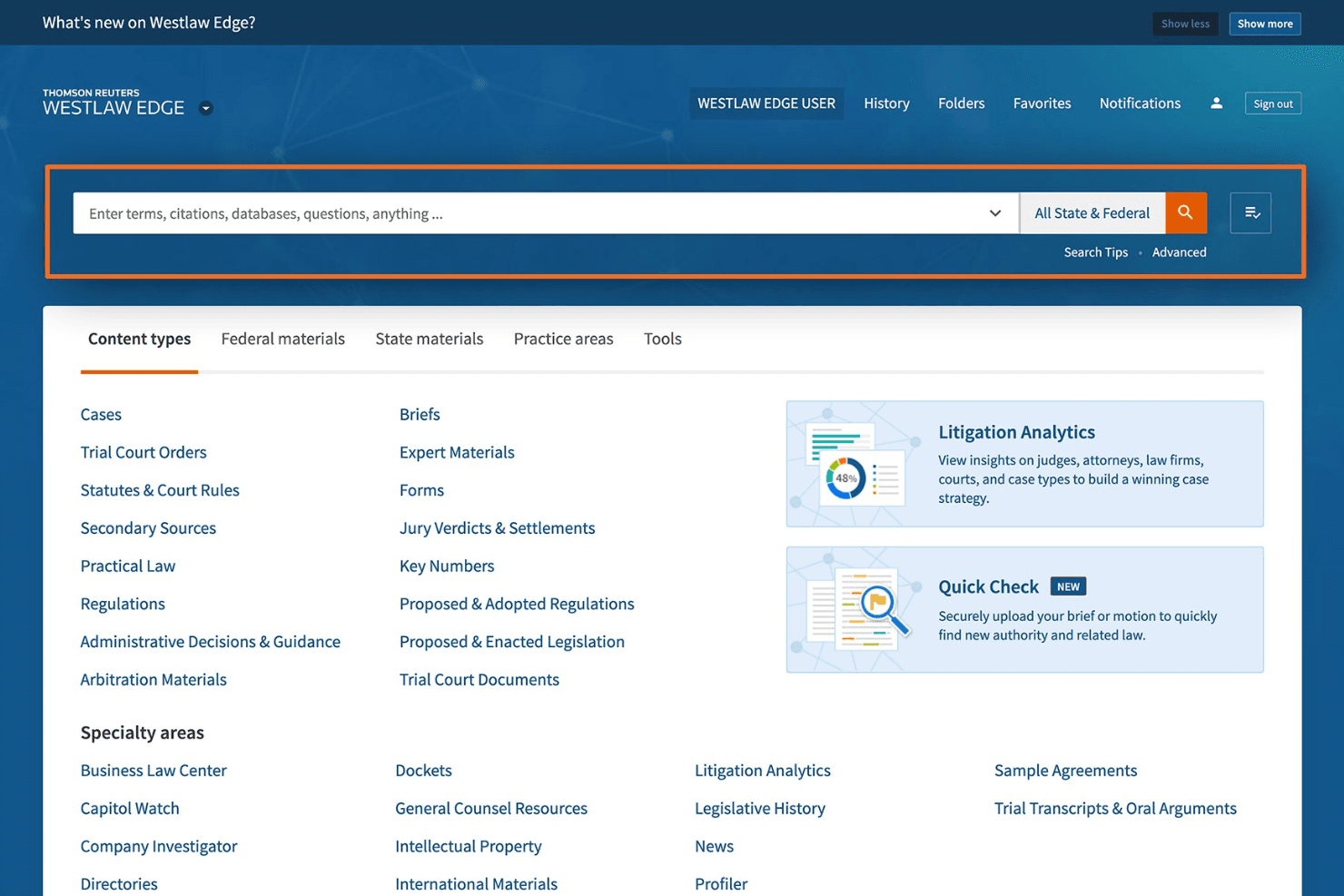
Westlaw’s interface is clean, intuitive, and easy to navigate, even for new users. I think the natural language search, clear citation flags, and document upload tools make research fast and straightforward.
Users often mention that search filters and result organization help them zero in on relevant materials quickly. While the platform is feature-rich, onboarding resources and responsive support keep the learning curve manageable for most legal professionals.
Integrations
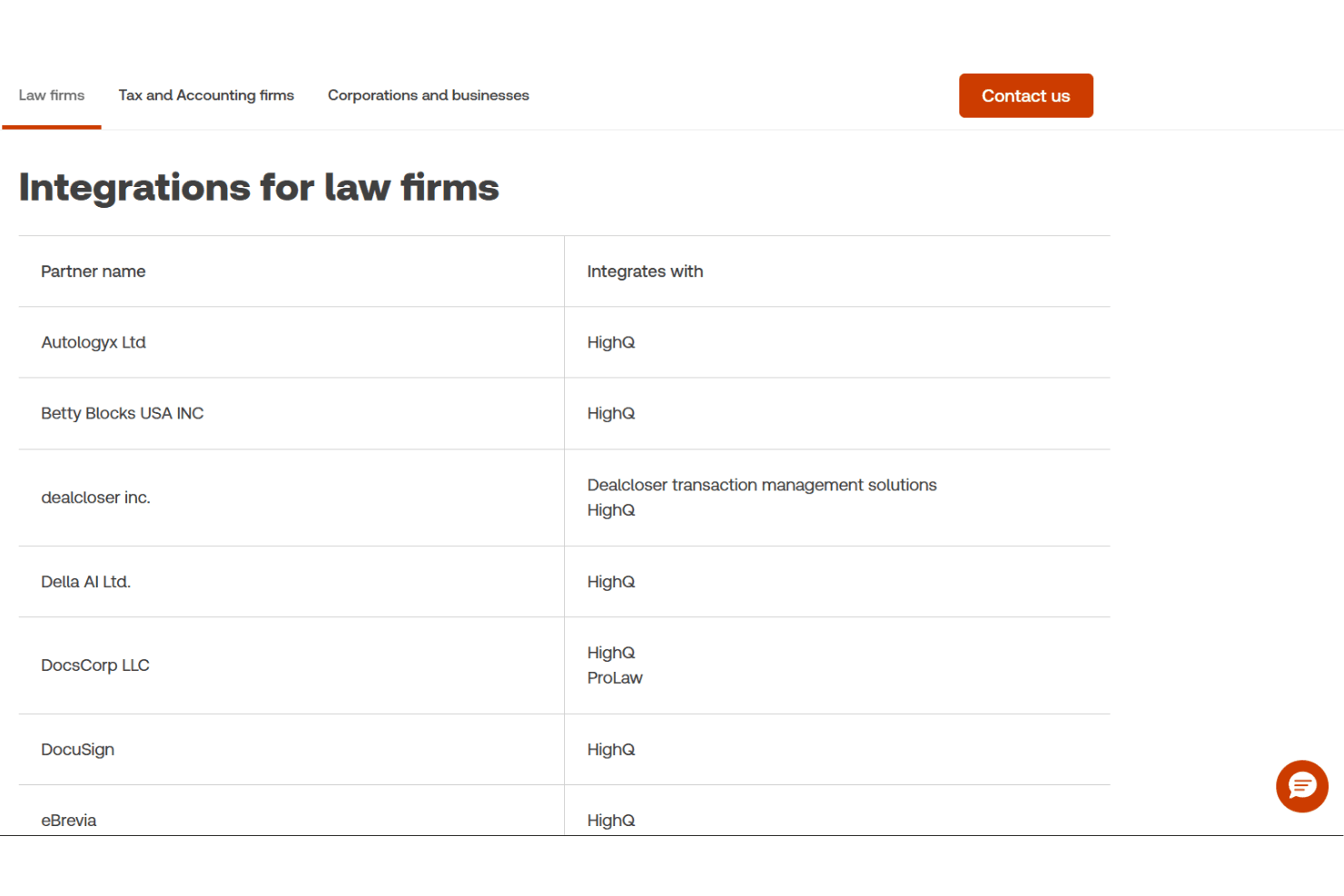
Westlaw integrates with Practical Law, CoCounsel Legal, CoCounsel Essentials, HighQ, CLEAR Investigate, ProView, Tax Quickfinder, Global Classification AI, CoCounsel Tax, and Claims Explorer, among others.
Westlaw does not offer a public API and does not connect with third-party integration tools.
Westlaw Specs
- 2-Factor Authentication: Yes
- API: Yes
- Approval Workflows: Yes
- Audit Trail: Yes
- Calendar Management: Yes
- Compliance Tracking: Yes
- Contract Management: Yes
- Custom Reports: Yes
- Customer Management: No
- Data Export: Yes
- Data Import: Yes
- Document Management: Yes
- External Integrations: Yes
- Multi-User: Yes
- NDA Management: No
- Notifications: Yes
- Policy Management: Yes
- Scheduling: No
- Workflow Management: Yes


