

Recensione di Casefleet: Pro, Contro, Caratteristiche e Prezzi Spiegati
Casefleet si distingue per i suoi robusti strumenti di gestione dei fatti e delle cronologie, rendendolo ideale per i litiganti, ma potrebbe essere meno adatto agli studi legali che cercano soluzioni complete di gestione dello studio.

Recensiamo gli strumenti in modo indipendente e le commissioni ci aiutano a finanziare i nostri test. Consulta la nostra politica sulla trasparenza, la nostra metodologia o suggerisci uno strumento.
CaseFleet is a legal case management software built for litigators who need to organize facts, build case chronologies, and track evidence across active matters. I'd consider it over something like Clio if your practice is litigation-focused. Clio covers more ground across practice types, but CaseFleet goes deeper on fact and timeline management.
CaseFleet Evaluation Summary
4.7/5
- From $30/user/month (billed annually)
- 14-day free trial
Perché fidarsi dei nostri consigli sui software
6,700+
Reviews
20
Industry experts
16+
Evaluation factors
14
Years
Il nostro team testa e recensisce software dal 2012. In quanto leader di studi legali noi stessi, sappiamo quanto sia difficile — e importante — scegliere il software giusto.
Per questa guida, abbiamo valutato gli strumenti attraverso test pratici e ricerche indipendenti, assegnando un punteggio agli strumenti in base ai nostri criteri di selezione.
Le nostre recensioni riflettono il nostro giudizio editoriale umano, non un discorso di vendita.
CaseFleet Overview
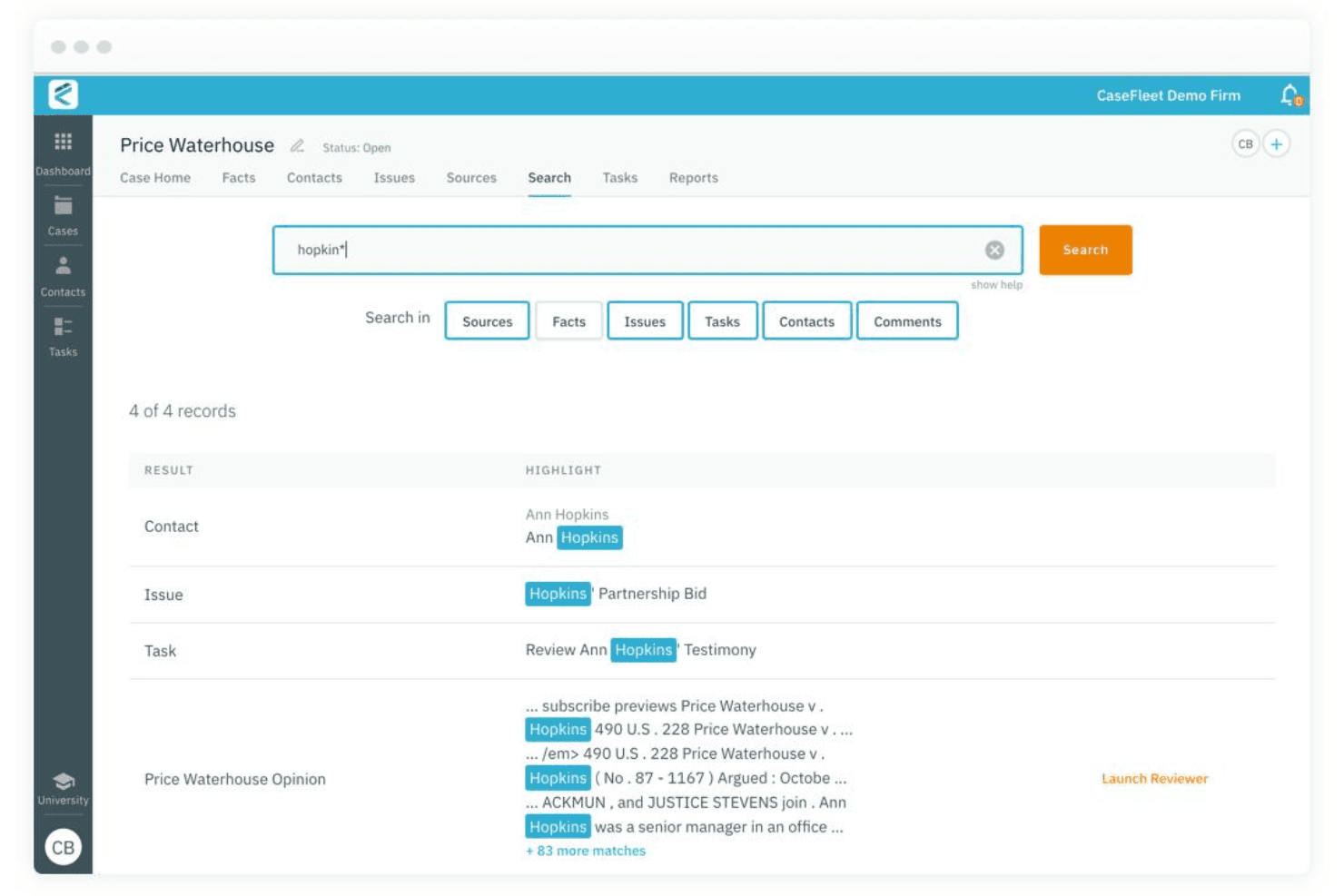
Casefleet stands out for its detailed fact management, timeline building, and document linking, making it a top choice for litigators who need to organize complex cases. Its interface is clean and onboarding is straightforward, but integrations and broader practice management features are limited compared to some competitors. Pricing is transparent and support is responsive, which helps teams judge value quickly. If you're selecting software for litigation-heavy environments or investigative work, Casefleet's focus on chronology and evidence tracking gives it an edge, though firms needing billing or client management may find it underperforms in those areas.
Pros
- Timeline and fact management tools support complex litigation cases
- Document linking and source tracking improve evidence organization
- Chronology features help teams build clear case narratives
Cons
- Lacks built-in billing and client management modules
- Limited integrations with other legal and business tools
- Not designed for transactional or non-litigation practice areas
Is CaseFleet Right For Your Needs?
Who Would be a Good Fit for CaseFleet?
Casefleet is best suited for litigation-focused teams, investigative units, and legal professionals who need to organize facts, documents, and timelines in detail. Its strengths in chronology building, evidence linking, and fact management make it a strong choice for those handling complex disputes or investigations. If your law practice involves connecting source documents, tracking issues, and building case chronologies, Casefleet's specialized tools can help you manage and present information with clarity. Paralegals and attorneys alike benefit from the platform's user friendly design and focused functionality.
- Litigation Law FirmsCasefleet's timeline and fact management features are designed for complex litigation matters.
- In-House Litigation TeamsThe software helps corporate legal departments track internal investigations and disputes.
- Government Investigative UnitsChronology and document linking support regulatory or criminal investigations.
- Plaintiff AttorneysFact and evidence management tools assist in building strong case narratives.
- Insurance Defense TeamsCasefleet's issue tracking and source linking help manage high-volume claims.
- Legal ConsultantsConsultants handling case analysis or expert testimony benefit from detailed fact organization.
Who Would be a Bad Fit for CaseFleet?
Casefleet is less suitable for transactional practices, firms needing all-in-one management, or teams focused on high-volume administrative work. Its lack of billing, client management, and broader workflow tools means it may not meet the needs of those seeking a single platform for all legal operations. If your work centers on contracts, compliance, or routine legal processes, Casefleet's litigation focus may not align with your requirements.
- Transactional Law FirmsCasefleet lacks contract management and deal workflow features.
- Solo PractitionersThe platform may be too specialized for general practice needs.
- Corporate Compliance TeamsIt does not offer compliance tracking or regulatory workflow tools.
- Legal Aid OrganizationsCasefleet's litigation focus may not support high-volume intake or triage.
- Real Estate Law DepartmentsThe software does not address property or closing management.
- HR DepartmentsCasefleet is not designed for employment law or workplace investigations outside litigation.
Come Testiamo e Valutiamo gli Strumenti
Abbiamo trascorso anni a costruire, perfezionare e migliorare il nostro sistema di test e valutazione del software. La nostra rubrica è progettata per cogliere le sfumature della selezione del software e ciò che rende uno strumento efficace, concentrandosi sugli aspetti critici del processo decisionale. Qui sotto puoi vedere esattamente come funzionano i nostri test e la nostra valutazione su sette criteri. Questo ci permette di offrire una valutazione imparziale del software sulla base della funzionalità principale, delle caratteristiche distintive, facilità d’uso, onboarding, assistenza clienti, integrazioni, recensioni dei clienti e rapporto qualità-prezzo.
Funzionalità Principale (25% della valutazione finale)
Il punto di partenza della nostra valutazione è sempre la funzionalità principale dello strumento. Possiede le funzionalità e le caratteristiche di base che un utente si aspetterebbe di trovare? Alcune di queste funzionalità principali sono bloccate su piani tariffari più costosi? Ci aspettiamo che uno strumento sia competitivo rispetto alle capacità di base dei suoi concorrenti.
Caratteristiche Distintive (25% della valutazione finale)
Valutiamo quindi le caratteristiche distintive e non comuni che vanno oltre la funzionalità di base generalmente presente in strumenti dello stesso tipo. Un punteggio elevato riflette caratteristiche specializzate o uniche che rendono il prodotto più veloce, più efficiente, oppure che offrono ulteriore valore all’utente. Valutiamo anche quanto sia facile integrare con altri strumenti tipici della propria infrastruttura tecnologica per espandere la funzionalità e l’utilità del software. Gli strumenti che offrono molte integrazioni native, connessioni di terze parti e accesso API per costruire integrazioni personalizzate ottengono i punteggi migliori.
Facilità d’Uso (10% della valutazione finale)
Consideriamo quanto sia rapido e semplice eseguire le attività definite nella funzionalità principale utilizzando lo strumento. Il software con punteggio più alto è ben progettato, intuitivo da usare, offre app mobili, propone modelli e rende semplici anche le attività relativamente complesse.
Onboarding (10% della valutazione finale)
Sappiamo quanto sia importante una rapida adozione da parte del team per una nuova piattaforma, quindi valutiamo quanto sia facile imparare e usare uno strumento con il minimo di formazione. Esaminiamo quanto rapidamente un membro del team può essere operativo e iniziare a usare lo strumento senza esperienza. Le soluzioni con punteggi elevati richiedono poco o nessun supporto.
Assistenza Clienti (10% della valutazione finale)
Esaminiamo quanto sia rapido e semplice sbloccarsi e trovare aiuto tramite telefono, chat dal vivo o knowledge base. Gli strumenti e le aziende che forniscono supporto in tempo reale ottengono i punteggi migliori, mentre i chatbot ottengono i punteggi peggiori.
Recensioni dei Clienti (10% della valutazione finale)
Oltre ai nostri test e alle nostre valutazioni, consideriamo il net promoter score dei clienti attuali e passati. Esaminiamo la probabilità che, se avessero la scelta, selezionerebbero di nuovo lo strumento per la funzionalità principale. Un software con punteggio alto riflette un alto net promoter score da parte dei suoi utenti.
Rapporto Qualità-Prezzo (10% della valutazione finale)
Infine, considerando tutti gli altri criteri, valutiamo il prezzo medio dei piani entry level rispetto alle funzionalità principali e consideriamo anche il valore degli altri criteri di valutazione. Il software che offre di più, al costo minore, otterrà un punteggio più elevato.
Core Features
Fact Management
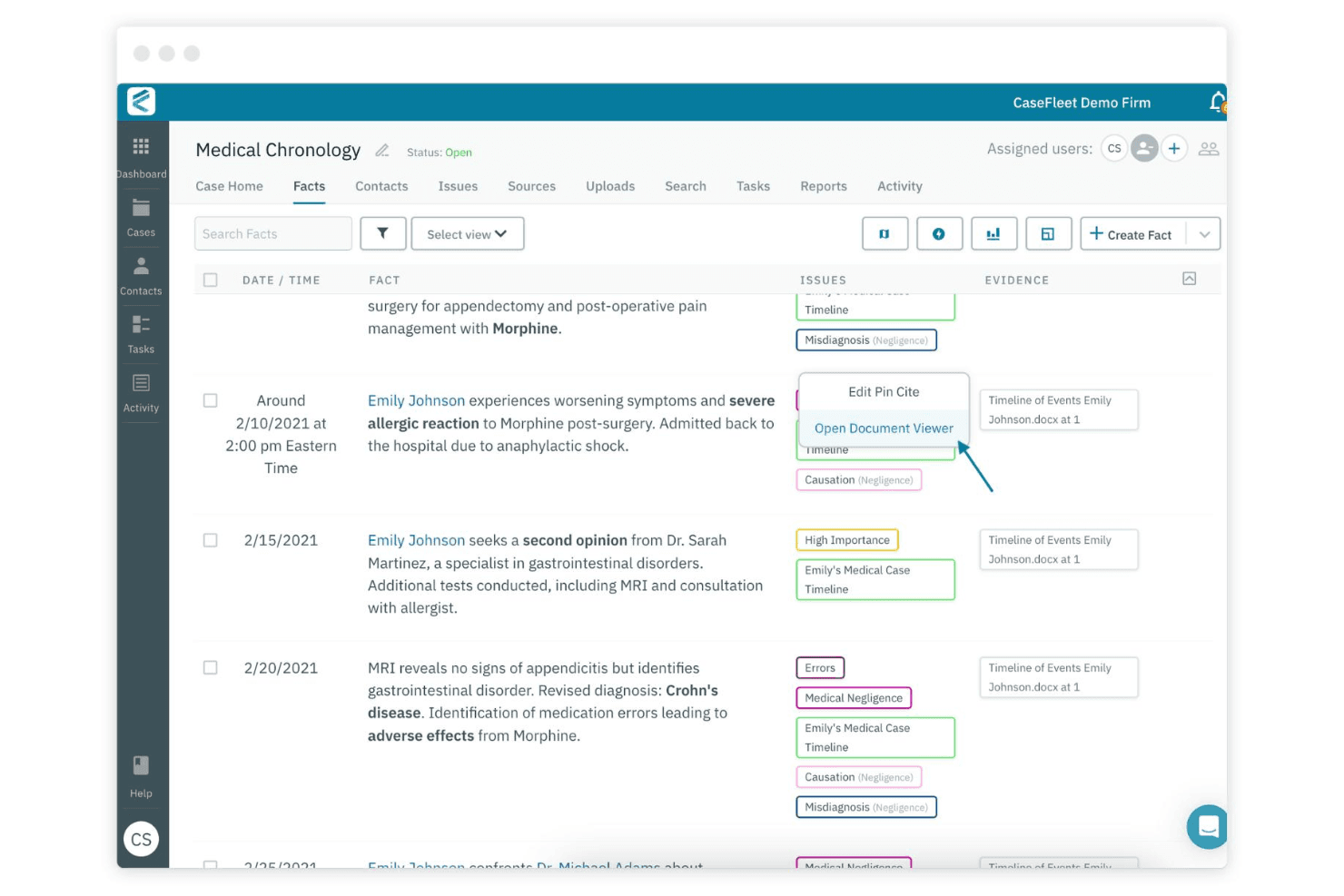
Organize facts, issues, and people in a structured database for each case. Link facts to source documents and issues to build a clear case narrative.
Fact Chronologies
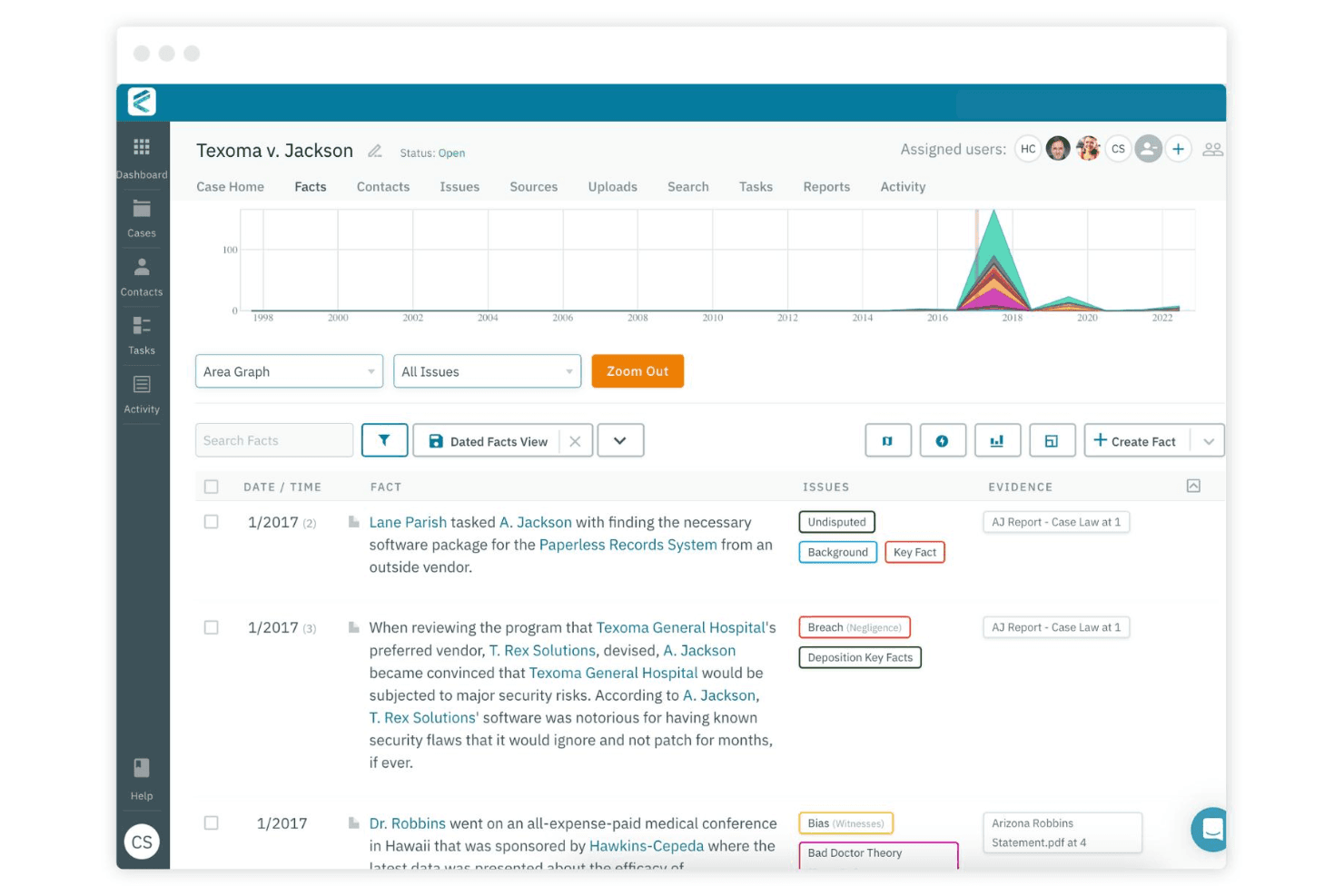
Create detailed timelines that connect facts, documents, and events. Visualize case progress and identify gaps or inconsistencies quickly.
Document Management
Upload, tag, and search documents within each case file. Link documents directly to facts, issues, or witnesses for easy reference.
Issue Tagging
Assign issues to facts and documents to track legal arguments. Filter and sort information by issue to focus on what matters most.
Source Linking
Connect every fact to its supporting evidence, such as documents or testimony. Quickly trace the origin of each fact for review or disclosure.
Dashboard and Reporting Tools
Generate reports on facts, issues, and sources for case analysis or sharing. Export timelines and summaries to support collaboration or court filings.
Ease of Use
Casefleet is widely regarded as intuitive, with a clean interface and logical workflows that help users get started quickly. The timeline and fact management tools are easy to navigate, and onboarding resources are clear and accessible. Some users note that the platform's focus on litigation features keeps the experience streamlined, though those seeking broader practice management may find navigation limited. Overall, Casefleet's usability supports efficient case organization without overwhelming users with unnecessary options.
Integrations
Casefleet does not provide an integration interface or marketplace. The platform operates as a self-contained system, and the only external connectivity is limited to authentication methods such as SSO via Okta, which is managed outside the Casefleet application.
CaseFleet Specs
- 2-Factor Authentication: Yes
- API: Yes
- Approval Workflows: Yes
- Audit Trail: Yes
- Calendar Management: Yes
- Compliance Tracking: Yes
- Contract Management: Yes
- Custom Reports: Yes
- Customer Management: Yes
- Data Export: Yes
- Data Import: Yes
- Document Management: Yes
- External Integrations: Yes
- Multi-User: Yes
- NDA Management: Yes
- Notifications: Yes
- Policy Management: Yes
- Scheduling: Yes
- Workflow Management: Yes


