


Recensione TimeSolv: Pro, Contro, Caratteristiche e Prezzi



TimeSolv is a legal billing software built for law firms and solo attorneys who need precise time tracking and invoice management without the overhead of a full practice management platform. I'd recommend it if billing-first functionality is your priority and you don't need the broader case management features that a platform like Clio bundles in—features that add complexity you may not use.
TimeSolv Evaluation Summary
- From $45/user/month
- 10-day free trial
Perché fidarsi dei nostri consigli sui software
Il nostro team testa e recensisce software dal 2012. In quanto leader di studi legali noi stessi, sappiamo quanto sia difficile — e importante — scegliere il software giusto.
Per questa guida, abbiamo valutato gli strumenti attraverso test pratici e ricerche indipendenti, assegnando un punteggio agli strumenti in base ai nostri criteri di selezione.
Le nostre recensioni riflettono il nostro giudizio editoriale umano, non un discorso di vendita.
TimeSolv Overview
When I compare TimeSolv to other legal billing software, I think its flexible billing templates, strong trust accounting, and responsive support set it apart. The interface is clean, and onboarding is straightforward, so new users can get up to speed quickly. Pricing is competitive for firms that want advanced features without a steep learning curve. However, some integrations are limited, and reporting could be deeper.
I’d suggest TimeSolv for small to midsize law firms that want a balance of customization, ease of use, and reliable support when selecting a billing solution.
pros
-
Trust accounting meets bar compliance requirements.
-
Mobile app supports offline time tracking.
-
Customizable invoice templates for different billing needs.
cons
-
Reporting options lack advanced customization.
-
Some integrations are limited compared to competitors.
-
Occasional delays in customer support response.
-

CARET Legal
Visit WebsiteThis rating combines scores from multiple user review sites to reflect overall customer sentiment about the product.4.4 -
Mitratech TAP Workflow Automation
Visit WebsiteThis rating combines scores from multiple user review sites to reflect overall customer sentiment about the product.4.2 -
Redactable
Visit WebsiteThis rating combines scores from multiple user review sites to reflect overall customer sentiment about the product.4.8


Come Testiamo e Valutiamo gli Strumenti
Abbiamo trascorso anni a costruire, perfezionare e migliorare il nostro sistema di test e valutazione del software. La nostra rubrica è progettata per cogliere le sfumature della selezione del software e ciò che rende uno strumento efficace, concentrandosi sugli aspetti critici del processo decisionale. Qui sotto puoi vedere esattamente come funzionano i nostri test e la nostra valutazione su sette criteri. Questo ci permette di offrire una valutazione imparziale del software sulla base della funzionalità principale, delle caratteristiche distintive, facilità d’uso, onboarding, assistenza clienti, integrazioni, recensioni dei clienti e rapporto qualità-prezzo.
Funzionalità Principale (25% della valutazione finale)
Il punto di partenza della nostra valutazione è sempre la funzionalità principale dello strumento. Possiede le funzionalità e le caratteristiche di base che un utente si aspetterebbe di trovare? Alcune di queste funzionalità principali sono bloccate su piani tariffari più costosi? Ci aspettiamo che uno strumento sia competitivo rispetto alle capacità di base dei suoi concorrenti.
Caratteristiche Distintive (25% della valutazione finale)
Valutiamo quindi le caratteristiche distintive e non comuni che vanno oltre la funzionalità di base generalmente presente in strumenti dello stesso tipo. Un punteggio elevato riflette caratteristiche specializzate o uniche che rendono il prodotto più veloce, più efficiente, oppure che offrono ulteriore valore all’utente. Valutiamo anche quanto sia facile integrare con altri strumenti tipici della propria infrastruttura tecnologica per espandere la funzionalità e l’utilità del software. Gli strumenti che offrono molte integrazioni native, connessioni di terze parti e accesso API per costruire integrazioni personalizzate ottengono i punteggi migliori.
Facilità d’Uso (10% della valutazione finale)
Consideriamo quanto sia rapido e semplice eseguire le attività definite nella funzionalità principale utilizzando lo strumento. Il software con punteggio più alto è ben progettato, intuitivo da usare, offre app mobili, propone modelli e rende semplici anche le attività relativamente complesse.
Onboarding (10% della valutazione finale)
Sappiamo quanto sia importante una rapida adozione da parte del team per una nuova piattaforma, quindi valutiamo quanto sia facile imparare e usare uno strumento con il minimo di formazione. Esaminiamo quanto rapidamente un membro del team può essere operativo e iniziare a usare lo strumento senza esperienza. Le soluzioni con punteggi elevati richiedono poco o nessun supporto.
Assistenza Clienti (10% della valutazione finale)
Esaminiamo quanto sia rapido e semplice sbloccarsi e trovare aiuto tramite telefono, chat dal vivo o knowledge base. Gli strumenti e le aziende che forniscono supporto in tempo reale ottengono i punteggi migliori, mentre i chatbot ottengono i punteggi peggiori.
Recensioni dei Clienti (10% della valutazione finale)
Oltre ai nostri test e alle nostre valutazioni, consideriamo il net promoter score dei clienti attuali e passati. Esaminiamo la probabilità che, se avessero la scelta, selezionerebbero di nuovo lo strumento per la funzionalità principale. Un software con punteggio alto riflette un alto net promoter score da parte dei suoi utenti.
Rapporto Qualità-Prezzo (10% della valutazione finale)
Infine, considerando tutti gli altri criteri, valutiamo il prezzo medio dei piani entry level rispetto alle funzionalità principali e consideriamo anche il valore degli altri criteri di valutazione. Il software che offre di più, al costo minore, otterrà un punteggio più elevato.
Core Features
Time Tracking
Track billable hours with timers, manual entries, or mobile app logging. Easily allocate time to matters and generate detailed time reports.
Trust Accounting
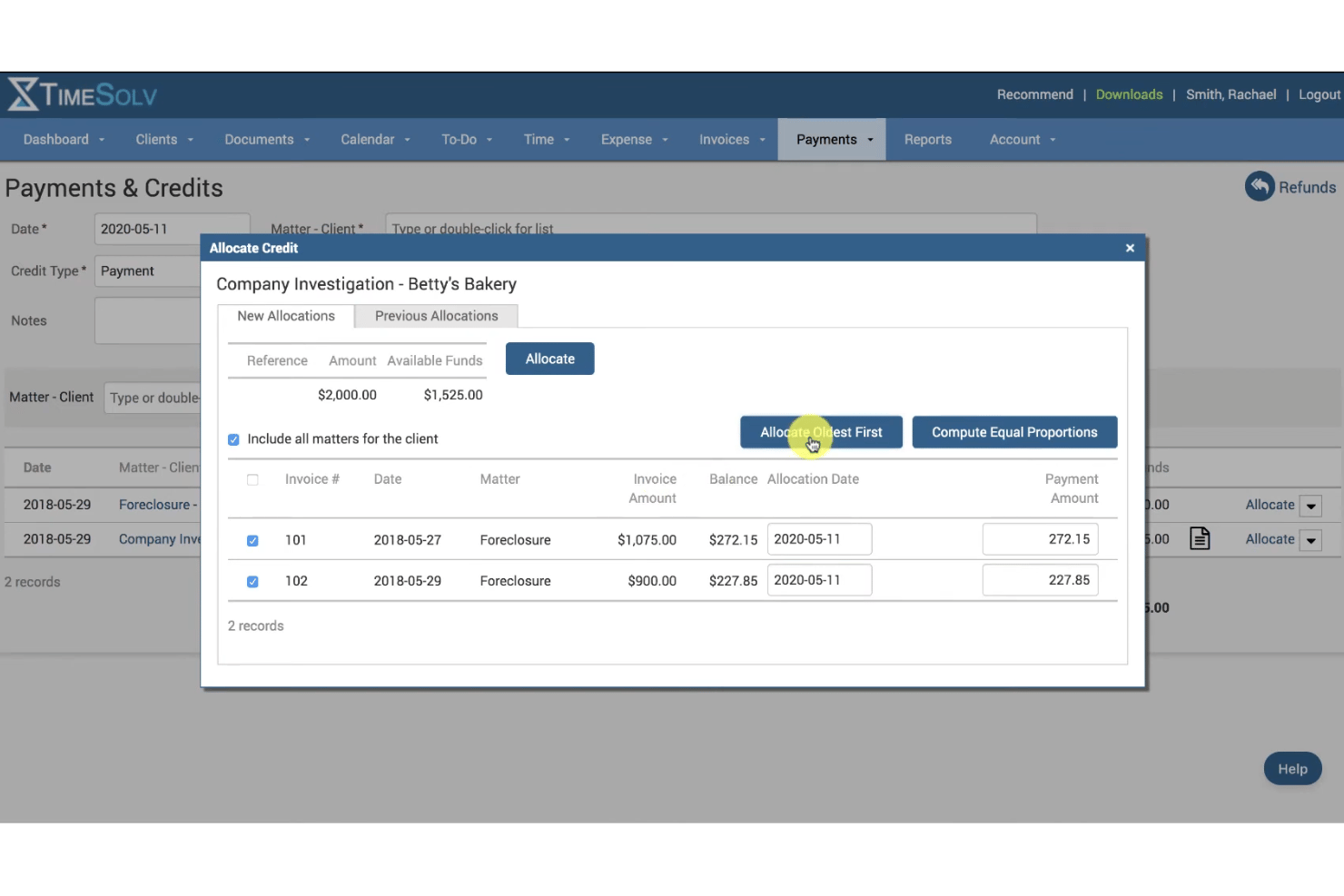
Manage client trust funds with bar-compliant workflows and safeguards. Automatically track deposits, withdrawals, and balances for each client.
Customizable Invoicing
Create branded invoices with flexible templates and billing arrangements. Adjust formats for hourly, flat fee, or retainer billing.
Expense Tracking
Log reimbursable expenses and attach receipts to matters. Generate expense reports and include costs directly on client invoices.
Batch Billing
Generate and send multiple invoices at once for faster billing cycles. Review, edit, and approve invoices in bulk before sending.
Payment Processing
Accept online payments through integrated credit card and ACH options. Clients can pay invoices directly from secure payment links.
Ease of Use
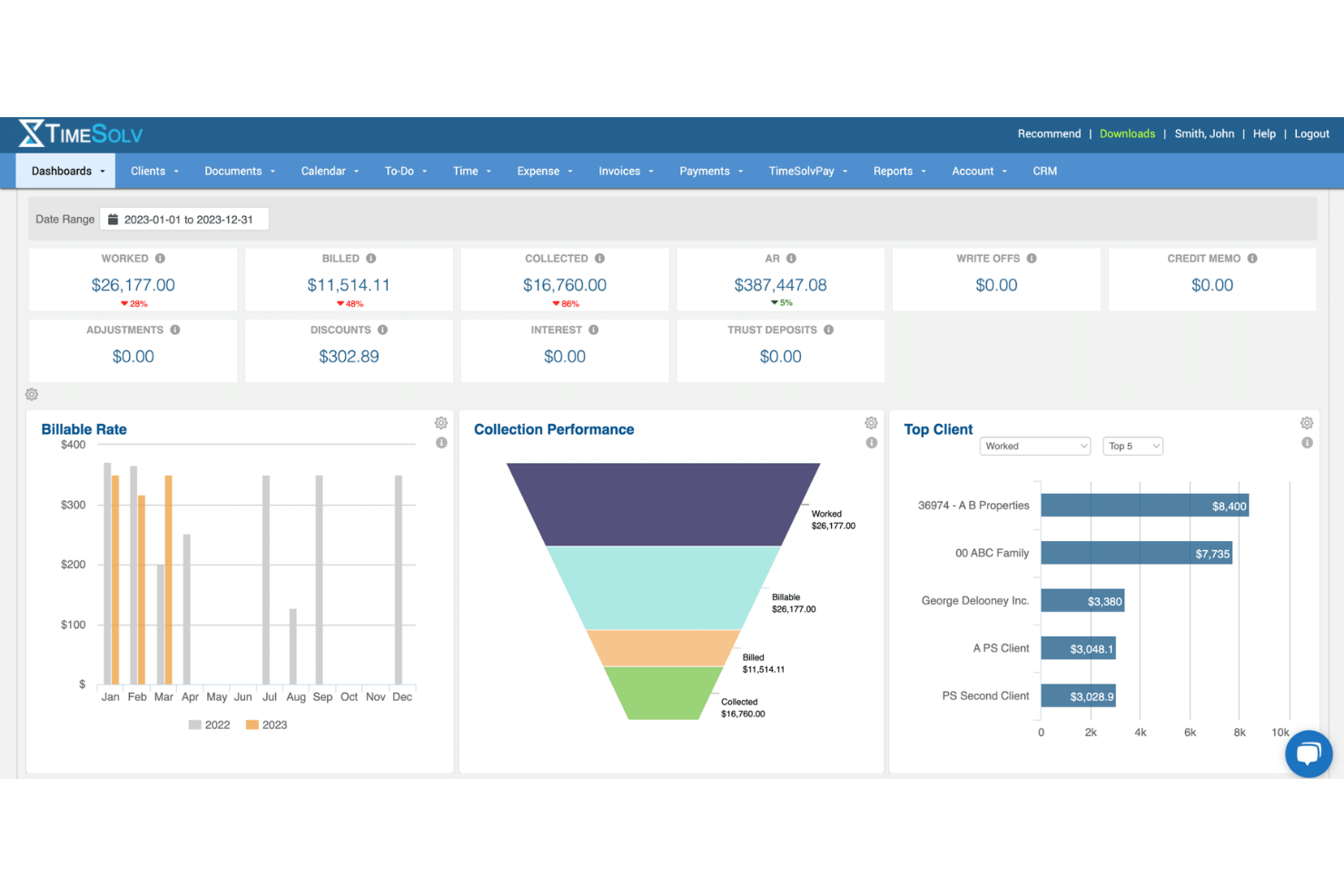
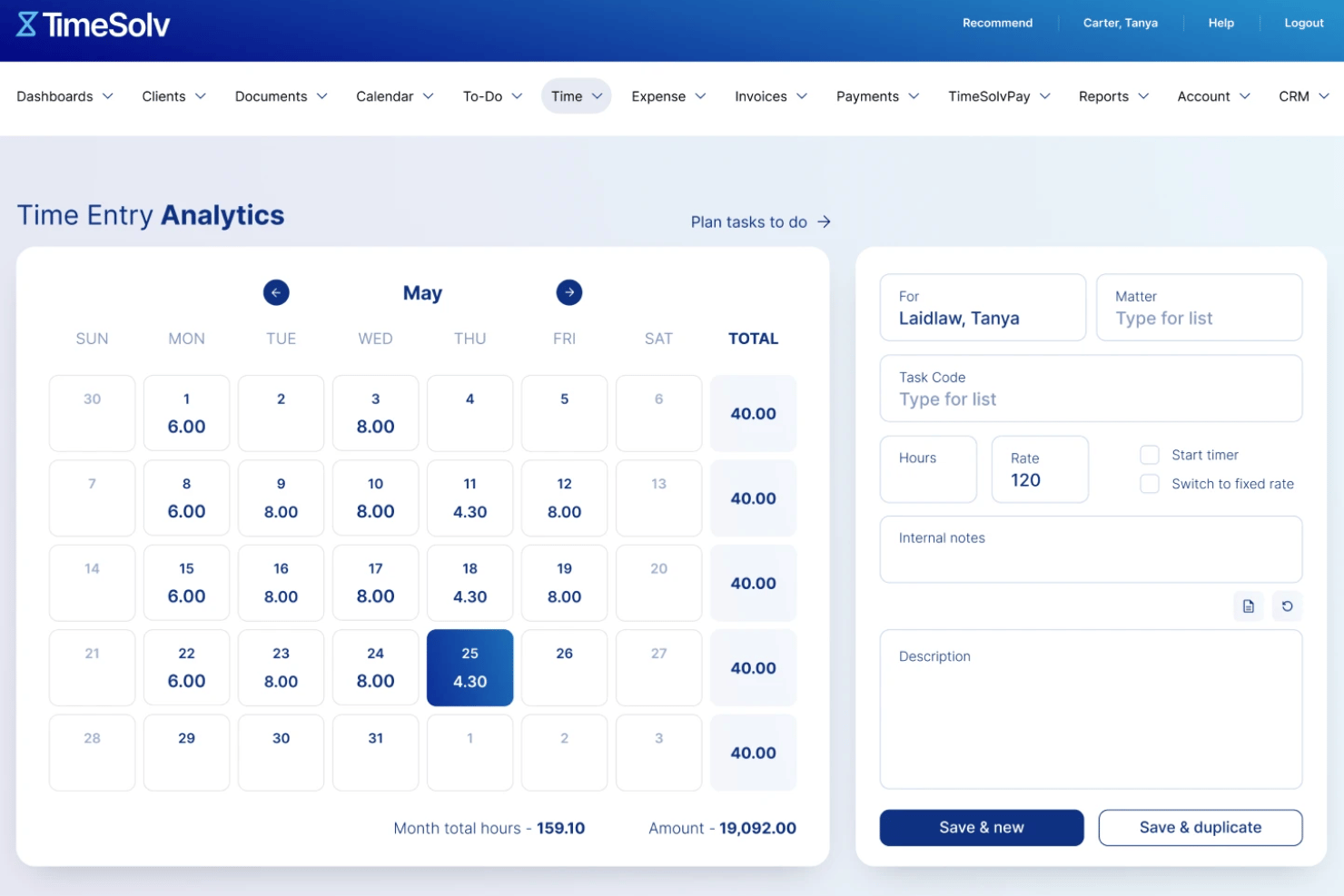
TimeSolv is straightforward to navigate, with a clean dashboard and intuitive workflows for billing, time entry, and trust accounting. I think most users will appreciate how quickly they can generate invoices or track time, even without extensive training. User reviews often mention the helpful onboarding resources and responsive support team, which make setup and daily use less stressful. The mobile app adds convenience for attorneys who need to log hours on the go.
Integrations
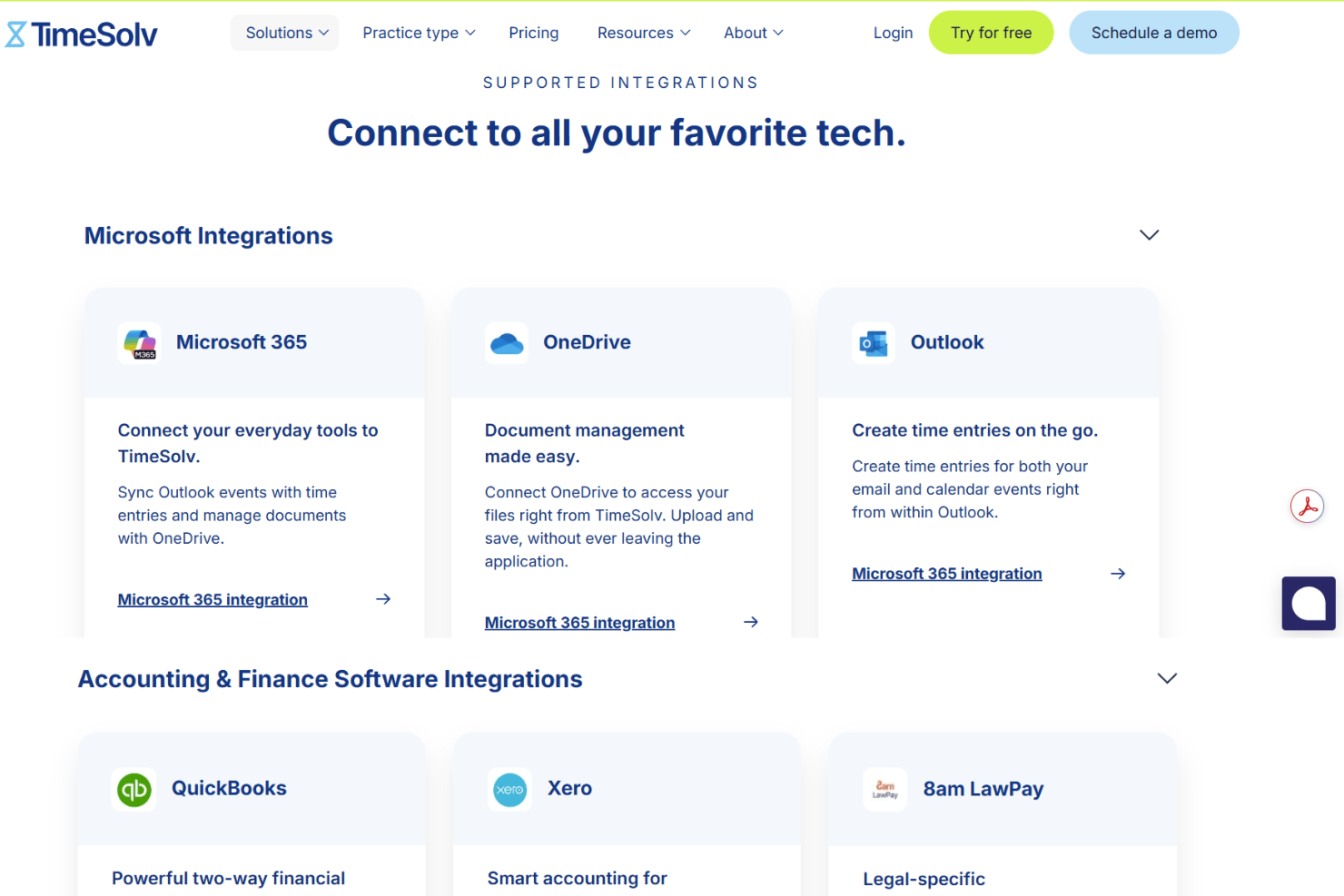
TimeSolv integrates with QuickBooks, Xero, LawPay, NetDocuments, Dropbox, OneDrive, Outlook, AccountEdge, Microsoft 365, and Google Calendar, among others.
TimeSolv also offers an API for custom integrations and connects with select third-party integration tools.
TimeSolv Specs
- Analytics
- API
- Approval Workflows
- Attendance Tracking
- Batch Permissions & Access
- Billing/Invoicing
- Budgeting
- Calendar Management
- Dashboard
- Data Export
- Data Import
- Data Visualization
- Expense Tracking
- External Integrations
- Forecasting
- Multi-User
- Notifications
- Project Management
- Resource Management
- Scheduling
- Task Scheduling/Tracking
- Time Management
- Timesheets
- Vacation & Absence Calendar


