

BRYTER Review: Pros, Cons, Features and Pricing Explained
BRYTER stands out for its no-code flexibility, letting teams build tailored workflows fast—ideal if you want control without IT bottlenecks, but not for those seeking out-of-the-box simplicity.

We review tools independently, and commissions help fund our testing. See our transparency policy, our methodology, or suggest a tool.
BRYTER is a matter management software for in-house legal teams that need to manage requests, automate intake workflows, and build self-service tools for business stakeholders. I'd consider it over tools like SimpleLegal if your team wants to go beyond tracking matters and actually automate how legal work gets triaged and resolved—using no-code workflow builders rather than relying on manual assignment and follow-up.
BRYTER Evaluation Summary
4.7/5
- Pricing upon request
- Free trial available
Why Trust Our Software Recommendations
6,700+
Reviews
20
Industry experts
16+
Evaluation factors
14
Years
Our team has been testing and reviewing software since 2012. As legal practice leaders ourselves, we know how difficult—and important—it is to choose the right software.
For this guide, we evaluated tools using hands-on testing and independent research, scoring tools using our selection criteria.
Our reviews reflect our human editorial judgment, not a sales pitch.
BRYTER Overview
If you’re judging BRYTER against other legal matter management software, I think its no-code automation and customizable workflows set it apart for teams who want control over process design. The interface is clean, and onboarding is straightforward, but you’ll need to invest time to build what you need—there’s less out-of-the-box structure than some alternatives. Pricing is on the higher side, but support is responsive and integrations are solid.
I’d suggest BRYTER is best for legal teams who want to tailor solutions to their own needs rather than fit into a rigid, pre-built system.
Pros
- No-code automation lets legal teams build custom workflows.
- AI-driven tools handle document review and data extraction.
- Responsive support and active product development.
Cons
- Pricing is higher than many alternatives.
- Out-of-the-box templates are limited for complex matters.
- Requires time investment to design and maintain workflows.
Is BRYTER Right For Your Needs?
Who Would be a Good Fit for BRYTER?
BRYTER is a strong choice for teams that need to automate complex, repeatable legal processes and want the flexibility to design their own workflows. I think it’s especially well-suited for regulated industries, larger organizations, and departments with unique requirements that can’t be met by rigid, pre-built systems. If your team values control, customization, and the ability to quickly adapt processes as regulations or business needs change, BRYTER’s no-code platform and AI-driven features are going to be a real advantage.
- Enterprise Compliance TeamsCentralize and automate regulatory reporting and risk management.
- Healthcare OrganizationsHandle sensitive data with configurable privacy and security controls.
- Consulting FirmsAutomate client-facing legal processes and document generation.
- In-House CounselCustomizable intake and triage tools fit evolving business demands.
- Financial ServicesRegulated workflows and audit trails align with compliance needs.
- Large Legal DepartmentsBRYTER supports custom workflows for high-volume, complex matters.
Who Would be a Bad Fit for BRYTER?
BRYTER isn’t the best choice for teams that want a plug-and-play solution or have limited resources for workflow design. If you’re looking for a tool with extensive pre-built templates or you don’t have the time to invest in building and maintaining custom processes, you’ll probably find BRYTER less appealing. Smaller teams or those with straightforward matter management needs may find the platform’s flexibility unnecessary and the pricing hard to justify.
- IT HelpdesksMatter management focus doesn’t align with IT ticketing workflows.
- NonprofitsBudget constraints and simple needs don’t match BRYTER’s pricing.
- HR DepartmentsLacks HR-specific templates and features out of the box.
- StartupsLimited resources make ongoing workflow design impractical.
- Solo PractitionersToo complex and costly for basic matter tracking.
- Small Law FirmsSetup and customization overhead outweighs the benefits for small teams.
How We Test & Score Tools
We’ve spent years building, refining, and improving our software testing and scoring system. The rubric is designed to capture the nuances of software selection and what makes a tool effective, focusing on critical aspects of the decision-making process.
Below, you can see exactly how our testing and scoring works across seven criteria. It allows us to provide an unbiased evaluation of the software based on core functionality, standout features, ease of use, onboarding, customer support, integrations, customer reviews, and value for money.
Core Functionality (25% of final scoring)
The starting point of our evaluation is always the core functionality of the tool. Does it have the basic features and functions that a user would expect to see? Are any of those core features locked to higher-tiered pricing plans? At its core, we expect a tool to stand up against the baseline capabilities of its competitors.
Standout Features (25% of final scoring)
Next, we evaluate uncommon standout features that go above and beyond the core functionality typically found in tools of its kind. A high score reflects specialized or unique features that make the product faster, more efficient, or offer additional value to the user.
We also evaluate how easy it is to integrate with other tools typically found in the tech stack to expand the functionality and utility of the software. Tools offering plentiful native integrations, 3rd party connections, and API access to build custom integrations score best.
Ease of Use (10% of final scoring)
We consider how quick and easy it is to execute the tasks defined in the core functionality using the tool. High scoring software is well designed, intuitive to use, offers mobile apps, provides templates, and makes relatively complex tasks seem simple.
Onboarding (10% of final scoring)
We know how important rapid team adoption is for a new platform, so we evaluate how easy it is to learn and use a tool with minimal training. We evaluate how quickly a team member can get set up and start using the tool with no experience. High scoring solutions indicate little or no support is required.
Customer Support (10% of final scoring)
We review how quick and easy it is to get unstuck and find help by phone, live chat, or knowledge base. Tools and companies that provide real-time support score best, while chatbots score worst.
Customer Reviews (10% of final scoring)
Beyond our own testing and evaluation, we consider the net promoter score from current and past customers. We review their likelihood, given the option, to choose the tool again for the core functionality. A high scoring software reflects a high net promoter score from current or past customers.
Value for Money (10% of final scoring)
Lastly, in consideration of all the other criteria, we review the average price of entry level plans against the core features and consider the value of the other evaluation criteria. Software that delivers more, for less, will score higher.
Core Features
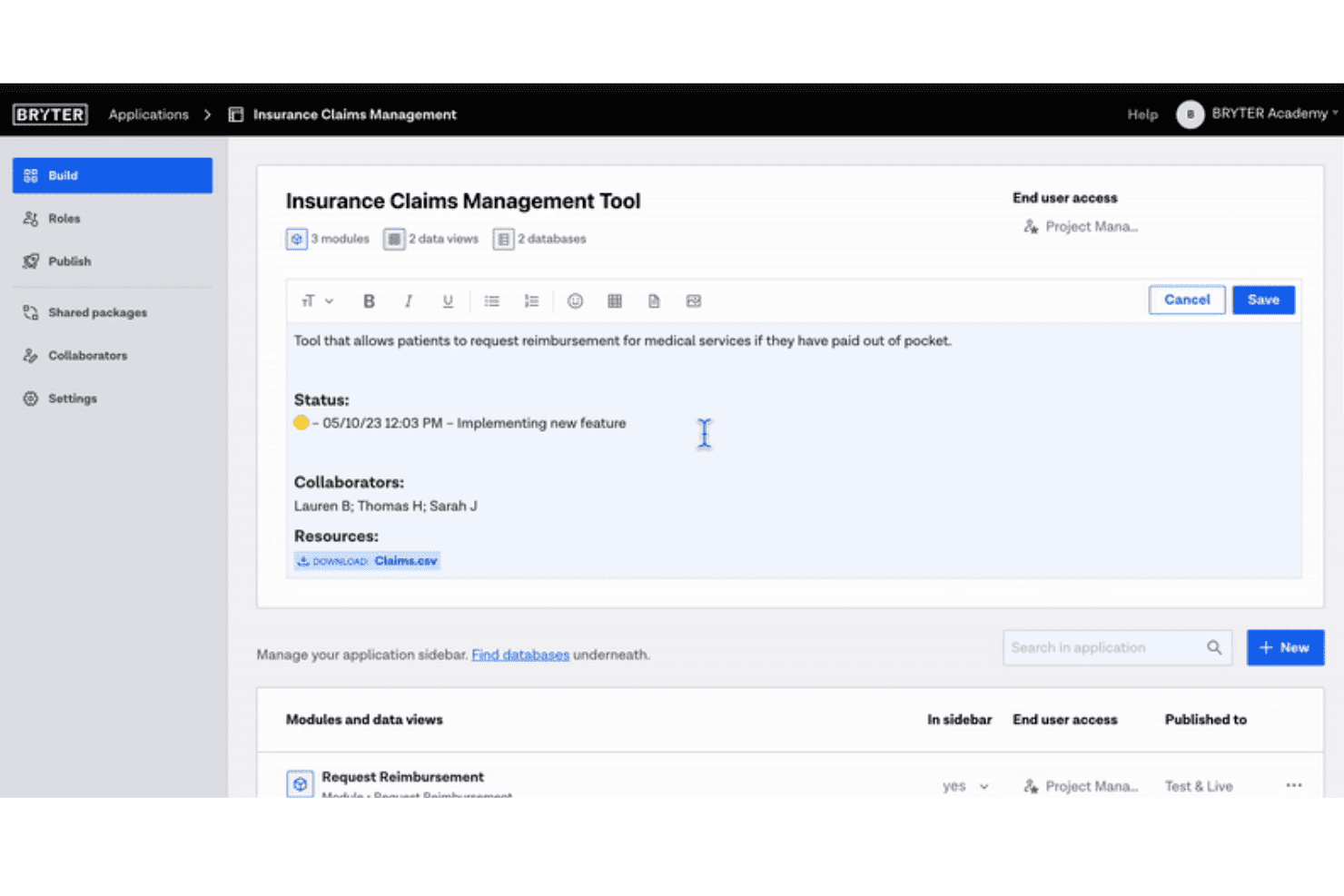
No-Code Workflow Builder
Design and automate legal processes without coding. Drag-and-drop modules let you create custom workflows for intake, triage, and approvals.
Document Automation
Generate, review, and manage legal documents using AI-powered templates. Automate repetitive drafting tasks and ensure consistency across matters.
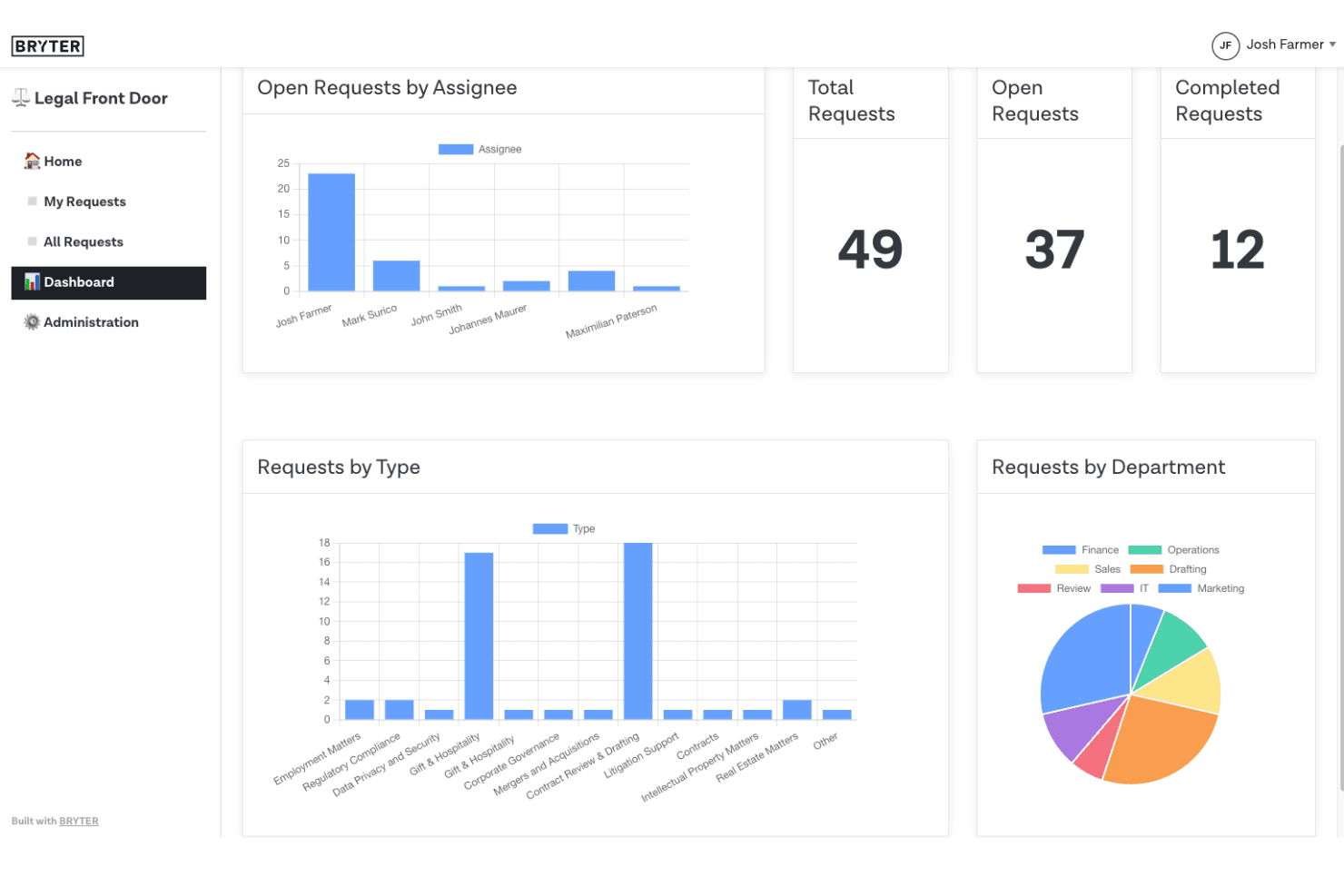
Centralized Matter Dashboard
Track all matters, deadlines, and tasks in one place. Visual dashboards give you real-time status updates and easy access to key information.
Conditional Logic and Rules
Set up branching workflows based on matter type, urgency, or other criteria. Automate routing and escalation to the right team members.
Audit Trails and Reporting
Monitor every action and change within a matter for compliance. Export detailed reports to support audits and regulatory requirements.
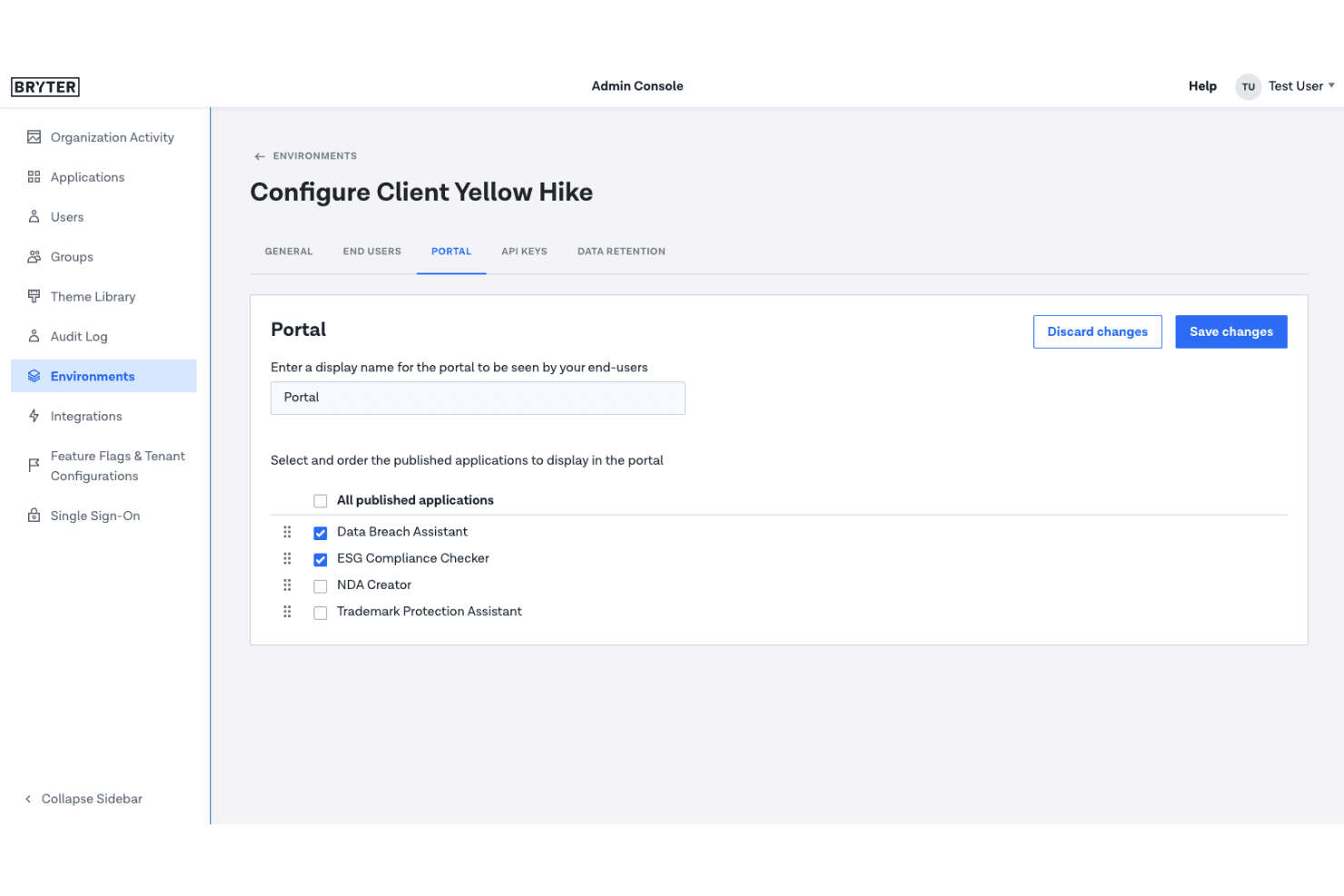
Self-Service Portals
Let clients or business users submit requests and check status directly. Customizable forms and portals reduce manual intake and email back-and-forth.
Ease of Use
BRYTER’s interface is clean and intuitive, especially for legal teams new to no-code tools. I think most users will find the drag-and-drop workflow builder straightforward, but building complex processes still takes time and planning.
User reviews often mention the helpful onboarding resources and responsive support, which make the initial setup less daunting. If you want flexibility without deep technical skills, BRYTER strikes a good balance between customization and usability.
Integrations
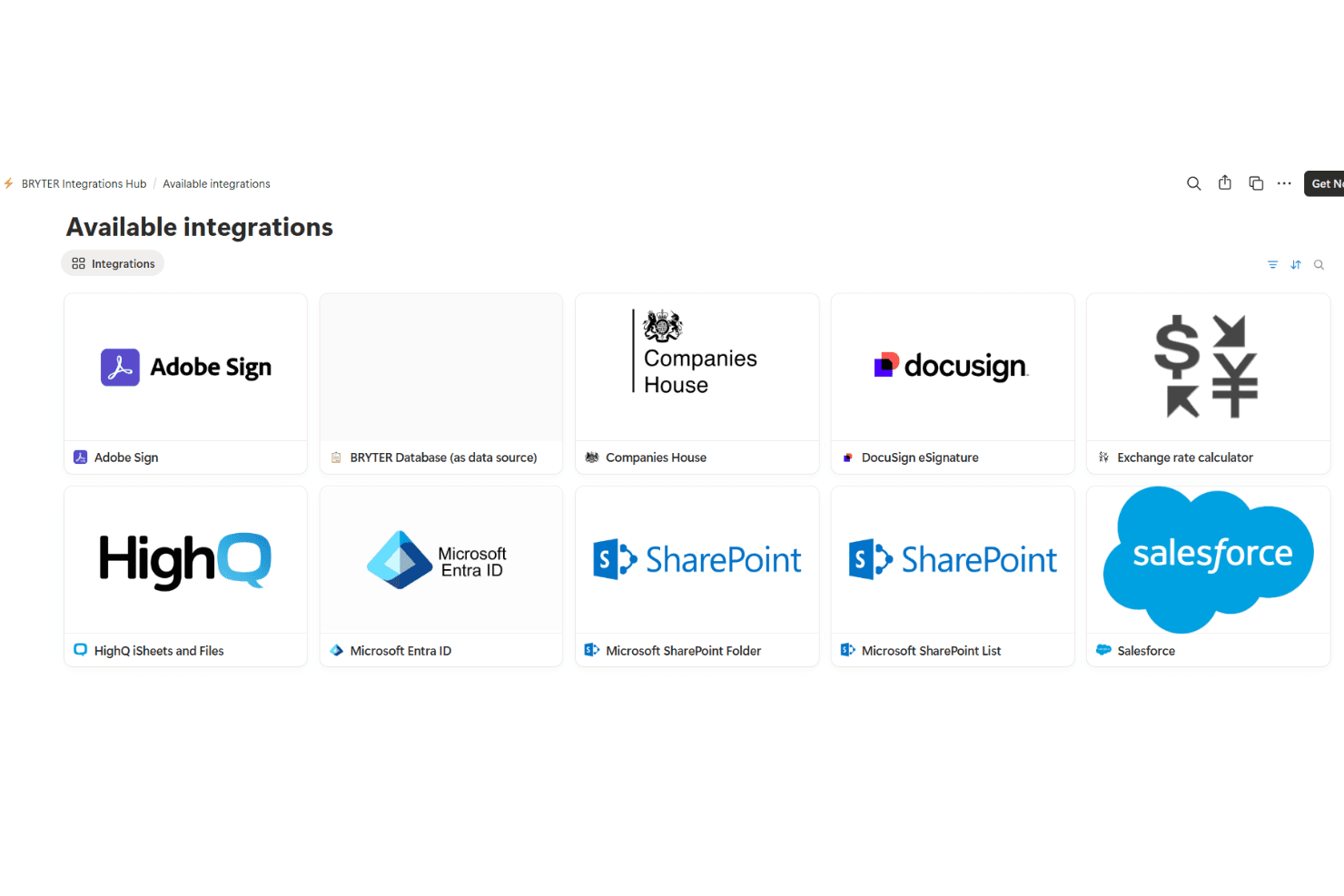
BRYTER integrates with Adobe Sign, Companies House, DocuSign, Salesforce, SharePoint, HighQ, Google Workspace, ServiceNow, SAP, and Jira, among others.
BRYTER also offers an API and supports connections with third-party integration tools.
BRYTER Specs
- 2-Factor Authentication: No
- Access Management: Yes
- Anti-Virus: No
- API: Yes
- Audit Trail: Yes
- Bug Tracking: No
- Calendar Management: No
- Customer Management: No
- Dashboard: Yes
- Data Export: Yes
- Data Import: Yes
- Data Visualization: Yes
- Email Integration: Yes
- External Integrations: Yes
- File Sharing: Yes
- File Transfer: Yes
- Firewall: No
- Google Apps Integration: No
- Inventory Tracking: No
- Malware Protection: No
- Multi-User: Yes
- Network Device Performance Monitoring: No
- Network Traffic Monitoring: No
- Network Visualization: No
- Notifications: Yes
- Project Management: No
- Remote Access: Yes
- Risk Assessment: Yes
- SAP Integration: No
- Scheduling: No
- Software Integration: Yes
- Third-Party Plugins/Add-Ons: No
- Ticket Management: No


