

Litify Review 2026: Pros, Cons, Features and Pricing
Litify isn’t just another law firm CRM—it’s a powerhouse platform that redefines how legal teams manage clients, cases, and growth in 2026. Here’s what sets it apart.

We review tools independently, and commissions help fund our testing. See our transparency policy, our methodology, or suggest a tool.
Litify is a law firm client management software built on Salesforce, designed for firms that need to manage client intake, matter tracking, and legal workflows in a single platform. I'd look at it closely if your firm handles high volumes of litigation and needs more operational depth than tools like Clio provide—particularly around custom reporting, workflow automation, and the kind of enterprise-grade configurability that scales with a growing practice rather than constraining it.
Litify Evaluation Summary
4.2/5
- Pricing upon request
- Free demo available
Why Trust Our Software Recommendations
6,700+
Reviews
20
Industry experts
16+
Evaluation factors
14
Years
Our team has been testing and reviewing software since 2012. As legal practice leaders ourselves, we know how difficult—and important—it is to choose the right software.
For this guide, we evaluated tools using hands-on testing and independent research, scoring tools using our selection criteria.
Our reviews reflect our human editorial judgment, not a sales pitch.
Litify Overview
I think Litify stands out for its deep customization, Salesforce-powered reliability, and strong reporting tools, making it a top pick for firms that want to tailor workflows and scale. Its pricing is on the higher end, but you get robust integrations, a modern interface, and responsive support. Onboarding can take time, especially for smaller teams, but larger firms or those with complex processes will appreciate the flexibility.
If you’re judging by adaptability and long-term growth, Litify is a smart choice—especially if you want to connect intake, case management, and analytics in one place.
Pros
- Centralized document management with AI-powered tools
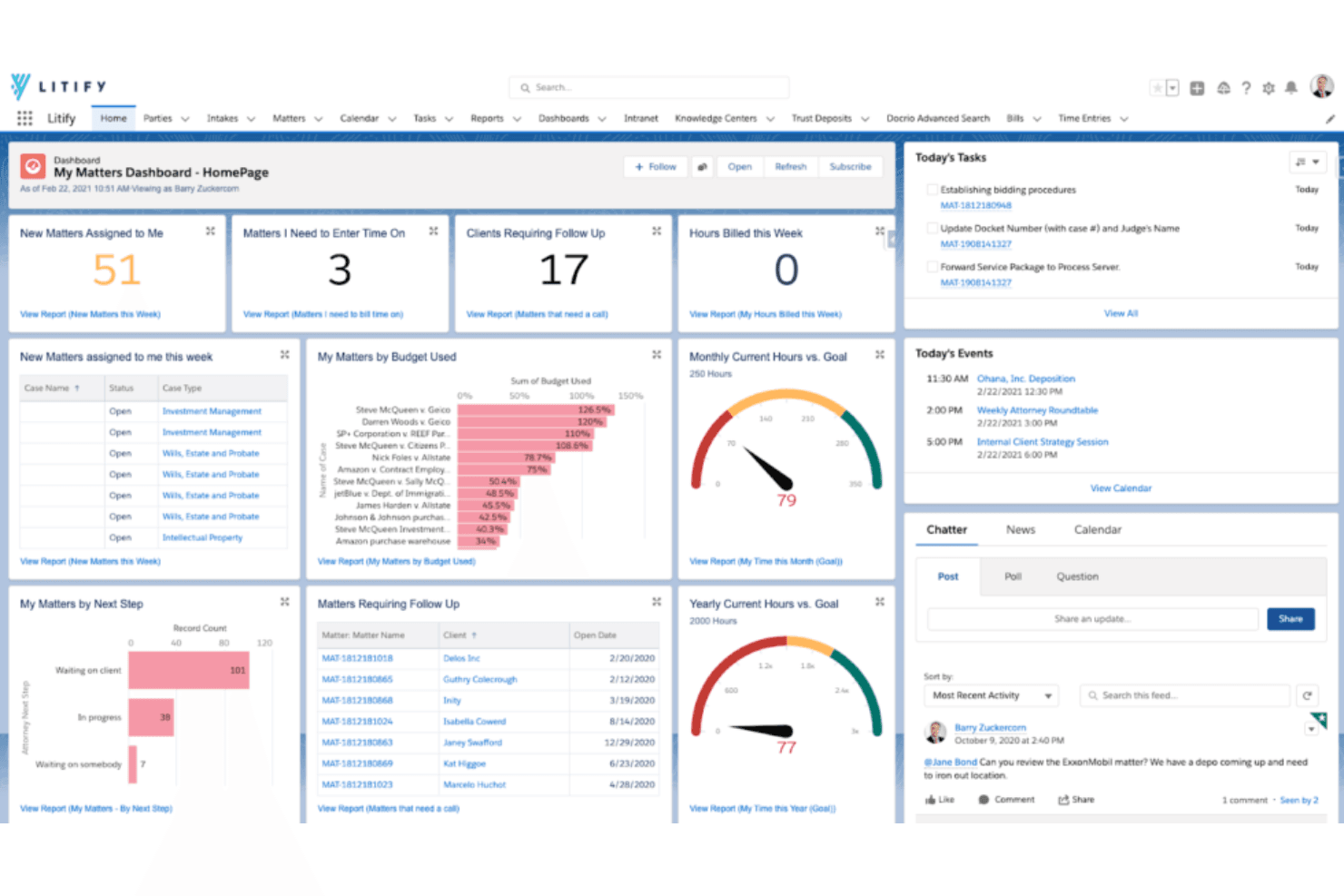
- Strong reporting and analytics with real-time dashboards
- Customizable workflows for different legal practice areas
Cons
- Some users report occasional performance slowdowns
- Onboarding can be lengthy for smaller teams
- Higher pricing compared to many alternatives
Is Litify Right For Your Needs?
Who Would be a Good Fit for Litify?
Litify is best for legal teams that need advanced customization, centralized data, and scalable workflows. Firms with complex case management, high-volume client intake, or strict compliance requirements will get the most value. Its Salesforce foundation, robust reporting, and AI-powered document management make it ideal for organizations that want to connect every part of their legal process and grow over time.
- Regulated IndustriesAudit trails and compliance features support strict regulatory needs.
- Legal Operations TeamsAdvanced analytics and workflow automation improve process oversight.
- Multi-Office FirmsCloud-based access and dashboards unify teams across locations.
- Personal Injury PracticesCustom intake and matter management streamline high-volume client work.
- Corporate Legal DepartmentsCentralized data and reporting support compliance and cross-team collaboration.
- Large Law FirmsLitify handles high case volumes and complex workflows with ease.
Who Would be a Bad Fit for Litify?
Litify isn’t the best choice for small teams, firms with simple needs, or those seeking a quick, low-cost setup. Its advanced features and customization can be overkill for straightforward practices, and the onboarding process may not justify the investment for lean operations.
- Firms Without IT SupportCustomization and maintenance require technical resources many small firms lack.
- Budget-Conscious FirmsHigher pricing and ongoing costs may not fit tight budgets.
- Short-Term ProjectsImplementation time is too long for temporary or one-off needs.
- Non-Legal DepartmentsFeatures are tailored for legal workflows, not general business use.
- Small Law FirmsOnboarding and customization are too resource-intensive for small teams.
- Solo PractitionersSetup and cost outweigh benefits for single-user practices.
How We Test & Score Tools
We’ve spent years building, refining, and improving our software testing and scoring system. The rubric is designed to capture the nuances of software selection and what makes a tool effective, focusing on critical aspects of the decision-making process.
Below, you can see exactly how our testing and scoring works across seven criteria. It allows us to provide an unbiased evaluation of the software based on core functionality, standout features, ease of use, onboarding, customer support, integrations, customer reviews, and value for money.
Core Functionality (25% of final scoring)
The starting point of our evaluation is always the core functionality of the tool. Does it have the basic features and functions that a user would expect to see? Are any of those core features locked to higher-tiered pricing plans? At its core, we expect a tool to stand up against the baseline capabilities of its competitors.
Standout Features (25% of final scoring)
Next, we evaluate uncommon standout features that go above and beyond the core functionality typically found in tools of its kind. A high score reflects specialized or unique features that make the product faster, more efficient, or offer additional value to the user.
We also evaluate how easy it is to integrate with other tools typically found in the tech stack to expand the functionality and utility of the software. Tools offering plentiful native integrations, 3rd party connections, and API access to build custom integrations score best.
Ease of Use (10% of final scoring)
We consider how quick and easy it is to execute the tasks defined in the core functionality using the tool. High scoring software is well designed, intuitive to use, offers mobile apps, provides templates, and makes relatively complex tasks seem simple.
Onboarding (10% of final scoring)
We know how important rapid team adoption is for a new platform, so we evaluate how easy it is to learn and use a tool with minimal training. We evaluate how quickly a team member can get set up and start using the tool with no experience. High scoring solutions indicate little or no support is required.
Customer Support (10% of final scoring)
We review how quick and easy it is to get unstuck and find help by phone, live chat, or knowledge base. Tools and companies that provide real-time support score best, while chatbots score worst.
Customer Reviews (10% of final scoring)
Beyond our own testing and evaluation, we consider the net promoter score from current and past customers. We review their likelihood, given the option, to choose the tool again for the core functionality. A high scoring software reflects a high net promoter score from current or past customers.
Value for Money (10% of final scoring)
Lastly, in consideration of all the other criteria, we review the average price of entry level plans against the core features and consider the value of the other evaluation criteria. Software that delivers more, for less, will score higher.
Core Features
Matter Management
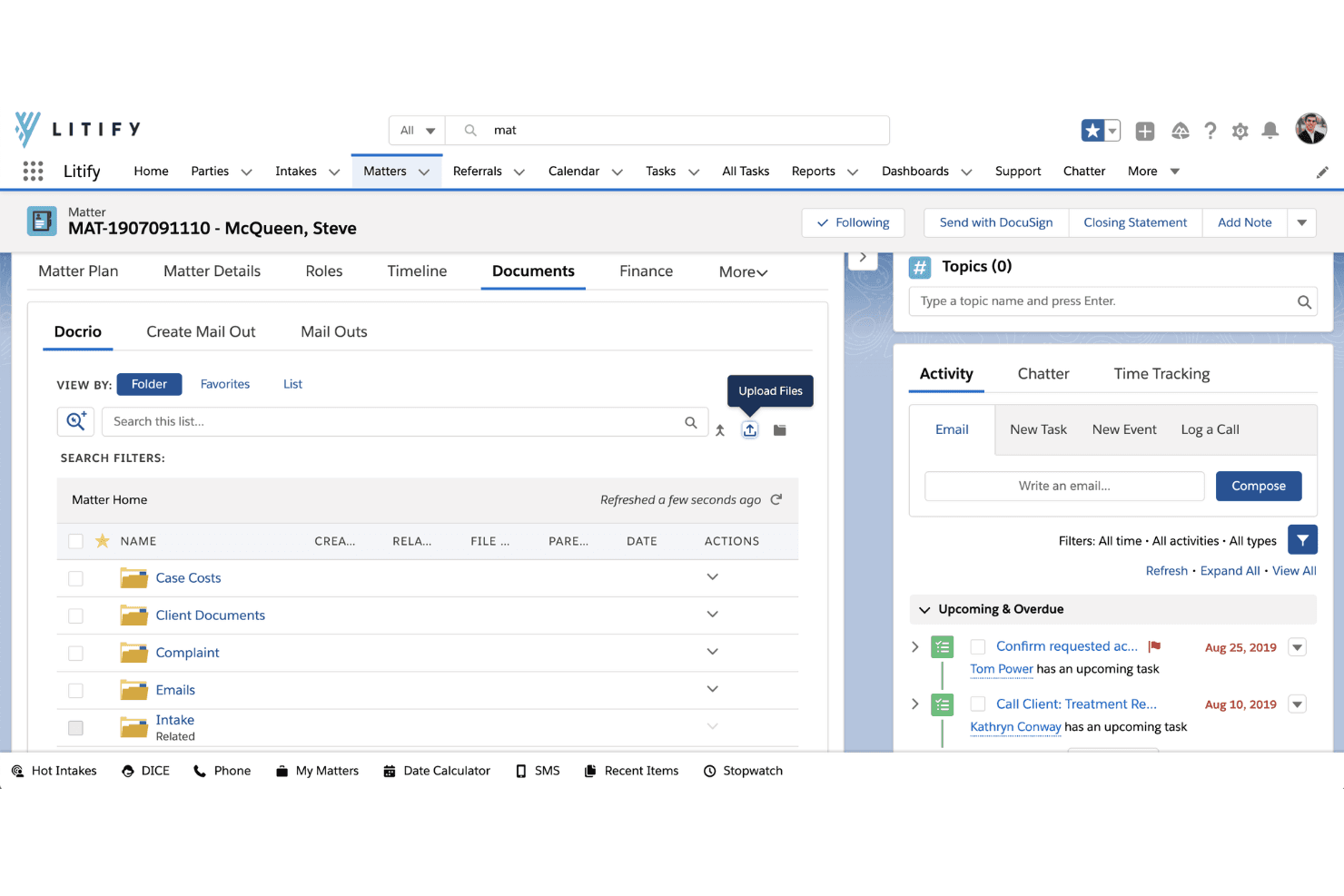
Track, organize, and update all case details in one place. Custom fields and workflows let you tailor processes for any practice area.
Client Intake
Automate client onboarding with customizable forms and guided workflows. Capture, qualify, and assign leads directly from your website or referrals.
Document Management
Store, search, and share documents securely within the platform. AI-powered tools help categorize and surface relevant files quickly.
Task and Workflow Automation
Automate repetitive tasks and set up triggers for deadlines or approvals. Visual workflow builders make it easy to adapt processes as your firm grows.
Reporting and Analytics
Create real-time dashboards and export detailed reports on cases, clients, and team performance. Drill down into data to spot trends and improve decision-making.
Time and Expense Tracking
Log billable hours and expenses directly within each matter. Built-in tools help ensure accurate client billing and financial reporting.
Standout Features
Salesforce Platform Customization
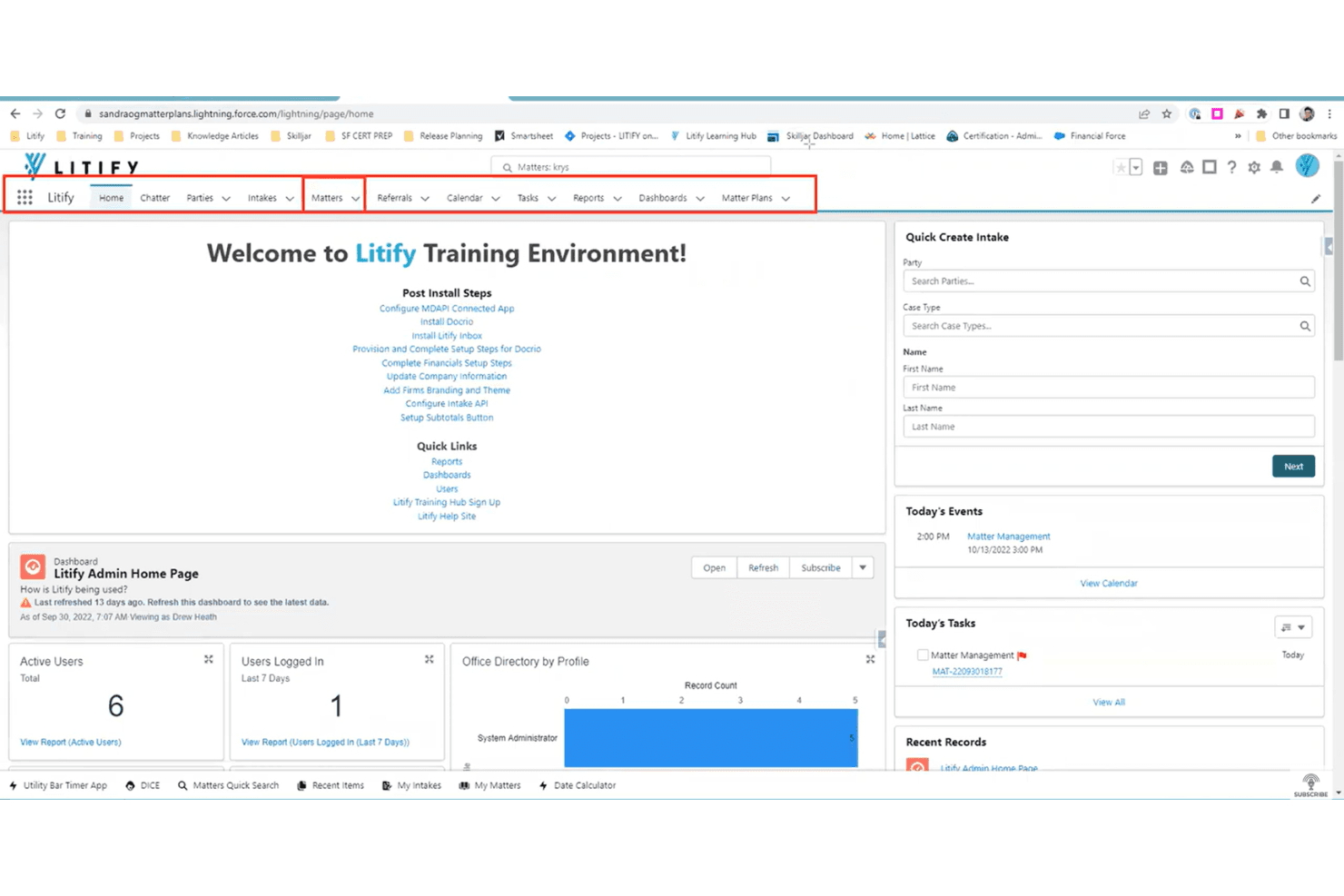
Litify is built on Salesforce, letting you deeply customize fields, workflows, and dashboards to fit your firm’s exact needs. This flexibility supports unique practice areas and complex reporting that most legal platforms can’t match.
Docrio AI Document Tools
Docrio, Litify’s integrated AI document management, automatically tags, organizes, and surfaces relevant files. You save time searching and reduce risk by always having the right documents at your fingertips.
Ease of Use
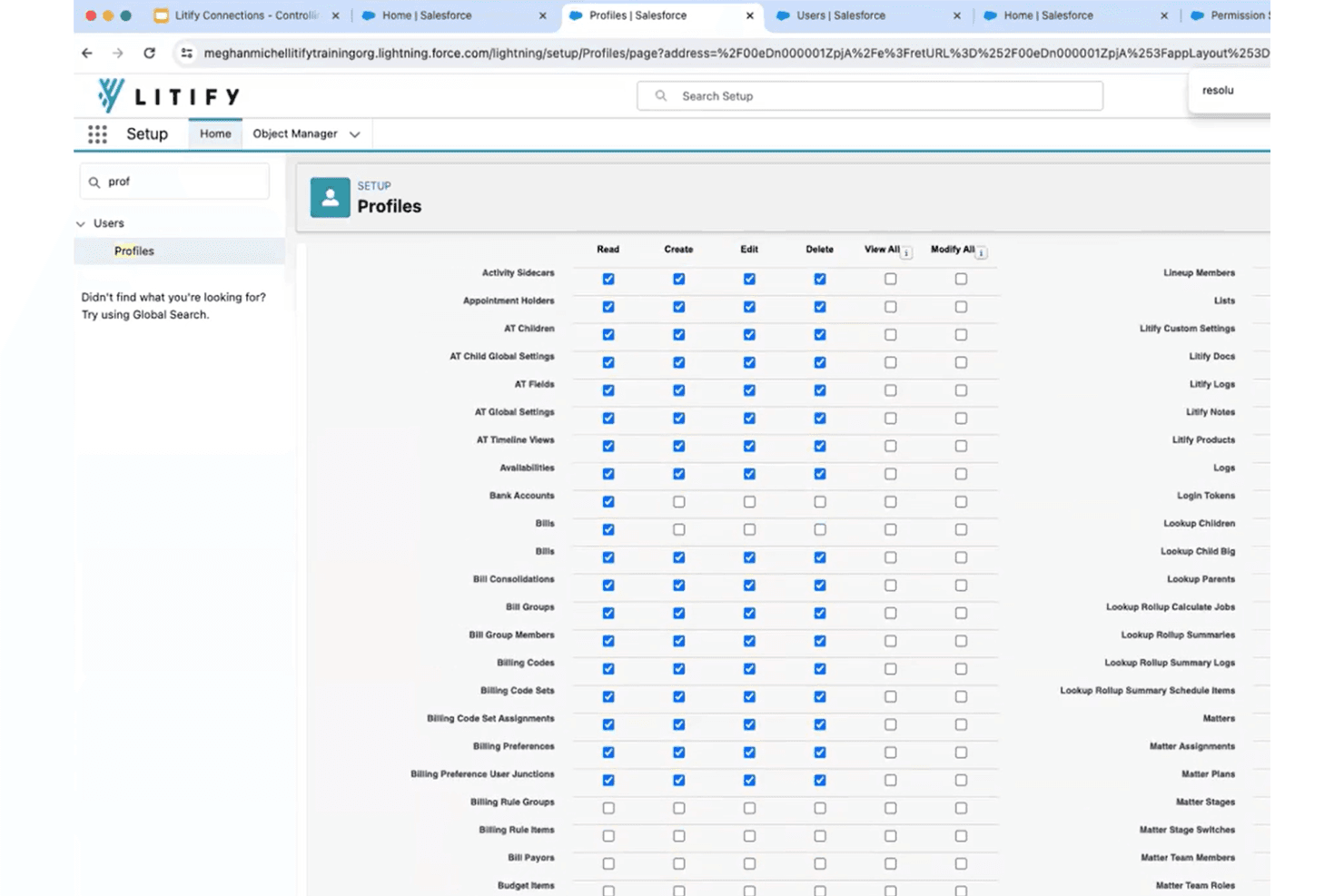
Litify offers a modern, intuitive interface, but its depth and customization options can feel overwhelming at first—especially for smaller teams or those new to legal tech. Once set up, navigation is straightforward, and dashboards make tracking matters and tasks easy.
Users appreciate the platform’s flexibility, but some mention that initial onboarding and training require a time investment to unlock Litify’s full potential.
Onboarding
Litify’s onboarding process is thorough but can be lengthy, especially for firms with complex needs or limited IT resources. Users report that dedicated implementation teams and detailed training materials help guide setup, but customizing workflows and migrating data takes time. The platform offers strong support, including live assistance and a knowledge base, which helps new users get up to speed, though the initial investment in training is higher than with simpler systems.
Customer Support
Litify’s customer support earns high marks for responsiveness and expertise, with users noting quick turnaround on tickets and helpful guidance during implementation. Support is available through multiple channels, including live chat, email, and a comprehensive help center. Many users appreciate the dedicated account managers and regular check-ins, which help resolve issues and optimize workflows. However, some mention that complex customization questions can take longer to address.
Integrations
Litify integrates with Salesforce, DocuSign, Microsoft Outlook, Microsoft 365, NetDocuments, iManage, QuickBooks, RingCentral, Zoom, and Google Workspace, among others.
Litify also offers an open API and supports connections with third-party integration tools.
Value for Money
Litify delivers strong value for legal teams that need a highly configurable platform for matter management, workflow automation, and reporting at scale. Users often justify the investment through its flexibility, Salesforce-based foundation, and ability to support complex legal operations, but pricing is custom and requires contacting the vendor directly.
Litify Specs
- 2-Factor Authentication: Yes
- API: Yes
- Approval Workflows: Yes
- Audit Trail: Yes
- Calendar Management: Yes
- Compliance Tracking: Yes
- Contract Management: Yes
- Custom Reports: Yes
- Customer Management: Yes
- Data Export: Yes
- Data Import: Yes
- Document Management: Yes
- External Integrations: Yes
- Multi-User: Yes
- NDA Management: Yes
- Notifications: Yes
- Policy Management: Yes
- Scheduling: Yes
- Workflow Management: Yes
Litify FAQs
Litify Company Overview & History
Litify is a legal technology company headquartered in Brooklyn, New York, serving over 70,000 legal professionals worldwide. The company focuses on providing an all-in-one, cloud-based platform for law firms and corporate legal departments, with a strong emphasis on AI-driven automation and enterprise-grade security. Litify is not publicly traded and does not list other owned products or affiliations on its website. The platform is trusted by hundreds of enterprise legal teams and is known for its user-friendly interface, robust reporting, and dedicated customer support.
Litify Major Milestones
- 2016: Litify founded in Brooklyn, New York.
- 2017: Official launch of the Litify platform for law firms and legal departments.
- 2023: Surpassed 70,000 legal professionals using the platform.
- 2024: Introduced Litify ACE, an AI-powered Agentic Case Expert for legal teams.