


Practical Law Bewertung: Vorteile, Nachteile, Funktionen und Preise



Practical Law is a legal document management software from Thomson Reuters that gives legal teams access to attorney-drafted templates, practice notes, and checklists across dozens of practice areas. I'd mainly consider it if your team handles a lot of transactional or advisory work and needs drafting resources you can rely on right out of the box. Compared to Bloomberg Law, Practical Law's edge is the depth and usability of its practice-ready documents, making it a stronger fit for teams that prioritize drafting support over a research-first platform.
Practical Law Evaluation Summary
- Pricing upon request
- Free demo available
Warum Sie unseren Software-Empfehlungen vertrauen können
Unser Team testet und bewertet Software seit 2012. Als Führungskräfte in der Rechtsbranche wissen wir selbst, wie schwierig – und wichtig – es ist, die richtige Software auszuwählen.
Für diesen Leitfaden haben wir Tools mithilfe von praktischen Tests und unabhängiger Recherche bewertet und dabei unsere Bewertungskriterien angewendet.
Unsere Bewertungen spiegeln unser menschliches redaktionelles Urteilsvermögen wider, keine Verkaufsstrategie.
Practical Law Overview
When I compare Practical Law to other legal management software, I think its curated guidance and up-to-date templates set it apart for teams who need reliable, vetted content. The interface is straightforward, and onboarding is quick, but integration options are limited and pricing can be steep for smaller firms.
I find Practical Law best for in-house counsel or law firms handling complex, high-stakes matters where accuracy and speed matter most. If you’re judging by content quality and expert support, Practical Law is a top pick, though it’s less suited for those seeking deep workflow automation or broad third-party integrations.
pros
-
Fast access to practical answers for complex legal questions
-
Guidance and practice notes written by experienced attorneys
-
Extensive library of up-to-date legal templates and resources
cons
-
Integration options with other legal tools are minimal
-
Pricing is high for small or solo practices
-
Limited workflow automation compared to other platforms
-

CARET Legal
Visit WebsiteThis rating combines scores from multiple user review sites to reflect overall customer sentiment about the product.4.4 -
Mitratech TAP Workflow Automation
Visit WebsiteThis rating combines scores from multiple user review sites to reflect overall customer sentiment about the product.4.2 -
Redactable
Visit WebsiteThis rating combines scores from multiple user review sites to reflect overall customer sentiment about the product.4.8


So testen & bewerten wir Tools
Wir haben Jahre damit verbracht, unser System zur Softwareprüfung und -bewertung aufzubauen, zu verfeinern und zu verbessern. Unsere Bewertungsmatrix ist darauf ausgelegt, die Feinheiten der Softwareauswahl und die Effektivität eines Tools einzufangen, wobei kritische Aspekte des Entscheidungsprozesses im Fokus stehen. Im Folgenden können Sie genau nachvollziehen, wie unser Test- und Bewertungssystem anhand von sieben Kriterien funktioniert. Damit bieten wir eine objektive Bewertung der Software auf Grundlage der Kernfunktionen, herausragender Merkmale, Benutzerfreundlichkeit, Einführung, Kundensupport, Integrationen, Kundenrezensionen und Preis-Leistungs-Verhältnis.
Kernfunktionalität (25% der Gesamtbewertung)
Ausgangspunkt unserer Bewertung ist immer die grundlegende Funktionalität des Tools. Verfügt es über die Basisfunktionen, die ein Nutzer erwarten würde? Sind einige dieser Kernfunktionen auf teurere Tarife beschränkt? Im Kern erwarten wir, dass ein Tool den Grundfunktionen der Wettbewerber standhält.
Herausragende Funktionen (25% der Gesamtbewertung)
Als nächstes bewerten wir außergewöhnliche, besondere Funktionen, die weit über die typische Grundfunktionalität ähnlicher Tools hinausgehen. Eine hohe Bewertung spiegelt spezialisierte oder einzigartige Merkmale wider, die das Produkt schneller, effizienter oder für den Nutzer noch wertvoller machen. Wir bewerten außerdem, wie leicht es ist, das Tool mit anderen typischen Werkzeugen der IT-Infrastruktur zu integrieren, um die Funktionalität und den Nutzen der Software zu erweitern. Tools, die zahlreiche native Integrationen, Drittanbieteranbindungen und API-Zugriffe für individuelle Schnittstellen bieten, schneiden am besten ab.
Benutzerfreundlichkeit (10% der Gesamtbewertung)
Wir berücksichtigen, wie schnell und einfach sich Aufgaben des Funktionskerns mit dem Tool ausführen lassen. Software mit hoher Punktzahl ist gut gestaltet, intuitiv bedienbar, bietet mobile Apps, stellt Vorlagen bereit und macht auch komplexe Vorgänge einfach.
Einführung (10% der Gesamtbewertung)
Wir wissen, wie wichtig eine schnelle Einführung eines neuen Tools im Team ist. Deshalb bewerten wir, wie einfach es ist, eine Lösung mit minimalem Training zu erlernen und zu nutzen. Wir beurteilen, wie schnell ein Teammitglied ohne Vorerfahrung einsatzbereit ist. Hoch bewertete Lösungen zeigen, dass kaum Unterstützung benötigt wird.
Kundensupport (10% der Gesamtbewertung)
Wir prüfen, wie schnell und einfach man per Telefon, Live-Chat oder Wissensdatenbank Hilfe erhält. Tools und Firmen mit Echtzeit-Support erzielen Top-Bewertungen, während Chatbots schlechter abschneiden.
Kundenrezensionen (10% der Gesamtbewertung)
Neben unseren eigenen Tests beziehen wir auch die Net-Promoter-Bewertung aktiver und ehemaliger Kunden ein. Wir prüfen, wie wahrscheinlich sie sich erneut für das Tool wegen dessen Kernfunktionen entscheiden würden. Gute Bewertungen spiegeln einen hohen Net Promoter Score der Nutzer wider.
Preis-Leistungs-Verhältnis (10% der Gesamtbewertung)
Abschließend vergleichen wir die durchschnittlichen Einstiegspreise mit den Kernfunktionen und dem Mehrwert aus anderen Kriterien. Software, die mehr bietet und dafür weniger verlangt, erreicht die höchsten Bewertungen.
Core Features
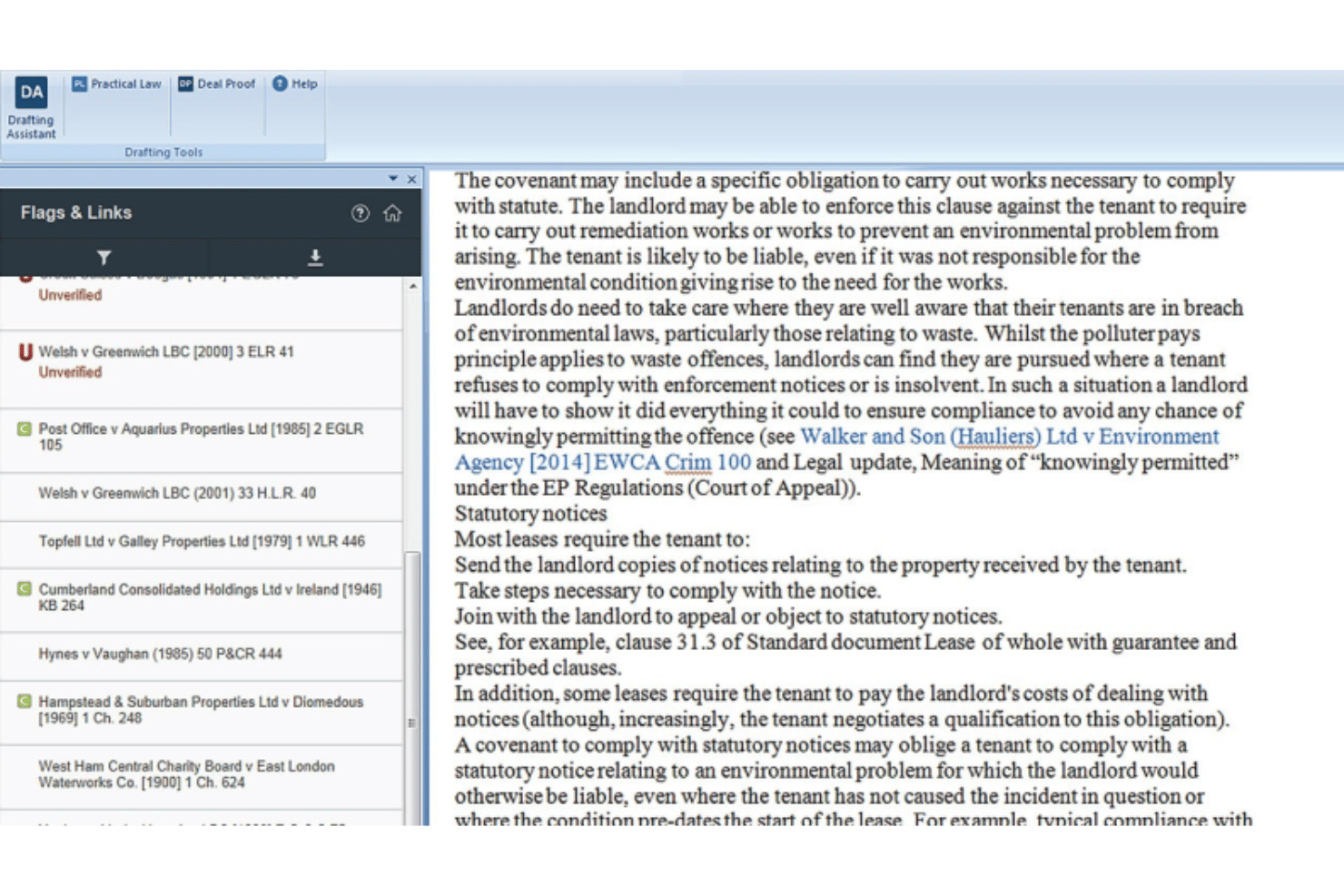
Expert Practice Notes
Access plain-language explanations of complex legal issues, written by experienced attorney-editors. These notes help you get up to speed quickly on new matters.
Standard Documents and Clauses
Jumpstart drafting with up-to-date templates, annotations, and negotiation tips. Each document is maintained by legal experts for accuracy and relevance.
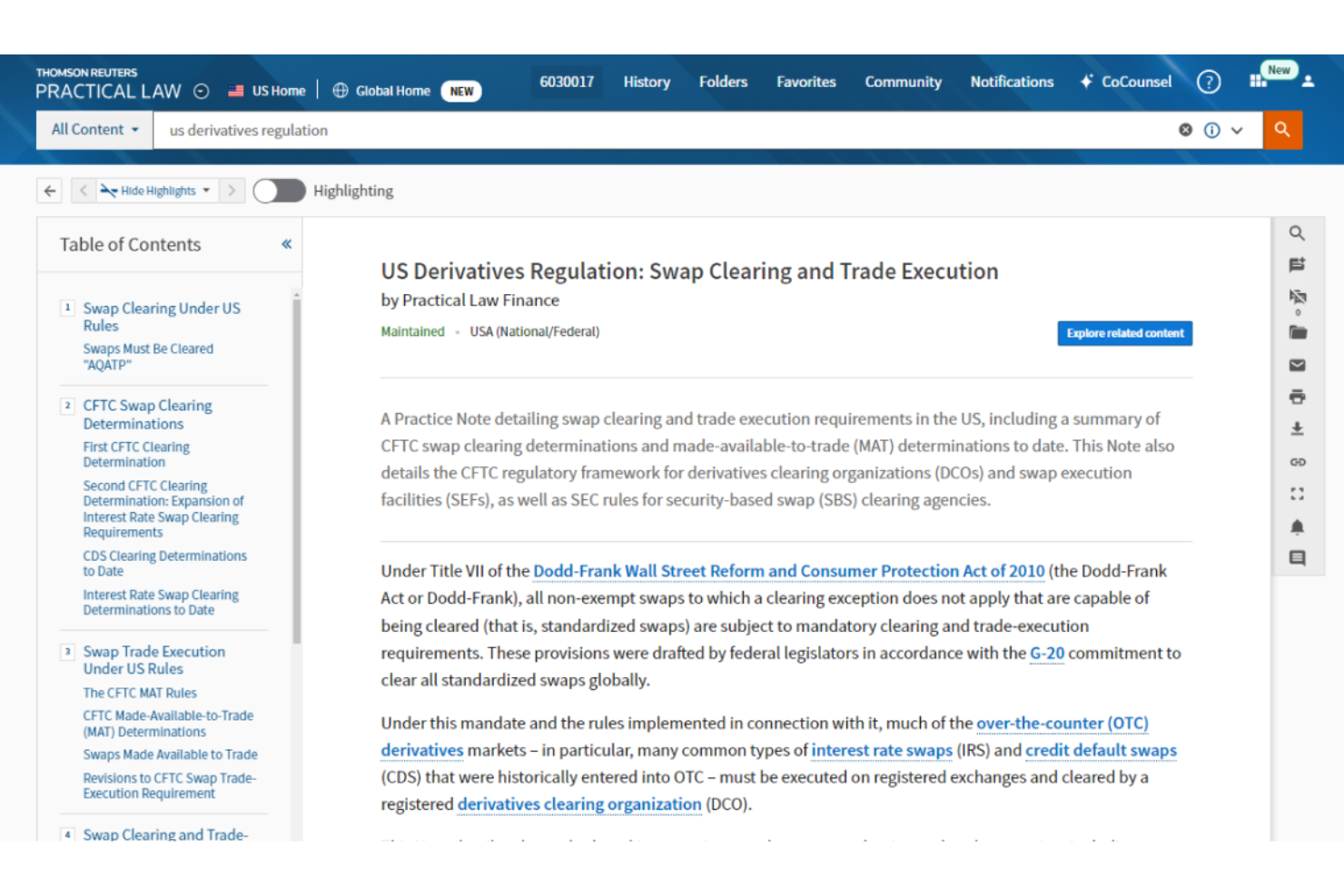
Dynamic Tool Set
Use visualization tools and data-driven charts to gain deeper legal insights. This feature helps you navigate unfamiliar areas of law with confidence.
Search & Summarize with AI
Retrieve and synthesize critical legal information fast using CoCounsel AI. Get concise summaries of the most relevant resources for your query.
Attorney-Editor Network
Leverage a global team of 650+ full-time attorney-editors. Their expertise ensures resources are current and tailored to real-world legal challenges.
Timely Content Updates
Stay up to date with resources continuously maintained to reflect evolving laws and regulations.
Ease of Use
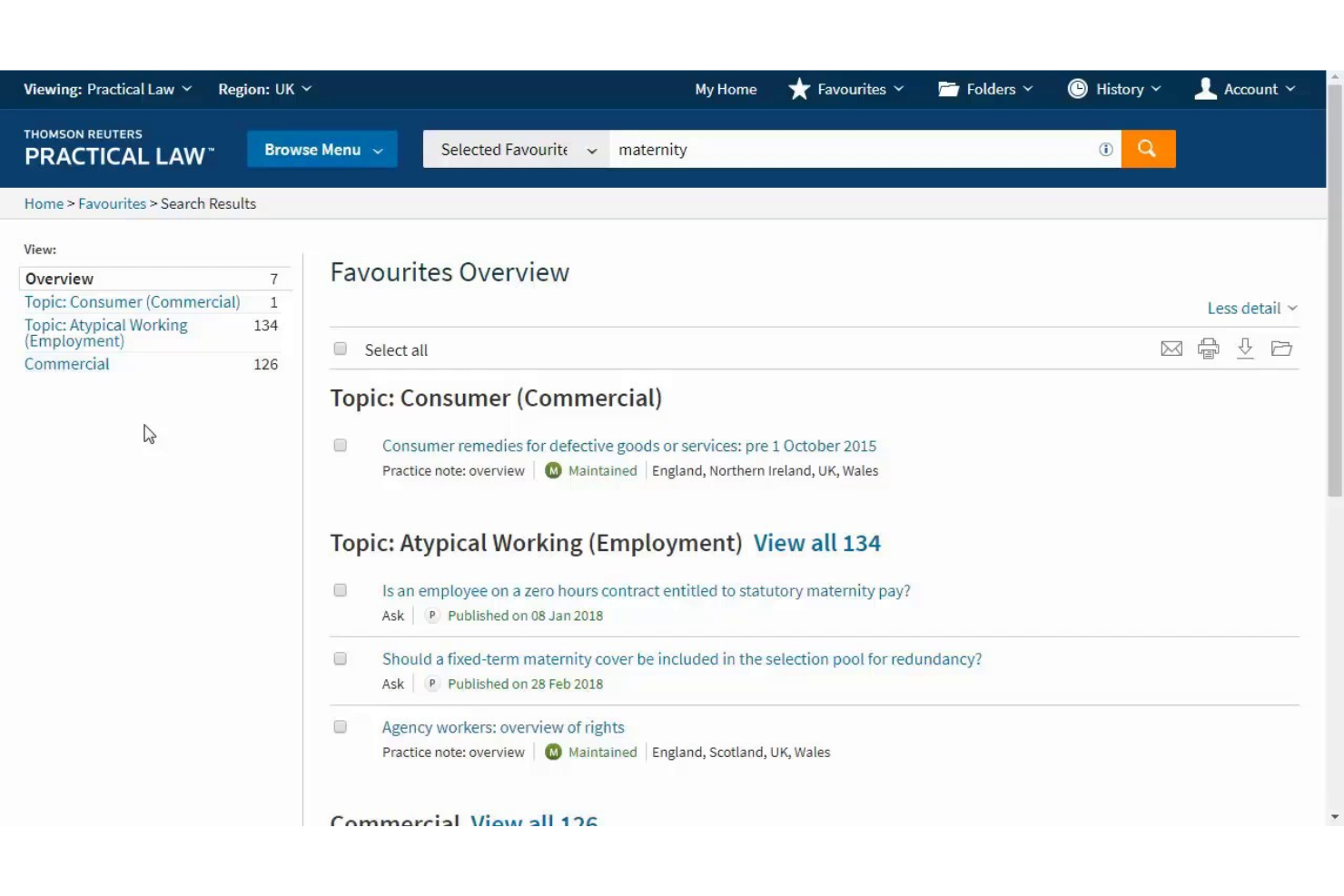
Practical Law is generally easy to use for day-to-day legal work, with strong ratings (around 4–5/5) and users highlighting its quick learning curve and practical templates. You can find answers fast thanks to structured practice notes, standard documents, and AI-assisted search. However, its large content library can feel overwhelming at first, making navigation harder for new users.
Integrations
Practical Law integrates with Westlaw, CoCounsel, Contract Express, HighQ, ProView, Legal Tracker, ONESOURCE, CLEAR, Tax Quickfinder, and Practical Law Connect.
Practical Law also offers API access and can connect with other Thomson Reuters products, but does not natively support third-party integration tools.
Practical Law Specs
- 2-Factor Authentication
- API
- Approval Workflows
- Audit Trail
- Calendar Management
- Compliance Tracking
- Contract Management
- Custom Reports
- Customer Management
- Data Export
- Data Import
- Document Management
- External Integrations
- Multi-User
- NDA Management
- Notifications
- Policy Management
- Scheduling
- Workflow Management


