

Las 10 mejores herramientas de gestión de asuntos para equipos jurídicos en 2026

10 Selección de los mejores programas de gestión de asuntos


Gestionar asuntos jurídicos puede resultar abrumador. Hay que hacer malabarismos con los plazos, los documentos y las comunicaciones con los clientes. Es difícil mantenerlo todo organizado y accesible. Ahí es donde entra en juego el software de gestión de asuntos.
Según mi experiencia, estas herramientas te ayudan a centralizar los expedientes, hacer un seguimiento de los plazos y mejorar la colaboración dentro de tu equipo. Están diseñadas para aliviar el estrés de gestionar varios casos a la vez.
En este artículo, compartiré mis principales recomendaciones de software de gestión de asuntos. He probado y analizado cada uno de forma independiente para ofrecerte información imparcial. Encontrarás un desglose de las funciones, las ventajas y los inconvenientes, y aquello que hace única a cada herramienta. Tanto si eres un profesional independiente como si formas parte de un gran bufete, aquí encontrarás algo para ti.
Por qué confiar en nuestras recomendaciones de software
Nuestro equipo lleva probando y evaluando software desde 2012. Como líderes de despachos jurídicos, sabemos lo difícil —y lo importante— que es elegir el software adecuado.
Para esta guía, evaluamos las herramientas mediante pruebas prácticas e investigación independiente, puntuando las herramientas según nuestros criterios de selección.
Nuestras reseñas reflejan nuestro criterio editorial humano, no un discurso de ventas.
Tabla comparativa: software de gestión de asuntos
Esta tabla comparativa resume los detalles de precios de mis principales selecciones de software de gestión de asuntos.
| Tool | Best For | Trial Info | Price | ||
|---|---|---|---|---|---|
| 1 | Mejor para la comunicación y colaboración con clientes | Prueba gratuita de 10 días + demo gratis disponible | Desde $49/usuario/mes (facturado anualmente) | Website | |
| 2 | La mejor opción para optimizar las operaciones legales mediante IA | Demostración gratuita disponible | Precios bajo solicitud | Website | |
| 3 | Mejor para la gestión legal todo en uno de despachos jurídicos | Prueba gratuita de 10 días | Desde $79/usuario/mes (facturado anualmente) | Website | |
| 4 | Ideal para la automatización sin código en servicios legales | Prueba gratuita disponible | Precios a consultar | Website | |
| 5 | La mejor para la personalización de flujos de trabajo con arrastrar y soltar | Precio bajo consulta | Website | ||
| 6 | La mejor para la gestión escalable de despachos de abogados en la nube | Demostración gratuita disponible | Desde $52/usuario/mes (facturación anual) | Website | |
| 7 | Ideal para el seguimiento de gastos legales | Not available | Precio a consultar | Website | |
| 8 | La mejor para conocimientos legales basados en datos | Prueba gratuita disponible | Desde $12/usuario/mes (facturado anualmente) | Website | |
| 9 | Mejor para prácticas de derecho de discapacidad y lesiones | Not available | Desde $69/usuario/mes (facturado anualmente) | Website | |
| 10 | Ideal para flujos de trabajo jurídicos en la nube sin interrupciones | Demostración gratuita disponible | Desde $49/usuario/mes (facturado anualmente) | Website |
Análisis de los mejores programas de gestión de asuntos
A continuación encontrarás mis resúmenes detallados de los mejores programas de gestión de asuntos que llegaron a mi selección. Mis análisis ofrecen una visión detallada de las funciones clave, las ventajas y los inconvenientes, las integraciones y los casos de uso ideales de cada herramienta para ayudarte a encontrar la mejor opción para ti.

MyCase
Mejor para la comunicación y colaboración con clientes
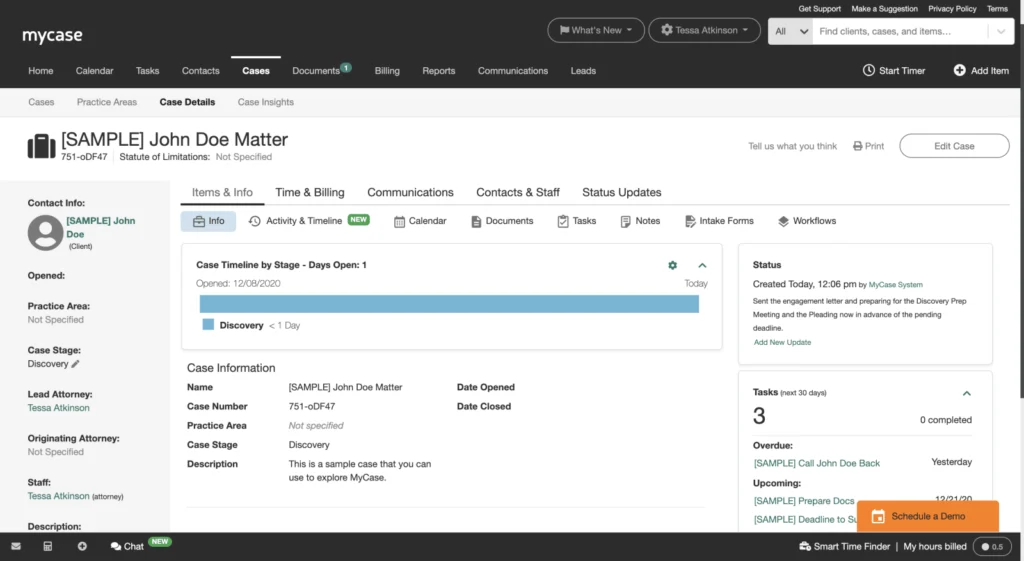
MyCase es un software de gestión de despachos jurídicos diseñado para agilizar la comunicación y colaboración con los clientes. Su interfaz fácil de usar y el énfasis en la participación del cliente lo convierten en la elección ideal para los bufetes que desean mejorar sus interacciones con los clientes.
Por qué elegí MyCase: Elegí MyCase para esta lista debido a su fuerte enfoque en la comunicación y colaboración con los clientes. La plataforma ofrece funciones que facilitan la comunicación y colaboración entre los despachos y sus clientes, diferenciándola de otras herramientas de gestión jurídica.
Funciones destacadas e integraciones: Las funciones destacadas de MyCase incluyen un portal para clientes, compartición y colaboración de documentos, y mensajería integrada. Estas herramientas ayudan a mejorar la participación y comunicación con los clientes. MyCase también ofrece integraciones con aplicaciones populares como QuickBooks Online, Microsoft Office y Google Workspace, lo que permite a los usuarios sincronizar datos y optimizar su flujo de trabajo.
Pros and Cons
Pros:
- Gran enfoque en la comunicación y colaboración con clientes
- Interfaz fácil de usar
- Integraciones con QuickBooks Online, Microsoft Office y Google Workspace
Cons:
- No hay aplicación móvil para usuarios de Android
- Opciones de personalización limitadas
- Puede ser caro para firmas más pequeñas

Checkbox
La mejor opción para optimizar las operaciones legales mediante IA
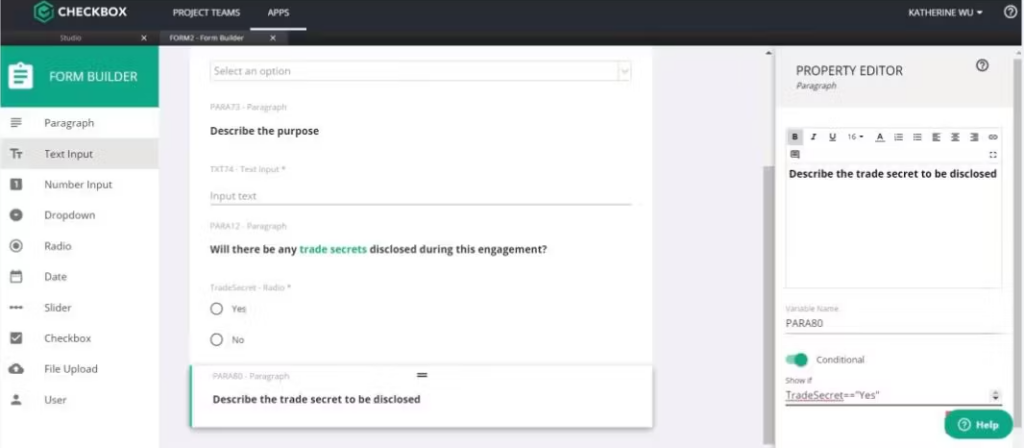
Checkbox es una plataforma impulsada por IA que ayuda a los bufetes de abogados a optimizar sus operaciones legales, automatizar tareas y reducir el trabajo manual. Al aprovechar la inteligencia artificial, mejora eficazmente la eficiencia y la productividad, lo que la convierte en la mejor opción para optimizar las operaciones legales mediante IA.
Por qué elegí Checkbox: Elegí Checkbox para esta lista debido a sus potentes capacidades de IA, que la diferencian de otras herramientas de gestión legal. El enfoque de la herramienta en utilizar la inteligencia artificial para automatizar y optimizar los procesos legales la convierte en la mejor opción para optimizar las operaciones legales mediante IA.
Funciones e integraciones destacadas: Las funciones clave de Checkbox incluyen la automatización de documentos impulsada por IA, un creador de árboles de decisión y la automatización de flujos de trabajo. Estas funciones permiten a los bufetes de abogados automatizar tareas repetitivas, crear árboles de decisión personalizados y diseñar procesos eficientes. Entre las integraciones importantes que ofrece Checkbox se incluyen Salesforce, Microsoft Office 365 y Zapier, que mejoran la colaboración y la gestión de datos.
Pros and Cons
Pros:
- Automatización de documentos impulsada por IA para aumentar la eficiencia
- Creador de árboles de decisión personalizable para soluciones adaptadas
- Integraciones con Salesforce, Microsoft Office 365 y Zapier
Cons:
- La información sobre precios no está disponible fácilmente
- Puede tener una curva de aprendizaje pronunciada para algunos usuarios
- Opciones limitadas de atención al cliente

CosmoLex
Mejor para la gestión legal todo en uno de despachos jurídicos
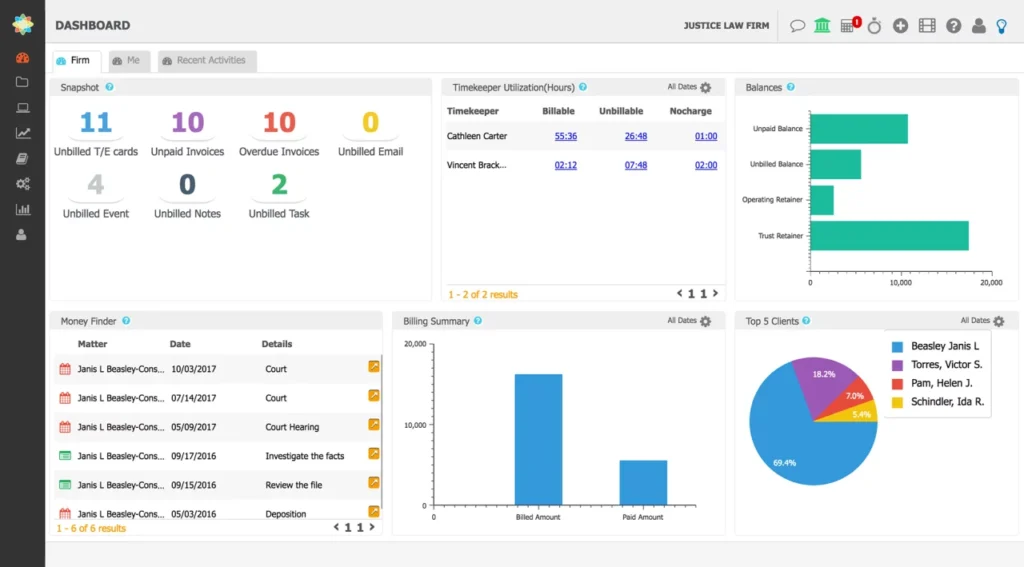
CosmoLex es una solución integral de gestión de despachos jurídicos que abarca desde la gestión de casos hasta la contabilidad y la facturación. Su enfoque todo en uno simplifica las operaciones de los despachos, lo que lo hace ideal para equipos jurídicos que buscan una plataforma unificada para gestionar su práctica.
Por qué elegí CosmoLex: Elegí CosmoLex por su capacidad de ofrecer una amplia gama de funciones dentro de una sola plataforma, agilizando la gestión de despachos jurídicos. Su funcionalidad todo en uno lo destaca frente a otras opciones, siendo la mejor elección para equipos legales que prefieren una solución unificada para sus operaciones diarias. El enfoque integral de CosmoLex es lo que lo convierte en una opción excepcional para la gestión de despachos jurídicos.
Características destacadas e integraciones: CosmoLex ofrece una gestión robusta de casos, gestión de documentos, control de tiempos, facturación y funciones de contabilidad integradas. Además, incluye capacidades de contabilidad de fondos en fideicomiso, garantizando el cumplimiento de regulaciones legales. CosmoLex se integra con herramientas populares como Microsoft Office 365, Google Workspace y LawPay para una sincronización de datos y procesamiento de pagos sin interrupciones.
Pros and Cons
Pros:
- Solución integral todo en uno para la gestión legal de despachos
- Funciones integradas de contabilidad y contabilidad fiduciaria
- Integración perfecta con herramientas de productividad populares
- Solución integral todo en uno para la gestión legal de despachos
- Funciones integradas de contabilidad y contabilidad fiduciaria
- Integración perfecta con herramientas de productividad populares
Cons:
- Precio inicial más alto comparado con otras soluciones
- Sin aplicación móvil nativa para acceso en movimiento
- Opciones de personalización limitadas para necesidades más específicas
- Precio inicial más alto comparado con otras soluciones
- Sin aplicación móvil nativa para acceso en movimiento
- Opciones de personalización limitadas para necesidades más específicas

BRYTER
Ideal para la automatización sin código en servicios legales
Pros and Cons
Pros:
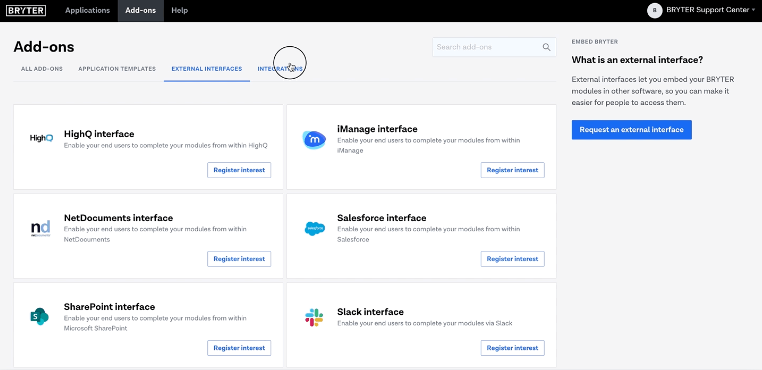
- Plataforma sin código para facilitar la creación de aplicaciones personalizadas
- Interfaz de arrastrar y soltar para una experiencia de usuario fluida
- Funciones integradas de cumplimiento y auditoría
Cons:
- Información de precios no disponible fácilmente
- Puede tener una curva de aprendizaje para usuarios no técnicos
- Integraciones nativas limitadas con otros programas

La mejor para la personalización de flujos de trabajo con arrastrar y soltar
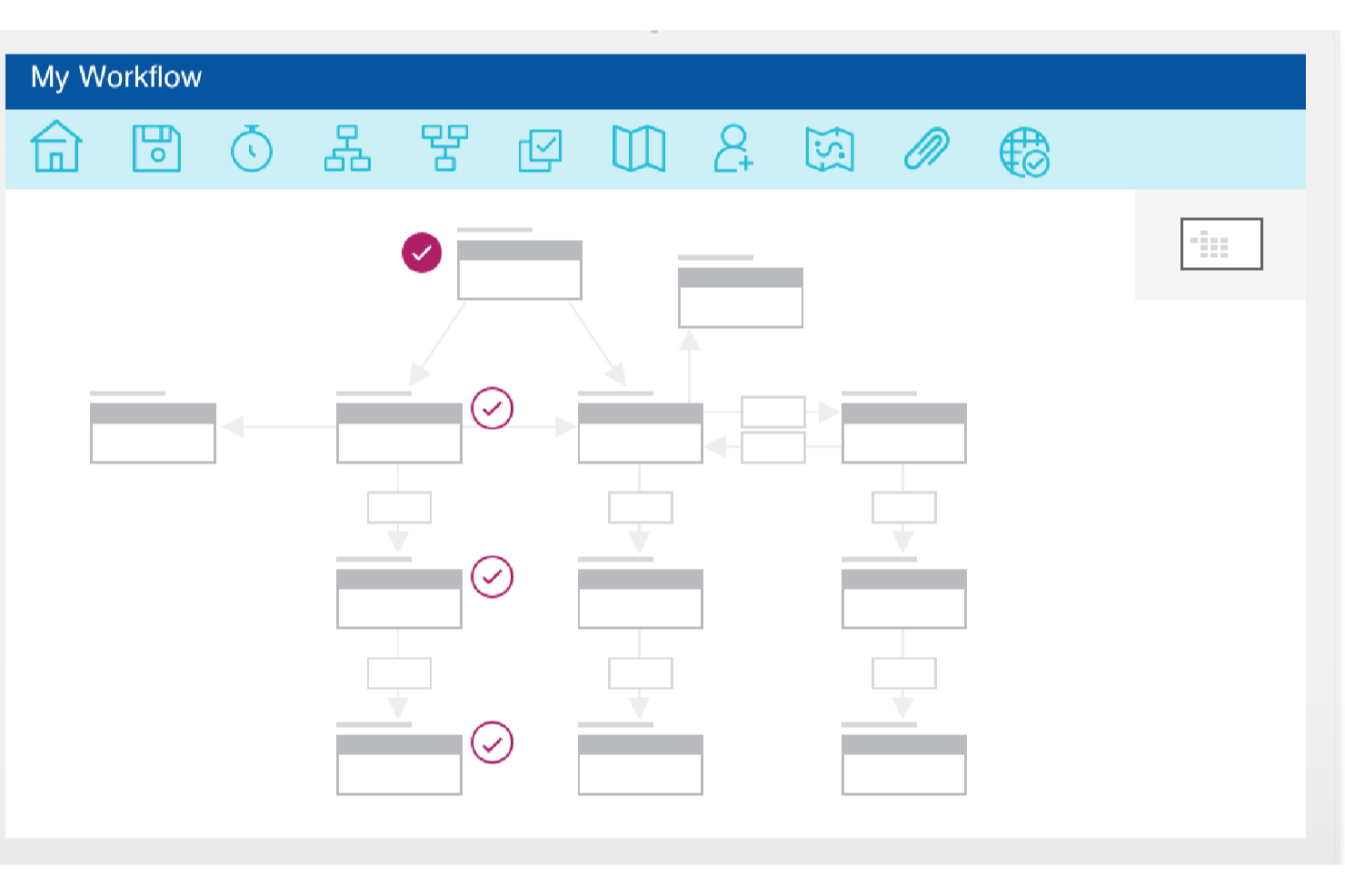
Mitratech TAP Workflow Automation ofrece a los equipos legales una forma de diseñar, automatizar y gestionar flujos de trabajo complejos de asuntos legales sin una gran implicación del departamento de TI. Esta plataforma es ideal para organizaciones que necesitan estandarizar procesos, garantizar el cumplimiento y reducir el trabajo manual en operaciones legales. Su flexible automatización de flujos de trabajo ayuda a los profesionales jurídicos a gestionar grandes volúmenes de asuntos mientras mantienen el control y la visibilidad.
¿Para quién es mejor Mitratech TAP Workflow Automation?
Mitratech TAP Workflow Automation es una excelente opción para equipos legales internos y profesionales de operaciones legales en organizaciones medianas y grandes que necesitan automatizar y estandarizar flujos de trabajo complejos de gestión de asuntos.
Por qué elegí Mitratech TAP Workflow Automation
Elegí Mitratech TAP Workflow Automation por su personalización intuitiva de flujos de trabajo mediante arrastrar y soltar, lo cual es especialmente valioso para equipos legales que gestionan diversos tipos de asuntos. La plataforma permite diseñar y modificar visualmente los flujos de trabajo sin necesidad de programación, por lo que puedes adaptar rápidamente los procesos a medida que cambian tus necesidades. Me gusta cómo se pueden planificar cadenas de aprobación, el enrutamiento de documentos y la asignación de tareas directamente en el constructor. Esta flexibilidad significa que tu sistema de gestión de asuntos puede evolucionar junto a tus operaciones legales, sin depender del departamento de TI ni de consultores externos.
Funciones clave de Mitratech TAP Workflow Automation
Otras funciones que los equipos de gestión de asuntos pueden encontrar útiles incluyen:
- Notificaciones automatizadas: El sistema envía alertas y recordatorios para mantener a las partes interesadas informadas sobre el progreso de los asuntos y los plazos.
- Gestión de documentos: Guarda, organiza y recupera documentos relacionados con los asuntos directamente dentro de cada flujo de trabajo.
- Integración de firma electrónica: Recoge firmas legalmente vinculantes en documentos sin salir de la plataforma.
- Pistas de auditoría: Rastrea cada acción y cambio dentro de un flujo de trabajo para garantizar el cumplimiento y la rendición de cuentas.
Integraciones de Mitratech TAP Workflow Automation
Las integraciones incluyen TeamConnect, AdobeSign, DocuSign, Salesforce Classic, ABCPdf, MS SQL Server y una API abierta para integraciones personalizadas.
Pros and Cons
Pros:
- Escalados automáticos y enrutamiento de aprobaciones
- Conectores predefinidos para herramientas legales populares
- Interfaz sin código para el diseño de flujos de trabajo
Cons:
- Recursos de capacitación y documentación limitados
- Sin plan gratuito permanente ni acceso abierto a prueba

La mejor para la gestión escalable de despachos de abogados en la nube

Centerbase es una plataforma de gestión para despachos de abogados basada en la nube que ofrece herramientas completas para facturación, gestión de casos y administración de documentos. Su naturaleza escalable le permite adaptarse a despachos en crecimiento, lo que la convierte en la mejor opción para la gestión de despachos de abogados en la nube con capacidad de escalabilidad.
Por qué elegí Centerbase: Seleccioné Centerbase para esta lista debido a su adaptabilidad a las necesidades de despachos de diversos tamaños. La capacidad de la plataforma para crecer junto con el despacho la diferencia de otras herramientas de gestión legal, haciéndola ideal para la gestión en la nube con escalabilidad.
Funciones destacadas e integraciones: Las funciones importantes de Centerbase incluyen seguimiento de tiempo y gastos, facturación personalizable y un sólido sistema de gestión de documentos. Estas herramientas ayudan a los despachos a optimizar sus operaciones y mejorar la eficiencia. Las integraciones clave que ofrece Centerbase incluyen QuickBooks, Office 365 y Dropbox, lo que contribuye a un flujo de trabajo sin interrupciones.
Pros and Cons
Pros:
- Escalable para adaptarse a despachos en crecimiento
- Opciones de facturación personalizables
- Integraciones con QuickBooks, Office 365 y Dropbox
Cons:
- El precio puede ser elevado para despachos pequeños
- No hay opción de facturación mensual disponible
- Horario de atención al cliente limitado

Ideal para el seguimiento de gastos legales
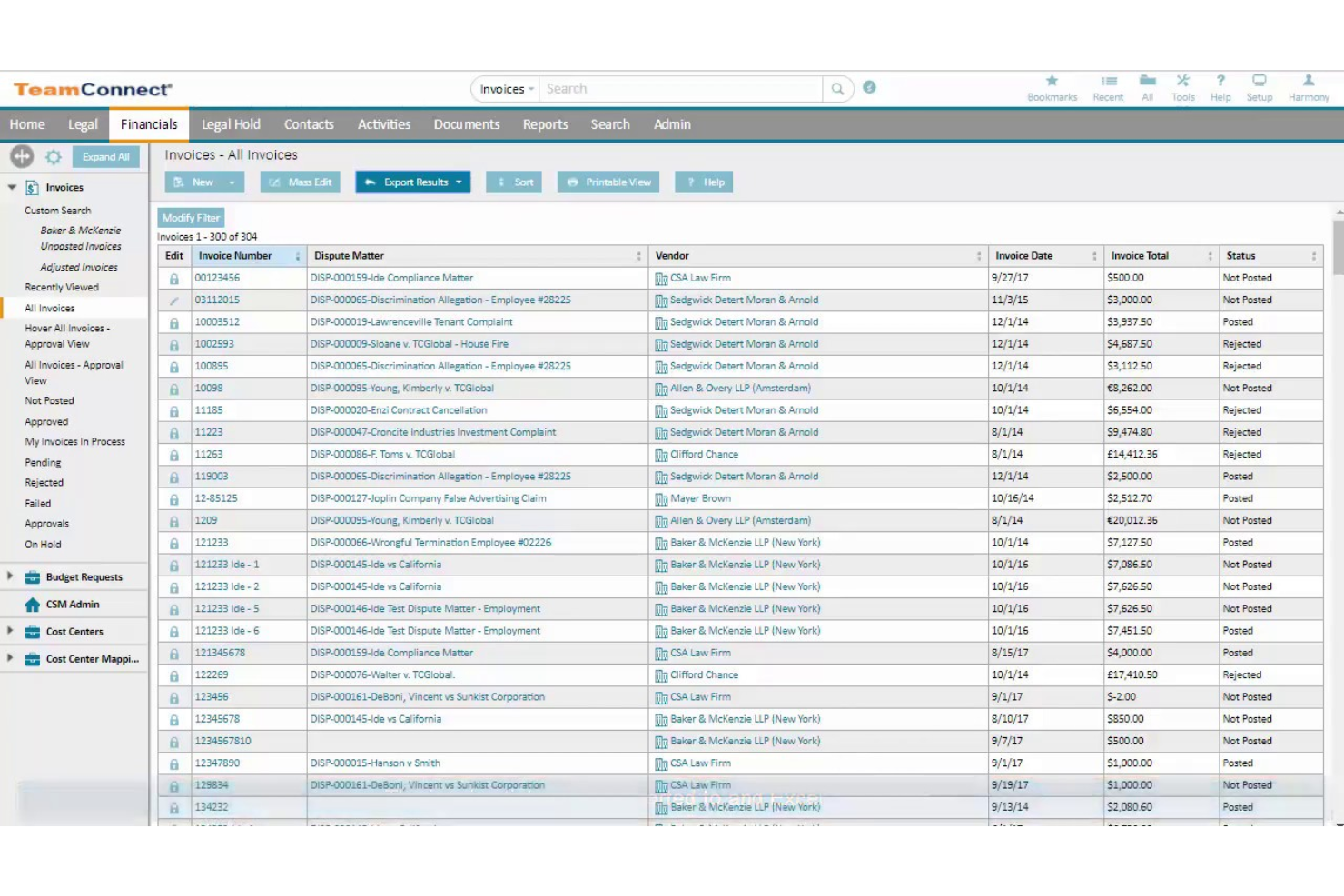
Mitratech TeamConnect es una plataforma de gestión legal empresarial diseñada para ayudar a los equipos legales internos a gestionar asuntos, controlar los gastos legales y mantener el cumplimiento. La plataforma combina automatización, analítica y capacidades de IA para centralizar operaciones, optimizar flujos de trabajo y mejorar la toma de decisiones.
Por qué elegí Mitratech TeamConnect: Elegí Mitratech TeamConnect porque ofrece sólidas capacidades de gestión de gastos legales y gestión de casos, lo que ayuda a los equipos jurídicos a rastrear gastos y administrar casos de manera más efectiva. Su gestión integrada de retención legal garantiza que los documentos y datos críticos se conserven durante los procedimientos, reduciendo los riesgos potenciales. Además, TeamConnect respalda la toma de decisiones basada en datos con herramientas integradas de analítica y automatización, lo que lo convierte en una opción versátil para los departamentos jurídicos corporativos.
Características destacadas e integraciones
Entre las características clave de Mitratech TeamConnect se incluyen la automatización avanzada de flujos de trabajo para optimizar procesos, herramientas de gestión de riesgos para supervisión de terceros y cumplimiento normativo, y revisión gestionada de facturación para mantener la transparencia en los gastos legales. Las integraciones importantes incluyen DMS Connector, TeamConnect Business Intelligence (TCBI), Módulo de Integración TAP, Integración de Retención Legal, Automatización de Documentos, Microsoft Office Suite, DocuSign API e integración con HotDocs.
Pros and Cons
Pros:
- Automatización avanzada de flujos de trabajo para una gestión eficiente de asuntos
- Seguimiento de gastos legales incorporado y revisión gestionada de facturas
- Integraciones sólidas con DocuSign, HotDocs y Microsoft Office
Cons:
- Requiere configuración e implementación para maximizar su valor
- Transparencia de precios limitada; solo presupuestos personalizados

Xakia
La mejor para conocimientos legales basados en datos
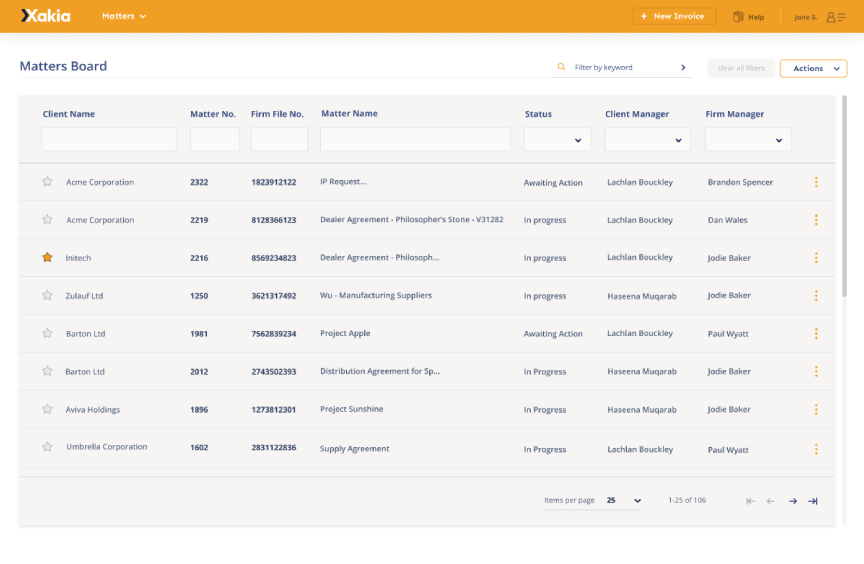
Xakia es una plataforma de operaciones legales diseñada para proporcionar a los despachos de abogados y equipos jurídicos internos información basada en datos para una mejor toma de decisiones. Con un fuerte enfoque en el análisis de datos y la visualización, Xakia optimiza la gestión de asuntos legales mientras asegura que mantengas el control de los indicadores clave de desempeño.
Por qué elegí Xakia: Elegí Xakia por sus potentes capacidades de análisis de datos, que la diferencian de otras soluciones. Su énfasis en el conocimiento respaldado por datos la convierte en la mejor opción para profesionales jurídicos que desean tomar decisiones informadas y optimizar sus operaciones. Este enfoque en la obtención de perspectivas legales basadas en datos es lo que posiciona a Xakia como un fuerte competidor en los programas de gestión de asuntos legales.
Funciones destacadas e integraciones: Xakia ofrece paneles de control intuitivos de asuntos, informes en tiempo real y visualización de datos personalizable para mantener informados a los usuarios sobre el rendimiento de su práctica legal. También proporciona herramientas para la captación y el triaje de asuntos, ayudando a los equipos a priorizar y asignar recursos de manera eficaz. Xakia se integra de manera fluida con herramientas de productividad populares como Microsoft Office 365, G Suite y Trello, así como con sistemas de gestión documental como NetDocuments e iManage.
Pros and Cons
Pros:
- Potentes herramientas de análisis y visualización de datos
- Paneles de control personalizables de asuntos e informes en tiempo real
- Integración fluida con herramientas de productividad populares
Cons:
- No incluye un sistema de gestión documental integrado
- El precio puede ser elevado para equipos pequeños
- No cuenta con una aplicación móvil nativa para acceso en movimiento

Mejor para prácticas de derecho de discapacidad y lesiones

Prevail Case Management System es un software integral de gestión de casos legales diseñado específicamente para prácticas jurídicas de derecho de discapacidad y lesiones. Sus funciones personalizadas y su robusta funcionalidad lo convierten en una opción ideal para despachos enfocados en estas áreas especializadas del derecho.
Por qué elegí Prevail Case Management System: Elegí Prevail Case Management System por su enfoque en el derecho de discapacidad y lesiones, lo que lo diferencia de otras herramientas genéricas de gestión legal. Sus características especializadas y funcionalidades atienden específicamente las necesidades únicas de estas prácticas, convirtiéndolo en la mejor opción para despachos de derecho de discapacidad y lesiones.
Características destacadas e integraciones: Prevail ofrece funciones esenciales para prácticas de derecho de discapacidad y lesiones, incluyendo seguimiento de casos, gestión de documentos y plantillas de flujo de trabajo personalizables. También proporciona integraciones perfectas con Microsoft Office y QuickBooks, lo que permite a los usuarios sincronizar fácilmente datos y gestionar los aspectos financieros de su práctica.
Pros and Cons
Pros:
- Adaptado a las prácticas de derecho de discapacidad y lesiones
- Plantillas de flujo de trabajo personalizables
- Integraciones con Microsoft Office y QuickBooks
Cons:
- Opciones limitadas para prácticas que no sean de derecho de discapacidad y lesiones
- No hay aplicación móvil disponible
- Puede no ser adecuado para despachos pequeños debido a la estructura de precios

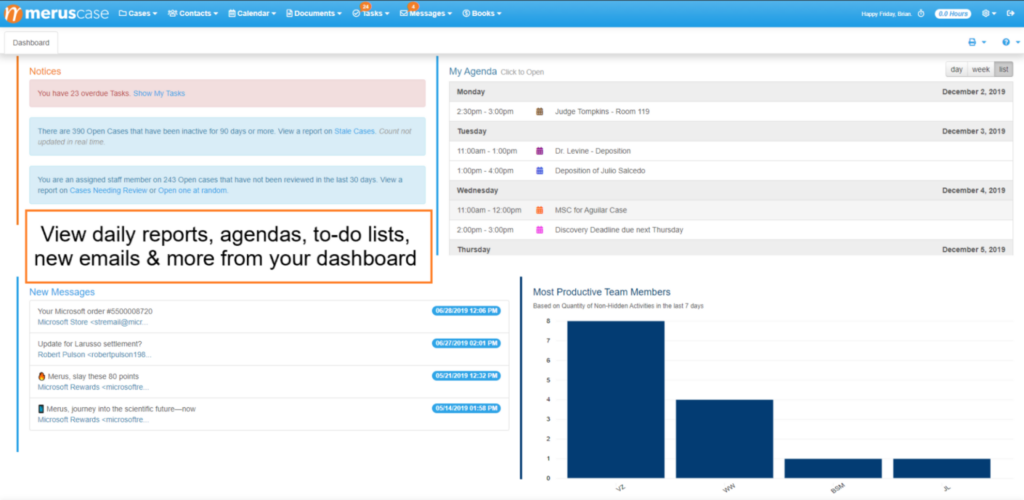
MerusCase es una solución de gestión de prácticas legales basada en la nube, diseñada para optimizar el flujo de trabajo y mejorar la colaboración entre los miembros del equipo. Su integración fluida de gestión de casos, gestión de documentos y herramientas de comunicación la convierte en una opción perfecta para profesionales jurídicos que buscan una solución eficiente basada en la nube.
Por qué elegí MerusCase: Elegí MerusCase por su arquitectura en la nube y sus capacidades para flujos de trabajo sin interrupciones. Su integración de funciones esenciales en una sola plataforma simplifica la colaboración y la organización, diferenciándola de otras opciones. El enfoque basado en la nube de MerusCase es lo que la convierte en la mejor elección para equipos legales que buscan optimizar sus procesos de trabajo.
Características destacadas e integraciones: MerusCase ofrece una variedad de funciones, incluyendo gestión de casos, gestión de documentos, seguimiento de tiempo, facturación y reportes. Sus integraciones internas de correo electrónico y calendario facilitan la comunicación y organización del equipo. MerusCase también se integra con herramientas populares como Microsoft Office, Google Workspace y QuickBooks para una sincronización de datos fluida.
Pros and Cons
Pros:
- Solución en la nube eficiente para flujos de trabajo jurídicos
- Integración fluida con las herramientas de productividad más populares
- Conjunto de funciones integral para la gestión de despachos
Cons:
- Carece de aplicación móvil para acceso en movimiento
- Opciones de personalización limitadas
- No cuenta con funcionalidad nativa para contabilidad fiduciaria
Otros programas de gestión de asuntos
Estas son algunas opciones adicionales de software de gestión de asuntos que no llegaron a mi selección, pero que aun así merece la pena considerar:
- Moxo
Ideal para automatización legal altamente personalizable
- LegalEdge
Bueno para el seguimiento de casos legales centrados en el gobierno
- Coyote Analytics
Bueno para análisis financieros y de práctica completos


Cómo evalúo el software de gestión de casos
Evalúo las herramientas de gestión de casos en dos niveles: lo imprescindible—seguimiento de casos, facturación, calendario de plazos—y los diferenciadores que separan la opción adecuada del resto.
Funcionalidades básicas (Requisitos esenciales para esta lista)
Cuando selecciono herramientas para mi lista, califico cada una en una escala del 0 (no ofrece la funcionalidad) al 5 (destaca en este aspecto) para cada funcionalidad básica que se detalla a continuación. Luego, calculo el puntaje total de la herramienta como un porcentaje. Cada herramienta debe lograr un puntaje mínimo total del 65% para ser considerada para su inclusión.
- Gestión del ciclo de vida del caso: Analizo cómo cada herramienta gestiona un caso desde la admisión hasta el cierre, incluyendo si admite etapas personalizadas, tipos de caso y flujos de trabajo de estados.
- Gestión de documentos y archivos: Almacenar archivos en una carpeta del caso es lo mínimo. Reviso el control de versiones, etiquetado, búsqueda y cómo la herramienta gestiona documentos provenientes de correos electrónicos o fuentes externas.
- Seguimiento de plazos y calendarios: Perder un plazo de prescripción o de presentación es el peor escenario posible. Evalúo cómo cada plataforma gestiona recordatorios, fechas recurrentes y cálculos impulsados por reglas de tribunales.
- Registro de tiempos y facturación: Considero si la herramienta captura el tiempo a nivel del caso y admite facturación, seguimiento de gastos y estructuras tarifarias que se adapten a flujos de trabajo reales de facturación.
- Asignación de tareas y flujos de trabajo: Delegar tareas entre abogados y asistentes legales en un mismo caso es trabajo cotidiano. Busco funciones de asignación, fechas de vencimiento, dependencias y visibilidad del progreso.
- Informes y análisis de casos: Evalúo qué informes ofrece cada herramienta de manera nativa y si es posible crear vistas personalizadas para el seguimiento de gastos, distribución de carga laboral o resúmenes de estado de casos.
Una vez que tengo una lista de herramientas que cumplen con estos criterios, considero qué distingue a cada plataforma.
Factores diferenciadores (Qué distingue a los proveedores)
Así es como comparo y contrasto los diferentes proveedores:
Funciones destacadas
La verificación de conflictos es un gran diferenciador para mí. Analizo si una herramienta puede escanear automáticamente entre partes, entidades relacionadas y casos históricos antes de la admisión para señalar posibles problemas. La gestión de abogados externos también es importante, especialmente para equipos internos que monitorean el gasto en estudios externos y hacen cumplir las políticas de facturación. Formularios de admisión configurables completan el panorama al permitir que los equipos estandaricen cómo ingresan los nuevos casos al sistema, lo que reduce registros incompletos y el seguimiento manual.
Más allá de las funciones
Los estándares de seguridad y cumplimiento tienen un peso real aquí. Los equipos legales manejan comunicaciones privilegiadas y datos sensibles de clientes, por lo que reviso el cumplimiento con SOC 2 Tipo II, muros éticos y controles de acceso basados en roles. Las integraciones con otros sistemas también determinan qué tan bien se adapta una herramienta al trabajo diario. Una plataforma de gestión de casos que se conecta con Microsoft 365, el sistema de gestión documental (DMS) y el sistema contable ahorra horas de ingreso de datos duplicados. También evalúo si el modelo de precios del proveedor escala con el crecimiento del despacho, ya que las estructuras por usuario y por caso pueden diferir mucho a medida que cambia el número de empleados.
Cómo elegir un software de gestión de asuntos
Es fácil perderse entre largas listas de funciones y estructuras de precios complejas. Para ayudarte a mantener la atención mientras avanzas en tu proceso único de selección de software, aquí tienes una lista de factores que debes tener en cuenta:
| Factor | Qué tener en cuenta |
|---|---|
| Escalabilidad | ¿Crecerá el software con su bufete? Considere el crecimiento futuro y si la herramienta puede gestionar un mayor volumen de asuntos sin tener que cambiarla más adelante. |
| Integraciones | ¿Se conecta con sus herramientas actuales? Compruebe la compatibilidad con sus sistemas actuales, como el software de contabilidad o los clientes de correo electrónico. |
| Personalización | ¿Puede adaptarlo a sus necesidades? Busque opciones que le permitan ajustar los flujos de trabajo y los paneles para adaptarlos a sus procesos específicos. |
| Facilidad de uso | ¿Es intuitiva la interfaz? Asegúrese de que su equipo pueda aprender a utilizar el sistema y navegar por él rápidamente sin necesidad de una formación exhaustiva. |
| Implementación e incorporación | ¿Con qué rapidez puede empezar? Considere el tiempo necesario para la configuración y la calidad del soporte de incorporación, como sesiones de formación o guías. |
| Coste | ¿Se ajusta a su presupuesto? Evalúe la estructura de precios y esté atento a las tarifas ocultas. Compare el coste con el valor que ofrece a su despacho. |
| Medidas de seguridad | ¿Qué grado de seguridad tienen sus datos? Asegúrese de que el software cumple las normas legales de protección de datos y ofrece cifrado y copias de seguridad periódicas. |
| Requisitos de cumplimiento | ¿Cumple las normativas legales? Compruebe si el software permite cumplir normas del sector como el RGPD o la HIPAA, según su jurisdicción. |
¿Qué es el software de gestión de asuntos?
El software de gestión de asuntos es una herramienta diseñada para ayudar a los profesionales del derecho a organizar y gestionar su trabajo de forma eficiente. Los abogados, asistentes jurídicos y equipos legales suelen utilizar estas herramientas para realizar un seguimiento de los asuntos, los documentos y los plazos. Las funciones de almacenamiento de documentos, comunicación con clientes y facturación ayudan a mejorar la organización y la productividad. Estas herramientas ofrecen un valor significativo al simplificar la gestión de asuntos y mejorar la eficiencia de los flujos de trabajo de los profesionales del derecho.
Funciones
Al seleccionar un software de gestión de asuntos, preste atención a las siguientes funciones clave:
- Gestión de asuntos: Ayuda a organizar y realizar un seguimiento de toda la información relacionada con los asuntos en un solo lugar, mejorando la accesibilidad y la eficiencia.
- Almacenamiento de documentos: Proporciona un almacenamiento seguro para los documentos legales, garantizando una recuperación sencilla y el cumplimiento de las normativas sobre datos.
- Comunicación con clientes: Facilita la comunicación directa con los clientes mediante portales o sistemas de mensajería, mejorando las relaciones con ellos.
- Facturación y emisión de facturas: Automatiza el seguimiento del tiempo y los procesos de facturación, lo que facilita la gestión financiera y garantiza una facturación precisa.
- Programación de tareas: Permite establecer plazos y recordatorios, ayudando a los equipos legales a mantenerse al día con las tareas y citas importantes.
- Paneles personalizables: Ofrece la posibilidad de adaptar los paneles a necesidades específicas, mejorando la experiencia del usuario y la eficiencia.
- Capacidades de integración: Garantiza la compatibilidad con las herramientas y sistemas existentes, permitiendo un flujo de datos fluido entre plataformas.
- Medidas de seguridad: Proporciona protección de datos mediante cifrado y copias de seguridad periódicas, salvaguardando la información legal confidencial.
- Interfaz fácil de usar: Garantiza la facilidad de uso mediante una navegación intuitiva, reduciendo la curva de aprendizaje de los nuevos usuarios.
- Soporte para el cumplimiento: Ayuda a cumplir normativas legales como el RGPD o la HIPAA, garantizando el cumplimiento de las normas del sector.
Ventajas
La implementación de un software de gestión de asuntos ofrece varias ventajas para su equipo y su empresa. Estas son algunas de las que puede esperar:
- Mejor organización: Mantiene toda la información relacionada con los asuntos en un solo lugar, lo que facilita su gestión y acceso.
- Comunicación mejorada: Facilita mejores interacciones con los clientes mediante mensajería directa y portales para clientes.
- Ahorro de tiempo: Automatiza tareas rutinarias como la facturación y la programación, liberando tiempo para trabajos más importantes.
- Mayor precisión: Reduce los errores en la facturación y la gestión de documentos, lo que permite obtener resultados más fiables.
- Garantía de cumplimiento: Ayuda a garantizar el cumplimiento de normas legales como el RGPD, reduciendo el riesgo de incumplimiento.
- Mejor gestión de la carga de trabajo: Permite programar tareas y realizar un seguimiento de los plazos de forma eficiente, ayudando a los equipos a mantenerse al día con sus responsabilidades.
- Seguridad de los datos: Proporciona cifrado y copias de seguridad periódicas para proteger la información legal confidencial frente a accesos no autorizados.
Costes & precios
Seleccionar un software de gestión de asuntos jurídicos requiere comprender los distintos modelos de precios y planes disponibles. Los costes varían en función de las características, el tamaño del equipo, los complementos y otros factores. Los departamentos jurídicos más grandes pueden necesitar un software empresarial de gestión de asuntos jurídicos para admitir flujos de trabajo más complejos.
La tabla siguiente resume los planes habituales, sus precios medios y las características que suelen incluir las soluciones de software de gestión de asuntos jurídicos:
Tabla comparativa de planes para software de gestión de asuntos jurídicos
| Tipo de plan | Precio medio | Características habituales |
|---|---|---|
| Plan gratuito | $0 | Almacenamiento básico de documentos, gestión limitada de asuntos y comunicación básica con clientes. |
| Plan personal | $10-$30/usuario/mes | Gestión de documentos, facturación básica, comunicación con clientes y programación de tareas. |
| Plan empresarial | $30-$60/usuario/mes | Facturación avanzada, portales para clientes, capacidades de integración y herramientas de generación de informes. |
| Plan corporativo | $60-$100/usuario/mes | Paneles personalizables, seguridad avanzada, asistencia para el cumplimiento normativo y soporte especializado. |
Preguntas frecuentes sobre el software de gestión de asuntos jurídicos
Estas son algunas preguntas que también me hacen sobre el software de gestión de asuntos jurídicos y la gestión de asuntos en general: