

10 mejores programas para programar citas legales en 2026

10 Lista de software de programación de citas legales


El software de programación de citas legales permite a tu despacho de abogados automatizar reservas, gestionar calendarios y coordinar reuniones con clientes sin la necesidad de correos electrónicos o llamadas telefónicas de ida y vuelta. Si buscas la mejor manera de reducir el trabajo administrativo, minimizar ausencias y mantener a tu equipo organizado, la herramienta de programación adecuada puede marcar una diferencia medible. Esta lista te ayudará a comparar las mejores opciones de software de programación de citas legales para 2026, para que encuentres una solución que se ajuste a tu flujo de trabajo, apoye el cumplimiento normativo y mejore la experiencia del cliente.
Por qué confiar en nuestras recomendaciones de software
Nuestro equipo lleva probando y evaluando software desde 2012. Como líderes de despachos jurídicos, sabemos lo difícil —y lo importante— que es elegir el software adecuado.
Para esta guía, evaluamos las herramientas mediante pruebas prácticas e investigación independiente, puntuando las herramientas según nuestros criterios de selección.
Nuestras reseñas reflejan nuestro criterio editorial humano, no un discurso de ventas.
Resumen de software de programación de citas legales
| Tool | Best For | Trial Info | Price | ||
|---|---|---|---|---|---|
| 1 | Ideal para sincronización de calendarios con plataformas externas | Prueba gratuita de 14 días y plan gratuito disponible | Desde $14.40/usuario/mes | Website | |
| 2 | Mejor para la gestión de calendarios con varios empleados | Plan gratuito disponible | Desde $5/usuario/mes (facturado anualmente) | Website | |
| 3 | Ideal para páginas de reserva de consultas legales con la marca de tu despacho | Plan gratuito disponible | Desde $11.9/mes (facturado anualmente) | Website | |
| 4 | Mejor para integración de programación a través del portal de clientes | Prueba gratuita de 10 días + demo gratis disponible | Desde $39/usuario/mes (facturado anualmente) | Website | |
| 5 | La mejor para enlaces de reserva personalizables para firmas | Prueba gratuita de 14 días + demo gratuita disponible | Desde $39/usuario/mes | Website | |
| 6 | Ideal para integrar admisión de clientes con flujos de programación de citas | Demostración gratuita disponible | Precios a consultar | Website | |
| 7 | Ideal para recordatorios y confirmaciones automáticos a clientes | Prueba gratis de 7 días + demo gratuita disponible | Desde $69CAD/usuario/mes (facturación anual) | Website | |
| 8 | Ideal para automatización de calendarios basada en reglas judiciales | Demo gratuita disponible | Precio bajo solicitud | Website | |
| 9 | Mejor para la asignación de citas basada en equipos | Prueba gratuita de 10 días | Desde $15/usuario/mes (facturado anualmente) | Website | |
| 10 | Ideal para coordinación de reuniones grupales | Plan gratuito disponible | Desde $13/usuario/mes | Website |
Reseñas de software de programación de citas legales
A continuación encontrarás mis resúmenes detallados del software de programación de citas legales que ha entrado en mi lista corta. Mis reseñas ofrecen un análisis profundo de las funciones, integraciones y mejores casos de uso de cada plataforma para ayudarte a encontrar la mejor para ti.

Ideal para sincronización de calendarios con plataformas externas
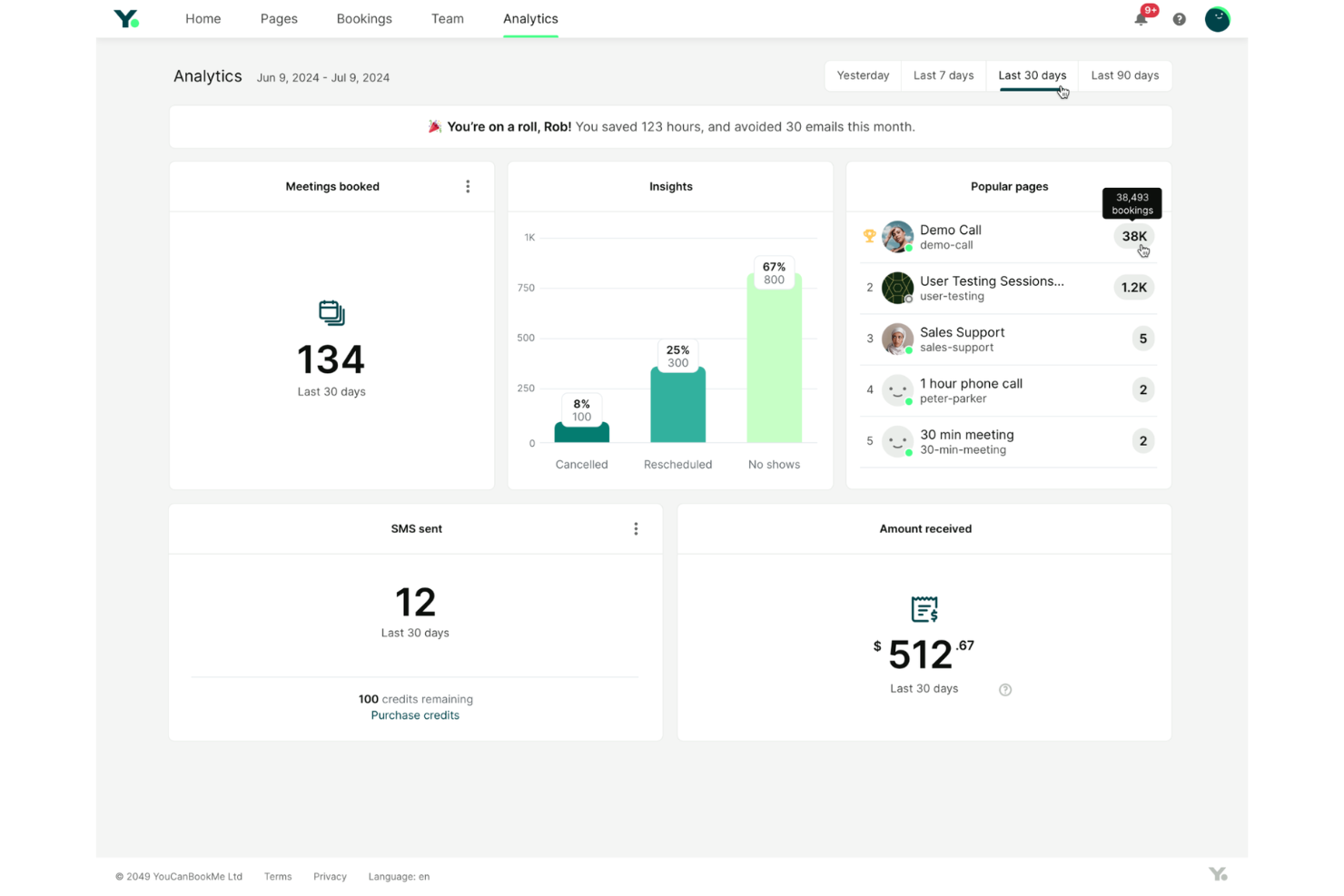
YouCanBookMe ayuda a los despachos de abogados y profesionales del derecho a simplificar la programación de citas con clientes, automatizar confirmaciones y recordatorios, y gestionar reservas en varios calendarios para reducir el trabajo administrativo y evitar reservas dobles.
¿Para quién es más adecuado YouCanBookMe?
YouCanBookMe es una buena opción para profesionales independientes y pequeños despachos que necesitan una herramienta de programación sencilla con integración confiable de calendarios.
Por qué elegí YouCanBookMe
YouCanBookMe merece su lugar en mi lista corta por lo bien que gestiona la sincronización de calendarios entre plataformas externas. Me gusta que se conecta directamente tanto con Google Calendar como con Microsoft Outlook, así que cuando un cliente agenda una consulta, se refleja al instante en todos los calendarios que usa mi equipo, sin necesidad de actualizaciones manuales. YouCanBookMe también me permite establecer tiempos de espera entre citas y definir horarios de disponibilidad personalizados, lo cual resulta útil cuando se gestionan varios abogados con diferentes agendas. Esa sincronización en tiempo real entre plataformas es lo que evita que las reservas dobles se conviertan en un problema recurrente.
Funciones clave de YouCanBookMe
- Páginas de reserva personalizables: Crea páginas de reservas con la marca del despacho y campos personalizados para recopilar información de admisión del cliente antes de la consulta.
- Recordatorios automáticos por email y SMS: Envía recordatorios automáticos de citas a los clientes para reducir ausencias.
- Detección de zona horaria: Detecta y muestra automáticamente los horarios de las citas en la zona horaria local del cliente.
- Programación de equipos: Gestiona la disponibilidad y reservas de varios miembros del equipo desde una sola cuenta.
Integraciones de YouCanBookMe
Las integraciones incluyen Google Calendar, Microsoft Calendar, Apple Calendar, Fastmail Calendar, Zoom, Google Meet, Microsoft Teams, Stripe, Gmail y HubSpot.
Pros and Cons
Pros:
- Sincronización instantánea con calendarios de Google y Outlook
- Formularios de admisión personalizables para la información del cliente
- Incorpora páginas de reserva directamente en los sitios web del despacho
Cons:
- No tiene funciones de gestión documental específicas legales
- Los informes carecen de métricas específicas para la práctica legal

Setmore
Mejor para la gestión de calendarios con varios empleados

Setmore ofrece a los despachos de abogados una forma de gestionar citas, automatizar recordatorios y permitir que los clientes reserven por sí mismos, ayudando a los equipos legales a coordinar horarios y reducir inasistencias.
¿Para quién es mejor Setmore?
Setmore es ideal para despachos jurídicos pequeños y medianos que necesitan una forma sencilla de gestionar citas entre varios abogados y personal.
Por qué elegí Setmore
Setmore se gana su puesto en mi lista por la forma en que gestiona el calendario de varios empleados para los equipos legales. Me gusta que se puedan crear accesos individuales para cada abogado o miembro del equipo, permitiendo que cada quien gestione su propia disponibilidad mientras tú supervisas todos los horarios desde una sola cuenta. Los clientes pueden revisar los perfiles de los abogados en la página de reservas y elegir con quién desean reunirse, lo que reduce la coordinación de ida y vuelta. Los enlaces de reservas individuales también son un buen detalle: cada abogado puede compartir su propio enlace para atraer clientes directamente.
Características clave de Setmore
- Recordatorios automatizados: Envía recordatorios por correo electrónico y mensaje de texto a los clientes antes de sus citas programadas para reducir ausencias.
- Sincronización de calendario: Conecta Setmore con Google Calendar o Outlook para mantener todos los horarios alineados en un solo lugar.
- Página de reservas personalizada: Crea una página de reservas con la imagen de tu marca donde los clientes puedan programar consultas sin llamar a la oficina.
- Cobro de pagos: Acepta depósitos o pagos completos en el momento de la reserva mediante integraciones con Stripe o Square.
Integraciones de Setmore
Las integraciones incluyen Google Calendar, Outlook, Zoom, Slack, Salesforce, HubSpot, Clio, QuickBooks, Stripe y PayPal.
Pros and Cons
Pros:
- Permite citas ilimitadas por miembro del personal
- Ofrece reservas de clientes con formularios de admisión
- Se integra con LawPay para pagos legales
Cons:
- No tiene gestión integrada de documentos para expedientes
- Carece de informes avanzados para métricas legales

Ideal para páginas de reserva de consultas legales con la marca de tu despacho
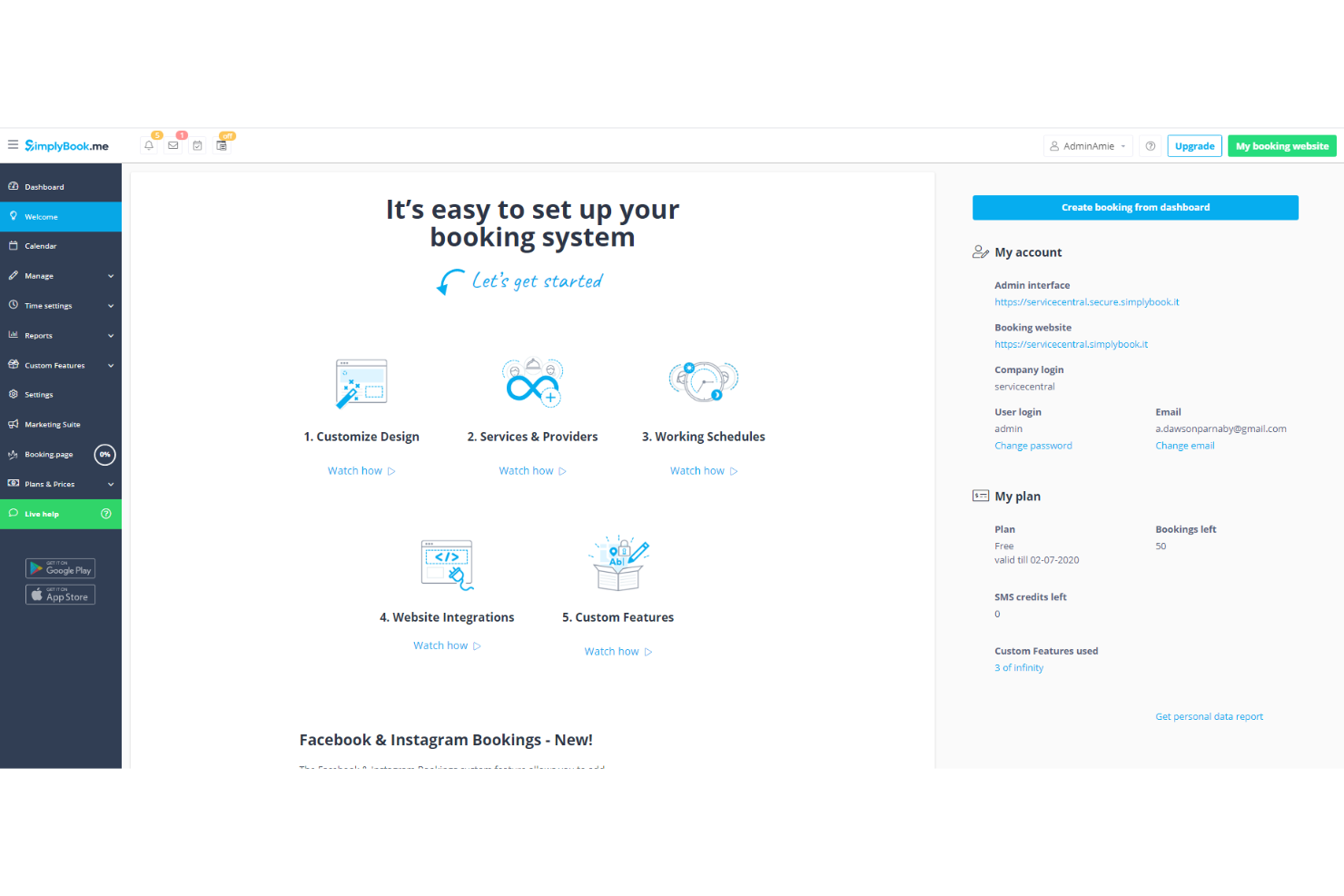
SimplyBook.me ofrece a los despachos de abogados y profesionales legales una plataforma flexible para gestionar citas con clientes, automatizar confirmaciones y manejar la admisión, ayudando a los equipos a reducir la fricción en la programación y presentar una imagen profesional a los clientes.
¿Para quién es SimplyBook.me?
SimplyBook.me es ideal para abogados independientes y despachos pequeños o medianos que necesitan una herramienta de reservas orientada al cliente sin requerir una compleja configuración informática.
¿Por qué elegí SimplyBook.me?
Elegí SimplyBook.me como uno de los mejores por el control que ofrece sobre la página de reservas dirigida al cliente. La función de personalización de diseño te permite aplicar el logo de tu despacho, los colores de tu marca y CSS personalizado, para que la experiencia de reserva parezca una extensión natural de tu propio sitio web en lugar de una herramienta de terceros. También me gusta la opción de dominio personalizado, que te permite alojar la página de reservas bajo tu propio URL, algo que es crucial cuando se busca proyectar credibilidad ante posibles clientes. Además, los formularios de admisión te permiten recopilar información específica del caso en el momento de la reserva, para que los abogados lleguen a las consultas conociendo ya los aspectos básicos de la situación del cliente.
Funciones clave de SimplyBook.me
- Notificaciones y recordatorios de citas: Envía automáticamente confirmaciones de reservas, recordatorios y alertas de cancelación tanto a los clientes como a los abogados por correo electrónico, SMS o WhatsApp.
- Aprobación de reservas: Permite que tu equipo revise y apruebe o rechace manualmente las solicitudes de consulta antes de que se confirmen en el calendario.
- Reprogramación por parte del cliente: Incluye un enlace de reprogramación en los correos de confirmación para que los clientes puedan cambiar su cita sin necesidad de llamar a la oficina.
- Términos y condiciones: Muestra los términos de tu despacho al momento de reservar, requiriendo que el cliente los acepte antes de confirmar una cita.
Integraciones de SimplyBook.me
Las integraciones incluyen WordPress, Joomla, Facebook, Instagram, Google My Business, Microsoft 365/Teams, Stripe, PayPal, QuickBooks y FreshBooks.
Pros and Cons
Pros:
- Sitio de reservas personalizable acorde a la marca de tu despacho
- Los formularios de admisión recopilan información del cliente y del caso
- Admite pagos en línea por servicios legales
Cons:
- Las opciones de programación grupal son básicas
- Los informes carecen de métricas específicas para la práctica legal

MyCase
Mejor para integración de programación a través del portal de clientes
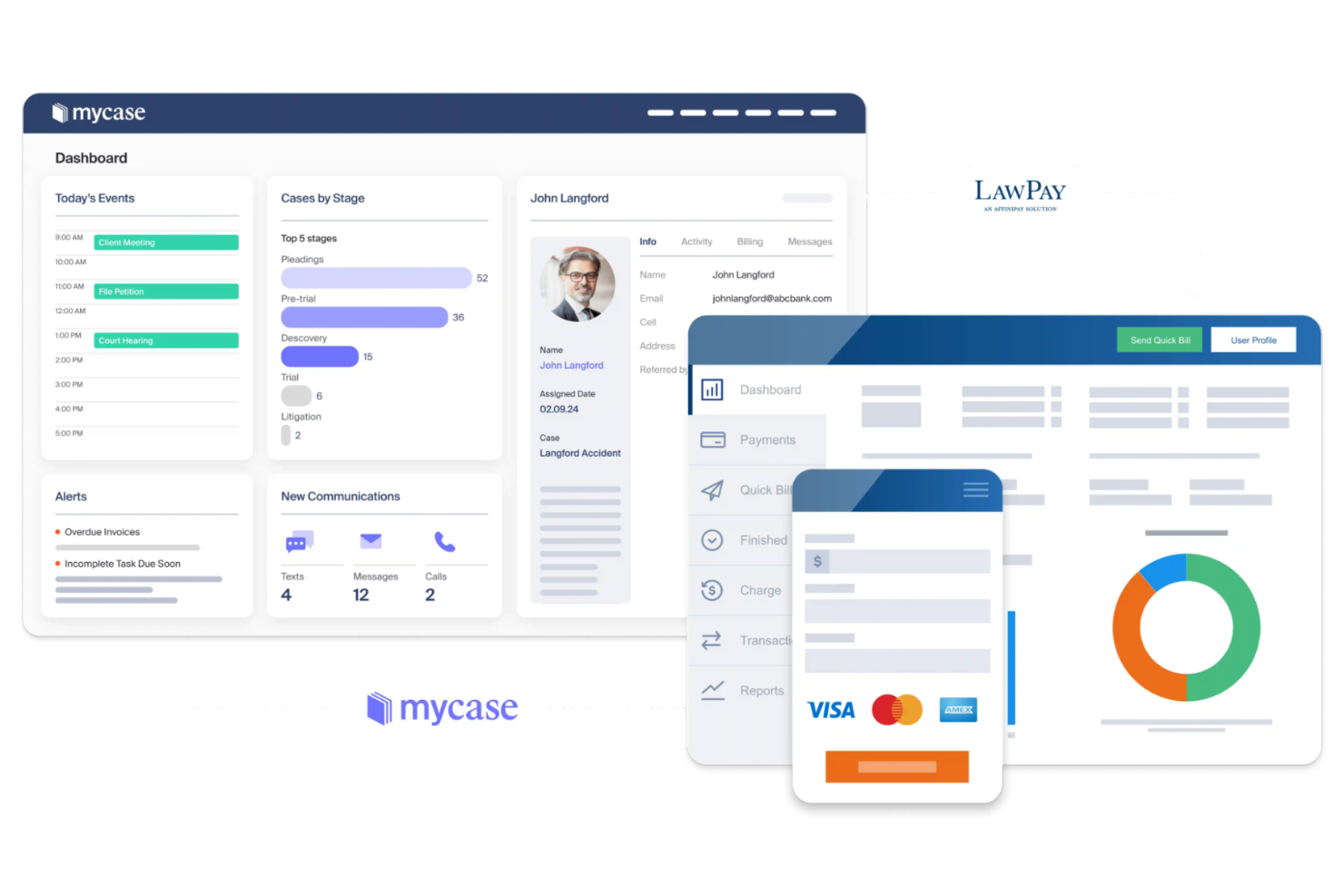
MyCase es una plataforma de gestión de despachos jurídicos diseñada para bufetes que necesitan programación de citas integrada, comunicaciones seguras con los clientes y herramientas para gestionar casos, calendarios y facturación en un solo lugar.
¿Para quién es mejor MyCase?
MyCase es ideal para bufetes de abogados pequeños y medianos que desean una única plataforma para gestionar la captación de clientes, la programación y la administración de casos sin tener que usar múltiples herramientas.
Por qué elegí MyCase
MyCase se ganó su lugar en mi lista corta por lo bien que su portal de clientes se integra con la programación y la gestión de casos. Lo seleccioné específicamente por la integración de programación del portal de clientes: cuando se crea un nuevo evento o cita en MyCase, se comparte automáticamente con el cliente a través del portal, así ambas partes están alineadas sin necesidad de intercambiar correos electrónicos. También me gusta que el portal permita a los clientes ver fechas próximas, responder mensajes y acceder a documentos del caso desde un solo lugar, lo que reduce las llamadas telefónicas que normalmente rodean la coordinación de citas. Además, los recordatorios automáticos por SMS vinculados a los eventos del calendario hacen que los clientes realmente asistan: un abogado que usa MyCase comentó que 'rara vez tienen ausencias' tras habilitar esa función.
Funciones clave de MyCase
- Formularios de captación en línea: Recoge información del cliente y detalles del caso antes de la primera cita utilizando formularios personalizables.
- Registro de tiempo integrado: Registra horas facturables directamente sobre casos y citas sin cambiar de herramienta.
- Gestión de tareas: Crea y asigna tareas vinculadas a casos específicos, con fechas de vencimiento para mantener al día los seguimientos de citas.
- Mensajería bidireccional por SMS: Envía y recibe mensajes SMS con los clientes directamente desde MyCase, manteniendo toda la comunicación dentro del registro del caso.
Integraciones de MyCase
Las integraciones incluyen QuickBooks, Dropbox, Google Calendar, Microsoft Outlook, LawPay, Mailchimp, NetDocuments, CallRail, Smith.ai y LawToolBox.
Pros and Cons
Pros:
- El portal de clientes permite la auto-programación segura
- Recordatorios de cita enviados por correo electrónico y SMS
- Los formularios de captación pueden personalizarse para las citas
Cons:
- No hay opción de programación grupal ni para varios asistentes
- Análisis limitados para el seguimiento de citas

Lawcus
La mejor para enlaces de reserva personalizables para firmas

Lawcus es una plataforma de gestión para despachos jurídicos diseñada para bufetes que desean simplificar la programación de citas, automatizar la admisión de clientes y gestionar calendarios junto con los flujos de trabajo de casos.
¿Para quién es mejor Lawcus?
Lawcus es ideal para despachos de abogados pequeños o medianos que necesitan una plataforma todo en uno que combine programación, admisión y gestión de casos en un solo lugar.
Por qué elegí Lawcus
Elegí Lawcus como uno de los mejores por el gran control que ofrece sobre la configuración de reservas. Cada página de programación es completamente configurable: puedes definir el título del evento, la duración, las ventanas de disponibilidad, los tiempos de margen e incluso las políticas de cancelación; luego, compartes un enlace directo con los clientes o lo integras en tu flujo de admisión. También me gusta que puedes vincular una sola página de programación a varios calendarios del equipo, por lo que, cuando un cliente reserva, el evento aparece automáticamente en los calendarios de todos los abogados relevantes. Además, el formulario de reserva admite campos personalizados, lo que significa que mi equipo puede recopilar detalles de admisión específicos del caso en el momento de la programación, en lugar de tener que solicitar información a los clientes posteriormente.
Características clave de Lawcus
- Disparadores de automatización de flujos de trabajo: Configura tareas, notificaciones y recordatorios automáticos que se activan cuando un cliente reserva una cita a través del programador.
- Programación por turnos automáticos: Distribuye automáticamente las solicitudes de cita entre varios abogados para que ningún miembro del equipo se sobrecargue.
- Canal de prospectos estilo Kanban: Haz seguimiento de los clientes potenciales desde el primer contacto hasta la admisión utilizando un tablero visual que se conecta directamente con tus datos de programación y CRM.
- Creador de flujos de trabajo sin código: Crea automatizaciones de varios pasos en torno a eventos de casos, plazos y puntos de contacto con clientes, sin necesidad de programar.
Integraciones de Lawcus
Las integraciones incluyen Box, Calendly, Dropbox, Gmail, Google Calendar, Google Drive, LawPay, Mailchimp, Microsoft 365 y QuickBooks.
Pros and Cons
Pros:
- Enlaces de reserva personalizables para cada miembro del personal
- Formularios de admisión de clientes integrados para citas
- Sincronización de calendarios con Google y Outlook
Cons:
- Sin función de programación de citas grupales
- Informes limitados sobre estadísticas de citas

Ideal para integrar admisión de clientes con flujos de programación de citas
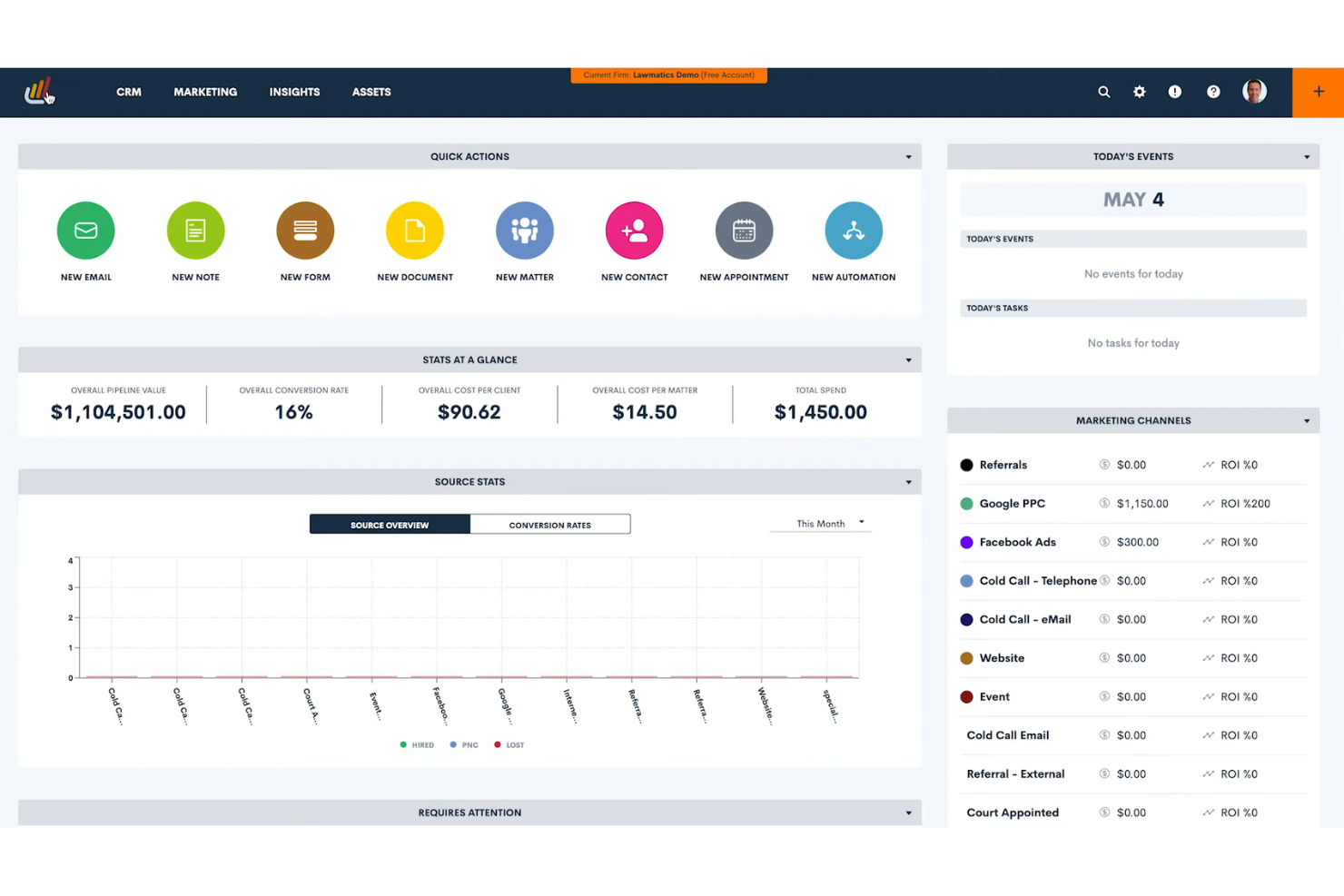
Lawmatics es una plataforma centrada en el ámbito jurídico diseñada para despachos de abogados que desean automatizar la programación de citas, la admisión de clientes y la gestión de flujos de trabajo en un solo lugar.
¿Para Quién es Mejor Lawmatics?
Lawmatics es ideal para despachos de abogados pequeños y medianos que necesitan una única plataforma para gestionar la admisión de clientes, seguimientos y la programación de citas de forma conjunta.
Por Qué Elegí Lawmatics
Lawmatics se gana su lugar en mi lista porque es una de las pocas plataformas construidas específicamente para despachos jurídicos que conecta la programación de citas directamente con la admisión de clientes. Cuando un posible cliente agenda una consulta, Lawmatics puede activar automáticamente un formulario de admisión, enviar correos electrónicos de seguimiento y avanzar el asunto a través de un flujo de trabajo predefinido, todo sin intervención manual. Me gustan especialmente las campañas automatizadas de goteo que mantienen involucrados a los posibles clientes entre la reserva y su primera cita. Las herramientas de programación y admisión comparten los mismos datos del CRM, por lo que mi equipo no tiene que ingresar datos de contacto nuevamente ni perseguir formularios incompletos.
Características Clave de Lawmatics
- Gestión de pipeline: Realiza un seguimiento de los clientes potenciales en cada etapa del recorrido del cliente mediante un pipeline visual con etiquetas personalizables y filtros de estado.
- Verificación de conflictos: Realiza comprobaciones de conflicto de intereses directamente en el CRM antes de avanzar un nuevo prospecto en el proceso de admisión.
- Firma electrónica para documentos legales: Envía acuerdos de honorarios y otros documentos para firma electrónica sin salir de la plataforma.
- Plantillas de documentos: Crea plantillas de documentos reutilizables que se completan automáticamente con los datos del CRM para reducir la redacción manual durante la incorporación.
Integraciones de Lawmatics
Las integraciones incluyen Clio, MyCase, Filevine, PracticePanther, Smokeball, Gmail, Microsoft Outlook, QuickBooks, LawPay y Zoom.
Pros and Cons
Pros:
- Los formularios de admisión activan automáticamente la programación de citas
- Los registros de citas enlazan directamente con los asuntos de los clientes
- Recordatorios automáticos enviados por correo electrónico o SMS
Cons:
- No permite programación grupal ni para varios asistentes
- No se puede incrustar la herramienta de programación directamente en sitios web del despacho

Clio
Ideal para recordatorios y confirmaciones automáticos a clientes
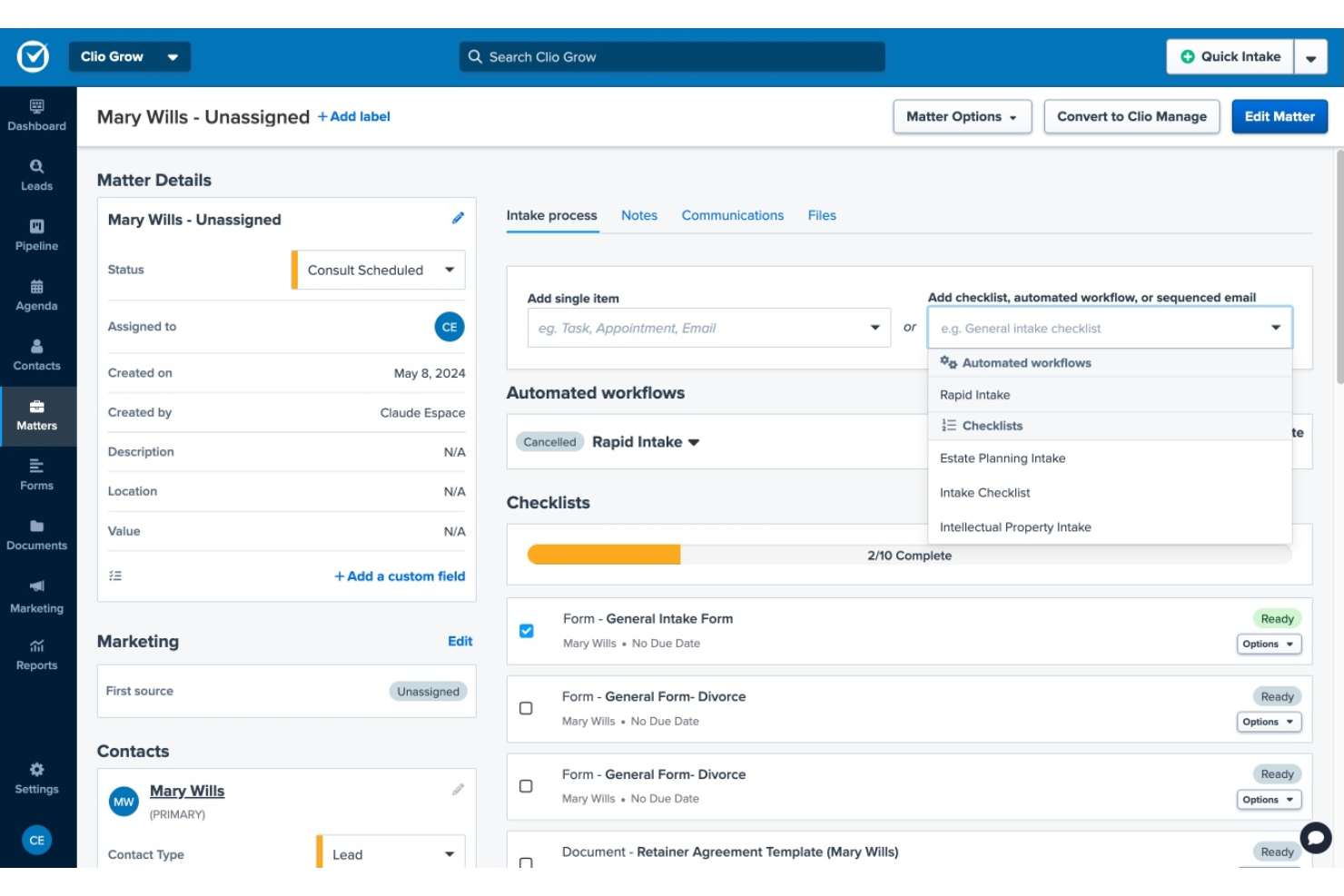
Clio es una plataforma de gestión para despachos jurídicos diseñada para firmas legales que necesitan herramientas seguras e integradas de programación de citas y comunicación con clientes, con el fin de simplificar reservas, reducir ausencias y mantener las interacciones con clientes organizadas.
¿Para quién es Clio ideal?
Clio es una excelente opción para abogados independientes y despachos pequeños o medianos que desean una plataforma todo en uno para gestionar captación de clientes, programación de citas y trabajo de casos en un solo lugar.
Por qué escogí Clio
Elegí Clio como uno de los mejores debido a la eficacia de su sistema automatizado de recordatorios en la práctica. A través de Clio Grow, los clientes potenciales pueden agendar consultas por sí mismos directamente desde el sitio web o correo electrónico de tu firma, y los recordatorios automáticos por mensaje de texto se envían sin necesidad de seguimiento manual por parte de tu equipo. Un cliente de Clio reportó una reducción de su tasa de ausencias de entre el 20–25% a menos del 5% después de configurar Clio Grow. También me agrada que la automatización del flujo de trabajo de captación mantiene a los clientes comprometidos entre la reserva y la cita, evitando que se pierda algo antes de la primera reunión.
Funciones clave de Clio
- Revisión de conflictos: Ejecuta un escaneo de conflictos de intereses en contactos, notas de casos, eventos de calendario y comunicaciones, tanto en Clio Grow como en Clio Manage, antes de aceptar un nuevo cliente.
- Formularios de captación en línea: Crea formularios de admisión personalizados que se sincronizan directamente con Clio Manage, de modo que los nuevos detalles del cliente y del asunto se completan automáticamente sin necesidad de volver a ingresarlos.
- Calendario legal: Vincula eventos del calendario a asuntos específicos y sincronízalos con Google o Outlook, con funciones específicas para el sector, como la programación automática de fechas en tribunales.
- Seguimiento de tiempo y gastos: Registra tiempo facturable directamente desde tareas o eventos del calendario, con visibilidad de qué registros faltan para que nada se quede fuera de una factura.
Integraciones de Clio
Las integraciones incluyen QuickBooks Online, Xero, InfoTrack, OurFamilyWizard, Case Status, ChartSquad, Legl, Precedent Demand Composer, Scorpion RevenueMAX y la API abierta de Clio para integraciones personalizadas.
Pros and Cons
Pros:
- Recordatorios automáticos que reducen ausencias de clientes
- Registros de actividades de citas vinculados a asuntos
- Formularios de captación personalizables al reservar
Cons:
- Sin función para agendar citas grupales
- Personalización limitada para plantillas de recordatorio

Ideal para automatización de calendarios basada en reglas judiciales
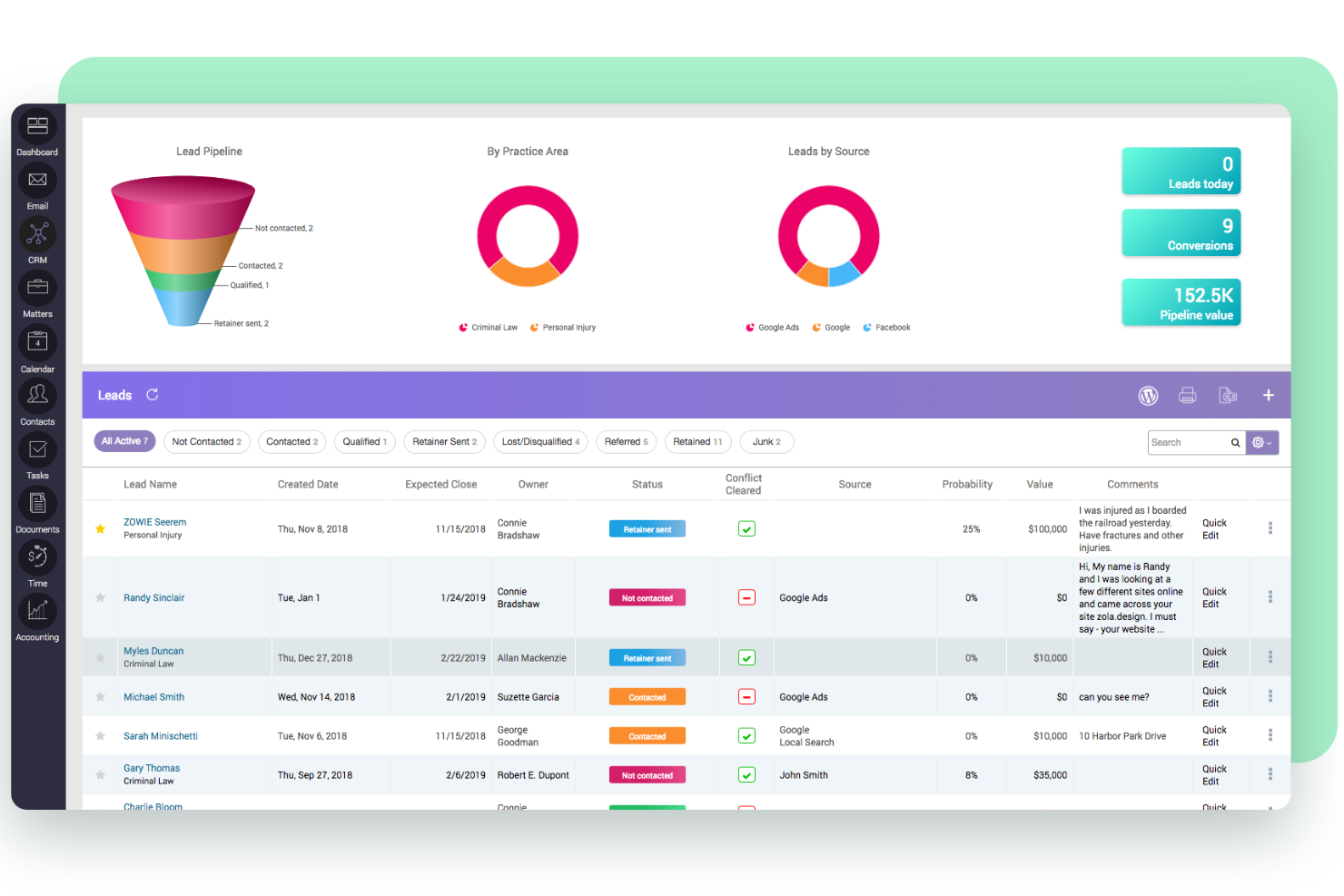
CARET Legal es una plataforma de gestión de despachos jurídicos diseñada para bufetes que requieren una avanzada gestión de calendarios, asuntos y programación de citas, adaptada a los flujos de trabajo legales y los requisitos de cumplimiento.
¿Para quién es mejor CARET Legal?
CARET Legal es una excelente opción para pequeños y medianos despachos que necesitan una solución de gestión integral con programación y seguimiento de plazos específicos para el sector legal incorporados.
Por qué elegí CARET Legal
CARET Legal gana su lugar en mi lista por la manera en que gestiona la automatización del calendario basada en reglas judiciales mediante la integración con LawToolBox. Me gusta que, cuando se abre un nuevo caso de litigio, el sistema calcula automáticamente todos los plazos judiciales relevantes según la jurisdicción y el tipo de caso—sin necesidad de cálculos manuales de fechas. El calendario también permite excluir fines de semana y feriados federales de los cálculos y guardar esos cálculos como plantillas reutilizables. Además, la capa de automatización del flujo de trabajo se integra directamente con el calendario, por lo que las tareas y citas para un tipo de asunto específico se disparan de forma automática a medida que avanza el caso.
Características clave de CARET Legal
- Gestión de asuntos: Centraliza todos los contactos, eventos, tareas, notas, comunicaciones, documentos y pagos relacionados con el caso en un solo expediente.
- Flujos de trabajo automatizados: Permite a tu equipo crear plantillas predefinidas que automáticamente disparan tareas y citas de calendario cuando se abre un nuevo tipo de asunto.
- Resúmenes de documentos impulsados por IA: La función Quick Summary utiliza inteligencia artificial para condensar contratos, escritos y documentos de descubrimiento en puntos clave directamente en la plataforma.
- Mensajería de texto bidireccional con clientes: Admite mensajería de texto segura y bidireccional con clientes junto al correo electrónico y un portal para clientes que centraliza la comunicación.
Integraciones de CARET Legal
Entre sus integraciones están Microsoft 365, Google Workspace, LawToolBox, Lawmatics, HotDocs, OneDrive, NetDocuments, Microsoft Word, RMail y QuickBooks Online.
Pros and Cons
Pros:
- Automatización de reglas judiciales para el cálculo de plazos
- Enlace directo de asuntos para todas las citas
- Sincronización bidireccional con Outlook y Google Calendar
Cons:
- Sin opción de autoservicio público para agendamiento de clientes
- Personalización limitada de tipos de citas

CozyCal
Mejor para la asignación de citas basada en equipos
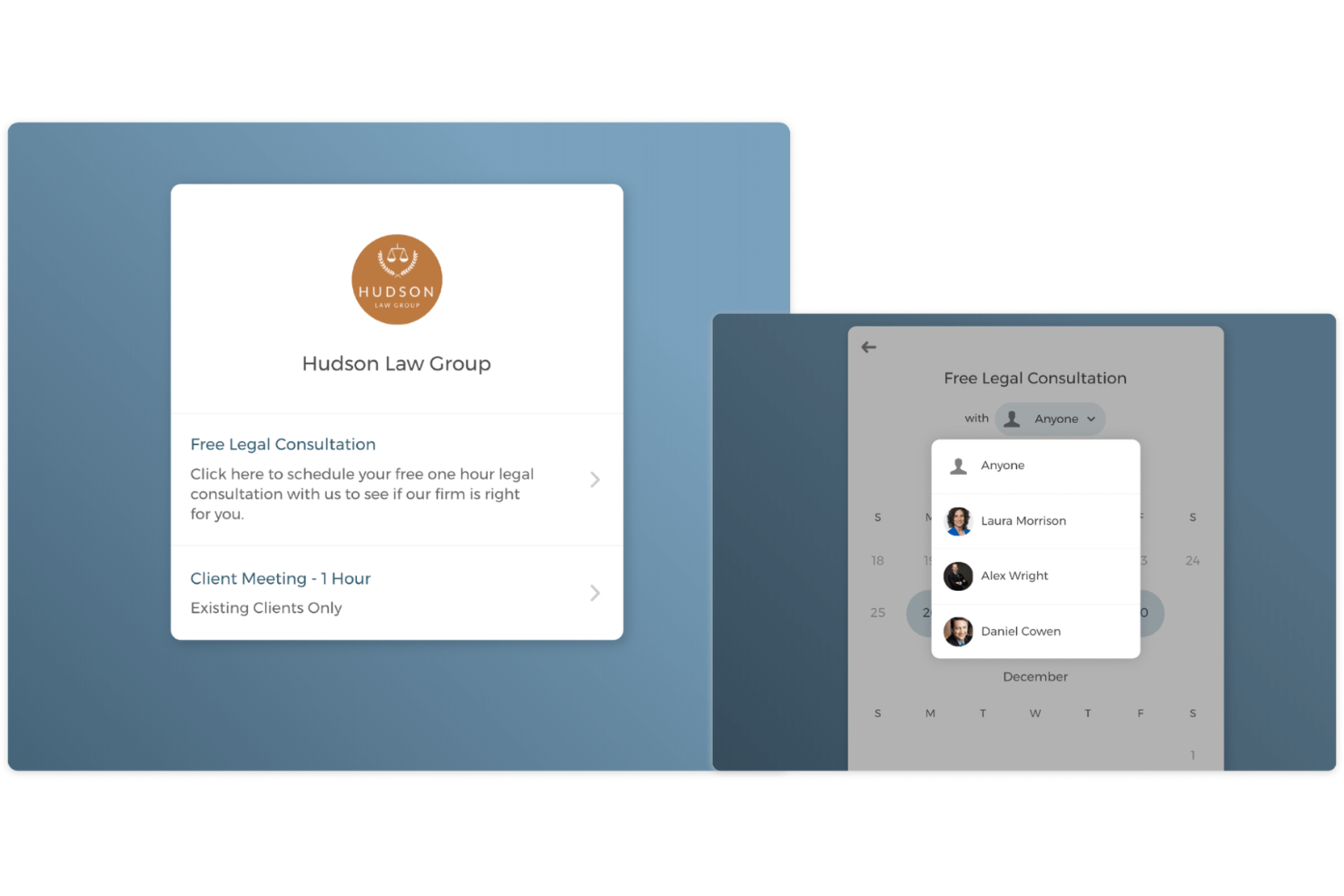
CozyCal es una herramienta de programación en línea diseñada para despachos de abogados y profesionales legales que necesitan una forma sencilla de gestionar citas con clientes, automatizar la sincronización del calendario y agilizar la captación de nuevos casos sin correos electrónicos de ida y vuelta.
¿Para quién es mejor CozyCal?
CozyCal es una buena opción para despachos jurídicos pequeños y medianos que necesitan una herramienta ligera de programación con reservas en equipo y captación de clientes integradas.
Por qué elegí CozyCal
CozyCal se gana un lugar en mi lista corta por la eficacia con la que su sistema de asignación en equipo gestiona la programación multiabogado que enfrentan los despachos a diario. Me gusta especialmente la función de asignación rotativa, que distribuye automáticamente las reservas de clientes entre los abogados disponibles, sin necesidad de selección manual. Lo que lo hace especialmente útil para equipos legales es la capacidad de programación híbrida: cuando un cliente solicita una consulta, CozyCal comprueba simultáneamente la disponibilidad del abogado y de la sala de reuniones, reservando ambos en un solo paso. También he encontrado realmente práctica la función de solicitud de evento, ya que permite a los abogados revisar el formulario de ingreso del cliente antes de aceptar o rechazar una reserva.
Características clave de CozyCal
- Páginas de reserva personalizables: Crea páginas de reserva con tu marca y campos personalizados para recopilar información del cliente antes de la consulta.
- Recordatorios automáticos: Envía recordatorios por correo electrónico o SMS automáticamente a los clientes antes de las citas para reducir inasistencias.
- Sincronización de calendario: Conecta calendarios de Google, Outlook o iCloud para mantener la disponibilidad de los abogados actualizada en tiempo real.
- Widget de programación incrustado: Añade un widget de reservas directamente en el sitio web del despacho o el portal del cliente.
Integraciones de CozyCal
Las integraciones incluyen ActiveCampaign, Clio, Google Analytics, Google Calendar, Google Meet, Stripe, Webflow, WordPress, Zapier y Zoom.
Pros and Cons
Pros:
- Formularios de ingreso personalizables para detalles del cliente
- Programación en equipo con asignación rotativa
- Sincroniza con calendarios de Google y Outlook
Cons:
- Sin comprobación de conflictos incorporada para las citas
- Las opciones de programación grupal son básicas

Zeeg
Ideal para coordinación de reuniones grupales
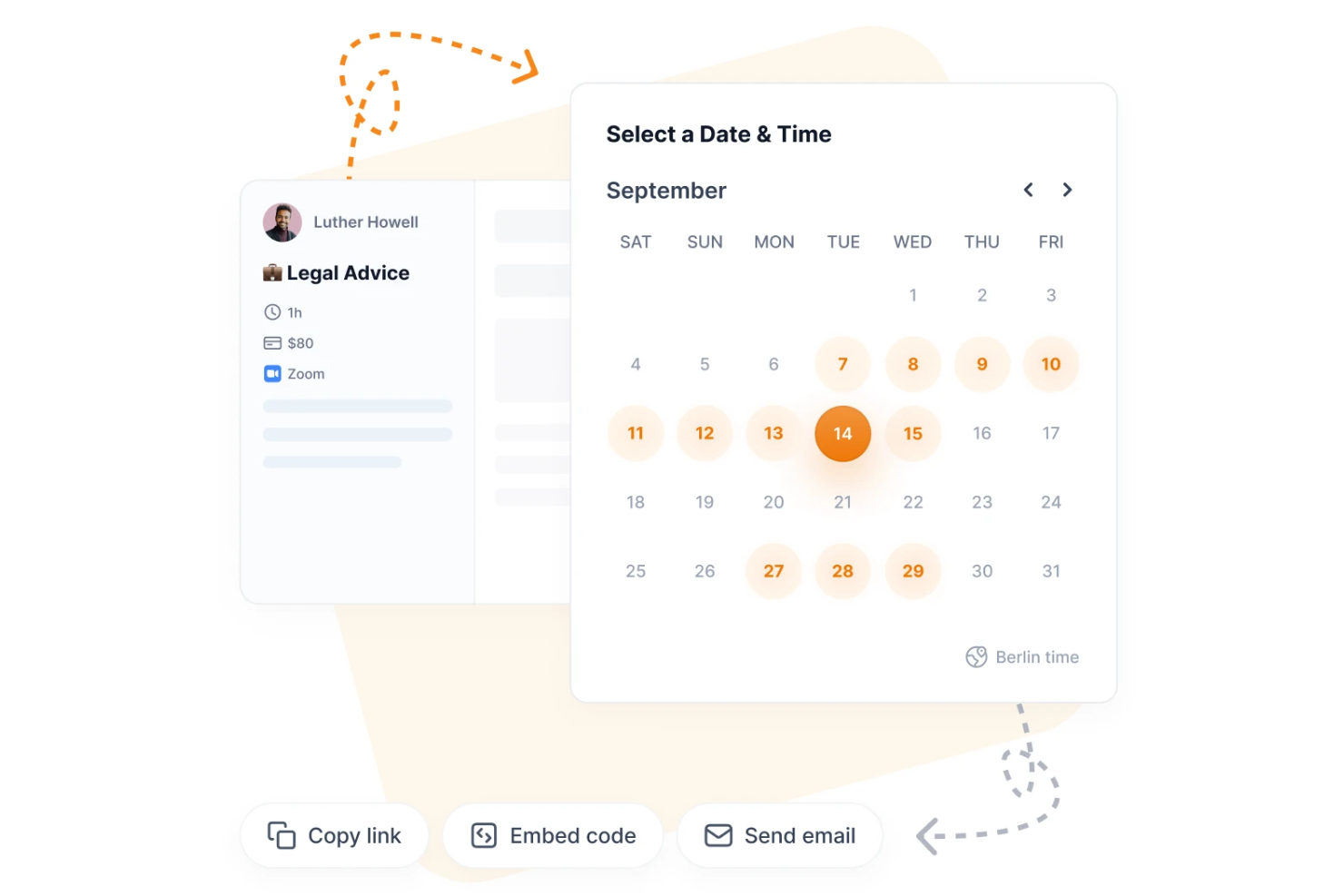
Zeeg ayuda a los despachos de abogados y profesionales legales a simplificar la programación de citas al automatizar las reservas, sincronizar calendarios y gestionar la logística compleja de reuniones tanto para equipos internos como para clientes.
¿Para quién es mejor Zeeg?
Zeeg es ideal para despachos de abogados pequeños y medianos que necesitan una herramienta sencilla de programación para gestionar reservas de clientes y reuniones internas del equipo.
Por qué elegí Zeeg
Zeeg se gana su lugar en mi lista porque gestiona muy bien la coordinación de reuniones grupales, algo con lo que los despachos de abogados lidian constantemente al programar declaraciones, mediaciones o llamadas de clientes con múltiples partes. Me gusta especialmente la función de programación colectiva, que permite a varios miembros del equipo compartir un único enlace de reserva para que los clientes encuentren un horario que funcione para todo el grupo. Zeeg también admite la programación por turnos, lo cual considero útil para distribuir llamadas de admisión entre asociados sin intervención manual.
Funciones clave de Zeeg
- Espacios automáticos entre reuniones: Establece tiempo de margen antes y después de las citas para que los abogados tengan tiempo de prepararse o hacer balance entre llamadas de clientes.
- Formularios de enrutamiento: Califica y dirige las solicitudes de reserva entrantes al abogado o grupo de práctica adecuado según las respuestas de admisión.
- Automatización de flujos de trabajo: Crea secuencias de seguimiento automatizadas y recordatorios activados por una reserva confirmada.
- Gestión de datos conforme al RGPD: Todos los datos de programación se almacenan con cifrado de extremo a extremo y cumplen completamente con el RGPD.
Integraciones de Zeeg
Las integraciones incluyen Google Calendar, Outlook Calendar, Office 365 Calendar, Microsoft Exchange, iCloud Calendar, Google Meet, Zoom, Microsoft Teams, Skype y Salesforce.
Pros and Cons
Pros:
- Ofrece páginas de reserva con marca personalizada para despachos de abogados
- Proporciona recordatorios automáticos por SMS y correo electrónico
- Incluye detección de zona horaria para clientes globales
Cons:
- Las funciones de informes no son específicas del área legal
- Las opciones de programación grupal carecen de personalización avanzada
Otros programas de programación de citas legales
Aquí tienes otras opciones de software para la programación de citas legales que no han entrado en mi lista corta, pero que igualmente vale la pena considerar:


Cómo evalúo el software de programación de citas legales
Evalúo en dos capas: un nivel base que toda herramienta debe cumplir —captura de información, sincronización de calendario, integraciones con gestión legal— y diferenciadores que separan a los programadores diseñados para el ámbito legal de las herramientas genéricas.
Funcionalidad básica (requisitos mínimos para esta lista)
Cuando selecciono herramientas para mi lista, califico cada una en una escala del 0 (no ofrece la funcionalidad) al 5 (sobresale en esta área) para cada funcionalidad básica que se enumera a continuación. Después, calculo el puntaje total de la herramienta como un porcentaje. Cada herramienta debe alcanzar un puntaje total mínimo del 65% para ser considerada para inclusión.
- Portal de autoprogramación para clientes: Verifico si los clientes pueden reservar consultas directamente según la disponibilidad en tiempo real del abogado, y si las páginas de reserva admiten múltiples tipos de servicios como consultas iniciales o revisiones de casos.
- Sincronización de calendario legal: La sincronización bidireccional con Google Calendar o Outlook es el punto de partida, pero también evalúo si la herramienta refleja fechas de audiencias, declaraciones y eventos de casos para que los abogados eviten reservas dobles.
- Captura de datos de ingreso y conflicto: Busco formularios de ingreso configurables que recojan detalles del caso y los nombres de las partes contrarias al momento de la reserva, ya que la reentrada manual después de la consulta consume tiempo y retrasa la verificación de conflictos.
- Integración con la gestión del despacho: Las conexiones nativas con plataformas como Clio, MyCase o PracticePanther son relevantes aquí. Evalúo si las citas y los datos de clientes se incorporan automáticamente a los expedientes de los casos.
- Confidencialidad y cumplimiento: El cifrado de datos y certificaciones de seguridad como SOC 2 son mi punto de partida. Las herramientas que manejan asuntos sensibles también deben admitir acuerdos BAA y mantener prácticas de datos alineadas con los estándares éticos de la ABA.
- Recordatorios y pagos automatizados: Los flujos de trabajo de recordatorios por correo electrónico y SMS reducen inasistencias, pero también evalúo si la herramienta permite la recaudación de tarifas de consulta a través de procesadores compatibles con el ámbito legal como LawPay o Gravity Legal.
Una vez que tengo una lista de herramientas que cumplen estos criterios, considero qué distingue a cada plataforma.
Factores diferenciadores (qué distingue a cada proveedor)
Así es como comparo y contrasto diferentes proveedores:
Características destacadas
Las capacidades de firma electrónica en la etapa de reserva permiten a los clientes firmar cartas de compromiso o acuerdos de honorarios antes de la primera reunión, eliminando así un cuello de botella común en la admisión. También evalúo la programación en turnos rotativos para bufetes con varios abogados: distribuir las consultas por área de práctica o disponibilidad mantiene las cargas de trabajo equilibradas. El seguimiento del origen de clientes potenciales es otro diferenciador que busco, ya que etiquetar reservas por canal de referencia ayuda a los despachos a medir qué esfuerzos de marketing realmente se convierten en clientes que pagan.
Más allá de las características
El cumplimiento con la contabilidad fiduciaria es una consideración importante: verifico si el procesamiento de pagos separa los fondos devengados y no devengados para mantener a los despachos alineados con los requisitos del colegio de abogados en torno a cuentas IOLTA. El tamaño del despacho y el área de práctica también son relevantes. Un abogado de inmigración independiente y una firma mediana de lesiones personales tienen necesidades de programación y flujo de trabajo muy diferentes. También evalúo qué tan bien se conecta cada herramienta con el resto del entorno tecnológico legal, incluyendo CRM como Lawmatics y plataformas de documentos como NetDocuments.
Cómo elegir un software de programación de citas legales
Es fácil perderse en largas listas de características y estructuras de precios complejas. Para ayudarte a mantener el enfoque durante tu proceso de selección de software, aquí tienes una lista de factores que debes tener en cuenta:
| Factor | Qué considerar |
| Escalabilidad | ¿El software acompañará el crecimiento del despacho, incluyendo la incorporación de nuevos usuarios, sedes o áreas de práctica? |
| Integraciones | ¿La herramienta se conecta de forma nativa con tus sistemas actuales de gestión legal, calendario y facturación? |
| Personalización | ¿Puedes adaptar las páginas de reserva, recordatorios y flujos de trabajo al branding y procesos de tu despacho? |
| Facilidad de uso | ¿Encontrarán abogados, personal y clientes la interfaz intuitiva o requerirá capacitación significativa? |
| Implementación y puesta en marcha | ¿Cuánto tiempo llevará empezar a utilizar el sistema y qué recursos o soporte ofrece el proveedor durante la configuración? |
| Costo | ¿Los niveles de precios son transparentes y se adaptan al tamaño, uso y necesidades de funcionalidad de tu despacho? Atención a los costes ocultos. |
| Medidas de seguridad | ¿El software ofrece cifrado, controles de acceso y registros de auditoría para proteger la información sensible del cliente? |
| Requisitos legales | ¿La herramienta te ayuda a cumplir con normas del sector como GDPR, HIPAA u obligaciones del colegio de abogados local? |
¿Qué es un software de programación de citas legales?
El software de programación de citas legales es una herramienta digital que ayuda a despachos de abogados y profesionales legales a gestionar citas, consultas y reuniones con clientes. Automatiza la programación, envía recordatorios y permite que los clientes reserven o modifiquen citas en línea. Estas plataformas suelen incluir funciones para sincronizar calendarios, comunicación segura y cumplir con normas legales del sector, ayudando a los equipos jurídicos a reducir ausencias y mejorar la comunicación con los clientes.
Características del software de programación de citas legales
Al seleccionar un software de programación de citas legales, preste atención a las siguientes características clave:
- Portal de reservas en línea: Permite a los clientes programar, reprogramar o cancelar citas a través de una interfaz web segura y fácil de usar.
- Recordatorios automáticos: Envía confirmaciones de cita y recordatorios por correo electrónico, SMS o voz para reducir ausencias y llegadas tardías.
- Sincronización de calendarios: Se integra con plataformas de calendario populares para mantener los horarios actualizados y evitar reservas dobles.
- Formularios de ingreso personalizables: Recoge información del cliente y detalles del caso durante el proceso de reserva para agilizar la preparación.
- Mensajería bidireccional: Permite la comunicación segura entre el personal legal y los clientes para confirmaciones, actualizaciones o consultas rápidas.
- Gestión de citas recurrentes: Permite programar reuniones continuas, como chequeos regulares con clientes o fechas de audiencias.
- Integración de procesamiento de pagos: Permite que los clientes paguen anticipos u honorarios en el momento de la reserva a través de pasarelas de pago seguras.
- Verificación de conflictos: Señala posibles conflictos de programación o reservas dobles para ayudar a mantener el cumplimiento y evitar errores.
- Controles de acceso basados en roles: Restringe el acceso a datos sensibles de programación según los roles de usuario dentro del despacho.
- Registros de auditoría e informes: Realiza un seguimiento del historial de citas, cambios y comunicaciones para el cumplimiento y la gestión de registros.
Las soluciones de software de programación de citas legales normalmente no incluyen inteligencia artificial (IA) entre sus características. Por lo tanto, no continuaré escribiendo esta sección.
Beneficios del software de programación de citas legales
Implementar un software de programación de citas legales aporta varios beneficios para su equipo y su empresa. Aquí le mencionamos algunos a los que puede esperar:
- Reducción de ausencias: Los recordatorios y confirmaciones automáticas ayudan a garantizar que los clientes recuerden y asistan a sus citas.
- Mejor experiencia para el cliente: Los portales de reservas en línea y la mensajería bidireccional facilitan a los clientes la programación y la comunicación con su despacho.
- Mayor cumplimiento: Funciones como registros de auditoría, verificación de conflictos y manejo seguro de datos respaldan la regulación y la gestión documental del sector legal.
- Flujos de trabajo optimizados: La sincronización de calendarios, los formularios de ingreso personalizables y la gestión de citas recurrentes reducen las tareas manuales de programación para el personal.
- Mejor asignación de recursos: Los controles de acceso basados en roles y las herramientas de informes le ayudan a gestionar los horarios del personal y monitorear tendencias de citas.
- Cobro más rápido de pagos: El procesamiento de pagos integrado permite a los clientes abonar honorarios o anticipos al momento de la reserva, reduciendo los retrasos en la facturación.
- Mayor flexibilidad de horarios: Los clientes pueden reservar, reprogramar o cancelar citas en línea cuando les resulte conveniente, minimizando la comunicación de ida y vuelta.
Costos y precios del software de programación de citas legales
Seleccionar un software de programación de citas legales requiere entender los diferentes modelos y planes de precios disponibles. Los costos varían según las características, el tamaño del equipo, los complementos y más. La siguiente tabla resume los planes más comunes, sus precios promedio y las funciones típicas incluidas en las soluciones de software de programación de citas legales:
Tabla comparativa de planes para el software de programación de citas legales
| Tipo de plan | Precio promedio | Características comunes |
| Plan Gratuito | $0 | Reservas en línea básicas, sincronización de calendario limitada, recordatorios por correo electrónico y gestión simple de clientes. |
| Plan Personal | $5-$15/user/month | Portal de reservas en línea, recordatorios por SMS, integración de calendario e informes básicos. |
| Plan Empresarial | $15-$35/user/month | Formularios de ingreso personalizados, procesamiento de pagos, programación grupal, informes avanzados y acceso basado en roles. |
| Plan Corporativo | $35-$60/user/month | Personalización de marca, acceso a API, seguridad avanzada, herramientas de cumplimiento, soporte dedicado y registros de auditoría. |
Preguntas frecuentes sobre el software de programación de citas legales
A continuación, encontrará respuestas a las preguntas más comunes sobre el software de programación de citas legales:
¿Puede el software legal de programación de citas integrarse con mis herramientas actuales de gestión de despacho?
Sí, la mayoría de los softwares legales de programación de citas ofrecen integraciones con herramientas populares de gestión de despacho, facturación y calendario. Asegúrate de comprobar que cuenten con integraciones nativas o acceso por API para garantizar un flujo de datos fluido y evitar la doble entrada de información en los sistemas de tu firma.
¿Cómo ayuda el software legal de programación de citas con el cumplimiento normativo?
El software legal de programación de citas suele incluir funciones como registros de auditoría, almacenamiento seguro de datos y controles de acceso según roles. Estas características ayudan a tu despacho a cumplir con regulaciones del sector como GDPR o HIPAA y respaldan tus políticas internas de cumplimiento.
¿Es posible cobrar pagos a través del software legal de programación de citas?
Sí, muchas soluciones te permiten cobrar anticipos o tarifas de consulta al momento de la reserva. Busca plataformas con procesamiento de pagos integrado o integraciones con pasarelas de pago confiables para simplificar la facturación y reducir el trabajo administrativo.
¿Qué debo considerar al incorporar a mi equipo a un nuevo software de programación?
Elige soluciones que ofrezcan recursos de capacitación, recorridos por el producto y soporte ágil. Evalúa qué tan rápido tu equipo puede migrar las citas existentes, configurar flujos de trabajo y comenzar a usar la herramienta con mínima interrupción en las operaciones diarias.
¿Pueden los clientes reservar o reprogramar citas en línea sin llamar a la oficina?
Sí, la mayoría de los software legales de programación de citas proporcionan un portal en línea seguro donde los clientes pueden reservar, reprogramar o cancelar citas cuando lo deseen. Esto reduce la carga administrativa y mejora la satisfacción del cliente.
¿Qué sigue?
Si estás en proceso de investigar software legal de programación de citas, contacta con un asesor de SoftwareSelect para recibir recomendaciones gratuitas.
Llenas un formulario y tienes una charla breve donde profundizan en tus necesidades específicas. Después recibirás una lista reducida de programas para revisar. Incluso te acompañarán durante todo el proceso de compra, incluidas las negociaciones de precio.