

10 migliori strumenti per la gestione delle pratiche per i team legali nel 2026

10 Elenco dei migliori software per la gestione delle pratiche


Gestire le pratiche legali può essere estenuante. Devi tenere sotto controllo scadenze, documenti e comunicazioni con i clienti. È difficile mantenere tutto organizzato e facilmente accessibile. È qui che entra in gioco il software per la gestione delle pratiche.
In base alla mia esperienza, questi strumenti ti aiutano a centralizzare i fascicoli, monitorare le scadenze e migliorare la collaborazione all’interno del tuo team. Sono progettati per ridurre lo stress legato alla gestione simultanea di più pratiche.
In questo articolo condividerò le mie migliori scelte di software per la gestione delle pratiche. Ho testato e recensito indipendentemente ciascuno di essi per offrirti valutazioni imparziali. Troverai una panoramica delle funzionalità, dei vantaggi e degli svantaggi, oltre a ciò che rende unico ogni strumento. Che tu sia un professionista che lavora da solo o faccia parte di un grande studio, qui troverai qualcosa per te.
Perché fidarsi dei nostri consigli sui software
Il nostro team testa e recensisce software dal 2012. In quanto leader di studi legali noi stessi, sappiamo quanto sia difficile — e importante — scegliere il software giusto.
Per questa guida, abbiamo valutato gli strumenti attraverso test pratici e ricerche indipendenti, assegnando un punteggio agli strumenti in base ai nostri criteri di selezione.
Le nostre recensioni riflettono il nostro giudizio editoriale umano, non un discorso di vendita.
Tabella comparativa: software per la gestione delle pratiche
Questa tabella comparativa riassume i dettagli sui prezzi delle mie migliori selezioni di software per la gestione delle pratiche.
| Tool | Best For | Trial Info | Price | ||
|---|---|---|---|---|---|
| 1 | Ideale per comunicazione e collaborazione con i clienti | Prova gratuita di 10 giorni + demo gratuita disponibile | Da $49/utente/mese (fatturazione annuale) | Website | |
| 2 | Ideale per semplificare le operazioni legali attraverso l'AI | Demo gratuita disponibile | Prezzi su richiesta | Website | |
| 3 | Migliore per la gestione legale tutto-in-uno | Prova gratuita di 10 giorni | Da $79/utente/mese (fatturato annualmente) | Website | |
| 4 | Ideale per l'automazione senza codice nei servizi legali | Prova gratuita disponibile | Prezzi su richiesta | Website | |
| 5 | Ideale per la personalizzazione dei flussi di lavoro drag-and-drop | Prezzo su richiesta | Website | ||
| 6 | Ideale per la gestione scalabile degli studi legali su cloud | Demo gratuita disponibile | Da $52/utente/mese (fatturazione annuale) | Website | |
| 7 | Ideale per il monitoraggio delle spese legali | Not available | Prezzo su richiesta | Website | |
| 8 | Ideale per insight legali basati sui dati | Prova gratuita disponibile | Da $12/utente/mese (fatturazione annuale) | Website | |
| 9 | Ideale per gli studi che si occupano di diritto delle disabilità e dei risarcimenti per infortunio | Not available | Da $69/utente/mese (fatturazione annuale) | Website | |
| 10 | Ideale per un flusso di lavoro legale cloud senza interruzioni | Demo gratuita disponibile | Da $49/utente/mese (fatturazione annuale) | Website |
Recensioni dei migliori software per la gestione delle pratiche
Di seguito trovi i miei riepiloghi dettagliati dei migliori software per la gestione delle pratiche inclusi nella mia selezione. Le mie recensioni offrono un’analisi approfondita delle funzionalità principali, dei vantaggi e degli svantaggi, delle integrazioni e dei casi d’uso ideali di ogni strumento, per aiutarti a trovare quello più adatto a te.

MyCase
Ideale per comunicazione e collaborazione con i clienti

MyCase è un software di gestione per studi legali progettato per semplificare la comunicazione e la collaborazione con i clienti. La sua interfaccia intuitiva e l'enfasi sul coinvolgimento dei clienti lo rendono la scelta ideale per gli studi legali che desiderano migliorare le loro interazioni con la clientela.
Perché ho scelto MyCase: Ho scelto MyCase per questa lista grazie al suo forte focus sulla comunicazione e collaborazione con i clienti. La piattaforma offre funzionalità che facilitano la comunicazione e la collaborazione tra studi legali e clienti, distinguendosi dagli altri strumenti di gestione per studi legali.
Funzionalità e integrazioni principali: Le funzionalità principali di MyCase includono un portale clienti, condivisione e collaborazione sui documenti e messaggistica integrata. Questi strumenti aiutano a migliorare il coinvolgimento e la comunicazione con i clienti. MyCase offre inoltre integrazioni con applicazioni popolari come QuickBooks Online, Microsoft Office e Google Workspace, permettendo agli utenti di sincronizzare i dati e ottimizzare il proprio flusso di lavoro.
Pros and Cons
Pros:
- Forte attenzione alla comunicazione e collaborazione con i clienti
- Interfaccia intuitiva
- Integrazioni con QuickBooks Online, Microsoft Office e Google Workspace
Cons:
- Nessuna app mobile per utenti Android
- Opzioni di personalizzazione limitate
- Può essere costoso per gli studi più piccoli

Checkbox
Ideale per semplificare le operazioni legali attraverso l'AI
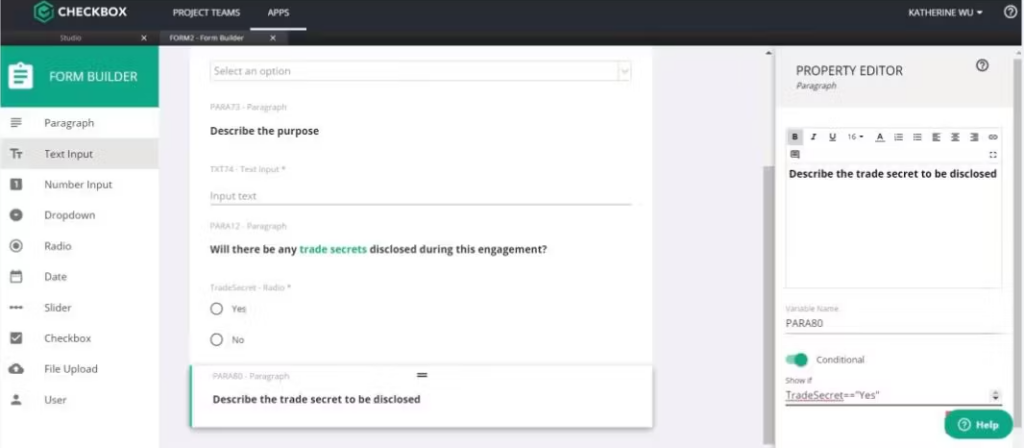
Checkbox è una piattaforma basata sull'intelligenza artificiale che aiuta gli studi legali a semplificare le loro operazioni legali, automatizzare le attività e ridurre il lavoro manuale. Sfruttando l'intelligenza artificiale, migliora efficacemente l'efficienza e la produttività, diventando la scelta migliore per semplificare le operazioni legali attraverso l'AI.
Perché ho scelto Checkbox: Ho scelto Checkbox per questo elenco per le sue potenti funzionalità di AI, che lo distinguono dagli altri strumenti di gestione legale. L'attenzione dello strumento all'utilizzo dell'intelligenza artificiale per automatizzare e ottimizzare i processi legali lo rende la scelta principale per semplificare le operazioni legali attraverso l'AI.
Funzionalità e integrazioni principali: Le funzionalità principali di Checkbox includono l'automazione documentale basata sull'AI, il generatore di alberi decisionali e l'automazione dei flussi di lavoro. Queste funzionalità consentono agli studi legali di automatizzare le attività ripetitive, creare alberi decisionali personalizzati e progettare processi efficienti. Le integrazioni importanti offerte da Checkbox includono Salesforce, Microsoft Office 365 e Zapier, che migliorano la collaborazione e la gestione dei dati.
Pros and Cons
Pros:
- Automazione documentale basata sull'AI per una maggiore efficienza
- Generatore di alberi decisionali personalizzabile per soluzioni su misura
- Integrazioni con Salesforce, Microsoft Office 365 e Zapier
Cons:
- Informazioni sui prezzi non facilmente disponibili
- Potrebbe richiedere un periodo di apprendimento significativo per alcuni utenti
- Opzioni di assistenza clienti limitate

CosmoLex
Migliore per la gestione legale tutto-in-uno
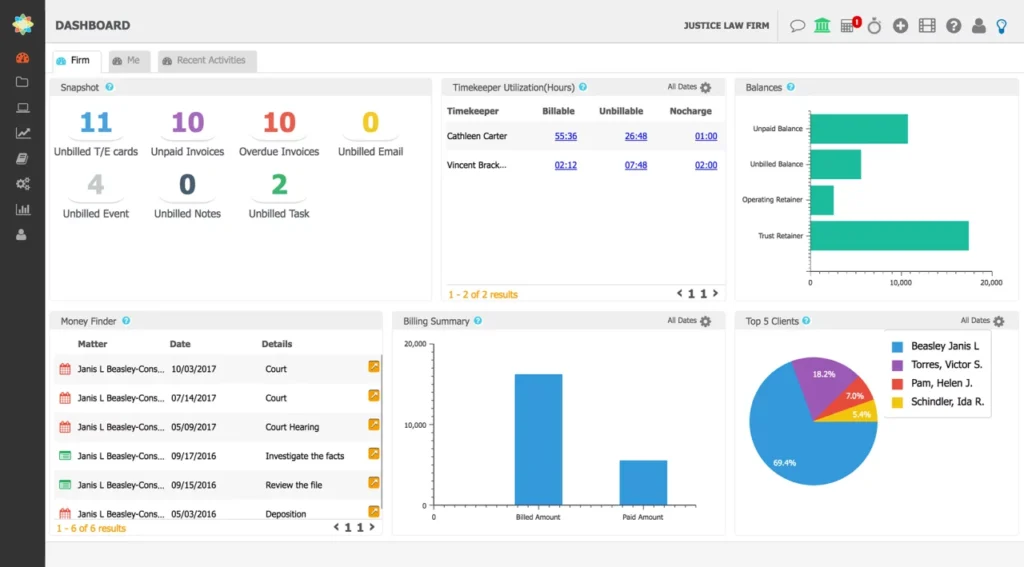
CosmoLex è una soluzione completa di gestione dello studio legale che copre tutto, dalla gestione dei casi alla contabilità e alla fatturazione. Il suo approccio all-in-one semplifica le operazioni degli studi legali, rendendolo ideale per i team legali che cercano una piattaforma unificata per gestire la propria attività.
Perché ho scelto CosmoLex: Ho scelto CosmoLex per la sua capacità di offrire un'ampia gamma di funzionalità all'interno di un'unica piattaforma, ottimizzando la gestione degli studi legali. Le sue funzionalità tutto-in-uno lo distinguono dalle altre opzioni, rendendolo la scelta migliore per i team legali che preferiscono una soluzione unificata per le loro operazioni quotidiane. L'approccio completo di CosmoLex è ciò che lo fa emergere come una scelta eccezionale per la gestione degli studi legali.
Caratteristiche e integrazioni principali: CosmoLex offre una solida gestione dei casi, gestione dei documenti, monitoraggio del tempo, fatturazione e contabilità integrata. Inoltre, include funzionalità di gestione dei fondi fiduciari, garantendo la conformità alle normative legali. CosmoLex si integra con strumenti popolari come Microsoft Office 365, Google Workspace e LawPay per una sincronizzazione dei dati e una gestione dei pagamenti senza interruzioni.
Pros and Cons
Pros:
- Soluzione completa di gestione legale tutto-in-uno
- Capacità integrate di contabilità e gestione dei fondi fiduciari
- Integrazione senza soluzione di continuità con i principali strumenti di produttività
- Soluzione completa di gestione legale tutto-in-uno
- Capacità integrate di contabilità e gestione dei fondi fiduciari
- Integrazione senza soluzione di continuità con i principali strumenti di produttività
Cons:
- Prezzo iniziale più elevato rispetto ad altre soluzioni
- Nessuna app mobile nativa per l'accesso in mobilità
- Opzioni di personalizzazione limitate per esigenze più specifiche
- Prezzo iniziale più elevato rispetto ad altre soluzioni
- Nessuna app mobile nativa per l'accesso in mobilità
- Opzioni di personalizzazione limitate per esigenze più specifiche

BRYTER
Ideale per l'automazione senza codice nei servizi legali

Pros and Cons
Pros:
- Piattaforma no-code per creare facilmente applicazioni personalizzate
- Interfaccia drag-and-drop per un'esperienza utente fluida
- Funzionalità integrate di conformità e auditing
Cons:
- Le informazioni sui prezzi non sono facilmente reperibili
- Potrebbe avere una curva di apprendimento per utenti non tecnici
- Integrazioni native limitate con altri software

Ideale per la personalizzazione dei flussi di lavoro drag-and-drop
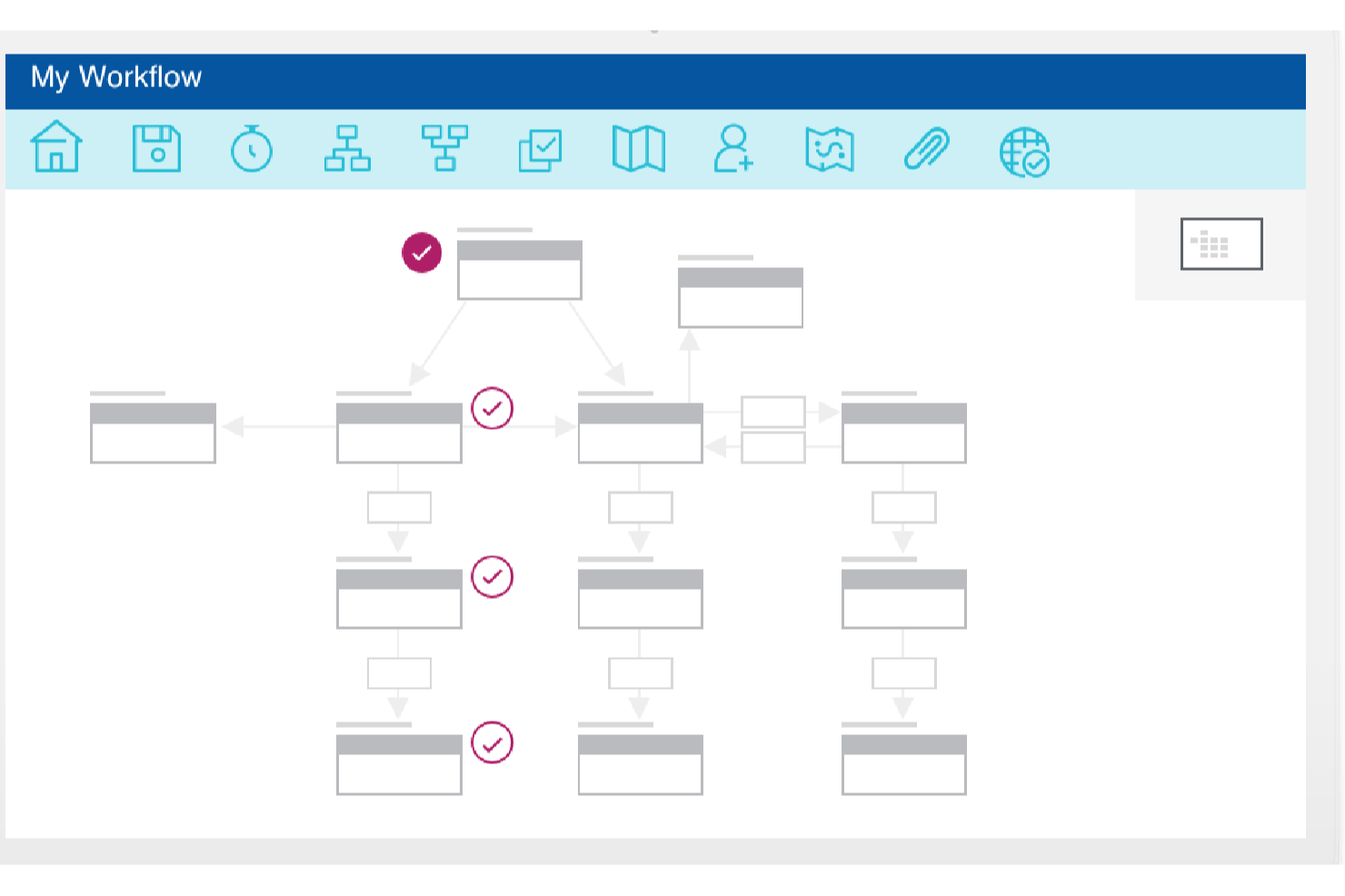
Mitratech TAP Workflow Automation offre ai team legali un modo per progettare, automatizzare e gestire flussi di lavoro complessi senza un pesante coinvolgimento dell'IT. Questa piattaforma è particolarmente adatta per le organizzazioni che devono standardizzare i processi, garantire la conformità e ridurre il lavoro manuale nelle operazioni legali. La sua automazione flessibile dei flussi di lavoro aiuta i professionisti legali a gestire grandi volumi di pratiche mantenendo controllo e visibilità.
Per chi è più indicato Mitratech TAP Workflow Automation?
Mitratech TAP Workflow Automation è una scelta valida per team legali interni e professionisti delle operazioni legali in organizzazioni di medie e grandi dimensioni che necessitano di automatizzare e standardizzare flussi di lavoro complessi di gestione delle pratiche.
Perché ho scelto Mitratech TAP Workflow Automation
Ho scelto Mitratech TAP Workflow Automation per la sua intuitiva personalizzazione dei flussi di lavoro con drag-and-drop, particolarmente preziosa per i team legali che gestiscono diversi tipi di pratiche. La piattaforma consente di progettare e modificare visivamente i flussi di lavoro senza codifica, permettendo di adattare rapidamente i processi al variare delle esigenze. Apprezzo la possibilità di tracciare catene di approvazione, instradamento dei documenti e assegnazione dei compiti direttamente nel builder. Questa flessibilità consente al sistema di gestione delle pratiche di evolversi insieme alle operazioni legali, senza dover attendere l'IT o consulenti esterni.
Caratteristiche principali di Mitratech TAP Workflow Automation
Altre funzionalità utili per i team responsabili della gestione delle pratiche includono:
- Notifiche automatizzate: Il sistema invia avvisi e promemoria per mantenere aggiornati le parti interessate sullo stato delle pratiche e sulle scadenze.
- Gestione documentale: Conserva, organizza e recupera i documenti relativi alle pratiche direttamente all'interno di ogni flusso di lavoro.
- Integrazione di firma elettronica: Raccogli firme legalmente vincolanti sui documenti senza uscire dalla piattaforma.
- Audit trail: Traccia ogni azione e modifica all'interno di un flusso di lavoro per la conformità e la responsabilità.
Integrazioni di Mitratech TAP Workflow Automation
Le integrazioni includono TeamConnect, AdobeSign, DocuSign, Salesforce Classic, ABCPdf, MS SQL Server e un'API aperta per integrazioni personalizzate.
Pros and Cons
Pros:
- Escalation automatiche e instradamento delle approvazioni
- Connettori predefiniti per i principali strumenti legali
- Interfaccia senza codice per la progettazione dei flussi di lavoro
Cons:
- Risorse formative e documentazione limitate
- Nessun piano gratuito o prova libera disponibile

Ideale per la gestione scalabile degli studi legali su cloud

Centerbase è una piattaforma di gestione studi legali basata su cloud che offre strumenti completi per la fatturazione, la gestione dei casi e dei documenti. La sua natura scalabile le consente di adattarsi agli studi legali in crescita, rendendola la scelta migliore per la gestione di studi legali scalabili basata su cloud.
Perché ho scelto Centerbase: Ho selezionato Centerbase per questa lista per la sua adattabilità alle esigenze di studi legali di diverse dimensioni. La capacità della piattaforma di crescere insieme allo studio la distingue dagli altri strumenti di gestione legale, rendendola ideale per la gestione scalabile di studi legali su cloud.
Funzionalità principali e integrazioni: Le funzionalità fondamentali di Centerbase includono la registrazione di tempi e spese, la fatturazione personalizzabile e un solido sistema di gestione documentale. Questi strumenti aiutano gli studi legali a ottimizzare le operazioni e aumentare l'efficienza. Le principali integrazioni offerte da Centerbase comprendono QuickBooks, Office 365 e Dropbox, che contribuiscono a rendere fluido il flusso di lavoro.
Pros and Cons
Pros:
- Scalabilità per supportare studi legali in crescita
- Opzioni di fatturazione personalizzabili
- Integrazioni con QuickBooks, Office 365 e Dropbox
Cons:
- Prezzi che potrebbero essere elevati per studi più piccoli
- Nessuna opzione di fatturazione mensile disponibile
- Orari limitati per l'assistenza clienti

Ideale per il monitoraggio delle spese legali
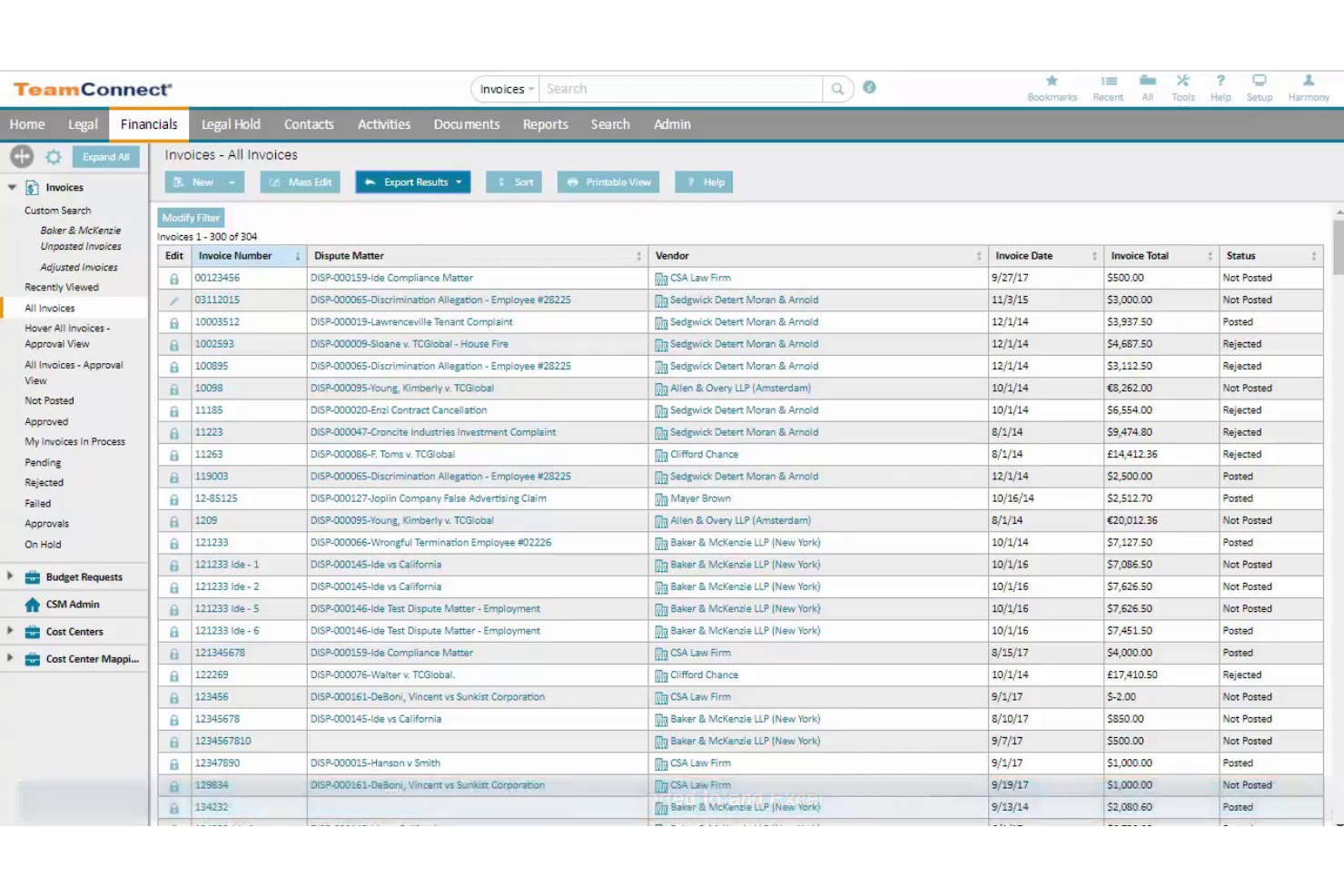
Mitratech TeamConnect è una piattaforma di gestione legale aziendale progettata per aiutare i team legali interni a gestire le pratiche, controllare le spese legali e mantenere la conformità. La piattaforma combina automazione, analisi e funzionalità di intelligenza artificiale per centralizzare le operazioni, ottimizzare i flussi di lavoro e migliorare il processo decisionale.
Perché ho scelto Mitratech TeamConnect: Ho scelto Mitratech TeamConnect perché offre solide capacità di gestione delle spese legali e delle pratiche, aiutando i team legali a monitorare le spese e gestire i casi in modo più efficace. La gestione integrata dei legal hold garantisce la conservazione di documenti e dati critici durante i procedimenti, riducendo i rischi potenziali. Inoltre, TeamConnect supporta il processo decisionale basato sui dati grazie ad analisi integrate e strumenti di automazione, rendendolo una scelta versatile per i dipartimenti legali aziendali.
Caratteristiche principali & integrazioni
Le funzionalità chiave di Mitratech TeamConnect includono automazione avanzata dei flussi di lavoro per ottimizzare i processi, strumenti di gestione del rischio per il controllo di terze parti e la conformità alle policy, e un sistema di revisione fatture gestita per mantenere la trasparenza delle spese legali. Tra le integrazioni più importanti figurano DMS Connector, TeamConnect Business Intelligence (TCBI), TAP Integration Module, Legal Hold Integration, Document Automation, Microsoft Office Suite, l'API di DocuSign e l'integrazione con HotDocs.
Pros and Cons
Pros:
- Automazione avanzata dei flussi di lavoro per una gestione efficiente delle pratiche
- Monitoraggio integrato delle spese legali e revisione fatture gestita
- Solide integrazioni con DocuSign, HotDocs e Microsoft Office
Cons:
- Richiede configurazione e personalizzazione per massimizzare il valore
- Trasparenza dei prezzi limitata; solo preventivi personalizzati

Xakia
Ideale per insight legali basati sui dati
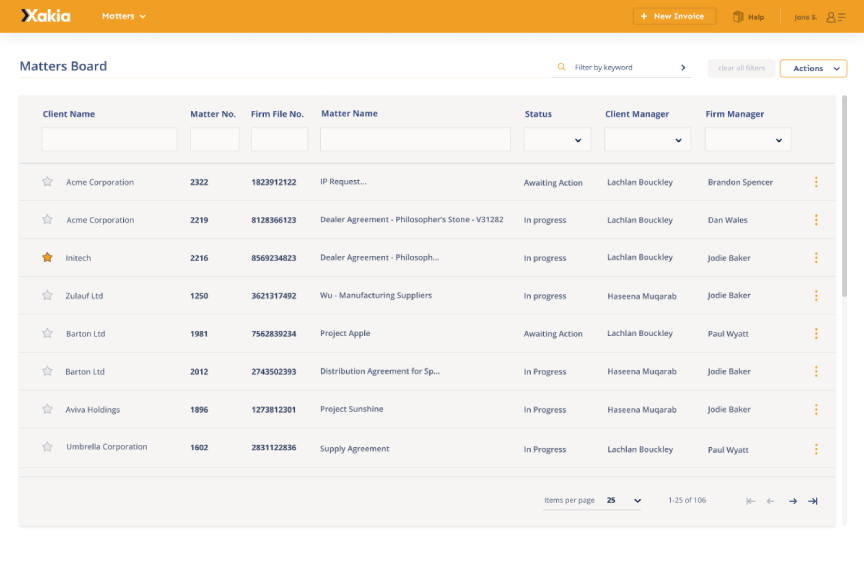
Xakia è una piattaforma di legal operations progettata per fornire a studi legali e team legali interni approfondimenti basati sui dati per decisioni più informate. Con un forte focus su analisi dei dati e visualizzazione, Xakia semplifica la gestione delle pratiche legali garantendo il controllo dei principali indicatori di prestazione.
Perché ho scelto Xakia: Ho scelto Xakia per le sue potenti capacità di analisi dei dati che la distinguono dalle altre soluzioni. La sua enfasi sugli insight basati sui dati la rende la scelta migliore per i professionisti legali che desiderano prendere decisioni informate e ottimizzare le loro operazioni. Questo focus sugli insight legali data-driven è ciò che rende Xakia un valido concorrente nel settore dei software di gestione delle pratiche.
Funzionalità e integrazioni principali: Xakia offre dashboard delle pratiche intuitive, reportistica in tempo reale e visualizzazione dei dati personalizzabile per tenere gli utenti aggiornati sulle prestazioni dello studio legale. Fornisce inoltre strumenti per la raccolta e la selezione delle pratiche, aiutando i team a dare priorità e allocare risorse in modo efficace. Xakia si integra perfettamente con strumenti di produttività popolari come Microsoft Office 365, G Suite e Trello, oltre a sistemi di gestione documentale come NetDocuments e iManage.
Pros and Cons
Pros:
- Strumenti di analisi e visualizzazione dei dati avanzati
- Dashboard pratiche personalizzabili e reportistica in tempo reale
- Integrazione fluida con strumenti di produttività popolari
Cons:
- Nessun sistema di gestione documentale integrato
- Il prezzo può essere elevato per team di piccole dimensioni
- Manca un'app mobile nativa per l'accesso in mobilità

Ideale per gli studi che si occupano di diritto delle disabilità e dei risarcimenti per infortunio
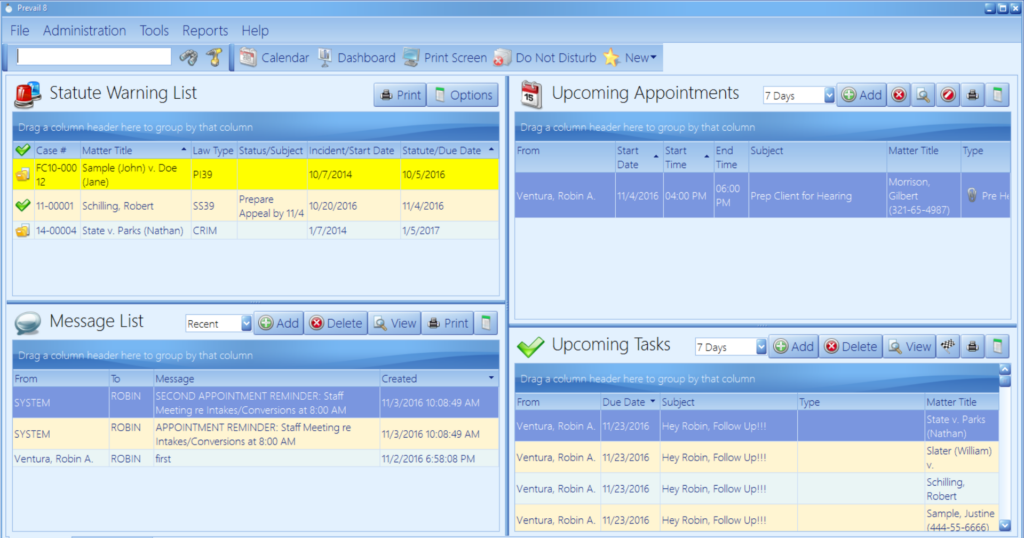
Prevail Case Management System è un software completo per la gestione dei casi legali, progettato specificamente per gli studi che si occupano di diritto delle disabilità e dei risarcimenti per infortunio. Le sue funzionalità su misura e la robusta operatività lo rendono una scelta perfetta per gli studi che si concentrano su queste aree specialistiche del diritto.
Perché ho scelto Prevail Case Management System: Ho scelto Prevail Case Management System per il suo focus sul diritto delle disabilità e sugli infortuni, che lo distingue da altri strumenti di gestione legale più generici. Le sue funzionalità specializzate rispondono specificamente alle esigenze di questi studi, rendendolo la scelta migliore per gli studi legali che operano in questi ambiti.
Funzionalità principali & integrazioni: Prevail offre funzionalità essenziali per gli studi che si occupano di diritto delle disabilità e dei risarcimenti per infortunio, come il tracciamento dei casi, la gestione dei documenti e modelli di workflow personalizzabili. Offre anche integrazioni fluide con Microsoft Office e QuickBooks, permettendo agli utenti di sincronizzare facilmente i dati e gestire gli aspetti finanziari dello studio.
Pros and Cons
Pros:
- Personalizzato per studi che si occupano di diritto delle disabilità e dei risarcimenti per infortunio
- Modelli di workflow personalizzabili
- Integrazioni con Microsoft Office e QuickBooks
Cons:
- Opzioni limitate per studi che non si occupano di diritto di disabilità o di infortuni
- Nessuna app mobile disponibile
- Potrebbe non essere adatto agli studi di piccole dimensioni a causa della struttura dei prezzi

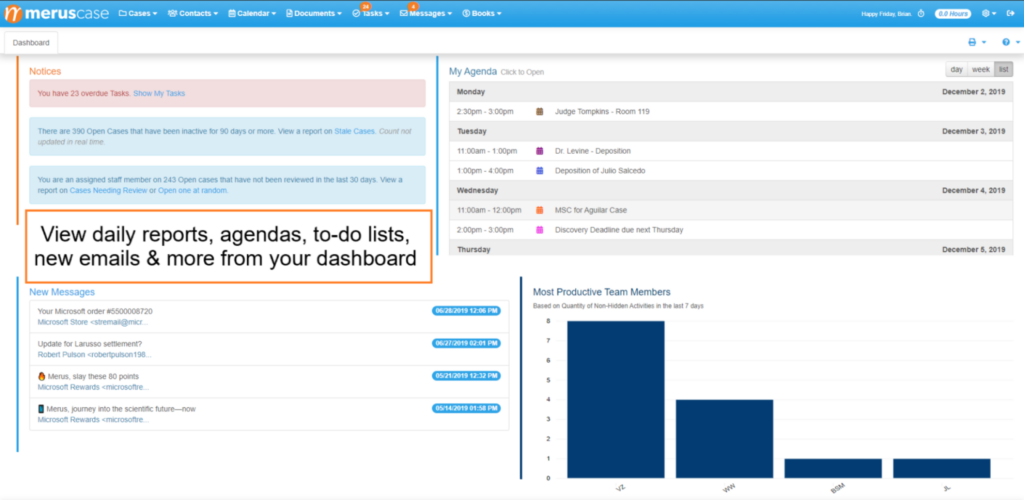
MerusCase è una soluzione cloud per la gestione degli studi legali progettata per ottimizzare il flusso di lavoro e migliorare la collaborazione tra i membri del team. La sua integrazione senza interruzioni tra gestione dei casi, gestione dei documenti e strumenti di comunicazione la rende perfetta per i professionisti legali che cercano un'efficiente soluzione basata sul cloud.
Perché ho scelto MerusCase: Ho scelto MerusCase per la sua architettura cloud e per le sue funzionalità che rendono il flusso di lavoro fluido. L'integrazione armoniosa delle funzioni essenziali in un'unica piattaforma semplifica la collaborazione e l'organizzazione, distinguendola da altre soluzioni. L'approccio cloud-based di MerusCase la rende la scelta migliore per i team legali che desiderano ottimizzare i processi di lavoro.
Funzionalità principali e integrazioni: MerusCase offre una varietà di funzionalità, tra cui gestione dei casi, gestione dei documenti, monitoraggio del tempo, fatturazione e reportistica. Le integrazioni incorporate con email e calendario facilitano la comunicazione e l'organizzazione del team. MerusCase si integra anche con strumenti popolari come Microsoft Office, Google Workspace e QuickBooks per una sincronizzazione dei dati senza problemi.
Pros and Cons
Pros:
- Soluzione cloud efficiente per il flusso di lavoro legale
- Integrazione fluida con i principali strumenti di produttività
- Set di funzionalità completo per la gestione degli studi legali
Cons:
- Non dispone di app mobile per l'accesso in mobilità
- Opzioni di personalizzazione limitate
- Nessuna funzionalità nativa per la contabilità fiduciaria
Altri software per la gestione delle pratiche
Ecco alcune altre opzioni di software per la gestione delle pratiche che non sono entrate nella mia selezione, ma che vale comunque la pena valutare:
- Moxo
Ideale per l'automazione personalizzabile dei processi legali
- LegalEdge
Ideale per il monitoraggio dei casi legali rivolti alle amministrazioni pubbliche
- Coyote Analytics
Ideale per analisi finanziarie e gestionali complete


Come Valuto il Software di Gestione delle Pratiche
Valuto gli strumenti di gestione delle pratiche su due livelli: le funzionalità di base imprescindibili—monitoraggio delle pratiche, fatturazione, calendario delle scadenze—e i fattori differenzianti che distinguono la soluzione giusta dalle altre.
Funzionalità di Base (Requisiti Minimi per Questa Lista)
Quando seleziono gli strumenti per la mia lista, valuto ciascuno su una scala da 0 (funzionalità non presente) a 5 (eccelle in quest'ambito) per ognuna delle funzionalità principali elencate di seguito. Successivamente, calcolo il punteggio totale dello strumento in percentuale. Ogni strumento deve raggiungere un punteggio minimo totale del 65% per essere preso in considerazione.
- Gestione del Ciclo di Vita della Pratica: Esamino come ogni strumento gestisce una pratica dall'apertura alla chiusura, compreso se supporta fasi personalizzate, tipologie di pratica e workflow degli stati.
- Gestione Documentale e dei File: Archiviare i file in una cartella della pratica è il minimo. Verifico la presenza di controllo delle versioni, tagging, ricerca e come lo strumento gestisce i documenti provenienti da email o fonti esterne.
- Monitoraggio delle Scadenze e dei Calendari: Perdere un termine legale o una scadenza di deposito è lo scenario peggiore. Valuto come ogni piattaforma gestisce promemoria, date ricorrenti e calcoli regolati dalle norme di tribunale.
- Rilevazione del Tempo e Fatturazione: Considero se lo strumento registra il tempo a livello di pratica e supporta la fatturazione, la gestione delle spese e le strutture tariffarie che rispecchiano i processi di fatturazione reali.
- Assegnazione di Task e Workflow: Delegare attività tra avvocati e paralegali su una singola pratica fa parte del quotidiano. Cerco funzioni di assegnazione, date di scadenza, dipendenze e visibilità dell'avanzamento.
- Reportistica e Analisi delle Pratiche: Valuto quali report ogni strumento offre di default e se è possibile creare viste personalizzate per il monitoraggio delle spese, la distribuzione del carico di lavoro o i riepiloghi sullo stato delle pratiche.
Una volta creata una lista di strumenti che soddisfano questi criteri, considero ciò che rende unica ciascuna piattaforma.
Fattori di Differenziazione (Cosa Distingue i Fornitori)
Ecco come confronto i diversi fornitori:
Funzionalità Distintive
Il controllo dei conflitti è un vero elemento distintivo per me. Esamino se uno strumento può eseguire automaticamente una scansione tra le parti coinvolte, entità correlate e pratiche storiche prima dell'acquisizione per segnalare potenziali problemi. Anche la gestione dei consulenti esterni è importante, soprattutto per i team legali interni che monitorano la spesa degli studi legali partner e fanno rispettare le linee guida di fatturazione. I moduli di acquisizione configurabili sono l'ultimo tassello, perché permettono ai team di standardizzare l'inserimento delle nuove pratiche nel sistema, riducendo le registrazioni incompleti e i follow-up manuali.
Oltre le Funzionalità
Gli standard di sicurezza e conformità hanno un peso reale qui. I team legali gestiscono comunicazioni coperte da segreto professionale e dati sensibili dei clienti, quindi verifico la conformità SOC 2 Type II, le barriere etiche e i controlli di accesso basati sui ruoli. Anche le integrazioni con l'ecosistema lavorativo influenzano la compatibilità di uno strumento con la routine quotidiana. Una piattaforma di gestione delle pratiche che si integra con Microsoft 365, il proprio DMS e il sistema di contabilità fa risparmiare ore di inserimenti duplicati. Valuto anche se il modello di prezzo del fornitore sia in grado di scalare con la crescita dello studio, poiché la struttura per utente o per pratica può cambiare notevolmente al variare del personale.
Come scegliere il software per la gestione delle pratiche
È facile perdersi in lunghi elenchi di funzionalità e strutture tariffarie complesse. Per aiutarti a rimanere concentrato mentre affronti il tuo processo di selezione del software, ecco un elenco di fattori da tenere a mente:
| Fattore | Cosa considerare |
|---|---|
| Scalabilità | Il software crescerà insieme al tuo studio? Considera la crescita futura e se lo strumento è in grado di gestire un aumento del volume delle pratiche senza doverlo sostituire in seguito. |
| Integrazioni | Si connette agli strumenti che già utilizzi? Verifica la compatibilità con i sistemi attuali, come il software di contabilità o i client di posta elettronica. |
| Personalizzazione | Puoi adattarlo alle tue esigenze? Cerca opzioni che ti consentano di modificare i flussi di lavoro e i cruscotti in base ai tuoi processi specifici. |
| Semplicità d'uso | L'interfaccia è intuitiva? Assicurati che il tuo team possa imparare rapidamente a utilizzare e consultare il sistema senza una formazione approfondita. |
| Implementazione e avvio | Quanto tempo serve per iniziare? Considera il tempo necessario per la configurazione e la qualità del supporto iniziale, come sessioni di formazione o guide. |
| Costo | Rientra nel tuo budget? Valuta la struttura dei prezzi e fai attenzione ai costi nascosti. Confronta il costo con il valore che offre al tuo studio. |
| Misure di sicurezza | Quanto sono sicuri i tuoi dati? Assicurati che il software sia conforme agli standard legali in materia di protezione dei dati e offra crittografia e backup regolari. |
| Requisiti di conformità | Rispetta le normative legali? Verifica se il software supporta la conformità agli standard del settore come il GDPR o l'HIPAA, a seconda della tua giurisdizione. |
Che cos'è il software di gestione delle pratiche?
Il software di gestione delle pratiche è uno strumento progettato per aiutare i professionisti legali a organizzare e gestire il lavoro relativo ai casi in modo efficiente. Avvocati, praticanti e team legali utilizzano in genere questi strumenti per tenere traccia di casi, documenti e scadenze. Le funzionalità di archiviazione dei documenti, comunicazione con i clienti e fatturazione favoriscono l'organizzazione e la produttività. Questi strumenti offrono un valore significativo semplificando la gestione dei casi e migliorando l'efficienza dei flussi di lavoro per i professionisti legali.
Funzionalità
Quando scegli un software di gestione delle pratiche, presta attenzione alle seguenti funzionalità principali:
- Gestione dei casi: Aiuta a organizzare e monitorare tutte le informazioni relative ai casi in un unico luogo, migliorando accessibilità ed efficienza.
- Archiviazione dei documenti: Fornisce uno spazio sicuro per archiviare i documenti legali, garantendone il facile reperimento e la conformità alle normative sui dati.
- Comunicazione con i clienti: Facilita la comunicazione diretta con i clienti tramite portali o sistemi di messaggistica, migliorando le relazioni con la clientela.
- Fatturazione ed emissione delle fatture: Automatizza il monitoraggio del tempo e i processi di fatturazione, semplificando la gestione delle finanze e garantendo fatture accurate.
- Pianificazione delle attività: Consente di impostare scadenze e promemoria, aiutando i team legali a gestire le attività e gli appuntamenti importanti.
- Cruscotti personalizzabili: Offre la possibilità di adattare i cruscotti alle esigenze specifiche, migliorando l'esperienza e l'efficienza degli utenti.
- Funzionalità di integrazione: Garantisce la compatibilità con gli strumenti e i sistemi esistenti, consentendo un flusso di dati continuo tra le piattaforme.
- Misure di sicurezza: Protegge i dati mediante crittografia e backup regolari, salvaguardando le informazioni legali sensibili.
- Interfaccia intuitiva: Garantisce semplicità d'uso grazie a una navigazione intuitiva, riducendo la curva di apprendimento per i nuovi utenti.
- Supporto alla conformità: Aiuta a rispettare le normative legali come il GDPR o l'HIPAA, garantendo l'aderenza agli standard del settore.
Vantaggi
L'implementazione di un software di gestione delle pratiche offre diversi vantaggi al tuo team e alla tua attività. Ecco alcuni dei benefici che puoi aspettarti:
- Organizzazione migliorata: Mantiene tutte le informazioni relative ai casi in un unico luogo, semplificandone la gestione e l'accesso.
- Comunicazione più efficace: Favorisce interazioni migliori con i clienti tramite messaggistica diretta e portali dedicati.
- Risparmio di tempo: Automatizza attività di routine come la fatturazione e la pianificazione, liberando tempo da dedicare a lavori più importanti.
- Maggiore accuratezza: Riduce gli errori nella fatturazione e nella gestione dei documenti, portando a risultati più affidabili.
- Garanzia di conformità: Aiuta a garantire il rispetto di standard legali come il GDPR, riducendo il rischio di non conformità.
- Migliore gestione del carico di lavoro: Consente di pianificare efficientemente le attività e monitorare le scadenze, aiutando i team a gestire le proprie responsabilità.
- Sicurezza dei dati: Offre crittografia e backup regolari per proteggere le informazioni legali sensibili dagli accessi non autorizzati.
Costi e prezzi
La selezione di un software per la gestione delle pratiche legali richiede la comprensione dei vari modelli e piani tariffari disponibili. I costi variano in base alle funzionalità, alle dimensioni del team, ai componenti aggiuntivi e ad altri fattori. I dipartimenti legali più grandi potrebbero aver bisogno di un software aziendale per la gestione delle pratiche legali per supportare flussi di lavoro più complessi.
La tabella seguente riepiloga i piani più comuni, i relativi prezzi medi e le funzionalità generalmente incluse nelle soluzioni software per la gestione delle pratiche legali:
Tabella comparativa dei piani per il software di gestione delle pratiche legali
| Tipo di piano | Prezzo medio | Funzionalità comuni |
|---|---|---|
| Piano gratuito | $0 | Archiviazione di base dei documenti, gestione limitata delle pratiche e comunicazione di base con i clienti. |
| Piano personale | $10-$30/utente/mese | Gestione dei documenti, fatturazione di base, comunicazione con i clienti e pianificazione delle attività. |
| Piano aziendale | $30-$60/utente/mese | Fatturazione avanzata, portali per i clienti, funzionalità di integrazione e strumenti di reporting. |
| Piano aziendale | $60-$100/utente/mese | Cruscotti personalizzabili, sicurezza avanzata, supporto alla conformità e assistenza dedicata. |
Domande frequenti sul software di gestione delle pratiche legali
Ecco alcune domande che mi vengono poste spesso sul software di gestione delle pratiche legali e sulla gestione delle pratiche in generale: