

I 10 Migliori Software per la Pianificazione degli Appuntamenti Legali 2026

10 Elenco dei Software di Prenotazione Appuntamenti Legali


Il software di prenotazione appuntamenti legali consente al tuo studio legale di automatizzare le prenotazioni, gestire i calendari e coordinare gli incontri con i clienti senza scambi di email o chiamate telefoniche. Se stai cercando il modo migliore per ridurre il lavoro amministrativo, diminuire le assenze e tenere organizzato il tuo team, lo strumento di pianificazione giusto può fare una differenza concreta. Questo elenco ti aiuterà a confrontare i migliori software di prenotazione appuntamenti legali per il 2026, così potrai trovare la soluzione più adatta al tuo flusso di lavoro, compatibile con gli obblighi normativi e utile a migliorare l’esperienza del cliente.
Perché fidarsi dei nostri consigli sui software
Il nostro team testa e recensisce software dal 2012. In quanto leader di studi legali noi stessi, sappiamo quanto sia difficile — e importante — scegliere il software giusto.
Per questa guida, abbiamo valutato gli strumenti attraverso test pratici e ricerche indipendenti, assegnando un punteggio agli strumenti in base ai nostri criteri di selezione.
Le nostre recensioni riflettono il nostro giudizio editoriale umano, non un discorso di vendita.
Riepilogo dei Software di Prenotazione Appuntamenti Legali
| Tool | Best For | Trial Info | Price | ||
|---|---|---|---|---|---|
| 1 | Ideale per la sincronizzazione dei calendari con piattaforme esterne | Prova gratuita di 14 giorni e piano gratuito disponibili | Da $14.40/utente/mese | Website | |
| 2 | Ideale per la gestione dei calendari di più membri dello staff | Disponibile piano gratuito | A partire da $5/utente/mese (fatturato annualmente) | Website | |
| 3 | Ideale per pagine di prenotazione consulenze legali personalizzate | Piano gratuito disponibile | A partire da $11.9/mese (fatturazione annuale) | Website | |
| 4 | Ideale per l'integrazione della pianificazione tramite portale clienti | Prova gratuita di 10 giorni + demo gratuita disponibile | A partire da $39/utente/mese (fatturazione annuale) | Website | |
| 5 | Ideale per link di prenotazione personalizzabili per studi | Prova gratuita di 14 giorni + demo gratuita disponibile | Da $39/utente/mese | Website | |
| 6 | Ideale per integrare l'onboarding con i flussi di pianificazione degli appuntamenti | Demo gratuita disponibile | Prezzo su richiesta | Website | |
| 7 | Ideale per promemoria e conferme automatiche ai clienti | Prova gratuita di 7 giorni + demo gratuita disponibile | Da $69CAD/utente/mese (fatturati annualmente) | Website | |
| 8 | Ideale per l'automazione del calendario basata sulle regole dei tribunali | Demo gratuita disponibile | Prezzo su richiesta | Website | |
| 9 | Ideale per la gestione degli appuntamenti in team | Prova gratuita di 10 giorni | Da $15/utente/mese (fatturazione annuale) | Website | |
| 10 | Ideale per il coordinamento delle riunioni di gruppo | Piano gratuito disponibile | Da $13/utente/mese | Website |
Recensioni dei Software di Prenotazione Appuntamenti Legali
Di seguito trovi i miei riepiloghi dettagliati dei software di prenotazione appuntamenti legali che hanno superato la selezione. Le mie recensioni offrono una panoramica completa delle funzionalità, delle integrazioni e dei migliori casi d’uso di ciascuna piattaforma, per aiutarti a trovare quella più adatta a te.

Ideale per la sincronizzazione dei calendari con piattaforme esterne

YouCanBookMe aiuta studi legali e professionisti del settore a semplificare la pianificazione degli appuntamenti con i clienti, automatizzare conferme e promemoria e gestire le prenotazioni su più calendari per ridurre il lavoro amministrativo ed evitare doppie prenotazioni.
Per chi è ideale YouCanBookMe?
YouCanBookMe è adatto a professionisti singoli e a piccoli studi legali che necessitano di uno strumento di pianificazione semplice con un'integrazione affidabile con i calendari.
Perché ho scelto YouCanBookMe
YouCanBookMe si è guadagnato un posto nella mia lista perché gestisce in modo eccellente la sincronizzazione dei calendari tra piattaforme esterne. Mi piace che si colleghi direttamente sia a Google Calendar che a Microsoft Outlook, quindi quando un cliente prenota una consulenza, la modifica si riflette istantaneamente su tutti i calendari utilizzati dal mio team—senza bisogno di aggiornamenti manuali. YouCanBookMe mi consente anche di impostare tempi di buffer tra gli appuntamenti e di definire finestre di disponibilità personalizzate, il che è utile quando si gestiscono più avvocati con orari diversi. È questa sincronizzazione in tempo reale su più piattaforme che permette di evitare che le doppie prenotazioni diventino un problema ricorrente.
Funzionalità principali di YouCanBookMe
- Pagine di prenotazione personalizzabili: Crea pagine di prenotazione con branding personalizzato e campi ad hoc per raccogliere le informazioni di intake dei clienti prima di una consulenza.
- Promemoria automatici via email e SMS: Invia promemoria automatici sugli appuntamenti ai clienti per ridurre le assenze.
- Rilevamento del fuso orario: Rileva e mostra automaticamente l'orario dell'appuntamento nel fuso orario locale del cliente.
- Pianificazione per il team: Gestisci la disponibilità e le prenotazioni di più membri del team da un unico account.
Integrazioni di YouCanBookMe
Le integrazioni includono Google Calendar, Microsoft Calendar, Apple Calendar, Fastmail Calendar, Zoom, Google Meet, Microsoft Teams, Stripe, Gmail e HubSpot.
Pros and Cons
Pros:
- Sincronizzazione istantanea con i calendari Google e Outlook
- Moduli di intake personalizzabili per le informazioni dei clienti
- Le pagine di prenotazione possono essere incorporate direttamente nei siti web dello studio
Cons:
- Mancano funzionalità di gestione documentale specifiche per gli studi legali
- I report non includono metriche specifiche per la pratica legale

Setmore
Ideale per la gestione dei calendari di più membri dello staff
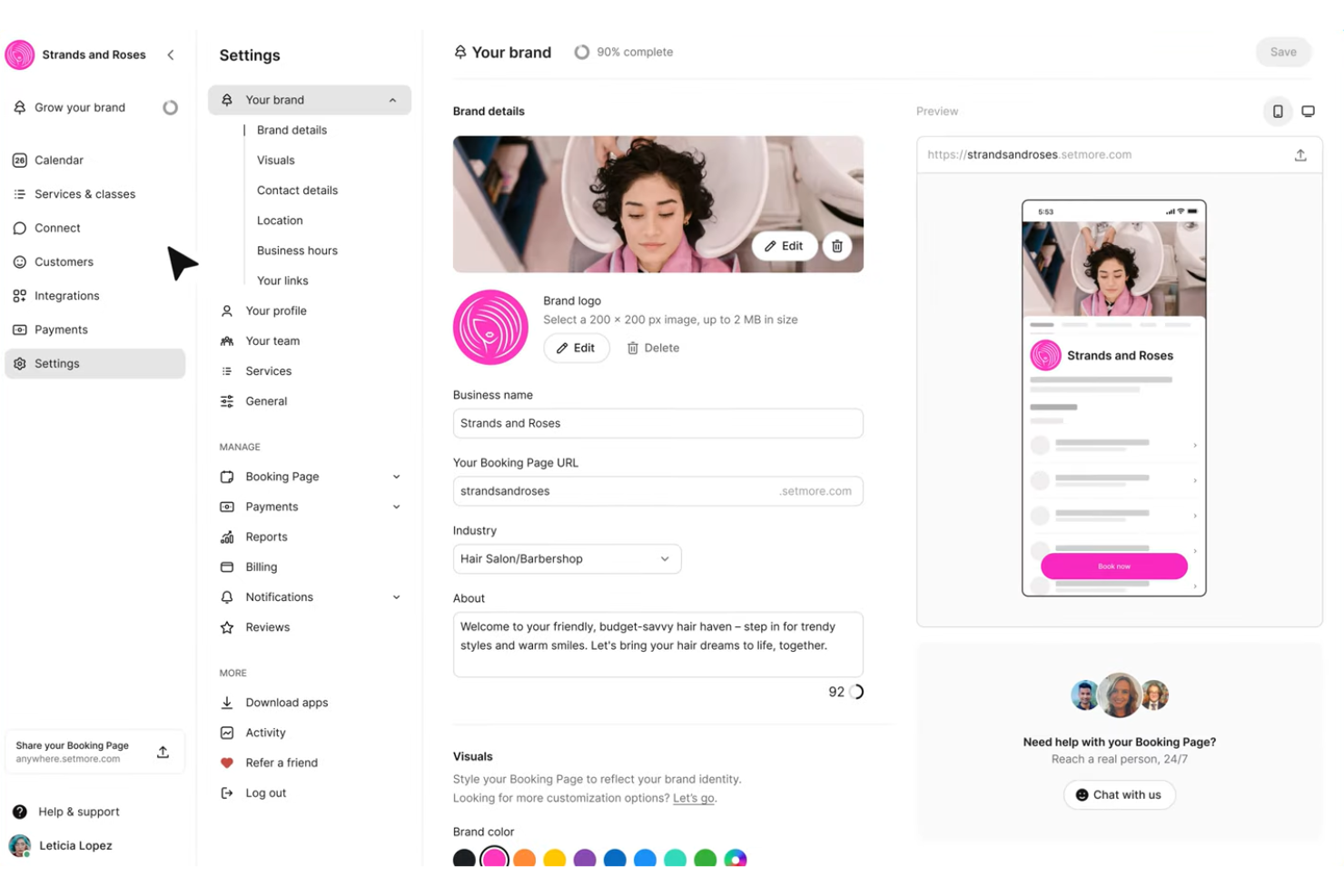
Setmore offre agli studi legali un modo per gestire gli appuntamenti, automatizzare i promemoria e consentire ai clienti di prenotare autonomamente, aiutando i team legali a coordinare gli orari e ridurre le assenze.
Per chi è più adatto Setmore?
Setmore è una buona scelta per studi legali di piccole e medie dimensioni che necessitano di un modo semplice per gestire gli appuntamenti tra più avvocati e membri dello staff.
Perché ho scelto Setmore
Setmore si guadagna un posto nella mia lista grazie alla sua efficacia nella gestione dei calendari multi-staff per i team legali. Mi piace il fatto che si possano creare login individuali per ciascun avvocato o membro dello staff, permettendo a ognuno di gestire la propria disponibilità mentre è possibile supervisionare tutti gli orari da un unico account. I clienti possono sfogliare i profili degli avvocati sulla pagina di prenotazione e scegliere con chi desiderano fissare un incontro, riducendo così le complicazioni di coordinamento. Anche i link di prenotazione individuali sono una caratteristica utile: ogni avvocato può condividere il proprio link per attirare direttamente i clienti.
Funzionalità chiave di Setmore
- Promemoria automatici: Invia promemoria via email e SMS ai clienti prima degli appuntamenti programmati per ridurre le assenze.
- Sincronizzazione calendario: Collega Setmore con Google Calendar o Outlook per mantenere tutti gli orari sincronizzati in un unico posto.
- Pagina di prenotazione personalizzata: Crea una pagina di prenotazione con il tuo marchio dove i clienti possono programmare le consulenze senza dover chiamare lo studio.
- Riscossione dei pagamenti: Accetta depositi o pagamenti completi al momento della prenotazione tramite le integrazioni con Stripe o Square.
Integrazioni Setmore
Le integrazioni includono Google Calendar, Outlook, Zoom, Slack, Salesforce, HubSpot, Clio, QuickBooks, Stripe e PayPal.
Pros and Cons
Pros:
- Supporta appuntamenti illimitati per ogni membro dello staff
- Offre prenotazione autonoma da parte dei clienti con moduli di raccolta dati
- Si integra con LawPay per i pagamenti legali
Cons:
- Non ha una gestione documentale integrata per i fascicoli dei casi
- Manca di report avanzati per metriche legali

Ideale per pagine di prenotazione consulenze legali personalizzate
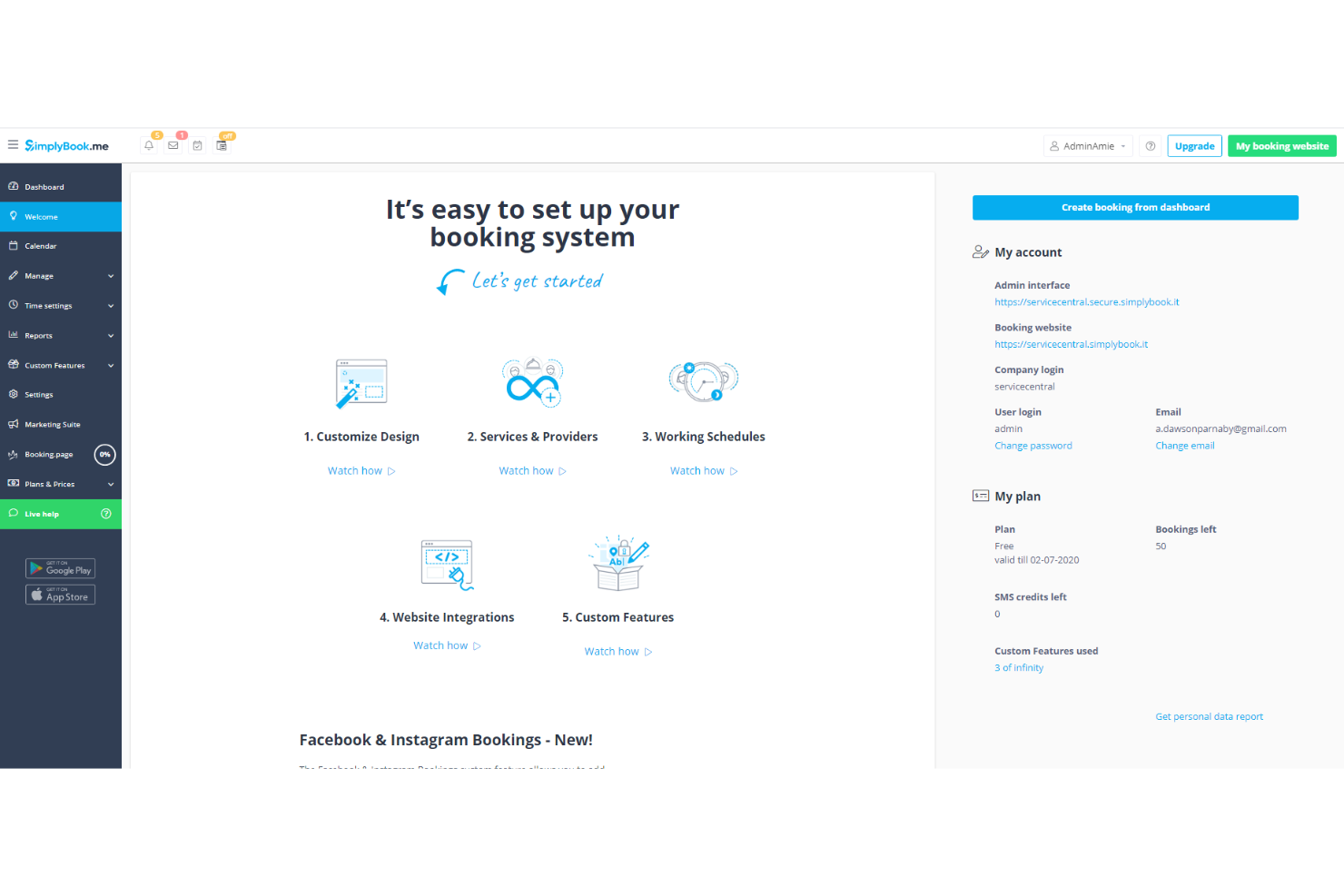
SimplyBook.me offre a studi legali e professionisti del settore una piattaforma flessibile per gestire appuntamenti con i clienti, automatizzare conferme e gestire la fase di raccolta dati iniziale, aiutando i team a ridurre le difficoltà di pianificazione e a presentare un'immagine professionale ai clienti.
Per chi è ideale SimplyBook.me?
SimplyBook.me è ideale per avvocati singoli e studi legali di piccole e medie dimensioni che hanno bisogno di un sistema di prenotazione rivolto ai clienti senza dover affrontare impegnative attività IT.
Perché ho scelto SimplyBook.me
Ho scelto SimplyBook.me tra i migliori perché permette di avere un grande controllo sulla pagina di prenotazione rivolta ai clienti. La funzione di personalizzazione del design consente di aggiungere il logo dello studio, i colori del brand e CSS personalizzati, facendo sì che l'esperienza di prenotazione sembri un'estensione naturale del proprio sito, invece di uno strumento di terze parti. Apprezzo inoltre la possibilità di usare un dominio personalizzato, che permette di ospitare la propria pagina di prenotazione sotto il proprio URL—un aspetto importante per trasmettere credibilità ai potenziali clienti. Inoltre, i moduli di raccolta dati consentono di acquisire informazioni specifiche già al momento della prenotazione, così gli avvocati arrivano ai colloqui conoscendo già le basi della situazione del cliente.
Funzionalità principali di SimplyBook.me
- Notifiche e promemoria per appuntamenti: Invia automaticamente conferme di prenotazione, promemoria e avvisi di cancellazione sia ai clienti sia agli avvocati via email, SMS o WhatsApp.
- Approvazione delle prenotazioni: Consente al team di esaminare e approvare o rifiutare manualmente le richieste di consulenze prima che vengano confermate in agenda.
- Riprogrammazione da parte del cliente: Include un link per riprogrammare all'interno delle email di conferma così i clienti possono modificare l'orario autonomamente senza chiamare lo studio.
- Termini e condizioni: Mostra i termini dello studio al momento della prenotazione, richiedendo l'accettazione prima di confermare l'appuntamento.
Integrazioni di SimplyBook.me
Le integrazioni includono WordPress, Joomla, Facebook, Instagram, Google My Business, Microsoft 365/Teams, Stripe, PayPal, QuickBooks e FreshBooks.
Pros and Cons
Pros:
- Il sito di prenotazione personalizzabile rispecchia l'immagine dello studio
- I moduli di raccolta dati acquisiscono dettagli del cliente e della pratica
- Supporta pagamenti online per servizi legali
Cons:
- Le opzioni di pianificazione di gruppo sono basilari
- I report non includono metriche specifiche per l'attività legale

MyCase
Ideale per l'integrazione della pianificazione tramite portale clienti
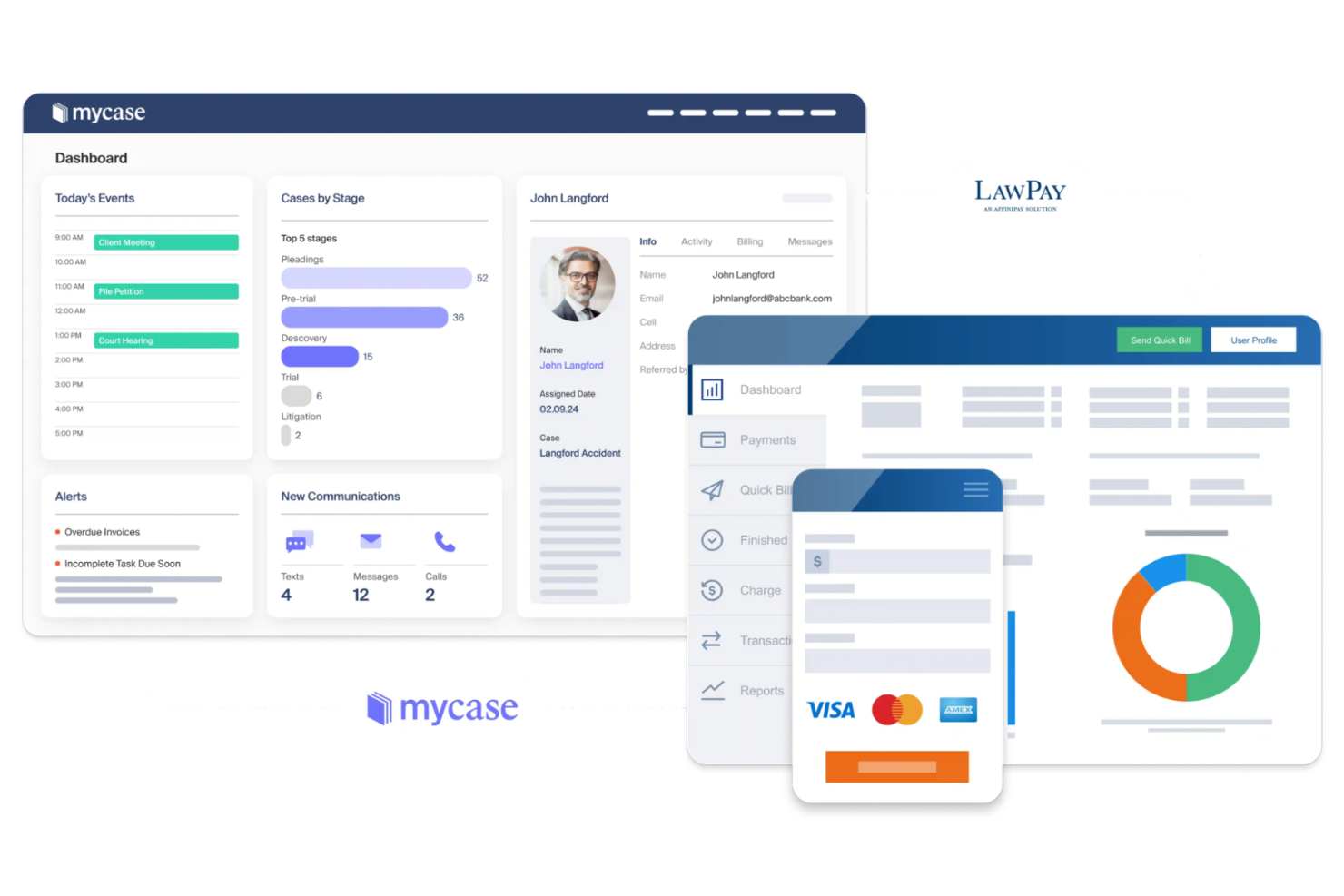
MyCase è una piattaforma di gestione dello studio legale progettata per gli studi che necessitano di pianificazione integrata degli appuntamenti, comunicazioni sicure con i clienti e strumenti per gestire pratiche, calendari e fatturazione in un unico luogo.
Per Chi è Ideale MyCase?
MyCase è adatta a studi legali di piccole e medie dimensioni che desiderano una piattaforma unica per gestire l'acquisizione dei clienti, la pianificazione e la gestione delle pratiche senza dover usare più strumenti diversi.
Perché Ho Scelto MyCase
MyCase merita il suo posto nella mia shortlist grazie al modo in cui il portale clienti si integra strettamente con la pianificazione e la gestione delle pratiche. L'ho selezionata proprio per l'integrazione del portale clienti con la pianificazione: quando viene creato un nuovo evento o appuntamento in MyCase, questo viene condiviso automaticamente con il cliente tramite il portale, così entrambe le parti restano allineate senza dover scambiare continuamente email. Apprezzo anche che il portale permetta ai clienti di visualizzare le date in programma, rispondere ai messaggi e accedere ai documenti delle pratiche tutto in un'unica area, riducendo così le chiamate ripetute tipiche del coordinamento degli appuntamenti. In più, i promemoria automatici via SMS collegati agli eventi del calendario fanno sì che i clienti si presentino realmente—un avvocato che utilizza MyCase ha osservato che 'raramente ha una mancata presentazione' dopo aver attivato questa funzione.
Caratteristiche Principali di MyCase
- Moduli di raccolta dati online: Raccogli informazioni e dettagli delle pratiche dai clienti prima del primo appuntamento utilizzando moduli personalizzabili.
- Rilevamento tempo integrato: Registra le ore fatturabili direttamente sulle pratiche e sugli appuntamenti senza passare a un altro strumento.
- Gestione delle attività: Crea e assegna attività collegate a pratiche specifiche, con date di scadenza per mantenere sotto controllo i follow-up degli appuntamenti.
- SMS bidirezionale: Invia e ricevi messaggi SMS con i clienti direttamente all'interno di MyCase, mantenendo tutte le comunicazioni nella scheda della pratica.
Integrazioni di MyCase
Le integrazioni includono QuickBooks, Dropbox, Google Calendar, Microsoft Outlook, LawPay, Mailchimp, NetDocuments, CallRail, Smith.ai e LawToolBox.
Pros and Cons
Pros:
- Il portale clienti consente l'auto-prenotazione sicura
- Promemoria appuntamenti inviati via email e SMS
- I moduli di raccolta possono essere personalizzati per gli appuntamenti
Cons:
- Nessuna opzione per appuntamenti di gruppo o con più partecipanti
- Analisi limitata per il monitoraggio degli appuntamenti

Lawcus
Ideale per link di prenotazione personalizzabili per studi
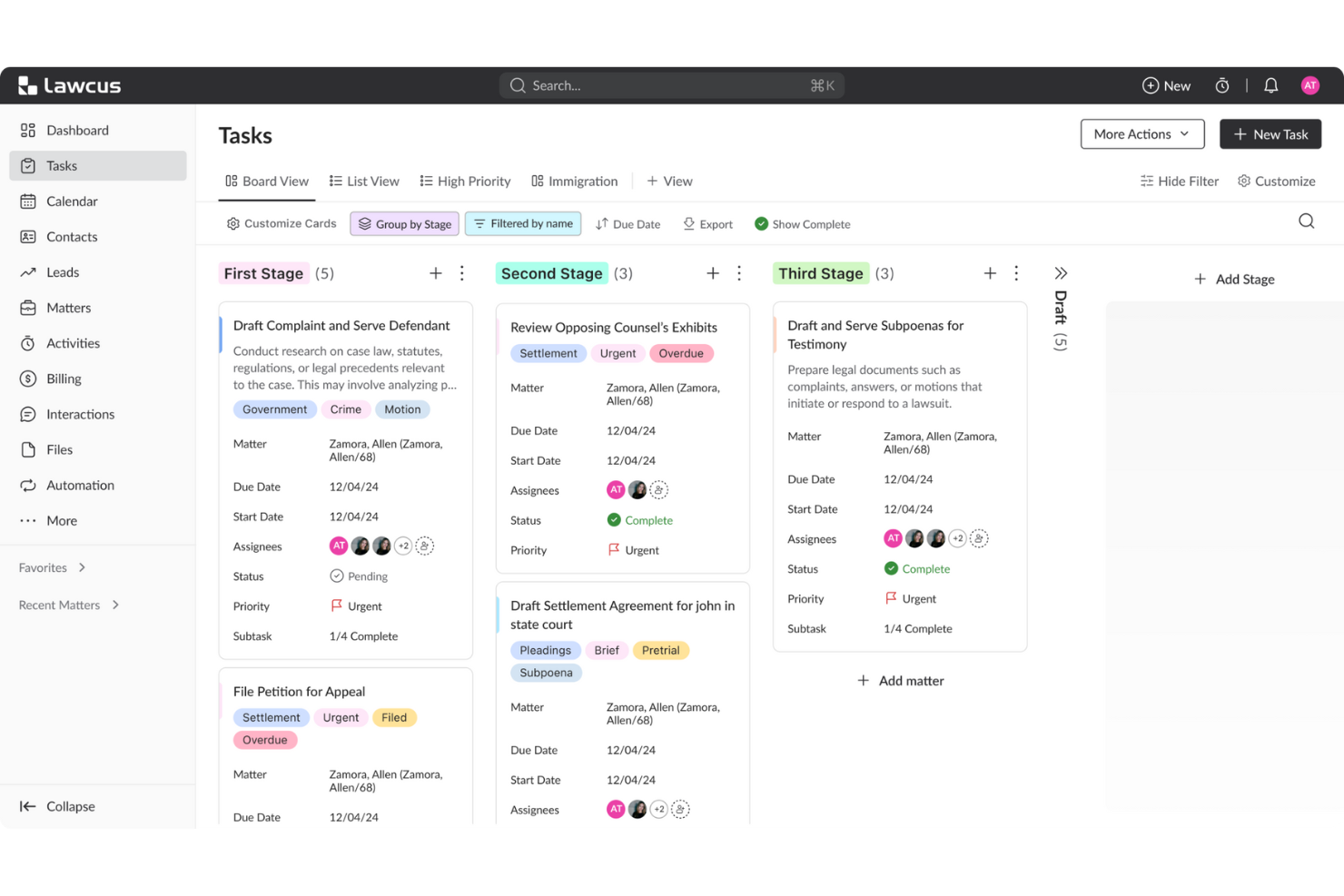
Lawcus è una piattaforma di gestione dello studio legale progettata per gli studi legali che desiderano semplificare la pianificazione degli appuntamenti, automatizzare l'acquisizione dei clienti e gestire i calendari insieme ai flussi di lavoro dei casi.
Per Chi È Ideale Lawcus?
Lawcus è una soluzione ideale per studi legali di piccole e medie dimensioni che cercano una piattaforma tutto-in-uno che unisca pianificazione, acquisizione clienti e gestione dei casi in un unico posto.
Perché Ho Scelto Lawcus
Ho scelto Lawcus come uno dei migliori per il controllo completo che offre sulla configurazione delle prenotazioni. Ogni pagina di pianificazione è completamente personalizzabile: puoi impostare il titolo dell’evento, la durata, le finestre di disponibilità, i tempi di buffer e persino le politiche di cancellazione, quindi condividere un link diretto con i clienti o integrarlo nel tuo flusso di acquisizione clienti. Apprezzo anche la possibilità di collegare una singola pagina di pianificazione a più calendari del team, così quando un cliente prenota, l'evento appare automaticamente su ogni calendario degli avvocati coinvolti. Inoltre, il modulo di prenotazione supporta campi personalizzati, il che significa che il mio team può raccogliere dettagli specifici relativi alla pratica già al momento della prenotazione invece di inseguire i clienti per avere informazioni dopo.
Funzionalità Principali di Lawcus
- Trigger di automazione dei flussi di lavoro: Imposta attività automatiche, notifiche e promemoria che si attivano quando un cliente prenota un appuntamento tramite il pianificatore.
- Pianificazione round robin: Distribuisci automaticamente le richieste di appuntamento ricevute tra diversi avvocati, così che nessun membro del team venga sovraccaricato.
- Pipeline visiva a schede stile Kanban: Monitora i potenziali clienti dal primo contatto fino all'acquisizione utilizzando una bacheca che si collega direttamente alla pianificazione e ai dati del CRM.
- Builder di flussi di lavoro senza codice: Crea automazioni multi-step intorno a eventi di causa, scadenze e punti di contatto con i clienti senza scrivere una riga di codice.
Integrazioni di Lawcus
Le integrazioni includono Box, Calendly, Dropbox, Gmail, Google Calendar, Google Drive, LawPay, Mailchimp, Microsoft 365 e QuickBooks.
Pros and Cons
Pros:
- Link di prenotazione personalizzabili per ogni membro dello staff
- Moduli di acquisizione clienti integrati per appuntamenti
- Sincronizzazione calendario con Google e Outlook
Cons:
- Nessuna funzionalità di pianificazione appuntamenti di gruppo
- Reportistica limitata sulle analisi degli appuntamenti

Ideale per integrare l'onboarding con i flussi di pianificazione degli appuntamenti
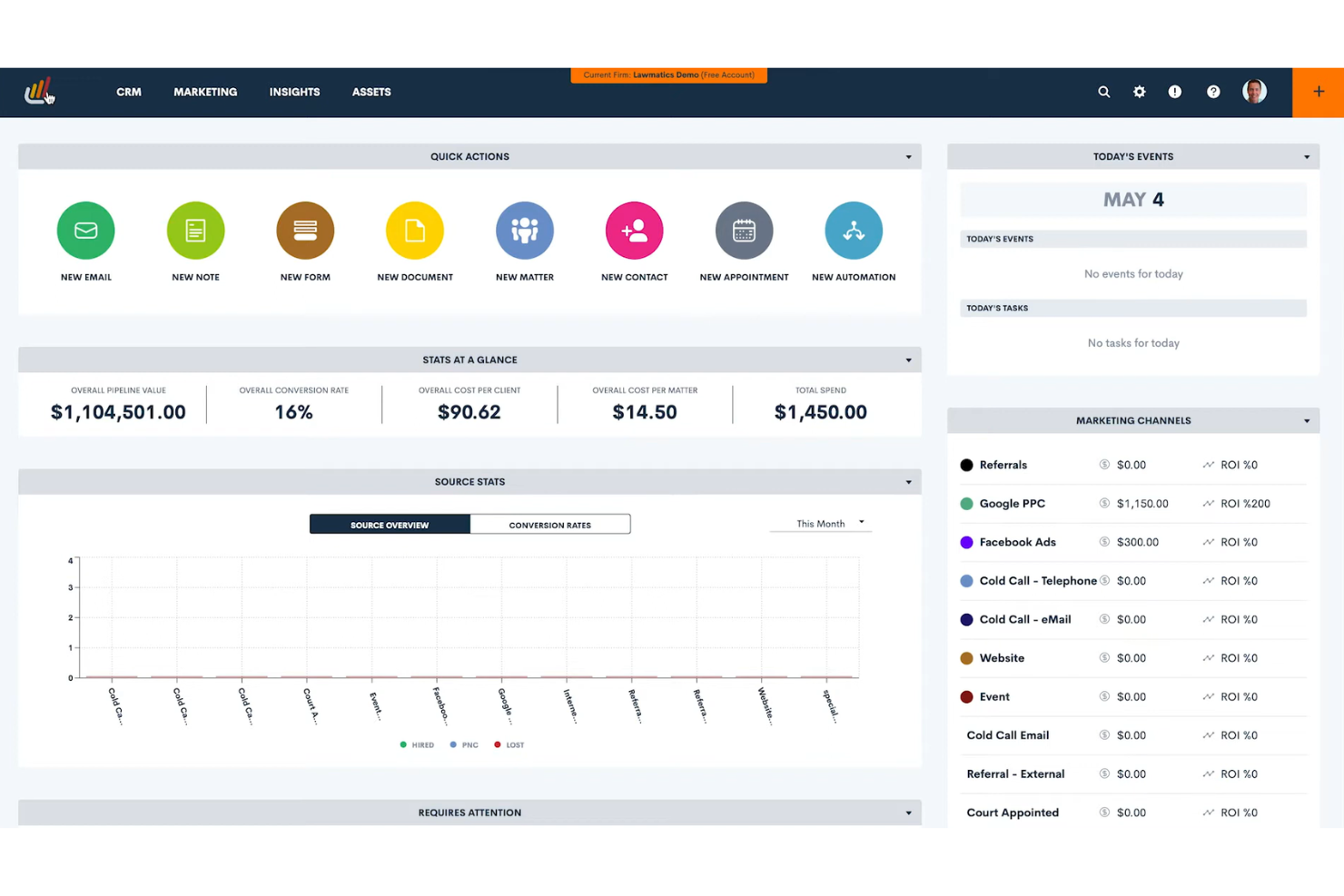
Lawmatics è una piattaforma pensata per il settore legale, progettata per gli studi legali che desiderano automatizzare la pianificazione degli appuntamenti, l'onboarding dei clienti e la gestione dei flussi di lavoro in un unico luogo.
Per chi è più indicato Lawmatics?
Lawmatics è particolarmente adatto a studi legali di piccole e medie dimensioni che hanno bisogno di una piattaforma unica per gestire insieme l'onboarding dei clienti, i follow-up e la pianificazione degli appuntamenti.
Perché ho scelto Lawmatics
Lawmatics si guadagna un posto nella mia shortlist perché è una delle poche piattaforme costruite appositamente per studi legali che collega direttamente la pianificazione degli appuntamenti all'onboarding dei clienti. Quando un potenziale cliente prenota una consulenza, Lawmatics può automaticamente attivare un modulo di onboarding, inviare email di follow-up e far avanzare la pratica in un flusso di lavoro predefinito—senza nessun passaggio manuale. Apprezzo in particolare le campagne automatizzate a rilascio graduale che mantengono i potenziali clienti coinvolti tra la prenotazione e il primo appuntamento. Gli strumenti per la pianificazione e l'onboarding condividono gli stessi dati nel CRM, così il mio team non deve reinserire le informazioni di contatto o rincorrere moduli incompleti.
Funzionalità chiave di Lawmatics
- Gestione pipeline: Traccia i potenziali clienti in ogni fase del percorso cliente usando una pipeline visuale con tag personalizzabili e filtri per lo stato.
- Verifica conflitti: Esegui controlli di conflitto d'interesse direttamente all'interno del CRM prima di avanzare una nuova lead nel processo di onboarding.
- Firma elettronica per documenti legali: Invia accordi di mandato e altri documenti per la firma elettronica senza uscire dalla piattaforma.
- Modelli di documenti: Crea modelli di documenti riutilizzabili che si compilano automaticamente con i dati del CRM per ridurre la redazione manuale durante l'onboarding.
Integrazioni Lawmatics
Le integrazioni includono Clio, MyCase, Filevine, PracticePanther, Smokeball, Gmail, Microsoft Outlook, QuickBooks, LawPay e Zoom.
Pros and Cons
Pros:
- I moduli di onboarding attivano automaticamente la pianificazione degli appuntamenti
- I log degli appuntamenti sono collegati direttamente alle pratiche dei clienti
- Promemoria automatici inviati via email o SMS
Cons:
- Nessuna opzione per appuntamenti di gruppo o con più partecipanti
- Non è possibile incorporare lo strumento di pianificazione direttamente nei siti web dello studio

Clio
Ideale per promemoria e conferme automatiche ai clienti
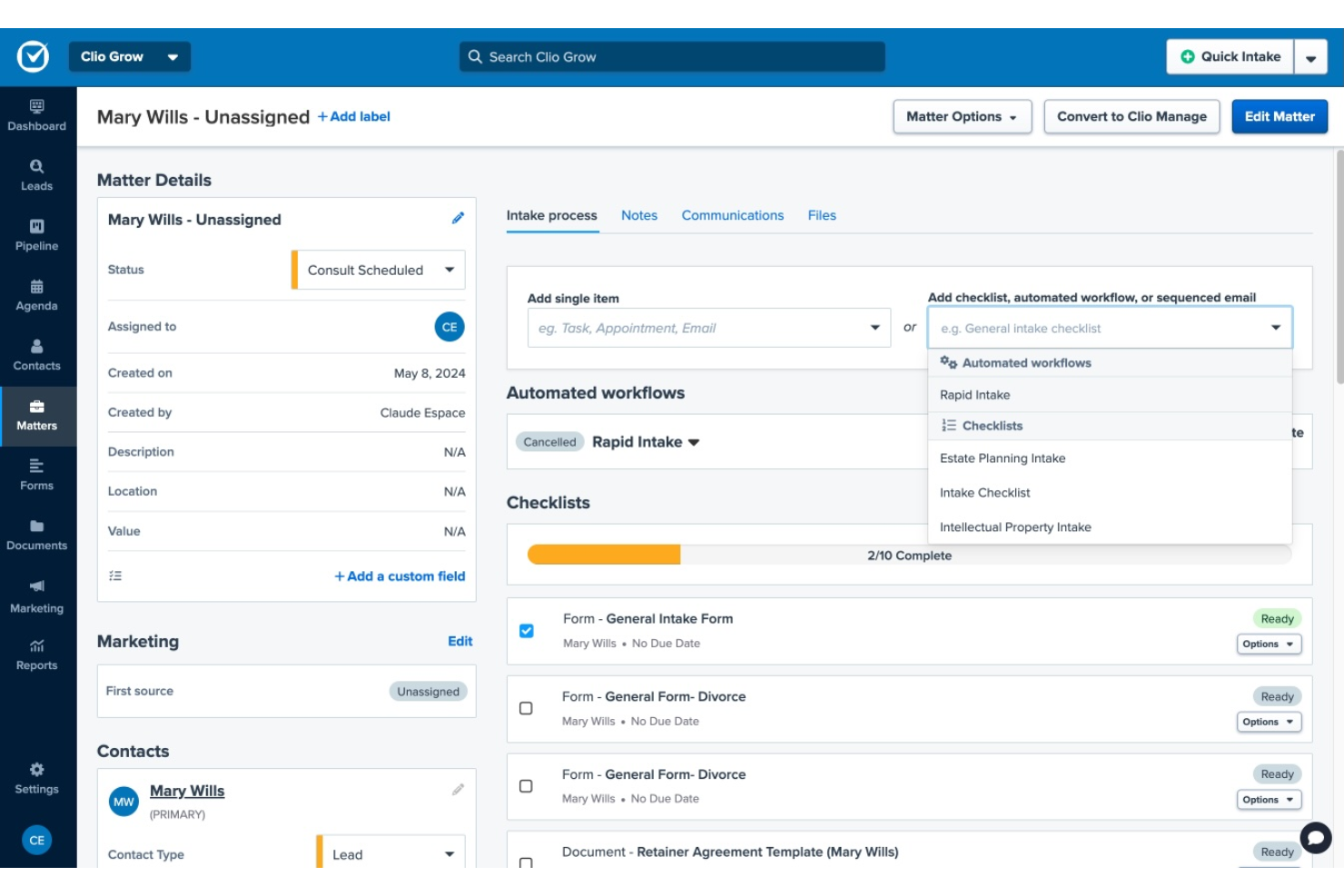
Clio è una piattaforma di gestione per studi legali progettata per gli studi che necessitano di strumenti sicuri e integrati per la programmazione degli appuntamenti e la comunicazione con i clienti, al fine di semplificare la prenotazione, ridurre le assenze e mantenere organizzate le interazioni con i clienti.
Per Chi È Clio?
Clio è particolarmente adatto ad avvocati indipendenti e studi legali di piccole e medie dimensioni che desiderano una piattaforma tutto-in-uno per gestire l'acquisizione dei clienti, la programmazione degli appuntamenti e le pratiche in un unico luogo.
Perché Ho Scelto Clio
Ho scelto Clio come uno dei migliori grazie all'efficacia del suo sistema di promemoria automatici. Con Clio Grow, i potenziali clienti possono fissare autonomamente una consulenza direttamente dal sito web o dall'email dello studio, e i promemoria tramite SMS vengono inviati automaticamente senza bisogno di interventi manuali dal team. Un cliente di Clio ha segnalato una riduzione del tasso di mancata presentazione dal 20–25% a meno del 5% dopo aver implementato Clio Grow. Apprezzo anche l'automazione del flusso di lavoro di acquisizione, che mantiene i clienti coinvolti tra la prenotazione e l'appuntamento, evitando così che qualcosa venga trascurato prima del primo incontro.
Funzionalità Principali di Clio
- Verifica conflitti: Esegui una scansione dei conflitti di interesse su contatti, note di casi, eventi in calendario e comunicazioni sia in Clio Grow che in Clio Manage prima di accettare un nuovo cliente.
- Moduli di acquisizione online: Crea moduli di acquisizione personalizzati che si sincronizzano direttamente con Clio Manage, così i dettagli di nuovi clienti e pratiche vengono popolati automaticamente senza reinserimenti manuali.
- Calendario legale: Collega gli eventi del calendario a pratiche specifiche e sincronizza con Google o Outlook, disponendo di funzionalità specifiche per ambito legale come la programmazione automatica delle date di udienza.
- Monitoraggio di tempi e spese: Registra il tempo fatturabile direttamente da attività o eventi in calendario, con la possibilità di vedere quali voci mancano in modo che nulla venga omesso dalla fattura.
Integrazioni di Clio
Le integrazioni includono QuickBooks Online, Xero, InfoTrack, OurFamilyWizard, Case Status, ChartSquad, Legl, Precedent Demand Composer, Scorpion RevenueMAX e l'API aperta di Clio per integrazioni personalizzate.
Pros and Cons
Pros:
- Promemoria automatici riducono le assenze dei clienti
- I log delle attività degli appuntamenti sono collegati alle pratiche
- Moduli di acquisizione personalizzabili in fase di prenotazione
Cons:
- Nessuna funzione di programmazione appuntamenti di gruppo
- Personalizzazione limitata dei modelli di promemoria

Ideale per l'automazione del calendario basata sulle regole dei tribunali
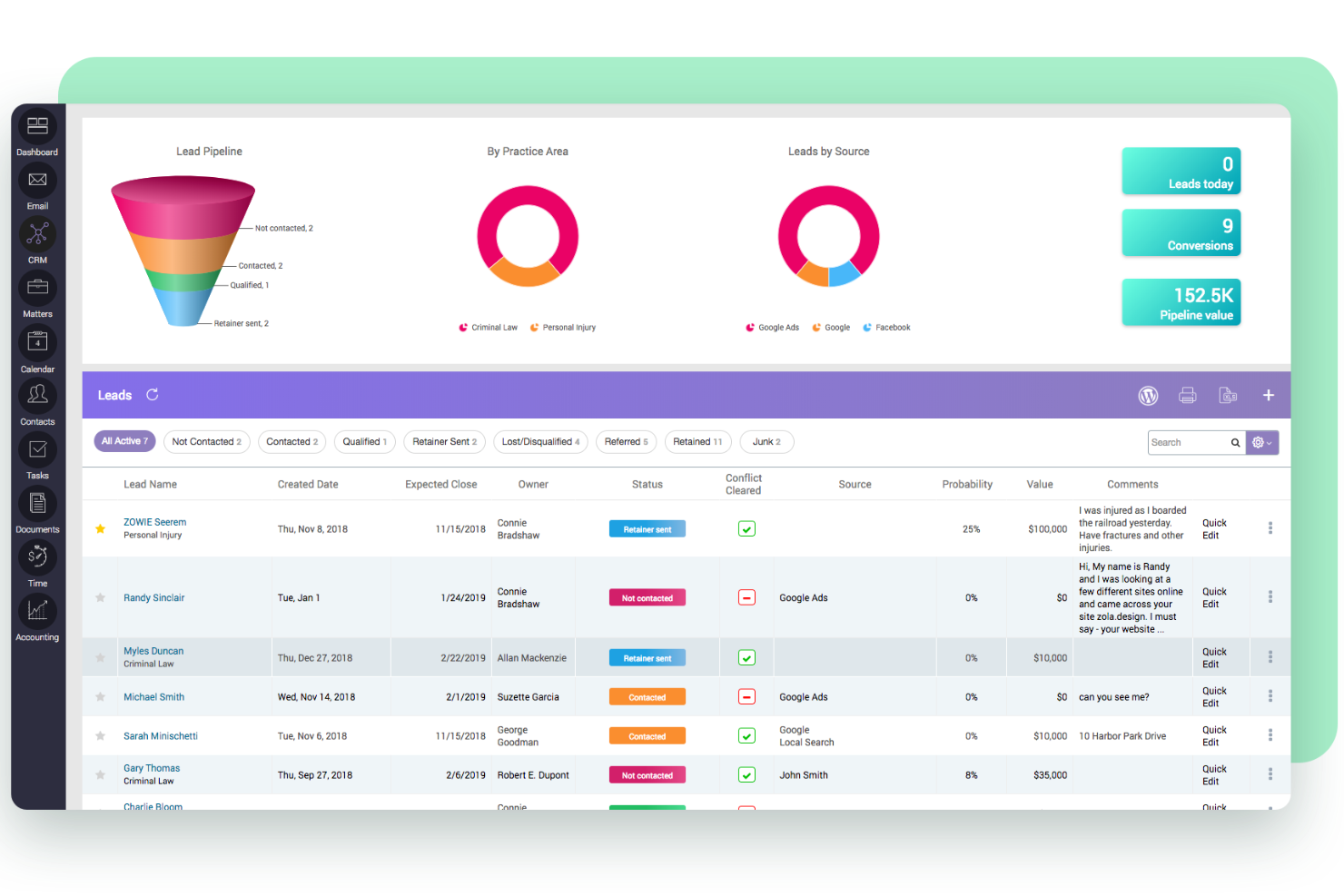
CARET Legal è una piattaforma di gestione dello studio legale progettata per studi legali che necessitano di calendari avanzati, gestione delle pratiche e pianificazione di appuntamenti su misura per i flussi di lavoro legali e i requisiti di conformità.
Per chi è ideale CARET Legal?
CARET Legal è particolarmente indicato per studi legali di piccole e medie dimensioni che cercano una soluzione gestionale tutto-in-uno con pianificazione e monitoraggio delle scadenze specifici per il settore legale integrati.
Perché ho scelto CARET Legal
CARET Legal si merita un posto nella mia lista perché gestisce l'automazione del calendario basata sulle regole dei tribunali grazie all'integrazione con LawToolBox. Mi piace il fatto che, all'apertura di una nuova pratica di contenzioso, il sistema calcoli automaticamente tutte le scadenze processuali rilevanti in base alla giurisdizione e al tipo di causa—senza necessità di calcoli manuali sulle date. Il calendario consente inoltre al mio team di escludere i fine settimana e i giorni festivi nazionali dal calcolo delle date e di salvare tali calcoli come modelli riutilizzabili. Inoltre, il livello di automazione del flusso di lavoro è direttamente collegato al calendario, quindi attività e appuntamenti relativi a un determinato tipo di pratica si attivano automaticamente man mano che il caso procede.
Caratteristiche principali di CARET Legal
- Gestione delle pratiche: Centralizza tutti i contatti, eventi, attività, note, comunicazioni, documenti e pagamenti relativi a un caso in un'unica scheda pratica.
- Flussi di lavoro automatizzati: Permette al tuo team di creare modelli predefiniti che attivano automaticamente attività e appuntamenti in calendario all'apertura di un nuovo tipo di pratica.
- Riassunto documenti tramite AI: La funzione Quick Summary utilizza l'intelligenza artificiale per condensare contratti, atti e file di discovery in sintesi concise direttamente all'interno della piattaforma.
- Messaggistica bidirezionale con i clienti: Supporta la messaggistica sicura, bidirezionale tramite SMS con i clienti, oltre che via email e portale cliente per una comunicazione centralizzata.
Integrazioni di CARET Legal
Le integrazioni includono Microsoft 365, Google Workspace, LawToolBox, Lawmatics, HotDocs, OneDrive, NetDocuments, Microsoft Word, RMail e QuickBooks Online.
Pros and Cons
Pros:
- Automazione delle scadenze secondo le regole dei tribunali
- Collegamento diretto delle pratiche a tutti gli appuntamenti
- Sincronizzazione bidirezionale con Outlook e Google Calendar
Cons:
- Nessuna opzione pubblica di auto-prenotazione per i clienti
- Personalizzazione limitata delle tipologie di appuntamenti

CozyCal
Ideale per la gestione degli appuntamenti in team
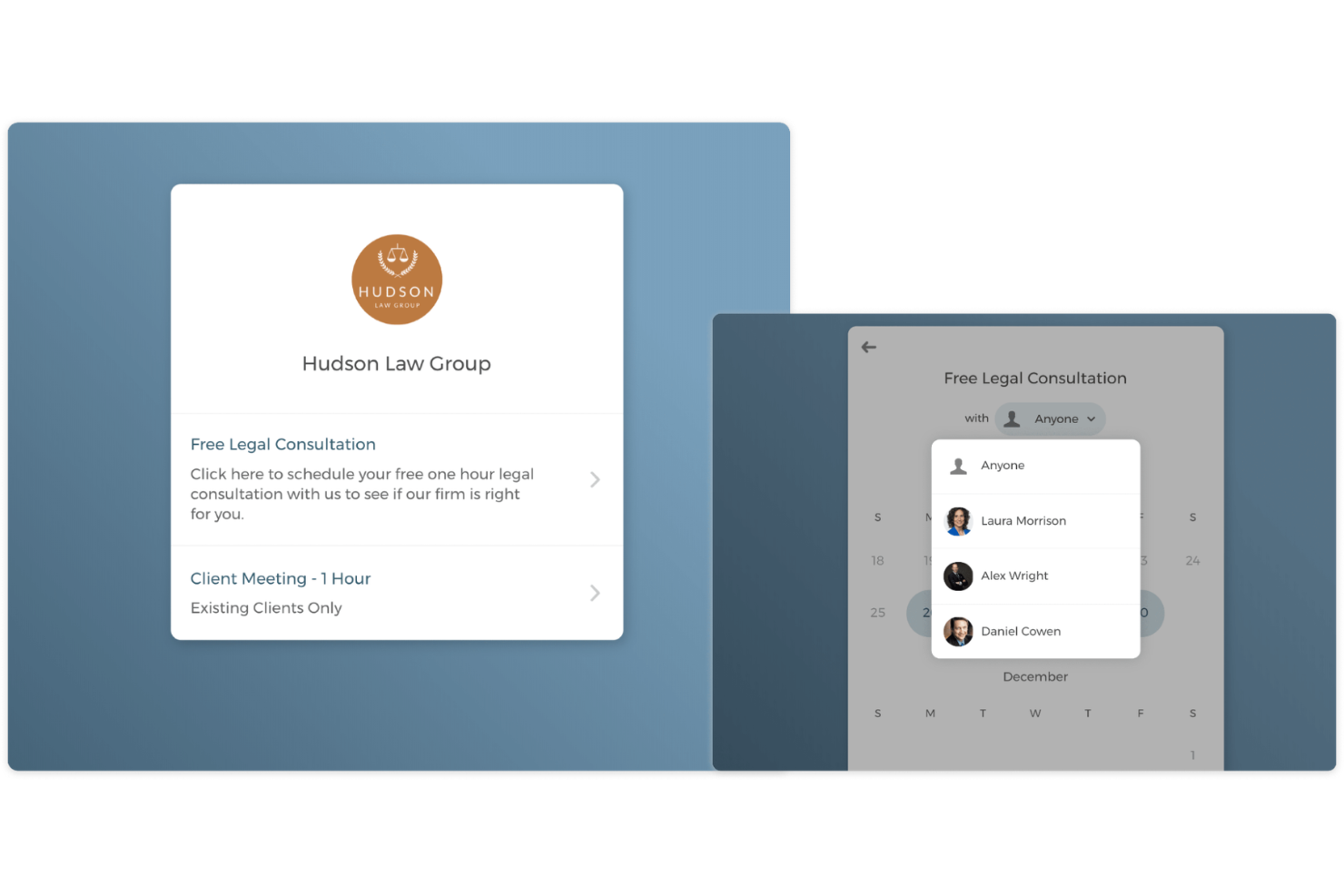
CozyCal è uno strumento di pianificazione online progettato per studi legali e professionisti del settore legale che necessitano di un modo semplice per gestire gli appuntamenti con i clienti, automatizzare la sincronizzazione del calendario e semplificare la raccolta delle informazioni senza lo scambio di e-mail.
Per chi è CozyCal?
CozyCal è adatto a studi legali di piccole e medie dimensioni che cercano uno strumento di pianificazione leggero con funzionalità integrate di prenotazione di gruppo e raccolta dati dai clienti.
Perché ho scelto CozyCal
CozyCal si è guadagnato un posto nella mia lista grazie all'efficienza con cui il suo sistema di assegnazione per team gestisce la pianificazione multi-avvocato tipica degli studi legali. Apprezzo particolarmente la funzione di assegnazione turnistica, che distribuisce automaticamente le prenotazioni dei clienti tra gli avvocati disponibili—senza necessità di gestione manuale. Ciò che lo rende particolarmente utile per i team legali è la capacità di pianificazione ibrida: quando un cliente prenota una consulenza, CozyCal verifica simultaneamente la disponibilità sia dell’avvocato sia della sala riunioni, prenotando entrambi in un'unica operazione. Trovo anche estremamente pratica la funzione di richiesta di evento, poiché consente agli avvocati di esaminare il modulo d’ingresso del cliente prima di accettare o rifiutare la prenotazione.
Funzionalità principali di CozyCal
- Pagine di prenotazione personalizzabili: Crea pagine di prenotazione personalizzate con campi su misura per raccogliere dettagli dai clienti prima della consulenza.
- Promemoria automatici: Invia promemoria automatici via e-mail o SMS ai clienti prima degli appuntamenti fissati per ridurre le assenze.
- Sincronizzazione del calendario: Collega i calendari Google, Outlook o iCloud per mantenere aggiornata in tempo reale la disponibilità degli avvocati.
- Widget di prenotazione integrabile: Aggiungi un widget di prenotazione direttamente al sito web dello studio legale o al portale clienti.
Integrazioni CozyCal
Le integrazioni includono ActiveCampaign, Clio, Google Analytics, Google Calendar, Google Meet, Stripe, Webflow, WordPress, Zapier e Zoom.
Pros and Cons
Pros:
- Moduli di raccolta dati personalizzabili per i dettagli dei clienti
- Pianificazione di team con assegnazione turnistica
- Si sincronizza con Google e Outlook Calendar
Cons:
- Nessun controllo conflitti integrato per gli appuntamenti
- Le opzioni di pianificazione di gruppo sono basilari

Zeeg
Ideale per il coordinamento delle riunioni di gruppo
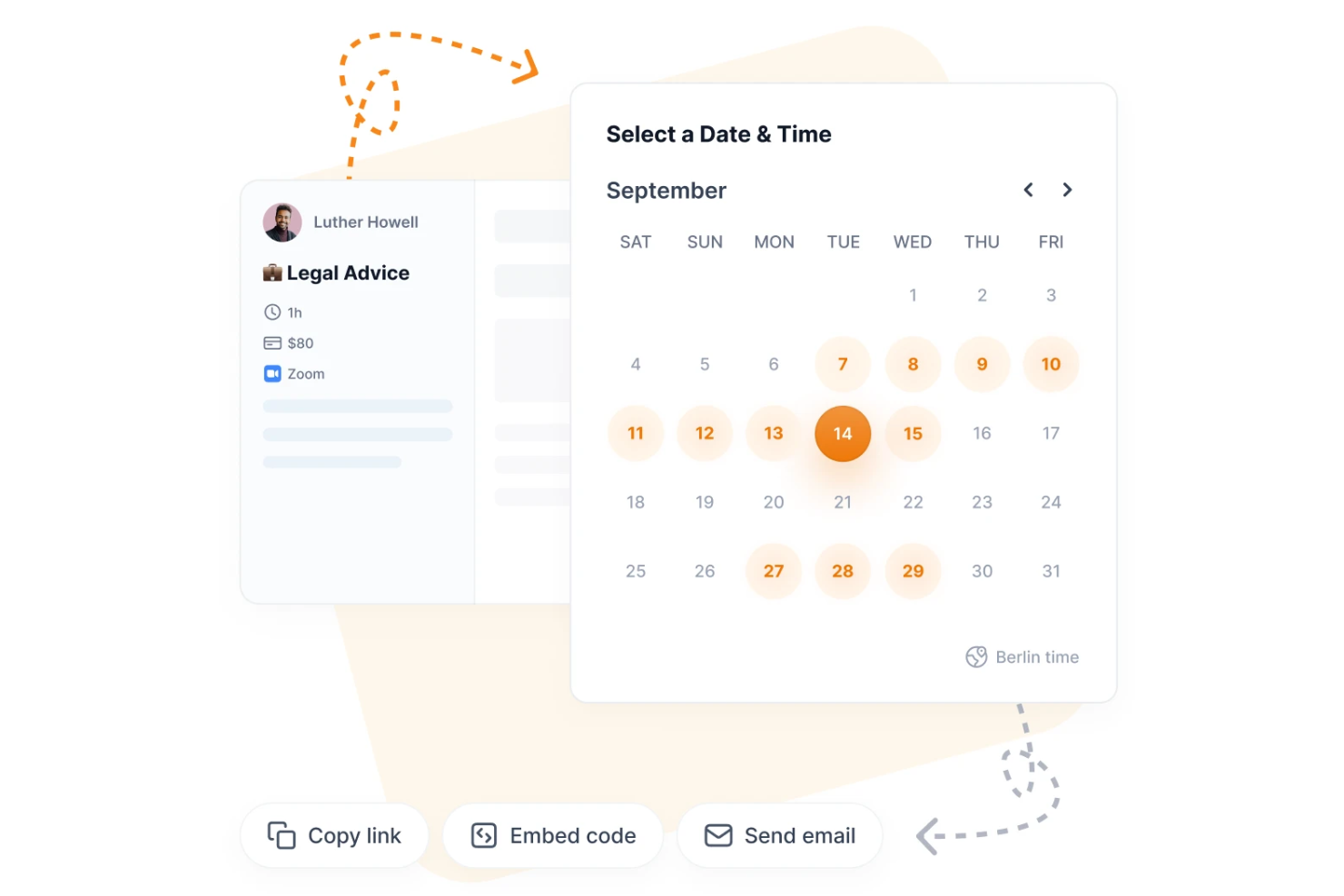
Zeeg aiuta gli studi legali e i professionisti del settore legale a semplificare la pianificazione degli appuntamenti automatizzando le prenotazioni, sincronizzando i calendari e gestendo la logistica complessa delle riunioni sia per i team interni che per i clienti.
Per chi è Zeeg?
Zeeg è adatto a studi legali di piccole e medie dimensioni che necessitano di uno strumento di pianificazione semplice per gestire le prenotazioni dei clienti e le riunioni interne del team.
Perché ho scelto Zeeg
Zeeg si guadagna un posto nella mia lista grazie all’efficienza con cui gestisce il coordinamento delle riunioni di gruppo, un'esigenza continua per gli studi legali quando si tratta di organizzare deposizioni, mediazioni o chiamate con più clienti. Apprezzo particolarmente la funzione di pianificazione collettiva, che consente a più membri del team di condividere un unico link di prenotazione così che i clienti possano trovare un orario che vada bene per tutto il gruppo. Zeeg supporta anche la pianificazione round-robin, utile per distribuire le chiamate di primo contatto fra i collaboratori senza intervento manuale.
Funzionalità principali di Zeeg
- Buffer automatici per le riunioni: Imposta un intervallo di tempo prima e dopo gli appuntamenti affinché gli avvocati abbiano tempo per prepararsi o per fare il punto tra una chiamata e l’altra con i clienti.
- Moduli di instradamento: Qualifica e indirizza le richieste di prenotazione in arrivo all’avvocato o gruppo di pratica giusto sulla base delle risposte all’intake.
- Automazione dei workflow: Crea sequenze automatiche di follow-up e promemoria attivati da una prenotazione confermata.
- Gestione dati conforme al GDPR: Tutti i dati di pianificazione sono archiviati con crittografia end-to-end e piena conformità al GDPR integrata.
Integrazioni di Zeeg
Le integrazioni includono Google Calendar, Outlook Calendar, Office 365 Calendar, Microsoft Exchange, iCloud Calendar, Google Meet, Zoom, Microsoft Teams, Skype e Salesforce.
Pros and Cons
Pros:
- Offre pagine di prenotazione personalizzate per gli studi legali
- Fornisce promemoria automatici via SMS e email
- Include il rilevamento del fuso orario per clienti internazionali
Cons:
- Le funzionalità di reportistica non sono specifiche per il settore legale
- Le opzioni per la pianificazione di gruppo non consentono personalizzazioni avanzate
Altri Software di Prenotazione Appuntamenti Legali
Ecco altre opzioni di software di prenotazione appuntamenti legali che non hanno superato la selezione, ma che vale comunque la pena considerare:


Come Valuto i Software per la Pianificazione di Appuntamenti Legali
Valuto su due livelli: una base che ogni strumento deve soddisfare—raccolta dati di intake, sincronizzazione calendario, integrazioni con gestionali legali—e gli elementi differenzianti che separano i pianificatori legali specializzati dagli strumenti generici.
Funzionalità di Base (Requisiti Fondamentali per Questa Lista)
Quando seleziono gli strumenti per la mia lista, valuto ciascuno su una scala da 0 (non offre la funzionalità) a 5 (eccelle in quest'area) per ogni funzionalità di base elencata di seguito. Poi calcolo il punteggio totale dello strumento in percentuale. Ogni strumento deve raggiungere un punteggio minimo totale del 65% per essere considerato.
- Portale di Autoprenotazione per Clienti: Verifico se i clienti possono prenotare consulenze direttamente sulla base della disponibilità in tempo reale dell'avvocato, e se le pagine di prenotazione supportano diversi tipi di servizio come prime consulenze o revisioni pratiche.
- Sincronizzazione Calendario Legale: La sincronizzazione bidirezionale con Google Calendar o Outlook è il requisito minimo, ma valuto anche se lo strumento mostra date di udienza, deposizioni ed eventi di materia per evitare il doppio appuntamento agli avvocati.
- Raccolta Dati di Intake e Conflitti: Cerco moduli di intake configurabili che raccolgano dettagli sulla pratica e nomi delle controparti al momento della prenotazione, poiché il reinserimento manuale dopo una consulenza fa perdere tempo e ritarda la verifica dei conflitti.
- Integrazione con il Gestionale dello Studio: Sono importanti le connessioni native con piattaforme come Clio, MyCase o PracticePanther. Valuto se appuntamenti e dati dei clienti vengono trasferiti automaticamente nei fascicoli.
- Riservatezza e Conformità: La crittografia dei dati e certificazioni di sicurezza come SOC 2 sono il punto di partenza. Gli strumenti che gestiscono questioni sensibili dovrebbero anche supportare BAAs e mantenere pratiche dei dati allineate agli standard etici dell'ABA.
- Promemoria Automatici e Pagamenti: I promemoria via email e SMS riducono le assenze, ma valuto anche se lo strumento supporta l'incasso delle tariffe tramite processori conformi al settore legale come LawPay o Gravity Legal.
Una volta individuati gli strumenti che soddisfano questi criteri, considero ciò che distingue ciascuna piattaforma.
Fattori Differenzianti (Cosa Distingue i Fornitori)
Ecco come confronto i diversi fornitori:
Caratteristiche Distintive
Le funzionalità di firma elettronica in fase di prenotazione permettono ai clienti di firmare mandati o accordi di compenso prima del primo incontro, eliminando un comune collo di bottiglia nell'onboarding. Valuto anche la pianificazione round-robin per studi con più avvocati—distribuire le consulenze per area di competenza o disponibilità aiuta a bilanciare il carico di lavoro. Il tracciamento delle fonti dei lead è un altro elemento che considero, perché etichettare le prenotazioni per canale di riferimento aiuta gli studi a capire quali strategie di marketing portano davvero clienti paganti.
Oltre le Funzionalità
La conformità alla contabilità fiduciaria è un aspetto fondamentale—controllo se il sistema di pagamento separa fondi maturati e non maturati per rispettare i requisiti degli ordini professionali sugli account IOLTA. Anche la dimensione dello studio e la pratica legale sono rilevanti. Un avvocato singolo esperto di immigrazione e uno studio medio di infortunistica hanno volumi di prenotazione e flussi di lavoro molto diversi. Valuto inoltre quanto ogni strumento si collega con l'ecosistema legale, inclusi CRM come Lawmatics e piattaforme documentali come NetDocuments.
Come Scegliere un Software di Prenotazione Appuntamenti Legali
È facile perdersi tra lunghe liste di funzionalità e strutture di prezzo complesse. Per aiutarti a restare concentrato durante il tuo percorso di selezione, ecco una checklist di fattori da considerare:
| Fattore | Cosa Considerare |
| Scalabilità | Il software supporterà lo studio mentre cresce, inclusa l’aggiunta di nuovi utenti, sedi o aree di attività? |
| Integrazioni | Lo strumento si collega nativamente ai sistemi gestionali, al calendario e alla fatturazione che già utilizzi? |
| Personalizzazione | È possibile personalizzare le pagine di prenotazione, i promemoria e i flussi di lavoro per adattarli all’immagine e ai processi dello studio? |
| Facilità d’uso | Avvocati, personale e clienti troveranno l’interfaccia intuitiva, oppure servirà una formazione approfondita? |
| Implementazione e onboarding | Quanto tempo serve per andare a regime e quali risorse o supporto offre il fornitore durante l’avvio? |
| Costo | I piani tariffari sono trasparenti e allineati con la dimensione dello studio, l’uso e le funzionalità necessarie? Attenzione a costi nascosti. |
| Sicurezza | Il software offre crittografia, controlli di accesso e tracciabilità per proteggere i dati sensibili dei clienti? |
| Requisiti di conformità | Lo strumento aiuta a rispettare gli standard di settore come GDPR, HIPAA o le regole delle associazioni forensi locali? |
Cos’è un Software di Prenotazione Appuntamenti Legali?
Il software di prenotazione appuntamenti legali è uno strumento digitale che aiuta studi legali e professionisti del diritto a gestire appuntamenti, consulenze e incontri con i clienti. Automatizza la pianificazione, invia promemoria e permette ai clienti di prenotare o riprogrammare online. Queste piattaforme includono spesso funzionalità per la sincronizzazione dei calendari, comunicazioni sicure e il rispetto degli standard del settore legale, aiutando i team legali a ridurre le assenze e migliorare la comunicazione con il cliente.
Funzionalità del Software per la Pianificazione di Appuntamenti Legali
Quando scegli un software per la pianificazione di appuntamenti legali, fai attenzione alle seguenti funzionalità chiave:
- Portale di prenotazione online: Permette ai clienti di programmare, riprogrammare o cancellare appuntamenti tramite un'interfaccia web sicura e intuitiva.
- Promemoria automatici: Invia conferme e promemoria degli appuntamenti tramite email, SMS o voce per ridurre le mancate presenze e i ritardi.
- Sincronizzazione del calendario: Si integra con le piattaforme di calendario più diffuse per mantenere gli orari aggiornati ed evitare doppie prenotazioni.
- Moduli di accettazione personalizzabili: Raccoglie le informazioni dei clienti e i dettagli del caso durante il processo di prenotazione per ottimizzare la preparazione.
- Messaggistica bidirezionale: Consente una comunicazione sicura tra il personale legale e i clienti per conferme, aggiornamenti o domande rapide.
- Gestione appuntamenti ricorrenti: Supporta la pianificazione di incontri regolari, come aggiornamenti periodici con i clienti o date di udienza.
- Integrazione con sistemi di pagamento: Permette ai clienti di pagare acconti o tariffe al momento della prenotazione tramite gateway di pagamento sicuri.
- Controllo dei conflitti: Segnala potenziali conflitti di pianificazione o doppie prenotazioni per aiutare a mantenere la conformità ed evitare errori.
- Controlli di accesso basati sui ruoli: Limita l'accesso ai dati sensibili di pianificazione in base ai ruoli utente all'interno dello studio.
- Audit trail e reportistica: Traccia la cronologia degli appuntamenti, le modifiche e le comunicazioni per conformità e gestione dei registri.
Le soluzioni software per la pianificazione di appuntamenti legali normalmente non includono l'intelligenza artificiale tra le proprie funzionalità. Di conseguenza, non procederò con la stesura di questa sezione.
Vantaggi del Software per la Pianificazione di Appuntamenti Legali
L'implementazione di un software per la pianificazione di appuntamenti legali offre numerosi vantaggi per il tuo team e la tua attività. Eccone alcuni cui puoi guardare con fiducia:
- Riduzione delle mancate presenze: I promemoria e le conferme automatiche aiutano a garantire che i clienti ricordino e partecipino ai loro appuntamenti.
- Migliore esperienza per il cliente: I portali di prenotazione online e la messaggistica bidirezionale rendono più semplice per i clienti fissare appuntamenti e comunicare con il tuo studio.
- Maggiore conformità: Funzionalità quali audit trail, controllo dei conflitti e gestione sicura dei dati supportano le normative e la tenuta dei registri nel settore legale.
- Flussi di lavoro più efficienti: Sincronizzazione del calendario, moduli di accettazione personalizzabili e gestione degli appuntamenti ricorrenti riducono le attività manuali di pianificazione per il personale.
- Migliore allocazione delle risorse: I controlli di accesso basati sui ruoli e gli strumenti di reportistica consentono di gestire gli orari del personale e monitorare le tendenze degli appuntamenti.
- Riscossione dei pagamenti più rapida: L'integrazione con sistemi di pagamento permette ai clienti di saldare tariffe o acconti al momento della prenotazione, riducendo i ritardi di fatturazione.
- Maggiore flessibilità nella pianificazione: I clienti possono prenotare, riprogrammare o cancellare gli appuntamenti online in base alle proprie esigenze, riducendo le comunicazioni di andata e ritorno.
Costi e Prezzi del Software per la Pianificazione di Appuntamenti Legali
La scelta di un software di pianificazione di appuntamenti legali richiede la comprensione dei vari modelli di prezzo e piani disponibili. I costi variano in base alle funzionalità, alla dimensione del team, alle opzioni aggiuntive e altro ancora. La tabella seguente riassume i piani più comuni, i prezzi medi e le caratteristiche tipiche incluse nelle soluzioni software di pianificazione di appuntamenti legali:
Tabella Comparativa dei Piani per il Software di Pianificazione di Appuntamenti Legali
| Tipo di piano | Prezzo medio | Funzionalità comuni |
| Piano gratuito | $0 | Prenotazione online di base, sincronizzazione del calendario limitata, promemoria via email e gestione clienti semplice. |
| Piano personale | $5-$15/user/month | Portale di prenotazione online, promemoria SMS, integrazione con il calendario e reportistica di base. |
| Piano business | $15-$35/user/month | Moduli di accettazione personalizzati, elaborazione dei pagamenti, pianificazione di gruppo, reportistica avanzata e controllo accessi basato sui ruoli. |
| Piano enterprise | $35-$60/user/month | Personalizzazione del brand, accesso API, sicurezza avanzata, strumenti di conformità, supporto dedicato e audit trail. |
Domande Frequenti sul Software per la Pianificazione di Appuntamenti Legali
Ecco alcune risposte alle domande più comuni sul software per la pianificazione di appuntamenti legali:
Il software di pianificazione degli appuntamenti legali può integrarsi con i miei attuali strumenti di gestione dello studio?
Sì, la maggior parte dei software di pianificazione degli appuntamenti legali offre integrazioni con i più diffusi strumenti di gestione dello studio, fatturazione e calendario. Verifica la presenza di integrazioni native o l’accesso a API per garantire un flusso dati fluido ed evitare inserimenti duplicati nei sistemi del tuo studio.
In che modo il software di pianificazione degli appuntamenti legali aiuta con la conformità?
Il software di pianificazione degli appuntamenti legali include spesso funzionalità come registri delle attività, archiviazione sicura dei dati e controlli di accesso basati sui ruoli. Queste caratteristiche aiutano il tuo studio a rispettare le normative di settore come GDPR o HIPAA e supportano le tue politiche interne di conformità.
È possibile riscuotere pagamenti tramite il software di pianificazione degli appuntamenti legali?
Sì, molte soluzioni consentono di riscuotere acconti o tariffe per consulenze già al momento della prenotazione. Scegli piattaforme con elaborazione pagamenti integrata o integrazioni con gateway di pagamento affidabili, così da semplificare la fatturazione e ridurre il lavoro amministrativo.
Cosa devo considerare quando inserisco il mio team in un nuovo software di pianificazione?
Punta su soluzioni che offrano risorse di formazione, tour del prodotto e supporto reattivo. Valuta quanto rapidamente il tuo team possa migrare gli appuntamenti esistenti, impostare i flussi di lavoro e iniziare a utilizzare lo strumento senza interrompere troppo le operazioni quotidiane.
I clienti possono prenotare o riprogrammare appuntamenti online senza chiamare lo studio?
Sì, la maggior parte dei software di pianificazione degli appuntamenti legali offre un portale online sicuro attraverso il quale i clienti possono fissare, riprogrammare o annullare appuntamenti in autonomia. Questo riduce il carico amministrativo e migliora la soddisfazione dei clienti.
Cosa succede ora:
Se stai cercando un software per la pianificazione degli appuntamenti legali, collegati con un consulente SoftwareSelect per ricevere raccomandazioni gratuite.
Compili un modulo e fai una breve chiacchierata in cui verranno approfondite le tue esigenze specifiche. Poi riceverai una selezione di software da valutare. Ti supporteranno anche durante l’intero processo di acquisto, comprese le trattative sui prezzi.