
AbacusLaw Review: Pros, Cons, Features, and Pricing
AbacusLaw stands out for its deep customization and legal workflow automation—ideal if you want control, but less suited for firms seeking a modern, out-of-the-box experience.

We review tools independently, and commissions help fund our testing. See our transparency policy, our methodology, or suggest a tool.
AbacusLaw is a legal practice management software for law firms that need case management, rules-based court deadline calendaring, billing, and contact management in one place. I'd consider it if your firm wants on-premise or hybrid deployment—something cloud-only platforms like Clio don't offer. That local control makes AbacusLaw worth a serious look for firms with strict data residency requirements or IT policies that rule out fully hosted solutions.
AbacusLaw Evaluation Summary

4/5
- Pricing upon request
- Free demo available
Why Trust Our Software Recommendations
6,700+
Reviews
20
Industry experts
16+
Evaluation factors
14
Years
Our team has been testing and reviewing software since 2012. As legal practice leaders ourselves, we know how difficult—and important—it is to choose the right software.
For this guide, we evaluated tools using hands-on testing and independent research, scoring tools using our selection criteria.
Our reviews reflect our human editorial judgment, not a sales pitch.
AbacusLaw Overview
When I compare AbacusLaw to other practice management software, I think its workflow customization and legal calendaring are top-tier, especially for firms with complex litigation needs. The interface feels dated and onboarding takes effort, but the automation and rules-based calendaring outperform most options. Pricing is mid-range, and support is responsive, though integration choices are limited. I’d suggest AbacusLaw for midsize to large firms that want to tailor processes and don’t mind investing time upfront. If you’re judging by flexibility and legal-specific features, AbacusLaw is a strong contender.
Pros
- Customizable workflows for different practice areas.
- Built-in legal calendaring and rules-based deadline tracking.
- Integrated trust accounting that meets bar requirements.
Cons
- Interface feels outdated compared to newer options.
- Limited third-party integration options.
- Initial setup and onboarding can be complex.
Is AbacusLaw Right For Your Needs?
Who Would be a Good Fit for AbacusLaw?
AbacusLaw is best for legal professionals who need advanced workflow customization, strict compliance tools, and legal-specific automation. Firms handling complex litigation, managing high volumes of deadlines, or requiring integrated trust accounting will find its features especially valuable.
I think midsize to large law firms, legal departments, and specialized practices benefit most, as AbacusLaw’s rules-based calendaring and document automation are built for environments where precision and control matter.
- Compliance-Focused PracticesAutomated deadline rules and audit trails support regulatory needs.
- Multi-Office PracticesCentralized data and calendaring help coordinate across locations.
- Trust Accounting TeamsIntegrated trust accounting meets bar compliance requirements.
- Legal DepartmentsCentralized case management and compliance tools fit in-house needs.
- Midsize Law FirmsCustomizable workflows and reporting scale well for growing teams.
- Complex Litigation FirmsAbacusLaw’s rules-based calendaring and deadline tracking support multi-jurisdictional litigation.
Who Would be a Bad Fit for AbacusLaw?
AbacusLaw isn’t ideal for firms wanting a modern interface, quick onboarding, or broad integration with other business tools. Small firms, solo practitioners, and tech-forward teams may find its setup and interface cumbersome. If you need seamless integration with cloud apps or prioritize user experience, you’ll likely find better options elsewhere.
- Firms Prioritizing UXThe dated interface and navigation frustrate users seeking modern design.
- Firms Needing Cloud-OnlyOn-premise options and hybrid hosting may not fit cloud-first policies.
- Non-Legal DepartmentsLegal-specific features don’t translate to HR or finance teams.
- Tech-Forward StartupsOutdated interface and lack of modern integrations disappoint.
- Small Law FirmsLimited integration and onboarding effort don’t suit lean teams.
- Solo PractitionersSetup complexity and feature depth are overkill for solo needs.
How We Test & Score Tools
We’ve spent years building, refining, and improving our software testing and scoring system. The rubric is designed to capture the nuances of software selection and what makes a tool effective, focusing on critical aspects of the decision-making process.
Below, you can see exactly how our testing and scoring works across seven criteria. It allows us to provide an unbiased evaluation of the software based on core functionality, standout features, ease of use, onboarding, customer support, integrations, customer reviews, and value for money.
Core Functionality (25% of final scoring)
The starting point of our evaluation is always the core functionality of the tool. Does it have the basic features and functions that a user would expect to see? Are any of those core features locked to higher-tiered pricing plans? At its core, we expect a tool to stand up against the baseline capabilities of its competitors.
Standout Features (25% of final scoring)
Next, we evaluate uncommon standout features that go above and beyond the core functionality typically found in tools of its kind. A high score reflects specialized or unique features that make the product faster, more efficient, or offer additional value to the user.
We also evaluate how easy it is to integrate with other tools typically found in the tech stack to expand the functionality and utility of the software. Tools offering plentiful native integrations, 3rd party connections, and API access to build custom integrations score best.
Ease of Use (10% of final scoring)
We consider how quick and easy it is to execute the tasks defined in the core functionality using the tool. High scoring software is well designed, intuitive to use, offers mobile apps, provides templates, and makes relatively complex tasks seem simple.
Onboarding (10% of final scoring)
We know how important rapid team adoption is for a new platform, so we evaluate how easy it is to learn and use a tool with minimal training. We evaluate how quickly a team member can get set up and start using the tool with no experience. High scoring solutions indicate little or no support is required.
Customer Support (10% of final scoring)
We review how quick and easy it is to get unstuck and find help by phone, live chat, or knowledge base. Tools and companies that provide real-time support score best, while chatbots score worst.
Customer Reviews (10% of final scoring)
Beyond our own testing and evaluation, we consider the net promoter score from current and past customers. We review their likelihood, given the option, to choose the tool again for the core functionality. A high scoring software reflects a high net promoter score from current or past customers.
Value for Money (10% of final scoring)
Lastly, in consideration of all the other criteria, we review the average price of entry level plans against the core features and consider the value of the other evaluation criteria. Software that delivers more, for less, will score higher.
Core Features
Rules-Based Calendaring
Automate court deadlines and appointments using jurisdiction-specific rules. This reduces missed deadlines and supports compliance for litigation teams.
Document Assembly
Generate legal documents from customizable templates within the platform. This speeds up drafting and ensures consistency across case files.
Case and Matter Management
Track all case details, contacts, and documents in one centralized system. Users can quickly search, update, and organize matters by client or type.
Time and Billing Tracking
Log billable hours, expenses, and generate invoices directly from case records. This feature supports detailed reporting and helps firms capture all revenue.
Conflict Checking
Automatically search for potential conflicts of interest across clients and matters. This helps firms maintain ethical compliance and avoid risk.
Task and Workflow Automation
Set up automated task lists and reminders for case milestones. This keeps teams on track and streamlines processes across the firm.

Standout Features
AbacusLaw Rules Engine
The rules engine lets users automate complex legal workflows based on court rules and firm policies. This feature supports custom triggers and actions, reducing manual work.
Abacus Private Cloud Hosting
AbacusLaw offers secure, managed private cloud hosting for firms needing remote access and data protection. This option provides security without requiring on-premises infrastructure.
Ease of Use
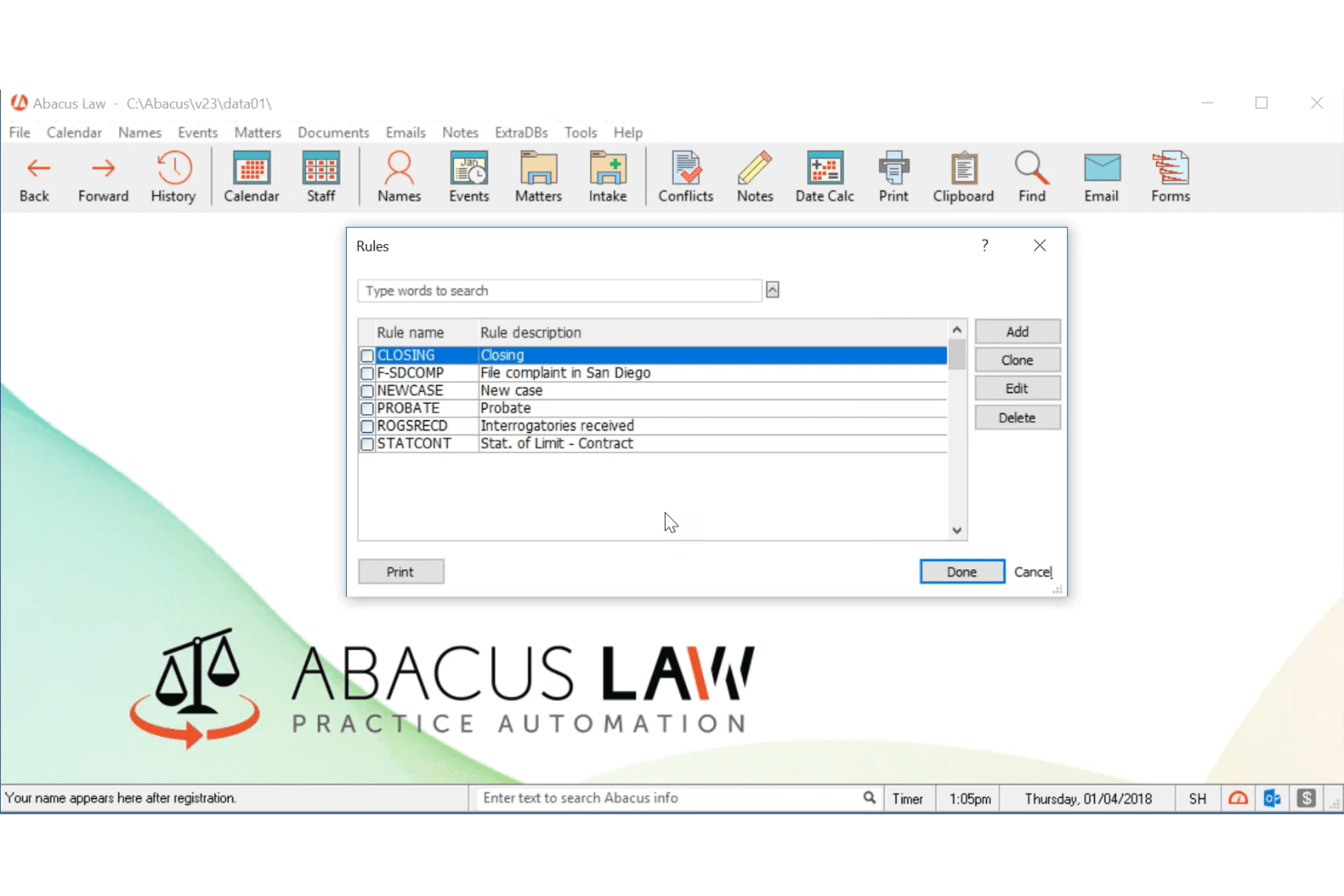
AbacusLaw's interface feels dated and can be overwhelming for new users, especially those without dedicated tech support — so definitely not as user-friendly as other legal software. Navigation relies on traditional menus and dense screens, which slows onboarding and daily use for paralegals and attorneys alike. However, once configured, its customizable workflows and automation tools offer efficiency for teams willing to invest time upfront.
User reviews often mention the steep learning curve but note that the platform's depth rewards firms with complex, process-driven needs.

Onboarding
AbacusLaw’s onboarding process is detailed but can feel lengthy and complex, especially for firms migrating from other systems. Users often mention the need for hands-on training and support to get up to speed. The Gold Support plan offers personalized onboarding and ongoing training, which helps, but expect a steeper learning curve before reaching full value. I think firms with dedicated admin staff will adapt faster, while smaller teams may find the process demanding.
Customer Support
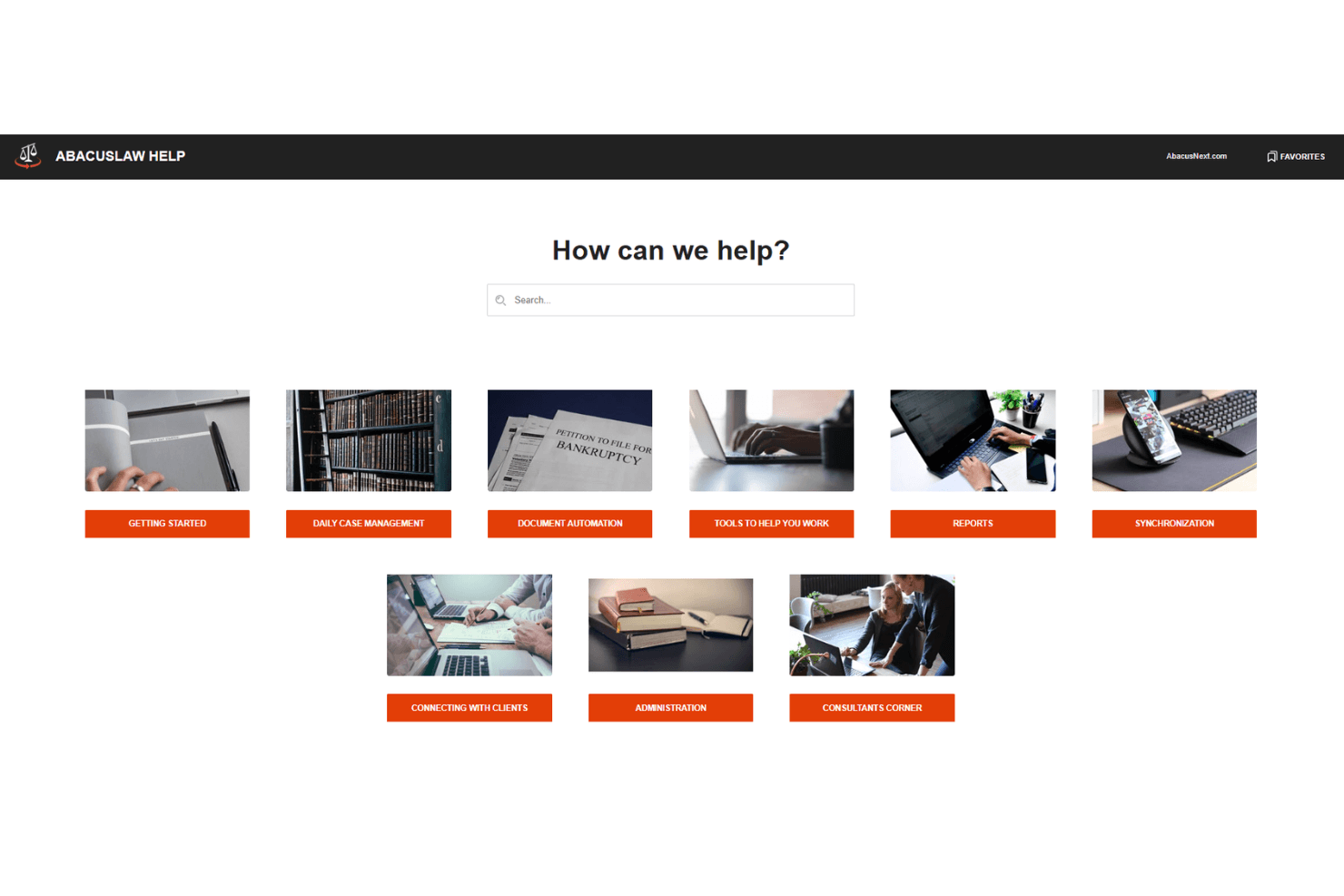
AbacusLaw is recognized for its responsive, U.S.-based customer support, with users frequently noting quick turnaround times and knowledgeable assistance. Support is available by phone, email, and online resources including a knowledge base and webinars, which helps address technical issues and workflow questions. Many users value the personalized help during onboarding and ongoing use, though some mention that complex issues may require escalation.
Overall, the support team's accessibility and expertise are strong points for firms seeking reliable assistance.
Integrations
AbacusLaw integrates with DocuSign, Microsoft 365, Abacus Payment Exchange (APX), HotDocs, LawPay, QuickBooks, Abacus Private Cloud, Abacus Accounting, Abacus Court Rules, and Abacus Mobile, among others.
AbacusLaw does not offer a public API and does not connect with third-party integration tools like Zapier.

Value for Money
AbacusLaw delivers deep legal practice management that centralizes casework and billing, but its value can feel uneven due to limited pricing transparency. Pricing is provided on request, requiring firms to contact sales rather than view clear per-user rates or tiers. There’s no free trial, which makes it harder to evaluate before committing, and some users note mixed experiences with support.
Notably, Abacus Accounting and trust accounting are built into the platform, which can reduce the need for separate billing or accounting tools—but this added value is most relevant for firms ready to adopt the full system.
AbacusLaw Specs
- 2-Factor Authentication: No
- API: No
- Approval Workflows: No
- Audit Trail: Yes
- Calendar Management: Yes
- Compliance Tracking: No
- Contract Management: No
- Custom Reports: Yes
- Customer Management: Yes
- Data Export: Yes
- Data Import: Yes
- Document Management: Yes
- External Integrations: Yes
- Multi-User: Yes
- NDA Management: No
- Notifications: Yes
- Policy Management: No
- Scheduling: Yes
- Workflow Management: Yes
AbacusLaw FAQs
AbacusLaw Company Overview & History
AbacusLaw is a legal practice management software solution designed to support law firms with case management, accounting, calendaring, and document automation. The company is part of the broader portfolio that includes Amicus Attorney and CARET Legal, offering a range of legal technology products.
AbacusLaw provides both cloud-based and on-premise deployment options, serving firms across various practice areas.
AbacusLaw Major Milestones
- 1983: AbacusLaw founded and begins developing legal practice management software.
- 2022: AbacusLaw becomes part of the CARET Legal and Amicus Attorney product family, expanding its legal tech offerings.