

10 Best Legal Electronic Signature Software For 2026

10 Best Legal Electronic Signature Software Shortlist


Legal electronic signature software lets you securely collect signatures, manage permissions, and speed up contract workflows—all while being HIPAA- and SOC 2-compliant and easy to integrate with your business systems. You can streamline everything from signature requests to document tracking, no matter your setup or device.
If you're tired of paper processes, delays, or security concerns, using an e-signature platform gives you faster, safer, and simpler control over your important documents.
Why Trust Our Software Recommendations
Our team has been testing and reviewing software since 2012. As legal practice leaders ourselves, we know how difficult—and important—it is to choose the right software.
For this guide, we evaluated tools using hands-on testing and independent research, scoring tools using our selection criteria.
Our reviews reflect our human editorial judgment, not a sales pitch.
Best Legal Electronic Signature Software Summary
This comparison chart summarizes pricing details for my top legal electronic signature software selections to help you find the best one for your budget and business needs.
| Tool | Best For | Trial Info | Price | ||
|---|---|---|---|---|---|
| 1 | Best for secure client portal integration | 7-day free trial | From $49/user/month (billed annually) | Website | |
| 2 | Best for intuitive interface and user experience | Free plan available | From $10/month (billed annually) | Website | |
| 3 | Best for seamless integration with your workflow | Free trial available | From $20/month; API plans start at $49/month | Website | |
| 4 | Best for top-notch security and authentication features | Not available | From $9.95/user/month (billed annually) | Website | |
| 5 | Best for multi-country legal validity and language support | Not available | From $10/user/month | Website | |
| 6 | Best for template creation and collaborative signing | Free plan available + 14-day free trial available | From $19/user/month (billed annually) | Website | |
| 7 | Best for customizable signing workflows | Free trial available | From $49/month | Website | |
| 8 | Best for seamless integration with Dropbox cloud storage | Free trial available | From $15/user/month (billed annually) | Website | |
| 9 | Best for integration with video conferencing platforms | Not available | From $14/user/month | Website | |
| 10 | Best for advanced compliance and legality features | Not available | From $15/user/month (billed annually) | Website |
Best Legal Electronic Signature Software Review
Below are my detailed summaries of the best legal electronic signature software that made it onto my shortlist. My reviews offer a detailed look at the key features, pros & cons, integrations, and ideal use cases of each tool to help you find the best one for you.

Best for secure client portal integration

For legal professionals seeking a reliable electronic signature solution, PracticePanther offers a platform built for law firm workflows. It includes secure client portal integration alongside its eSignature tools, allowing you to send, sign, and manage documents in one place. This setup supports efficient document handling while helping your firm reduce paperwork and maintain compliance and security.
Why I Picked PracticePanther
I picked PracticePanther because its secure client portal lets you manage electronic signatures while keeping client documents protected and easy to access. You can send, track, and store signed files in one place, reducing back-and-forth with clients. The platform also connects eSignatures to everyday tasks like case updates and document requests, reducing manual steps. This setup works well for legal teams that want a safer and more organized signing process.
PracticePanther Key Features
In addition to secure client portal integration, PracticePanther offers:
- Document Management: Organize and store all legal documents securely in one place, with easy access and sharing options for team members.
- Time Tracking: Effortlessly track billable hours with integrated timers to ensure accurate billing and time management.
- Task Management: Assign and monitor tasks within your team to ensure deadlines are met and responsibilities are clear.
PracticePanther Integrations
Integrations include QuickBooks, LawPay, Mailchimp, Google Calendar, Microsoft Outlook, Box, Dropbox, NetDocuments, Zapier, and API availability for custom integrations.
Pros and Cons
Pros:
- Easy-to-use interface with minimal onboarding time
- Client management tools keep matters well structured
- Automates administrative tasks, saving significant time weekly
Cons:
- Customization options might be limited for specific needs
- Mobile app navigation feels limited and clunky
New Product Updates from PracticePanther

PantherAccounting Plus Unveiled
PracticePanther launches PantherAccounting Plus, enhancing financial management for law firms. It enables law firms to manage trust and operating accounting directly within the platform. For more information, visit PracticePanther's official site.
 .
.
Signwell
Best for intuitive interface and user experience

SignWell is an e-signature software designed to offer an easy-to-navigate interface and superior user experience. It caters to businesses and individuals who prefer a straightforward, uncomplicated signing process, thereby living up to its 'best for' statement.
Why I Picked SignWell: I included SignWell in this list because its simplicity and intuitiveness stood out among its peers. I judged this tool based on the ease of its use and its potential to make electronic signing less intimidating, especially for beginners. It's not just about functionality; user experience carries significant weight, and that's why SignWell is the best choice for those who value an intuitive interface.
Standout features & integrations:
SignWell offers a variety of features such as document tracking, bulk sending, and custom branding. Its standout feature, though, is its well-designed, intuitive interface that makes the entire signing process less daunting and more efficient.
SignWell integrates effectively with CRM platforms like Salesforce, Zoho, and HubSpot. This seamless integration also allows users to easily manage their contacts and documents without the need to switch between apps.
Pros and Cons
Pros:
- Features like document tracking and bulk sending
- Efficient CRM integrations
- User-friendly interface
Cons:
- Annual billing requirement for lower rates
- Lower-tier plan limits access to advanced features
- No free plan

Best for seamless integration with your workflow
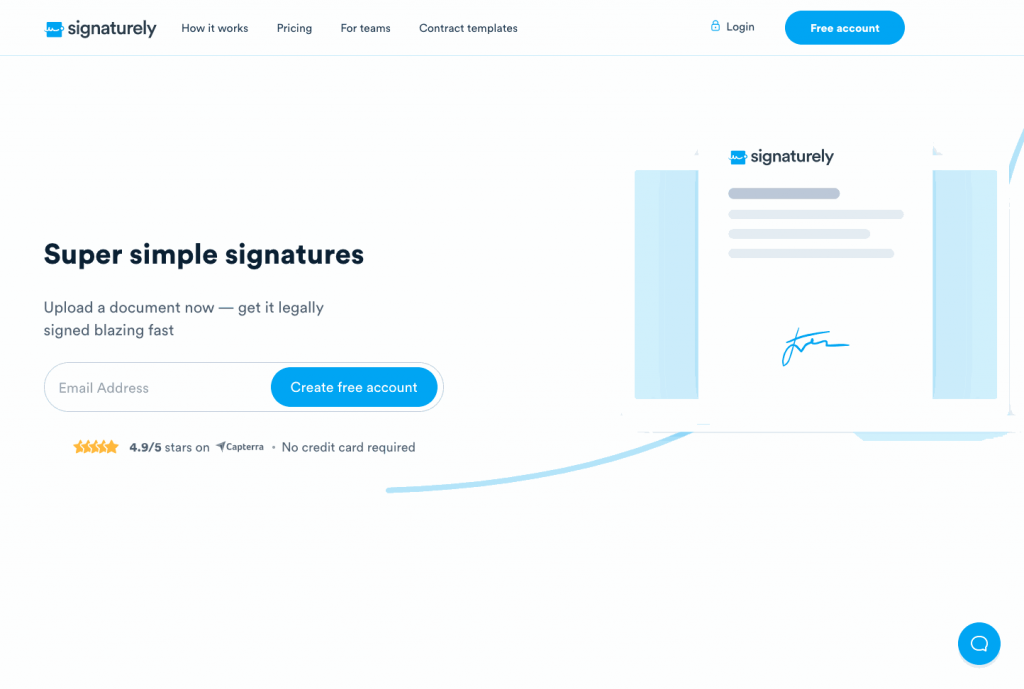
Signaturely is an electronic signature software that simplifies signing tasks by facilitating smooth integration with everyday workflows. The platform also suits businesses and individuals who are looking for an efficient tool that can effortlessly merge with their existing work processes.
Why I Picked Signaturely: In my quest for the ideal electronic signature software, Signaturely caught my attention due to its distinctive emphasis on user workflow integration. I chose this platform because it understands that businesses need a tool that doesn't disrupt but rather enhances their operational flow. This edge also makes it ideal for those seeking to streamline their signing processes without complicating their work routine.
Standout features & integrations:
Signaturely offers numerous helpful features such as bulk sending, custom branding, and real-time notifications. What's more, it provides a detailed audit trail, allowing users to track the signing process efficiently.
In terms of integrations, Signaturely works harmoniously with popular platforms like Google Drive, Dropbox, and OneDrive. Moreover, these integrations make it easy for users to import or export documents without the need for additional steps or software.
Pros and Cons
Pros:
- Wide range of integrations with popular storage platforms
- Detailed audit trail
- Efficient workflow integration
Cons:
- Requires annual billing for the lowest rate
- Some features only available in higher-tier plans
- No free version

Best for top-notch security and authentication features
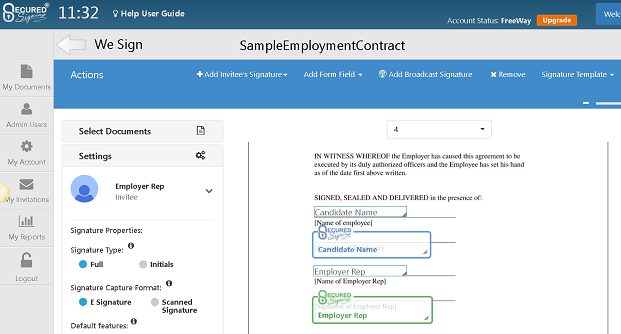
Secured Signing, as its name suggests, prioritizes security and authentication in its electronic signature solution. If your operations require enhanced security features, Secured Signing is the choice for you.
Why I Picked Secured Signing: I picked Secured Signing for this list due to its uncompromising focus on secure digital signature handling. It also stands out for its superior security features, including advanced PKI technology and a comprehensive authentication system. In my opinion, it's best for businesses and individuals needing top-notch security in their electronic signature processes.
Standout features & integrations:
Secured Signing shines with its robust set of security features, including two-factor authentication, time-stamped audit trails, and identity verification. It also offers a Video Confirmation feature, which further enhances the security of the signing process. Integration-wise, Secured Signing fits in smoothly with business workflows by connecting with common tools such as Salesforce, Google Workspace, Dropbox, and Microsoft Office.
Pros and Cons
Pros:
- Strong integrations with popular business tools
- Video Confirmation feature adds an extra layer of security
- Advanced security and authentication features
Cons:
- Pricing can get expensive for larger teams
- Some features may be overkill for small businesses
- No free plan available

Skribble
Best for multi-country legal validity and language support
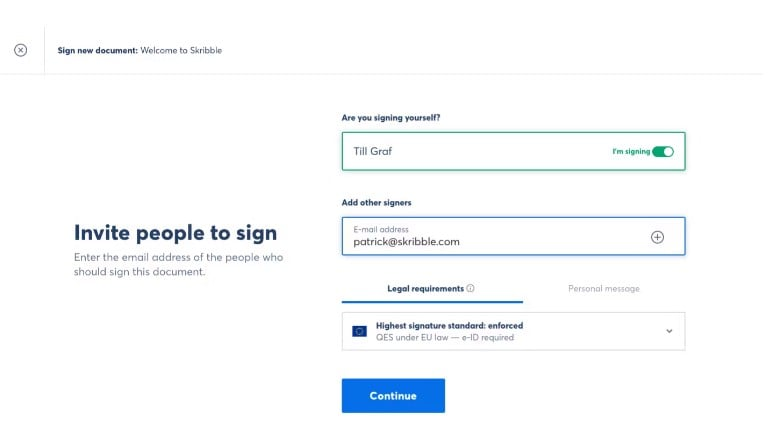
Skribble is an e-signature solution known for its support for multiple languages and its legal validity across many countries. It also ensures that documents signed through its platform are legally binding, with a special focus on supporting a diverse range of languages, making it a suitable choice for international businesses.
Why I Picked Skribble: Skribble was chosen for its commitment to multi-country legal validity and expansive language support. I judged it to stand out in its provision for global businesses, taking into consideration diverse needs. For companies operating in various countries and in multiple languages, I believe Skribble is the "Best for multi-country legal validity and language support".
Standout features & integrations:
Skribble's most notable features include its international legal compliance and wide language support. It adheres to eIDAS, Swiss law, and GDPR, ensuring that signatures obtained are legally binding worldwide. For integrations, Skribble can be connected with tools such as Microsoft Office, G Suite, and Salesforce, allowing for efficient workflow across different platforms.
Pros and Cons
Pros:
- Broad integration with popular platforms
- Extensive language support
- Legal validity across various countries
Cons:
- Pricing may be a bit high for smaller organizations
- The focus on legal validity might be unnecessary for some users
- The user interface may not be as intuitive as competitors
PandaDoc
Best for template creation and collaborative signing
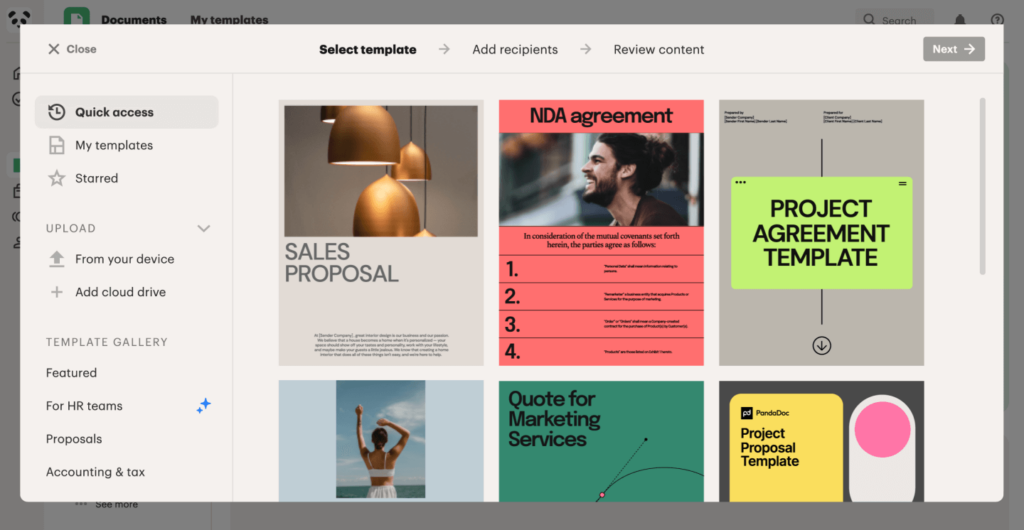
PandaDoc is an electronic signature tool known for its robust template creation capabilities and collaborative signing feature. It allows businesses to streamline their document processes, making it particularly useful for teams that frequently work with templates and need a tool that facilitates collaboration in signing documents.
Why I Picked PandaDoc: In determining my list, PandaDoc stood out due to its strong emphasis on template creation and collaborative signing. I believe it offers a distinct set of features that cater particularly to teams that depend heavily on templates and need to manage document signing in a collaborative manner. This makes it "Best for template creation and collaborative signing".
Standout features & integrations:
PandaDoc shines with its dynamic, customizable template creation and user-friendly interface that allows multiple parties to sign a document collaboratively. It also offers a document tracking feature, providing insights into the document process.
PandaDoc integrates seamlessly with many CRM platforms like Salesforce and Zoho, as well as cloud storage services such as Google Drive and Dropbox, offering flexibility in terms of workflow.
Pros and Cons
Pros:
- Wide range of integrations
- Facilitates collaborative signing
- Robust template creation
Cons:
- Limited features in the basic pricing tier
- Could be considered pricey for small businesses
- The collaborative signing feature might be overwhelming for some users

Under.io
Best for customizable signing workflows

Under.io is an e-signature and form-building software designed to make form creation and signature collection straightforward for businesses of all sizes.
Why I Picked Under.io: It lets you easily collect electronic signatures, which is essential for legally binding agreements. It supports multiple signers, so if you're dealing with contracts that require signatures from different parties, this functionality ensures that everyone can sign without the hassle of sending documents back and forth. Another valuable feature is real-time identity verification. When you're onboarding new clients or partners, verifying their identity can be a tedious process, but Under.io simplifies this by providing real-time checks. This means you can ensure the authenticity of your signers without lengthy back-and-forths.
Standout features & integrations:
Other features include customizable signing workflows, allowing you to set up how documents get routed through your organization. You can also set signing orders, so you control the sequence in which documents get signed. The platform also supports document templates, saving you time if your team frequently sends out the same types of contracts. Some integrations include Google Maps, Twilio, Plaid, KYC, HubSpot, and Salesforce.
Pros and Cons
Pros:
- Customizable, no-code logic form-building
- Document verification ensures legal compliance
- Templates help with frequently used contracts, forms, and applications
Cons:
- No mobile app
- Limited offline functionality

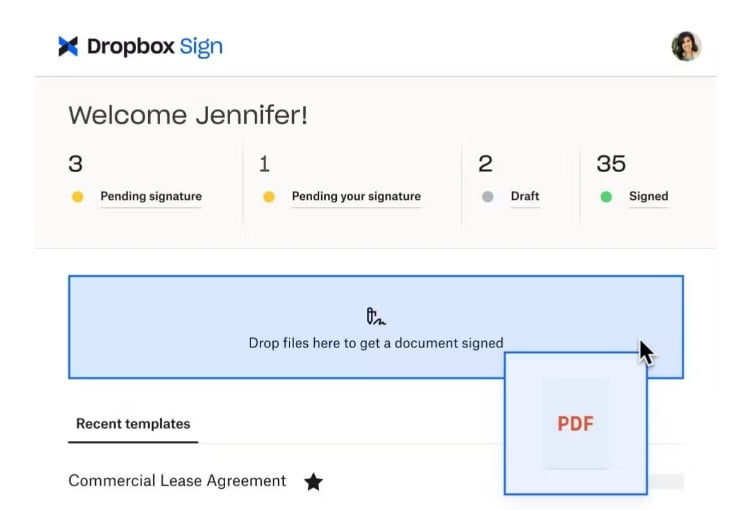
Dropbox Sign is an e-signature tool that works natively within the popular cloud storage platform, Dropbox. It's designed to simplify the document signing process for those who are already using Dropbox for file storage and collaboration.
Why I Picked Dropbox Sign: I selected Dropbox Sign due to its excellent integration with Dropbox. The tool stands out by seamlessly incorporating electronic signature functionality within an existing platform, providing a significant advantage for existing Dropbox users. This makes it a prime choice for those seeking to combine document storage and signing processes in one place.
Standout features & integrations:
Dropbox Sign's main feature is its ability to add and request signatures directly from within Dropbox. It also provides a detailed audit trail for each document, ensuring a transparent signing process. Since Dropbox Sign is a feature within Dropbox itself, it integrates perfectly with the platform. Users can easily sign any document stored in their Dropbox account and also share signed documents through Dropbox.
Pros and Cons
Pros:
- Simplified document signing process for Dropbox users
- Transparent audit trail
- Excellent integration with Dropbox
Cons:
- Lacks advanced features found in dedicated e-signature tools
- Higher pricing compared to some competitors
- Limited standalone functionality outside of Dropbox


ZOOM Signature is a prominent electronic signature solution from the widely known video conferencing platform, Zoom. It's also designed to seamlessly integrate e-signing capabilities into the video conferencing environment, which positions it as an optimal solution for teams frequently using video calls.
Why I Picked ZOOM Signature: The selection of ZOOM Signature for this list was a straightforward decision given its unique integration with video conferencing. Not only does it facilitate the usual e-signing features, but it also excels at integrating these into an environment that many businesses have become familiar with. In this context, ZOOM Signature is the "Best for integration with video conferencing platforms".
Standout features & integrations:
ZOOM Signature's key feature is its seamless integration with Zoom's video conferencing service, allowing for real-time signing during meetings. It also provides secure and verified signing processes, ensuring document integrity.
In terms of integrations, ZOOM Signature syncs with other services offered by Zoom, including Zoom Chat and Zoom Rooms, further bolstering its collaboration capabilities.
Pros and Cons
Pros:
- Real-time signing during meetings
- Secure and verified signing processes
- Excellent integration with Zoom's video conferencing platform
Cons:
- May require additional learning for those unfamiliar with Zoom's ecosystem
- Lacks some advanced features found in dedicated e-signature tools
- Limited value for those not using Zoom's other services

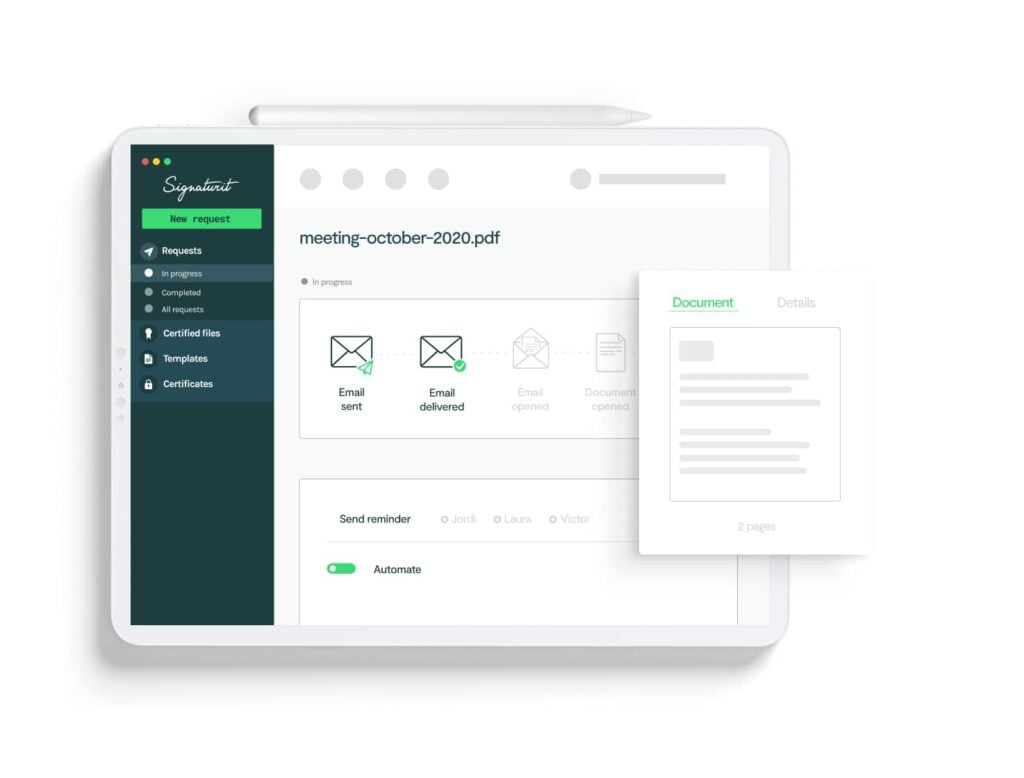
Signaturit Solutions provides a comprehensive e-signature service with a strong focus on legality and compliance aspects. It also offers multiple types of electronic signatures and adheres to the most stringent regulations, making it a reliable choice for companies with significant legal compliance requirements.
Why I Picked Signaturit Solutions: In my selection process, I judged Signaturit Solutions to be unmatched in its focus on advanced compliance and legality features. This distinction also makes it an ideal choice for businesses with complex compliance needs. The tool's commitment to legal adherence and the robustness of its compliance features are what position it as "Best for advanced compliance and legality features".
Standout features & integrations:
Signaturit Solutions delivers multiple types of electronic signatures, including simple, advanced, and qualified signatures. It also provides strong legal validity by complying with EU and international regulations such as eIDAS. Moreover, it has integrations with key business tools like Salesforce, SAP, and Microsoft Dynamics, which allow companies to incorporate the e-signature process seamlessly into their existing workflows.
Pros and Cons
Pros:
- Integrates well with major business tools
- Offers multiple types of electronic signatures
- Strong focus on compliance and legality
Cons:
- Potentially limited functionalities in the lower pricing tiers
- User interface may be less intuitive than other options
- Higher starting price compared to some competitors
Other Legal Electronic Signature Software
Here are some additional legal electronic signature software options that didn’t make it onto my shortlist, but are still worth checking out:
- Legal Files
For legal-specific document handling and management
- Fill
For quick document completion and efficient processing
- SignNow
For affordable yet robust functionality
- Legalesign
Good for large teams needing advanced admin controls and bulk-sending options
- Otter Waiver
Good for industries needing quick, mobile-friendly waiver signatures
- Zoho Sign
Good for businesses already using Zoho's suite of productivity tools
- OneSpan Sign
Good for businesses seeking top-notch security and audit trails
- Right Signature
Good for providing customers with an intuitive and simple signing experience
- sproof sign
Good for organizations requiring blockchain-based, tamper-proof signatures


How I Evaluate Legal Electronic Signature Software
I split my evaluation into baseline criteria—like ESIGN compliance and audit trails—and differentiators that separate tools built for law firms from generic signing platforms.
Core Functionality (Table Stakes For This List)
When I'm selecting tools for my list, I rank each one on a scale from 0 (does not offer the functionality) to 5 (excels in this area) for each core functionality listed below. Then, I calculate the tool's total score into a percentage. Each tool needs to achieve a minimum total score of 65% to be considered for inclusion.
- Legally Binding Signatures: I check whether each tool documents its compliance with ESIGN, UETA, and eIDAS so signed retainer agreements and settlement documents hold up under scrutiny.
- Court-Admissible Audit Trail: Each platform should generate a tamper-evident certificate with timestamps, IP addresses, and signer consent records attached directly to the completed document.
- Signer Identity Verification: I evaluate the range of authentication methods available, from basic email and SMS codes to KBA and government ID checks for high-stakes real estate closings or estate planning documents.
- Legal Workflow Integration: Tools that connect natively with practice management platforms like Clio, MyCase, or Smokeball score higher than those relying solely on generic connectors like Zapier.
- Document Security & Encryption: I look for encryption in transit and at rest, plus certifications like SOC 2 Type II, since these platforms routinely handle attorney-client privileged materials.
- Templates & Reusable Fields: Pre-built templates with signature, initial, and date fields save real time when your firm sends the same engagement letter or NDA dozens of times per month.
Once I have a list of tools that meet this criteria, I consider what sets each platform apart.
Differentiating Factors (What Sets Vendors Apart)
Here's how I compare and contrast different vendors:
Standout Features
In-person signing mode matters when you're meeting clients at your office or a courthouse and need on-device capture without sending an email link. Bulk send is another feature I evaluate closely—firms handling dozens of engagement letters per week benefit from sending one template to multiple clients with individual tracking. I also look for white-label branding, since a signing page with your firm's logo and custom URL builds client trust during intake.
Beyond Features
Pricing structure is one of the first things I evaluate—a solo practitioner needs per-envelope flexibility, while a mid-size firm benefits more from unlimited plans with multi-seat admin controls. I also consider how well each vendor supports onboarding, especially template migration from a legacy tool or wet-signature workflow. Data residency options matter too. Firms with international clients should check whether the platform offers geographic hosting controls to meet local data protection requirements.
How to Choose Legal Electronic Signature Software
It’s easy to get bogged down in long feature lists and complex pricing structures. To help you stay focused as you work through your unique software selection process, here’s a checklist of factors to keep in mind:
| Factor | What to Consider |
|---|---|
| Scalability | Can the software grow with your business? Consider the number of users and documents it can handle as your operations expand. |
| Integrations | Does it work with your existing tools? Look for compatibility with your document management and CRM systems. |
| Customizability | Can you tailor the workflow to fit your needs? Check if you can adjust templates and processes to suit your legal practices. |
| Ease of use | Is the interface intuitive? Ensure your team can quickly learn and use the software without extensive training. |
| Implementation and onboarding | How long will it take to get started? Assess the time and resources needed for setup and initial training. |
| Cost | What’s the total cost of ownership? Compare subscription fees, additional charges, and any long-term contracts. |
| Security safeguards | Does it protect sensitive data? Verify encryption standards, data storage locations, and compliance with privacy regulations. |
| Compliance requirements | Does it meet industry standards? Ensure the software adheres to legal and regulatory requirements specific to your jurisdiction and practice area. |
What Is Legal Electronic Signature Software?
Legal electronic signature software is a digital document tool utilized to capture, authenticate, and manage electronic signatures on legal documents. Also used by lawyers, business professionals, real estate agents, and any individuals or organizations needing to sign or collect signed legally binding signatures, these platforms offer a secure, efficient alternative to traditional pen-and-paper signatures.
Features
When selecting legal electronic signature software, keep an eye out for the following key features:
- Secure document storage: Ensures that signed documents are stored safely, protecting sensitive information.
- Audit trails: Provides a detailed history of document access and changes, aiding in compliance and accountability.
- User authentication: Confirms the identity of signers, enhancing the security of the signing process.
- Multiple document formats: Supports various file types, ensuring compatibility with different legal documents.
- Integration capabilities: Connects with existing legal software systems, streamlining workflows.
- Customizable templates: Allows users to create reusable document formats, saving time and ensuring consistency.
- Mobile access: Enables signing and managing documents on-the-go, increasing flexibility for users.
- Compliance support: Adheres to legal standards and regulations, ensuring documents are legally binding.
- Multi-language support: Accommodates diverse user bases by providing features in multiple languages.
- Encryption standards: Protects data during transmission and storage, ensuring confidentiality and integrity.
Benefits
Implementing legal electronic signature software provides several benefits for your team and your business. Here are a few you can look forward to:
- Increased efficiency: Speeds up the signing process by eliminating the need for physical documents.
- Enhanced security: Protects sensitive information with encryption and user authentication.
- Cost savings: Reduces expenses related to printing, mailing, and storing paper documents.
- Improved compliance: Ensures documents meet legal standards with features like audit trails and compliance support.
- Flexibility: Allows users to sign and manage documents from anywhere with mobile access.
- Better collaboration: Facilitates easy document sharing and tracking among team members.
- Environmental impact: Minimizes paper usage, contributing to eco-friendly business practices.
Costs & Pricing
Selecting legal electronic signature software requires an understanding of the various pricing models and plans available. Costs vary based on features, team size, add-ons, and more. The table below summarizes common plans, their average prices, and typical features included in legal electronic signature software solutions:
Plan Comparison Table for Legal Electronic Signature Software
| Plan Type | Average Price | Common Features |
|---|---|---|
| Free Plan | $0 | Basic signing capabilities, limited document storage, and email support. |
| Personal Plan | $5-$25/user/month | Unlimited signing, mobile access, and basic templates. |
| Business Plan | $25-$50/user/month | Team collaboration, advanced templates, and integration with third-party apps. |
| Enterprise Plan | $50-$100+/user/month | Custom workflows, dedicated account manager, and enhanced security features. |
Legal Electronic Signature Software FAQs
Here are some answers to common questions about legal electronic signature software:
How do electronic signatures improve workflow efficiency?
Electronic signatures eliminate the need for physical document handling, speeding up the signing process. They allow you to sign documents from anywhere, reducing delays and improving collaboration among team members.
Are electronic signatures secure?
Yes, electronic signatures are secure when they use encryption and authentication methods. Ensure your software provides these features to protect sensitive information and maintain the integrity of signed documents.
How do e-signature tools integrate with other legal or CRM systems?
Most serious vendors support API connections or native integrations with case management, CRM, or document systems. This means you can trigger sending, retrieve signed documents, or log status updates automatically. Look for prebuilt connectors or open APIs so your team doesn’t have to duplicate work.
What levels of signer authentication should you demand?
You’ll want adjustable authentication methods like email verification, SMS codes, government ID check, or multi-factor authentication. The level you choose should match the risk of the document. For highly sensitive agreements, require stronger verification to reduce repudiation risk.
How do audit trails and tamper evidence work in e-signature systems?
E-signature software typically logs every action (view, sign, edit) with timestamps, IP data, and digital certificates. After signing, the document is locked or its hash is embedded so any tampering is detectable. That gives you a defensible record if signatures are challenged.
What’s Next:
If you're in the process of researching legal electronic signature software, connect with a SoftwareSelect advisor for free recommendations.
You fill out a form and have a quick chat where they get into the specifics of your needs. Then you'll get a shortlist of software to review. They'll even support you through the entire buying process, including price negotiations.