
Best PDF Accessibility Checker in 2026

10 Best PDF Accessibility Checkers Shortlist


A PDF accessibility checker is a tool that scans and verifies whether your PDFs meet legal and usability standards like WCAG, Section 508, and court-specific guidelines. If you’re responsible for compliance in a law firm or legal department, making documents accessible isn’t optional—it’s crucial for risk, reputation, and serving clients. With scanned contracts, legacy files, and mass court submissions all in the mix, you need PDF accessibility solutions that actually fit legal workflows. In this guide, you’ll see which tools meet those demands—supporting enterprise scale, legal DMS integration, batch remediation, AI-driven tagging, and ongoing compliance so you can confidently deliver accessible, standards-compliant PDFs every time.
Why Trust Our Software Recommendations
Our team has been testing and reviewing software since 2012. As legal practice leaders ourselves, we know how difficult—and important—it is to choose the right software.
For this guide, we evaluated tools using hands-on testing and independent research, scoring tools using our selection criteria.
Our reviews reflect our human editorial judgment, not a sales pitch.
Best PDF Accessibility Checkers
This comparison chart summarizes pricing details for my top PDF accessibility checkers software selections to help you find the best one for your budget and practice needs.
| Tool | Best For | Trial Info | Price | ||
|---|---|---|---|---|---|
| 1 | Best for law firms using iManage or NetDocuments | 14-day free trial | From $10.99/user/month | Website | |
| 2 | Best for WCAG and Section 508 PDF compliance checks | Free demo available | Pricing upon request | Website | |
| 3 | Best for AI-aided PDF remediation at enterprise scale | Not available | Pricing upon request | Website | |
| 4 | Best for enterprise PDF compliance monitoring | Not available | Pricing upon request | Website | |
| 5 | Best free PDF/UA validator for batch compliance checks | Free plan available | Free plan available | Website | |
| 6 | Best for expert-led PDF remediation as a service | Free demo + 7-day free trial available | From $490/year | Website | |
| 7 | Best for AI-driven PDF tagging at legal scale | 7-day free trial | From $19.99/user/month (billed annually) | Website | |
| 8 | Best for FedRAMP-covered PDF compliance audits | Free demo available | Pricing upon request | Website | |
| 9 | Best for court and judicial PDF compliance | Free plan available | From $599/user/year | Website | |
| 10 | Best for AI-driven PDF tagging at scale | Free demo available | Pricing upon request | Website |
PDF Accessibility Checker Reviews
Below are my detailed summaries of the best PDF accessibility checkers that made it onto my shortlist. My reviews offer a detailed look at the features, best use cases, and capabilities of each tool to help you find the best one for you.

Best for law firms using iManage or NetDocuments
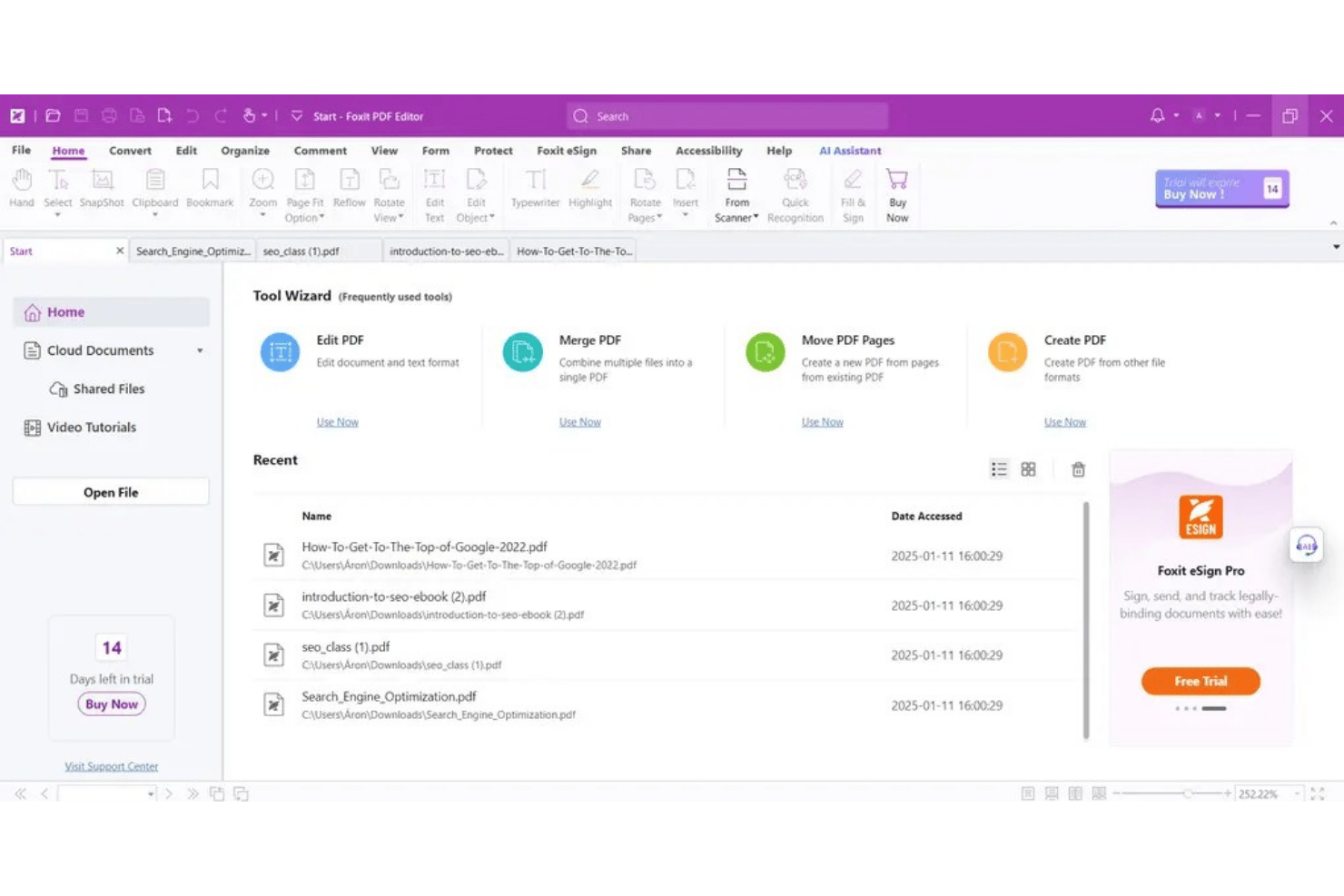
Foxit PDF Editor is a PDF editing and accessibility tool that combines built-in compliance checking against WCAG 2.0/2.1, PDF/UA-1, and Section 508 with autotag, tag editing, reading order correction, OCR, and redaction in a single desktop application.
Who Is Foxit PDF Editor Best For?
Foxit PDF Editor is a strong fit for law firms that run iManage or NetDocuments as their DMS and need accessibility remediation built into those existing workflows.
Why I Picked Foxit PDF Editor
I've included Foxit PDF Editor in my top picks because its native iManage and NetDocuments integrations let you run accessibility checks, apply autotag, and redact privileged content without ever pulling a document out of your DMS. That matters in law firms where chain of custody is non-negotiable. The Full Accessibility Check covers WCAG 2.0/2.1, PDF/UA-1, and Section 508, and its clickable issue report navigates directly to each problem location so paralegals can remediate without guesswork.
Foxit PDF Editor Key Features
- Full Accessibility Check: Scans PDFs against WCAG 2.0/2.1, PDF/UA-1, Section 508, ADA, and EN 301 549, producing a clickable report that navigates you directly to each failing element.
- Reading Order Tool (TURO): A visual drag-and-drop panel for resequencing content blocks, marking decorative elements as artifacts, and adding tags to untagged content.
- Action Wizard automation: Lets you build repeatable multi-step workflows—autotag, set language, set title, run compliance check—and apply them across batches of files from the desktop app.
- OCR integration: Converts scanned paper documents and image-based PDFs into searchable, taggable text so legacy legal files can be fully remediated for screen reader compatibility.
Foxit PDF Editor Integrations
Foxit PDF Editor offers native integrations with iManage Work, NetDocuments via ndOffice, and eDOCS. It also provides Foxit PDF Services API and Enterprise Automation connectivity for custom workflows across ECM, DMS, SAP, SharePoint, RPA platforms, and mail servers.
Pros and Cons
Pros:
- Strong reading order and tag editing tools
- Clickable reports navigate directly to issues
- Combines editing and accessibility in one tool
Cons:
- Batch checking requires separate enterprise products
- No WCAG 2.2 support documented
Best for WCAG and Section 508 PDF compliance checks
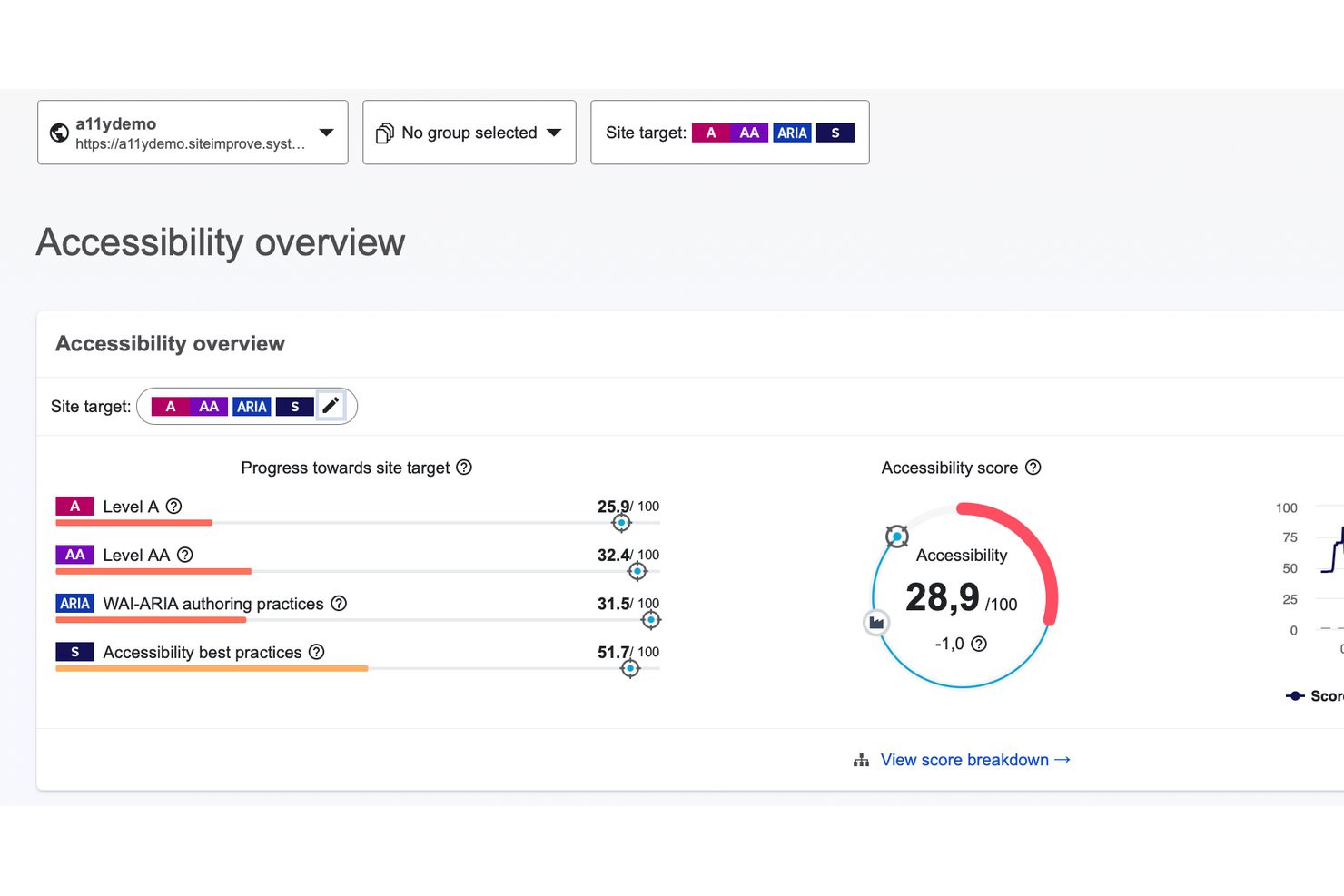
Siteimprove is a web accessibility platform that scans and remediates PDFs against WCAG 2.0/2.1/2.2, PDF/UA, Section 508, ADA Title II, and the European Accessibility Act, with separate tools for pre-publication checking and live site PDF auditing.
Who Is Siteimprove Best For?
Siteimprove is a strong fit for legal compliance officers and web publishing teams who need to track PDF accessibility across multiple regulatory frameworks, including WCAG 2.2, Section 508, and ADA Title II, from a single platform.
Why I Picked Siteimprove
I've included Siteimprove in my top picks because it tests PDFs against more regulatory frameworks simultaneously than almost any other tool I've seen, covering WCAG 2.0, 2.1, and 2.2, PDF/UA, Section 508, ADA Title II, and the European Accessibility Act in one scan. I particularly like the two-stage workflow: PDF Validate catches issues before a document goes live, while PDF Audit continuously discovers and checks PDFs already published on your site. The AI-powered remediation agent can auto-tag an entire unstructured PDF from scratch and generate alt text suggestions you can edit inline before downloading the fixed file.
Siteimprove Key Features
- Compliance Tab dashboards: Filter accessibility issue reports by regulation—EAA, ADA Title II, or Section 508—and track progress month-by-month with a built-in trend chart.
- PDF Audit auto-discovery: Automatically finds and scans every PDF linked on your monitored website, giving you library-level coverage without manual uploads.
- Fix Gaps remediation mode: Preserves correctly tagged content in an existing PDF while filling in only the missing accessibility elements, such as alt text, metadata, and language settings.
- CSV export for audit reporting: Export regulation-filtered compliance data directly to CSV for internal audits or to share progress with stakeholders outside the platform.
Siteimprove Integrations
Siteimprove offers native integrations with Jira, Microsoft Azure DevOps, WordPress, Drupal, and Sitecore, plus CI/CD workflows and an open API for custom connections. It also supports Zapier, but no native legal DMS integrations are documented.
Pros and Cons
Pros:
- Offers regulation-filtered compliance dashboards
- Provides AI-powered alt text suggestions
- Tests against WCAG 2.2 and Section 508
Cons:
- No legal DMS or e-discovery integrations
- Limits batch upload to 10 PDFs

OpenText
Best for AI-aided PDF remediation at enterprise scale

OpenText Document Accessibility is an AI-assisted PDF remediation and accessibility checking platform that covers WCAG, PDF/UA, Section 508, ADA, AODA, and EAA compliance, with tag editing, alt text automation, and high-volume batch processing via REST API.
Who Is OpenText Best For?
OpenText Document Accessibility is a strong fit for large corporate legal departments and government legal teams managing high volumes of PDFs across multiple accessibility compliance frameworks.
Why I Picked OpenText
I picked OpenText Document Accessibility because its AI AutoDetect engine handles the tagging heavy lifting at a scale that few tools can match. When you're processing thousands of PDFs across a corporate legal archive, the underlying Output Transformation Server handles high-volume batch remediation via REST API, while the Alternate Text Manager auto-applies alt text based on prior tagged content. The platform covers WCAG, PDF/UA, Section 508, ADA, AODA, and EAA in a single product, which matters when your compliance obligations span multiple jurisdictions.
OpenText Key Features
- Accessibility checker: A built-in validator that flags PDF/UA compliance issues and walks you through step-by-step remediation guidance for each identified problem.
- Custom ML model training: Train and refine auto-tagging models for specific document types, so recurring formats like contracts or briefs get more accurate tags over time.
- REST API with Open API/Swagger documentation: Embed accessibility checks and remediation into existing document workflows via a documented public API for pipeline-level automation.
- Multi-framework compliance coverage: Validates documents against WCAG, Section 508, ADA, AODA, and the European Accessibility Act from a single platform.
OpenText Document Accessibility Integrations
OpenText Document Accessibility has documented connections across the OpenText ecosystem, including Output Transformation Server, Documentum, AppEnhancer, Information Archive, OpenText Communications, and Content Cloud. It also supports OTDS, LDAP, GCP, AWS, on-premises, hybrid deployment, and REST API integrations.
Pros and Cons
Pros:
- Handles high-volume PDF remediation via API
- Custom machine learning models for document types
- AI AutoDetect engine reduces manual tagging
Cons:
- Requires OpenText Output Transformation Server setup
- No exportable VPAT or ACR conformance reports
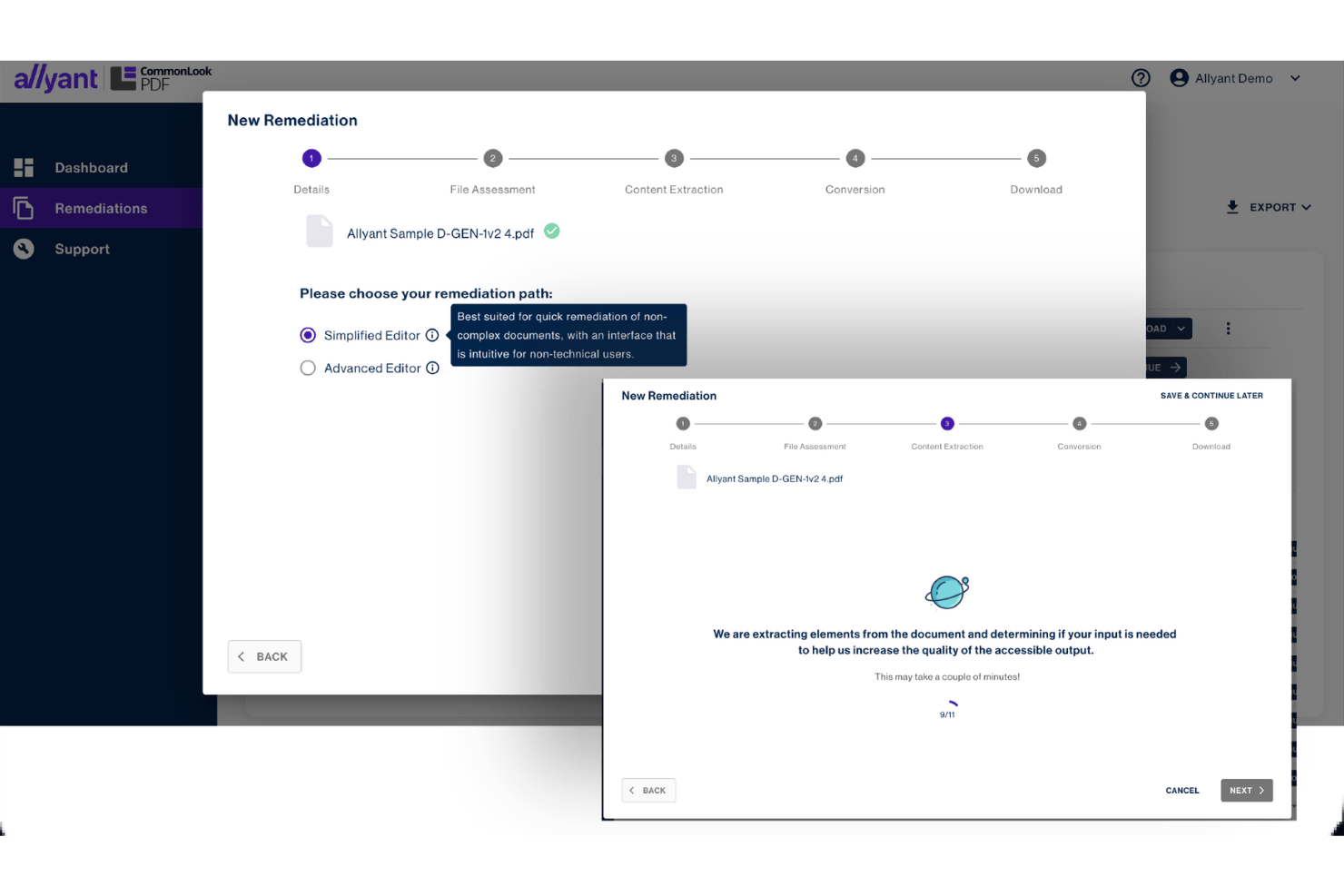
CommonLook Clarity by Allyant is an enterprise PDF accessibility scanning and monitoring tool that automatically discovers and tests PDFs across websites, intranets, and document repositories against WCAG, PDF/UA, Section 508, and HHS standards.
Who Is CommonLook Clarity Best For?
CommonLook Clarity is a strong fit for compliance officers and IT administrators in large organizations managing hundreds or thousands of PDFs across websites, intranets, and document repositories.
Why I Picked CommonLook Clarity
I've included CommonLook Clarity in my top picks because it's the only tool on this list built specifically for monitoring PDF accessibility at enterprise scale rather than checking files one at a time. It automatically discovers every pdf across your websites, intranets, and repositories, then tests each against WCAG 2.2 AA, PDF/UA, Section 508, and HHS standards simultaneously. I especially like its data-driven prioritization analytics, which surface your most-accessed or most non-compliant documents first so your team knows exactly where to focus remediation efforts.
CommonLook Clarity Key Features
- Continuous PDF monitoring: Clarity automatically re-scans newly published or modified PDFs on your websites, intranets, and portals to flag any that fall out of compliance.
- Multi-standard simultaneous testing: Each scan tests against WCAG 2.1/2.2 AA, PDF/UA, Section 508, and HHS guidelines in a single pass.
- Per-PDF compliance reports: Clarity generates individual audit trail reports for each document, showing pass/fail status against specific accessibility criteria.
- API/SDK integration support: Clarity exposes an API/SDK so your team can embed PDF scanning directly into existing workflows and platforms.
CommonLook Clarity Integrations
CommonLook Clarity integrates with CivicPlus Agenda and Meeting Management Select and supports API/SDK connections for custom workflows. It can scan PDFs stored across websites, intranets, portals, and document repositories, but native integrations with iManage, NetDocuments, Relativity, and Everlaw aren’t documented.
Pros and Cons
Pros:
- Prioritizes most-accessed inaccessible PDFs for review
- Supports WCAG 2.2, PDF/UA, 508, HHS
- Scans entire websites and repositories automatically
Cons:
- No VPAT or ACR export by default
- Does not provide built-in remediation tools
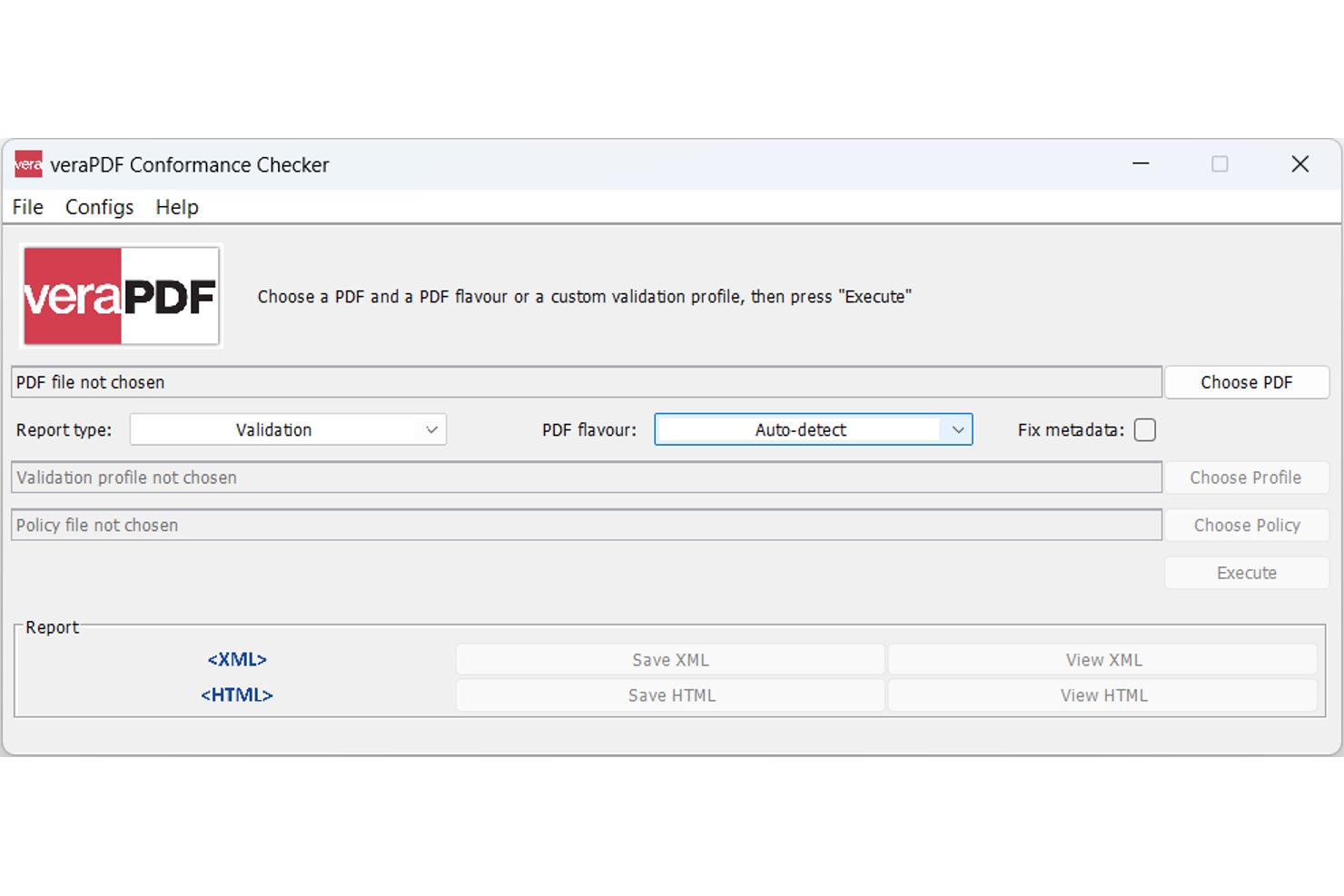
veraPDF is a free, open-source PDF format validator that checks documents against PDF/UA-1, PDF/UA-2, PDF/A, and Well-Tagged PDF (WTPDF) standards using Matterhorn Protocol-based validation rules.
Who Is veraPDF Best For?
veraPDF is a strong fit for IT administrators and developers who need to run automated, large-scale PDF/UA compliance checks across document repositories without paying for a license.
Why I Picked veraPDF
I picked veraPDF as one of the best because it's the only open-source PDF/UA validator backed by the PDF Association and built on Matterhorn Protocol rules, making its findings technically defensible in a way most tools can't match. I've run it against entire document repositories using the CLI's recursive folder scanning, which processes nested subfolders and ZIP archives in a single command. Its PDF/UA-1, PDF/UA-2, and Well-Tagged PDF coverage is broader than most commercial validators.
veraPDF Key Features
- PDF/A multi-version validation: Validates all conformance levels across PDF/A-1, PDF/A-2, PDF/A-3, and PDF/A-4 in a single validation run.
- Policy checker with custom Schematron rules: Lets you write and apply institution-specific validation rules—such as required metadata fields or font restrictions—using a GUI-based Policy Creator wizard.
- Features extractor: Pulls detailed metadata on fonts, images, color spaces, and document properties independently of the standard validation pass.
- Docker container deployment: Official Docker images support CLI and REST-based validation in containerized environments, including CI/CD pipelines.
veraPDF Integrations
veraPDF supports custom integrations through its REST API and Java library, plus Docker deployments and GitHub Actions workflows. It also connects with PDFix and PDF4WCAG through products built on its validation engine.
Pros and Cons
Pros:
- Powerful CLI batch scanning for large repositories
- Fully open source and transparent rules
- Validates PDF/UA and all PDF/A levels
Cons:
- Lacks WCAG or Section 508 validation profiles
- No remediation beyond limited metadata fixing
Best for expert-led PDF remediation as a service
accessiBe is a web and document accessibility platform that offers expert-led PDF remediation as a managed service, covering tagging, reading order correction, alt text, and conformance validation against WCAG 2.1 AA and PDF/UA standards.
Who Is accessiBe Best For?
accessiBe suits legal teams that need to outsource PDF remediation entirely, rather than run checks in-house.
Why I Picked accessiBe
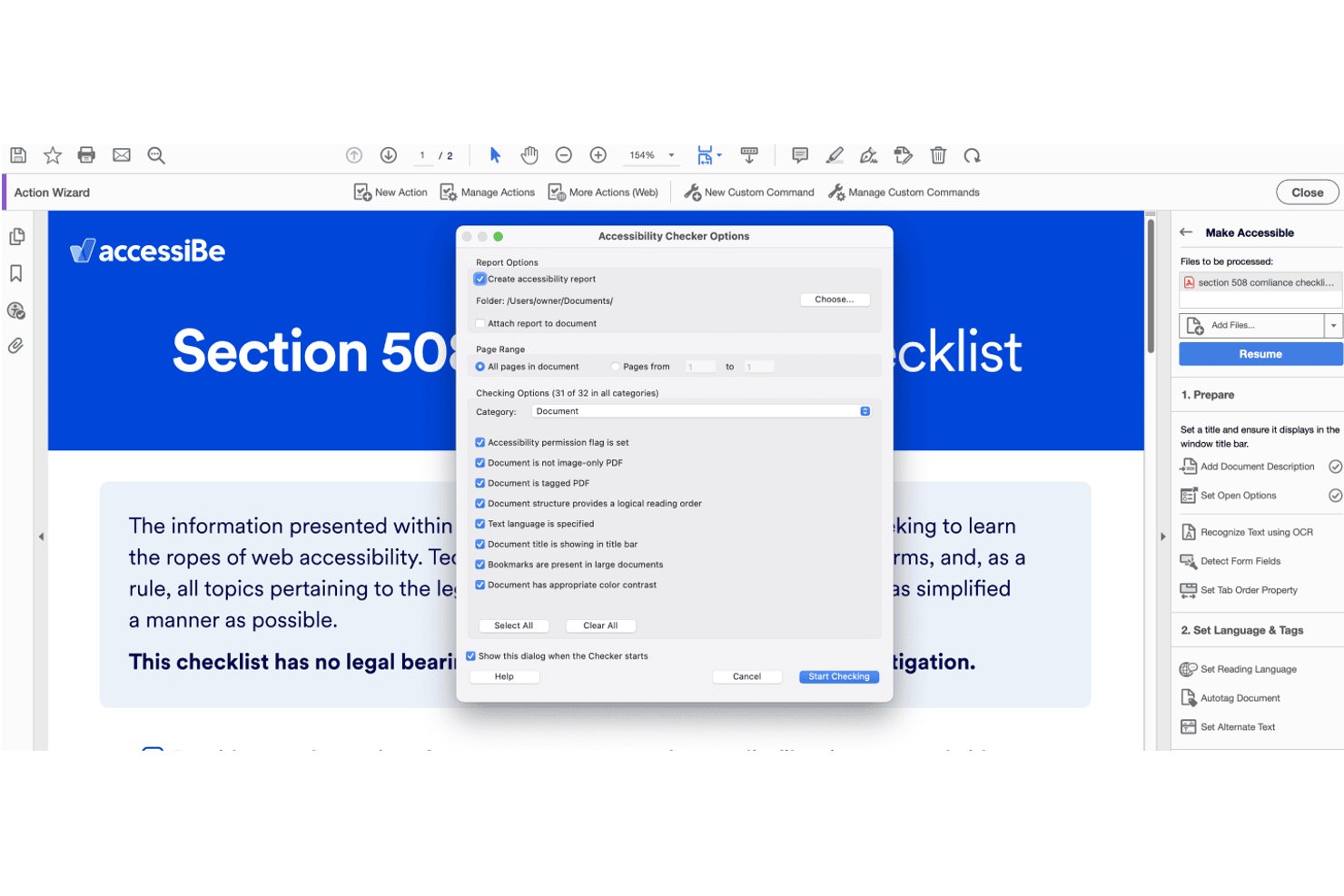
I've included accessiBe in my top picks because it's the only option on this list that hands PDF remediation entirely to human experts rather than asking your team to operate a tool. When you submit files through the portal, specialists handle tagging, reading order correction, and alt text against WCAG 2.1 AA and PDF/UA standards, then return a per-file validation report you can use as audit documentation. I particularly like the expedited three-day turnaround option for deadline-sensitive situations.
accessiBe Key Features
- Multi-format document remediation: The file accessibility service covers PDFs, Word documents, Excel workbooks, PowerPoint presentations, and forms in a single submission.
- Multi-language remediation support: Experts remediate documents in multiple languages, including Arabic, Chinese, French, German, Turkish, and Urdu.
- VPAT and ACR preparation: A dedicated service produces Voluntary Product Accessibility Templates aligned with Section 508, WCAG 2.0/2.1/2.2, and EU/EN 301 549 frameworks.
- Volume discounts and annual subscription plans: Organizations with recurring or high-volume remediation needs can access reduced per-project rates through ongoing plan options.
accessiBe Integrations
accessiBe doesn't have any native integrations relevant to PDF accessibility workflows. Its documented integrations with Jira, Asana, ClickUp, Jenkins, CircleCI, and GitLab support accessFlow, the vendor's web accessibility tool.
Pros and Cons
Pros:
- Supports multi-language PDF remediation requests
- Accessibility validation report included with each file
- Human experts handle PDF remediation tasks
Cons:
- No interactive tools for tag structure review
- No self-service PDF accessibility checker
Best for AI-driven PDF tagging at legal scale
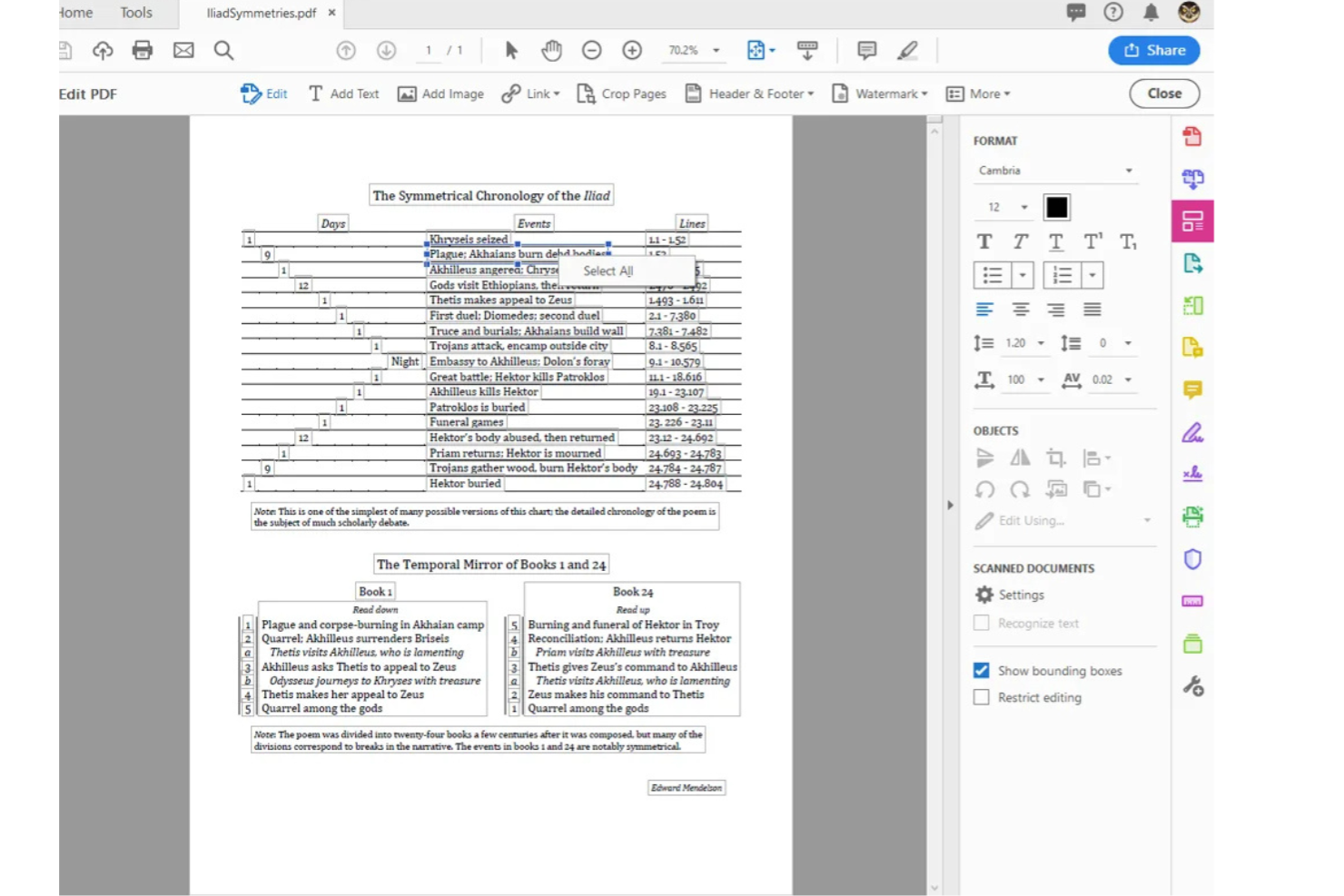
Adobe Acrobat is a PDF platform that combines an accessibility checker, AI-powered auto-tagging, OCR, manual tag tree editing, and batch remediation tools to help you identify and fix accessibility issues across legal documents at scale.
Who Is Adobe Acrobat Best For?
Adobe Acrobat is a strong fit for legal operations teams and court systems that need to remediate large volumes of PDFs against PDF/UA and WCAG standards at scale.
Why I Picked Adobe Acrobat
Adobe Acrobat earns its spot on my shortlist because the PDF Accessibility Auto-Tag API, powered by Adobe Sensei AI, can process millions of documents at scale—one U.S. state court system runs 8 million compliant documents through it per year. I also rely on the Action Wizard for desktop batch remediation, which lets me apply OCR, auto-tagging, and document property fixes across entire folders in a single run. The built-in Accessibility Checker validates against PDF/UA (ISO 14289) and WCAG 2.0, covering the core standards that matter most in legal compliance contexts.
Adobe Acrobat Key Features
- Reading order tool: A visual editor that lets you adjust the sequence in which screen readers process content on each page.
- Permanent redaction: Lets you mark, preview, and permanently remove sensitive text or images from a PDF before sharing or filing.
- Bates numbering: Applies sequential numbering headers and footers across multiple PDFs in a single batch operation for legal document management.
- Microsoft Power Automate connector: Connects Acrobat's auto-tagging workflow to Microsoft 365 environments without requiring custom code.
Adobe Acrobat Integrations
Adobe Acrobat offers native integrations across the Microsoft ecosystem, including Microsoft 365, SharePoint, Teams, and Power Automate. It also connects with Google Drive, Dropbox, Box, Adobe Document Services APIs, and Adobe Experience Manager for custom accessibility workflows.
Pros and Cons
Pros:
- Built-in Bates numbering and permanent redaction tools
- Batch processing supports complex legal workflows
- AI auto-tagging can handle large PDF volumes
Cons:
- No VPAT or ACR-style report export
- Accessibility checker does not cover WCAG 2.2
Best for FedRAMP-covered PDF compliance audits
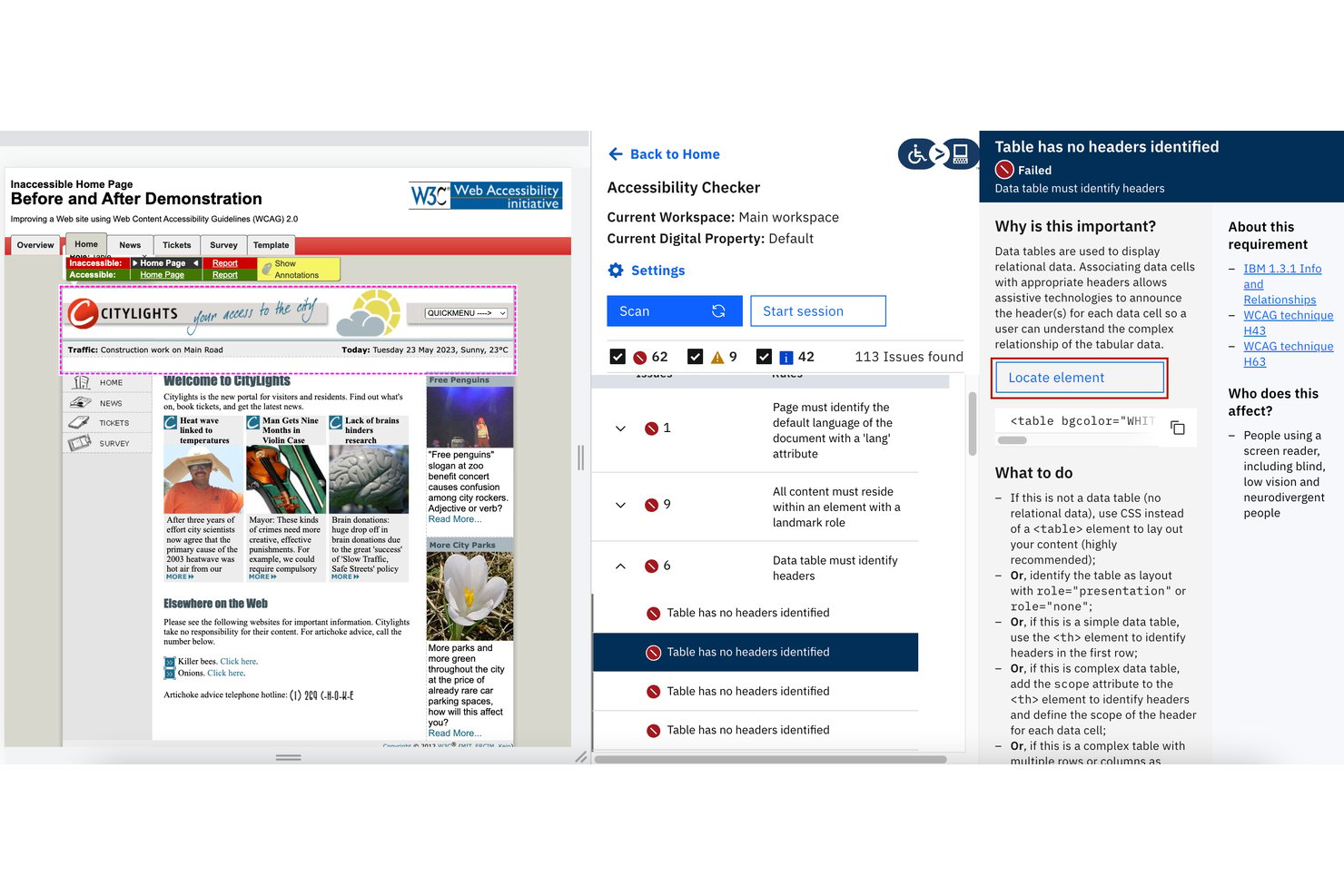
Level Access is an enterprise digital accessibility platform that combines automated PDF scanning, PDF/UA and WCAG testing, managed document remediation, and VPAT/ACR report generation in a single workflow.
Who Is Level Access Best For?
Level Access is a strong fit for large legal departments, government agencies, and court systems with Section 508 obligations and strict security requirements like FedRAMP authorization.
Why I Picked Level Access
Level Access earns its spot on my shortlist because it's the only PDF accessibility platform with a FedRAMP Low Impact SaaS Authorization to Operate, which matters enormously if your agency or court system is bound by federal security requirements. I picked it specifically for its built-in PDF checker, which crawls your site to auto-discover embedded PDFs, tests them against PDF/UA (ISO 14289) and Section 508, and lets you request managed remediation from the same interface. I also rely on the AI Reporting Agent to generate VPAT/ACR outputs filterable by standard and date range, which is exactly what you need to produce defensible audit documentation.
Level Access Key Features
- AI accessibility agents: AI-powered tools group duplicate issues, bulk-assign false positives, and generate natural language audit summaries across your scanned PDF inventory.
- Confidential scanning mode: Disables screenshots and limits saved data to HTML tags and attributes, keeping legally sensitive document content out of the platform's stored records.
- Standards-specific report filtering: The Reporting Agent lets you filter VPAT/ACR outputs by compliance standard—WCAG 2.1, Section 508, EN 301 549—and by date range for historical tracking.
- LevelDocs Office add-in: A Microsoft Office add-in for Word, PowerPoint, and Excel that applies rule-based tagging, heading wizards, and alt text wizards before exporting to accessible PDFs.
Level Access Integrations
Level Access has documented integrations with Jira, Azure Boards, GitHub, GitLab, Bitbucket, and Microsoft Office through LevelDocs. It also provides a REST API and webhooks for custom integrations and CI/CD workflows.
Pros and Cons
Pros:
- Generates VPAT and audit-ready reports
- Provides managed document remediation services
- Includes FedRAMP-authorized accessibility platform
Cons:
- Lacks direct PDF tag editing tools
- No legal document e-filing features
PDFix
Best for court and judicial PDF compliance
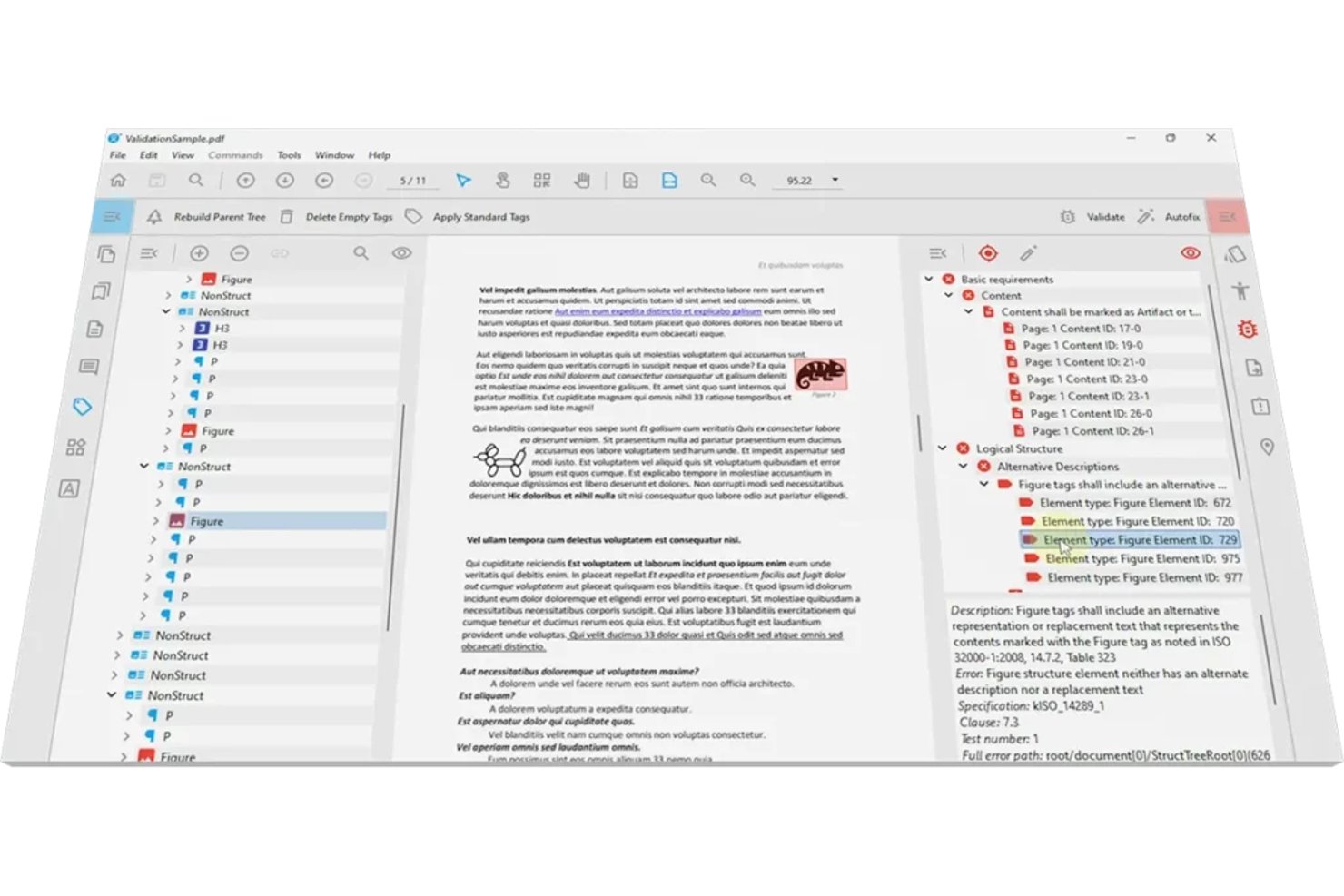
PDFix is a PDF accessibility checker and remediation tool that validates documents against WCAG 2.1/2.2, PDF/UA, Section 508, ADA Title II, and EAA standards, with AI-powered auto-tagging, batch processing, and on-premises deployment.
Who Is PDFix Best For?
PDFix is a strong fit for court systems and government agencies that process high volumes of judicial documents and need on-premises accessibility compliance.
Why I Picked PDFix
I've included PDFix in my top picks because of its documented deployment with the California Judicial Department, where it processes judicial documents across 58 courts at a rate of 4.8 million cases per year. I love that it runs fully on-premises, so sensitive case files never leave your network. Its on-premises AI auto-tagging and veraPDF-backed Section 508 and PDF/UA validation make it a natural fit for court systems processing high volumes of legally sensitive documents.
PDFix Key Features
- AI-powered auto-tagging: Four distinct auto-tagging methods let you apply IBM Docling, PaddleX, OpenAI, or BLIP to automatically tag complex document layouts, including multi-column and image-heavy files.
- JSON-based layout templates: Create reusable tagging rules based on font, size, position, and content patterns, then apply them automatically across thousands of recurring document types.
- veraPDF validation engine: Tests documents against all 136 Matterhorn Protocol failure conditions, covering WCAG 2.1/2.2, PDF/UA-1/2, Section 508, ADA Title II, and EAA standards.
- Multi-format report export: Exports validation reports in HTML, XML, and JSON, with per-issue error navigation that links directly to the offending element in the document.
PDFix Integrations
PDFix integrates with IBM Docling, PaddleX, Amazon Textract, OpenAI, Salesforce BLIP, veraPDF, and Enfocus. Its SDK supports Python, C#, Java, C++, and Node.js, with Docker, Kubernetes, GitHub Actions, and GitLab CI/CD connectivity for custom workflows.
Pros and Cons
Pros:
- Runs natively on Windows, macOS, and Linux
- Exports granular, machine-readable PDF accessibility reports
- Performs on-premises compliance for judicial records
Cons:
- Does not generate VPAT or ACR reports
- Lacks out-of-the-box legal DMS integration
PREP
Best for AI-driven PDF tagging at scale
PREP is a browser-based PDF accessibility checker and remediation platform that uses AI auto-tagging, built-in OCR, and a compliance checker covering WCAG 2.2, PDF/UA, Section 508, and ADA Title II to identify and fix accessibility issues across large document volumes.
Who Is PREP Best For?
PREP is a strong fit for enterprise legal and compliance teams managing large backlogs of scanned or legacy PDFs that need to meet ADA Title II, Section 508, or WCAG 2.2 standards at scale.
Why I Picked PREP
I picked PREP as one of the best because its AI auto-tagging engine handles the kind of volume that breaks manual workflows: think thousands of scanned legacy PDFs processed via the REST API, with 90%+ of tagging automated within seconds of upload. I also like that the built-in OCR covers documents that were never digitally created, which is a real gap most checkers ignore. The compliance checker runs against WCAG 2.2, PDF/UA, Section 508, and ADA Title II in a single pass.
PREP Key Features
- Multi-standard compliance checker: Test documents against WCAG 2.2, PDF/UA, Section 508, ADA Title II, EAA, and AODA in a single remediation pass.
- Screen reader side-by-side preview: View actual text alongside alt text in real time to validate structural output before exporting a final document.
- Reusable tag templates: Apply saved tag templates across recurring document types with one-click bulk remediation for consistent, repeatable results.
- Managed remediation service: Request outsourced remediation from IAAP-certified specialists directly on-platform for documents your team can't handle in-house.
PREP Integrations
PREP has documented integrations with Canvas and D2L Brightspace. Its REST APIs support custom connections with CMS, DMS, and internal platforms, although named legal DMS integrations such as iManage and NetDocuments aren't documented.
Pros and Cons
Pros:
- Side-by-side screen reader preview feature
- Wide compliance with global accessibility standards
- AI auto-tagging covers scanned PDFs quickly
Cons:
- Dedicated legal DMS integrations not available
- No chain-of-custody or audit trail logging
Other PDF Accessibility Checkers
Here are some additional PDF accessibility checker options that didn’t make it onto my shortlist, but are still worth checking out:
- Equidox
For scanned legal PDFs needing on-prem remediation
- GrackleDocs
For AI-assisted PDF accessibility fixes
- Pave
For free PDF/UA checks on non-sensitive docs
- PAC (PDF Accessibility Checker)
Free offline PDF/UA validator for legal files


How I Evaluate PDF Accessibility Checkers
I split my evaluation into baseline functionality every tool must cover and the differentiators—like redaction-aware remediation and DMS integration—that separate a genuinely useful legal tool from a generic checker.
Core Functionality (Table Stakes for This List)
When I'm selecting tools for my list, I rank each one on a scale from 0 (does not offer the functionality) to 5 (excels in this area) for each core functionality listed below. I then calculate the tool's total score into a percentage, using 65% as a benchmark to help assess its overall fit for the list.
- WCAG/PDF-UA Testing: I check whether the tool tests against WCAG 2.1 or 2.2, PDF/UA, and Section 508—all three matter when court filings and client documents need to hold up under ADA scrutiny.
- Detailed Issue Reporting: Reports should pinpoint each failure by page, element, and severity so a paralegal can locate a mistagged heading in a 200-page contract without guessing.
- Remediation Capabilities: I look for built-in fixes for tags, alt text, reading order, and metadata—plus OCR support for scanned case files that arrive as image-only PDFs.
- Tag & Structure Analysis: The tool needs to validate the full tag tree, including tables, lists, and heading hierarchy, since a broken reading order in a brief can change how a screen reader presents arguments.
- Batch Processing: I evaluate how the tool handles volume—watched folders, API access, or scheduled jobs—because a records team filing hundreds of PDFs per week can't process them one at a time.
- Conformance Report Export: Exportable, audit-ready reports aligned with VPAT or ACR formats matter here, especially when compliance officers need documentation for regulators or opposing counsel.
Once I have a list of tools that meet the criteria, I consider what sets each platform apart.
Differentiating Factors (What Sets Vendors Apart)
Here's how I compare and contrast different vendors:
Standout Features
I check whether a tool preserves Bates numbering and evidentiary markings during remediation—one misplaced tag fix that strips a Bates stamp can derail discovery production. Redaction-aware remediation matters just as much, since OCR and tagging passes that ignore existing redactions risk exposing privileged content. I also evaluate audit trail logging, looking for a chain-of-custody record of every action, user, and timestamp that holds up during ADA or Title II compliance reviews.
Beyond Features
I evaluate whether a tool connects to the DMS your firm already runs—iManage, NetDocuments, or SharePoint—since a checker that can't pull files from your matter workspace adds manual steps paralegals won't sustain. Security posture matters just as much: I look for AES-256 encryption, SOC 2 Type II attestation, and on-prem deployment options, especially when processing privilege-heavy litigation exhibits. I also check licensing flexibility, because a solo paralegal and a multi-office AmLaw firm need very different volume models.
How to Choose a PDF Accessibility Checker
Finding a PDF accessibility checker that fits your firm depends on more than feature checklists: what matters is how well a tool handles your documents, compliance obligations, and integration points.
| If your priority is... | Look for... |
| Court and regulator compliance | WCAG 2.1/2.2, PDF/UA, and Section 508 coverage |
| Integration with legal DMS | Native support for iManage, NetDocuments, or SharePoint |
| Large batch or legacy scans | OCR and batch remediation for image-only documents |
| Data security and privacy | On-prem or FedRAMP-compatible deployment options |
| Minimal manual intervention | AI-powered tagging/remediation with audit trails |
How to Vet Your Shortlist
- Test with a sample court filing: Submit a 100+ page scanned brief and require a conformance report that cites failed WCAG, PDF/UA, and Section 508 checkpoints.
- Request integration proof: Ask for a demo or documentation showing direct pull/push from your legal DMS (iManage, NetDocuments, or SharePoint), completed within a week.
- Audit the remediation process: Provide a file with redactions and Bates numbers for trial remediation—confirm these are preserved in the output.
- Security documentation: Request SOC 2, AES-256, or FedRAMP artifacts and review for alignment with your firm's privacy policies.
- Tradeoff to weigh: Choose between AI-driven batch remediation for speed at scale vs. managed service or expert review for edge-case documents needing manual oversight.
What Are PDF Accessibility Checkers?
PDF accessibility checkers are tools that scan and evaluate PDF documents for compliance with legal and usability standards like WCAG, Section 508, and PDF/UA. These tools help you identify issues that could prevent users with disabilities from accessing document content. Using a PDF accessibility checker is an essential step in legal document preparation, risk management, and maintaining regulatory compliance across your document workflows.
Features of PDF Accessibility Checkers
When selecting PDF accessibility checkers, keep an eye out for the following key features:
- WCAG/PDF-UA compliance testing: Evaluates PDFs against major accessibility standards like WCAG 2.1, PDF/UA, and Section 508, ensuring your documents are usable for people with disabilities and meet regulatory requirements.
- Detailed issue reporting: Pinpoints every accessibility problem by page number, element, and severity, so you know exactly where to focus your remediation efforts without guesswork.
- Remediation tools: Offers built-in options to fix common tagging, alt text, reading order, and metadata issues directly within the software, making it easier to address problems without exporting to another tool.
- Tag and structure analysis: Checks and validates the PDF’s tag tree, including tables, lists, and heading hierarchies, ensuring screen readers interpret the document in the right order and context.
- Batch processing: Lets you scan and remediate multiple PDFs at once using watched folders or scheduled jobs, saving time for teams who handle large volumes of documents.
- Conformance report export: Generates detailed, audit-ready reports—often in VPAT or ACR formats—that document your compliance progress for regulators or internal reviews.
- OCR support for scanned files: Converts image-only PDFs into searchable, accessible text so you can bring old or scanned documents into compliance without manual retyping.
- Preservation of legal artifacts: Ensures features like Bates numbers, redactions, and evidentiary stamps remain intact through the accessibility remediation process to maintain document integrity for legal purposes.
- Audit trail logging: Tracks changes, user activity, and remediation steps for every document, creating a defensible record for compliance reviews or challenges.
- Integration with legal DMS: Connects directly with systems like iManage, NetDocuments, or SharePoint so teams can check and remediate documents without duplicating files or breaking established workflows.
Common PDF Accessibility Checker AI Features
Beyond the standard PDF accessibility checker features listed above, many of these solutions are incorporating AI with features like:
- AI-driven tag suggestion: Uses machine learning to analyze document structure and automatically recommend accurate tags for headings, tables, lists, and other elements. This reduces manual tagging and helps ensure documents are properly structured for screen readers.
- Automated reading order correction: Applies AI to detect and fix incorrect reading orders in complex or multi-column PDFs. The tool predicts logical flow based on content patterns, making documents more navigable for assistive technologies.
- Intelligent alt text generation: Leverages AI to scan images and generate descriptive alternative text, helping teams quickly address missing alt text in large batches of documents without manual review.
- Context-aware remediation recommendations: Uses AI to identify not just errors, but also the best remediation steps based on document type, legal context, and prior user actions. This guides users toward fixes that align with compliance requirements and document intent.
- Predictive compliance risk scoring: Employs AI models to assess the likelihood that a document will fail accessibility audits, flagging high-risk files and prioritizing them for review or remediation.
- Natural language report summaries: Generates plain-language summaries of accessibility reports using AI, making it easier for legal teams and non-technical stakeholders to understand compliance status and next steps.
Benefits of PDF Accessibility Checkers
Implementing PDF accessibility checkers provides several benefits for your team and your business. Here are a few you can look forward to:
- Consistent legal compliance: Ensure your documents meet WCAG 2.1, PDF/UA, and Section 508 standards, reducing risk during court filings and regulator audits.
- Detailed issue identification: Pinpoint specific accessibility issues by page, element, and severity, so your team can remediate with confidence and accuracy.
- Faster remediation workflows: Use built-in remediation tools, including AI-powered tag suggestions and batch processing, to address document issues without manual tagging.
- Preservation of legal artifacts: Maintain Bates numbers, redactions, and evidentiary markings throughout remediation, so your documents retain their legal integrity.
- Searchable and accessible scanned files: Convert image-only PDFs into accessible, searchable text using OCR support, bringing legacy documents into compliance.
- Audit-ready documentation: Generate exportable reports in VPAT or ACR formats, providing clear proof of compliance for internal reviews or external regulators.
- Integration with legal document systems: Connect directly with DMS platforms like iManage, NetDocuments, or SharePoint, so you can check and remediate files inside your existing workflows.
Costs and Pricing of PDF Accessibility Checkers
Selecting PDF accessibility checkers requires an understanding of the various pricing models and plans available. Costs vary based on features, team size, add-ons, and more. The table below summarizes common plans, their average prices, and typical features included in PDF accessibility checker solutions:
Plan Comparison Table for PDF Accessibility Checkers
| Plan Type | Average Price | Common Features |
| Free Plan | $0 | Basic PDF/UA checks, limited WCAG compliance reports, single document uploads, and no batch processing. |
| Personal Plan | $10–$30/month | Core accessibility scans, individual report exports, basic remediation tools, and limited batch uploads. |
| Business Plan | $50–$150/user/month | Full WCAG and PDF/UA testing, detailed conformance reports, batch processing, moderate integration with DMS, and basic audit trails. |
| Enterprise Plan | $200–$600+/month | Unlimited document volume, advanced remediation tools, DMS and API integrations, audit-ready export options, robust security, and audit logs. |
PDF Accessibility Checker FAQs
Here are some answers to common questions about PDF accessibility checkers:
How do PDF accessibility checkers handle scanned documents that are just images?
Most PDF accessibility checkers use optical character recognition (OCR) to convert image-only scans into searchable, accessible text. This means you can run accessibility checks and add tags to legacy documents or court filings that arrive as scans, so you don’t need to manually retype or recreate the document.
Can a PDF accessibility checker verify compliance with multiple standards at once?
Yes, most tools test against multiple standards—typically WCAG 2.1 or 2.2, PDF/UA, and Section 508—in a single scan. This is important in legal settings, where different courts or agencies might require different compliance documentation. Check that your tool’s reports clearly cite which checkpoints pass or fail for each relevant standard.
Do PDF accessibility checkers preserve Bates numbers and redacted content during remediation?
Yes, some tools are designed to preserve Bates stamps, redactions, and other legal artifacts during remediation. It’s important to test this before rollout—ask your vendor to run a sample PDF with redactions and evidentiary markings, and confirm nothing is stripped or moved during tagging and fixes.
What should I ask vendors about integration with our document management system?
Ask for concrete examples or a demo showing direct integration with your legal DMS—such as iManage, NetDocuments, or SharePoint. Make sure the tool can pull files directly from your matter folders and return them post-remediation without requiring workarounds or downloads, so your team doesn’t face extra manual steps.
How do audit trails work in PDF accessibility checkers?
Audit trails track every action taken on a PDF—who initiated it, what changes were made, and when. This record helps meet legal or regulatory requirements, especially if you ever need to defend your remediation process during an ADA review or court challenge. Look for tools that log activity at the document and user level, not just systemwide.
What is the difference between AI-driven remediation and manual remediation?
AI-driven remediation uses algorithms to suggest or automatically apply fixes: tag suggestions, alt text generation, or reading order corrections. This speeds up work for batches of simple files. Manual remediation gives you granular control and is usually better for edge-case documents with complex formatting. Many firms find a mix of both is most practical.