
Disco Review: Pros, Cons, Features and Pricing
DISCO offers a fast, intuitive eDiscovery platform—this review covers its strengths, limitations, and how it compares.

We review tools independently, and commissions help fund our testing. See our transparency policy, our methodology, or suggest a tool.
DISCO eDiscovery is an ediscovery software built for legal teams that need to process, review, and produce documents across litigation and investigation matters. Its AI-native architecture means document review, conceptual search, and case insights are built into the platform. I'd consider it over a competitor like Relativity if your team wants that AI functionality without the heavy configuration, third-party integrations, and administrative overhead that Relativity typically demands.
DISCO Ediscovery Evaluation Summary
4.6/5
- Pricing upon request
- Free demo available
Why Trust Our Software Recommendations
6,700+
Reviews
20
Industry experts
16+
Evaluation factors
14
Years
Our team has been testing and reviewing software since 2012. As legal practice leaders ourselves, we know how difficult—and important—it is to choose the right software.
For this guide, we evaluated tools using hands-on testing and independent research, scoring tools using our selection criteria.
Our reviews reflect our human editorial judgment, not a sales pitch.
DISCO Ediscovery Overview
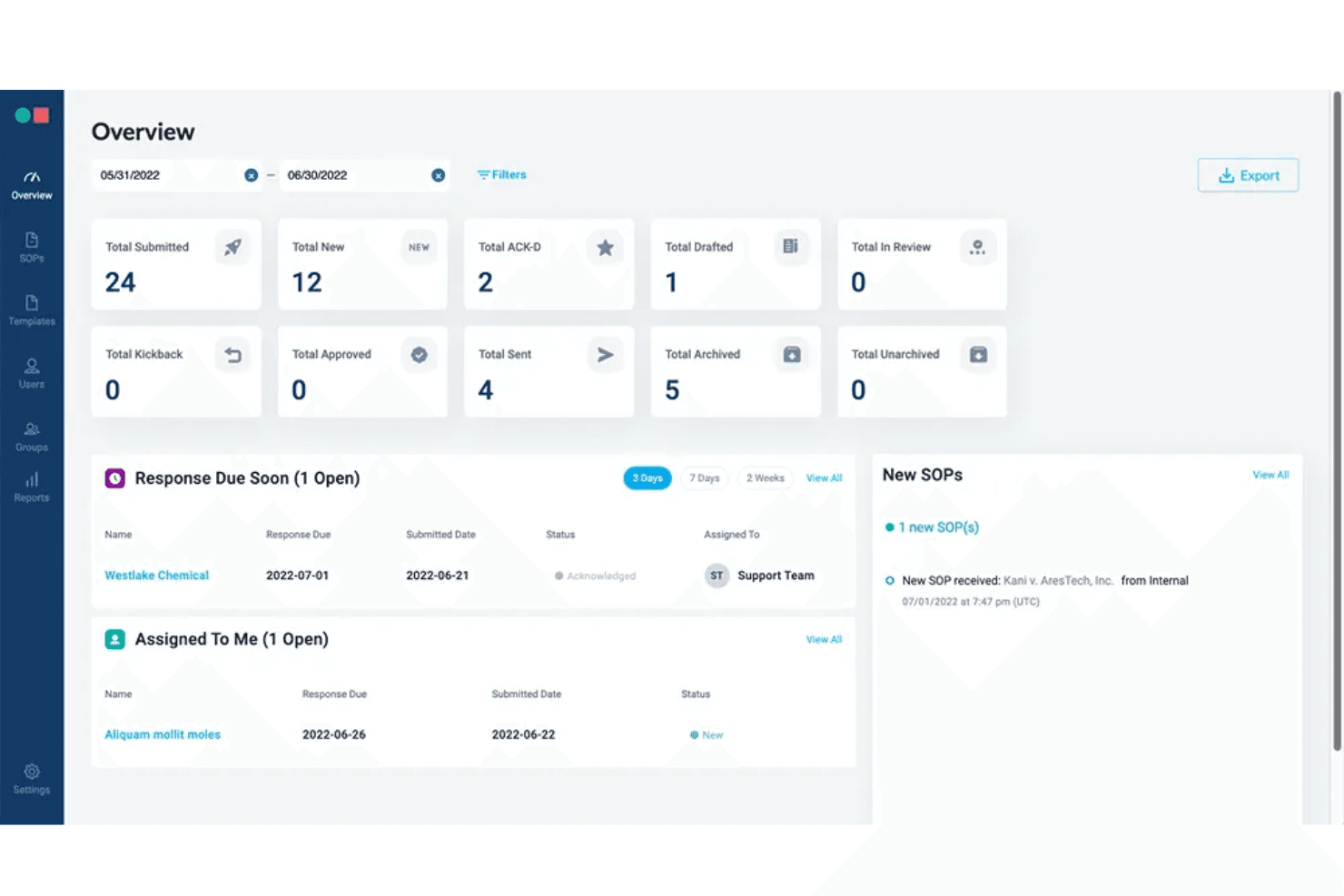
In my experience, Disco is one of the easiest eDiscovery platforms to pick up, with a clean interface and fast search that makes document review less painful. Pricing is transparent and predictable, which I think helps teams judge value up front. Support is responsive, and onboarding is quick—even for teams new to cloud-based tools.
While integrations are limited compared to some competitors, Disco’s automation and analytics features outperform most options I’ve tried. I’d suggest Disco is best for midsize to large legal teams who want speed, reliability, and a straightforward user experience without a steep learning curve.
Pros
- Support team is responsive and understands legal workflows.
- AI-powered features help surface key documents quickly.
- Search and document review speed is among the fastest.
Cons
- Pricing may be high for smaller or infrequent matters.
- Mass-tagging and batch actions can be cumbersome.
- Advanced search options are less flexible than some competitors.
Is DISCO Ediscovery Right For Your Needs?
Who Would be a Good Fit for DISCO Ediscovery?
Disco is a strong choice for legal teams that need fast, scalable document review and value AI-powered analytics. I think midsize to large law firms, corporate legal departments, and litigation support teams will get the most from Disco’s speed, automation, and responsive support.
Its cloud-based platform is especially useful for organizations handling complex, high-volume cases or frequent litigation, where quick turnaround and reliable performance are essential.
- Regulated IndustriesAudit trails and permissions support compliance in finance, healthcare, and energy.
- Class Action PracticesBatch processing and analytics help manage large document sets efficiently.
- Government AgenciesCloud-based security and compliance features meet public sector requirements.
- Litigation Support ProvidersAI-driven analytics and automation speed up client project delivery.
- Corporate Legal TeamsCentralized case management and predictable pricing suit in-house legal budgets.
- Large Law FirmsDisco handles high-volume, multi-party litigation with fast search and review.
Who Would be a Bad Fit for DISCO Ediscovery?
Disco may not be the best fit for small firms, teams with limited budgets, or those needing deep integration with legacy systems. If your matters are infrequent, low-volume, or require highly customized workflows, you might find Disco’s pricing and feature set less appealing. Teams focused on non-litigation work or with unique data sources may also find limitations.
- E-discovery NovicesAdvanced features may overwhelm teams without dedicated eDiscovery expertise.
- International FirmsLimited language support and regional compliance options may be restrictive.
- IT DepartmentsLacks deep integration with legacy or custom enterprise systems.
- Non-Litigation TeamsDisco’s features are focused on litigation, not transactional work.
- Small Law FirmsLimited volume discounts and high minimums don’t suit small caseloads.
- Solo PractitionersPricing and feature set are excessive for occasional, small matters.
How We Test & Score Tools
We’ve spent years building, refining, and improving our software testing and scoring system. The rubric is designed to capture the nuances of software selection and what makes a tool effective, focusing on critical aspects of the decision-making process.
Below, you can see exactly how our testing and scoring works across seven criteria. It allows us to provide an unbiased evaluation of the software based on core functionality, standout features, ease of use, onboarding, customer support, integrations, customer reviews, and value for money.
Core Functionality (25% of final scoring)
The starting point of our evaluation is always the core functionality of the tool. Does it have the basic features and functions that a user would expect to see? Are any of those core features locked to higher-tiered pricing plans? At its core, we expect a tool to stand up against the baseline capabilities of its competitors.
Standout Features (25% of final scoring)
Next, we evaluate uncommon standout features that go above and beyond the core functionality typically found in tools of its kind. A high score reflects specialized or unique features that make the product faster, more efficient, or offer additional value to the user.
We also evaluate how easy it is to integrate with other tools typically found in the tech stack to expand the functionality and utility of the software. Tools offering plentiful native integrations, 3rd party connections, and API access to build custom integrations score best.
Ease of Use (10% of final scoring)
We consider how quick and easy it is to execute the tasks defined in the core functionality using the tool. High scoring software is well designed, intuitive to use, offers mobile apps, provides templates, and makes relatively complex tasks seem simple.
Onboarding (10% of final scoring)
We know how important rapid team adoption is for a new platform, so we evaluate how easy it is to learn and use a tool with minimal training. We evaluate how quickly a team member can get set up and start using the tool with no experience. High scoring solutions indicate little or no support is required.
Customer Support (10% of final scoring)
We review how quick and easy it is to get unstuck and find help by phone, live chat, or knowledge base. Tools and companies that provide real-time support score best, while chatbots score worst.
Customer Reviews (10% of final scoring)
Beyond our own testing and evaluation, we consider the net promoter score from current and past customers. We review their likelihood, given the option, to choose the tool again for the core functionality. A high scoring software reflects a high net promoter score from current or past customers.
Value for Money (10% of final scoring)
Lastly, in consideration of all the other criteria, we review the average price of entry level plans against the core features and consider the value of the other evaluation criteria. Software that delivers more, for less, will score higher.
Core Features
AI-Powered Document Review
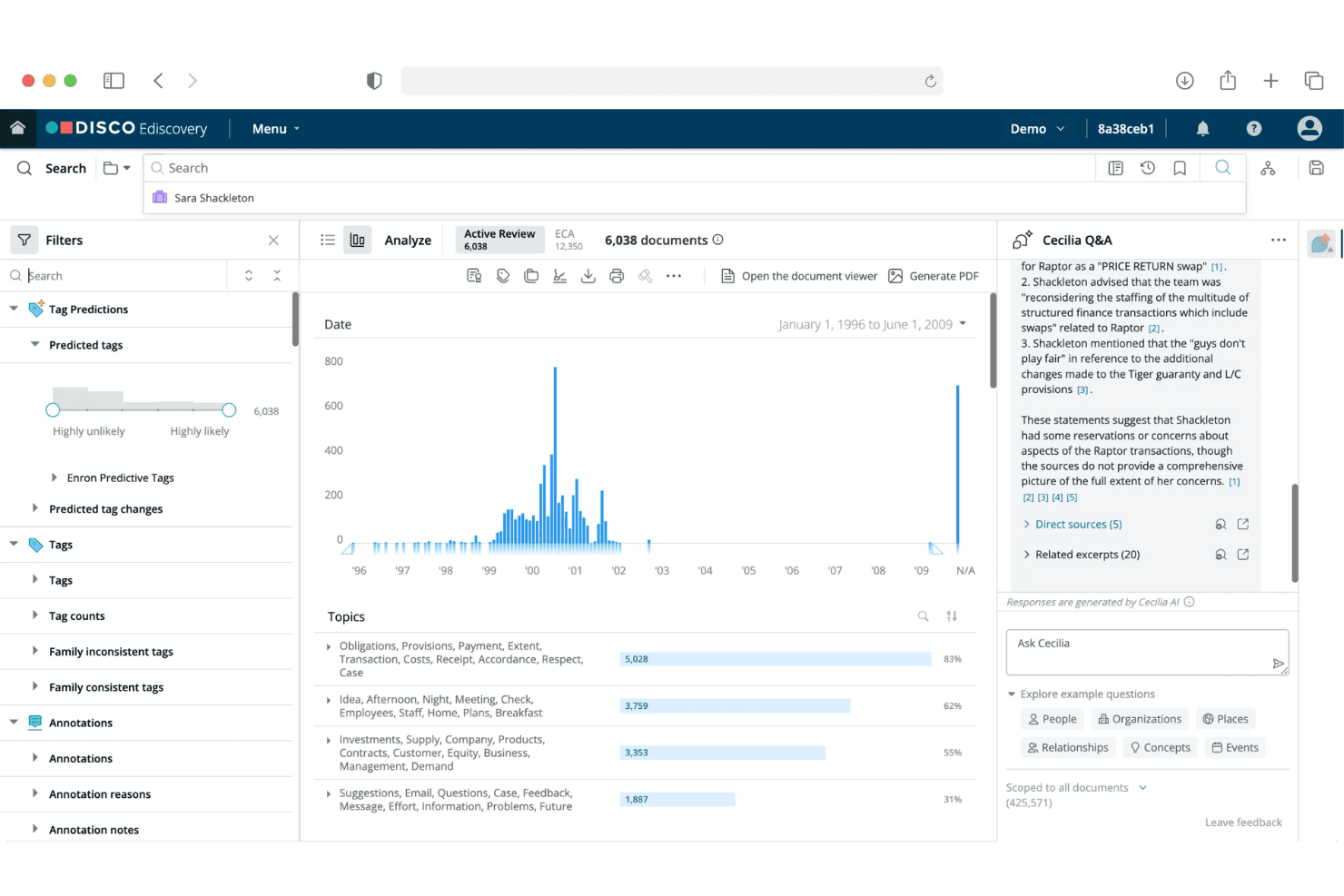
Disco uses generative AI to speed up document review and surface relevant materials. This helps teams quickly identify key facts and reduce manual effort.
Advanced Search and Filtering
The platform offers fast, precise search with filters for metadata, tags, and content. You can instantly narrow results across millions of documents.
Automated Legal Hold Management
Disco Hold automates issuing, tracking, and auditing legal holds from a single dashboard. This reduces manual work and helps ensure defensible compliance.
Cloud-Native Security and Access Controls
Disco provides secure, cloud-based storage with granular user permissions and audit trails. This supports compliance for sensitive legal data.
Batch Processing and Production
You can process, tag, and produce large volumes of documents with batch actions and automated Bates numbering. This is especially useful for class actions and complex litigation.
Case Analytics and Reporting
Disco delivers built-in analytics and reporting tools for tracking review progress, costs, and case metrics. Teams get real-time insights to manage deadlines and budgets.
Standout Features
Visual Search
Visual Search lets you explore document sets using interactive timelines and relationship maps. This helps you spot communication patterns and key events that text-based search might miss.
Predictive Tagging
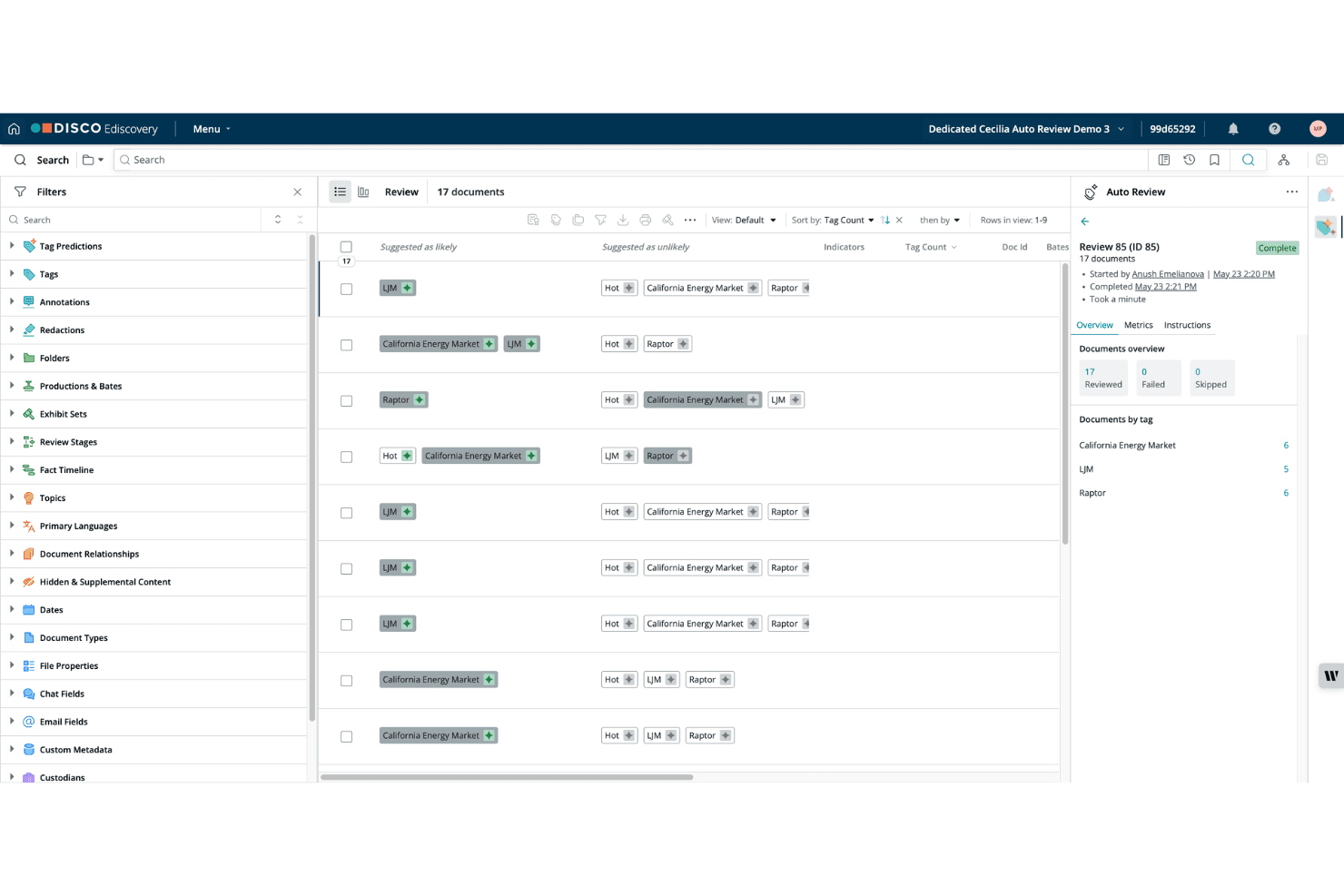
Predictive Tagging uses machine learning to suggest tags as you review documents. This speeds up coding decisions and helps maintain consistency across large review teams.
Ease of Use
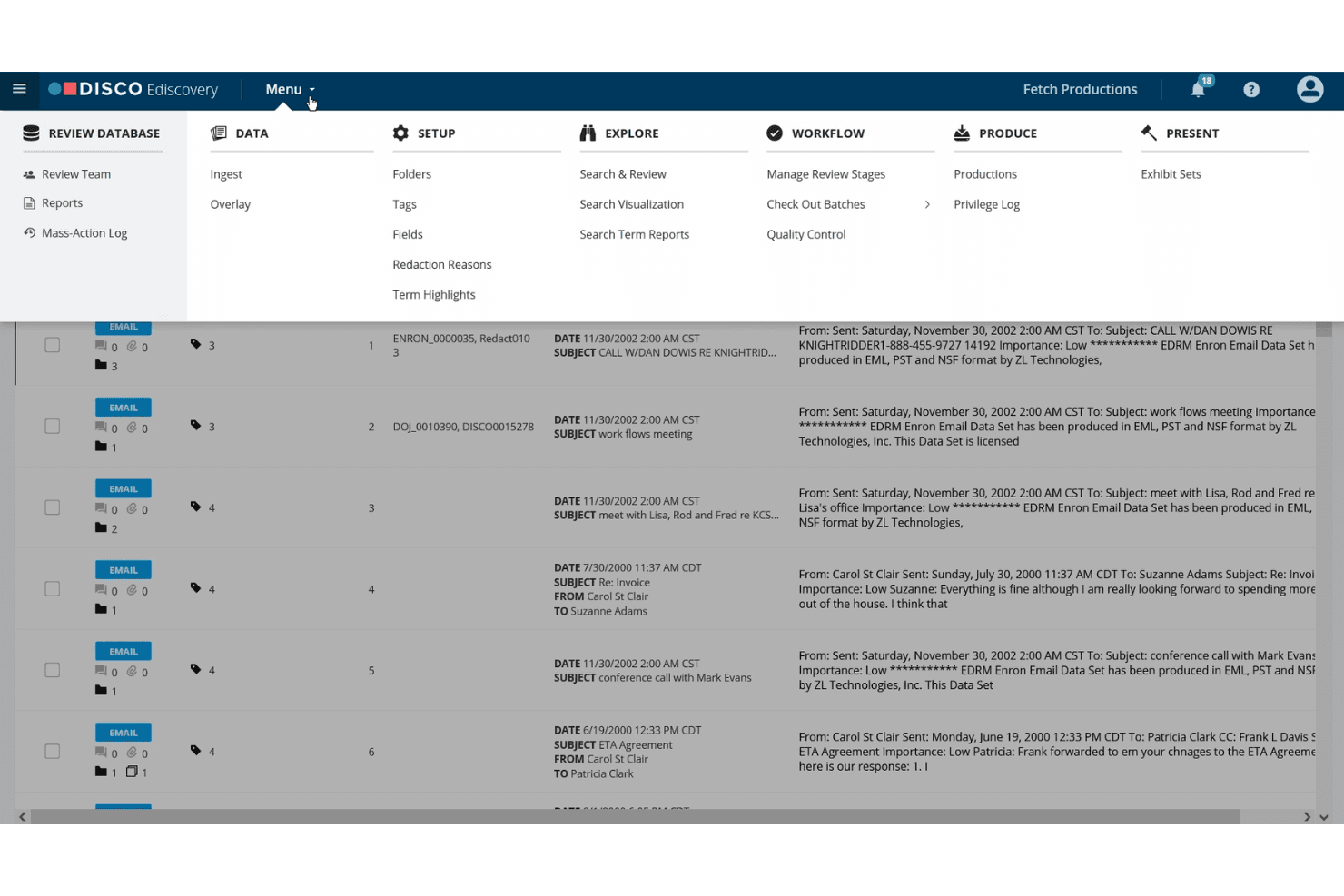
Disco stands out for its clean, intuitive interface and fast navigation, making it easy for legal teams to get started without heavy training. Users often mention how quickly they can upload, search, and review documents, thanks to responsive design and clear workflows. Features like drag-and-drop uploads and guided review tools reduce friction, while in-app support and documentation help users solve issues on the fly.
Overall, Disco feels modern and approachable for both new and experienced users.
Onboarding
Disco’s onboarding process is quick and straightforward, with most users reporting they can start reviewing documents within hours. The platform offers guided walkthroughs, detailed help articles, and responsive live support, which helps new users get up to speed fast.
I’ve seen positive feedback about the personalized training sessions and the proactive customer success team. This focus on onboarding means legal teams can realize value from Disco almost immediately, even if they’re new to cloud-based eDiscovery.

Customer Support
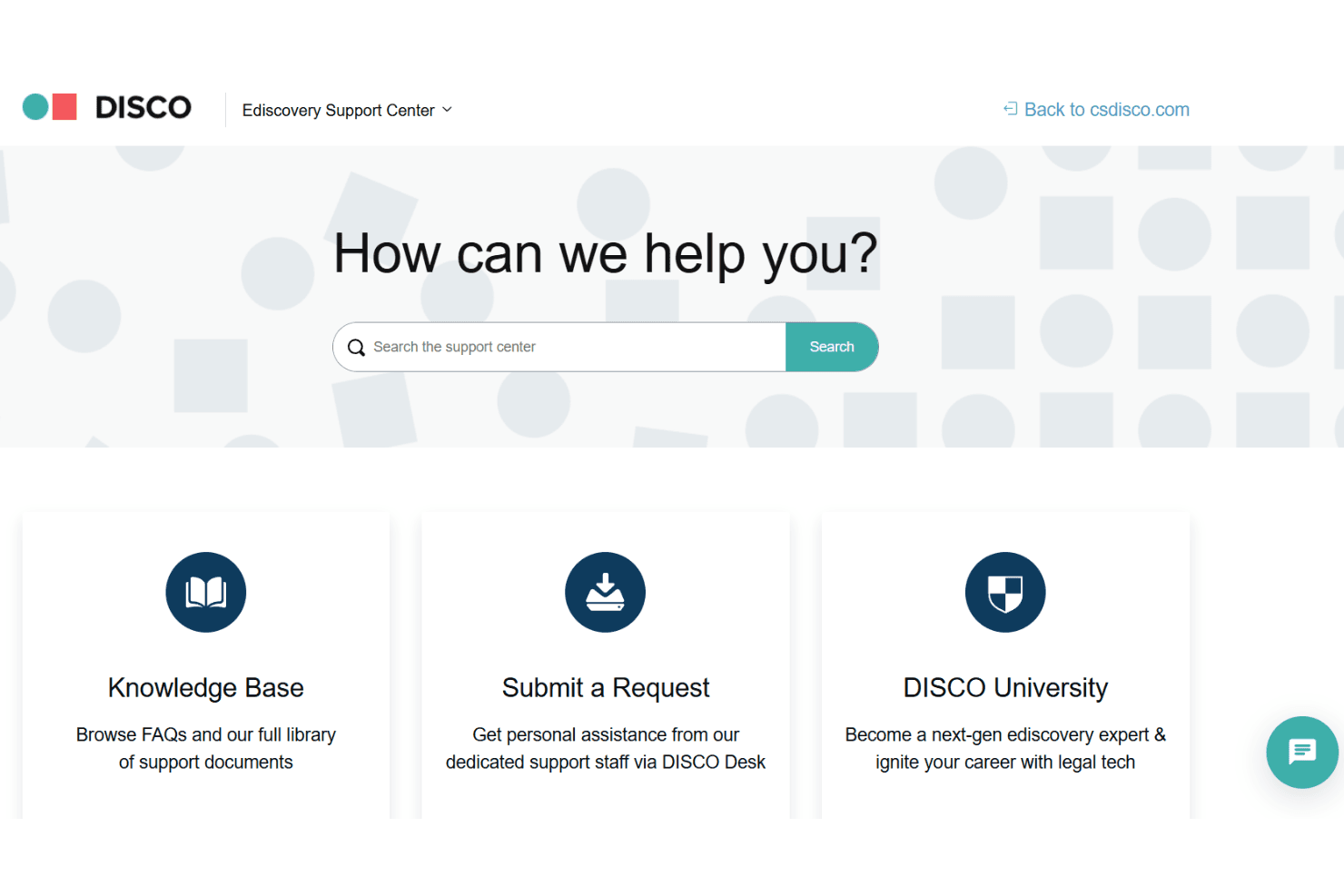
Disco’s customer support is consistently praised for its speed and expertise, with users noting quick response times and knowledgeable agents who understand legal workflows. Support is available through live chat, email, and phone, and the team often goes beyond basic troubleshooting to offer workflow advice.
Many users mention that issues are resolved on the first contact, and the proactive outreach from customer success managers helps teams maximize the platform’s value throughout their cases.
Integrations
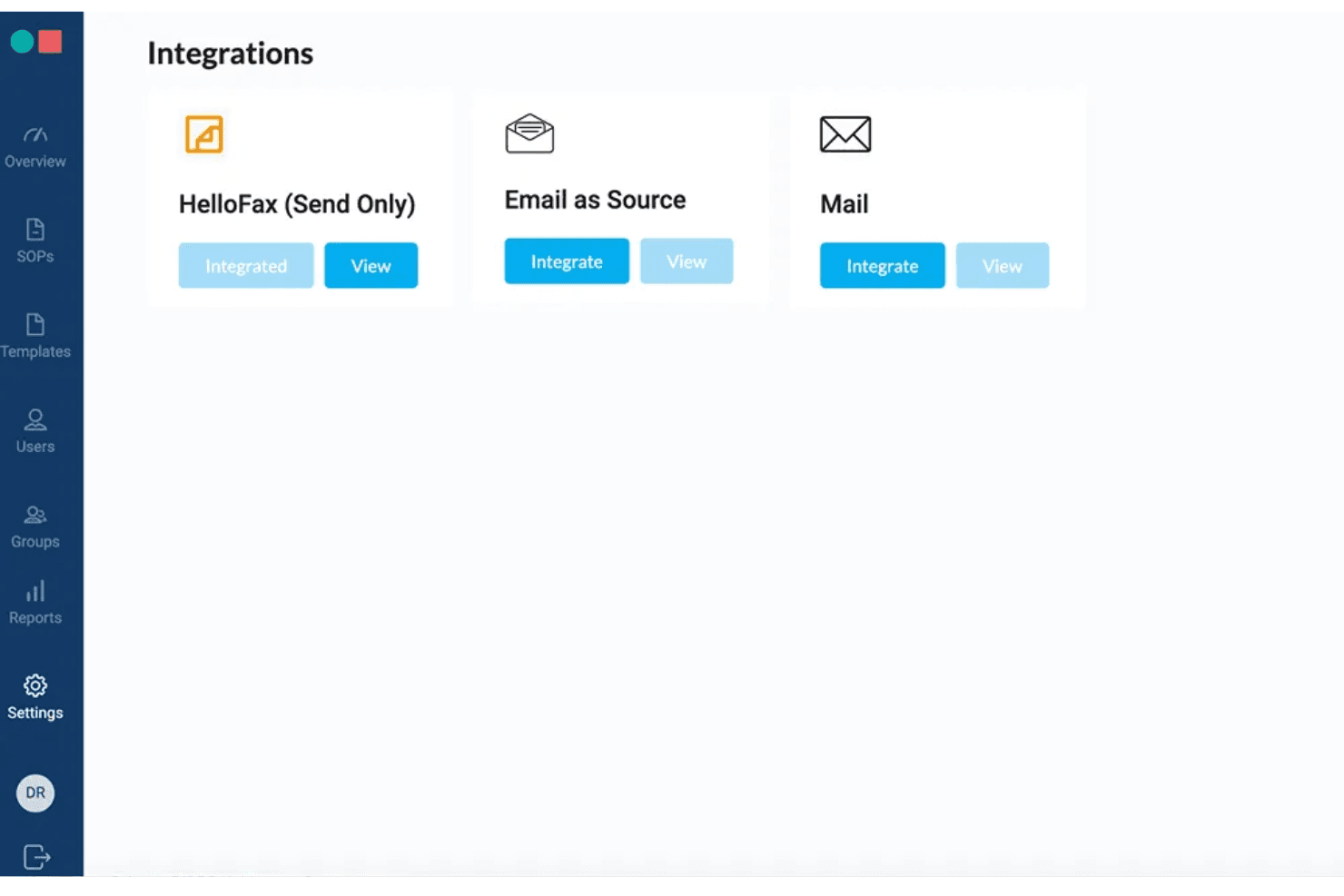
Disco integrates with Microsoft 365, Slack, Google Workspace, Box, Dropbox, Salesforce, OneDrive, Gmail, Outlook, and Exchange, among others.
Disco also offers a public API for custom integrations and connects with third-party tools through its API.
Value for Money
DISCO uses a usage-based pricing model, billing based on processed data rather than fixed subscription tiers. This includes access to its full platform—ediscovery, AI tools like Cecilia, timelines, and deposition management—without additional feature-based fees. This approach helps legal teams scale costs per matter while maintaining predictable access to all core capabilities.
DISCO Ediscovery Specs
- 2-Factor Authentication: Yes
- API: Yes
- Approval Workflows: Yes
- Audit Trail: Yes
- Calendar Management: No
- Compliance Tracking: Yes
- Contract Management: No
- Custom Reports: Yes
- Customer Management: Yes
- Data Export: Yes
- Data Import: Yes
- Document Management: Yes
- External Integrations: Yes
- Multi-User: Yes
- NDA Management: No
- Notifications: Yes
- Policy Management: No
- Scheduling: Yes
- Workflow Management: Yes
DISCO Ediscovery FAQs
DISCO Ediscovery Company Overview & History
CS Disco, Inc. is a legal technology company headquartered in Austin, Texas. The company focuses on AI-powered ediscovery, legal hold, and litigation management solutions for law firms and corporate legal departments.
DISCO offers a suite of products, including ediscovery, DISCO Hold, Case Builder, Cecilia AI, Timelines, and Auto Review. The company is publicly traded and serves law firms and corporate legal teams, including Am Law 200 firms.
Disco Major Milestones
- 2013: Founded in Houston, Texas.
- 2015: Launched its cloud-native ediscovery platform.
- 2021: Completed its initial public offering (IPO) on the New York Stock Exchange.
- 2023: Introduced Cecilia AI for generative AI-powered legal workflows.