

I 10 migliori software per la gestione delle email per studi legali nel 2026

I migliori software di gestione delle email per studi legali: selezione


Il software di gestione delle email per studi legali ti aiuta a organizzare, proteggere e monitorare le email legali, supportando al contempo le esigenze di flusso di lavoro e conformità. Se il tuo team ha difficoltà con messaggi archiviati in modo errato, rischi per la sicurezza o una collaborazione lenta, scegliere la piattaforma giusta può fare davvero la differenza. Questa guida ti mostra quali software si distinguono nel 2026 per i professionisti del settore legale che hanno bisogno di soluzioni affidabili in grado di proteggere le informazioni dei clienti, supportare l'organizzazione per cliente e pratica e aiutarti a essere sempre pronto per gli audit. Potrai conoscere da vicino gli strumenti più apprezzati e le funzionalità più importanti per i flussi di lavoro degli studi legali.
Perché fidarsi dei nostri consigli sui software
Il nostro team testa e recensisce software dal 2012. In quanto leader di studi legali noi stessi, sappiamo quanto sia difficile — e importante — scegliere il software giusto.
Per questa guida, abbiamo valutato gli strumenti attraverso test pratici e ricerche indipendenti, assegnando un punteggio agli strumenti in base ai nostri criteri di selezione.
Le nostre recensioni riflettono il nostro giudizio editoriale umano, non un discorso di vendita.
Riepilogo dei migliori software di gestione delle email per studi legali
Questa tabella comparativa riassume i dettagli sui prezzi delle mie selezioni dei migliori software di gestione delle email per studi legali, per aiutarti a trovare quello più adatto al tuo budget e alle esigenze della tua attività.
| Tool | Best For | Trial Info | Price | ||
|---|---|---|---|---|---|
| 1 | Ideale per il tracciamento automatico del tempo tramite email | Demo gratuita disponibile | Prezzo su richiesta | Website | |
| 2 | Ideale per l'automazione dei flussi di lavoro nell'infortunistica | Demo gratuita disponibile | Prezzo su richiesta | Website | |
| 3 | Ideale per la prova di consegna delle email ammissibile in tribunale | Demo gratuita disponibile | Da $7/utente/mese (fatturazione annuale) | Website | |
| 4 | Ideale per modelli di e-mail legali redatti dall'IA | Prova gratuita di 7 giorni | A partire da $49/utente/mese | Website | |
| 5 | Ideale per approfondimenti finanziari negli studi di piccole dimensioni | Demo gratuita disponibile | Prezzo su richiesta | Website | |
| 6 | Ideale per accesso sicuro ai file da mobile | Demo gratuita disponibile | Prezzi su richiesta | Website | |
| 7 | Ideale per l'integrazione con Microsoft Teams | Demo gratuita disponibile | Prezzo su richiesta | Website | |
| 8 | Ideale per archiviazione email di Outlook incentrata sulla pratica | Prova gratuita di 7 giorni + piano gratuito + demo gratuita disponibile | Da $395/mese | Website | |
| 9 | Ideale per conformità on-premise e tracciamento audit | Prova gratuita di 30 giorni + demo gratuita disponibile | Prezzi su richiesta | Website | |
| 10 | Ideale per archiviare le email di Outlook su SharePoint | Prova gratuita di 14 giorni + demo gratuita disponibile | Prezzo su richiesta | Website |
Recensioni dei migliori software di gestione delle email per studi legali
Di seguito trovi i miei riepiloghi dettagliati dei migliori software di gestione delle email per studi legali che sono entrati nella mia selezione. Le mie recensioni offrono uno sguardo approfondito sulle funzionalità, le integrazioni e i casi d’uso ideali di ogni piattaforma, per aiutarti a trovare quella più adatta a te.

Ideale per il tracciamento automatico del tempo tramite email

Smokeball è una piattaforma di gestione degli studi legali e gestione delle email per studi legali che offre tracciamento automatico del tempo, archiviazione delle email basata sulla pratica, automazione dei documenti e strumenti di comunicazione con i clienti.
Per chi è consigliato Smokeball?
Studi legali di piccole e medie dimensioni che desiderano il tracciamento automatico del tempo sulle email e la gestione delle pratiche in un'unica piattaforma.
Perché ho scelto Smokeball
Ho scelto Smokeball perché posso tracciare automaticamente ogni minuto speso nella redazione e nella risposta alle email: le mie voci di tempo si aggiornano senza inserimenti manuali e tutta la corrispondenza email è collegata direttamente alla pratica corretta.
Caratteristiche principali di Smokeball
- Archiviazione email basata sulla pratica: Organizza tutte le email per pratica per un facile recupero.
- Automazione dei documenti: Genera documenti legali utilizzando modelli personalizzabili direttamente dal fascicolo di ogni caso.
- Portale clienti: Condividi documenti e messaggi in modo sicuro con i clienti in un unico posto.
- Gestione di calendario e attività: Pianifica scadenze e assegna attività collegate a pratiche e contatti.
Integrazioni Smokeball
Le integrazioni includono AcroDocz, Answering Legal, Aquarius Reporting, Arctrieval, Birdeye, Briefpoint, Bundledocs, Campaign Monitor, Chicago Title e CollBox.
Pros and Cons
Pros:
- Email collegate automaticamente alle pratiche
- Automazione integrata dei documenti per la corrispondenza
- Regole personalizzate per archiviazione e conservazione email
Cons:
- Il tracciamento automatico può includere email non rilevanti
- Richiede l'installazione dell'applicazione desktop

CloudLex
Ideale per l'automazione dei flussi di lavoro nell'infortunistica

CloudLex è una piattaforma di gestione legale basata su cloud progettata per gli studi legali, che offre gestione delle pratiche, gestione delle email, processi di acquisizione, gestione dei documenti e strumenti di comunicazione integrati pensati per le pratiche di infortunistica.
Per chi è CloudLex?
Gli studi legali specializzati in infortunistica che desiderano una gestione dei flussi di lavoro e delle email sviluppata appositamente per la loro tipologia di casi.
Perché ho scelto CloudLex
CloudLex merita un posto nella mia shortlist perché consente di automatizzare le email direttamente dai flussi di lavoro dei casi e centralizzare tutta la comunicazione all'interno di una pratica. Mi piace il fatto che il mio team possa creare promemoria automatici e email di acquisizione collegate alle fasi specifiche di un caso di infortunistica.
Caratteristiche principali di CloudLex
- Registrazione delle email e audit trail: Traccia, archivia e registra la data e l'ora di tutte le comunicazioni email relative a un caso.
- Integrazione con Outlook: Sincronizza email e allegati direttamente da Microsoft Outlook nelle pratiche gestite su CloudLex.
- Controlli di accesso basati sui ruoli: Imposta permessi dettagliati sulla visibilità e il contenuto delle email all'interno delle pratiche.
- Hub centrale per le comunicazioni con i clienti: Archivia email, messaggi e allegati in un unico luogo per ciascun caso.
Integrazioni di CloudLex
Le integrazioni includono iCal, Google Calendar, OneDrive, Google Drive, Dropbox, Adobe Sign, DocuSign, QuickBooks Online, Gmail e Outlook.
Pros and Cons
Pros:
- Automatizza le email di acquisizione per le fasi dei casi
- Centralizza le conversazioni email nei record delle pratiche
- Tiene traccia della corrispondenza email in uscita e in arrivo
Cons:
- Nessun invio massivo di email dalla piattaforma
- Non include la gestione delle firme email integrate

RMail
Ideale per la prova di consegna delle email ammissibile in tribunale
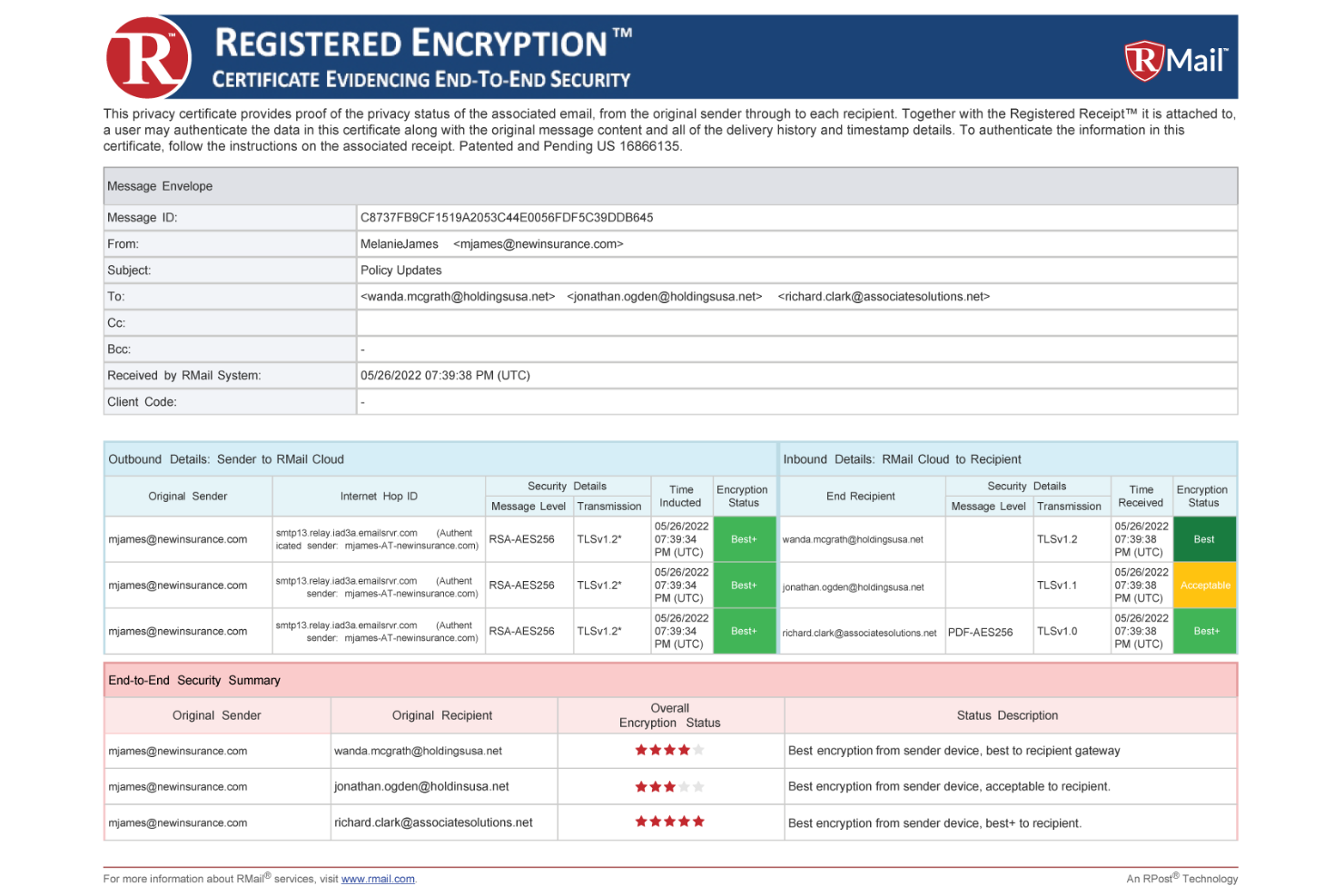
RMail è una piattaforma di gestione della posta elettronica per studi legali che fornisce prova registrata della consegna delle email, messaggistica sicura, firme elettroniche e crittografia avanzata delle email.
Per chi è ideale RMail?
Avvocati litigiosi e team legali che necessitano di prove verificabili e ammissibili in tribunale della consegna e del contenuto delle loro email.
Perché ho scelto RMail
Ho scelto RMail come uno dei migliori perché permette di inviare email registrate che forniscono una prova legalmente verificabile e ammissibile in tribunale della consegna e del contenuto. Mi piace che il mio team possa generare istantaneamente un registro a prova di manomissione per comunicazioni ad alto rischio e notifiche ai clienti.
Funzionalità principali di RMail
- Plug-in per Outlook e Gmail: Invia email sicure e registrate direttamente dal tuo client di posta elettronica esistente.
- Opzioni di crittografia delle email: Scegli tra crittografia automatica o su richiesta per la corrispondenza sensibile.
- Condivisione sicura di file di grandi dimensioni: Trasmetti allegati crittografati fino a 1GB tramite link sicuri ai file.
- Funzionalità di firma elettronica: Prepara e invia documenti per una firma elettronica legalmente vincolante all'interno delle conversazioni email.
Integrazioni di RMail
Le integrazioni includono Outlook, Gmail, Zimbra, Salesforce, SSM Cloud, Zywave Partner Platform, Yardi Breeze Premier, Applied Epic, iManage e NetDocuments.
Pros and Cons
Pros:
- Fornisce prova di consegna delle email ammissibile in tribunale
- Supporta la trasmissione crittografata di file di grandi dimensioni
- Consente richieste di firma elettronica sicura integrate
Cons:
- Richiede componenti aggiuntivi per l'utilizzo con Outlook o Gmail
- Nessuna funzione integrata per schedulazione o attività legali

Clio
Ideale per modelli di e-mail legali redatti dall'IA
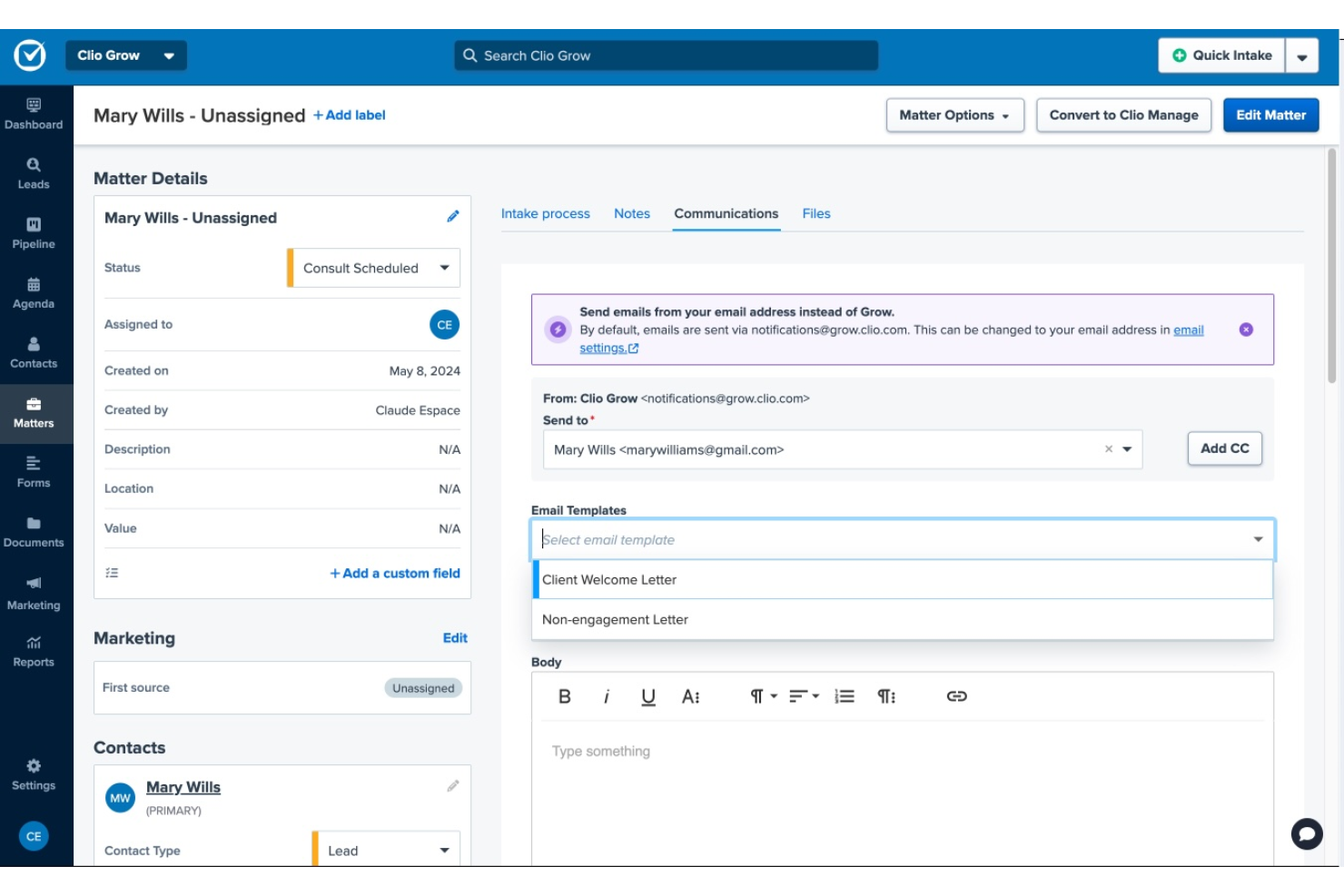
Clio è un software di gestione delle e-mail basato sulla tecnologia cloud per gli studi legali, che consente di gestire le comunicazioni con i clienti, automatizzare le campagne di comunicazione e creare modelli di e-mail riutilizzabili e personalizzati con il marchio all'interno di una piattaforma di gestione dello studio legale.
A chi è più adatto Clio?
Clio è adatto ai piccoli e medi studi legali o ai professionisti singoli del Nord America che desiderano strumenti integrati per le campagne e-mail insieme alla gestione dello studio legale.
Perché ho scelto Clio
Ho scelto Clio come una delle migliori soluzioni perché posso accedere a modelli di e-mail legali redatti dall'IA e pensati per il coinvolgimento dei clienti, creare newsletter con clausole di esclusione della responsabilità legale integrate e personalizzare rapidamente contenuti adatti ai diversi tipi di pratiche gestiti dal mio studio.
Caratteristiche principali di Clio
- Campagne e-mail programmate: Imposta date e orari specifici per le newsletter dello studio legale e gli aggiornamenti ai clienti.
- Pannello di analisi delle e-mail: Monitora i tassi di apertura, di clic e di consegna per tutte le e-mail inviate.
- Segmentazione dei contatti: Filtra i destinatari per tipo di pratica, stato o etichette personalizzate prima dell'invio.
- Strumento di modifica delle e-mail personalizzate: Progetta e modifica le impaginazioni delle e-mail con il logo e la tavolozza dei colori del tuo studio.
Integrazioni di Clio
Le integrazioni includono Scorpion RevenueMAX, OurFamilyWizard, AltFee, NetDocuments by Spring, Xero, Prolegis Solutions, Lawyer Conveyance System, QuickBooks Online e CallConnector.ai by ion8.
Pros and Cons
Pros:
- Redige con l'IA contenuti e-mail specifici per il settore legale
- Opzioni integrate per la progettazione di e-mail personalizzate con il marchio
- Automatizza l'inserimento delle clausole di esclusione della responsabilità legale
Cons:
- Flussi di automazione delle campagne limitati
- Le analisi delle e-mail non offrono una segmentazione avanzata

Ideale per approfondimenti finanziari negli studi di piccole dimensioni

CARET Legal è una piattaforma cloud per la gestione degli studi legali che include gestione delle email, automazione dei documenti, monitoraggio delle pratiche, calendario e funzionalità contabili per gli studi legali.
Per chi è più indicato CARET Legal?
Amministratori di piccoli studi legali e soci amministratori che desiderano contabilità integrata e gestione delle email in un unico sistema.
Perché ho scelto CARET Legal
Ho scelto CARET Legal perché posso generare report finanziari dettagliati e individuare tendenze per il mio piccolo studio, mentre gestisco le email dei clienti insieme a fatturazione e flussi di lavoro delle pratiche, tutto da un'unica dashboard. Faccio affidamento sulle sue analisi per monitorare la salute dello studio.
Funzionalità principali di CARET Legal
- Vista email a conversazione: Mantieni tutti i messaggi correlati raggruppati all'interno delle pratiche dei clienti.
- Sistema di gestione documentale: Archivia, organizza e collega file alle pratiche insieme alle email.
- Controlli sui permessi: Imposta i diritti di accesso alle comunicazioni riservate dei clienti.
- Calendario integrato: Gestisci appuntamenti e scadenze direttamente all'interno delle pratiche dei clienti.
Integrazioni CARET Legal
Le integrazioni includono Microsoft 365, Google Workspace, IMAP, LawToolBox, Lawmatics, HotDocs, OneDrive, NetDocuments, CARET Pay e QuickBooks Online.
Pros and Cons
Pros:
- Archiviazione email incentrata sulla pratica di default
- Importazione massiva di email nei registri di pratica
- Il tagging delle email collega i messaggi alle attività
Cons:
- Nessuna notifica push mobile per le email
- Accesso offline limitato agli archivi delle email

iManage
Ideale per accesso sicuro ai file da mobile
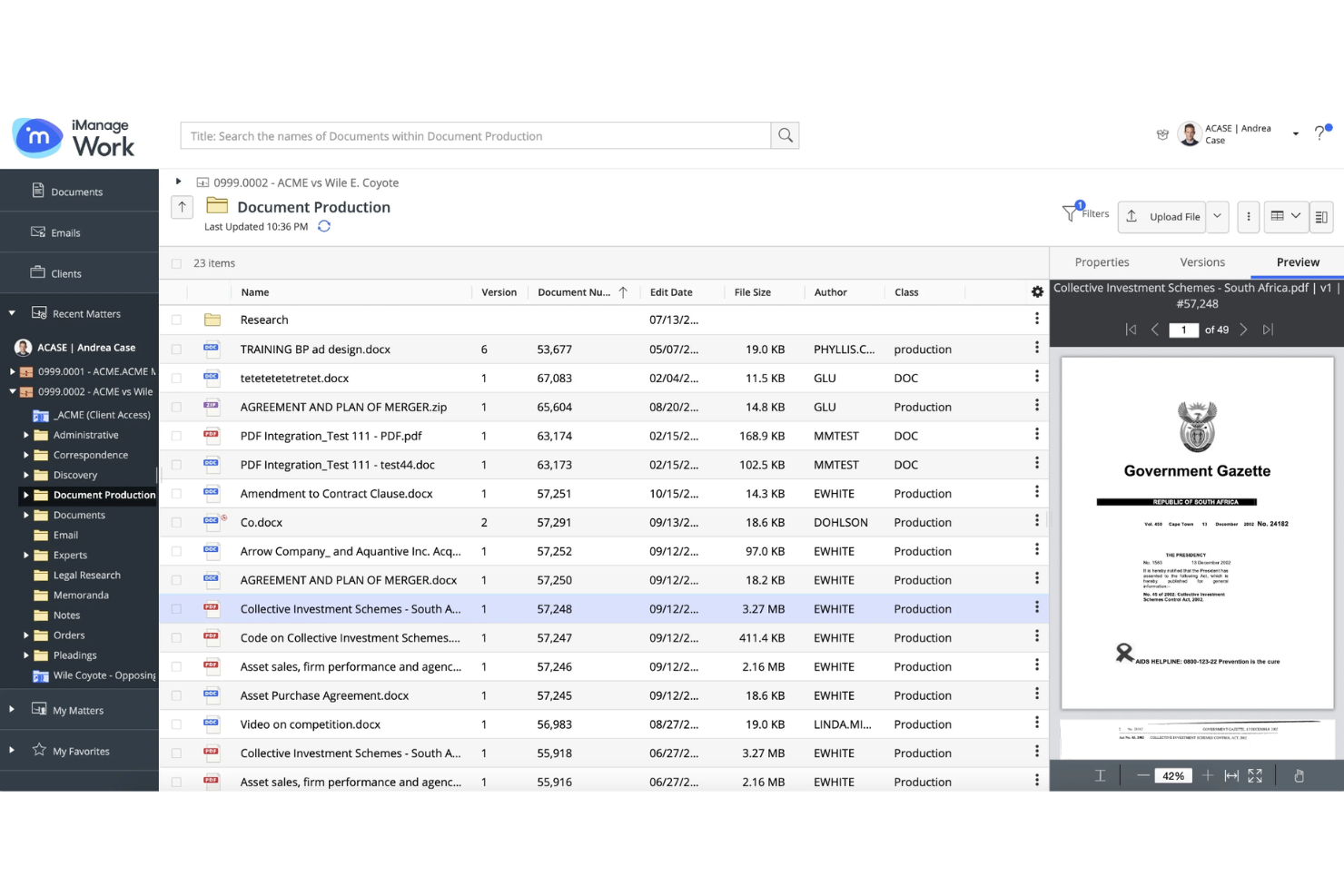
iManage è una piattaforma di gestione di documenti e email per studi legali che offre organizzazione centralizzata dei file, collaborazione sicura e strumenti di ricerca avanzata per gestire contenuti relativi a clienti e pratiche su tutti i dispositivi.
Per chi è ideale iManage?
iManage è adatto a studi legali, reparti legali aziendali e team di operazioni legali che danno priorità all’accesso ai file da mobile e alla gestione sicura dei documenti su diversi dispositivi.
Perché ho scelto iManage
Ho scelto iManage perché posso accedere, modificare e salvare file legali sensibili in modo sicuro dal mio telefono—anche offline—e l’app mobile supporta l’autenticazione biometrica oltre all’archiviazione crittografata dei documenti per maggiore tranquillità ovunque mi trovi.
Funzionalità principali di iManage
- Archiviazione e organizzazione email: Archivia le email direttamente nelle pratiche e nelle cartelle per una gestione ordinata dei registri.
- Ricerca avanzata di documenti: Trova file ed email usando filtraggio testuale e per metadati.
- Controllo delle versioni: Tieni traccia e gestisci automaticamente più versioni di documenti ed email.
- Tracciabilità e log delle attività: Mantieni registri dettagliati di accessi e modifiche ai file per conformità.
Integrazioni di iManage
Le integrazioni includono Avvoka, HighQ, DocuSign, Power BI, Slack, BRYTER e ContractExpress.
Pros and Cons
Pros:
- App mobile sicura con accesso ai documenti offline
- Sistema centralizzato di archiviazione in cartelle e per pratica
- Accesso sicuro ai file offline
Cons:
- Richiede licenze separate per componenti aggiuntivi
- Sincronizzazione limitata dello spazio di lavoro attivo

Ideale per l'integrazione con Microsoft Teams

NetDocuments è un sistema cloud per la gestione di documenti ed email pensato per studi legali, che unisce archiviazione email, collaborazione sui documenti e conservazione protetta dei contenuti in un’unica soluzione.
A chi è più adatto NetDocuments?
Studi legali di grandi dimensioni e dipartimenti legali aziendali che necessitano di una gestione centralizzata e cloud di documenti ed email con profonda integrazione in Microsoft Teams.
Perché ho scelto NetDocuments
Ho scelto NetDocuments perché il mio team può gestire email e documenti dei clienti direttamente nei canali Microsoft Teams, utilizzando conversazioni a thread per organizzare pratiche e corrispondenza in un unico spazio. Le autorizzazioni sicure garantiscono l’accesso ai contenuti sensibili solo agli utenti assegnati.
Caratteristiche chiave di NetDocuments
- Gestione delle versioni dei documenti: Accedi, monitora e ripristina versioni precedenti di documenti ed email.
- Ricerca full-text: Cerca istantaneamente in email, documenti e metadati su tutte le pratiche.
- Regole di conservazione automatizzate: Imposta regole personalizzate per archiviazione ed eliminazione di email e file.
- Controlli di accesso basati sui ruoli: Assegna permessi dettagliati per assicurare la visualizzazione dei contenuti solo agli utenti autorizzati.
Integrazioni di NetDocuments
Le integrazioni includono Microsoft 365, Copilot, DocuSign eSignature, FileTrail, Intapp, Kofax, LexisNexis, Litera, Lupl e Mitratech.
Pros and Cons
Pros:
- Archiviazione avanzata di email e documenti per pratica
- Monitoraggio e ripristino delle versioni dei documenti
- Gestione sicura dei permessi per contenuti sensibili
Cons:
- È obbligatoria la formazione per la configurazione
- L'interfaccia personalizzata non è disponibile

Ideale per archiviazione email di Outlook incentrata sulla pratica
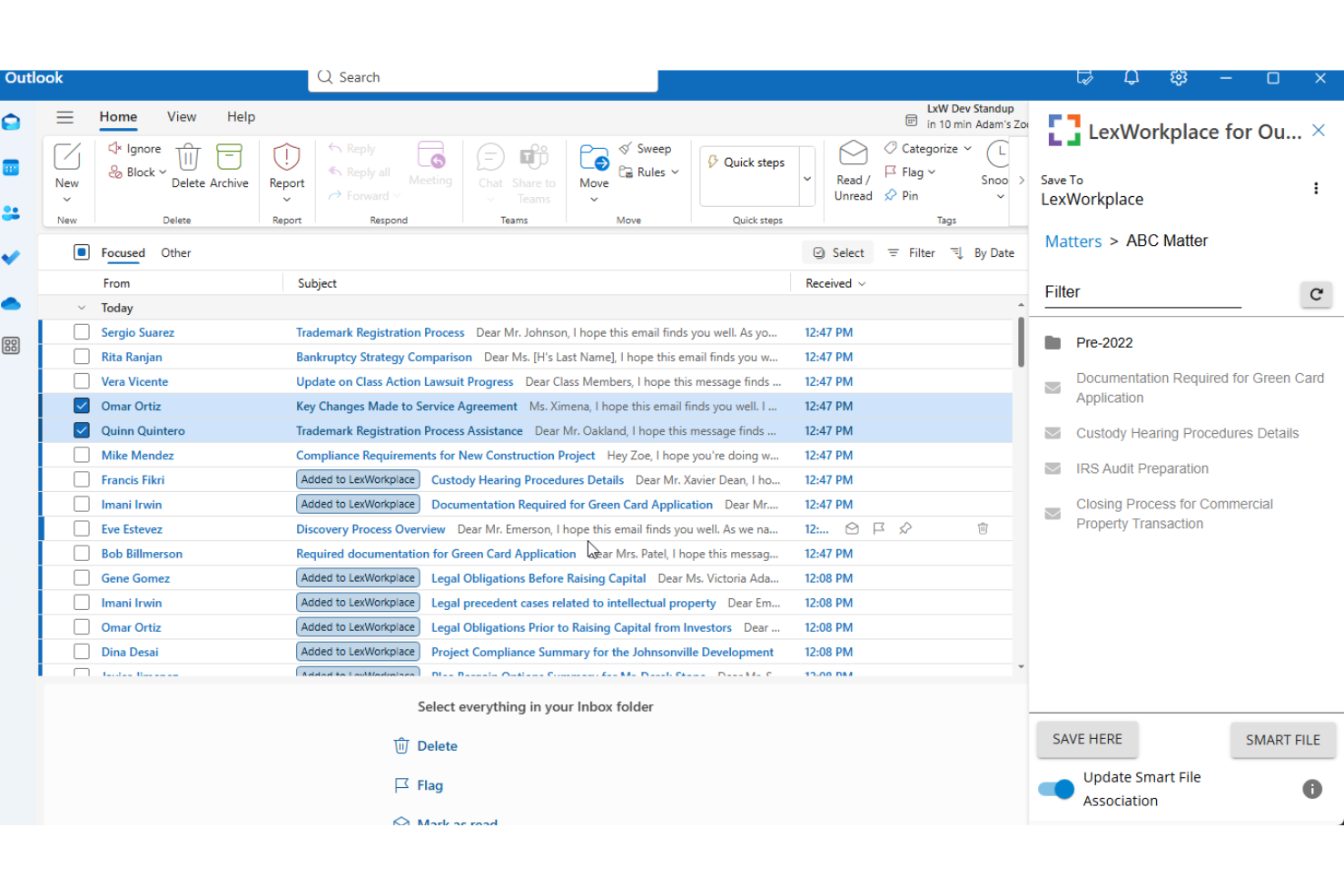
LexWorkplace è una piattaforma cloud per la gestione delle email pensata per studi legali, che offre organizzazione delle email per pratica, ricerca full-text, gestione documentale e integrazioni con Outlook e Microsoft 365.
Per chi è consigliato LexWorkplace?
LexWorkplace è ideale per studi legali che necessitano di una gestione strutturata di email e documenti legata alle pratiche, all'interno dell'ecosistema Microsoft.
Perché ho scelto LexWorkplace
Ho scelto LexWorkplace perché il mio team può archiviare direttamente le email di Outlook nelle pratiche clienti e accedere rapidamente ai thread di conversazione di ciascuna pratica. La piattaforma collega email correlate, allegati e note, così non perdo mai il contesto nelle comunicazioni con i clienti.
Caratteristiche principali di LexWorkplace
- Ricerca full-text: cerca istantaneamente tra email e documenti di tutte le pratiche con supporto OCR e metadati.
- Versionamento documentale: Tieni traccia, confronta e ripristina versioni precedenti di documenti e allegati email.
- Permessi basati sui ruoli: Limita l'accesso a file e email sensibili di una pratica in base a ruoli utente personalizzabili.
- Accesso cloud: Lavora in sicurezza da qualsiasi luogo senza dipendenza da server locali o necessità di VPN.
Integrazioni di LexWorkplace
Include integrazioni con Microsoft 365, Outlook + Exchange, Clio Manage e Litera Compare.
Pros and Cons
Pros:
- Organizzazione delle email per pratica per studi legali
- Integrazione diretta con Microsoft 365 e Outlook
- Ricerca full-text integrata per email e file
Cons:
- Nessuna integrazione nativa con la maggior parte delle app legali
- L'abbonamento mensile minimo potrebbe non essere conveniente per i singoli professionisti

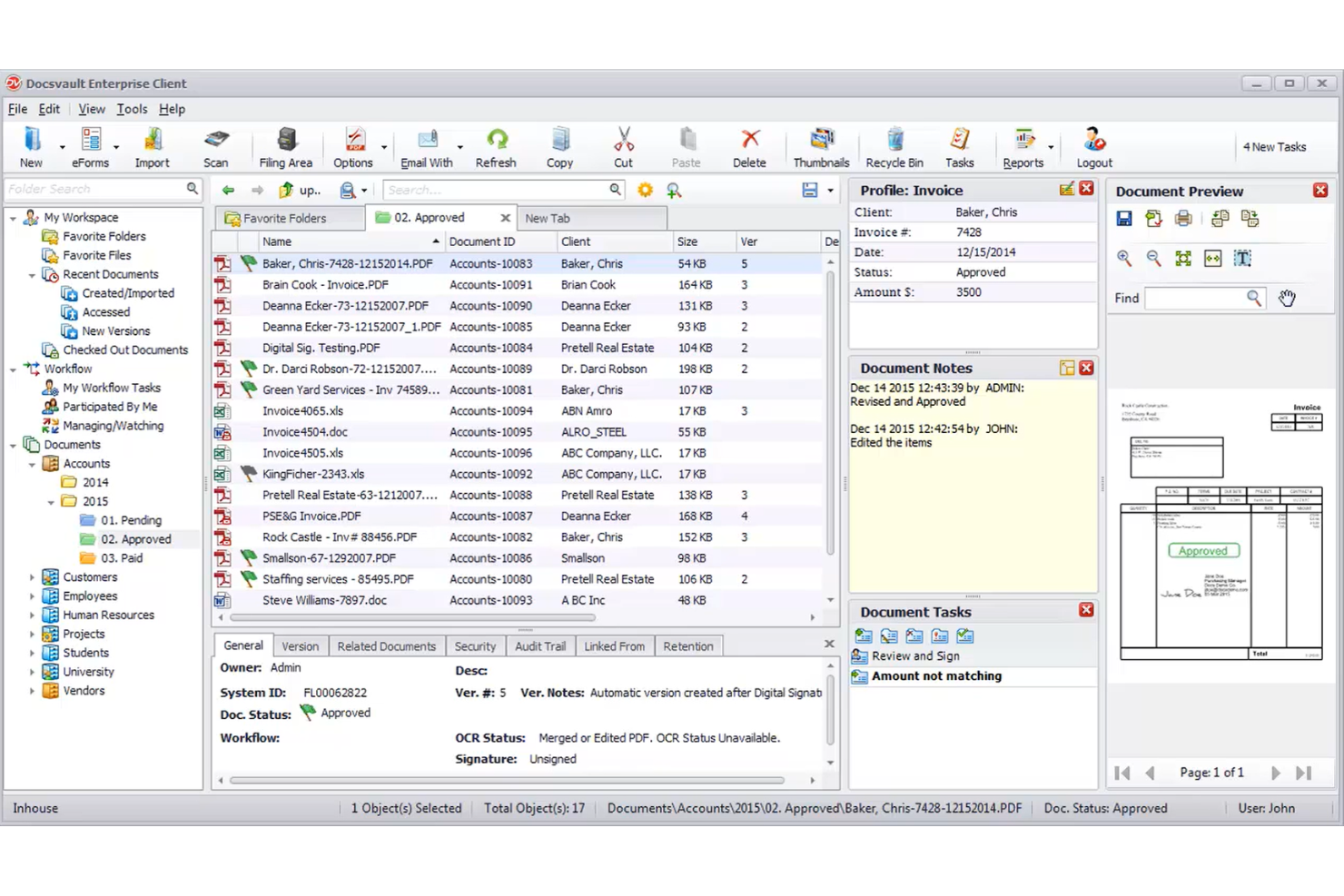
Docsvault è un sistema di gestione documentale on-premise per studi legali che offre acquisizione sicura delle email, archiviazione dei documenti, ricerca avanzata, autorizzazioni utente e tracciamento dettagliato delle attività.
A chi è più adatto Docsvault?
I responsabili IT e gli amministratori negli studi legali che necessitano di controllo on-premise sulla conformità di email e documenti.
Perché ho scelto Docsvault
Ho scelto Docsvault perché posso conservare i registri delle email nell’ambiente aziendale, tracciando ogni accesso e modifica per la conformità. Mi affido ai suoi log di controllo dettagliati e alle impostazioni dei permessi per supportare flussi di lavoro legali regolamentati.
Funzionalità principali di Docsvault
- Acquisizione e archiviazione email: Salva e organizza le email direttamente nelle cartelle di clienti o pratiche.
- Ricerca full-text: Trova email e allegati utilizzando ricerche per parole chiave e metadati.
- Notifiche email: Ricevi avvisi per nuovi file o file modificati relativi alle pratiche dei clienti.
- Controllo delle versioni: Tieni traccia delle revisioni di email e documenti con storici delle versioni automatici.
Integrazioni di Docsvault
Docsvault offre integrazioni native con Microsoft Outlook, Microsoft 365, Adobe Acrobat e Windows Active Directory, e supporta integrazioni personalizzate tramite la propria API.
Pros and Cons
Pros:
- Offre archiviazione protetta e locale dei registri email
- Include dettagliati audit trail di documenti ed email
- Permette l’archiviazione diretta da Microsoft Outlook
Cons:
- Richiede configurazione e manutenzione server on-premise
- Automazione email limitata rispetto agli strumenti cloud


Colligo è una piattaforma di gestione di email e documenti sviluppata per studi legali che consente di acquisire, organizzare e gestire le email di Outlook direttamente all'interno degli ambienti Microsoft SharePoint.
Per chi è ideale Colligo?
Colligo è adatto a professionisti legali e team di operations legali in studi orientati a Microsoft che hanno necessità di archiviare e organizzare le email di Outlook su SharePoint.
Perché ho scelto Colligo
Ho scelto Colligo tra i migliori perché consente di trascinare rapidamente le email di Outlook in cartelle specifiche di SharePoint, acquisire automaticamente i metadati e archiviare interi thread di posta direttamente dalla posta in arrivo senza caricamenti manuali.
Funzionalità chiave di Colligo
- Anteprima contenuto email: Visualizza in anteprima messaggi email e allegati prima di archiviarli su SharePoint.
- Tagging automatico dei metadati: Assegna metadati alle email salvate in base ai requisiti dello studio o della pratica.
- Supporto archiviazione massiva: Seleziona e archivia più email contemporaneamente da Outlook a SharePoint.
- Integrazione con la raccolta documenti SharePoint: Accedi e gestisci le raccolte documenti di SharePoint direttamente da Outlook.
Integrazioni di Colligo
Le integrazioni includono Microsoft 365, Affinity Consulting, Betach Solutions, Cadence Solutions, Creospark, Carahsoft, Doherty Associates, F12, Gimmal e IPI.
Pros and Cons
Pros:
- Archivia direttamente le email in SharePoint da Outlook
- Preserva i metadati originali delle email durante l'archiviazione
- Supporta la cattura massiva di email e allegati
Cons:
- Automazione limitata per l'archiviazione di email di routine
- Sono necessari i permessi SharePoint per gli utenti
Altri software di gestione delle email per studi legali
Ecco alcune ulteriori opzioni di software di gestione delle email per studi legali che non sono entrate nella mia selezione, ma che vale comunque la pena prendere in considerazione:
- Streamline AI
Ideale per la gestione automatizzata delle richieste legali
- Jace AI
Ideale per la redazione di email aziendali con l'intelligenza artificiale
- Mobile Helix (LINK)
Ideale per la gestione dei documenti e delle email di Outlook su dispositivi mobili


Come valuto il software di gestione email per studi legali
Esamino questi strumenti su due livelli: le caratteristiche imprescindibili come l’archiviazione per pratica e l’integrazione con i DMS, poi i fattori distintivi—come la classificazione tramite IA e la rilevazione automatica dei tempi—che differenziano un software dall’altro.
Funzionalità principali (Requisiti fondamentali per questa lista)
Queste funzionalità di base rappresentano i criteri di accettazione per l’inclusione nella mia lista di software di gestione email per studi legali:
- Archiviazione email centrata sulla pratica: Verifico se email e allegati possono essere etichettati e archiviati per cliente/pratica—ad esempio, gestendo direttamente una conversazione di accordo nella cartella corretta del caso.
- Integrazione con DMS e PM: Sono fondamentali connessioni native con piattaforme come iManage, NetDocuments, Clio o Worldox, poiché la maggior parte degli studi utilizza già almeno uno di questi sistemi.
- Compatibilità Outlook/Exchange: Valuto quanto a fondo uno strumento si integri con Outlook e Microsoft 365, incluso il supporto per desktop, web e dispositivi mobili per avvocati che lavorano su più device.
- Classificazione email automatica: Cerco suggerimenti per l’archiviazione basati su regole o IA—strumenti che apprendono dai comportamenti dell’utente e prevedono la pratica corretta a cui associare le nuove email.
- Conformità e tracciamento audit: Le policy di conservazione, i muri etici e i registri della catena di custodia sono essenziali per gli studi che gestiscono comunicazioni privilegiate o sensibili alle controversie.
- Gestione email in massa: Analizzo come ciascun strumento gestisce archiviazioni di gruppo, deduplicazione dei thread e riconciliazione multi-utente quando decine di avvocati lavorano sulla stessa pratica.
Valuto ciascun fornitore su una scala da 0 (funzionalità assente) a 5 (eccelle in questa area) per ciascun criterio.
I fornitori devono ottenere un punteggio medio minimo per essere presi in considerazione nella mia lista. Da lì, considero cosa distingue ogni piattaforma.
Fattori differenzianti (Cosa distingue i fornitori)
Dopo aver selezionato la mia lista, così confronto e paragono i diversi fornitori nel settore dei software di gestione email per studi legali:
Funzionalità distintive
La classificazione predittiva tramite IA è davvero notevole—se un sistema riesce ad apprendere il comportamento degli utenti e iniziare a intercettare le eccezioni senza intervento umano, fa davvero la differenza negli studi legali più impegnati. Analizzo anche le capacità mobili, come la possibilità di archiviare email nella pratica giusta usando un dispositivo iOS o Android durante un’audizione o riunione con il cliente. L’automazione dei controlli di conflitto è un altro importante elemento distintivo, poiché aiuta gli studi a evitare l’esposizione di comunicazioni privilegiate o in conflitto anche prima di rispondere a un thread email.
Oltre le funzionalità
Qui contano molto la dimensione dello studio e la tipologia di casi trattati. Un libero professionista che segue cause di diritto di famiglia ha volumi e necessità di archiviazione email molto diversi rispetto a un gruppo di contenziosi di un AmLaw 200 che gestisce migliaia di conversazioni per pratica. Valuto attentamente anche i modelli di implementazione—alcuni studi richiedono l’hosting on-premise o configurazioni ibride per superare audit di sicurezza da parte dei clienti, mentre altri si accontentano della soluzione puramente cloud. Vale la pena considerare anche il supporto all’implementazione, soprattutto quando si migra da vecchie piattaforme DMS dove l’adozione da parte degli avvocati può determinare il successo o il fallimento dell’implementazione.
Come scegliere un software di gestione delle email per studi legali
È facile perdersi in lunghi elenchi di funzionalità e strutture tariffarie complesse. Per aiutarti a rimanere concentrato mentre affronti il tuo specifico processo di selezione del software, ecco una lista di fattori da tenere a mente:
| Fattore | Cosa considerare |
|---|---|
| Scalabilità | La piattaforma supporterà la crescita del tuo studio, inclusa l'aggiunta di utenti e reparti e l'aumento del volume dei messaggi nel tempo? |
| Integrazioni | Il software si collega nativamente ai tuoi strumenti di gestione dei documenti legali, fatturazione e gestione dello studio oppure richiede soluzioni manuali? |
| Personalizzazione | Puoi adattare i flussi di lavoro, i modelli e le impostazioni di conservazione per rispecchiare le politiche del tuo studio, le aree di pratica e i requisiti di conformità? |
| Facilità d'uso | Avvocati e personale impareranno ad adottare rapidamente il sistema oppure sono necessarie una formazione approfondita e un supporto IT continuo? |
| Implementazione e avviamento | Quanto tempo e quante risorse interne richiederanno realisticamente la migrazione, la configurazione e la formazione? Il supporto e la documentazione sono sufficienti per il tuo team? |
| Costo | Qual è il costo totale di gestione nell'arco di un anno: licenza, supporto, migrazione e potenziali aggiornamenti futuri? Sono previsti costi nascosti o costi legati alla crescita? |
| Misure di sicurezza | La soluzione offre crittografia comprovata, registri di audit, opzioni di localizzazione dei dati e procedure di risposta alle violazioni per soddisfare gli standard legali? |
| Requisiti di conformità | La piattaforma supporterà le normative specifiche delle diverse giurisdizioni relative alla conservazione delle email, ai registri di audit o alla riservatezza dei clienti, come le linee guida dell'ABA o del GDPR? |
Che cos'è il software di gestione delle email per studi legali?
Il software di gestione delle email per gli studi legali è uno strumento digitale progettato per organizzare, proteggere e monitorare le comunicazioni via email dello studio legale. Queste piattaforme aiutano i professionisti legali a gestire la corrispondenza riservata, conservare i registri delle comunicazioni con i clienti, applicare i requisiti di conformità e supportare flussi di lavoro efficienti adattati alla pratica legale. Sono essenziali per garantire la sicurezza delle email, una corretta conservazione dei registri e una documentazione affidabile delle interazioni con tribunali, clienti e parti avverse.
Funzionalità
Quando scegli un software di gestione delle email per studi legali, presta attenzione alle seguenti funzionalità chiave:
- Trasmissione delle email crittografata: questa funzionalità protegge le informazioni riservate sui clienti e sui casi inviando i messaggi tramite canali sicuri e crittografati per impedire gli accessi non autorizzati.
- Archiviazione automatizzata delle email: memorizza automaticamente tutte le email in entrata e in uscita in archivi digitali facilmente consultabili, aiutando i team a trovare la corrispondenza importante e a conservare i registri di conformità.
- Monitoraggio delle conferme di consegna e lettura: monitora quando i messaggi vengono consegnati e aperti, fornendo prove con data e ora utili per le comunicazioni legali e la documentazione giudiziaria.
- Controlli degli accessi basati sui ruoli: consentono agli studi di definire chi può visualizzare, inviare o gestire le comunicazioni sensibili, supportando la riservatezza interna e i requisiti di conformità.
- Flussi di lavoro integrati per la firma elettronica: consentono agli utenti di inviare documenti per ottenere firme elettroniche legalmente vincolanti direttamente all'interno dei thread di email, semplificando la finalizzazione di contratti e documenti.
- Possibilità di allegare file di grandi dimensioni: consente l'invio sicuro di fascicoli, documenti relativi all'istruzione probatoria e prove documentali che in genere superano i limiti standard delle dimensioni degli allegati email.
- Strumenti di gestione della conformità: supportano le politiche di conservazione delle email a livello di studio, i blocchi legali e i registri di controllo per soddisfare le norme deontologiche e gli obblighi normativi delle diverse giurisdizioni.
- Storici delle corrispondenze consultabili: offrono funzionalità di ricerca dettagliate, così i team possono individuare rapidamente le comunicazioni per cliente, pratica, parola chiave o intervallo di date, quando necessario.
- Conversazioni raggruppate e assegnazione di tag: raggruppano i messaggi correlati per ogni pratica o cliente, offrendo opzioni per applicare tag, contrassegnare o categorizzare le comunicazioni e facilitarne l'organizzazione e il recupero.
- Integrazione con DMS e gestione dei casi: collega i flussi di lavoro delle email ai sistemi di gestione documentale e di gestione della pratica, riducendo la necessità di passare da uno strumento all'altro e contribuendo a mantenere un fascicolo cliente unificato.
Vantaggi
L'implementazione di un software di gestione delle email per studi legali offre diversi vantaggi al tuo team e alla tua attività. Ecco alcuni dei vantaggi che puoi aspettarti:
- Maggiore riservatezza dei clienti: una crittografia avanzata e i controlli degli accessi basati sui ruoli contribuiscono a garantire che solo gli utenti autorizzati possano accedere alle comunicazioni sensibili.
- Registri delle comunicazioni ammissibili in tribunale: l'archiviazione automatizzata e il monitoraggio delle conferme di lettura forniscono prove verificabili della consegna e del contenuto dei messaggi nei procedimenti legali.
- Flussi di lavoro documentali efficienti: le funzionalità integrate per la firma elettronica e le opzioni per l'invio di file di grandi dimensioni facilitano la gestione di contratti, atti depositati e corrispondenza con i clienti all'interno di un'unica piattaforma.
- Migliore gestione della conformità: gli strumenti integrati per le politiche di conservazione, i registri di controllo e i blocchi legali aiutano a mantenere la conformità ai requisiti normativi e deontologici.
- Recupero più rapido delle informazioni: gli storici delle email consultabili e le funzioni di assegnazione dei tag consentono ai team di individuare rapidamente i messaggi o la corrispondenza necessari per pratica, cliente o data.
- Gestione unificata di casi e documenti: l'integrazione fluida con le soluzioni di gestione documentale e di gestione dei casi mantiene tutte le comunicazioni e i file correlati organizzati in un'unica posizione.
- Minore carico amministrativo: l'automazione di attività di routine come l'archiviazione, la categorizzazione e il monitoraggio della conformità libera tempo da dedicare ad attività legali di maggior valore.
Costi e prezzi
La scelta di un software di gestione delle email per studi legali richiede la comprensione dei diversi modelli e piani tariffari disponibili. I costi variano in base alle funzionalità, alle dimensioni del team, ai componenti aggiuntivi e ad altri fattori. La tabella seguente riassume i piani più comuni, i relativi prezzi medi e le funzionalità tipicamente incluse nelle soluzioni software di gestione delle email per studi legali:
Tabella comparativa dei piani per il software di gestione delle email per studi legali
| Tipo di piano | Prezzo medio | Funzionalità comuni |
|---|---|---|
| Piano gratuito | $0 | Archiviazione di base delle email, ricerca limitata dei messaggi, supporto per un singolo utente e protezioni di sicurezza minime. |
| Piano personale | $5-$15/user/month | Email crittografate, strumenti di conformità di base, tracciamento dei messaggi e opzioni di integrazione limitate. |
| Piano aziendale | $15-$35/user/month | Controllo degli accessi basato sui ruoli, ricerca avanzata, invio sicuro di file di grandi dimensioni, firme elettroniche integrate e gestione del team. |
| Piano aziendale | $35-$75/user/month | Politiche di conservazione personalizzate, registri di controllo, integrazione con sistemi di gestione documentale e gestione dei casi, conformità avanzata, supporto prioritario e funzionalità di conservazione legale. |
Domande frequenti sui software di gestione delle email per gli studi legali
Ecco alcune risposte alle domande comuni sui software di gestione delle email per gli studi legali:
In che modo il software di gestione delle email aiuta a garantire la conformità legale?
Supporta la conformità legale crittografando i messaggi, applicando le politiche di conservazione, monitorando gli accessi e mantenendo registri sicuri e verificabili. Questo aiuta il tuo studio a soddisfare i requisiti stabiliti dagli ordini degli avvocati, dalle leggi sulla privacy e dagli standard di settore per la gestione delle informazioni sensibili e dei dati dei clienti. Le funzionalità di sicurezza avanzate e i rigorosi protocolli di sicurezza dei dati garantiscono che solo le persone autorizzate possano accedere alle comunicazioni riservate.
Il software di gestione delle email può integrarsi con gli strumenti di gestione dello studio che già utilizzo?
Sì, molte soluzioni offrono integrazioni native o tramite API con strumenti legali per la gestione dei documenti, la fatturazione e la gestione dei casi. Dovresti verificare la compatibilità e cercare opzioni che riducano la necessità di inserire dati duplicati o di eseguire processi manuali. Il collegamento di questi sistemi consente ai membri del team di registrare le ore fatturabili direttamente dalla posta in arrivo e di associare automaticamente le email a pratiche specifiche.
Qual è la differenza tra la posta elettronica standard e le soluzioni di gestione delle email legali?
Il software di gestione delle email legali è progettato per le esigenze di riservatezza, conformità e flussi di lavoro legali. A differenza della posta elettronica standard, di solito include archiviazione, tracciamento della consegna, conservazione legale, trasferimento sicuro dei file e report pronti per gli audit, elementi essenziali per un’adeguata assistenza ai clienti e la gestione dei rischi. Questo software specializzato consente a ogni assistente legale e avvocato di visualizzare in tempo reale gli aggiornamenti relativi ai casi, sia quando lavora dall’ufficio sia quando utilizza un dispositivo Android in mobilità.
È possibile inviare in modo sicuro file di grandi dimensioni utilizzando queste piattaforme?
Sì, la maggior parte degli strumenti per gli studi legali offre il trasferimento sicuro di file di grandi dimensioni, consentendo di inviare documenti relativi alla fase istruttoria e fascicoli che superano i normali limiti delle dimensioni degli allegati email. Questi file sono generalmente crittografati e l’accesso può essere controllato, mantenendo protetti i dati sensibili e facendo risparmiare tempo prezioso al personale.
Quanto tempo occorre per implementare un software di gestione delle email in uno studio legale?
Il tempo di implementazione dipende dalle dimensioni dello studio, dall’infrastruttura esistente e dall’eventuale necessità di migrare i dati. I piccoli team potrebbero essere operativi in un giorno, mentre gli studi più grandi con esigenze complesse potrebbero aver bisogno di alcune settimane per la formazione e l’integrazione.