

Le 10 migliori soluzioni software legali aziendali per il 2026

Elenco dei migliori software legali aziendali


Il software legale aziendale si riferisce alle piattaforme digitali che aiutano i team legali a gestire la conformità, i contratti, i flussi di lavoro e i rischi in tutta l'azienda. Se stai cercando il miglior software legale aziendale, probabilmente devi gestire requisiti normativi complessi, grandi volumi di lavoro legale e la necessità di fornire indicazioni chiare alla tua organizzazione.
La soluzione giusta può aiutare il tuo team a organizzare le pratiche, automatizzare le attività di routine e mantenere il controllo, senza sacrificare precisione o riservatezza. In questo elenco troverai opzioni affidabili per 2026, selezionate per affrontare le reali difficoltà che i professionisti legali devono gestire oggi.
Perché fidarsi dei nostri consigli sui software
Il nostro team testa e recensisce software dal 2012. In quanto leader di studi legali noi stessi, sappiamo quanto sia difficile — e importante — scegliere il software giusto.
Per questa guida, abbiamo valutato gli strumenti attraverso test pratici e ricerche indipendenti, assegnando un punteggio agli strumenti in base ai nostri criteri di selezione.
Le nostre recensioni riflettono il nostro giudizio editoriale umano, non un discorso di vendita.
Riepilogo dei migliori software legali aziendali
Questa tabella comparativa riassume i dettagli dei prezzi delle mie migliori selezioni di software legale aziendale, per aiutarti a trovare quello più adatto al tuo budget e alle esigenze della tua azienda.
| Tool | Best For | Trial Info | Price | ||
|---|---|---|---|---|---|
| 1 | Ideale per l’analisi delle spese legali | Dimostrazione gratuita disponibile | Prezzo su richiesta | Website | |
| 2 | Ideale per l'automazione del ciclo di vita dei contratti | Demo gratuita disponibile | Prezzo su richiesta | Website | |
| 3 | Il migliore grazie alle funzioni avanzate di analisi legale | Demo gratuita disponibile | Prezzo su richiesta | Website | |
| 4 | Ideale per l'integrazione dei processi aziendali | Demo gratuita disponibile | Prezzo su richiesta | Website | |
| 5 | Ideale per la gestione della conformità normativa | Consulenza di esperti disponibile | Prezzo su richiesta | Website | |
| 6 | Ideale con strumenti di ricerca giuridica integrati | Non disponibile | Prezzo su richiesta | Website | |
| 7 | Xakia mostra analisi del carico di lavoro legale con grafici per dipartimento. | Prova gratuita disponibile | Da $95/utente/mese (fatturazione annuale) | Website | |
| 8 | Ideale per la gestione personalizzabile delle pratiche | Demo gratuita disponibile | Prezzo su richiesta | Website | |
| 9 | Ideale per l'automazione dei flussi di lavoro nelle operations legali | Demo gratuita disponibile | Da $22.900/anno | Website | |
| 10 | Ideale per la localizzazione dei dati legali europei | Demo gratuita disponibile | Prezzi su richiesta | Website |
Recensioni dei migliori software legali aziendali
Di seguito trovi i miei riepiloghi dettagliati dei software legali aziendali inclusi nel mio elenco. Le mie recensioni offrono una panoramica dettagliata delle funzionalità, dei migliori casi d’uso e delle integrazioni di ciascuna piattaforma, per aiutarti a trovare quella più adatta al tuo team.

Ideale per l’analisi delle spese legali
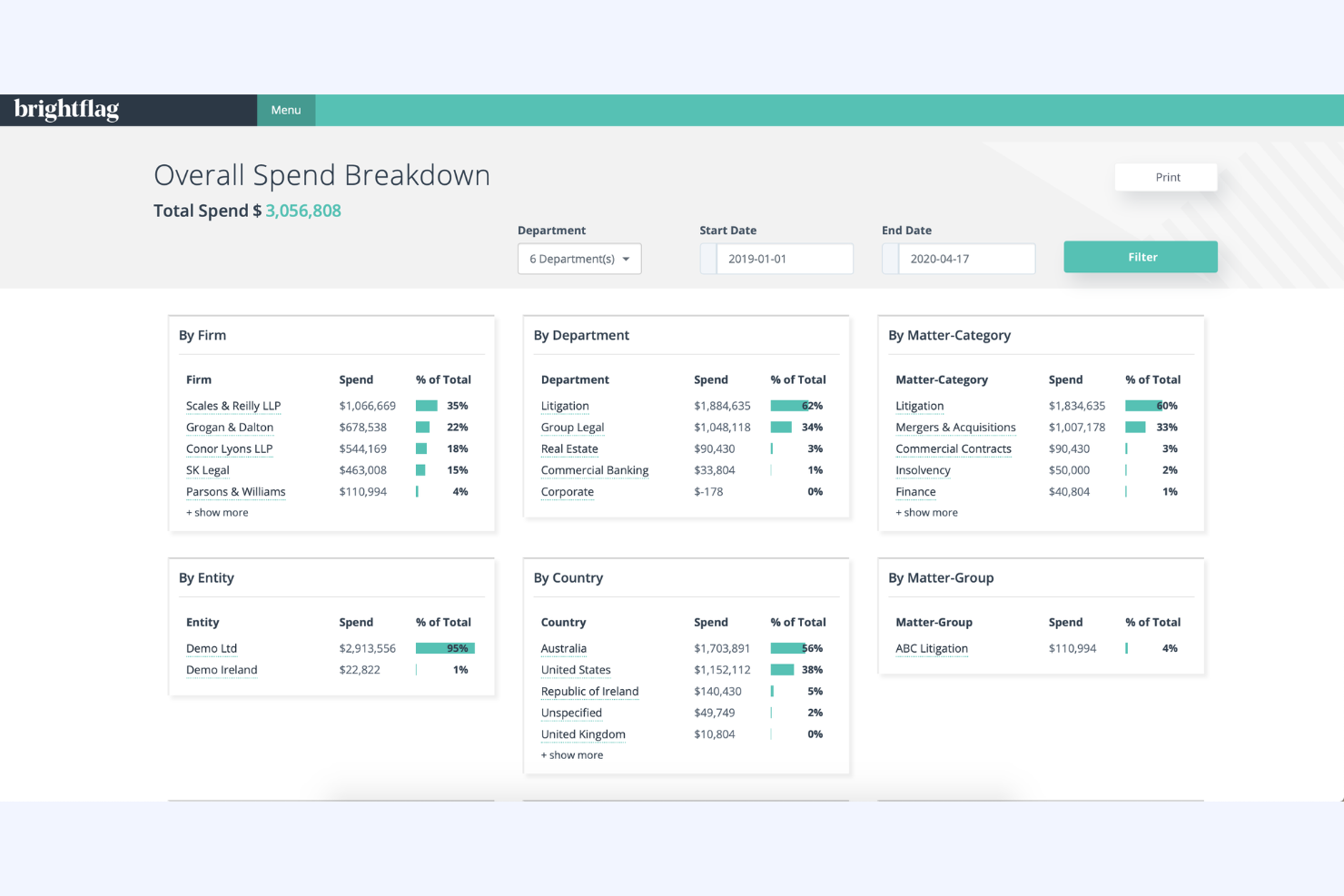
Brightflag è pensato per i dipartimenti legali e i team di operations che hanno bisogno di analizzare e controllare le spese legali. La piattaforma utilizza l’IA per categorizzare le fatture, segnalare addebiti insoliti e fornire analisi dettagliate della spesa. È particolarmente utile per le organizzazioni che vogliono migliorare la previsione del budget e la gestione dei fornitori tramite insight basati sui dati.
Perché ho scelto Brightflag
Brightflag si distingue per i team legali che hanno bisogno di avere controllo sull’analisi delle spese legali. Ho scelto Brightflag perché la sua revisione delle fatture guidata dall’IA categorizza automaticamente le voci di fatturazione e segnala gli addebiti non conformi, aiutando le squadre a individuare rapidamente le anomalie.
La dashboard di analisi dei costi della piattaforma suddivide le spese per pratica, fornitore e periodo di tempo, offrendo agli utenti una panoramica chiara di dove vengono investiti i budget. Queste funzionalità rendono Brightflag una scelta forte per le organizzazioni concentrate sul controllo dei costi e sul miglioramento della supervisione finanziaria delle proprie attività legali.
Caratteristiche principali di Brightflag
Altre funzionalità che rendono Brightflag utile per i team legali includono:
- Gestione delle pratiche: Traccia, organizza e genera report su tutte le pratiche legali in un unico luogo.
- Portale di collaborazione fornitori: Condividi documenti, comunica e gestisci le attività con consulenti esterni tramite un portale sicuro.
- Strumenti di monitoraggio budget: Imposta, monitora e modifica i budget per pratiche e fornitori in tempo reale.
- Report personalizzati: Crea ed esporta report su misura su spese, pratiche e prestazioni dei fornitori.
Integrazioni di Brightflag
Le integrazioni non sono pubblicamente elencate.
Pros and Cons
Pros:
- L’IA esamina le fatture per la conformità della fatturazione
- Il monitoraggio del budget viene aggiornato in tempo reale
- Il portale fornitori consente la condivisione sicura dei documenti
Cons:
- Le opzioni di automazione dei flussi di lavoro sono basilari
- Nessuna funzione di firma elettronica integrata

Ironclad
Ideale per l'automazione del ciclo di vita dei contratti
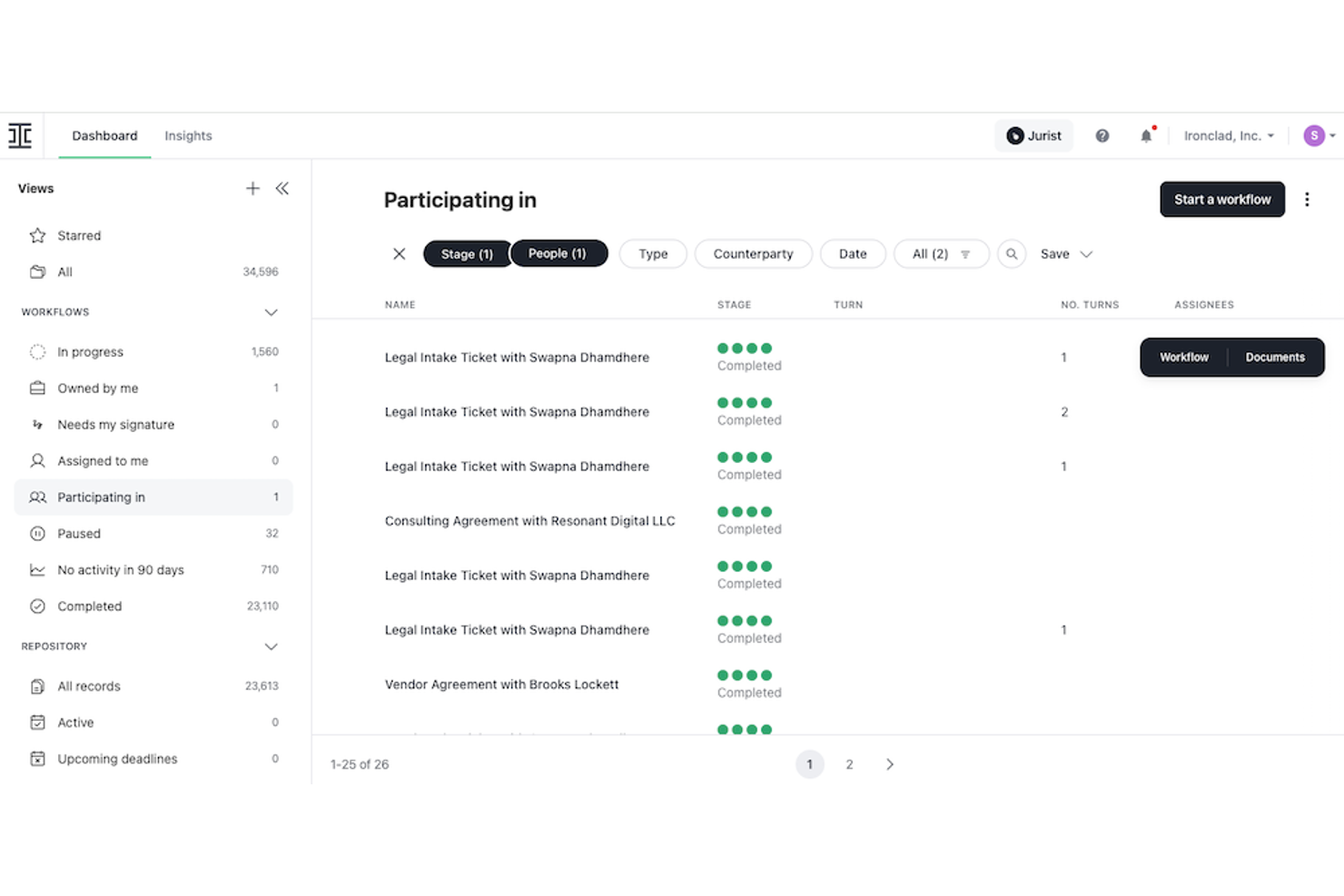
Ironclad è progettato per i team legali che hanno bisogno di automatizzare e controllare ogni fase del ciclo di vita dei contratti. Le sue soluzioni per l'automazione dei flussi di lavoro e la gestione digitale dei contratti sono pensate per gli avvocati aziendali e i team di operations legali che gestiscono elevati volumi di contratti o catene di approvazione complesse. Con Ironclad puoi standardizzare i processi, ridurre il lavoro manuale e ottenere visibilità sullo stato dei contratti in tutta l'organizzazione.
Perché ho scelto Ironclad
Ironclad si distingue per l'automazione del ciclo di vita dei contratti, fondamentale per i team legali che gestiscono grandi volumi di accordi. La piattaforma consente di costruire flussi di lavoro automatizzati per la creazione, la revisione, la negoziazione e l'approvazione dei contratti, così da ridurre le attività manuali e mantenere la coerenza dei processi. Apprezzo che Ironclad includa una libreria dinamica delle clausole e il controllo delle versioni, facilitando il mantenimento della conformità e il tracciamento delle modifiche tra i contratti.
Queste caratteristiche rendono Ironclad una scelta solida per le organizzazioni che desiderano semplificare la gestione contrattuale e ridurre i rischi.
Funzionalità principali di Ironclad
Altre funzionalità che rendono Ironclad prezioso per i team legali includono:
- Accordi Clickwrap: Acquisisci e gestisci l'accettazione di accordi online con registri pronti per l'audit.
- Cruscotto di Reportistica: Visualizza i dati contrattuali e monitora i principali indicatori in tempo reale.
- Integrazione con Salesforce: Collega i flussi contrattuali direttamente al tuo CRM per processi unificati.
- Azioni in massa: Esegui aggiornamenti o approvazioni collettive su più contratti contemporaneamente.
Integrazioni di Ironclad
Le integrazioni includono Salesforce, HubSpot, DocuSign, Adobe Sign, Slack, Microsoft Teams, Dropbox e Google Drive.
Pros and Cons
Pros:
- Instradamento delle approvazioni automatizzato per i flussi di lavoro contrattuali
- Tracciamento clickwrap per accordi online applicabili legalmente
- Libreria di clausole che supporta un linguaggio legale standardizzato
Cons:
- Nessuno strumento di redlining documentale integrato
- Curva di apprendimento ripida per flussi di lavoro complessi

Il migliore grazie alle funzioni avanzate di analisi legale
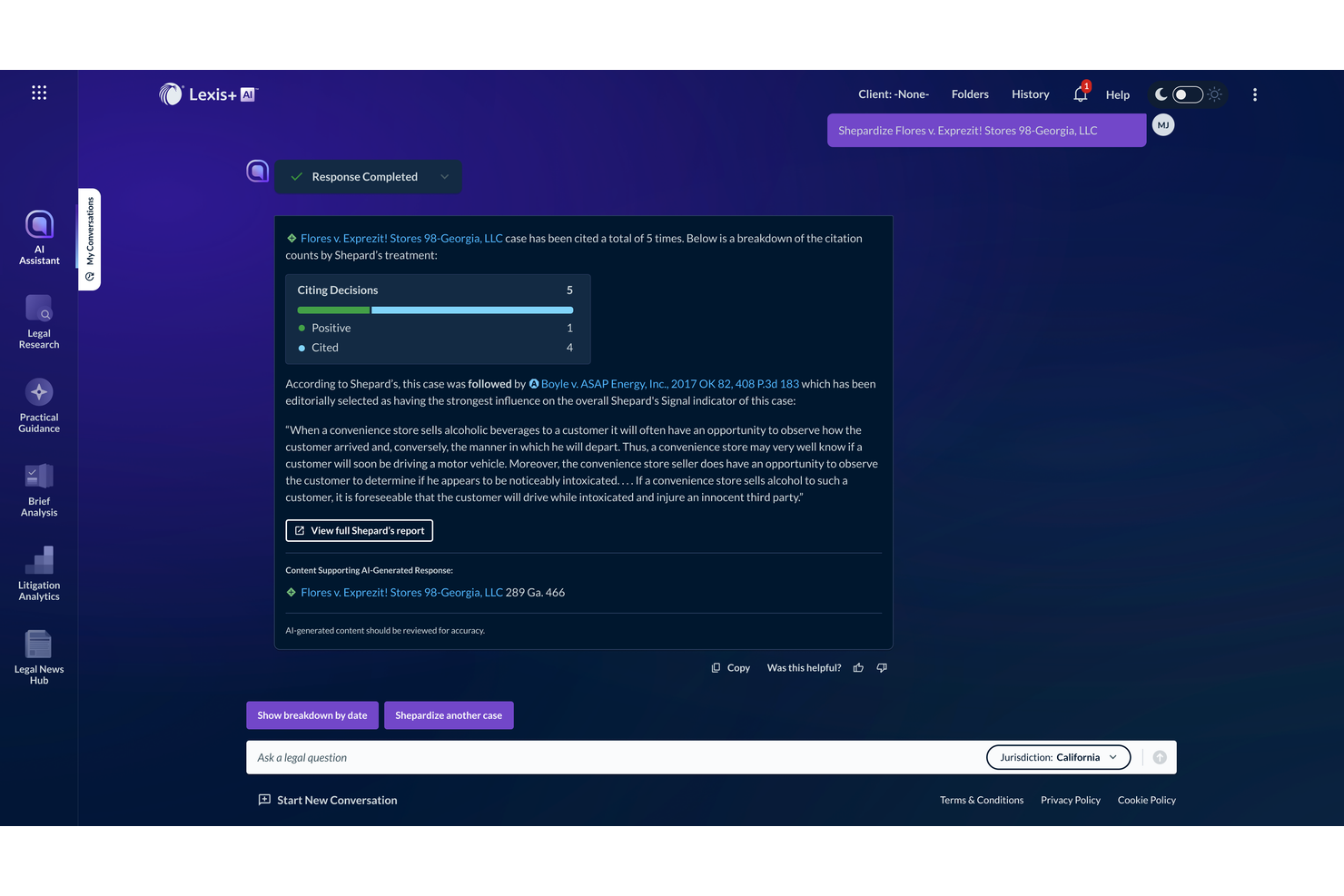
LexisNexis offre avanzate analisi legali ai team legali aziendali e agli studi legali che necessitano di approfondimenti per contenziosi, conformità e ricerche. La piattaforma è particolarmente utile per i professionisti che desiderano sfruttare il processo decisionale basato sui dati nella strategia dei casi e nella valutazione dei rischi. I suoi strumenti di analisi aiutano gli utenti a individuare tendenze, prevedere esiti e valutare le prestazioni tra giurisdizioni e aree di pratica.
Perché ho scelto LexisNexis
Ciò che distingue LexisNexis per i team legali aziendali sono le sue capacità avanzate di analisi legale. Ho scelto LexisNexis perché offre analisi dei contenziosi che aiutano gli utenti a valutare le tendenze di giudici e tribunali, oltre che i risultati di casi simili.
Gli strumenti di visualizzazione dei dati della piattaforma rendono più semplice individuare tendenze e valutare le prestazioni legali tra diverse giurisdizioni. Queste funzionalità di analisi supportano un processo decisionale più informato e una migliore gestione del rischio sia per consulenti interni che per studi legali.
Caratteristiche principali di LexisNexis
Altre funzionalità che rendono LexisNexis prezioso per i team di servizi legali includono:
- Database di ricerca legale: Accesso ad una vasta libreria di statuti, giurisprudenza e fonti secondarie.
- Strumenti di analisi dei contratti: Revisione, confronto ed estrazione di clausole chiave dai contratti tramite AI.
- Servizio Shepard’s Citations: Verifica la validità e la storia delle fonti legali tramite analisi delle citazioni.
- Strumento di monitoraggio della conformità normativa: Monitora le modifiche normative e legislative in più giurisdizioni.
Integrazioni di LexisNexis
Le integrazioni native non sono attualmente elencate.
Pros and Cons
Pros:
- Le analytics sul contenzioso coprono giudici e tribunali
- Shepard’s Citations garantisce l'affidabilità della giurisprudenza
- Il tracker normativo monitora i cambiamenti legali a livello globale
Cons:
- Le analisi avanzate richiedono abbonamenti separati
- Alcune funzioni sono limitate alla legislazione di USA e Regno Unito

Onit
Ideale per l'integrazione dei processi aziendali
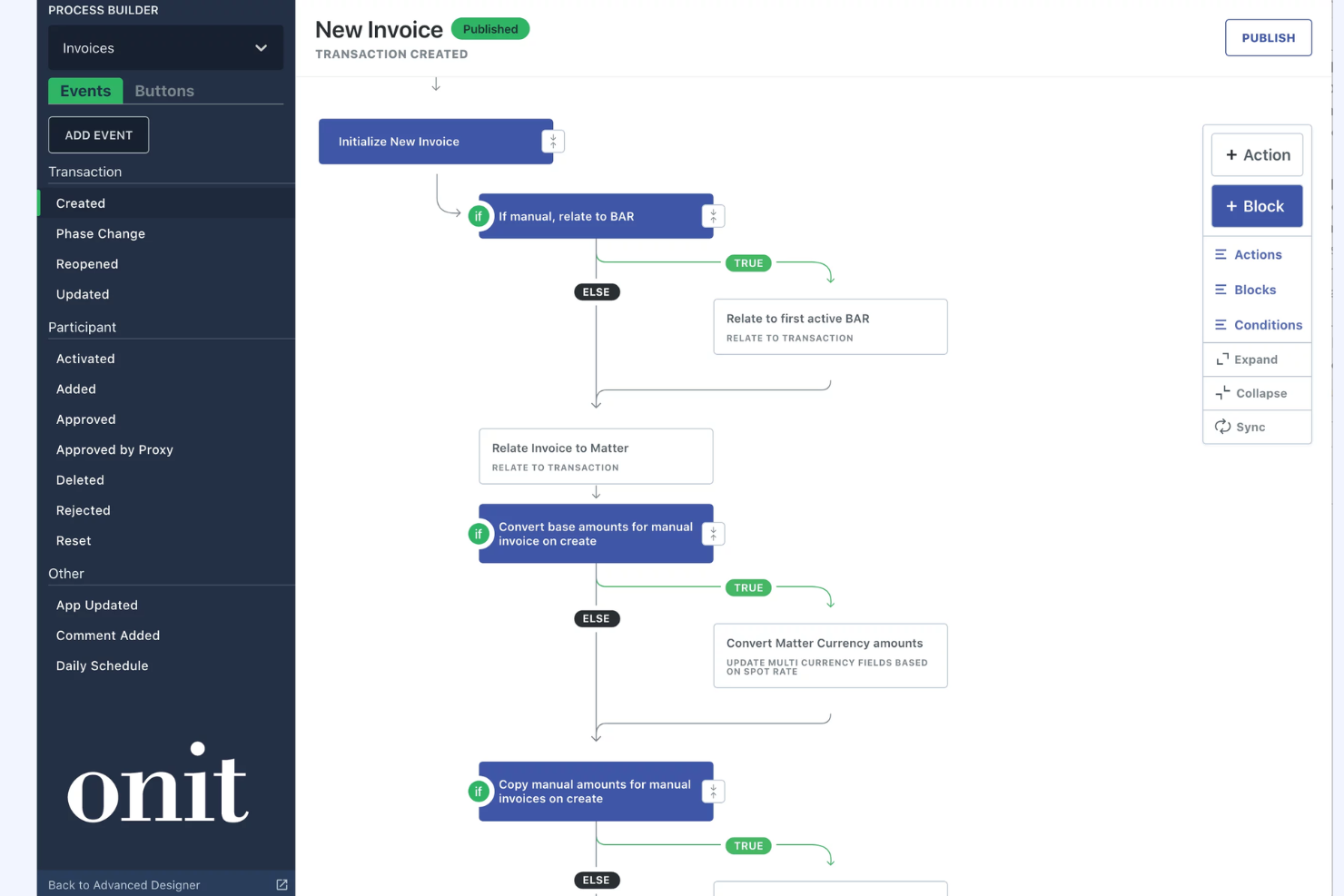
Onit offre una piattaforma modulare pensata per i dipartimenti legali che hanno bisogno di collegare i flussi di lavoro legali con i processi aziendali più ampi. È particolarmente adatta per grandi organizzazioni e team di operations legali che desiderano automatizzare, monitorare e integrare le attività legali con i sistemi di finanza, approvvigionamento e conformità. Onit ti aiuta a centralizzare le richieste legali, gestire le spese e garantire che i processi legali siano allineati con le operazioni aziendali su larga scala.
Perché ho scelto Onit
Ciò che distingue Onit è il suo focus sull'integrazione dei processi aziendali, un aspetto particolarmente prezioso per i team legali che lavorano all'interno di grandi organizzazioni complesse. Il motore di automazione dei flussi di lavoro di Onit ti permette di progettare e collegare i processi legali con altre funzioni aziendali, come approvvigionamento, finanza e conformità, affinché il lavoro legale non avvenga in isolamento.
Apprezzo il fatto che Onit offra applicazioni configurabili per la gestione delle pratiche e delle spese legali, che aiutano i team legali ad allineare il proprio lavoro con gli obiettivi più ampi dell'azienda. Queste funzionalità rendono Onit una scelta solida per i dipartimenti legali che devono coordinarsi con più unità aziendali e mantenere la visibilità su tutte le operazioni dell'impresa.
Funzionalità Principali di Onit
Altre caratteristiche che rendono Onit utile per i team legali includono:
- Archivio Contratti: Archivia, cerca e organizza tutti i contratti in un'unica posizione centralizzata.
- Composizione Automatica dei Documenti: Genera documenti legali utilizzando modelli approvati e campi dati.
- Analisi delle Spese: Monitora e analizza le spese legali tramite dashboard e report personalizzabili.
- Controlli di Accesso Basati sui Ruoli: Imposta i permessi e gestisci l'accesso degli utenti in base a ruoli e responsabilità.
Integrazioni di Onit
Le integrazioni non sono elencate pubblicamente.
Pros and Cons
Pros:
- App modulari per flussi di lavoro legali personalizzati
- Gestione avanzata delle spese con strumenti di analisi
- Catene di approvazione automatizzate per richieste legali
Cons:
- Limitate possibilità di redazione contrattuale all'interno della piattaforma
- Le esportazioni dei report non offrono opzioni di formattazione

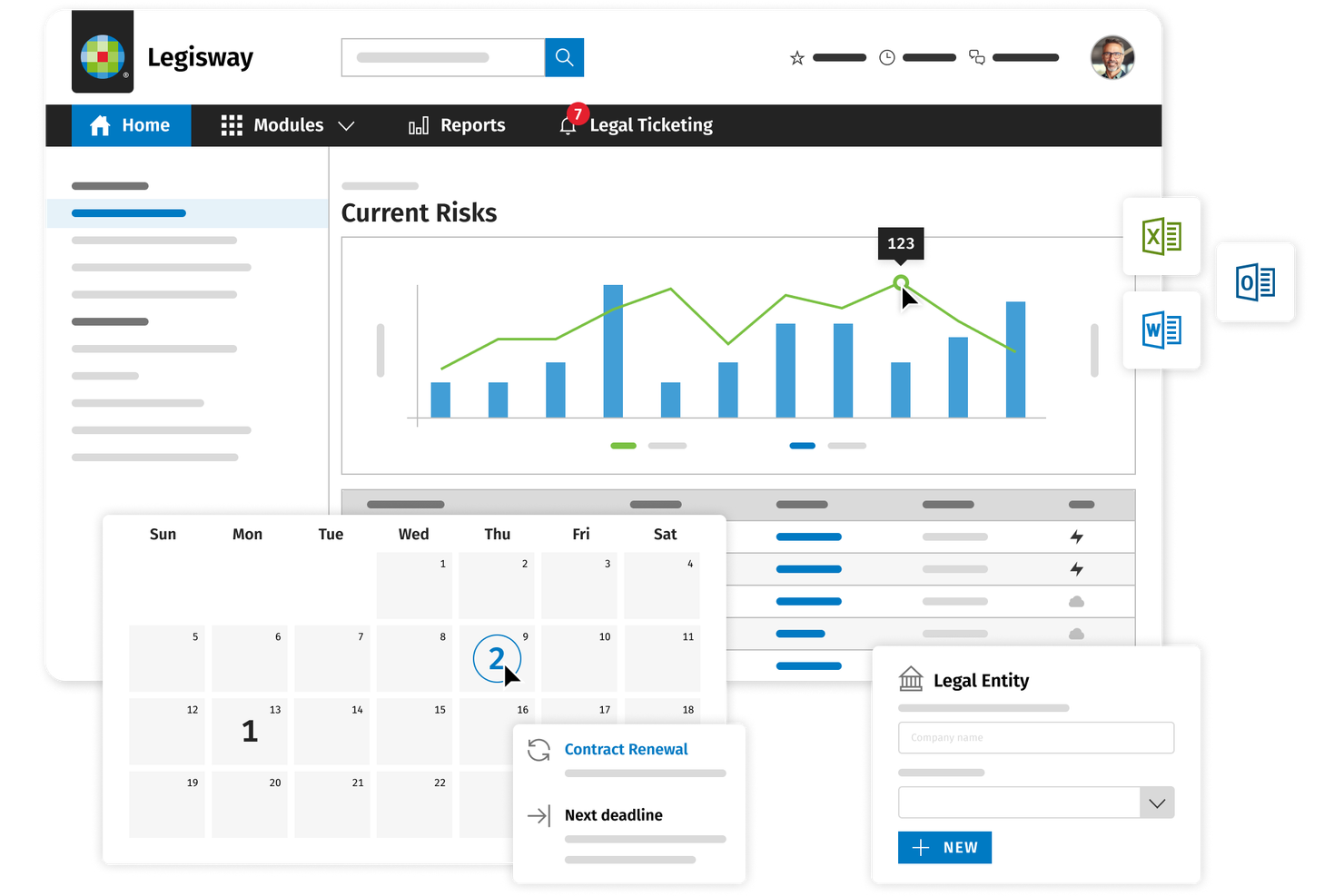
Wolters Kluwer offre una suite tutto-in-uno di soluzioni legali e di conformità progettata per le organizzazioni che devono gestire requisiti normativi complessi. Questa piattaforma è particolarmente utile per i team legali nei settori altamente regolamentati che devono monitorare, interpretare e attuare le normative in continuo cambiamento in diverse giurisdizioni. I suoi strumenti aiutano a centralizzare le attività di conformità e a ridurre il rischio di perdere aggiornamenti normativi critici.
Perché ho scelto Wolters Kluwer
Per i team legali focalizzati sulla gestione della conformità normativa, Wolters Kluwer si distingue grazie ai suoi strumenti specializzati per il monitoraggio della conformità e dell'intelligence normativa. Ho scelto questa piattaforma perché offre aggiornamenti in tempo reale su leggi e regolamenti in evoluzione, caratteristica essenziale per le organizzazioni che operano in più giurisdizioni.
Le sue funzionalità di automazione del flusso di lavoro aiutano i dipartimenti legali ad assegnare, monitorare e documentare le attività di conformità, riducendo la supervisione manuale. Il repository centralizzato per i contenuti normativi della piattaforma facilita inoltre la verifica e la dimostrazione della conformità quando necessario.
Caratteristiche chiave di Wolters Kluwer
Altre funzionalità che rendono Wolters Kluwer utile per i team legali aziendali includono:
- Gestione documentale: Conserva, organizza e recupera i documenti di conformità in un archivio digitale sicuro.
- Report personalizzabili: Genera report di conformità e rischio personalizzati per soddisfare le esigenze interne ed esterne.
- Tracciamento della cronologia delle revisioni: Mantieni un registro dettagliato di tutte le attività di conformità e delle modifiche ai documenti per la responsabilità.
- Controlli di accesso basati sui ruoli: Imposta le autorizzazioni degli utenti per garantire che le informazioni sensibili sulla conformità siano accessibili solo ai membri autorizzati del team.
Integrazioni di Wolters Kluwer
Le integrazioni non sono elencate pubblicamente.
Pros and Cons
Pros:
- Aggiornamenti normativi in tempo reale in più giurisdizioni
- Strumenti avanzati di automazione dei flussi di lavoro della conformità
- Archivio centralizzato per la documentazione di conformità
Cons:
- I contenuti legali più datati possono essere incompleti
- La configurazione iniziale può richiedere un notevole impegno


Thomson Reuters offre una suite di soluzioni software legali con un forte focus su strumenti di ricerca giuridica integrati. Questa piattaforma è adatta per i consulenti legali interni e per gli studi legali che necessitano di collegare ricerca, gestione delle pratiche e workflow in un unico luogo. Le sue funzionalità di ricerca aiutano i team legali ad accedere rapidamente a giurisprudenza aggiornata, normative e indicazioni regolatorie direttamente all'interno del loro workflow quotidiano.
Perché ho scelto Thomson Reuters
Ciò che distingue Thomson Reuters per i team legali aziendali è la profonda integrazione degli strumenti di ricerca giuridica all'interno della sua ampia piattaforma di gestione legale. Ho scelto questa soluzione perché consente agli utenti di accedere a ricerche Westlaw, normative e giurisprudenza direttamente dai fascicoli delle pratiche, eliminando la necessità di passare da un sistema all'altro. Le sue funzionalità di ricerca e analisi delle citazioni basate sull'IA aiutano i professionisti legali a trovare rapidamente precedenti rilevanti e assicurano che il loro lavoro sia sempre aggiornato. Questo livello di integrazione supporta una ricerca e una presa di decisioni più rapide e precise all'interno dei workflow giornalieri.
Caratteristiche principali di Thomson Reuters
Altre funzionalità che rendono Thomson Reuters prezioso per i team legali includono:
- Gestione delle pratiche: Monitora, organizza e gestisci tutte le pratiche legali in una dashboard centralizzata.
- Automazione dei documenti: Genera documenti legali utilizzando modelli personalizzabili e workflow automatizzati.
- Monitoraggio del tempo e della fatturazione: Registra le ore fatturabili e gestisci la fatturazione direttamente all'interno della piattaforma.
- Strumenti di collaborazione: Condividi file, note e aggiornamenti in modo sicuro con stakeholder interni ed esterni.
Integrazioni Thomson Reuters
Le integrazioni native non sono attualmente elencate.
Pros and Cons
Pros:
- Ricerca Westlaw integrata nella gestione delle pratiche
- Analisi delle citazioni con IA per i documenti legali
- Ampia biblioteca di normative e giurisprudenza
Cons:
- Navigazione complessa tra sottopiattaforme
- Elevata competenza tecnica richiesta

Xakia
Xakia mostra analisi del carico di lavoro legale con grafici per dipartimento.

Xakia è progettato per i team legali interni che desiderano una visione chiara e in tempo reale del proprio carico di lavoro e delle priorità. Il suo approccio con dashboard aiuta i dipartimenti legali a visualizzare pratiche, scadenze e allocazione delle risorse in un unico posto. Questo focus su dashboard operative rende più semplice per i team gestire le richieste, monitorare i progressi e riferire sul lavoro legale ai responsabili aziendali.
Perché ho scelto Xakia
Per i dipartimenti legali che necessitano di una panoramica chiara del proprio carico di lavoro, l'approccio basato sulle dashboard di Xakia si distingue. Ho scelto Xakia perché le sue dashboard permettono ai team legali interni di monitorare pratiche, scadenze e capacità della squadra a colpo d'occhio. Gli strumenti di reportistica visiva della piattaforma aiutano i leader legali a comunicare lo stato e le tendenze ai responsabili aziendali senza dover raccogliere manualmente i dati. Con widget personalizzabili e aggiornamenti in tempo reale, Xakia semplifica la definizione delle priorità e la dimostrazione del valore apportato dal team legale.
Funzionalità principali di Xakia
Oltre alle sue capacità di dashboard, Xakia offre diverse altre funzionalità a supporto dei team legali interni:
- Moduli di acquisizione pratiche: Raccogli e organizza le nuove richieste legali tramite moduli online personalizzabili.
- Gestione documentale: Archivia, cerca e gestisci i documenti legali in un repository centralizzato e sicuro.
- Monitoraggio delle spese: Monitora le spese legali e i budget con strumenti di controllo spese integrati.
- Assegnazione dei compiti: Assegna compiti ai membri del team e monitora l'avanzamento all'interno di ciascuna pratica.
Integrazioni di Xakia
Le integrazioni non sono elencate pubblicamente.
Pros and Cons
Pros:
- Le dashboard visive evidenziano il carico di lavoro del team
- Il monitoraggio delle spese è collegato a pratiche legali specifiche
- L'assegnazione dei compiti favorisce la collaborazione nel team
Cons:
- Le esportazioni dei report sono limitate a determinati formati
- Automazione limitata per le attività legali ricorrenti


Zelican offre alle squadre legali una piattaforma flessibile basata su cloud per gestire pratiche, documenti e flussi di lavoro. Le sue funzionalità di gestione pratiche personalizzabili permettono ai legali interni e agli studi legali di adattare campi, modelli e processi alle proprie esigenze specifiche. Questo approccio aiuta le organizzazioni a gestire pratiche complesse e multi-giurisdizionali e ad adattarsi rapidamente man mano che le loro operazioni legali evolvono.
Perché ho scelto Zelican
Quello che mi ha attirato verso Zelican è la sua attenzione alla gestione personalizzabile delle pratiche, una priorità per molti dipartimenti legali che gestiscono tipi di casi diversi. La piattaforma consente di creare campi e modelli personalizzati per le pratiche, così puoi raccogliere esattamente le informazioni di cui il tuo team ha bisogno per ogni caso. Apprezzo anche la possibilità di progettare flussi di lavoro in base ai tuoi processi interni, facilitando la standardizzazione del percorso delle pratiche dall'ingresso fino alla risoluzione.
Queste funzionalità rendono Zelican una soluzione ideale per le organizzazioni che vogliono adattare il software legale alle proprie esigenze, invece di dover modificare i loro processi per adeguarsi allo strumento.
Funzionalità chiave di Zelican
Altre caratteristiche che rendono Zelican interessante per il settore legale includono:
- Gestione documentale: Archivia, organizza e cerca documenti legali all'interno di un archivio centralizzato.
- Rilevazione dei tempi: Registra ore fatturabili e non, direttamente dalla piattaforma.
- Gestione attività: Assegna, monitora e aggiorna le attività dei membri del team sulle diverse pratiche.
- Integrazione calendario: Sincronizza date e scadenze importanti con il tuo sistema di calendario preferito.
Integrazioni Zelican
Le integrazioni native al momento non sono elencate.
Pros and Cons
Pros:
- Campi personalizzati per gestire diverse tipologie di pratiche
- Caricamento documenti in blocco per casi di grandi dimensioni
- Rilevazione dei tempi integrata per la fatturazione legale
Cons:
- Manutenzione del sistema che a volte comporta periodi di inattività
- Nessuna gestione integrata del ciclo di vita dei contratti


Streamline AI porta l'automazione dei flussi di lavoro ai team di operations legali che devono gestire volumi elevati di richieste e approvazioni. La piattaforma è progettata per i professionisti delle operations legali che vogliono automatizzare la raccolta delle richieste, la classificazione e la collaborazione tra le unità aziendali. L'accento su flussi di lavoro configurabili e la visibilità dei processi aiuta i dipartimenti legali a ridurre il lavoro manuale e a mantenere le pratiche in movimento in modo efficiente.
Perché ho scelto Streamline AI
Quando l'automazione dei flussi di lavoro è una priorità assoluta per le operations legali, Streamline AI offre una soluzione mirata. Ho scelto Streamline AI perché consente ai team legali di progettare e automatizzare i processi di raccolta, classificazione e approvazione delle richieste senza dipendere dall'IT. Il costruttore visuale di workflow della piattaforma e gli strumenti di logica condizionale permettono ai professionisti delle operations legali di personalizzare i processi in base alle esigenze dell'organizzazione.
Con tracciamento integrato e piste di controllo, Streamline AI favorisce trasparenza e responsabilità in ogni fase del flusso di lavoro legale.
Caratteristiche principali di Streamline AI
Altre funzionalità che rendono Streamline AI utile per i team legali includono:
- Moduli di raccolta personalizzabili: Crea e distribuisci moduli su misura per raccogliere le informazioni giuste per ogni richiesta legale.
- Controlli di accesso basati sui ruoli: Imposta permessi e visibilità per gli utenti in base al loro ruolo nell'organizzazione.
- Notifiche automatiche: Attiva avvisi via email o in-app per tenere aggiornati gli stakeholder sullo stato delle pratiche.
- Dashboard di analisi: Visualizza metriche in tempo reale sui volumi di richieste, tempi di evasione e colli di bottiglia nei flussi di lavoro.
Integrazioni con Streamline AI
Le integrazioni includono Ironclad, Box, Salesforce, Slack, Docusign e altro.
Pros and Cons
Pros:
- I moduli di raccolta possono essere personalizzati per tipo di richiesta
- Dashboard di analisi in tempo reale tiene traccia dello stato delle richieste
- Integrazione nativa con Ironclad e Docusign
Cons:
- Nessuna funzionalità di modifica documenti integrata
- Nessun portale pubblico per le richieste degli utenti esterni

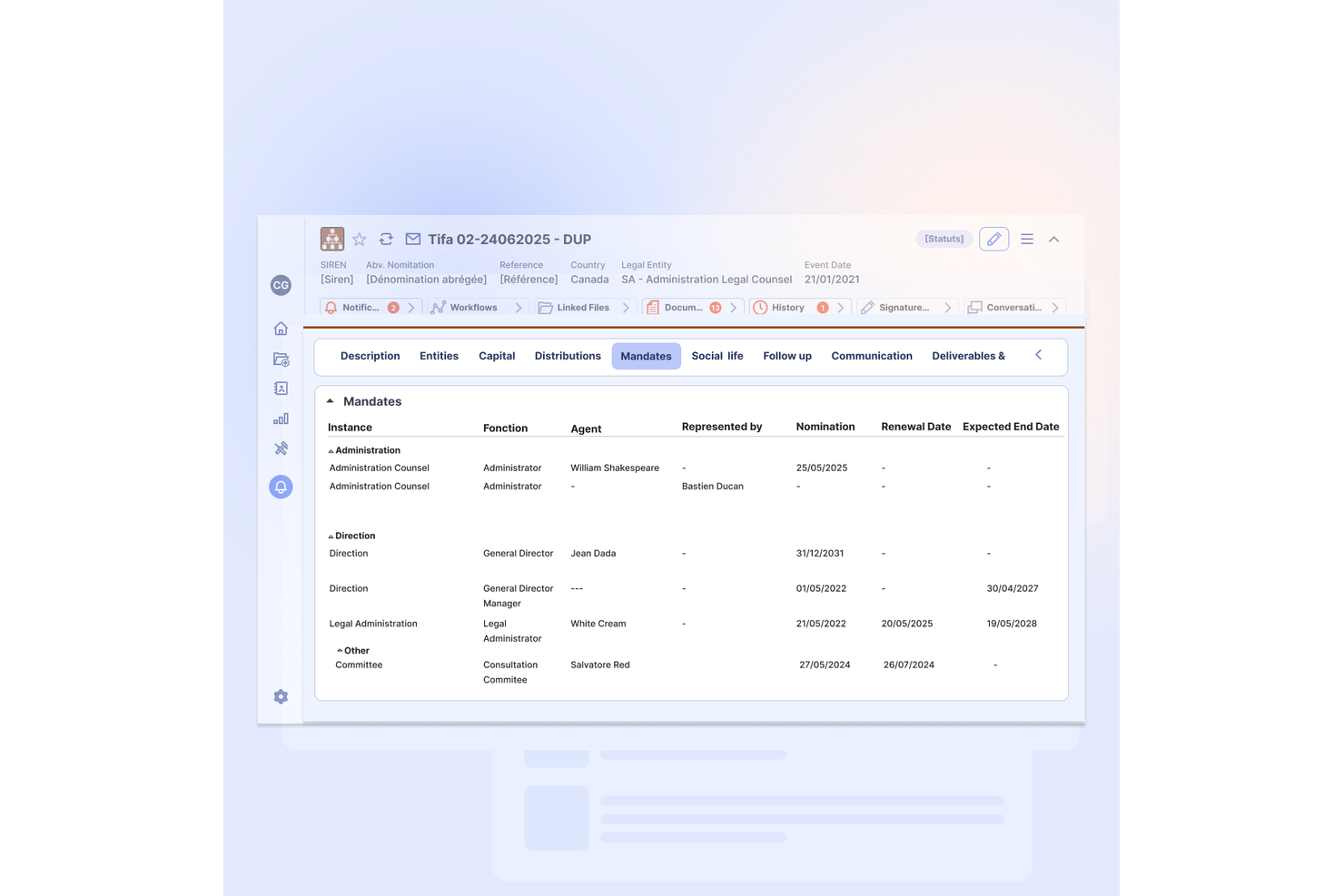
Septeo è progettato per team e studi legali che devono garantire il rigoroso rispetto delle normative europee sulla localizzazione e la privacy dei dati. La piattaforma si rivolge alle organizzazioni che operano nell'UE o con essa, dove il GDPR e i requisiti locali di residenza dei dati sono una delle principali preoccupazioni. La sua suite di strumenti per la gestione legale è pensata per mantenere i dati sensibili all'interno dei confini europei e supportare i flussi di lavoro specifici della regione.
Perché ho scelto Septeo
Per i team legali che devono dare priorità alla localizzazione dei dati europei, Septeo si distingue grazie alla sua infrastruttura focalizzata a livello regionale. Ho scelto Septeo perché offre soluzioni di gestione legale progettate appositamente per rispettare il GDPR e le leggi locali sulla residenza dei dati.
La piattaforma offre un hosting sicuro all'interno dell'UE e supporta flussi di lavoro che affrontano le esigenze normative europee. Questo rende Septeo una scelta solida per le organizzazioni che non possono rischiare che i dati escano dai confini europei.
Funzionalità Principali di Septeo
Oltre all'attenzione per la localizzazione dei dati europei, Septeo offre diverse altre funzionalità rilevanti per i team legali:
- Strumenti di Automatizzazione dei Documenti: Genera, gestisci e archivia documenti legali utilizzando modelli personalizzabili.
- Modulo di Gestione Pratiche: Monitora l'avanzamento delle pratiche, le scadenze e le comunicazioni collegate in un unico luogo.
- Integrazione di Firma Elettronica: Raccogli firme elettroniche legalmente valide direttamente dalla piattaforma.
- Portale Clienti: Migliora la comunicazione con i clienti offrendo accesso sicuro agli aggiornamenti delle pratiche e ai documenti condivisi.
Integrazioni di Septeo
Le integrazioni native non sono attualmente elencate.
Pros and Cons
Pros:
- L'hosting dei dati resta interamente nell'UE
- Funzionalità di conformità al GDPR integrate nei flussi di lavoro
- L'automatizzazione dei documenti supporta francese e olandese
Cons:
- Supporto linguistico limitato al di fuori dell'Europa
- Il design dell'interfaccia utente risulta datato
Altri software legali aziendali
Ecco alcune opzioni aggiuntive di software legale aziendale che non sono state incluse nel mio elenco, ma che vale comunque la pena considerare:


Come Valuto il Software Legale Aziendale
Divido la mia valutazione in due livelli: la funzionalità di base che ogni strumento deve avere—come l'acquisizione delle pratiche e i workflow di gestione dei contratti—e i fattori distintivi che fanno emergere le opzioni migliori.
Funzionalità di Base (Requisiti Indispensabili per Questa Lista)
Quando seleziono gli strumenti per il mio elenco, valuto ciascuno su una scala da 0 (non offre la funzionalità) a 5 (eccelle in quest'area) per ognuna delle funzionalità di base elencate di seguito. Successivamente, calcolo il punteggio totale dello strumento in percentuale. Ogni strumento deve raggiungere un punteggio minimo totale del 75% per essere preso in considerazione per l'inclusione.
- Gestione delle Pratiche: Valuto come ogni strumento gestisce l'acquisizione, l'assegnazione e il monitoraggio delle pratiche—come l'instradamento di una nuova controversia lavorativa dalla richiesta HR attraverso il triage fino alla risoluzione, con piena storia di audit.
- Gestione del Ciclo di Vita dei Contratti: Dalla redazione su modelli alla revisione, approvazione e archiviazione post-firma, cerco piattaforme che coprano l'intero ciclo di gestione del contratto e non solo funzioni di semplice archivio documentale.
- Gestione Della Spesa Legale & Fatturazione Elettronica: Ogni piattaforma che considero dovrebbe supportare la fatturazione in formato LEDES, il monitoraggio del budget e la reportistica sulle performance dei consulenti esterni, così che il tuo team possa verificare le fatture rispetto alle linee guida di fatturazione in un unico posto.
- Gestione di Documenti & Conoscenza: Controllo se lo strumento offre archiviazione con controllo di versione, ricerca full-text e controlli dei permessi—ad esempio, per individuare una delibera consiliare precedente o recuperare una clausola di esempio da centinaia di accordi salvati.
- Gestione Societaria & Governance: Mantenere i registri delle controllate, i dati di amministratori e dirigenti, le strutture proprietarie e le scadenze di deposito è una necessità fondamentale che cerco, soprattutto per i team che gestiscono decine di entità legali.
- Monitoraggio Della Conformità & Dei Rischi: Valuto la capacità di ciascuna piattaforma di monitorare gli obblighi normativi, gestire i blocchi legali e evidenziare l'esposizione al rischio tramite dashboard pensate per le esigenze di reporting del legale interno.
Una volta che dispongo di un elenco di strumenti che soddisfano questi criteri, considero cosa distingue ogni piattaforma dalle altre.
Fattori Differenzianti (Cosa Distingue i Fornitori)
Ecco come confronto e metto in risalto i diversi fornitori:
Funzionalità Distintive
Gli assistenti legali basati su AI sono una differenza importante—cerco strumenti che possano riassumere contratti, estrarre clausole chiave o segnalare linguaggio a rischio senza revisione manuale. Anche i portali di self-service per la richiesta di servizi legali sono molto rilevanti, soprattutto per i team che gestiscono centinaia di richieste NDA o acquisti dagli utenti di business ogni trimestre. Per i dipartimenti legali che operano su scala internazionale, valuto il supporto multi-giurisdizionale, inclusa la fatturazione in valute diverse, contenuti di conformità locali e opzioni linguistiche.
Oltre le Funzionalità
Il livello di sicurezza è una delle prime verifiche—la certificazione SOC 2 Type II, le opzioni per la residenza dei dati e le tracce di audit compatibili con i privilegi sono requisiti basilari per qualsiasi piattaforma che gestisca dati legali sensibili. Anche la profondità dell'integrazione è altrettanto importante. Valuto se uno strumento si collega nativamente a Microsoft 365, DocuSign e al sistema ERP, così che fatture e ratei possano fluire senza reinserimenti manuali. Esamino attentamente anche la trasparenza dei prezzi, specialmente come i fornitori concedono licenze a diversi tipi di utenti come consulenti esterni o richiedenti business rispetto agli utenti legali completi.
Come scegliere un software legale aziendale
È facile perdersi in lunghi elenchi di funzionalità e strutture di prezzo complesse. Per aiutarti a rimanere concentrato mentre valuti il processo di selezione del software più adatto alle tue esigenze, ecco un elenco dei fattori da tenere presenti:
| Fattore | Cosa considerare |
|---|---|
| Scalabilità | Il software sarà in grado di gestire il volume attuale e futuro delle pratiche, il numero di utenti e la complessità dei flussi di lavoro con la crescita della tua organizzazione? |
| Integrazioni | Lo strumento si connette nativamente ai sistemi esistenti (ad es. gestione documentale, ERP, fatturazione elettronica) per evitare soluzioni manuali? |
| Personalizzazione | Puoi adattare i flussi di lavoro, i campi e i report ai processi del tuo team legale senza un coinvolgimento significativo del reparto IT? |
| Semplicità d'uso | Il tuo team adotterà rapidamente lo strumento oppure l'interfaccia e la navigazione rallenteranno il lavoro quotidiano e richiederanno formazione aggiuntiva? |
| Implementazione e inserimento | Quanto tempo servirà per rendere operativo il sistema e quali risorse (interne o fornite dal fornitore) saranno necessarie per la migrazione dei dati e la configurazione? |
| Costo | Tutti i costi sono trasparenti, comprese licenze, assistenza e aggiornamenti, e il modello di prezzo è adatto alle tue modalità di utilizzo e al tuo budget? |
| Misure di sicurezza | Il software soddisfa i requisiti della tua organizzazione in materia di privacy dei dati, crittografia e controllo degli accessi, soprattutto per le pratiche sensibili? |
| Requisiti di conformità | Lo strumento supporta le esigenze normative del tuo settore (ad es. GDPR, HIPAA) e fornisce registri di controllo o certificazioni quando necessario? |
Che cos'è il software legale aziendale?
Il software legale aziendale è una categoria di strumenti digitali progettati per aiutare i team legali interni a gestire questioni legali, contratti, conformità e flussi di lavoro all'interno di un'organizzazione. Queste piattaforme centralizzano le informazioni legali, automatizzano i processi di routine e supportano la collaborazione tra i reparti, in modo simile ai software di gestione degli studi legali utilizzati dagli studi legali.
Utilizzando un software legale aziendale, i team legali possono migliorare la visibilità, mantenere la conformità e gestire volumi di lavoro maggiori con più uniformità e controllo.
Funzionalità
Quando selezioni un software legale aziendale, presta attenzione alle seguenti funzionalità principali:
- Gestione delle pratiche: Centralizza tutte le pratiche legali, consentendo di monitorare in un unico luogo lo stato dei casi, le scadenze, i documenti e le comunicazioni.
- Gestione del ciclo di vita dei contratti: Gestisce la creazione, la negoziazione, l'approvazione, l'archiviazione e il rinnovo dei contratti, garantendo il controllo delle versioni e un facile recupero.
- Gestione dei documenti: Organizza, archivia e protegge i documenti legali con funzioni di ricerca, etichettatura e controllo delle autorizzazioni, per consentire un accesso e una collaborazione efficienti.
- Monitoraggio delle spese legali: Monitora e presenta report sulle spese legali, sui budget e sulle fatture, aiutandoti a controllare i costi e ad analizzare i modelli di spesa.
- Automazione dei flussi di lavoro: Automatizza processi legali ripetitivi come approvazioni, notifiche e assegnazioni di attività, per ridurre il lavoro manuale e gli errori.
- Gestione della conformità: Monitora i requisiti normativi, le scadenze e gli obblighi, fornendo avvisi e registri di controllo per supportare la conformità continua.
- Report e analisi: Genera report e dashboard personalizzabili per visualizzare gli indicatori chiave, identificare le tendenze e supportare un processo decisionale basato sui dati.
- Controlli degli accessi basati sui ruoli: Limita l'accesso alle informazioni sensibili in base ai ruoli degli utenti, garantendo la riservatezza e la conformità alle politiche interne.
- Monitoraggio del calendario e delle scadenze: Si integra con i calendari per gestire date importanti, udienze in tribunale e scadenze per il deposito degli atti, riducendo il rischio di mancato rispetto degli obblighi.
Funzionalità comuni dell'intelligenza artificiale nei software legali aziendali
Oltre alle funzionalità standard dei software legali aziendali elencate sopra, molte di queste soluzioni stanno integrando l'intelligenza artificiale con funzionalità come:
- Revisione automatizzata dei contratti: Utilizza gli strumenti legali basati sull'intelligenza artificiale per analizzare il linguaggio dei contratti, segnalare i rischi e suggerire revisioni, aiutando i team legali a identificare rapidamente le clausole problematiche e a garantire la conformità agli standard aziendali.
- Previsione degli esiti delle pratiche: Utilizza la tecnologia legale, i dati storici e l'apprendimento automatico per prevedere i probabili risultati delle pratiche legali, supportando una migliore valutazione dei rischi e un'allocazione più efficace delle risorse.
- Classificazione intelligente dei documenti: Applica l'intelligenza artificiale per categorizzare ed etichettare automaticamente i documenti legali in base al contenuto, facilitando l'organizzazione, la ricerca e il recupero dei file.
- Revisione delle fatture basata sull'intelligenza artificiale: Analizza le fatture legali per individuare errori, addebiti duplicati e conformità alle linee guida per la fatturazione, riducendo il tempo dedicato alla revisione manuale e controllando le spese legali.
- Ricerca in linguaggio naturale: Consente agli utenti di cercare nei database e nei documenti legali utilizzando query conversazionali, migliorando la velocità e l'accuratezza del recupero delle informazioni.
Vantaggi
L'implementazione di un software legale aziendale offre diversi vantaggi al tuo team e alla tua azienda. Ecco alcuni dei vantaggi che puoi aspettarti:
- Gestione centralizzata delle informazioni: Mantiene tutte le pratiche legali, i contratti e i documenti organizzati in un'unica piattaforma sicura, facilitando la ricerca e la gestione delle informazioni essenziali.
- Migliore conformità: Monitora i requisiti normativi e le scadenze, fornendo avvisi e registri di controllo che aiutano il tuo team a mantenere la conformità agli standard del settore.
- Maggiore uniformità dei processi: Automatizza i flussi di lavoro e le approvazioni, garantendo che i processi legali vengano seguiti allo stesso modo ogni volta e riducendo il rischio di errori.
- Collaborazione migliorata: Facilita la comunicazione e l'assegnazione delle attività tra i team legali e aziendali, supportando una gestione dei progetti e un processo decisionale più efficienti.
- Controllo e trasparenza dei costi: Monitora le spese legali e i budget, fornendo analisi e report dettagliati per aiutarti a gestire i costi e giustificare le spese.
- Tempi di risposta più rapidi: Semplifica le attività che richiedono molto tempo, come la revisione dei documenti, la gestione dei contratti e il monitoraggio delle pratiche, consentendo al tuo team di rispondere più rapidamente alle esigenze aziendali.
- Informazioni basate sui dati: Fornisce report e analisi personalizzabili che aiutano a identificare le tendenze, misurare le prestazioni e prendere decisioni informate.
Costi e prezzi
La scelta di un software legale aziendale richiede la comprensione dei vari modelli di prezzo e dei piani disponibili. I costi variano in base alle funzionalità, alle dimensioni del team, ai componenti aggiuntivi e ad altri fattori. La tabella seguente riassume i piani più comuni, i relativi prezzi medi e le funzionalità tipicamente incluse nelle soluzioni software legali aziendali:
Tabella di confronto dei piani per software legali aziendali
| Tipo di piano | Prezzo medio | Funzionalità comuni |
|---|---|---|
| Piano gratuito | $0 | Monitoraggio di base delle pratiche, spazio di archiviazione limitato per i documenti, gestione semplice delle attività e assistenza via e-mail. |
| Piano personale | $20-$50/utente/mese | Gestione delle pratiche, archiviazione dei contratti, report di base, integrazioni limitate e assistenza standard. |
| Piano aziendale | $50-$120/utente/mese | Automazione avanzata dei flussi di lavoro, monitoraggio delle spese, strumenti per la conformità, report personalizzati e accesso API. |
| Piano aziendale avanzato | $120-$250/utente/mese | Integrazioni personalizzate, sicurezza avanzata, gestione dedicata dell'account, registri di controllo e assistenza prioritaria. |
Domande frequenti sui software legali aziendali
Ecco alcune risposte alle domande comuni sui software legali aziendali:
In che modo i software legali aziendali aiutano nella gestione della conformità?
I software legali aziendali aiutano nella gestione della conformità monitorando in un unico luogo i requisiti normativi, le scadenze e gli obblighi. Offrono avvisi automatici, registri di controllo e strumenti di reporting, consentendo al team di monitorare le attività di conformità e reagire rapidamente ai cambiamenti normativi.
I software legali aziendali possono integrarsi con altri sistemi aziendali?
Sì, la maggior parte dei software legali aziendali può integrarsi con sistemi quali piattaforme di gestione documentale, fatturazione elettronica, risorse umane ed ERP. Le integrazioni riducono l’inserimento manuale dei dati, migliorano la coerenza delle informazioni e aiutano i team legali a lavorare in modo più efficiente tra i diversi reparti.
Cosa devo considerare quando eseguo la migrazione dei dati verso una nuova piattaforma software legale aziendale?
Durante la migrazione dei dati, considera la mappatura dei dati, la compatibilità e la sicurezza. Pianifica un controllo approfondito dei dati, coinvolgi i responsabili IT e legali e utilizza gli strumenti o i servizi di migrazione forniti dal fornitore per garantire una transizione fluida con interruzioni minime.
In che modo i team legali garantiscono la sicurezza dei dati quando utilizzano software legali aziendali?
I team legali garantiscono la sicurezza dei dati scegliendo software dotati di crittografia efficace, controlli degli accessi e certificazioni di conformità. Esaminano regolarmente le autorizzazioni degli utenti, abilitano l’autenticazione a più fattori e collaborano con fornitori che offrono pratiche di sicurezza trasparenti e verifiche periodiche.
I software legali aziendali sono adatti ai piccoli uffici legali?
Sì, molte soluzioni software legali aziendali offrono piani e funzionalità scalabili adatti ai piccoli uffici legali. I piccoli studi legali hanno esigenze operative diverse e possono trarre maggiore vantaggio da un più ampio software per studi legali pensato per la gestione delle pratiche dei clienti, della fatturazione e delle attività dello studio. Cerca piattaforme con prezzi flessibili, inserimento iniziale semplice e funzionalità essenziali come la gestione delle pratiche e l’archiviazione dei documenti, senza complessità superflue.