

Avis HighQ : Avantages, Inconvénients, Fonctionnalités et Tarification
HighQ se démarque auprès des équipes juridiques à la recherche d'une gestion documentaire collaborative et sécurisée — voici mon avis sur ses points forts, ses faiblesses et sa position.

Nous évaluons les outils de façon indépendante, et les commissions contribuent à financer nos tests. Consultez notre politique de transparence, notre méthodologie, ou suggérez un outil.
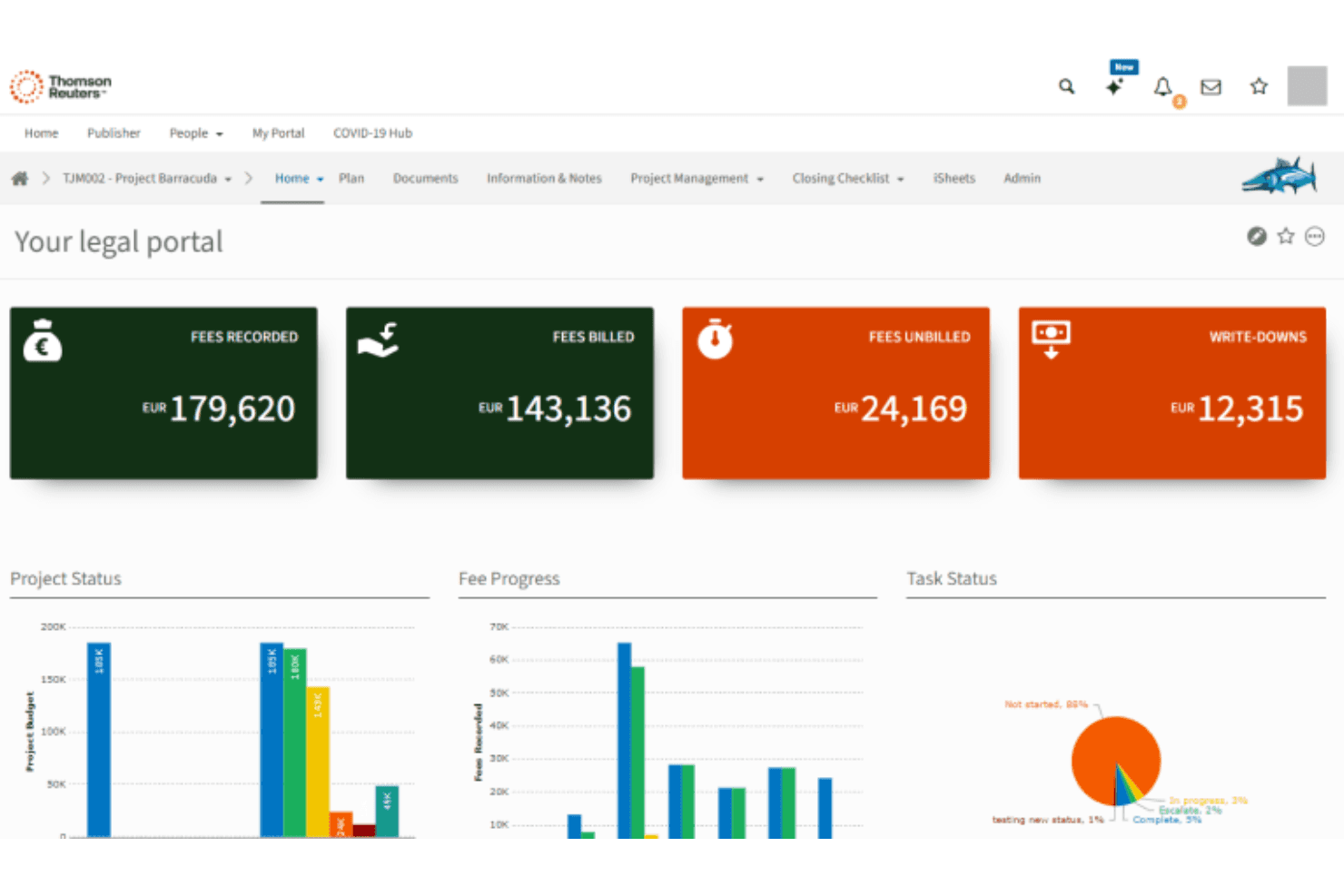
HighQ is a legal document management software for legal teams that need to store, organize, and share documents securely across matters and client engagements. It's built by Thomson Reuters, so it fits naturally into workflows that already rely on Westlaw or other TR products. I'd consider HighQ over iManage if your team wants built-in client portals and matter collaboration tools alongside document storage—rather than a dedicated DMS that depends on third-party add-ons to support that same level of collaboration.
HighQ Evaluation Summary
4.3/5
- Pricing upon request
- Free demo available
Pourquoi faire confiance à nos recommandations de logiciels
6,700+
Reviews
20
Industry experts
16+
Evaluation factors
14
Years
Notre équipe teste et évalue des logiciels depuis 2012. En tant que dirigeants de cabinets juridiques nous-mêmes, nous savons à quel point il est difficile — et important — de choisir le bon logiciel.
Pour ce guide, nous avons évalué les outils grâce à des tests pratiques et une recherche indépendante, en notant les outils selon nos critères de sélection.
Nos avis reflètent notre jugement éditorial humain, et non un argumentaire de vente.
HighQ Overview
When I compare HighQ to other document management systems, I think its secure collaboration tools, customizable workflows, and integration with legal tech ecosystems set it apart. The interface is modern and onboarding is straightforward, especially for legal teams used to complex matters. Pricing is premium, but you get responsive support and advanced features like AI-driven search.
I’d suggest HighQ is best for firms or in-house teams handling sensitive, high-volume matters who need granular permissions and seamless collaboration. If you’re judging options for legal-specific needs, HighQ’s balance of security and usability makes it a strong contender.
Pros
- Strong version control and audit trails.
- Customizable workflows for complex legal processes.
- Secure file sharing for sensitive legal documents.
Cons
- Limited offline document access options.
- Occasional slow performance with large data sets.
- Premium pricing compared to similar platforms.
Is HighQ Right For Your Needs?
Who Would be a Good Fit for HighQ?
HighQ is a strong choice for legal teams, regulated industries, and organizations that need secure, collaborative document management with advanced workflow automation. Its granular permissions, audit trails, and integration with legal tech ecosystems make it ideal for teams handling sensitive data, complex projects, or compliance-heavy work.
If your business values secure collaboration, document versioning, and customizable workflows, HighQ is likely to meet your needs.
- Consulting FirmsFacilitates client collaboration and document version control on projects.
- M&A Deal RoomsEnables secure sharing and real-time collaboration on deal documents.
- Corporate Compliance DepartmentsAutomates policy management and tracks document changes for audits.
- Financial ServicesMeets strict regulatory requirements with audit trails and permissions.
- In-House Legal TeamsCentralizes contracts, compliance, and matter management in one platform.
- Large Law FirmsHighQ supports complex matters, client portals, and secure collaboration.
Who Would be a Bad Fit for HighQ?
HighQ may not be the best fit for small businesses, teams with basic document needs, or industries where cost and simplicity outweigh advanced features. Its premium pricing and legal-focused capabilities can be excessive for organizations that don’t require granular permissions, workflow automation, or deep compliance features.
- Manufacturing DepartmentsDoesn’t address industry-specific document types or workflows.
- Nonprofits With Tight BudgetsPremium cost is hard to justify for simple document storage.
- Field Service TeamsLimited offline access and mobile-first features for remote work.
- Retail OperationsOffers more compliance and security than most retail teams require.
- Creative AgenciesLacks media asset management and design collaboration tools.
- Small StartupsHighQ’s pricing and features exceed basic document needs.
Comment nous testons et évaluons les outils
Nous avons passé des années à construire, affiner et améliorer notre système de test et de notation des logiciels. Notre grille est conçue pour saisir les nuances de la sélection logicielle et ce qui rend un outil efficace, en mettant l’accent sur les aspects critiques du processus décisionnel. Ci-dessous, vous pouvez voir exactement comment notre système de test et de notation fonctionne selon sept critères. Cela nous permet de fournir une évaluation objective du logiciel basée sur les fonctionnalités essentielles, les caractéristiques remarquables, la facilité d’utilisation, l’intégration, l’accompagnement client, les avis clients et le rapport qualité/prix.
Fonctionnalité principale (25 % de la note finale)
Le point de départ de notre évaluation est toujours la fonctionnalité principale de l’outil. Celui-ci possède-t-il les fonctions et fonctionnalités de base attendues par un utilisateur ? Certaines de ces fonctions essentielles sont-elles uniquement accessibles dans des formules plus chères ? À la base, nous attendons qu’un outil tienne la comparaison avec les capacités minimales de ses concurrents.
Fonctionnalités remarquables (25 % de la note finale)
Ensuite, nous évaluons les fonctionnalités exceptionnelles et rares qui vont au-delà de la fonctionnalité principale que l’on trouve habituellement dans ce type d’outils. Un score élevé reflète des fonctions spécialisées ou uniques rendant le produit plus rapide, plus efficace, ou offrant une valeur ajoutée à l’utilisateur. Nous évaluons également la facilité d’intégration avec d’autres outils présents dans la pile technologique pour élargir la fonctionnalité et l’utilité du logiciel. Les outils proposant de nombreuses intégrations natives, des connexions tierces et un accès API pour créer des intégrations personnalisées obtiennent de meilleurs scores.
Facilité d’utilisation (10 % de la note finale)
Nous prenons en compte la rapidité et la simplicité avec lesquelles il est possible d’exécuter les tâches définies dans la fonctionnalité principale à l’aide de l’outil. Un logiciel bien noté est bien conçu, intuitif à utiliser, propose des applications mobiles, fournit des modèles et rend des tâches relativement complexes simples.
Mise en route (10 % de la note finale)
Nous savons à quel point il est important d’adopter rapidement une nouvelle plateforme au sein d’une équipe, c’est pourquoi nous évaluons la facilité de prise en main et d’utilisation d’un outil avec peu de formation. Nous évaluons le temps nécessaire à un membre de l’équipe pour s’installer et commencer à utiliser l’outil sans expérience préalable. Les solutions bien notées indiquent que peu ou pas d’accompagnement est requis.
Support client (10 % de la note finale)
Nous examinons la rapidité et la facilité d’obtenir de l’aide par téléphone, chat en direct ou base de connaissances. Les outils et entreprises offrant un support en temps réel obtiennent la meilleure note, tandis que les chatbots reçoivent la note la plus basse.
Avis clients (10 % de la note finale)
Au-delà de nos propres tests et évaluations, nous prenons en compte le score de recommandation des clients actuels et passés. Nous vérifions leur probabilité, si elle leur était donnée, de choisir à nouveau cet outil pour ses fonctionnalités essentielles. Un logiciel bien noté reflète un score de recommandation élevé par les clients actuels ou passés.
Rapport qualité/prix (10 % de la note finale)
Enfin, en tenant compte de tous les autres critères, nous comparons le prix moyen des plans d’entrée de gamme aux fonctionnalités essentielles et analysons la valeur des autres critères d’évaluation. Un logiciel qui offre plus pour moins sera mieux noté.
Core Features
Document Version Control
Track, compare, and restore previous document versions with detailed audit trails. This helps teams avoid confusion and maintain a clear record of changes.
Granular Permissions
Set user- and group-level access to folders and files. You can control who views, edits, or shares sensitive documents.
Secure File Sharing
Share documents with internal and external parties using encrypted links. Expiry dates and access restrictions add extra security.
Automated Workflows
Build custom workflows for approvals, reviews, and notifications. This reduces manual steps and keeps projects moving.
Collaboration Workspaces
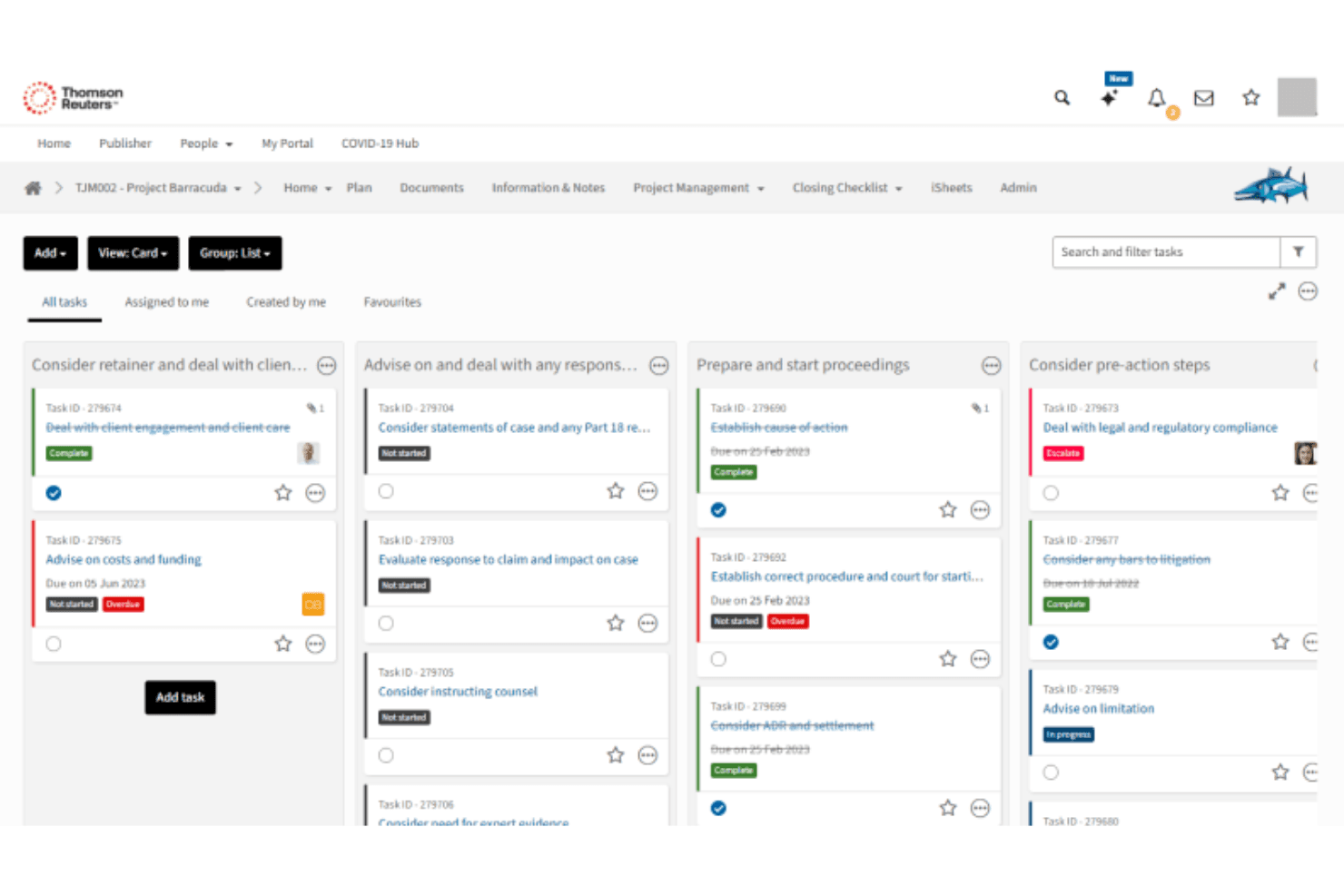
Create project-specific sites for document sharing, discussions, and task tracking. Teams can work together in real time on sensitive matters.
Full-Text Search
Search across all documents, emails, and notes with advanced filters. AI-powered search helps you find relevant content quickly.
Ease of Use
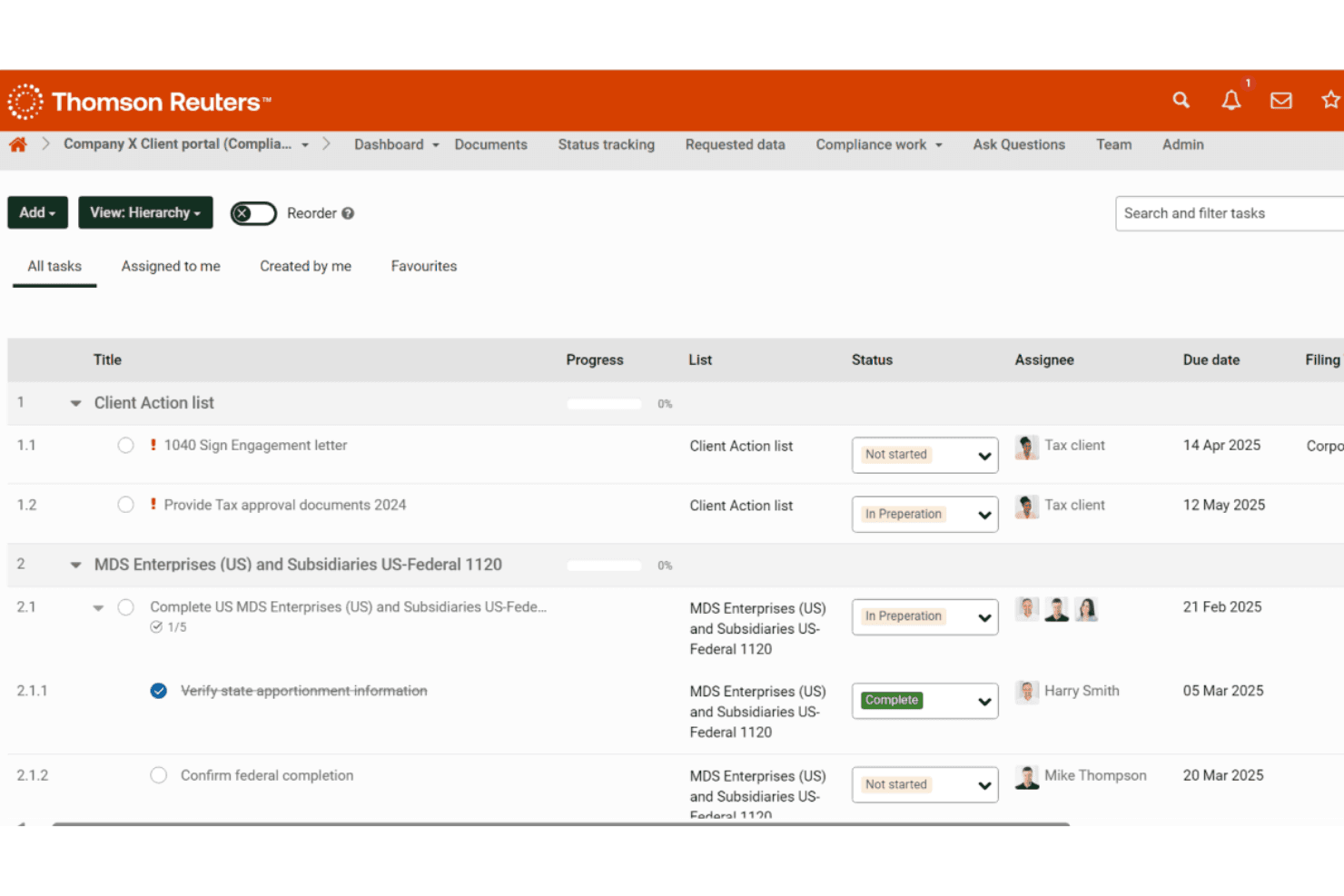
HighQ offers a modern, intuitive interface that legal professionals pick up quickly, even when managing complex workflows. Users often mention the dashboard’s clarity and the drag-and-drop document upload as standout features. Customizable workspaces and clear permission settings make it easy to organize projects and control access.
While advanced features require some setup, most teams find onboarding straightforward and daily navigation smooth, especially compared to more dated or cluttered systems.
Integrations
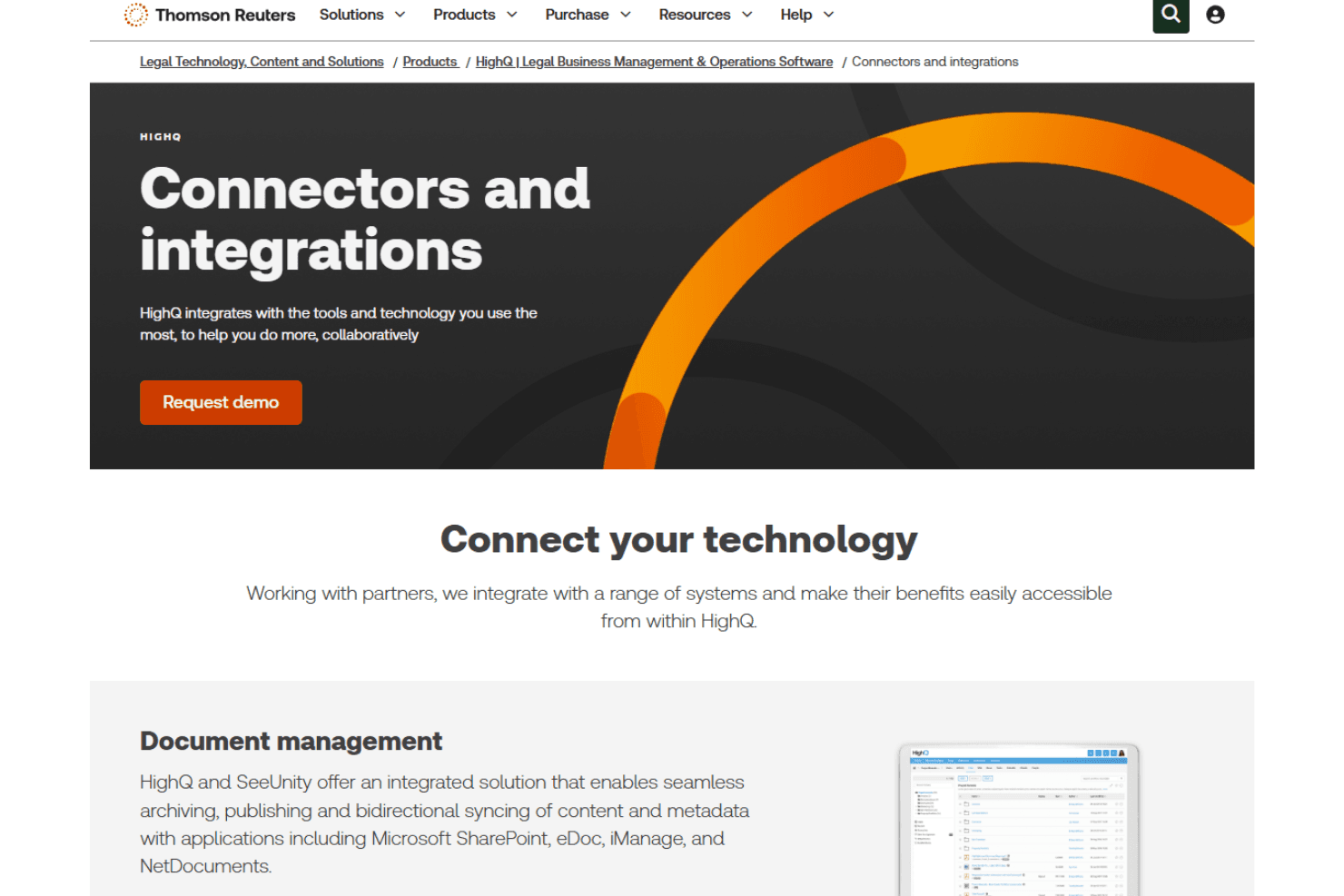
HighQ integrates with Microsoft SharePoint, iManage, NetDocuments, Kira Systems, Leverton, Eigen, Seclore, Microsoft 365, DocuSign, and Adobe Sign, among others.
HighQ also offers an API and supports connections with third-party integration tools.
HighQ Specs
- 2-Factor Authentication: Yes
- API: Yes
- Approval Workflows: Yes
- Audit Trail: Yes
- Calendar Management: Yes
- Compliance Tracking: Yes
- Contract Management: Yes
- Custom Reports: Yes
- Customer Management: Yes
- Data Export: Yes
- Data Import: Yes
- Document Management: Yes
- External Integrations: Yes
- Multi-User: Yes
- NDA Management: Yes
- Notifications: Yes
- Policy Management: Yes
- Scheduling: Yes
- Workflow Management: Yes


