

O software de gestão de processos jurídicos para Mac permite-lhe organizar processos, acompanhar prazos, gerir ficheiros de clientes e coordenar fluxos de trabalho jurídicos a partir de um Mac.
A escolha certa depende da forma como uma plataforma gere a sua área de prática, a admissão de clientes, a comunicação com os clientes, a faturação e a contabilidade de fundos fiduciários.
Why Trust Our Software Recommendations
6,700+
Reviews
20
Industry experts
16+
Evaluation factors
14
Years
Our team has been testing and reviewing software since 2012. As legal practice leaders ourselves, we know how difficult—and important—it is to choose the right software.
For this guide, we evaluated tools using hands-on testing and independent research, scoring tools using our selection criteria.
Our reviews reflect our human editorial judgment, not a sales pitch.
Tabela comparativa: software de gestão de processos jurídicos para Mac
Compare os preços e as especificações, lado a lado, do software de gestão de processos jurídicos para Mac que entrou na minha seleção.
Score legend (out of 5)
- Excellent4.5–5
- Good4–4.4
- Average3–3.9
- Below average2–2.9
- Poor1–1.9
Sorted by: Default
| Tool | Starting Price | Website | |||||||
|---|---|---|---|---|---|---|---|---|---|
Best for intake automation and client tracking | 4.0 out of 5 | 4 | 5 | 3 | 4 | 5 | 3 | Pricing upon request Free demo available | Website |
Best for jurisdiction-based deadline automation | 3.7 out of 5 | 4 | 4 | 3 | 4 | 3 | 4 | Pricing upon request Free demo available | Website |
Best for court-rule deadline calculation | 4.3 out of 5 | 4 | 5 | 4 | 5 | 3 | 5 | £79/user/month 7-day free trial + free demo available | Website |
Best for billing, trust accounts, and court deadlines | 3.8 out of 5 | 4 | 5 | 3 | 4 | 3 | 4 | Pricing upon request Free demo available | Website |
Best for built-in trust accounting compliance | 4.0 out of 5 | 4 | 5 | 3 | 5 | 4 | 3 | $49/user/month 10-day free trial + free demo available | Website |
Best for billing-first Mac-accessible matter tracking | 3.7 out of 5 | 4 | 4 | 3 | 5 | 3 | 3 | $59/user/month 10-day free trial + free demo available | Website |
Best for solo firm billing and trust accounting | 3.7 out of 5 | 4 | 4 | 3 | 5 | 2 | 4 | $45/user/month Free plan + free demo available | Website |
Best for AI-driven matter and billing workflows | 3.7 out of 5 | 4 | 5 | 3 | 4 | 4 | 2 | Pricing upon request Free demo available | Website |
Best for PI firms tracking cases end to end | 3.8 out of 5 | 4 | 5 | 3 | 3 | 4 | 4 | $109/user/month Free demo available | Website |
Best for Mac-native matter tracking with local AI | 3.5 out of 5 | 3 | 4 | 5 | 4 | 3 | 2 | $39.99/month Not available | Website |


Avaliações de software de gestão de processos jurídicos para Mac
Apresento abaixo as minhas avaliações detalhadas das opções de software de gestão de processos jurídicos que constam da minha seleção. Cada descrição aborda funcionalidades, fluxos de trabalho dos processos e ferramentas de faturação para o ajudar a encontrar a plataforma certa para o seu escritório.
 Best for intake automation and client tracking
- Free demo available
- Pricing upon request
Visit WebsiteCustomer Rating:4.6/5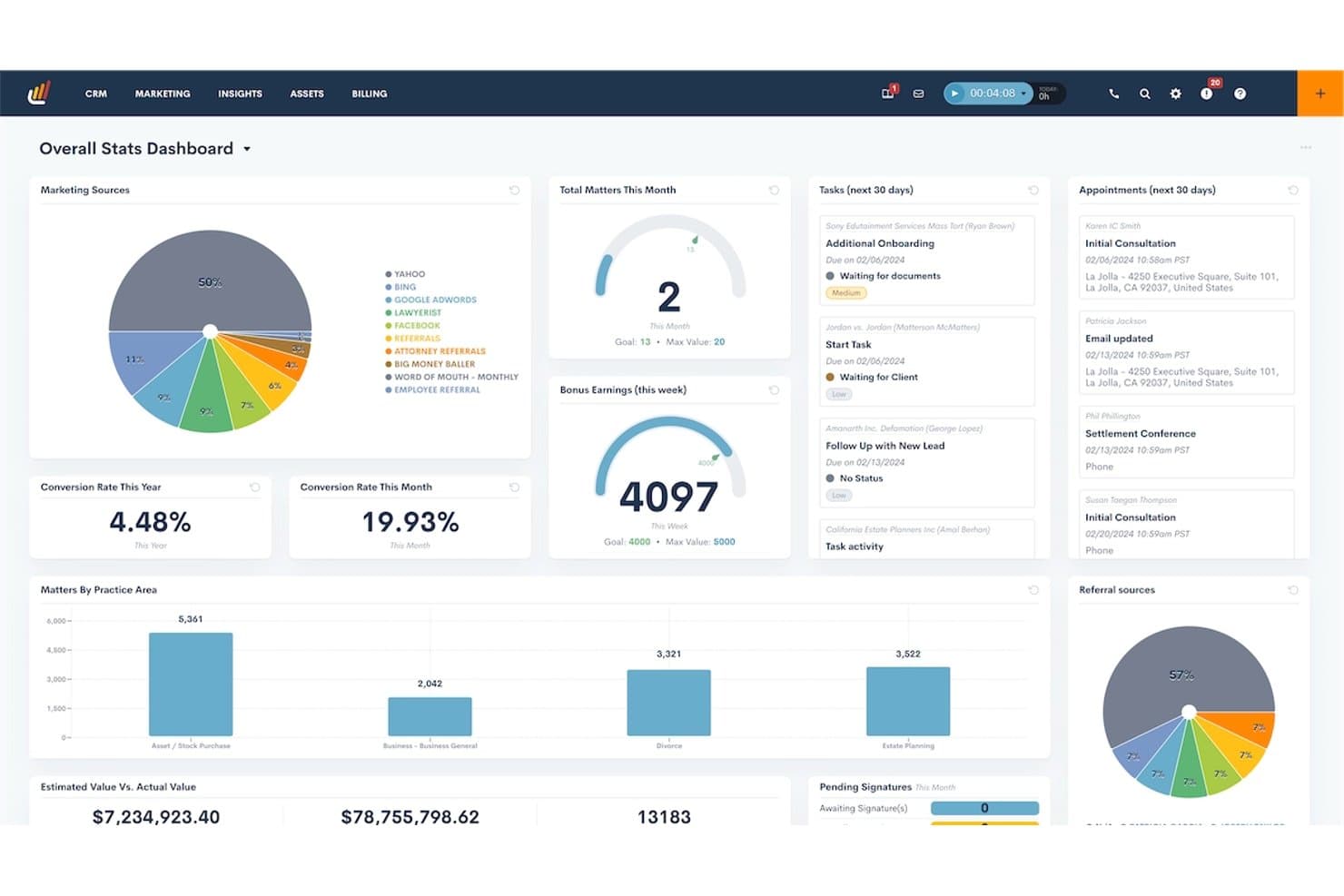
Lawmatics centralizes case stats, tasks, and appointments in one dashboard. Lawmatics is an AI-powered legal CRM that combines client intake automation, matter tracking, marketing automation, and client communication logging for law firms.
Who Is Lawmatics Best For?
Lawmatics is a strong fit for small to mid-sized law firms that need to manage client intake, lead pipelines, and matter communications in one place.
Why I Picked Lawmatics
I picked Lawmatics as one of the best because its intake automation and client tracking capabilities are genuinely hard to replicate with a general-purpose CRM. Every incoming lead moves through a customizable intake pipeline, with automated follow-ups, form collection, and e-signature requests triggered without manual effort. From there, each matter profile pulls together emails, SMS threads, portal messages, tasks, and file activity into a single chronological timeline, so nothing slips through the cracks across your team.
Lawmatics Key Features
- Document automation: Generates customizable documents by pulling from matter and client data fields.
- Client portal: Lets you grant selected contacts access to shared tasks, invoices, file requests, e-signature documents, and messages within a matter.
- Custom user roles and matter access controls: Restricts which matters and features each team member can view or edit based on assigned role and matter attributes.
- AI lead qualification: Uses Merlin Qualify to evaluate and score incoming leads, and Merlin Engage to send automated, personalized follow-up responses.
Lawmatics Integrations
Marketplace integrations include Clio, Gmail, Microsoft Outlook, iCal, OneDrive, QuickBooks, and Zoom. Lawmatics also offers REST API access, webhooks, and OAuth 2.0 for custom integrations.
Pros and Cons
Pros:
- Users praise onboarding support
- Matter timelines consolidate client communications
- Automated intake follow-ups reduce missed leads
Cons:
- No native macOS desktop app
- Workflow setup can take weeks
Learn more about Lawmatics: Best for jurisdiction-based deadline automation
- Free demo available
- Pricing upon request
Visit WebsiteCustomer Rating:4.5/5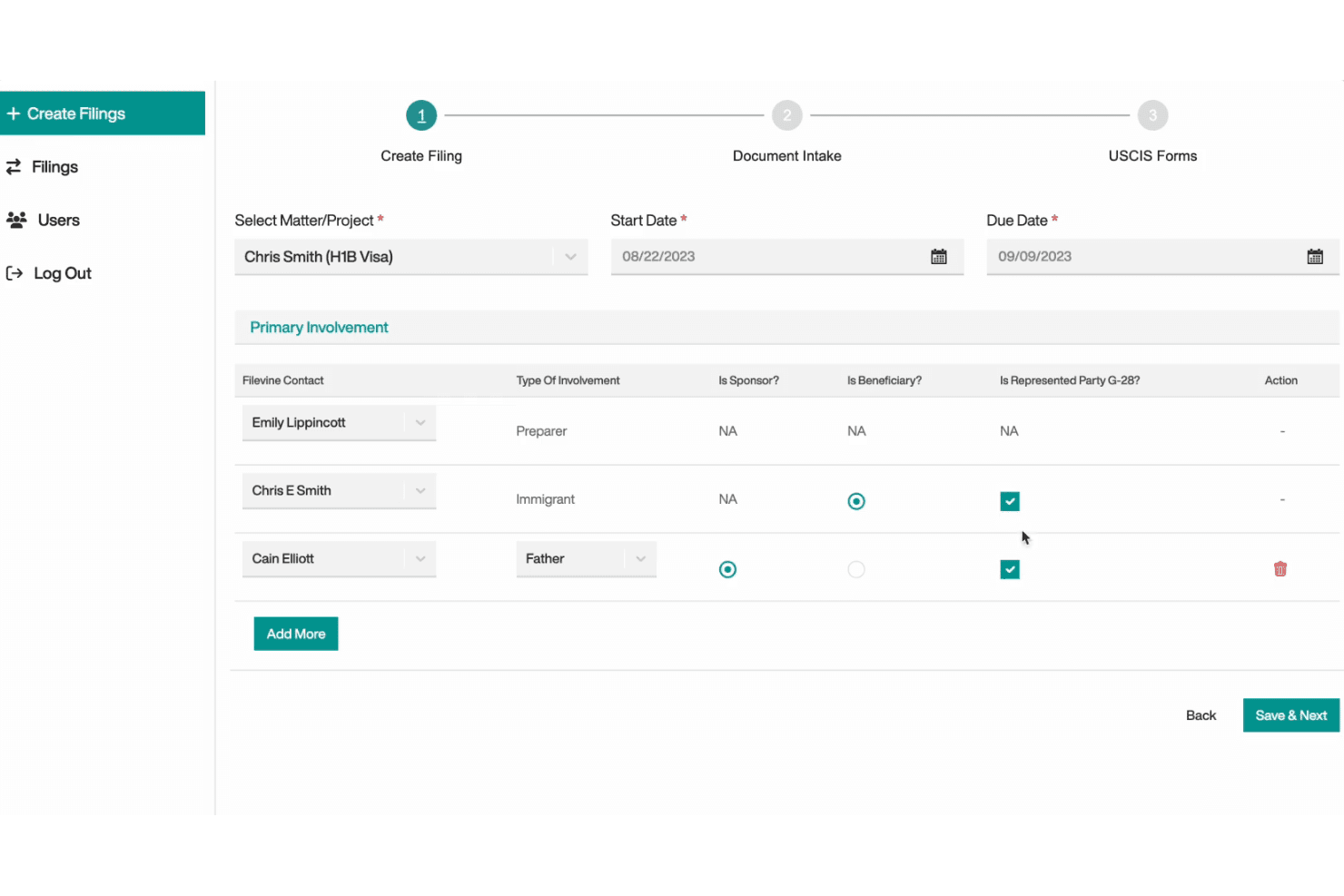
Filevine organizes legal matters, documents, deadlines, billing, and client communications. Filevine is a cloud-based legal case management platform that combines matter tracking, document management, deadline automation, time tracking, billing, and client communication tools in one browser-accessible workspace.
Who Is Filevine Best For?
Filevine is a strong fit for litigation-focused firms that handle high caseloads across multiple jurisdictions and need automated court-rule deadline tracking built into their case management workflow.
Why I Picked Filevine
Filevine earns its spot on my shortlist because of Timely, its jurisdiction-specific deadline engine that calculates court dates directly from statutes and court rules, then updates those rules automatically when jurisdictions change them. I find the workflow genuinely useful: select a jurisdiction, enter a triggering event, review the suggested deadline chain, and export the whole set straight into a Filevine matter or as an
.icsfile. For litigation teams juggling filings across multiple courts, that level of automation cuts real risk out of the calendaring process.Filevine Key Features
- Matter workspace: Connect emails, calendar events, time entries, and case notes to individual matter files in one browser-accessible workspace.
- Client Portal: Give clients secure access to message threads, shared documents, assigned tasks, and a case timeline.
- Document generation: Use DocGen templates to auto-populate client and case data and generate case documents directly from matter records.
- Audit reporting: Track user activity across matters, including task assignments, field edits, and permission changes, with built-in audit reports.
Filevine Integrations
Filevine lists over 2,000 potential integrations, including Outlook, Google Calendar, Office 365, Microsoft Teams, Slack, Gmail, QuickBooks, and Zapier. It also offers an API for custom integrations.
Pros and Cons
Pros:
- Case feeds keep updates with matters
- Matter-linked documents support template generation
- Timely calculates jurisdiction-based court deadlines
Cons:
- Reviewers report slow search and setup demands
- Mac access uses a Chrome-optimized browser
Learn more about Filevine: 3Best for court-rule deadline calculation
Clio
- 7-day free trial + free demo available
- From £79/user/month
Visit WebsiteCustomer Rating:4.5/5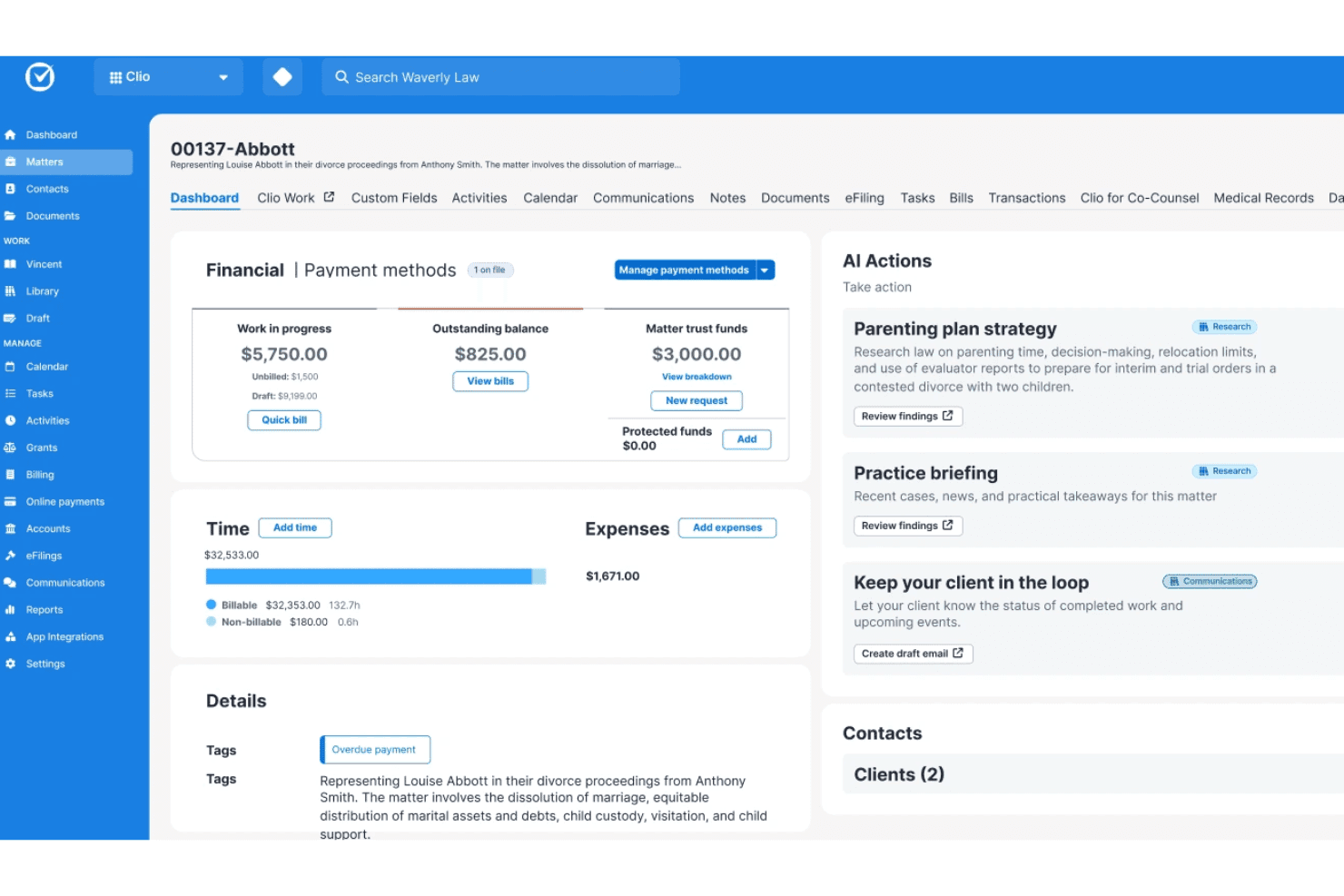
Clio's matter screen includes financial records, time entries, and AI actions. Clio Manage is a cloud-based legal practice management platform that brings together matter tracking, document management, time tracking, billing, trust accounting, and court-rule deadline calculation across thousands of jurisdictions.
Who Is Clio Best For?
Clio Manage is a strong fit for law firms of any size that need court-rule deadline calculation across hundreds of jurisdictions built directly into their practice management workflow.
Why I Picked Clio
Clio earns its spot on my shortlist because of its court-rule deadline calculation, which automatically generates related court events across 2,200 U.S. jurisdictions the moment you select a trigger date. I also like that its AI can parse a court document and convert it directly into calendar events, confirmed against the source. On top of that, each matter acts as a hub where those deadlines sit alongside documents, communications, and billing, so nothing lives in a separate tool.
Clio Key Features
- Trust account reconciliation: Compare your Clio trust ledger against a bank statement and generate exportable reconciliation reports for each client.
- Matter-linked client portal: Share documents, invoices, events, and tasks with clients through a secure per-matter portal accessible via browser or mobile app.
- Clio Drive integration: Access and edit matter documents directly through Mac Finder, with saved changes reflected in Clio Manage automatically.
- Role-based permissions: Assign standard or custom roles to control each user's access to matter records, billing data, and firm information.
Clio Integrations
Clio Manage documents 250+ app integrations, including native Gmail, Microsoft Outlook, QuickBooks, Xero, and TrustBooks connections, plus Ruby through its marketplace and Zapier. Its REST API supports JSON endpoints, webhooks, and OAuth 2.0 for custom integrations.
Pros and Cons
Pros:
- Matter records group billing and communications
- Mac Finder access keeps matter files nearby
- Court rules generate jurisdiction-based deadlines
Cons:
- Billing reports and payment status confuse users
- Calendar and reminder workflows draw complaints
Learn more about Clio: Best for billing, trust accounts, and court deadlines
- Free demo available
- Pricing upon request
Visit WebsiteCustomer Rating:4.4/5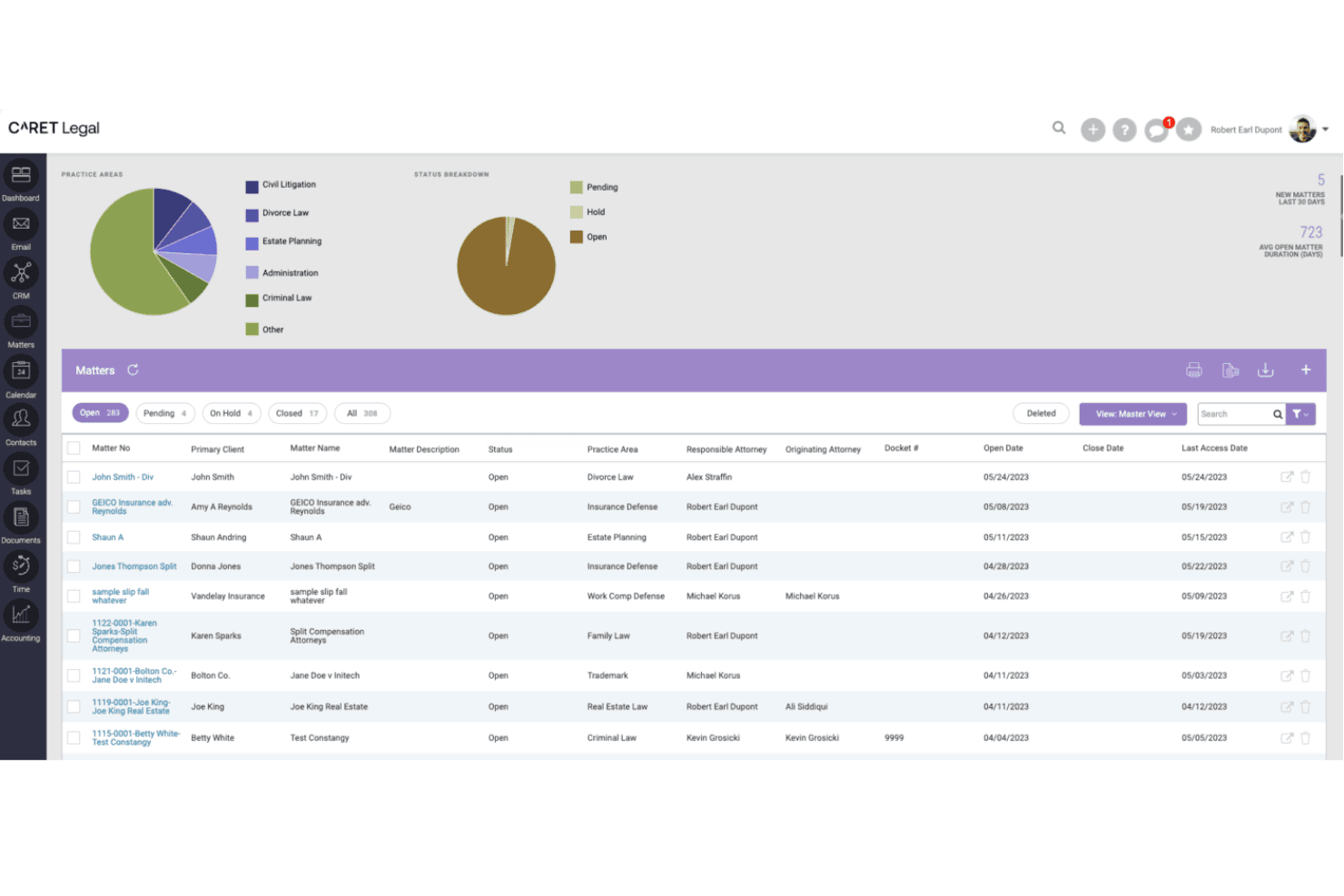
CARET Legal centralizes matter tracking across practice areas and statuses. CARET Legal is a cloud-based legal practice management platform that brings together matter tracking, billing, trust accounting, document management, calendaring, and court-rules-based deadline calculation in one system.
Who Is CARET Legal Best For?
CARET Legal is a strong fit for mid-size law firms where billing administrators and legal operations staff need tight control over trust accounts, invoicing, and court-deadline tracking.
Why I Picked CARET Legal
I've included CARET Legal in my top picks because its billing, trust accounting, and court-deadline tools go deeper than most practice management platforms. CARET Court Rules automatically recalculates dependent deadlines when a trigger date shifts, and flags events that fall on court holidays so you can adjust without losing your chain of dates. On the financial side, the Three-way Reconciliation report compares your bank balance, book balance, and individual trust ledger totals in one view, which is exactly what you need to stay on top of trust account compliance.
CARET Legal Key Features
- Matter-linked task management: Create and track tasks directly within a matter record, keeping all case action items tied to a single, organized view.
- Two-way texting: Send and receive text messages with clients from within the platform, with communication logged alongside other matter activity.
- Role-based user permissions: Assign custom permission levels by role, controlling which users can access specific matters, accounting sections, or billing data.
- iOS and Android mobile app: Access matter details, contacts, documents, and calendars from your phone, with support for Touch ID authentication and business card scanning.
CARET Legal Integrations
CARET Legal lists integrations with Microsoft 365, Google Workspace, OneDrive, NetDocuments, QuickBooks Online, IMAP, LawToolBox, and Lawmatics. It also provides an API for custom integrations.
Pros and Cons
Pros:
- Linked deadlines recalculate after trigger-date changes
- Integrated timers support billable time capture
- Matter records group documents, tasks, and costs
Cons:
- Reviewers report email sync and matter-association friction
- Windows-only Office plugins limit Mac workflows
Learn more about CARET Legal: Best for built-in trust accounting compliance
- 10-day free trial + free demo available
- From $49/user/month (billed annually)
Visit WebsiteCustomer Rating:4.3/5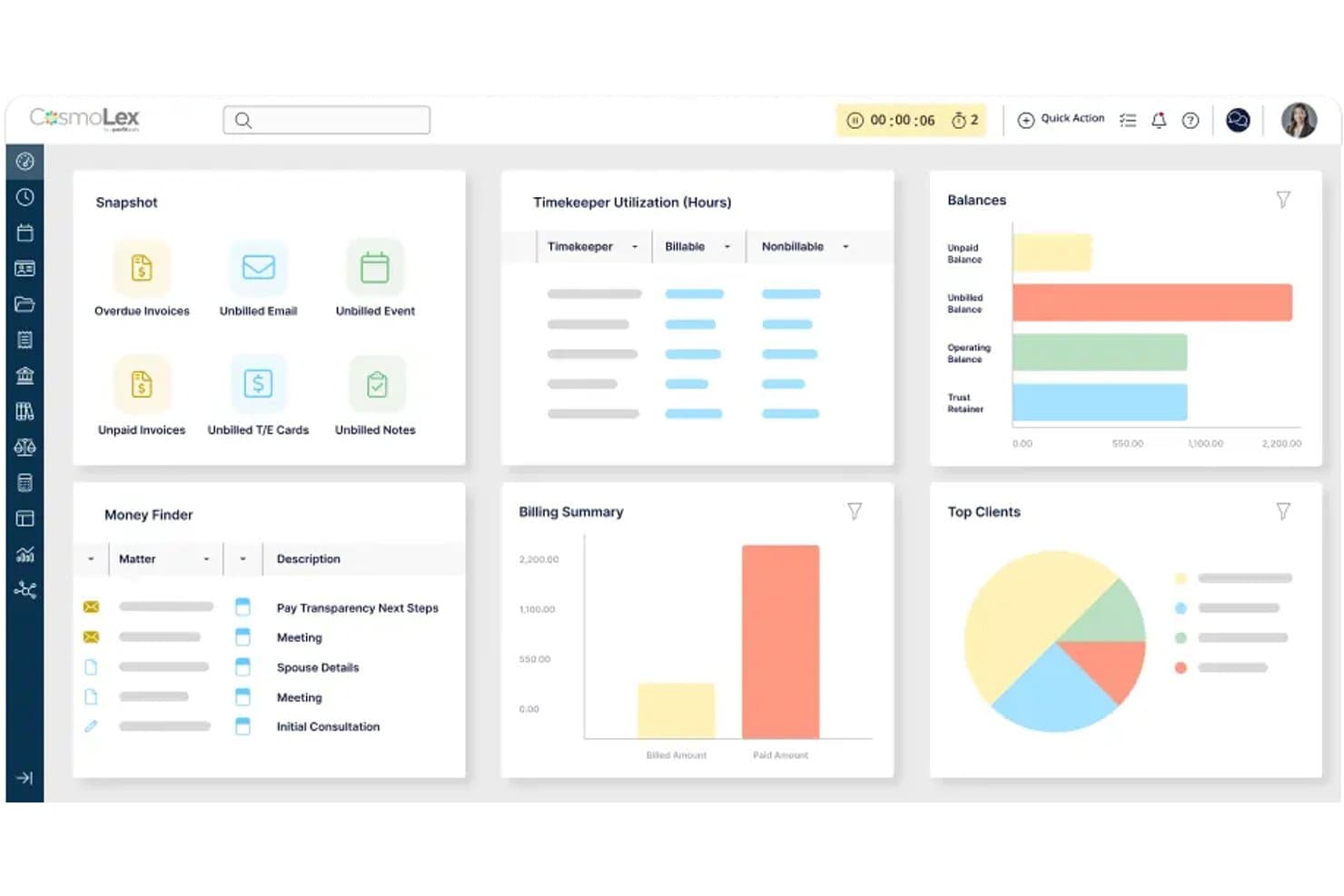
CosmoLex handles legal matters, billing, trust accounting, and client communications. CosmoLex is a cloud-based legal practice management platform that combines matter tracking, billing, trust accounting, document management, and client communication tools in one system.
Who Is CosmoLex Best For?
CosmoLex is a strong fit for solo attorneys and small law firms that need billing, trust accounting, and matter management in one system.
Why I Picked CosmoLex
I've included CosmoLex in my top picks because trust accounting compliance is built directly into the platform, not bolted on as an afterthought. Every plan includes separate trust and operating ledgers, automatic holds and transfers, and three-way reconciliation, so your books stay audit-ready without a separate accounting tool. I also like that system emails are automatically logged to the correct matter, keeping client communication history intact alongside billing and trust records.
CosmoLex Key Features
- Matter-linked email filing: File emails directly to client matters, with automatic alerts when no matching matter is found or multiple matches exist.
- Client portal with document exchange: Clients can upload and download documents, view invoices, send messages, and access matter information through a secure portal.
- Custom workflow templates: Build reusable task workflows and apply them to new or existing matters to keep work moving consistently.
- AI document review: Upload documents to extract key terms, obligations, deadlines, and action items using built-in AI summarization (Core and Pro plans).
CosmoLex Integrations
CosmoLex offers native integrations with Microsoft 365, Outlook, Google Calendar, QuickBooks Online, Dropbox, OneDrive, Google Drive, NetDocuments, Box, and LawPay. It also supports Zapier and provides a REST API for custom integrations.
Pros and Cons
Pros:
- Browser access brings matter work to Mac
- Reviewers praise connected timekeeping and billing workflows
- Matter-linked trust ledgers support three-way reconciliation
Cons:
- Reviewers report glitches, slowdowns, and syncing issues
- No dedicated native macOS desktop app
Learn more about CosmoLex: Best for billing-first Mac-accessible matter tracking
- 10-day free trial + free demo available
- From $59/user/month (billed annually)
Visit WebsiteCustomer Rating:4.4/5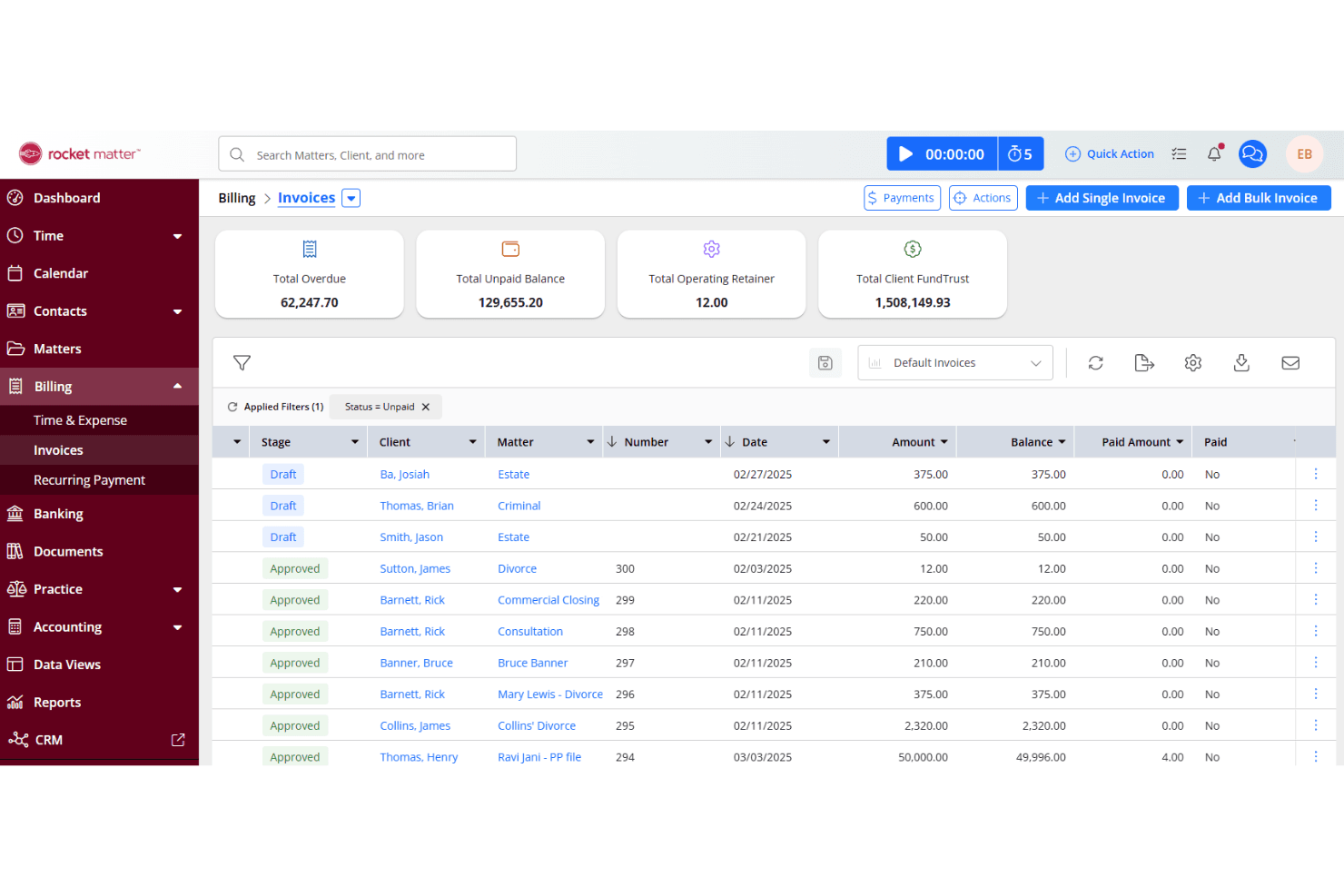
Rocket Matter enables flexible payment plans and balance and invoice tracking. Rocket Matter is a cloud-based legal practice management platform that centralizes matter tracking, time entry, billing, trust accounting, and document management across web, macOS, and mobile devices.
Who Is Rocket Matter Best For?
Rocket Matter is a strong fit for law firms that put billing and trust accounting at the center of their practice management workflow.
Why I Picked Rocket Matter
I picked Rocket Matter as one of the best because billing sits at the core of how it organizes every matter. Time entries, trust account balances, and invoice activity attach directly to each matter record, so when I'm reviewing a case from my Mac, I'm also looking at its full financial picture in one place. The trust accounting tools go further than most, with replenishment alerts that trigger when a client's balance drops below a set threshold and reconciliation built into the platform.
Rocket Matter Key Features
- Matter activity log: Records every user action on tasks, events, notes, and billable entries, so your full matter history stays auditable and accessible.
- Document assembly: Generates legal documents from customizable templates pre-filled with client data stored in Rocket Matter.
- Conflict checking: Runs conflict checks across firm contacts and client relationships directly from the platform.
- Client portal: Lets you share files, send invoices, and respond to client questions through a dedicated secure portal.
Rocket Matter Integrations
Rocket Matter offers native integrations with Microsoft 365 Outlook, Google Calendar, QuickBooks Online, OneDrive, Dropbox, Box, NetDocuments, WebCal, and iCalendar. It also supports Zapier and provides an HTTP JSON API with OpenAPI documentation for custom integrations.
Pros and Cons
Pros:
- Cloud access works across Mac and mobile
- Case records centralize documents and activity
- Matter-linked billing and trust balances
Cons:
- Reviewers report calendar sync problems
- Cloud access, but no native Mac app
Learn more about Rocket Matter: Best for solo firm billing and trust accounting
- Free plan + free demo available
- From $45/user/month
Visit WebsiteCustomer Rating:4.4/5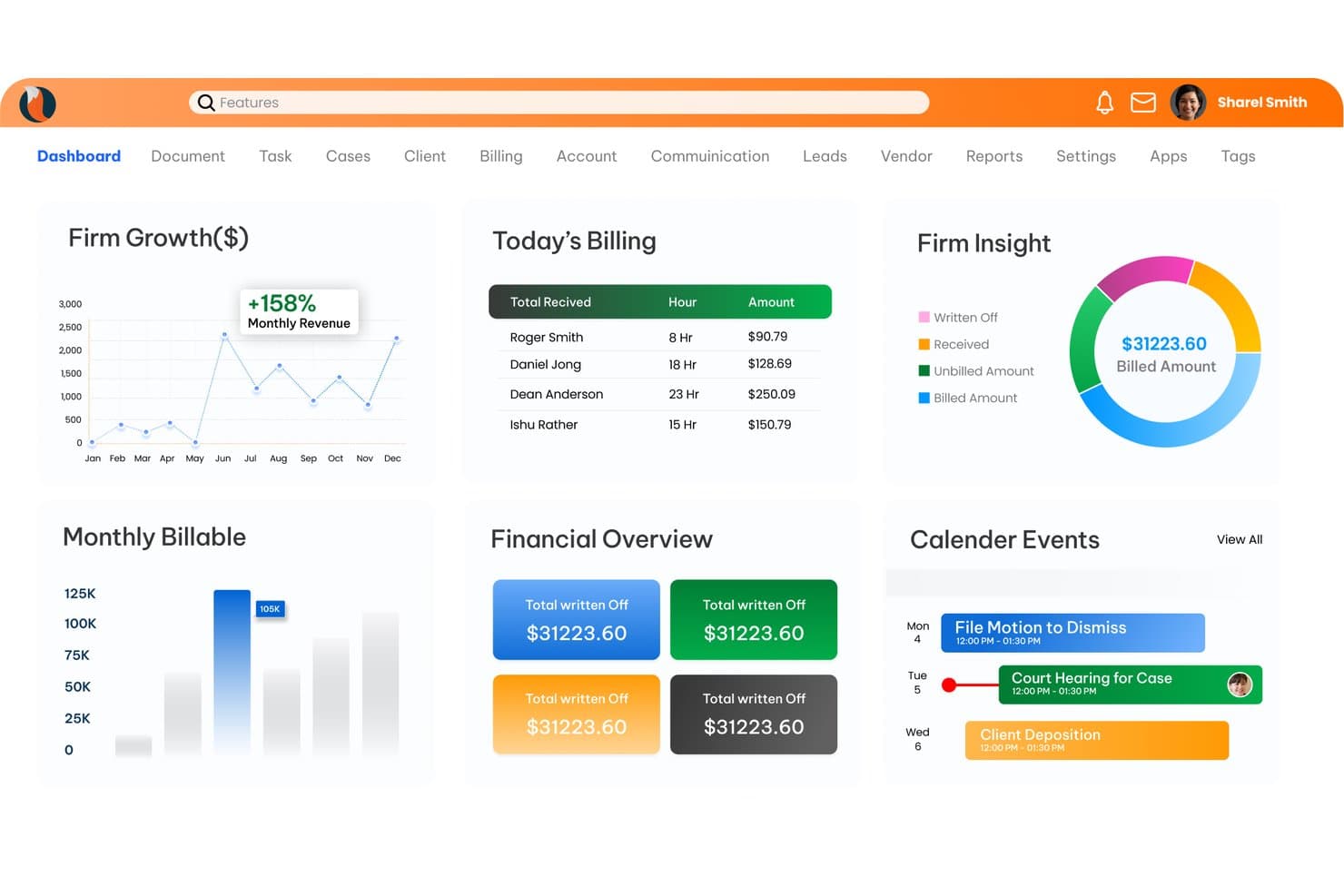
CaseFox tracks legal matters, time, expenses, trust accounts, and client billing. CaseFox is a cloud-based legal case management platform built for solo and small firms, covering matter tracking, time and expense entry, LEDES/UTBMS billing, trust accounting, legal calendaring, document management, and a secure client portal.
Who Is CaseFox Best For?
CaseFox is a strong fit for solo attorneys and small firms that need structured billing, trust accounting, and matter tracking without a steep price tag.
Why I Picked CaseFox
I've included CaseFox in my top picks because its billing and trust accounting tools are genuinely built for the solo attorney workflow, not bolted on as an afterthought. You can record time via a built-in timer, SMS, or calendar notes, then pay invoices directly from IOLTA-labeled trust accounts with deductions reflected on the invoice automatically. The LEDES and UTBMS billing support means you're covered for structured legal billing without needing a separate tool.
CaseFox Key Features
- Conflict check search: Search across clients, contacts, and cases to flag potential conflicts, with matching that accounts for misspellings and multiple languages.
- Client intake forms: Build drag-and-drop intake forms, share them via secure link, and capture submissions directly as leads in CaseFox.
- Rules-based calendaring: Set up automated court-deadline calendars with case-linked events, email reminders, and two-way sync with Google Calendar and Outlook.
- Role-based user permissions: Assign staff roles—including customizable Office Secretary access—to control which cases, time entries, and billing amounts each user can view.
CaseFox Integrations
CaseFox lists integrations with iCal, Google Calendar, Outlook, Google Drive, Dropbox, OneDrive, Google Docs, BoxNet, LawPay, and PayPal. The vendor doesn’t state a total integration count or public API availability.
Pros and Cons
Pros:
- Cloud access supports Mac-based casework
- Trust ledgers pair with invoice deductions
- Reviewers praise easy time entry and invoicing
Cons:
- Email records require manual filing
- No confirmed native macOS application
Learn more about CaseFox: Best for AI-driven matter and billing workflows
- Free demo available
- Pricing upon request
Visit WebsiteCustomer Rating:4.2/5
Litify handles legal matters, client intake, billing, documents, and AI workflows. Litify is a cloud-based legal platform built natively on Salesforce that covers matter management, document handling, intake, time tracking, billing, and AI-driven workflow automation across the full case lifecycle.
Who Is Litify Best For?
Litify is a strong fit for mid-size to large law firms that need a single platform to manage the full case lifecycle, from intake through billing, with AI-driven automation built in.
Why I Picked Litify
I've included Litify in my top picks because it's one of the few platforms where AI is woven into the billing and matter workflow itself, not bolted on. LitifyAI Time Capture tracks your daily activity and recommends time entries automatically, while the Matter Summary Agent pulls case status and recent activity into a single, readable snapshot. Built natively on Salesforce, the whole platform runs in a browser, so Mac users get full access without any compatibility concerns.
Litify Key Features
- Document Assistant: Retrieves new documents from email, classifies file types, and routes them to a matter-linked review queue.
- Intake Qualifier Agent: Screens incoming cases against your configured criteria to flag high-value claims before they enter the matter pipeline.
- Configurable no-code reports and dashboards: Build custom reports on case performance, team productivity, and revenue without writing code.
- Digital Disbursements: Manages settlement disbursements with matter-level approval workflows and auditable records for trust and IOLTA transactions.
Litify Integrations
Litify natively integrates with Salesforce and connects with Outlook, DocuSign, Workday, SAP, and QuickBooks. It also supports REST API integrations and marketplace integrations through Salesforce AppExchange, which offers 3,600+ software tools.
Pros and Cons
Pros:
- AI suggests time entries from daily activity
- OCR search finds scanned matter documents
- Matter timelines centralize files and communications
Cons:
- Large document batches can upload slowly
- Calendar lacks automated court-rule deadlines
Learn more about Litify: Best for PI firms tracking cases end to end
- Free demo available
- From $109/user/month (billed annually)
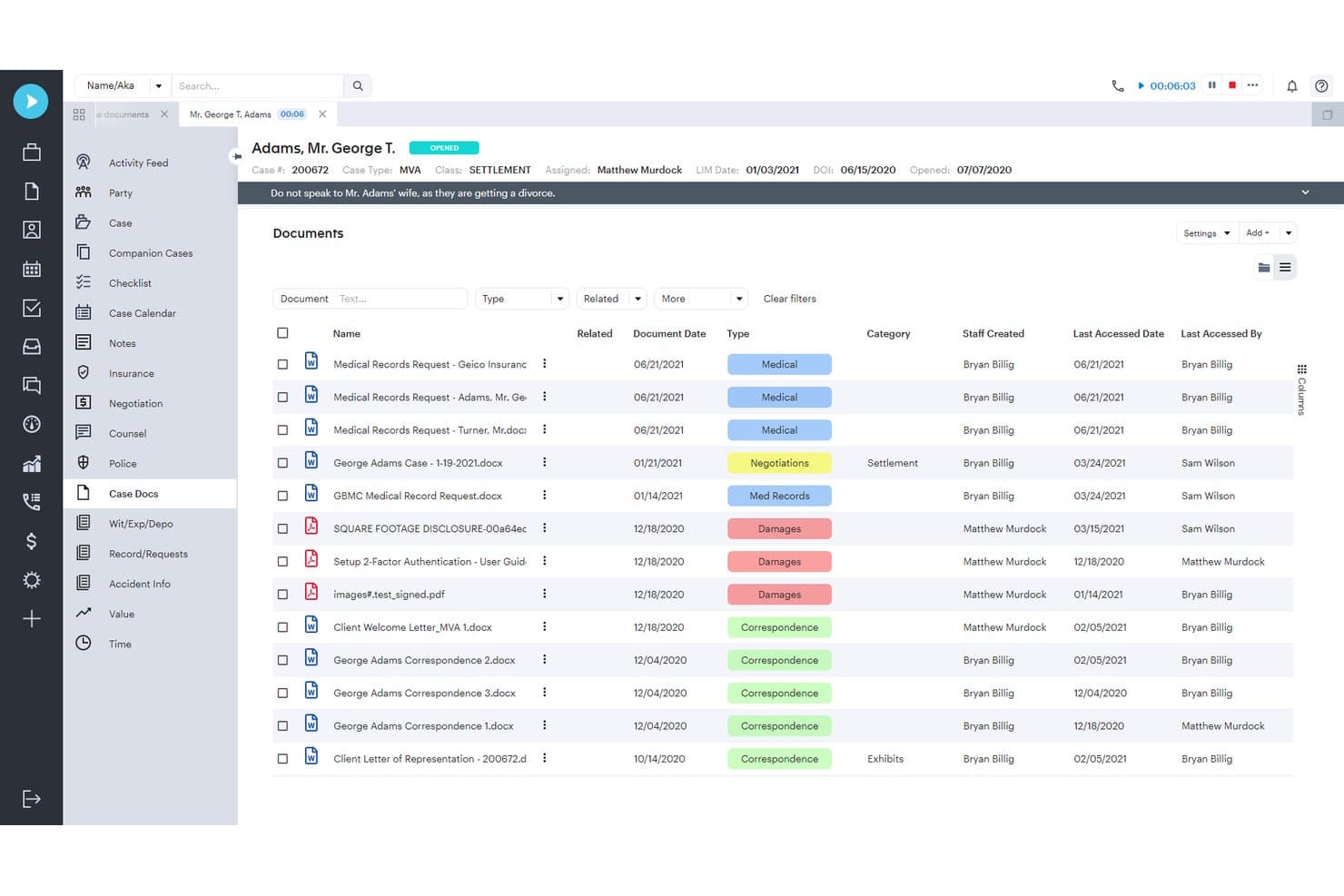
Assembly NEOS centralizes case documents with filters and type tags. Neos is a cloud-based personal injury case management platform by Assembly Software that covers intake, case tracking, document management, client communications, and billing from a single case record.
Who Is Neos Best For?
Neos is built for plaintiff-side personal injury firms with three or more staff who need to manage cases from intake through settlement in one place.
Why I Picked Neos
I picked Neos as one of the best because it's built specifically for plaintiff-side personal injury firms that need to track every case from the first intake call through final disbursement. I love how the case record pulls together liens, subrogation, settlement value, and costs in one place, so nothing slips through during a complex PI matter. The Demands Plus feature is what really sets it apart: it drafts demand letters and builds medical chronologies directly from the case file, with every claim linked back to its source document.
Neos Key Features
- NeosAI document summarization: NeosAI reads case documents and extracts data directly into case fields, reducing manual data entry on Platinum.
- LawToolBox deadline calculation: Automatically calculates jurisdiction-specific court deadlines, filing dates, and statutes of limitation, then syncs them to the Neos calendar.
- Role-based and individual permissions: Firms can control access at the role or individual user level across all staff, from paralegals to partners.
- QuickBooks Online sync: Approved cost and fee entries sync automatically to QuickBooks Online according to firm-configured preferences.
Neos Integrations
Neos offers documented integrations with Microsoft 365, Outlook, SharePoint, OneDrive, RingCentral, Zoom Phone, LawPay, and Case Status. It also provides an API for custom integrations.
Pros and Cons
Pros:
- Document templates support quick letter generation
- Case-linked communications keep matter history together
- PI settlement tracking covers liens and disbursements
Cons:
- Browser layout reduces usable screen space
- Safari compatibility issues affect Mac workflows
Learn more about Assembly NEOS: Best for Mac-native matter tracking with local AI
- Not available
- From $39.99/month
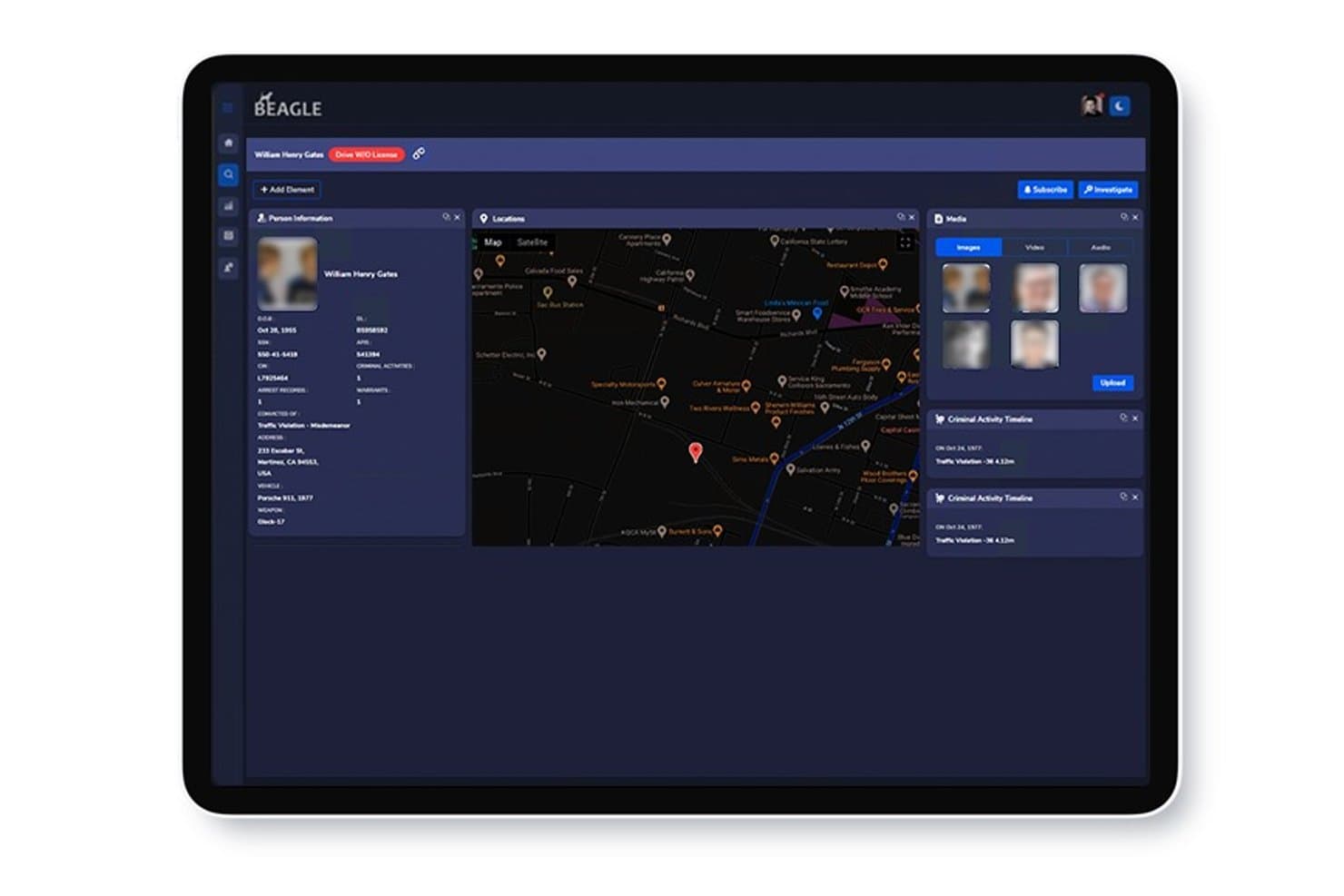
Beagle LPM centralizes case profiles, location maps, and criminal timelines. Beagle LPM is a Mac-native legal practice management app that covers matter tracking, time entry, billing, trust accounting, document management, and AI-assisted matter analysis across Mac, iPhone, and Apple Watch.
Who Is Beagle LPM Best For?
Beagle LPM is a strong fit for solo attorneys and small Mac-based firms who want their practice management, billing, and AI tools built around the Apple ecosystem.
Why I Picked Beagle LPM
Beagle LPM earns its spot on my shortlist because it's genuinely built for the Mac, not just ported to it. I love that its AI features, including Matter Intelligence for risk analysis and contradiction detection, run locally through Ollama or LM Studio, so your matter content never has to leave your machine. The conflict check tool searches relationships across your entire practice and preserves each check with the matter record, which I find invaluable at intake.
Beagle LPM Key Features
- Live timer across devices: Start and stop a timer from your Mac, iPhone, or Apple Watch, with entries syncing back to the matter record.
- Trust ledger: Record client trust funds, deposits, withdrawals, and adjustments with per-client running balances inside the matter workspace.
- OCR document review: Extract and review text read from documents stored in a matter's case file directly on your Mac.
- Settlement calculator: Run settlement calculations from within the matter record without switching to a separate tool.
Beagle LPM Integrations
Beagle LPM offers native integrations with Ollama, LM Studio, OpenAI-compatible servers, OpenAI, and Anthropic for AI workflows. Local options can keep prompts and matter content on your Mac when configured.
Pros and Cons
Pros:
- Apple Watch timer syncs to matters
- Local AI keeps matter content on-device
- Native Mac app works offline after sign-in
Cons:
- Trust ledger isn't reconciliation-grade accounting
- iPhone omits the full matter workspace
Learn more about Beagle LPM:
Outro software de gestão de processos jurídicos para Mac
Eis algumas opções adicionais que não entraram na minha seleção, mas que vale a pena conhecer:
- 11MyCaseBest for client communication history per matter
- 12PracticePantherBest for billing and trust accounting compliance
- 13CloudLexBest for PI case tracking via browser on Mac
- 14DayliteBest for Apple-native case and client tracking
- 15SmartAdvocateBest for litigation case workflows with built-in AI
- 16ActionstepBest for customizable matter workflows at scale
- 17SmokeballBest for document automation across matter types
- 18LawcusBest for client intake, CRM, and matter workflows
- 19TimeSolvBest for time-entry billing on Mac and Windows
- 20HoudiniESQBest for solo attorneys on any browser or OS
Related Reviews
How I Evaluate Legal Case Management Software for Mac
I split my evaluation into three parts. Core functionality carries the most weight: the tool must run reliably on macOS and organize matters with linked contacts, deadlines, and documents. Then I look at standout features like court-rules-based deadline automation and trust accounting compliance. Finally, I consider onboarding support and cross-platform pricing value.
Core Functionality (Table Stakes For This List)
When I'm selecting tools for my list, I score each one on a scale from 0 (does not offer the functionality) to 5 (excels in this area) for each core functionality listed below. I then convert the total into a percentage to help assess each tool's overall fit, with extra weight on any functionalities I've deemed essential.
- Mac Compatibility (Essential): I check whether the platform runs on macOS through a native app or full-featured web interface without resorting to virtual machines.
- Case and Matter Tracking (Essential): Each tool needs to let you organize deadlines, contacts, notes, and documents within individual matter records rather than across disconnected screens.
- Document Management: I look for matter-linked storage with version control and templates, so your team can retrieve a filed motion or engagement letter without digging through folders.
- Calendaring and Deadlines: Court-rule-based deadline automation matters here. Tools like Clio and Filevine offer rule sets that calculate downstream dates from a single trigger event.
- Time Tracking and Billing: I evaluate whether time entries, invoicing, and payment tracking are tied directly to matters and whether the platform supports trust accounting and multiple billing models.
- Client Communication Records: The tool should log emails, calls, and notes within each matter record so you can pull a full interaction history during a client call or before a hearing.
Once I have a list of tools that meet the criteria, I consider what sets each platform apart.
Differentiating Factors (What Sets Vendors Apart)
Here's how I compare and contrast different vendors:
Standout Features
Court rules-based deadline automation is the first thing I check. A tool like Clio or Filevine that calculates downstream dates from a single trigger event—say, a filing date generating response and discovery deadlines—saves hours of manual calendaring and reduces malpractice risk. I also evaluate built-in trust accounting compliance, since platforms like CosmoLex and PracticePanther handle IOLTA reconciliation inside the same system where you track matters. A secure client portal rounds out my evaluation; giving clients direct access to documents and invoices cuts down on status-update emails and keeps communication tied to the matter record.
Beyond Features
I evaluate how well each vendor supports Mac users over time—some, like Clio and Zola Suite, maintain native Mac/iOS apps, while others rely solely on browser access that can lag behind macOS updates. Data security also matters: I check for encryption standards and audit trails that satisfy bar association confidentiality rules, especially when privileged matter records are shared across devices. For firms planning to grow, I look at whether adding users and matters forces a platform migration or fits within the existing tier.
Como escolher software de gestão de processos jurídicos para Mac
Escolha uma plataforma testando os fluxos de trabalho dos processos em que prazos falhados, registos incompletos ou erros de faturação criam o maior risco.
| Se a sua prioridade for | Procure |
|---|---|
| Se a sua prioridade forPrazos judiciais precisos | ProcureProvas de que as datas calculadas correspondem às regras aplicáveis nas suas jurisdições |
| Se a sua prioridade forContinuidade entre a admissão e o processo | ProcureUm teste que mostre como os dados da admissão são transferidos para o registo do processo |
| Se a sua prioridade forPrecisão na faturação e nas contas fiduciárias | ProcureUm fluxo de trabalho que corresponda aos seus procedimentos de faturação e reconciliação |
| Se a sua prioridade forCompatibilidade com Mac e acesso aos dados | ProcureUm período de teste nos Macs da sua equipa e um processo claro de exportação de dados |
Como avaliar a sua seleção
- Faça um teste com um processo: Numa sessão de 30 minutos, crie um processo de teste, adicione um contacto e introduza uma data de entrega; compare os prazos resultantes com o calendário da sua equipa.
- Peça documentação sobre as regras: Solicite um documento datado que enumere as jurisdições abrangidas e, em seguida, verifique cinco prazos de exemplo comparando-os com as suas próprias referências regulamentares.
- Teste um documento de faturação: Introduza tempo de exemplo, prepare uma fatura e registe uma transação fiduciária; compare os resultados com o procedimento de reconciliação do seu escritório.
- Teste o acesso no Mac e as opções de saída: Durante um período-piloto de duas semanas, conclua uma tarefa habitual de um processo em cada configuração de Mac que utiliza; depois, solicite uma exportação de dados de exemplo e analise as condições de exportação do contrato.
- Escolha o seu compromisso: Utilize a grelha de avaliação do período-piloto para decidir se valoriza mais um fluxo de trabalho unificado de faturação e gestão de processos ou uma automatização mais aprofundada dos prazos, e documente essa prioridade antes de assinar.
O que é o software de gestão de processos jurídicos para Mac?
O software de gestão de processos jurídicos para Mac é um software que ajuda as equipas jurídicas a organizar processos e a tratar do trabalho relacionado no macOS. Pode reunir contactos, documentos, prazos, comunicações e registos de faturação em ficheiros de processos. Algumas plataformas funcionam num navegador, enquanto outras disponibilizam aplicações para Mac. Verifique se as funcionalidades de que a sua equipa necessita funcionam nos seus dispositivos e se se adequam aos fluxos de trabalho do seu escritório.
Funcionalidades do software de gestão de processos jurídicos para Mac
Eis as principais funcionalidades que procuro num software de gestão de processos jurídicos para Mac:
- Gestão de processos: Crie um registo central para cada processo ou assunto de cliente, com contactos, notas, documentos e detalhes do estado associados. A sua equipa pode utilizá-lo para consultar o histórico atualizado do processo sem ter de reunir informações provenientes de ficheiros separados.
- Gestão de documentos: Armazene documentos juntamente com o processo relacionado e utilize modelos para preparar ficheiros recorrentes, como cartas de contratação. O histórico de versões pode ajudar a sua equipa a identificar o rascunho mais recente e a evitar a utilização de uma cópia desatualizada.
- Calendário e acompanhamento de prazos: Adicione compromissos, datas de entrega e lembretes a um calendário partilhado. Algumas plataformas calculam datas relacionadas a partir de um evento desencadeador, utilizando conjuntos de regras judiciais; por isso, confirme se as regras abrangem as suas jurisdições e correspondem às referências da sua equipa.
- Gestão de tarefas e fluxos de trabalho: Atribua tarefas, responsáveis e datas-limite dentro de um processo. As etapas do fluxo de trabalho podem esclarecer quem trata de cada fase, desde a revisão de documentos até à entrega, e mostrar o que ainda requer atenção.
- Acompanhamento do tempo e faturação: Registe o tempo faturável associado a um processo, prepare faturas e acompanhe pagamentos. Verifique se o software suporta os seus métodos de faturação e mantém os registos de tempo associados ao trabalho que descrevem.
- Contabilidade de fundos de clientes: Registe os fundos dos clientes separadamente dos fundos operacionais e reconcilie as transações fiduciárias. Confirme se a plataforma suporta os requisitos contabilísticos da sua jurisdição e o processo de reconciliação do seu escritório.
- Comunicação com clientes e portal: Mantenha registos de emails, chamadas e notas associados ao processo relevante. Um portal seguro para clientes também pode proporcionar-lhes um local para consultar documentos ou faturas partilhados, sem misturar essas trocas com os registos internos.
- Recolha de dados e verificação de conflitos: Registe os dados de potenciais clientes antes de abrir um processo e compare os nomes com os registos existentes. Isto ajuda a sua equipa a analisar potenciais conflitos antes de aceitar novo trabalho.
Vantagens do software de gestão de processos jurídicos para Mac
Eis algumas vantagens comuns que pode esperar de um software de gestão de processos jurídicos para Mac:
- Organização dos processos: Os contactos, notas, documentos e detalhes do estado associados mantêm reunidos os registos de cada processo.
- Acompanhamento de prazos: Os calendários partilhados, os lembretes e os cálculos baseados em regras judiciais ajudam a sua equipa a gerir as datas de entrega e os prazos relacionados.
- Acesso a documentos: O armazenamento associado aos processos, os modelos e os históricos de versões ajudam a sua equipa a encontrar o ficheiro correto e a identificar o rascunho mais recente.
- Registos de faturação: Os registos de tempo, as faturas, o acompanhamento de pagamentos e a contabilidade de fundos de clientes associados aos processos mantêm a atividade financeira ligada ao trabalho jurídico.
- Histórico de comunicações: Os registos de emails, chamadas e notas armazenados com um processo proporcionam à sua equipa uma visão mais completa das interações com os clientes.
- Visibilidade do fluxo de trabalho: As tarefas com responsáveis e datas-limite atribuídos mostram quem trata de cada etapa e o que ainda requer atenção.
- Acesso através de Mac: As aplicações nativas ou as plataformas baseadas em navegador permitem que a sua equipa trabalhe a partir do macOS sem depender de uma máquina virtual.
Custos e preços do software de gestão de processos jurídicos para Mac
Os custos dependem das funcionalidades, do tamanho da equipa e das condições de faturação. A maioria das plataformas de gestão de processos jurídicos utiliza subscrições pagas, enquanto o acesso gratuito é normalmente um período de avaliação limitado. Eis os intervalos de preços mensais habituais.
Tabela de comparação de planos para software de gestão de processos jurídicos para Mac
| Tipo de plano | Preço médio | Funcionalidades comuns |
|---|---|---|
| Tipo de planoPlano pessoal | Preço médio$30-$60/utilizador/mês | Funcionalidades comunsGestão de processos e contactos, acompanhamento de calendários e tarefas, armazenamento de documentos e acompanhamento básico do tempo. |
| Tipo de planoPlano empresarial | Preço médio$60-$150/utilizador/mês | Funcionalidades comunsFluxos de trabalho avançados, automatização de documentos, portais para clientes, faturação e contabilidade de fundos de clientes, e relatórios. |
| Tipo de planoPlano empresarial de grande escala | Preço médioPersonalizado ou $100-$200/utilizador/mês | Funcionalidades comunsPermissões personalizadas, automatização avançada, administração centralizada, opções de integração e suporte dedicado. |
Perguntas frequentes
Eis as respostas a perguntas comuns sobre software de gestão de processos jurídicos para Mac.
Preciso de uma aplicação nativa para Mac para gerir processos jurídicos?
Não, não é necessária uma aplicação nativa para macOS para utilizar software de gestão de processos jurídicos num Mac. Uma plataforma baseada no navegador pode funcionar bem se for compatível com a sua versão do macOS e com as tarefas diárias do seu escritório. Durante um período de teste, experimente carregar documentos, aceder ao calendário, capturar e-mails, imprimir e utilizar quaisquer integrações de que a sua equipa dependa. Verifique se as funcionalidades do navegador e do telemóvel correspondem às funcionalidades do computador. Se precisar de acesso sem ligação à Internet ou de uma integração mais profunda com o macOS, peça ao fornecedor que demonstre esses fluxos de trabalho antes de se comprometer.
Como devo migrar os processos para um novo sistema?
Comece por pedir ao fornecedor um plano de exportação e importação de exemplo antes de assinar. Identifique quais os registos que serão transferidos: processos, contactos, notas, documentos, itens do calendário, registos de tempo e campos personalizados. Pergunte também se o histórico de e-mails, as versões dos documentos, as permissões e os registos de auditoria podem ser transferidos; estes elementos requerem frequentemente um tratamento separado. Teste uma pequena amostra com anexos e compare os registos importados com os do seu sistema de origem. Confirme como o fornecedor trata as importações falhadas, os registos duplicados e o acesso aos ficheiros antigos durante a transição.
Posso utilizar software de gestão de processos jurídicos sem ligação à Internet num Mac?
Por vezes, mas o acesso sem ligação à Internet depende do produto e da funcionalidade. Um sistema baseado no navegador pode exigir uma ligação à Internet para consultar registos de processos, calendários ou armazenamento de documentos, enquanto algumas aplicações armazenam em cache informações selecionadas. Pergunte o que pode consultar ou editar sem ligação, se as novas entradas são sincronizadas automaticamente depois de restabelecer a ligação e como o sistema resolve alterações em conflito. Teste com um processo não confidencial num Mac antes de depender do acesso sem ligação à Internet durante uma viagem ou uma deslocação ao tribunal. Confirme se os ficheiros transferidos continuam protegidos pelas definições de segurança do seu dispositivo.