

I 10 migliori software di fatturazione per avvocati recensiti nel 2026

10 Miglior software di fatturazione per avvocati: selezione


Il software di fatturazione per avvocati ti aiuta a tenere traccia delle ore fatturabili, gestire le aspettative dei clienti e garantire pagamenti puntuali. Può semplificare la fatturazione, ridurre gli errori e migliorare il flusso di cassa.
Da anni studio la tecnologia legale e testo soluzioni software. In questo articolo condividerò le mie migliori scelte di software di fatturazione per avvocati. Ho selezionato questi strumenti in base alle loro funzionalità, alla facilità d'uso e al rapporto qualità-prezzo.
Perché fidarsi dei nostri consigli sui software
Il nostro team testa e recensisce software dal 2012. In quanto leader di studi legali noi stessi, sappiamo quanto sia difficile — e importante — scegliere il software giusto.
Per questa guida, abbiamo valutato gli strumenti attraverso test pratici e ricerche indipendenti, assegnando un punteggio agli strumenti in base ai nostri criteri di selezione.
Le nostre recensioni riflettono il nostro giudizio editoriale umano, non un discorso di vendita.
Riepilogo dei migliori software di fatturazione per avvocati
Questa tabella comparativa riassume i dettagli dei prezzi delle mie migliori selezioni di software di fatturazione per avvocati, per aiutarti a trovare quello più adatto al tuo budget e alle esigenze della tua attività.
| Tool | Best For | Trial Info | Price | ||
|---|---|---|---|---|---|
| 1 | Ideale per la fatturazione a tariffa oraria | Prova gratuita disponibile | Da $39/utente/mese (fatturato annualmente) | Website | |
| 2 | Ideale per la fatturazione basata sulle attività | Demo gratuita disponibile | Prezzo su richiesta | Website | |
| 3 | Ideale per l'automazione della fatturazione | Prova gratuita di 7 giorni + demo gratuita disponibile | A partire da $49/utente/mese (fatturato annualmente) | Website | |
| 4 | Ideale per la comunicazione con i clienti | Prova gratuita di 10 giorni + demo gratuita disponibile | Da $39/utente/mese (fatturato annualmente) | Website | |
| 5 | Ideale per il monitoraggio del tempo | Prova gratuita + demo gratuita disponibile | Da $43/utente/mese (fatturazione annuale) | Website | |
| 6 | Ideale per la contabilità integrata | Prova gratuita di 10 giorni | Da $109/utente/mese (fatturato annualmente) | Website | |
| 7 | Ideale per l'etichettatura delle fatture | Demo gratuita disponibile | Prezzo su richiesta | Website | |
| 8 | Ideale per la fatturazione ricorrente | Prova gratuita di 10 giorni + demo gratuita disponibile | Da $59/utente/mese (fatturato annualmente) | Website | |
| 9 | Ideale per la fatturazione personalizzabile | Piano gratuito disponibile | Da $39/utente/mese | Website | |
| 10 | Ideale per la fatturazione di moduli giudiziari | Demo gratuita disponibile | Prezzo su richiesta | Website |
Recensione dei migliori software di fatturazione per avvocati
Di seguito trovi i miei riepiloghi dettagliati dei migliori software di fatturazione per avvocati presenti nella mia selezione. Le mie recensioni esaminano le funzionalità principali, i pro e contro, le integrazioni e i casi d’uso ideali di ciascuno strumento, per aiutarti a trovare quello più adatto.

Ideale per la fatturazione a tariffa oraria
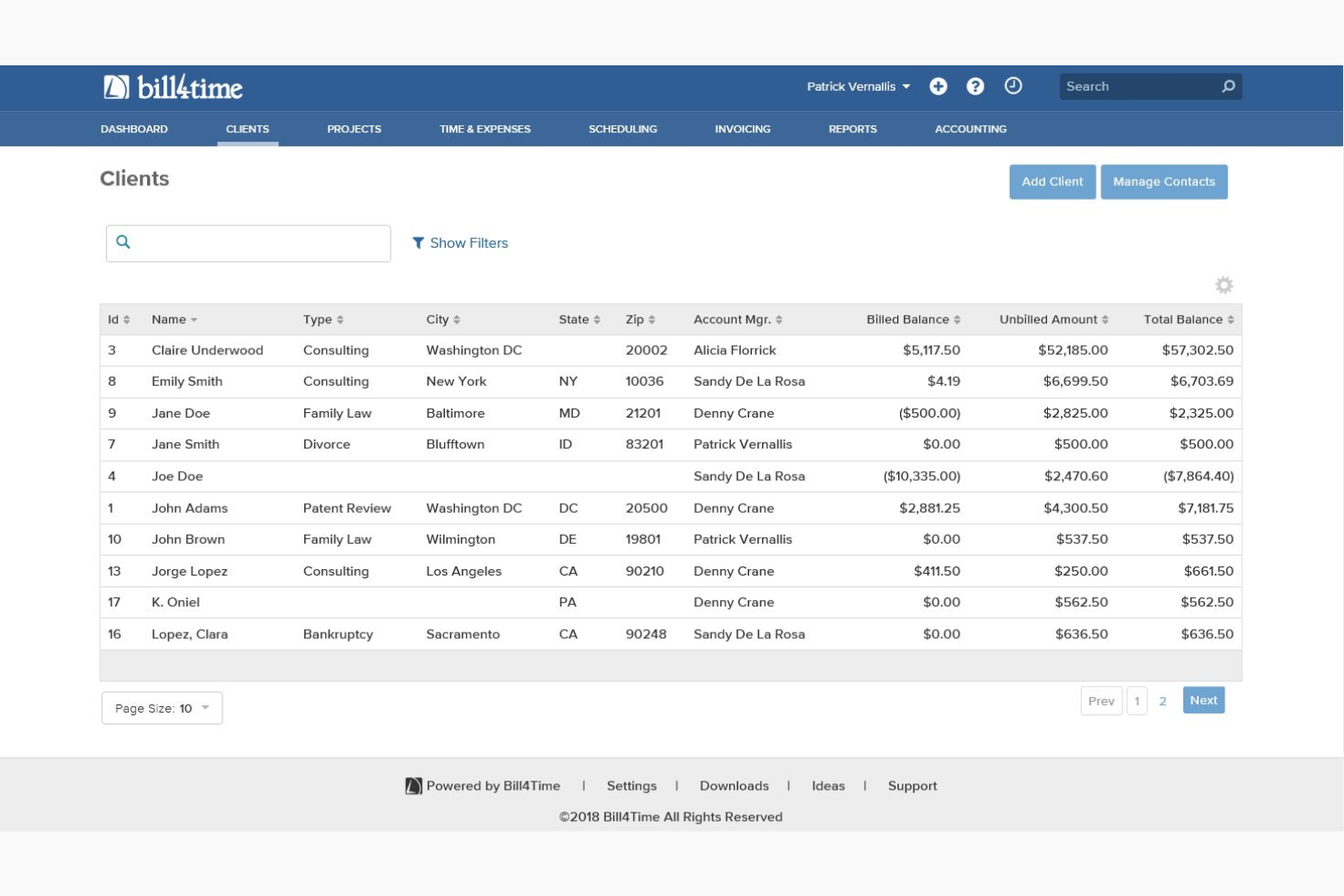
Bill4Time offre strutture di fatturazione flessibili, permettendo agli studi di impostare tariffe orarie personalizzate per cliente, pratica o membro dello staff, e supporta modelli di fatturazione ibridi. Dispone di strumenti intuitivi per la rilevazione delle ore lavorative, garantendo la registrazione accurata delle ore fatturabili da qualsiasi luogo.
Perché ho scelto Bill4Time: Funziona bene quando hai bisogno di fatturare a ore e mantenere i registri del tempo ben organizzati. Puoi registrare le ore con timer o inserimenti manuali e assegnarle a specifici clienti o pratiche. Il sistema supporta diverse tariffe di fatturazione in base all'utente, al compito o al cliente. Permette anche di creare fatture direttamente dal tempo e dalle spese tracciate, così non devi reinserire nulla.
Funzionalità e integrazioni principali:
Funzionalità includono il monitoraggio delle spese, la gestione dei documenti e report integrati. Puoi utilizzare i portali clienti per inviare fatture e ricevere pagamenti. C'è anche la verifica dei conflitti per gestire l'accettazione dei clienti.
Integrazioni includono QuickBooks Online, PayPal, LawPay, Stripe, Google Calendar, Box, Dropbox, Outlook e Office 365.
Pros and Cons
Pros:
- Modelli di fattura personalizzati
- Promemoria di pagamento automatici
- Conformità contabile fiduciaria
Cons:
- Nessun pagamento ricorrente
- Nessun avviso per fatture scadute
- Mancanza di aggiornamenti in tempo reale

Ideale per la fatturazione basata sulle attività
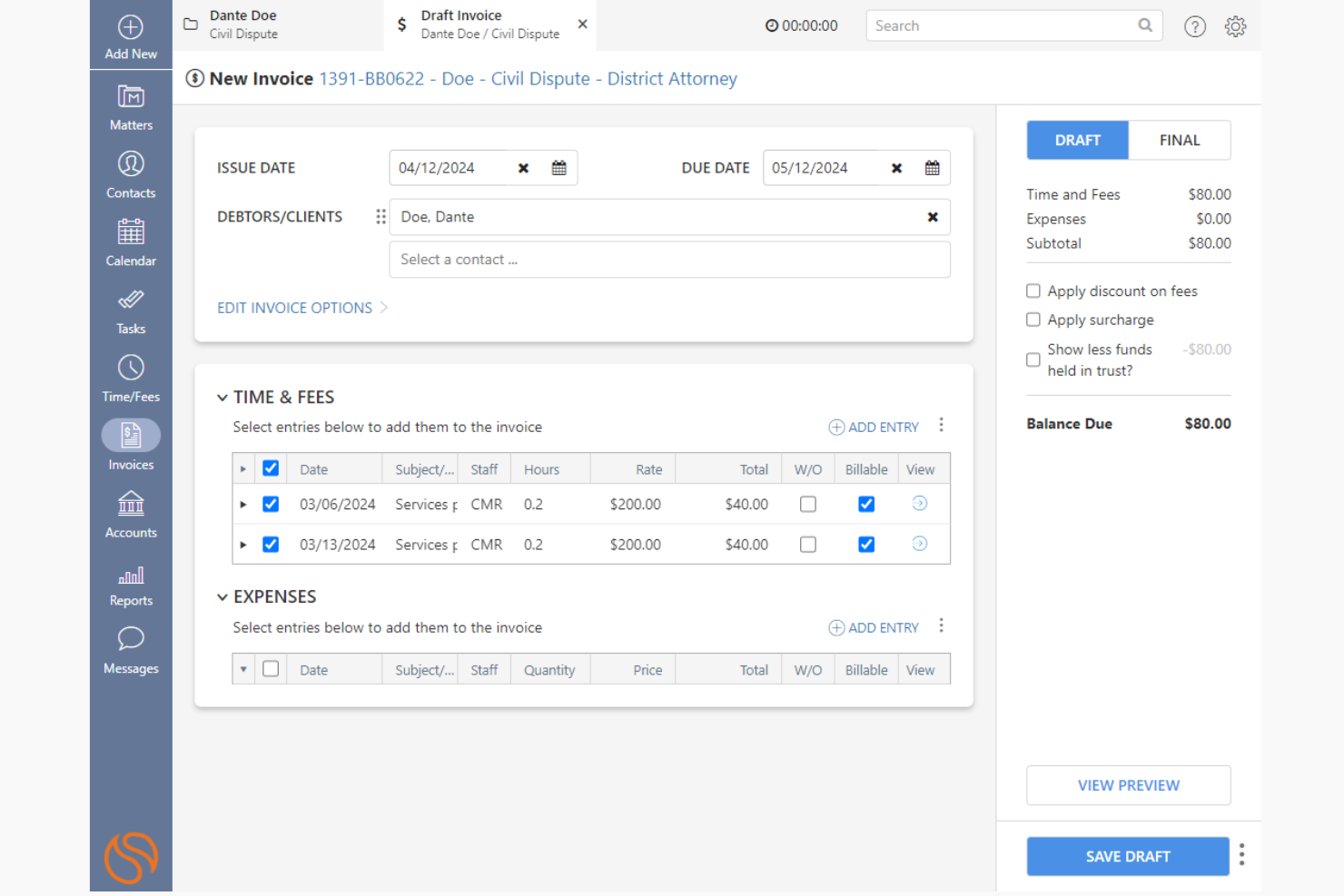
Smokeball eccelle nella fatturazione basata sulle attività, rendendolo una scelta ideale per registrare con precisione ogni voce fatturabile. La sua funzione distintiva, Activity Intelligence, registra automaticamente il tempo speso per varie attività senza necessità di timer manuali.
Perché ho scelto Smokeball: Traccia l’attività del tuo team in background e la trasforma in tempo fatturabile. Puoi consultare registri dettagliati di email, modifiche ai documenti e riunioni, quindi fatturare in base a ciò che è stato effettivamente svolto. Questo è utile se desideri fatturare tutto il lavoro, non solo quello registrato manualmente. Supporta inoltre la fatturazione a tariffa fissa e consente di generare fatture pre-compilate con un solo clic.
Funzionalità e integrazioni principali:
Funzionalità comprendono gestione documentale integrata, calendario legale e flussi di lavoro per attività per area di pratica. Puoi automatizzare moduli e lettere utilizzando i dati archiviati nella pratica. La sincronizzazione delle email aiuta a mantenere tutte le comunicazioni legate al fascicolo del caso.
Le integrazioni includono LawPay, Microsoft Word, Outlook, QuickBooks Online, Dropbox, InfoTrack, Bundledocs, CalendarRules, Xero e RingCentral.
Pros and Cons
Pros:
- Conversione automatica da tempo a fattura
- Capacità di fatturazione in batch
- Bozze di fatture pre-fatturate
Cons:
- Nessuna sincronizzazione in tempo reale delle fatture
- Inserimento manuale delle penali di mora
- Controllo limitato dei campi fiscali
Clio
Ideale per l'automazione della fatturazione
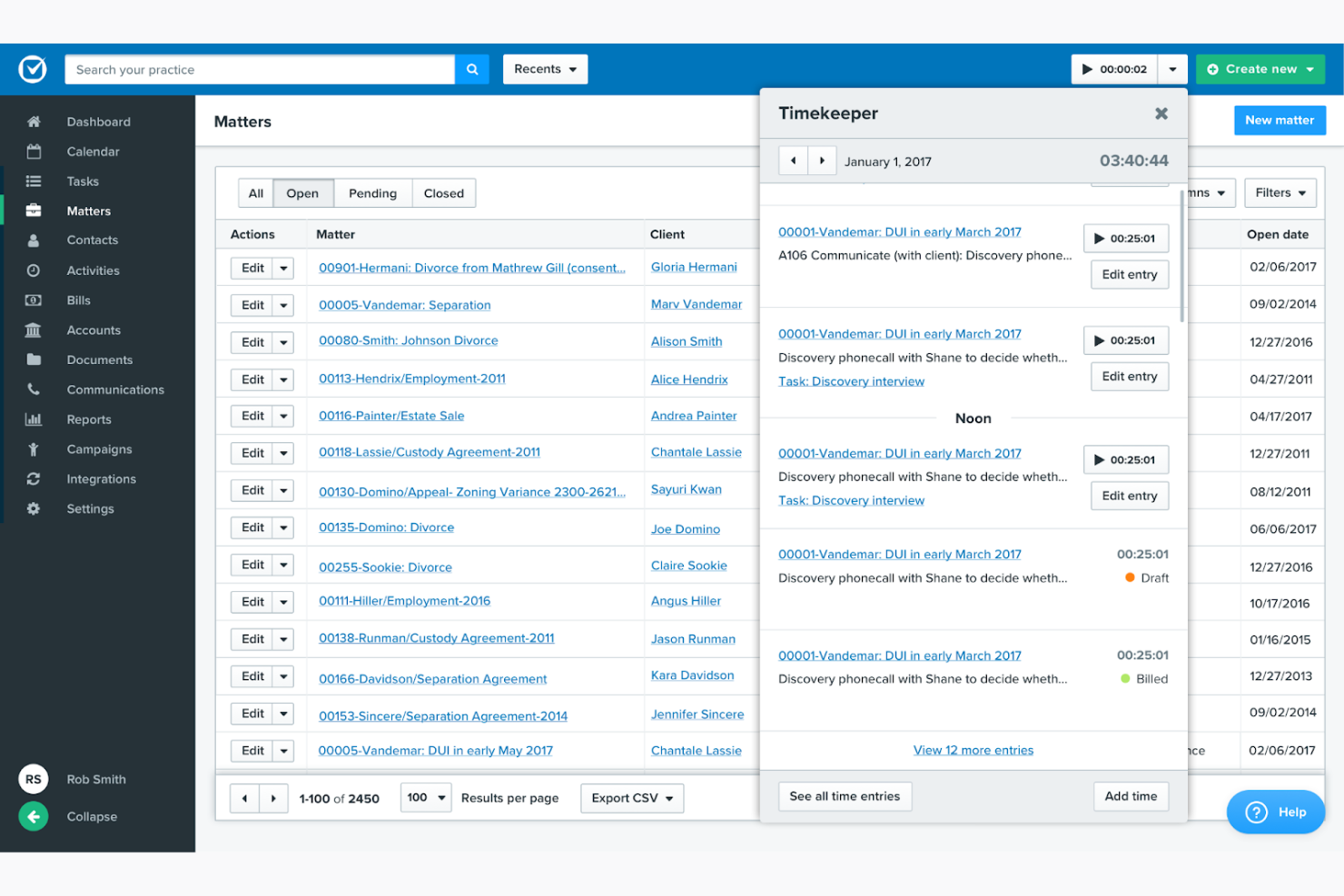
Il software di fatturazione legale di Clio offre potenti funzionalità di automazione che riducono le attività amministrative e accelerano il flusso di cassa. Automatizza tutto, dall'inserimento delle ore alla consegna delle fatture e ai solleciti di pagamento, rendendolo ideale per gli studi che desiderano modernizzare i propri processi di fatturazione end-to-end.
Perché ho scelto Clio: Automatizza i processi di fatturazione e pagamento, risultando ideale per una gestione efficiente della fatturazione. Il software include strumenti basati su intelligenza artificiale che accelerano la gestione delle pratiche e migliorano l'efficienza dei flussi di lavoro. Con un'app dedicata ai clienti, la comunicazione tra te e i tuoi clienti è semplice.
Funzionalità e integrazioni principali:
Funzionalità includono un portale clienti per comunicazioni sicure, strumenti di fatturazione automatica per semplificare l'incasso dei pagamenti e funzionalità di gestione delle attività per mantenere le pratiche organizzate.
Integrazioni includono Office 365, Zoom, QuickBooks, Dropbox, Google Apps, Xero, NetDocuments, Fastcase, LawPay e Microsoft Teams.
Pros and Cons
Pros:
- Strumenti di collaborazione prima della fatturazione
- Anteprime delle fatture in tempo reale
- Monitoraggio dei saldi dei fondi deposito
Cons:
- Modifica limitata delle fatture in batch
- Nessun accesso offline alle fatture
- Configurazione ricorrente di base

MyCase
Ideale per la comunicazione con i clienti
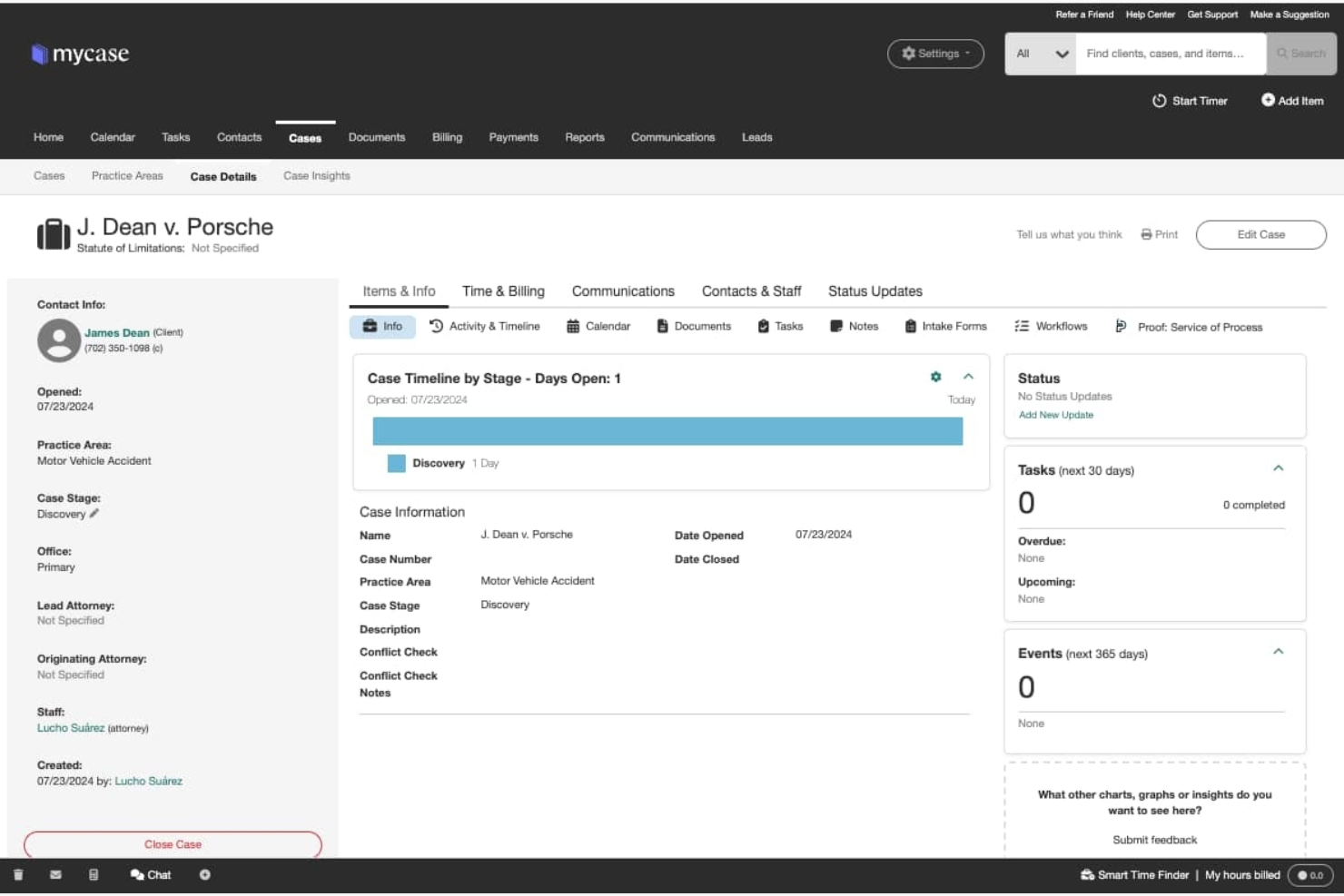
MyCase eccelle nel facilitare una comunicazione fluida con i clienti per gli studi legali. Offre un portale clienti sicuro dove i clienti possono accedere ai dettagli delle pratiche, documenti, fatture e messaggi, migliorando la trasparenza e riducendo le frequenti chiamate telefoniche o email.
Perché ho scelto MyCase: Questo software per la fatturazione degli avvocati si distingue per semplificare la comunicazione con i clienti tramite il portale integrato e gli strumenti di messaggistica. Questo ti permette di mantenere i clienti informati e coinvolti, aspetto essenziale per mantenere relazioni solide. MyCase offre anche funzionalità di gestione delle pratiche che aiutano a organizzare e monitorare i casi in modo efficiente. Le sue funzionalità di fatturazione e gestione delle fatture semplificano la gestione finanziaria, rendendolo una soluzione completa per gli studi legali.
Funzionalità e integrazioni principali:
Funzionalità includono calendario centralizzato per tenere organizzata l'agenda, gestione sicura dei documenti per un accesso facilitato ai file importanti e rilevamento del tempo per garantire una fatturazione accurata.
Integrazioni includono QuickBooks, LawPay, Google Calendar, Microsoft Outlook, Dropbox, NetDocuments, Smith.ai, Ruby Receptionists, Zapier, Mailchimp e Infusionsoft.
Pros and Cons
Pros:
- Pagamenti tramite portale clienti
- Modelli di fattura personalizzati
- Automazione della fatturazione ricorrente
Cons:
- Personalizzazione delle fatture limitata
- Necessari storni manuali
- Generazione lenta delle fatture in blocco
TimeSolv
Ideale per il monitoraggio del tempo
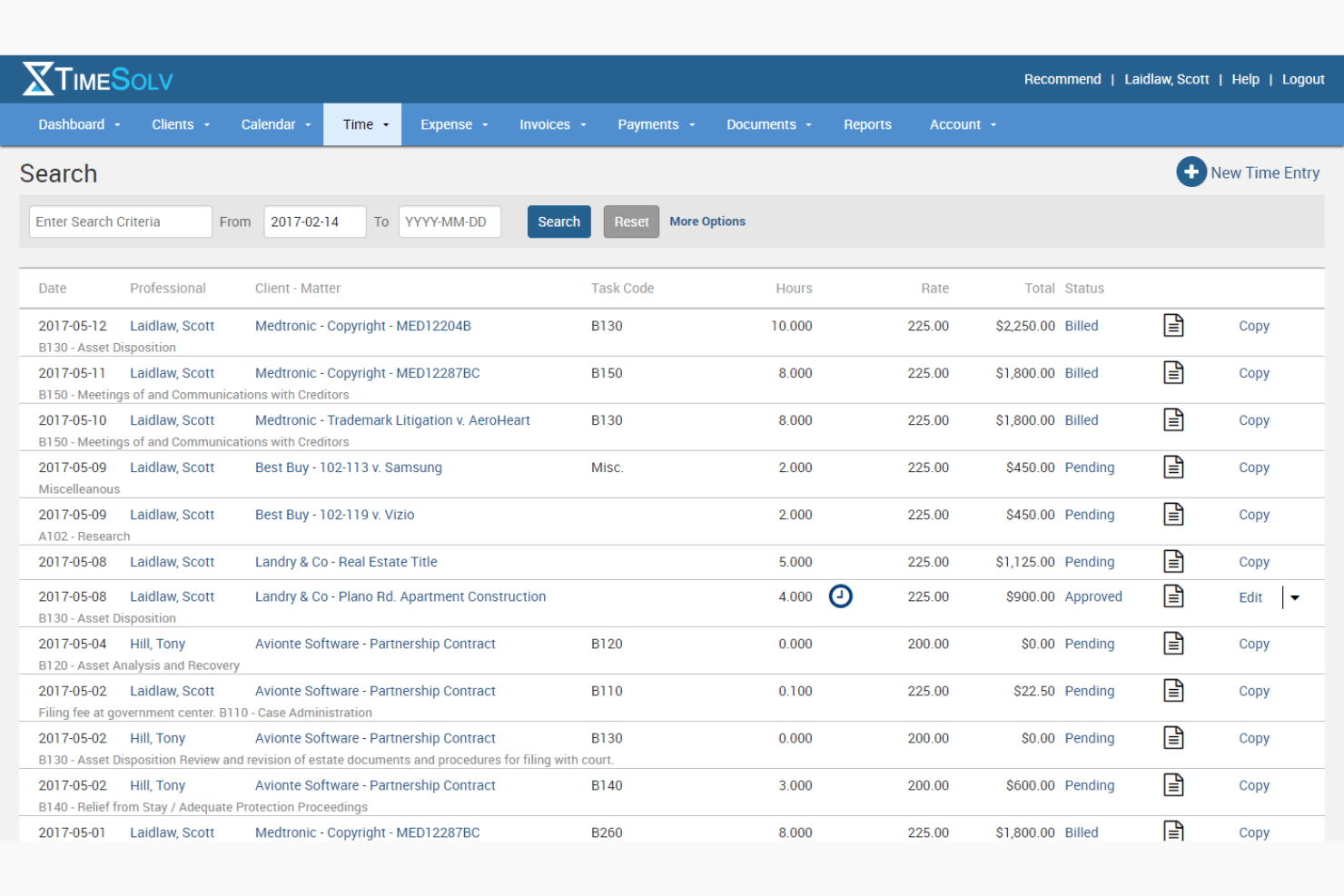
TimeSolv offre solide funzionalità di monitoraggio del tempo, rendendolo una scelta ideale per gli studi legali che desiderano massimizzare le ore fatturabili e ottimizzare le operazioni. Gli avvocati possono registrare il tempo da qualsiasi dispositivo, anche offline, con sincronizzazione automatica una volta riconnessi.
Perché ho scelto TimeSolv: Eccelle nel monitoraggio del tempo, rendendolo ideale per gli studi che necessitano di una fatturazione precisa. La funzione di fatturazione consente di personalizzare le fatture in base alle esigenze dei clienti. Il sistema di gestione documentale mantiene tutti i file organizzati e facilmente accessibili. Grazie alle integrazioni con applicazioni popolari, TimeSolv assicura che il flusso di lavoro rimanga fluido.
Caratteristiche principali e integrazioni:
Caratteristiche includono dashboard dinamici per il monitoraggio delle metriche, funzionalità mobili per la registrazione di tempo e spese, e archiviazione cloud sicura con crittografia SSL a 256-bit.
Integrazioni includono QuickBooks, Microsoft 365, Dropbox, Xero, NetDocuments, LawPay, Box, Zapier, Stripe e PayPal.
Pros and Cons
Pros:
- Modelli di fatture personalizzati
- Supporto alla fatturazione LEDES
- Integrazione con conti fiduciari
Cons:
- Personalizzazione delle fatture limitata
- Modifica delle tariffe poco chiara
- Programmazione delle fatture limitata

CosmoLex
Ideale per la contabilità integrata
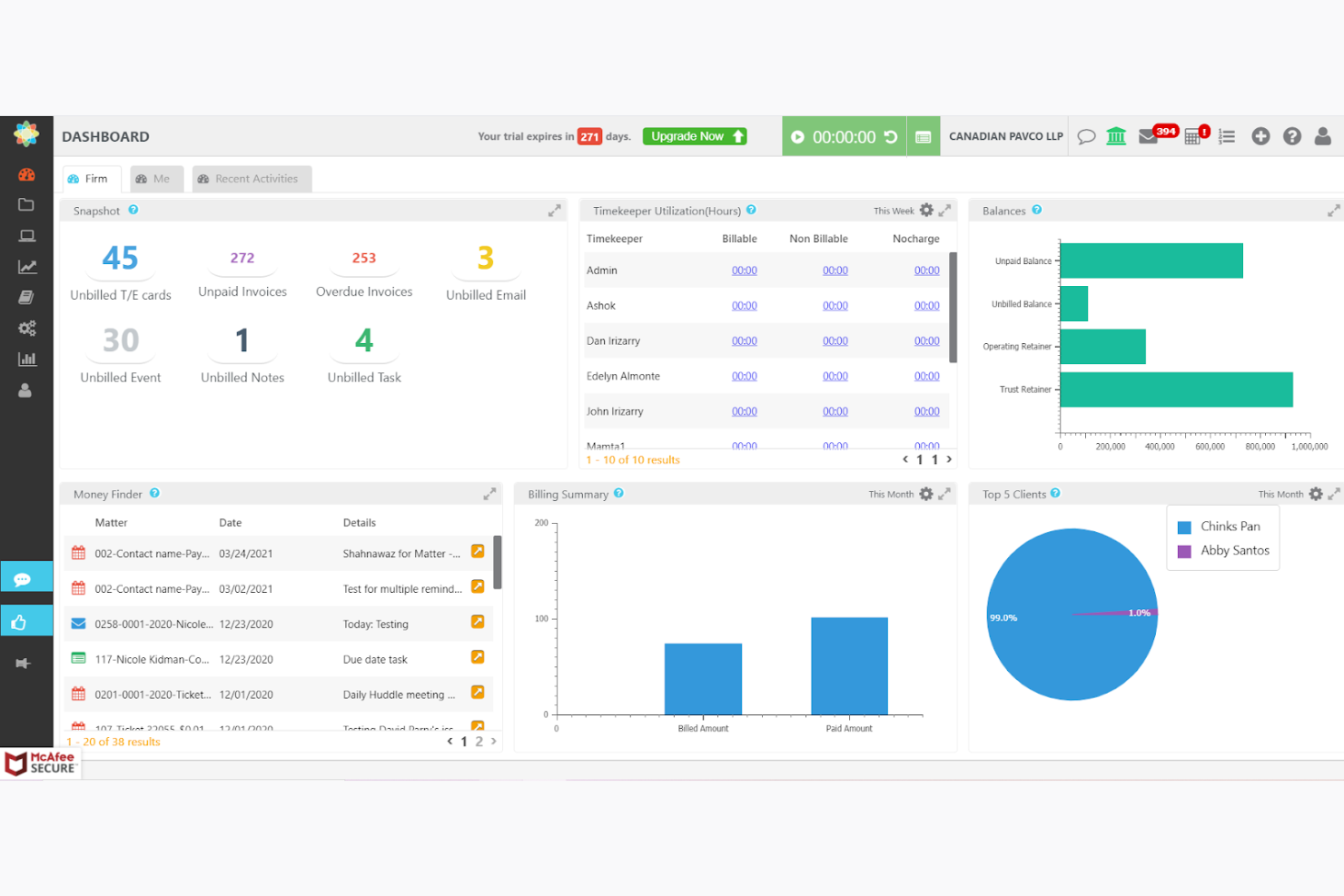
CosmoLex integra fatturazione, rilevazione del tempo e contabilità legale completa in un'unica piattaforma. Il software è specificamente progettato per studi legali, offrendo funzionalità di conformità integrate e garanzie contro la commistione di fondi.
Perché ho scelto CosmoLex: Offre funzionalità di contabilità integrate che eliminano la necessità di QuickBooks, rendendolo unico tra i software legali. Il rilevamento intuitivo di tempi e spese garantisce una fatturazione accurata. La funzionalità di gestione fiduciaria aiuta a mantenere la conformità ai requisiti legali. Grazie a un portale clienti sicuro, puoi migliorare la collaborazione e la comunicazione con i tuoi clienti.
Funzionalità principali e integrazioni:
Funzionalità includono modelli di fattura personalizzabili per adattarsi al brand dello studio, promemoria di fatturazione automatici per ridurre i pagamenti in ritardo e strumenti di reportistica dettagliata per una migliore visione finanziaria.
Integrazioni includono LawPay, NetDocuments, Microsoft 365, Dropbox, Google Drive, Box, QuickBooks Online, Xero, Stripe e PayPal.
Pros and Cons
Pros:
- Contabilità fiduciaria per la conformità
- Promemoria di fatturazione automatici
- Modelli di fattura personalizzabili
Cons:
- Personalizzazione delle fatture limitata
- Nessuna registrazione ricorrente del tempo
- Generazione delle fatture lenta

Ideale per l'etichettatura delle fatture
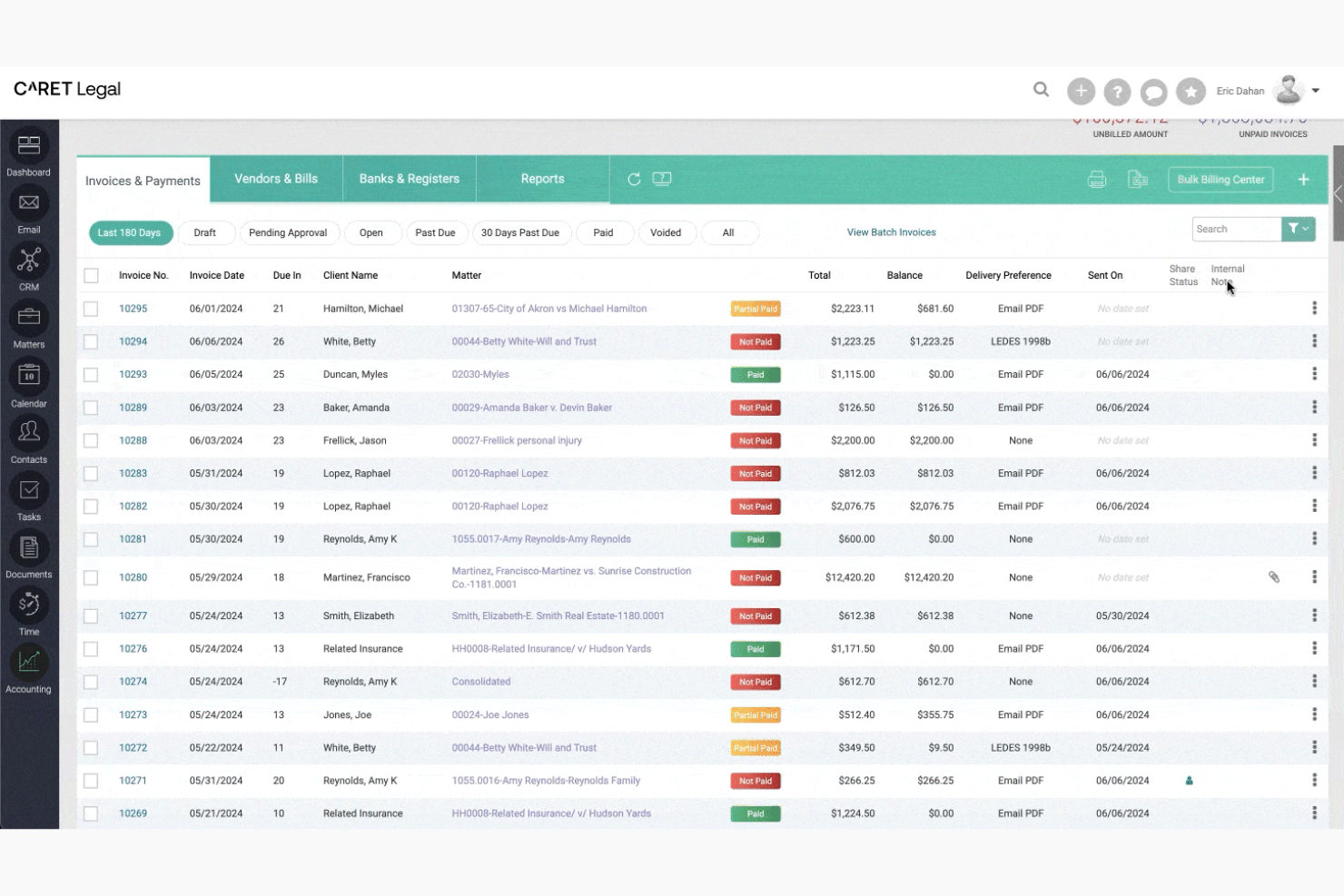
CARET Legal offre un sistema di etichettatura delle fatture che migliora l'organizzazione e l'efficienza nei processi di fatturazione. Permette di categorizzare le fatture per cliente, pratica o criteri personalizzati, facilitando il monitoraggio e il recupero delle informazioni di fatturazione.
Perché ho scelto CARET Legal: Offre un maggiore controllo su come organizzare e monitorare la fatturazione con funzionalità come l'etichettatura delle fatture in base a cliente, pratica o tipo di servizio. È possibile applicare etichette con codici colore per raggruppare le fatture correlate e filtrarle rapidamente durante la revisione dei pagamenti. Supporta inoltre la fatturazione suddivisa e la fatturazione di gruppo, utili per studi con numerose pratiche di minor entità. Con la contabilità integrata, non è necessario passare da un sistema all'altro per gestire la parte finanziaria.
Funzionalità e integrazioni distintive:
Funzionalità includono la sincronizzazione email bidirezionale, l'automazione nativa dei documenti e la gestione delle attività. È possibile utilizzare campi personalizzati per adattare il layout delle pratiche alle proprie esigenze. Il rilevamento del tempo è integrato in ogni parte della piattaforma.
Integrazioni disponibili con LawPay, QuickBooks Online, Dropbox, Google Drive, NetDocuments, Office 365, Microsoft Outlook, Google Calendar, RMail e InfoTrack.
Pros and Cons
Pros:
- Ruoli di fatturazione multiutente
- Anteprima fattura in tempo reale
- Elaborazione dei pagamenti integrata
Cons:
- Assenza di regole automatizzate per la fatturazione
- Calcolo degli interessi poco flessibile
- Nessuna visibilità sulla cronologia delle modifiche

Ideale per la fatturazione ricorrente

Rocket Matter eccelle nell'automazione della fatturazione ricorrente, aiutando gli studi legali con clienti con acconti o piani di pagamento. Offre programmi di fatturazione automatizzati che generano e inviano fatture ed elaborano i pagamenti senza intervento manuale.
Ho scelto Rocket Matter: È il miglior software di fatturazione legale per strumenti di fatturazione flessibili che rendono semplice impostare pagamenti ricorrenti e piani di pagamento. Puoi automatizzare i cicli di fatturazione, inviare fatture in blocco e consentire ai clienti di pagare tramite un portale sicuro. Il sistema supporta anche i formati di fatturazione LEDES e più timer per la rilevazione del tempo. Se gestisci molte attività di fatturazione di routine, Rocket Matter ti aiuta a rimanere organizzato senza molto lavoro manuale.
Funzionalità e integrazioni principali:
Funzionalità includono automazione dei documenti, contabilità fiduciaria e sincronizzazione del calendario. Puoi assegnare compiti ai membri del team e monitorare facilmente le loro scadenze. I moduli per l'acquisizione dei clienti sono personalizzabili e aiutano ad accelerare l'onboarding.
Integrazioni includono QuickBooks Online, LawPay, Dropbox, Box, Evernote, Google Calendar, Office 365, Microsoft Outlook, OneDrive e ScanSnap.
Pros and Cons
Pros:
- Automazione della fatturazione in batch
- Modelli di fattura personalizzabili
- Integrazione con la contabilità fiduciaria
Cons:
- Nessun tracciamento delle versioni delle fatture
- Manca la modalità anteprima della fattura
- Pochi campi di fatturazione personalizzati
CaseFox
Ideale per la fatturazione personalizzabile
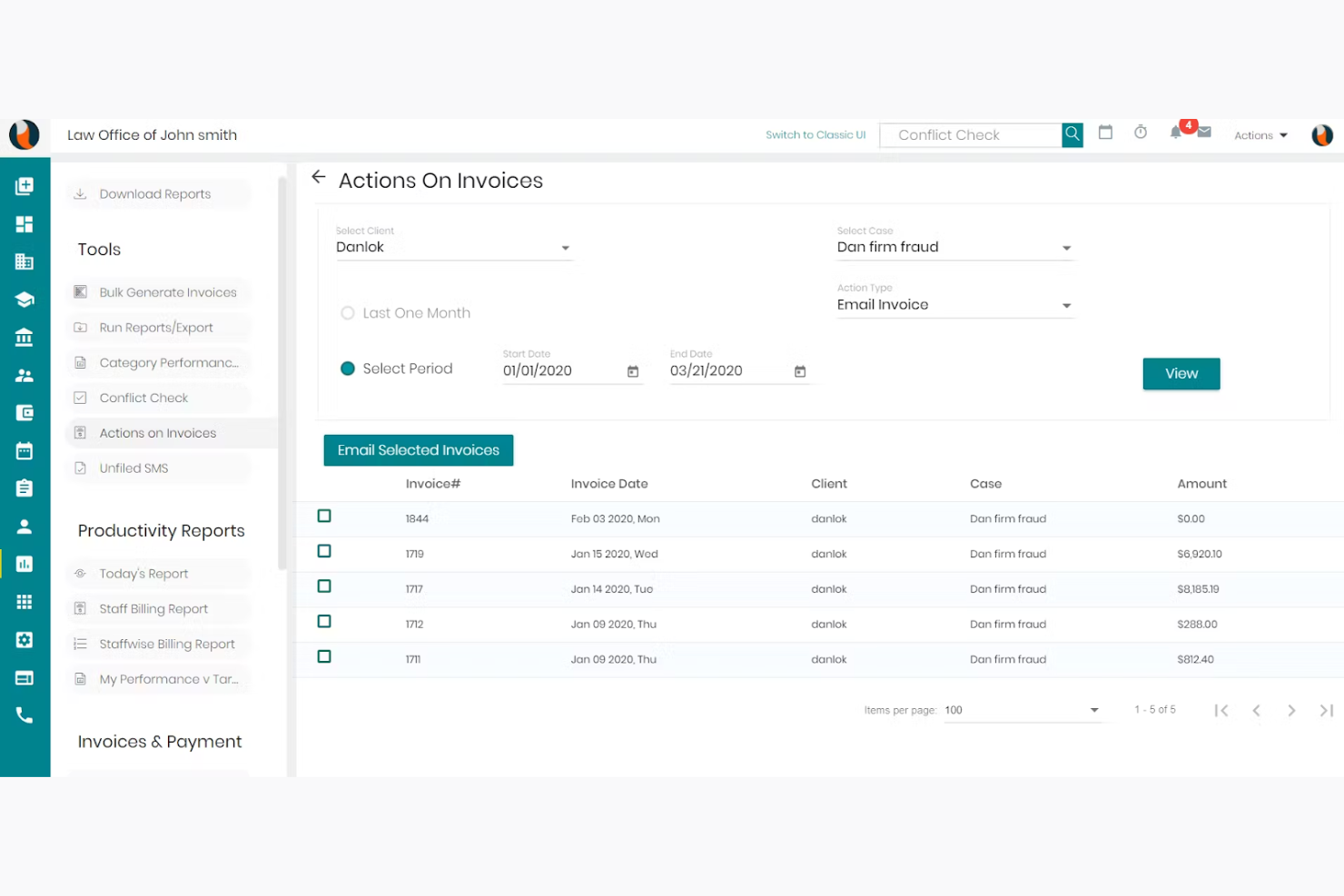
CaseFox offre fatturazione personalizzabile per una gestione flessibile e professionale delle fatture. Propone modelli di fattura personalizzati con il proprio marchio, permettendo agli studi di inserire loghi e adattare i dettagli delle fatture secondo il proprio branding.
Perché ho scelto CaseFox: Offre opzioni di fatturazione personalizzabili che si adattano a diverse pratiche legali, rendendolo versatile per studi di varie dimensioni. La funzione di fatturazione LEDES garantisce la conformità agli standard del settore, mentre la generazione di fatture in blocco consente di risparmiare tempo. Il software comprende anche la gestione dei fondi fiduciari e opzioni di pagamento online, migliorando la gestione finanziaria. Gli utenti apprezzano la sua interfaccia intuitiva e la convenienza, aspetti essenziali per operazioni efficienti.
Funzionalità e integrazioni principali:
Funzionalità includono tracciamento automatico del tempo per una fatturazione precisa, un portale clienti sicuro per comunicazioni e pagamenti, e strumenti avanzati di reportistica per monitorare le prestazioni dello studio.
Integrazioni includono Microsoft Outlook, Google Suite, LawPay, QuickBooks e PayPal.
Pros and Cons
Pros:
- Generazione di fatture in blocco
- Promemoria di pagamento automatici
- Conformità nella gestione dei fondi fiduciari
Cons:
- Nessuna assegnazione intelligente dei pagamenti
- Nessun pagamento parziale
- Modifica delle fatture poco flessibile

LEAP
Ideale per la fatturazione di moduli giudiziari

LEAP è un software di fatturazione per studi legali che integra una vasta libreria di moduli legali automatizzati e specifici per giurisdizione con il suo sistema di fatturazione. Gli avvocati possono generare moduli giudiziari specifici per stato che si auto-compilano con le informazioni di clienti e pratiche, riducendo l'inserimento manuale dei dati e minimizzando gli errori.
Perché ho scelto LEAP: Collega i moduli giudiziari direttamente alle pratiche dei clienti, consentendo di auto-compilarli con i dettagli del caso e della fatturazione. Puoi registrare il tempo mentre lavori su questi moduli e generare fatture basate sull'attività svolta. C'è inoltre il supporto sia per tariffe fisse che per fatturazione oraria, così puoi adattarlo alle esigenze del tuo team. Se il tuo studio si occupa molto di lavori legali basati su moduli, queste funzionalità possono farti risparmiare tempo e ridurre le revisioni.
Funzionalità principali & integrazioni:
Funzionalità includono modelli specifici per ambito legale, elenchi di attività per diversi tipi di pratiche e un'app mobile per lavorare in mobilità. È possibile gestire i conti fiduciari senza necessità di software di terze parti. LEAP include anche il controllo di versione dei documenti così il tuo team non perde traccia delle modifiche.
Integrazioni includono Microsoft Word, Outlook, Xero, QuickBooks Online, InfoTrack, LawConnect, RapidPay, Google Workspace, Google Calendar e Bundledocs.
Pros and Cons
Pros:
- Modelli di fattura personalizzati con branding
- Elaborazione batch delle fatture
- Gestione integrata dei pagamenti
Cons:
- Personalizzazione delle fatture limitata
- Nessun avviso di fatture scadute
- Nessuna previsione di fatturazione futura
Altri software di fatturazione per avvocati
Ecco alcune opzioni aggiuntive di software per la fatturazione degli studi legali che non sono entrate nella mia selezione, ma che vale comunque la pena valutare:


Come Valuto il Software di Fatturazione per Avvocati
Cerco due cose: requisiti di base indispensabili come la fatturazione LEDES e la contabilità fiduciaria, poi elementi distintivi come i workflow di pre-fatturazione e le integrazioni di e-billing che distinguono i migliori strumenti.
Funzionalità Fondamentali (Requisiti Minimi per Questa Lista)
Quando seleziono gli strumenti per la mia lista, valuto ognuno su una scala da 0 (non offre la funzionalità) a 5 (eccelle in quest'area) per ogni funzionalità fondamentale elencata di seguito. Poi, trasformo il punteggio totale dello strumento in una percentuale. Ogni strumento deve raggiungere un punteggio totale minimo del 65% per essere considerato per l'inclusione.
- Conversione da Tempo a Fattura: Verifico se le ore e le spese fatturabili rilevate confluiscono in fatture dettagliate con tariffe dell'avvocato e riferimenti alla pratica allegati.
- Supporto ai Formati di Fatturazione Legale: Gli strumenti dovrebbero esportare fatture in LEDES 1998B o XML e supportare i codici attività UTBMS/ABA per l'invio di e-billing ai clienti aziendali.
- Integrazione con la Contabilità Fiduciaria: Valuto quanto bene la piattaforma gestisca i saldi IOLTA, gli acconti e la separazione dei fondi fiduciari da quelli operativi sulle fatture.
- Struttura di Fatturazione Basata sulle Pratiche: Ogni strumento deve organizzare le fatture per cliente e pratica, supportando modalità come tariffa oraria, forfait e a risultato nello stesso caso.
- Pagamenti Online & Monitoraggio Crediti: È importante un'elaborazione dei pagamenti conforme alle normative legali, quindi cerco integrazioni con provider come LawPay che indirizzano i fondi al conto corretto.
- Workflow di Revisione Pre-Fattura: Cerco bozze di fatture modificabili che permettano agli avvocati di correggere voci, aggiustare le descrizioni e approvare le fatture prima che arrivino al cliente.
Una volta che ho una lista di strumenti che soddisfano i criteri, considero ciò che differenzia ciascuna piattaforma.
Fattori Differenzianti (Cosa Distingue i Fornitori)
Ecco come confronto e metto a confronto i vari fornitori:
Funzionalità Distintive
Presto particolare attenzione alla stesura assistita da IA delle descrizioni. Gli strumenti che affinano le registrazioni di tempo vaghe—come trasformare "chiamata con cliente" in una descrizione dettagliata—aiutano a ridurre le correzioni in fase di pre-fatturazione. Valuto anche se una piattaforma offre un portale di fatturazione clienti in cui i clienti possono visualizzare le fatture, sollevare contestazioni e inviare pagamenti senza scambi di email. Il controllo del budget e delle regole è un altro elemento distintivo; gli strumenti migliori segnalano le voci che violano i limiti di tariffa o i requisiti dei codici attività del cliente prima dell'invio della fattura.
Oltre le Funzionalità
Le integrazioni all'interno dell'ecosistema legale sono molto importanti qui. Verifico se uno strumento si collega nativamente a piattaforme di gestione dello studio come Clio o PracticePanther, e se si sincronizza con sistemi di contabilità come QuickBooks o Xero senza riconciliazioni manuali. Anche l'adeguatezza alle dimensioni dello studio è un fattore che considero—un libero professionista che migra da fogli di calcolo ha esigenze molto diverse rispetto a uno studio medio che si sposta da sistemi legacy come Timeslips o PCLaw. Anche la struttura dei prezzi merita attenzione, in particolare se la fatturazione è per collaboratore o per studio, poiché questa distinzione cambia il costo totale in modo significativo man mano che lo studio cresce.
Come scegliere un software di fatturazione per avvocati
È facile perdersi in lunghi elenchi di funzionalità e strutture tariffarie complesse. Per aiutarti a rimanere concentrato mentre affronti il tuo processo di selezione del software, ecco una lista di fattori da tenere a mente:
| Fattore | Cosa considerare |
| Scalabilità | Il software crescerà insieme al tuo studio? Considera le esigenze future e se lo strumento è in grado di gestire carichi di lavoro maggiori o un numero più elevato di clienti con l'espansione dello studio. |
| Integrazioni | Funziona con i tuoi sistemi attuali? Verifica la compatibilità con strumenti esistenti come software di contabilità o sistemi di gestione dei documenti. |
| Personalizzazione | Puoi adattarlo alle tue esigenze? Cerca opzioni per modificare i flussi di lavoro, i modelli di fattura e le autorizzazioni degli utenti in base ai processi del tuo studio. |
| Facilità d'uso | È facile da usare per il tuo team? Valuta la curva di apprendimento e se il personale può adattarsi rapidamente senza una formazione approfondita. |
| Implementazione e avviamento | Quanto è fluida la transizione? Considera il tempo e le risorse necessari per implementare il software e formare efficacemente il tuo team. |
| Costo | Rientra nel tuo budget? Confronta i piani tariffari e considera eventuali costi o commissioni nascosti per funzionalità o utenti aggiuntivi. |
| Misure di sicurezza | Come protegge i tuoi dati? Assicurati che offra crittografia, controlli degli accessi e aggiornamenti di sicurezza regolari per proteggere le informazioni sensibili dei clienti. |
| Disponibilità dell'assistenza | Avrai l'aiuto necessario? Verifica la presenza di opzioni di assistenza 24 ore su 24, 7 giorni su 7, i tempi di risposta e la disponibilità di risorse come domande frequenti o assistenza tramite chat dal vivo. |
Che cos'è un software di fatturazione per avvocati?
Il software di fatturazione per avvocati aiuta gli studi legali a gestire in modo efficiente la fatturazione e i pagamenti. Avvocati, paralegali e assistenti legali utilizzano questi strumenti per risparmiare tempo e ridurre gli errori nei processi finanziari.
Le sue funzionalità di fatturazione automatizzata, monitoraggio del tempo e gestione sicura dei pagamenti favoriscono una fatturazione accurata e migliorano il flusso di cassa. Questi strumenti aumentano l'efficienza complessiva degli studi legali semplificando la gestione finanziaria.
Funzionalità del software di fatturazione per avvocati
Quando scegli un software di fatturazione per avvocati, presta attenzione alle seguenti funzionalità principali:
- Fatturazione automatizzata: Semplifica il processo di fatturazione generando e inviando automaticamente le fatture, facendo risparmiare tempo e riducendo gli errori manuali.
- Monitoraggio del tempo: Registra con precisione le ore fatturabili per garantire che ai clienti venga addebitato correttamente il tempo dedicato ai loro casi.
- Modelli di fattura personalizzabili: Ti consente di adattare le fatture in modo che rispecchino il marchio del tuo studio e le esigenze specifiche dei clienti.
- Elaborazione sicura dei pagamenti: Offre una piattaforma sicura che consente ai clienti di effettuare pagamenti, proteggendo le informazioni finanziarie sensibili.
- Contabilità fiduciaria: Aiuta a gestire i fondi dei clienti detenuti in conti fiduciari, garantendo la conformità alle normative finanziarie del settore legale.
- Portali clienti: Offrono uno spazio sicuro in cui i clienti possono visualizzare le fatture, effettuare pagamenti e comunicare con il tuo team.
- Reportistica avanzata: Fornisce informazioni sulle prestazioni della fatturazione e sulla situazione finanziaria attraverso analisi e report dettagliati.
- Funzionalità di integrazione: Si collega agli strumenti già in uso, come i software di contabilità e i sistemi di gestione dei documenti, per creare un flusso di lavoro coerente.
- Accesso da dispositivi mobili: Ti consente di gestire le attività di fatturazione anche in mobilità, garantendo flessibilità e praticità.
- Gestione della conformità: Garantisce che tutte le pratiche di fatturazione rispettino gli standard del settore e i requisiti di legge, riducendo il rischio di non conformità.
Vantaggi del software di fatturazione per avvocati
L'implementazione di un software di fatturazione per avvocati offre diversi vantaggi al tuo team e alla tua attività. Ecco alcuni dei vantaggi che puoi aspettarti:
- Risparmio di tempo: La fatturazione automatizzata e il monitoraggio del tempo riducono il tempo dedicato alle attività manuali di fatturazione, consentendo al tuo team di concentrarsi su lavori di maggior valore.
- Maggiore precisione: Funzionalità come il monitoraggio del tempo e i modelli di fattura personalizzabili garantiscono fatture precise, riducendo al minimo gli errori e le contestazioni dei clienti.
- Migliore flusso di cassa: L'elaborazione sicura dei pagamenti e i promemoria automatici contribuiscono ad accelerare gli incassi, migliorando il flusso di cassa del tuo studio.
- Migliore conformità: Le funzionalità di contabilità fiduciaria e di gestione della conformità aiutano il tuo studio a rispettare i requisiti legali in materia di fatturazione, riducendo il rischio di sanzioni.
- Maggiore soddisfazione dei clienti: I portali clienti offrono trasparenza e praticità, facilitando la visualizzazione e il pagamento delle fatture e la comunicazione con il tuo team.
- Informazioni utili: La reportistica avanzata fornisce informazioni basate sui dati sulle prestazioni finanziarie del tuo studio, contribuendo a prendere decisioni strategiche.
- Flessibilità e praticità: L'accesso da dispositivi mobili consente al tuo team di gestire le attività di fatturazione da qualsiasi luogo, garantendo la continuità operativa e la capacità di adattamento.
Costi e prezzi del software di fatturazione per avvocati
La scelta di un software di fatturazione per avvocati richiede la comprensione dei diversi modelli e piani tariffari disponibili. I costi variano in base alle funzionalità, alle dimensioni del team, agli eventuali componenti aggiuntivi e ad altri fattori. La tabella seguente riassume i piani più comuni, i relativi prezzi medi e le funzionalità generalmente incluse nelle soluzioni software di fatturazione per avvocati:
Tabella di confronto dei piani per il software di fatturazione per avvocati
| Tipo di piano | Prezzo medio | Funzionalità comuni |
| Piano gratuito | $0 | Fatturazione di base, supporto limitato e reportistica di base. |
| Piano personale | $10-$30/utente/mese | Monitoraggio del tempo, fatture personalizzabili e supporto via e-mail. |
| Piano aziendale | $40-$70/ utente/mese | Fatturazione automatizzata, portali clienti, reportistica avanzata e integrazioni. |
| Piano per grandi aziende | $80-$150/ utente/mese | Personalizzazione completa, supporto dedicato, gestione della conformità e funzionalità di sicurezza avanzate. |
Domande frequenti sul software di fatturazione per avvocati
Ecco alcune risposte alle domande frequenti sul software di fatturazione per avvocati:
Come funziona il software di fatturazione?
Il software di fatturazione automatizza la creazione e la gestione delle fatture per i servizi. Semplifica la fatturazione generando fatture, monitorando i pagamenti e aggiornando i registri finanziari. Per gli avvocati, garantisce una fatturazione accurata del tempo dedicato al lavoro per i clienti, contribuendo a mantenere la solidità finanziaria e a effettuare previsioni.
Come funziona la fatturazione per gli avvocati?
Gli avvocati utilizzano spesso la fatturazione oraria, addebitando ai clienti il tempo dedicato alla ricerca, alla redazione di documenti e alle udienze. Alcuni possono applicare tariffe forfettarie o tariffe basate sul risultato. Il software di fatturazione aiuta a monitorare questi metodi di fatturazione, garantendo una fatturazione accurata e puntuale ai clienti.
Che cos'è la regola della fatturazione per terzi?
La regola dei terzi è una strategia di fatturazione secondo cui i ricavi vengono suddivisi in tre parti: una per la remunerazione del team, una per coprire le spese operative e una per il profitto. Questo aiuta gli studi legali a bilanciare entrate e spese, garantendo stabilità finanziaria e redditività.
In che modo il software di fatturazione aiuta i professionisti legali e gli ordini forensi?
Il software di fatturazione per avvocati aiuta i professionisti legali a seguire le linee guida dell’ABA e degli ordini forensi. Nel settore legale, semplifica il processo di fatturazione legale, automatizza la creazione delle fatture e riduce il lavoro amministrativo, garantendo che le pratiche di fatturazione rispettino gli standard professionali legali.
Come possono gli studi legali utilizzare il software di fatturazione per soddisfare le proprie esigenze?
Il software di fatturazione per avvocati supporta gli studi e gli uffici legali automatizzando le fatture, monitorando il tempo e gestendo le finanze dello studio. Si adatta alle esigenze dello studio, è adatto al settore legale e risolve esigenze specifiche di studi di diverse dimensioni.
Quali funzionalità di fatturazione servono agli avvocati in un software di fatturazione?
Il software di fatturazione per avvocati semplifica il processo di fatturazione legale con opzioni di fatturazione, strumenti per le fatture legali e fatturazione elettronica. Automatizza i promemoria per i pagamenti in ritardo, garantendo una fatturazione puntuale e migliori rapporti con i clienti.
In che modo il software di fatturazione gestisce i pagamenti e i conti dei clienti?
Il software di fatturazione per avvocati monitora i crediti verso clienti, supporta i pagamenti tramite assegno elettronico e gestisce i conti IOLTA. Organizza i conti dei clienti e garantisce la conformità agli standard legali per la gestione dei pagamenti.
Qual è il prossimo passo?
Per ulteriori approfondimenti e risorse legali, iscriviti alla nostra newsletter e unisciti a una comunità di professionisti legali innovativi che stanno plasmando il futuro del diritto.