

10 Best Email Management Software for Law Firms in 2026

Best Email Management Software for Law Firms Shortlist


Email management software for law firms helps you organize, secure, and track legal emails while supporting workflow and compliance needs. If your team struggles with misfiled messages, security risks, or slow collaboration, choosing the right platform can make a real difference. This guide shows you which software stands out in 2026 for legal professionals who need dependable solutions that safeguard client information, support client-matter organization, and help you stay audit-ready. You'll get an inside look at the top-rated tools and which features matter most for law firm workflows.
Why Trust Our Software Recommendations
Our team has been testing and reviewing software since 2012. As legal practice leaders ourselves, we know how difficult—and important—it is to choose the right software.
For this guide, we evaluated tools using hands-on testing and independent research, scoring tools using our selection criteria.
Our reviews reflect our human editorial judgment, not a sales pitch.
Comparison Table: Email Management Software for Law Firms
This comparison table summarizes pricing details for my top email management software for law firms selections.
| Tool | Best For | Trial Info | Price | ||
|---|---|---|---|---|---|
| 1 | Best for automatic time tracking with email | Free demo available | Pricing upon request | Website | |
| 2 | Best for personal injury workflow automation | Free demo available | Pricing upon request | Website | |
| 3 | Best for court-admissible email delivery proof | Free demo available | From $7/user/month (billed annually) | Website | |
| 4 | Best for AI-drafted legal email templates | 7-day free trial | From $49/user/month | Website | |
| 5 | Best for small firm financial insights | Free demo available | Pricing upon request | Website | |
| 6 | Best for secure mobile access to files | Free demo available | Pricing upon request | Website | |
| 7 | Best for Microsoft Teams integration | Free demo available | Pricing upon request | Website | |
| 8 | Best for matter-centric Outlook email filing | 7-day free trial + free plan + free demo available | From $395/month | Website | |
| 9 | Best for on-premise compliance and audit trails | 30-day free trial + free demo available | Pricing upon request | Website | |
| 10 | Best for filing Outlook emails to SharePoint | 14-day free trial + free demo available | Pricing upon request | Website |
Best Email Management Software for Law Firms Reviews
Below are my detailed summaries of the best email management software for law firms that made it onto my shortlist. My reviews offer a detailed look at the features, integrations, and best use cases of each platform to help you find the best one for you.

Best for automatic time tracking with email
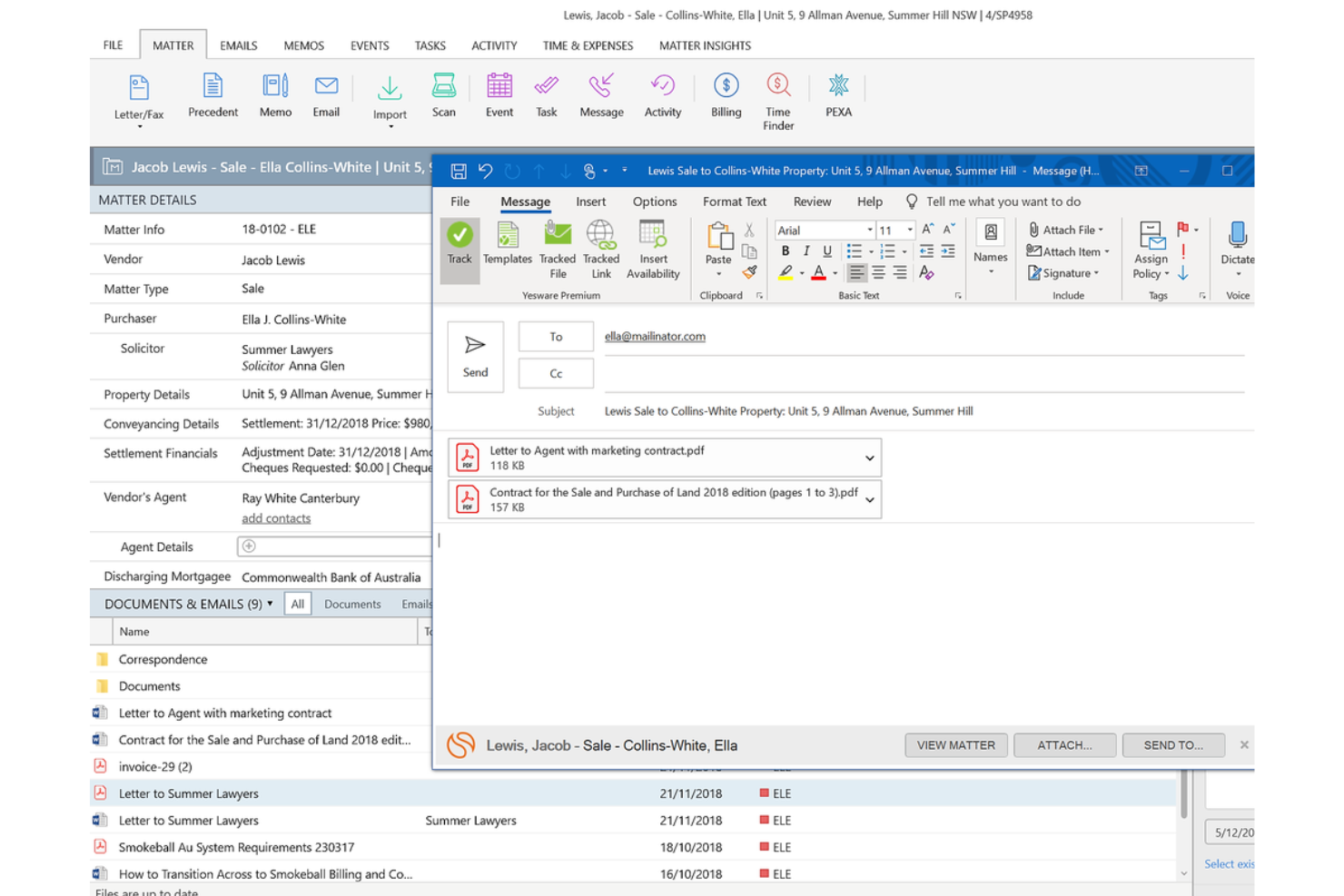
Smokeball is a legal practice management and email management platform for law firms that features automatic time tracking, matter-centric email filing, document automation, and client communication tools.
Who Is Smokeball Best For?
Small and midsize law firms that want automatic email time tracking and matter management in one platform.
Why I Picked Smokeball
I picked Smokeball because I can track every minute spent drafting and responding to emails automatically—my time entries update without manual input, and all email correspondence links directly to the correct matter.
Smokeball Key Features
- Matter-centric email filing: Organize all emails by matter for easy retrieval.
- Document automation: Generate legal documents using customizable templates from within each case file.
- Client portal: Share documents and messages securely with clients in one place.
- Calendar and task management: Schedule deadlines and assign tasks tied to cases and contacts.
Smokeball Integrations
Integrations include AcroDocz, Answering Legal, Aquarius Reporting, Arctrieval, Birdeye, Briefpoint, Bundledocs, Campaign Monitor, Chicago Title, and CollBox.
Pros and Cons
Pros:
- Custom rules for email filing and retention
- Built-in document automation for correspondence
- Email automatically linked to case matters
Cons:
- Requires desktop application installation
- Automatic tracking may capture irrelevant emails

CloudLex
Best for personal injury workflow automation
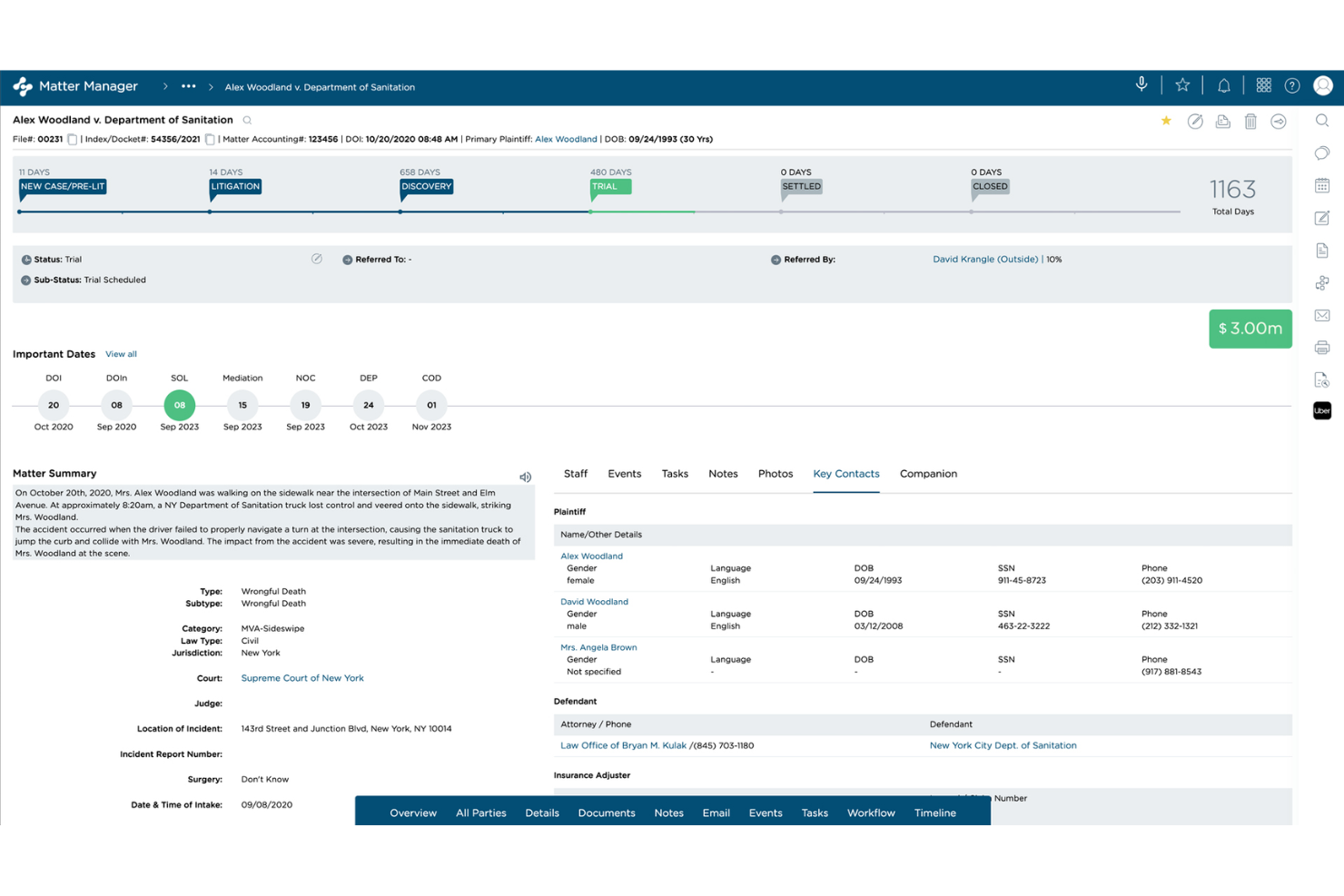
CloudLex is a cloud-based legal management platform designed for law firms, offering matter management, email management, intake, document handling, and built-in communication tools tailored for personal injury practices.
Who Is CloudLex Best For?
Personal injury law firms want practice-wide workflow and email management built specifically for their case processes.
Why I Picked CloudLex
CloudLex earns its spot on my shortlist because I can automate emails directly from case workflows and centralize all communication within a matter. I like that my team can create automated reminders and intake emails tied to the specific stages of a personal injury case.
CloudLex Key Features
- Email logging and audit trails: Track, archive, and timestamp all email communications related to a case.
- Outlook integration: Sync emails and attachments directly from Microsoft Outlook into CloudLex matters.
- Role-based access controls: Set granular permissions on email visibility and content within matters.
- Centralized client communications hub: Store emails, messages, and attachments in one place for each case.
CloudLex Integrations
Integrations include iCal, Google Calendar, OneDrive, Google Drive, Dropbox, Adobe Sign, DocuSign, QuickBooks Online, Gmail, and Outlook.
Pros and Cons
Pros:
- Tracks outgoing and incoming email correspondence
- Centralizes email threads in Matter records
- Automates intake emails for case stages
Cons:
- Lacks built-in email signature management
- No bulk email sending from the platform

RMail
Best for court-admissible email delivery proof
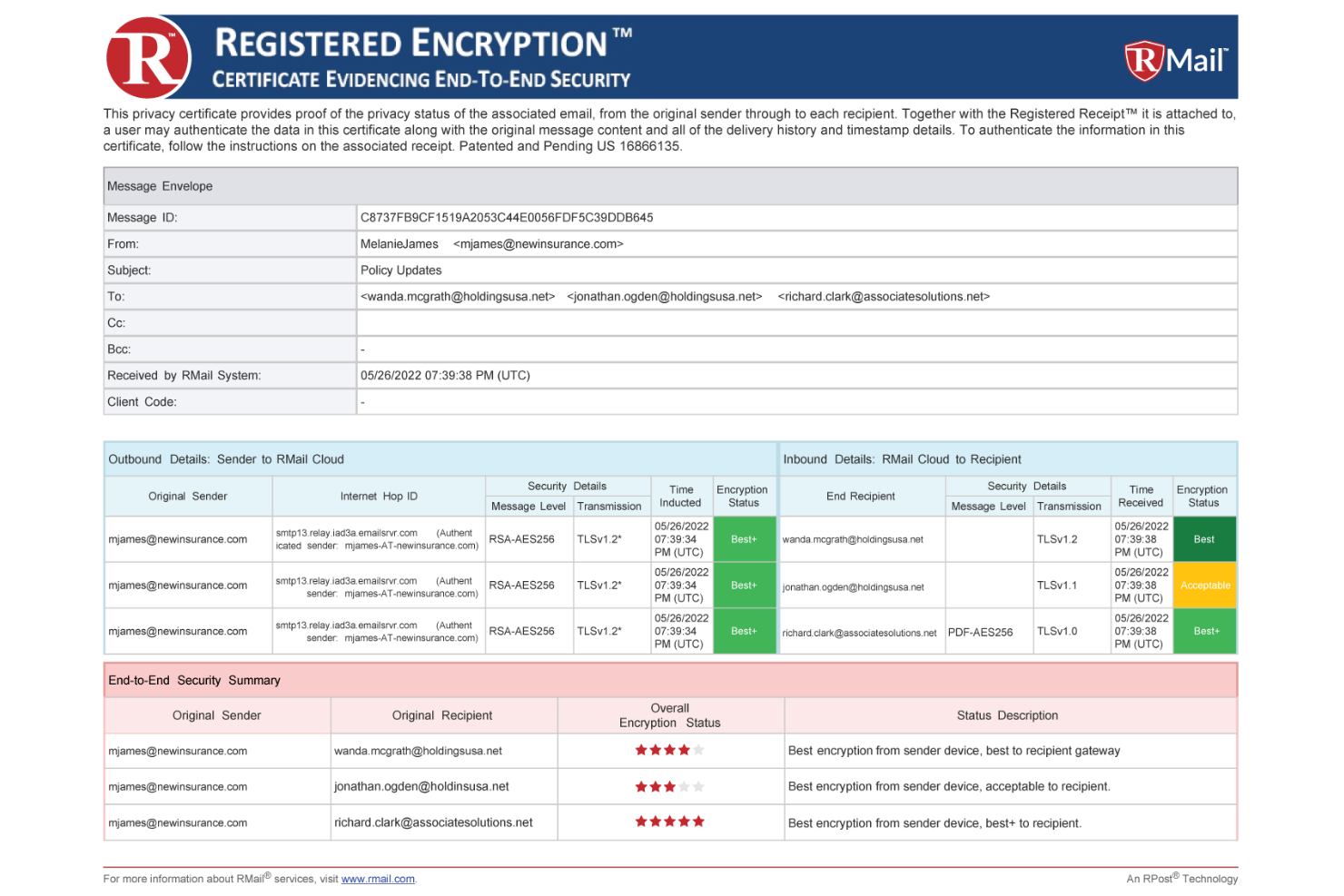
RMail is an email management platform for law firms that provides registered proof of email delivery, secure messaging, e-signatures, and advanced email encryption.
Who Is RMail Best For?
Litigation attorneys and legal teams who need verifiable, court-admissible evidence of their email delivery and content.
Why I Picked RMail
I picked RMail as one of the best because I can send registered emails that provide legally verifiable, court-admissible proof of delivery and content. I like that my team can instantly generate a tamper-evident record for high-risk communications and client notifications.
RMail Key Features
- Outlook and Gmail plug-ins: Send secure and registered emails directly from your existing email client.
- Email encryption options: Choose between automatic or on-demand encryption for sensitive correspondence.
- Secure large file sharing: Transmit encrypted attachments up to 1GB in size using secure file links.
- E-signature capability: Prepare and send documents for a legally binding electronic signature within email threads.
RMail Integrations
Integrations include Outlook, Gmail, Zimbra, Salesforce, SSM Cloud, Zywave Partner Platform, Yardi Breeze Premier, Applied Epic, iManage, and NetDocuments.
Pros and Cons
Pros:
- Offers built-in secure e-signature requests
- Supports encrypted large file transmission
- Provides court-admissible email delivery proof
Cons:
- No built-in docketing or legal task features
- Requires add-ins for Outlook or Gmail use

Clio
Best for AI-drafted legal email templates
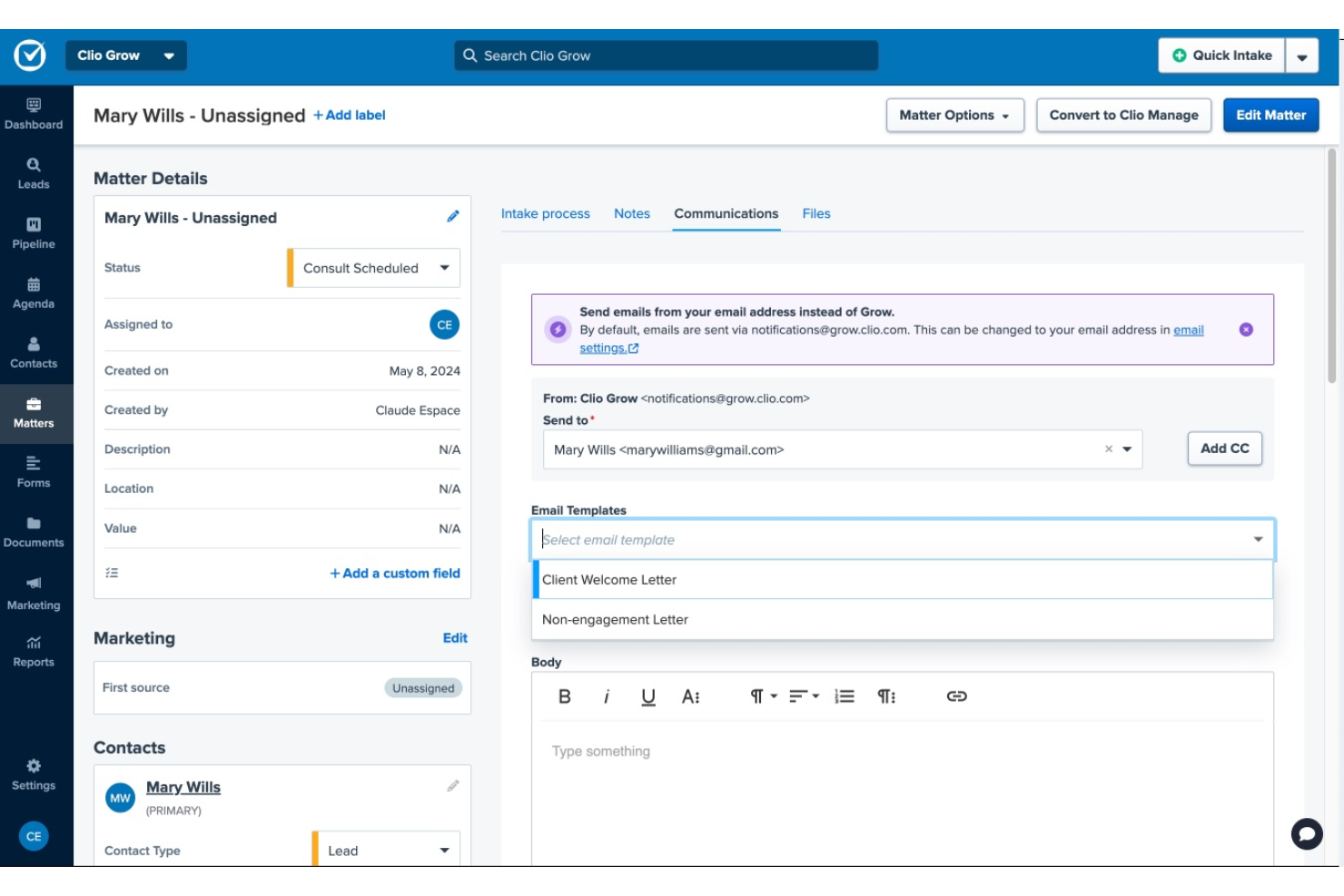
Clio is a cloud-based email management software for law firms that lets you manage client communications, automate outreach campaigns, and create reusable branded email templates within a legal practice management platform.
Who Is Clio Best For?
Clio suits small to midsize law firms or solo practitioners in North America who want integrated email campaign tools with legal practice management.
Why I Picked Clio
I picked Clio as one of the best because I can access AI-drafted legal email templates made for client engagement, draft newsletters with built-in legal disclaimers, and quickly customize content that fits different matter types my firm handles.
Clio Key Features
- Scheduled email campaigns: Set specific dates and times for law firm newsletters and client updates.
- Email analytics dashboard: Track open, click, and delivery rates for all sent emails.
- Contact segmentation: Filter recipients by matter type, status, or custom tags before sending.
- Branded email builder: Design and edit email layouts with your firm’s logo and colour palette.
Clio Integrations
Integrations include Scorpion RevenueMAX, OurFamilyWizard, AltFee, NetDocuments by Spring, Xero, Prolegis Solutions, Lawyer Conveyance System, QuickBooks Online, and CallConnector.ai by ion8.
Pros and Cons
Pros:
- Automates legal disclaimer insertion
- Built-in branded email design options
- AI drafts legal-specific email content
Cons:
- Email analytics lack advanced segmentation
- Limited campaign automation workflows

Best for small firm financial insights
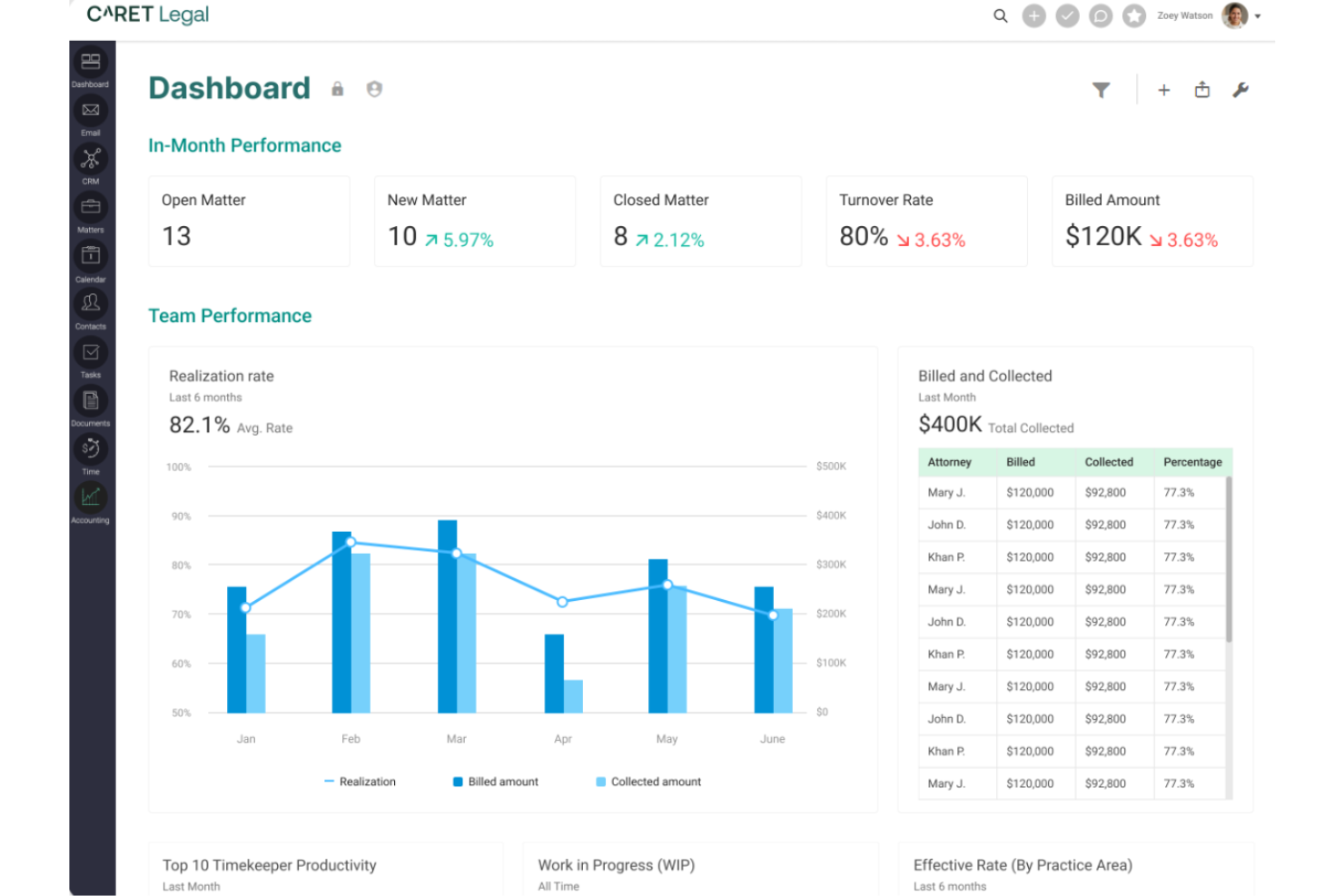
CARET Legal is a cloud-based legal practice management platform that includes email management, document automation, case tracking, calendar, and accounting features for law firms.
Who Is CARET Legal Best For?
Small law firm administrators and managing partners seeking built-in accounting and email management in one system.
Why I Picked CARET Legal
I picked CARET Legal because I can pull detailed financial reports and spot trends for my small firm while managing client emails right alongside billing and case workflows—all from one dashboard. I rely on its insights to track practice health.
CARET Legal Key Features
- Threaded email view: Keep all related messages grouped within client matters.
- Document management system: Store, organize, and link files to matters alongside emails.
- Permission controls: Set access rights for confidential client communications.
- Integrated calendar: Manage appointments and deadlines directly from within client matters.
CARET Legal Integrations
Integrations include Microsoft 365, Google Workspace, IMAP, LawToolBox, Lawmatics, HotDocs, OneDrive, NetDocuments, CARET Pay, and QuickBooks Online.
Pros and Cons
Pros:
- Email tagging links messages to tasks
- Bulk email import for case records
- Matter-centric email filing by default
Cons:
- Limited offline access to email archives
- No mobile push notifications for emails

iManage
Best for secure mobile access to files
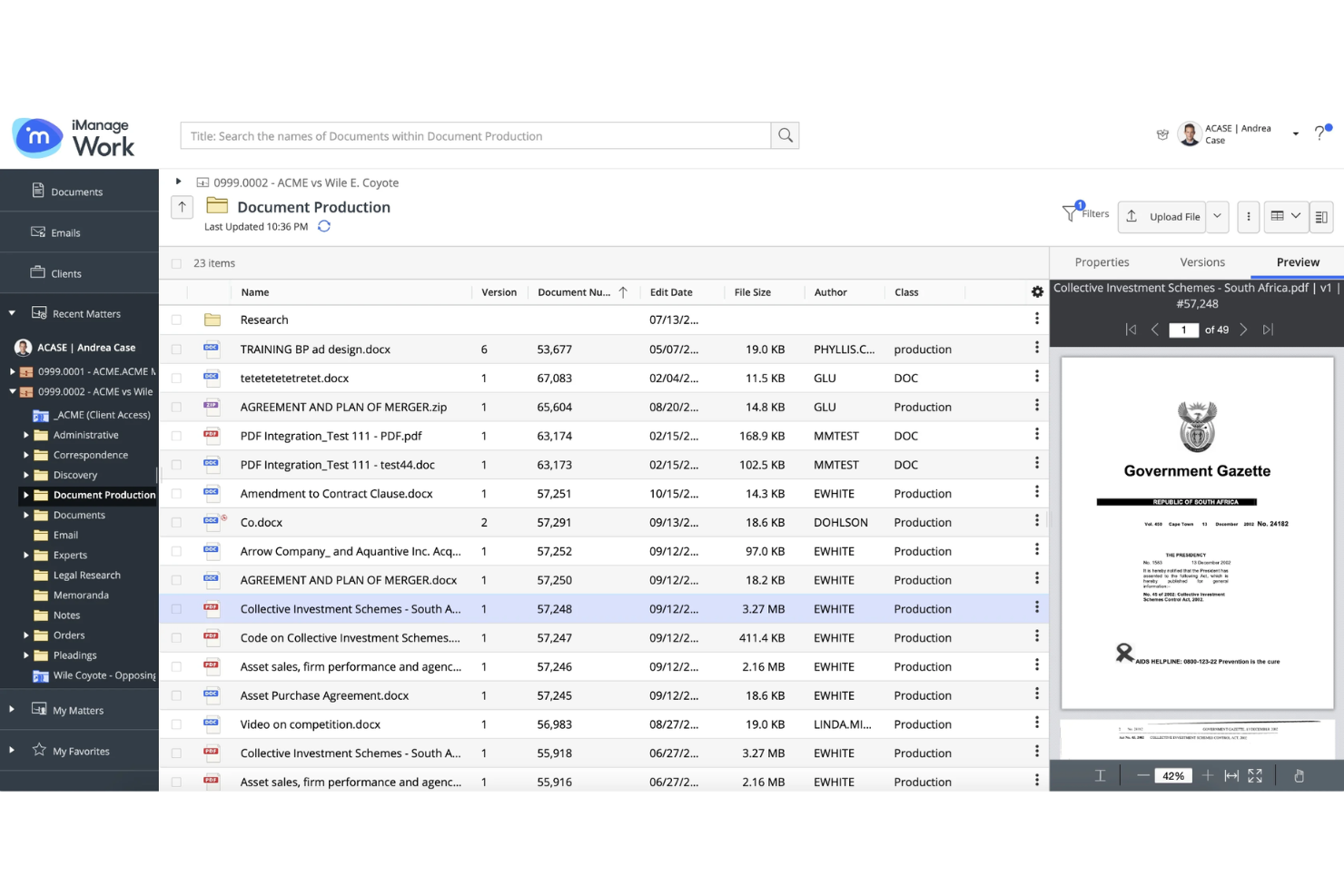
iManage is a document and email management platform for law firms that offers centralized file organization, secure collaboration, and advanced search tools for handling client and matter-related content across devices.
Who Is iManage Best For?
iManage suits law firms, corporate legal departments, and legal operations teams that prioritize mobile file access and secure document management across devices.
Why I Picked iManage
I picked iManage because I can access, edit, and save sensitive legal files securely from my phone—even offline—and the mobile app supports biometric authentication plus encrypted document storage for peace of mind on the go.
iManage Key Features
- Email filing and organization: File emails directly into matters and folders for organized recordkeeping.
- Advanced document search: Locate files and emails using full-text and metadata filtering.
- Version control: Track and manage multiple documents and email versions automatically.
- Audit trails and activity logs: Maintain detailed logs of file access and changes for compliance.
iManage Integrations
Integrations include Avvoka, HighQ, DocuSign, Power BI, Slack, BRYTER, and ContractExpress.
Pros and Cons
Pros:
- Access files securely offline
- Centralized folder and matter-based filing system
- Secure mobile app with offline document access
Cons:
- Limited active workspace sync
- Requires separate licenses for addons

Best for Microsoft Teams integration

NetDocuments is a cloud-based document and email management system for law firms, combining email filing, document collaboration, and secure content storage in a single solution.
Who Is NetDocuments Best For?
Large law firms and corporate legal departments that need centralized, cloud-based document and email management with deep Microsoft Teams integration.
Why I Picked NetDocuments
I picked NetDocuments because my team can manage client emails and documents directly inside Microsoft Teams channels, using threaded conversations to organize matter files and correspondence in one place. Secure permissions keep sensitive content accessible only to assigned users.
NetDocuments Key Features
- Document version management: Access, track, and restore previous versions of documents and emails.
- Full-text search: Instantly search within emails, documents, and metadata across all matters.
- Automated retention policies: Set custom rules for archiving and deleting emails and files.
- Role-based access controls: Assign granular permissions to ensure only authorized users can view specific content.
NetDocuments Integrations
Integrations include Microsoft 365, Copilot, DocuSign eSignature, FileTrail, Intapp, Kofax, LexisNexis, Litera, Lupl, and Mitratech.
Pros and Cons
Pros:
- Secure permission management for sensitive content
- Track and restore document versions
- Advanced matter-based email and document filing
Cons:
- Custom interface is not available
- Training is mandatory for setup

Best for matter-centric Outlook email filing
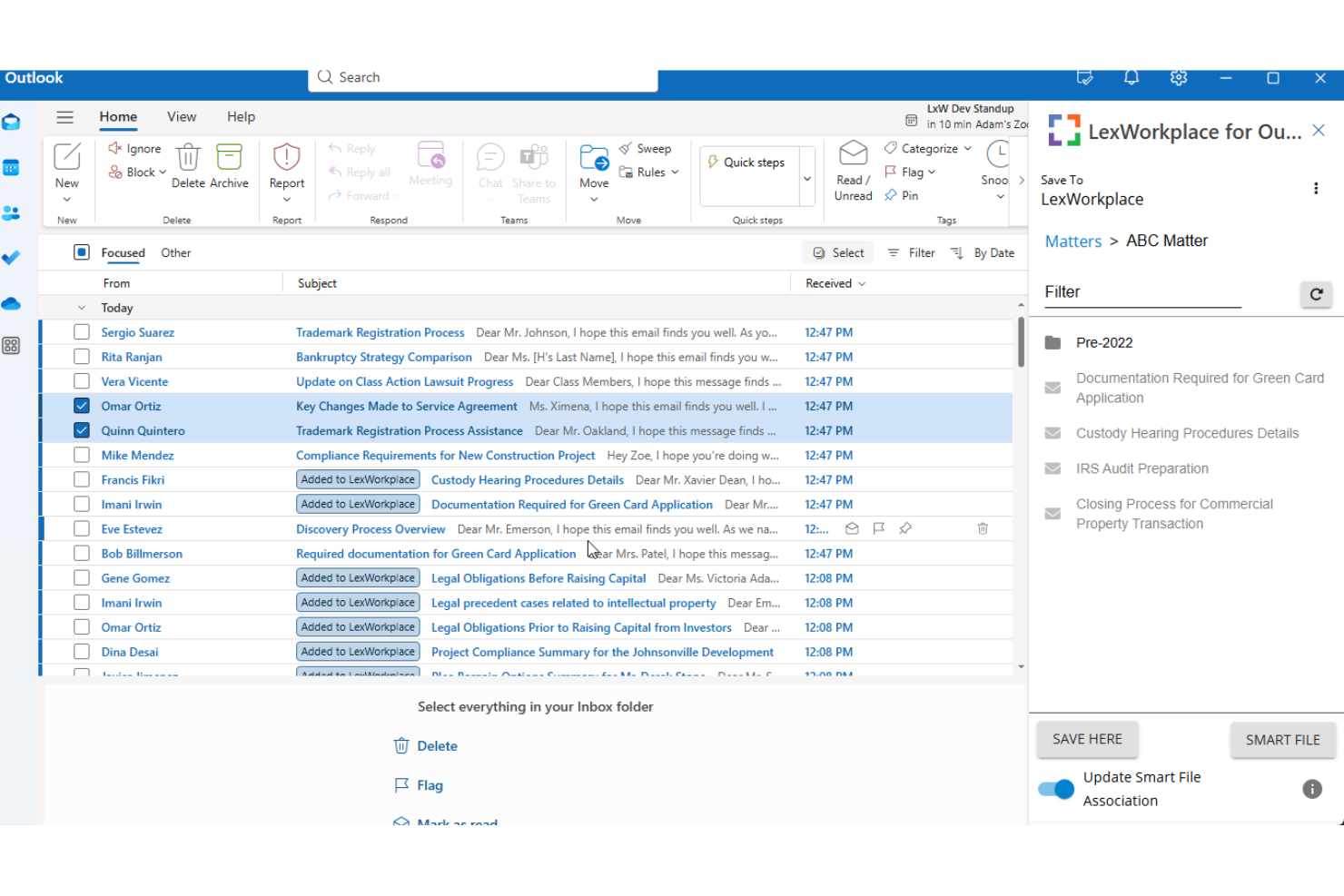
LexWorkplace is a cloud-based email management platform designed for law firms, offering matter-centric email organization, full-text search, document management, and integrations with Outlook and Microsoft 365.
Who Is LexWorkplace Best For?
LexWorkplace suits law firms that need structured, matter-driven email and document management within the Microsoft ecosystem.
Why I Picked LexWorkplace
I picked LexWorkplace because my team can file Outlook emails directly to client matters and quickly access conversation threads within each matter. The platform links related emails, attachments, and notes, so I never miss context in client correspondence.
LexWorkplace Key Features
- Full-text search: Instantly search across emails and documents in all matters with OCR and metadata support.
- Document versioning: Track, compare, and roll back to previous versions of documents and email attachments.
- Role-based permissions: Restrict access to sensitive matter files and emails based on customizable user roles.
- Cloud-based access: Work securely from any location without local server dependencies or VPN requirements.
LexWorkplace Integrations
Integrations include Microsoft 365, Outlook + Exchange, Clio Manage, and Litera Compare.
Pros and Cons
Pros:
- Built-in full-text search for emails and files
- Direct integration with Microsoft 365 and Outlook
- Matter-centric email organization for law firms
Cons:
- Minimum monthly subscription may not suit solos
- No native integration with most legal tech apps

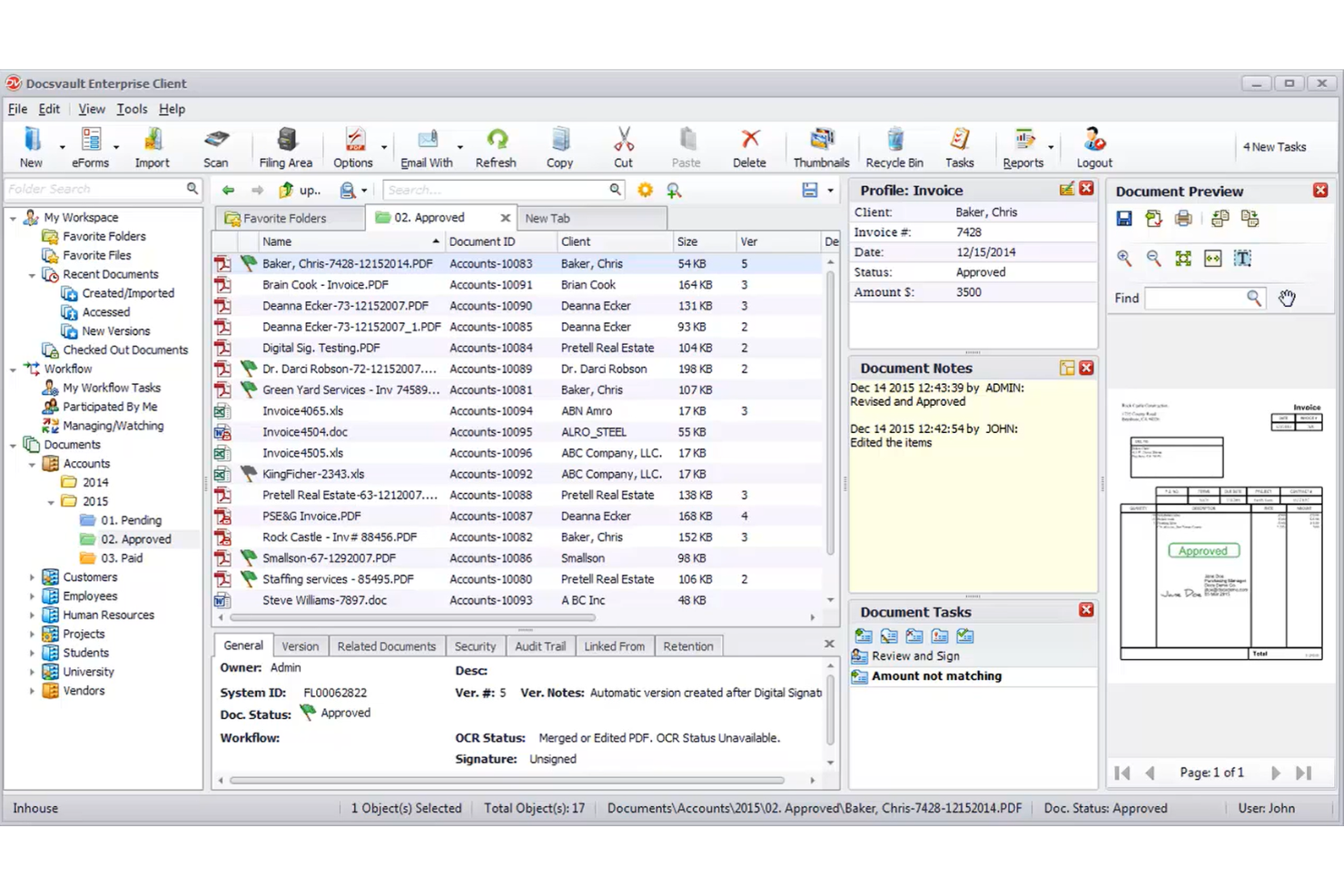
Docsvault is an on-premise document management system for law firms featuring secure email capture, document storage, advanced search, user permissions, and detailed activity tracking.
Who Is Docsvault Best For?
IT managers and administrators at law firms need on-premise control over email and document compliance.
Why I Picked Docsvault
I picked Docsvault because I can keep email records in our own environment while tracking every access and change for compliance. I rely on its extensive audit logs and permission controls to support regulated legal workflows.
Docsvault Key Features
- Email capture and archiving: Save and organize emails directly in client or matter folders.
- Full-text search: Find emails and attachments using keyword and metadata queries.
- Email notifications: Receive alerts about new or changed files related to client matters.
- Version control: Track email and document revisions with automatic version histories.
Docsvault Integrations
Docsvault offers native integrations with Microsoft Outlook, Microsoft 365, Adobe Acrobat, and Windows Active Directory, and supports custom integrations through its API.
Pros and Cons
Pros:
- Enables direct filing from Microsoft Outlook
- Includes detailed document and email audit trails
- Offers secure local storage of email records
Cons:
- Limited email automation compared to cloud tools
- Requires on-premise server setup and maintenance

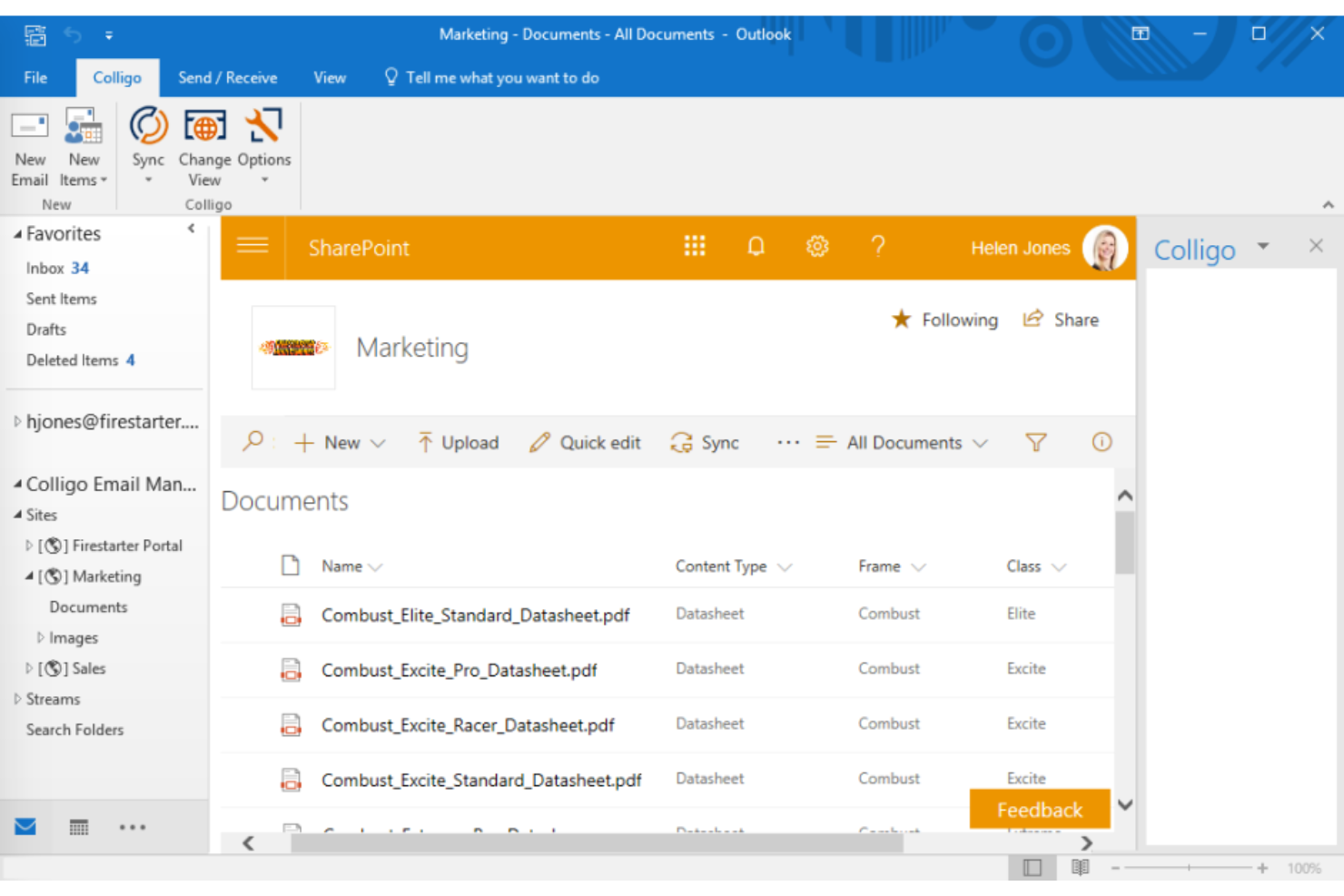
Colligo is an email and document management platform built for law firms that lets you capture, organize, and manage Outlook emails directly within Microsoft SharePoint environments.
Who Is Colligo Best For?
Colligo suits legal professionals and legal operations teams in Microsoft-centred firms that need to file and organize Outlook emails within SharePoint.
Why I Picked Colligo
I picked Colligo as one of the best because I can quickly drag and drop Outlook emails into specific SharePoint folders, automatically capture metadata, and file entire email threads directly from my inbox without manual uploads.
Colligo Key Features
- Email content preview: Preview email messages and attachments before filing them to SharePoint.
- Automatic metadata tagging: Assign metadata to saved emails based on firm or matter requirements.
- Bulk filing support: Select and file multiple emails simultaneously from Outlook to SharePoint.
- SharePoint document library integration: Access and manage SharePoint document libraries directly within Outlook.
Colligo Integrations
Integrations include Microsoft 365, Affinity Consulting, Betach Solutions, Cadence Solutions, Creospark, Carahsoft, Doherty Associates, F12, Gimmal, and IPI.
Pros and Cons
Pros:
- Supports bulk email and attachment capture
- Preserves original email metadata during filing
- Directly files emails into SharePoint from Outlook
Cons:
- SharePoint permissions required for users
- Limited automation for routine email filing
Other Email Management Software for Law Firms
Here are some additional email management software for law firms options that didn’t make it onto my shortlist, but are still worth checking out:
- MyCase
For secure client communication portals
- Gmelius
For syncing Gmail labels across teams
- Mailbutler
For cross-platform email productivity
- Missive
For collaborative shared inboxes
- Drag
For managing Gmail with visual boards
- Front
For unified omnichannel communication
- Streamline AI
For automated legal request triag
- Jace AI
For AI-powered business email drafting
- Mobile Helix (LINK)
For DMS and Outlook email on mobile
- Workstorm
For privacy-focused collaboration


How I Evaluate Email Management Software for Law Firms
I split my evaluation into baseline criteria—like matter-based filing and Outlook integration—and differentiating factors that separate tools built for law firms from generic email archiving.
Core Functionality (Table Stakes For This List)
When I'm selecting tools for my list, I rank each one on a scale from 0 (does not offer the functionality) to 5 (excels in this area) for each core functionality listed below. Then, I calculate the tool's total score into a percentage. Each tool needs to achieve a minimum total score of 55% to be considered for inclusion.
- Matter-Based Email Filing: I check whether attorneys can tag and file emails directly to specific matters or clients, not just generic folders—think filing a discovery response thread to the right case in two clicks.
- Practice Management Integration: Each tool gets evaluated on how well it connects with platforms like Clio, iManage, or NetDocuments, since email data that lives outside your core legal systems creates gaps.
- Outlook/Gmail Compatibility: The plug-in or add-in experience inside Outlook or Gmail matters a lot here—I look for tools that let attorneys file and tag without leaving their inbox.
- Compliance & Retention Controls: Retention policies, legal holds, ethical walls, and audit trails all factor into my evaluation, especially for firms handling matters with regulatory oversight.
- Time & Billing Capture: I evaluate whether the tool can track time spent on email activity and push entries into billing systems, since attorneys lose recoverable hours when this step is manual.
- Advanced Search & eDiscovery Support: Strong metadata search, conversation threading, and eDiscovery-ready export capabilities are what I look for, particularly for litigation-heavy firms pulling email records during case prep.
Once I have a list of tools that meet the criteria, I consider what sets each platform apart.
Differentiating Factors (What Sets Vendors Apart)
Here's how I compare and contrast different vendors:
Standout Features
Predictive email filing is a big differentiator—I look for tools that learn from past filing behavior and suggest the right matter automatically, which saves attorneys from manually sorting dozens of emails after a long deposition day. Bulk attachment management also matters, especially when a single email chain includes multiple exhibit drafts that need to land in the DMS with proper version control. Mobile matter access rounds things out for attorneys who need to file and search emails between court appearances.
Beyond Features
I evaluate whether a vendor's compliance posture aligns with legal industry standards like ABA ethics rules and SOC 2 certification, since a data breach involving client communications is an existential risk. Firm size fit is another key factor—a solo practitioner and an AmLaw 200 firm have very different deployment and licensing needs. I also consider implementation support, specifically whether the vendor offers legal-specific onboarding and attorney training programs, because adoption is where most email management rollouts fail.
How to Choose Email Management Software for Law Firms
It’s easy to get bogged down in long feature lists and complex pricing structures. To help you stay focused as you work through your unique software selection process, here’s a checklist of factors to keep in mind:
| Factor | What to Consider |
|---|---|
| Scalability | Will the platform support your firm’s growth, including adding users, departments, and increasing message volume over time? |
| Integrations | Does the software connect natively with your legal document management, billing, and practice management tools or require manual workarounds? |
| Customizability | Can you adapt workflows, templates, and retention settings to match your firm’s policies, practice areas, and compliance requirements? |
| Ease of use | Will attorneys and staff learn and adopt the system quickly, or does it require extensive training and ongoing IT support? |
| Implementation and onboarding | How much time and internal resources will migration, setup, and training realistically take? Are support and documentation sufficient for your team? |
| Cost | What is the total cost of ownership over a year—license, support, migration, and potential future upgrades? Are there hidden or scaling fees? |
| Security safeguards | Does the solution deliver proven encryption, audit trails, data residency options, and breach response procedures to meet legal standards? |
| Compliance requirements | Will the platform support jurisdiction-specific rules around email retention, audit logs, or client confidentiality—like ABA or GDPR guidelines? |
What Is Email Management Software for Law Firms?
Email management software for law firms is a digital tool designed to organize, secure, and track law firm email communications. These platforms help legal professionals handle confidential correspondence, maintain client communication records, enforce compliance requirements, and support efficient workflows tailored to legal practice. They are essential for ensuring email security, proper record-keeping, and reliable documentation of interactions with courts, clients, and opposing parties.
Features
When selecting email management software for law firms, keep an eye out for the following key features:
- Encrypted email transmission: This feature protects confidential client and case information by sending messages through secure, encrypted channels to prevent unauthorized access.
- Automated email archiving: Automatically stores all incoming and outgoing emails within easily searchable digital archives, helping teams find important correspondence and maintain compliance records.
- Delivery and read receipt tracking: Tracks when messages are delivered and opened, providing time-stamped evidence that’s useful for legal communications and court documentation.
- Role-based access controls: Allow firms to define who can view, send, or manage sensitive communications, supporting internal confidentiality and compliance requirements.
- Integrated e-signature workflows: Let users send documents for legally binding electronic signatures directly within email threads, streamlining contract and document execution.
- Large file attachment capability: Enables secure sending of case files, discovery documents, and exhibits that typically exceed standard email attachment size limits.
- Compliance management tools: Supports firm-wide email retention policies, legal holds, and audit logs to meet jurisdictional ethics rules and regulatory obligations.
- Searchable correspondence histories: Provides detailed search functionality so teams can quickly locate communications by client, matter, keyword, or date range as needed.
- Threaded conversation and tagging: Groups related messages for each matter or client, with options to tag, flag, or categorize communications for simple organization and retrieval.
- Integration with DMS and case management: Connects email workflows to document management and practice management systems, reducing the need to switch between tools and helping maintain a unified client file.
Benefits
Implementing email management software for law firms provides several benefits for your team and your business. Here are a few you can look forward to:
- Improved client confidentiality: Strong encryption and role-based access controls help ensure only authorized users can access sensitive communications.
- Court-admissible communication records: Automated archiving and read receipt tracking offer verifiable evidence of message delivery and content for legal proceedings.
- Efficient document workflows: Integrated e-signature features and large file sending options make it easier to manage contracts, filings, and client correspondence within one platform.
- Improved compliance management: Built-in tools for retention policies, audit trails, and legal holds help you stay aligned with regulatory and ethics requirements.
- Faster information retrieval: Searchable email histories and tagging functions allow teams to quickly locate required messages or correspondence by matter, client, or date.
- Unified case and document handling: Seamless integration with document management and case management solutions keeps all related communications and files organized in a single location.
- Lower administrative burden: Automation of routine tasks like archiving, categorization, and compliance tracking frees up time for higher-value legal work.
Costs and Pricing
Selecting email management software for law firms requires an understanding of the various pricing models and plans available. Costs vary based on features, team size, add-ons, and more. The table below summarizes common plans, their average prices, and typical features included in email management software for law firm solutions:
Plan Comparison Table for Email Management Software for Law Firms
| Plan Type | Average Price | Common Features |
|---|---|---|
| Free Plan | $0 | Basic email archiving, limited message search, single-user support, and minimal security protections. |
| Personal Plan | $5-$15/user/month | Encrypted email, basic compliance tools, message tracking, and limited integration options. |
| Business Plan | $15-$35/user/month | Role-based access control, advanced search, secure large file sending, integrated e-signatures, and team management. |
| Enterprise Plan | $35-$75/user/month | Custom retention policies, audit logs, DMS and case management integration, advanced compliance, priority support, and legal hold features. |
Email Management Software for Law Firms FAQs
Here are some answers to common questions about email management software for law firms:
How does email management software help with legal compliance?
It supports legal compliance by encrypting messages, enforcing retention policies, tracking access, and maintaining secure, auditable records. This helps your firm meet requirements set by bar associations, privacy laws, and industry standards for handling sensitive information and client data. Advanced security features and strict data security protocols ensure that only the right people have access to confidential communications.
Can email management software integrate with my existing practice management tools?
Yes, many solutions offer native or API integrations with legal document management, billing, and case management tools. You should verify compatibility and look for options that reduce the need for duplicate data entry or manual processes. Connecting these systems allows team members to track billable hours directly from their inbox and automatically link emails to specific matters.
What’s the difference between standard email and legal email management solutions?
Legal email management software is built for confidentiality, compliance, and legal workflow needs. Unlike standard email, it usually includes archiving, delivery tracking, legal hold, secure file transfer, and audit-ready reporting—essential for proper client service and risk management. This specialized software allows every paralegal and attorney to view case-related updates in real-time, whether they are working from the office or using an Android device on the go.
Is it possible to securely send large files using these platforms?
Yes, most tools for law firms offer secure large file transfer, letting you send discovery documents and case files that exceed normal email size limits. These files are typically encrypted, and access can be controlled, keeping sensitive data protected while saving your staff valuable time.
How long does it take to implement email management software at a law firm?
Implementation time depends on your firm’s size, existing infrastructure, and whether you require data migration. Small teams might be up and running in a day, while larger firms with complex needs may need a few weeks for training and integration.