

10 Best Legal Case Management Software For Small Firms In 2026

10 Best Legal Case Management Software For Small Firms Shortlist


Legal case management software for small firms helps you organize cases, manage documents, track time, and streamline communications—all from one place. If you’re looking for the top tools to simplify practice management, keep your caseload organized, and free up time for client work, you’re in the right spot. Below, you’ll find a clear breakdown of the best options available in 2026—so you can compare features and pick the right fit for your firm’s size, workflow, and goals.
Why Trust Our Software Recommendations
Our team has been testing and reviewing software since 2012. As legal practice leaders ourselves, we know how difficult—and important—it is to choose the right software.
For this guide, we evaluated tools using hands-on testing and independent research, scoring tools using our selection criteria.
Our reviews reflect our human editorial judgment, not a sales pitch.
Best Legal Case Management Software
| Tool | Best For | Trial Info | Price | ||
|---|---|---|---|---|---|
| 1 | Best for legal billing and accounting | Free demo available | From $89/user/month | Website | |
| 2 | Best for time tracking and invoicing | Free demo + 10-day free trial available | From $43/user/month (billed annually) | Website | |
| 3 | Best for document-heavy legal practices | Free demo available | Pricing upon request | Website | |
| 4 | Best for billing and productivity management | Free trial available | From $59/user/month | Website | |
| 5 | Best for customizable legal workflows | Not available | Pricing upon request | Website | |
| 6 | Best for document and workflow automation | Free demo available | Pricing upon request | Website | |
| 7 | Best for all-in-one small firm management | 7-day free trial | From $49/user/month | Website | |
| 8 | Best for client communication and case tracking | 10-day free trial and free demo available | From $50/user/month (billed annually) | Website | |
| 9 | Best for built-in legal accounting | 10-day free trial | From $49/user/month (billed annually) | Website | |
| 10 | Best for intuitive case and billing workflows | 7-day free trial | From $49/user/month (billed annually) | Website |
Best Legal Case Management Software For Small Firms Reviews
Below are my detailed summaries of the best legal case management software for small firms that made it onto my shortlist. My reviews offer a detailed look at the features, best use cases, and integrations of each software to help you find the best one for you.

Tabs3
Best for legal billing and accounting
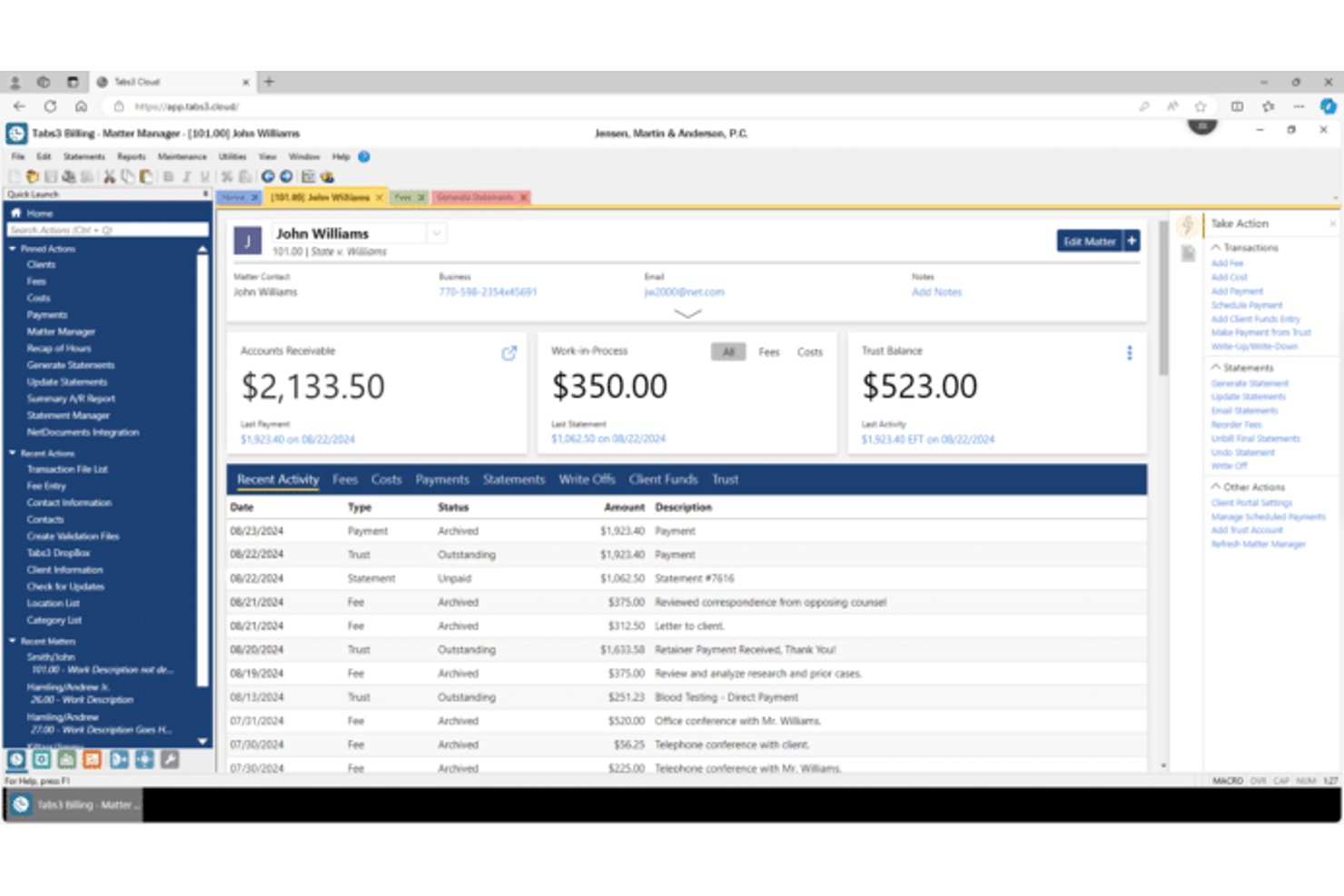
Tabs3 is a legal practice management platform that combines matter management, time tracking, billing, trust accounting, and client intake tools built specifically for solo practitioners and small to midsize law firms.
Who Is Tabs3 Best For?
Tabs3 is a natural fit for small law firms where billing accuracy and trust accounting compliance are central to daily operations.
Why I Picked Tabs3
I picked Tabs3 as one of the best because its billing and trust accounting tools are genuinely built around how law firms actually work. I can set up multiple billing rate structures per matter, run batch invoicing across clients, and accept ACH payments through Tabs3Pay without leaving the platform. The trust accounting module handles three-way reconciliation and generates compliance-ready reports, which I find invaluable when bar audits come up.
Tabs3 Key Features
- Matter-centric dashboard: View all matter details, key contacts, events, and documents from a single, organized screen.
- PracticeMaster cloud access: Manage cases, contacts, calendars, and intake securely from any location via browser-based access.
- Conflict of interest checking: Search across contacts, matters, and notes to identify potential conflicts before intake.
- Custom workflow automation: Set up automated tasks, reminders, or document generation triggered by matter status changes.
Tabs3 Integrations
Tabs3 offers native integrations with NetDocuments, HotDocs, WORLDOX, QuickBooks Online, and LawPay. An API is available for custom integrations.
Pros and Cons
Pros:
- Detailed billing rate customization per matter
- Batch invoicing across multiple client matters
- Strong trust accounting with three-way reconciliation
Cons:
- Setup requires significant technical configuration time
- Desktop-first design limits mobile access
TimeSolv
Best for time tracking and invoicing
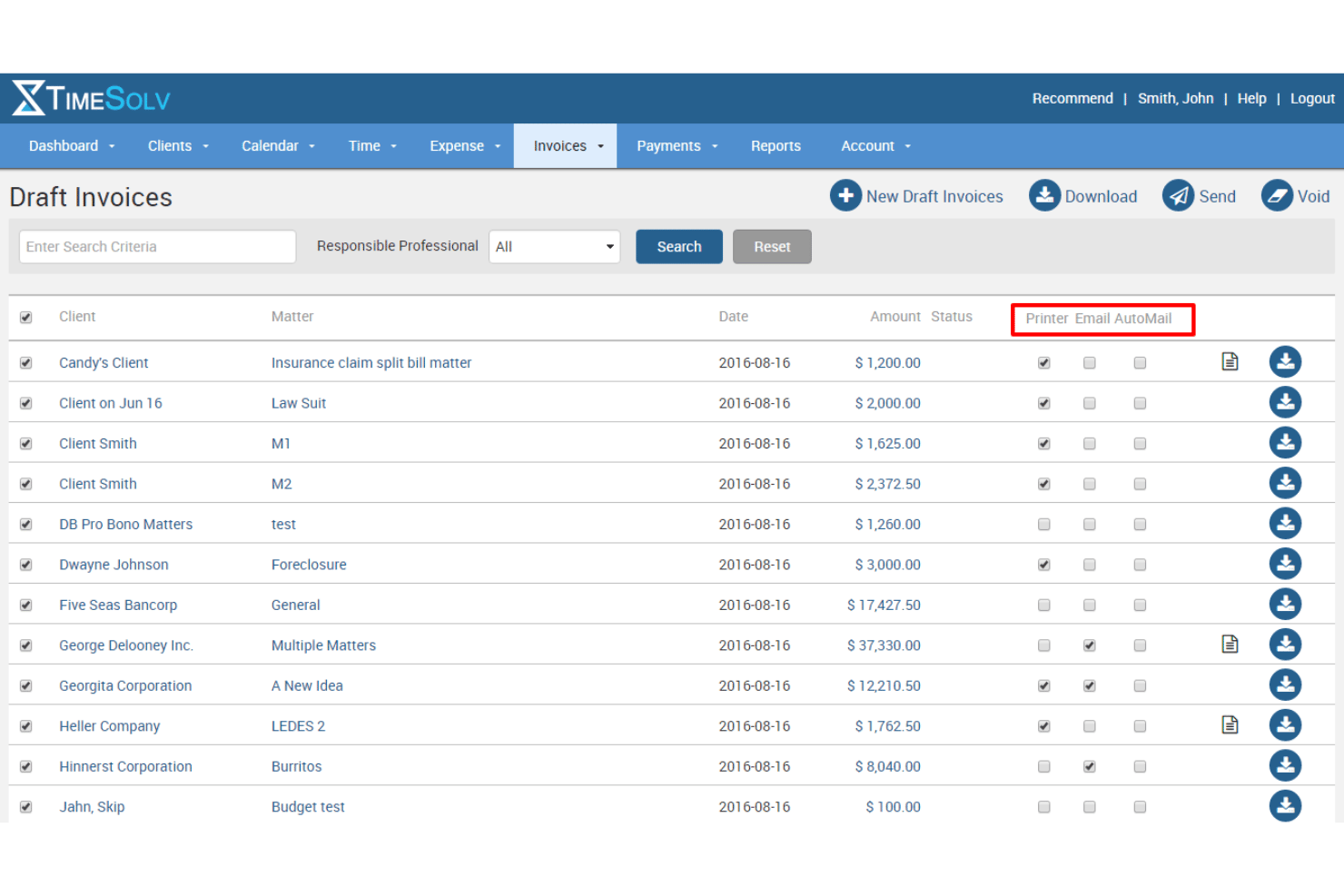
TimeSolv is a cloud-based legal billing platform for law firms that combines time tracking, matter management, trust accounting, invoicing, and document management in a single system.
Who Is TimeSolv Best For?
TimeSolv is a strong fit for solo practitioners and small law firms where billing accuracy and trust accounting compliance are the top priorities.
Why I Picked TimeSolv
TimeSolv earns its spot on my shortlist because its time tracking setup is genuinely built for the rhythm of legal work. I love that running multiple simultaneous timers is standard, so switching from drafting a motion to taking a client call doesn't mean losing captured time. Batch invoicing then lets me process an entire month of matters in one pass, and LEDES billing is built into the Legal tier for firms that bill insurers or corporate clients.
TimeSolv Key Features
- Matter management dashboard: Organize case details, client information, deadlines, and contacts by matter in a unified view.
- Trust accounting tools: Perform three-way reconciliation, manage IOLTA ledgers, and run dedicated trust reports to meet bar standards.
- Document management integration: Store and share documents with NetDocuments, Dropbox, and OneDrive from within each matter.
- Client portal: Offer clients access to invoices, payment history, and secure document sharing from a web-based portal.
TimeSolv Integrations
TimeSolv offers native integrations with NetDocuments, Dropbox, OneDrive, QuickBooks Online, Xero, and LawPay. An API is available for custom integrations.
Pros and Cons
Pros:
- Batch invoicing processes all matters at once
- LEDES billing included for corporate clients
- Multiple simultaneous timers run at once
Cons:
- No built-in document automation or templating
- Basic matter management for case-heavy firms

Best for document-heavy legal practices
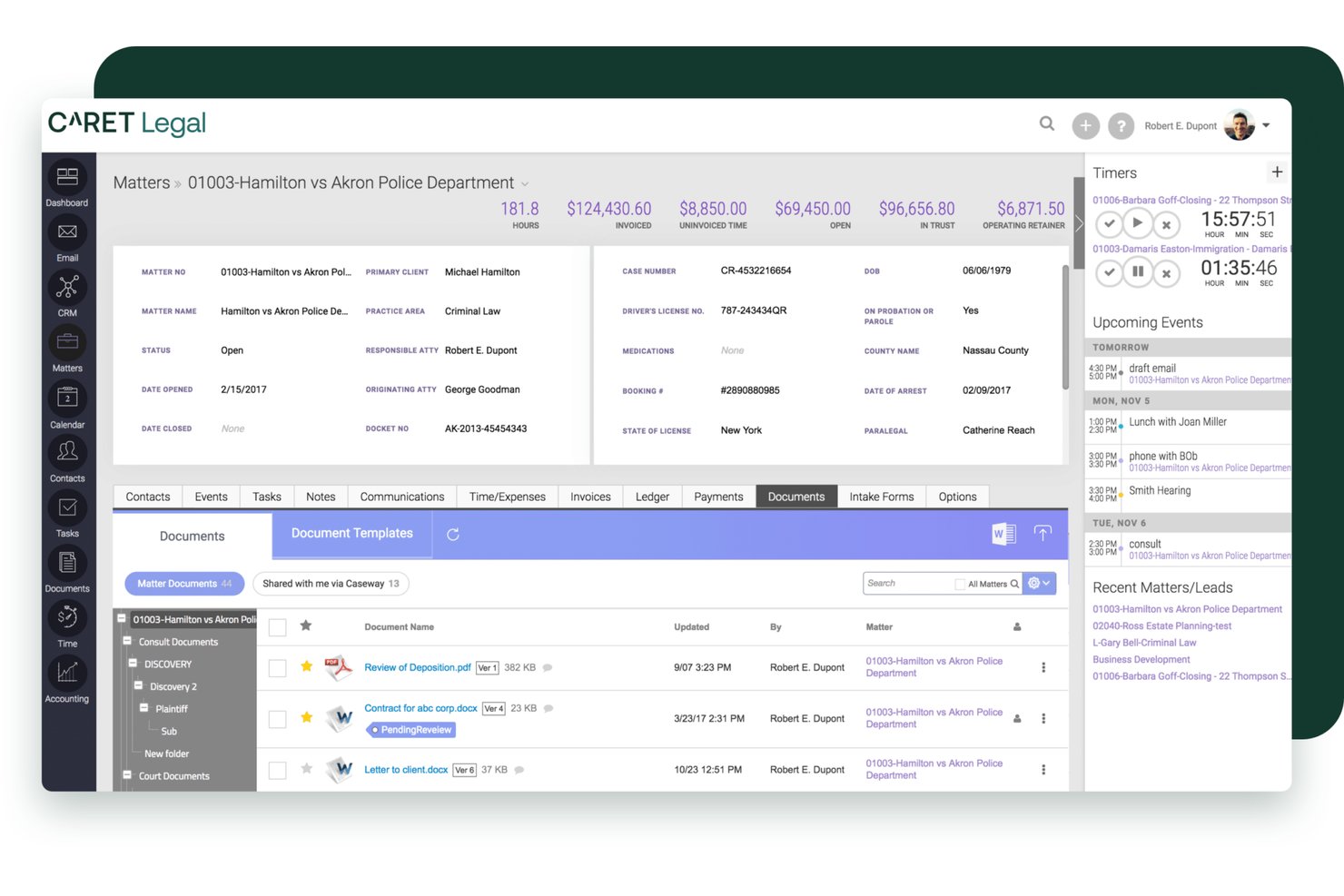
CARET Legal is a cloud-based legal practice management platform that combines matter management, native trust and business accounting, time tracking, billing, document management, and client portal tools in a single system.
Who Is CARET Legal Best For?
Small to mid-sized law firms that want practice management and full accounting in one platform, without relying on QuickBooks or other third-party financial tools.
Why I Picked CARET Legal
CARET Legal earns its spot on my shortlist because of how it handles document-heavy workflows natively. Document templates with matter merge fields are built directly into the platform, so generating a motion or client agreement pulls live matter data without any copy-paste work. On the Enterprise Plus tier, native document editing and AI-generated document summaries let me draft, review, and finalize files inside the same system where the matter lives.
CARET Legal Key Features
- Native trust accounting: Handles IOLTA-compliant ledgers, three-way reconciliation, and bar association safeguards.
- Automated intake workflows: Connects with Lawmatics to drive online client intake directly into matter creation.
- Rules-based calendaring: Calculates legal deadlines using court rules integration and syncs with Google or Microsoft 365 calendars.
- Integrated client portal: Enables secure message exchange, document sharing, and invoice delivery between clients and firm.
CARET Legal Integrations
CARET Legal offers native integrations with LawToolBox, Lawmatics, NetDocuments, iManage, HotDocs, LawPay, QuickBooks Online, Microsoft 365, and Google Workspace. An API is available for custom integrations.
Pros and Cons
Pros:
- Onboarding and data migration support is consistently praised
- Billing depth rivals standalone legal accounting tools
- Full accounting built in, no QuickBooks required
Cons:
- Reporting customization is limited without higher-tier plans
- Initial setup takes significant time and configuration

Best for billing and productivity management
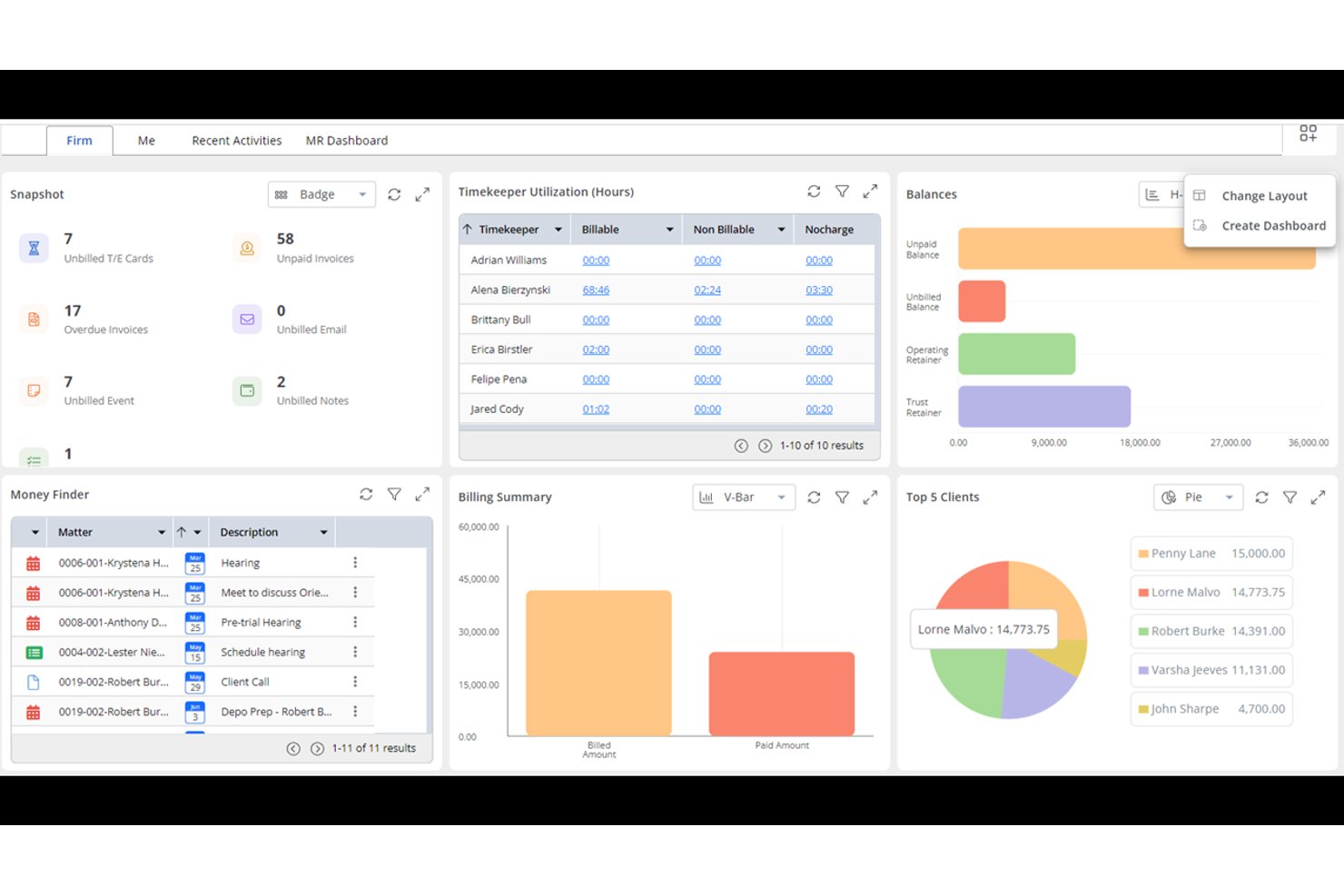
Rocket Matter is a cloud-based legal practice management platform for small firms and solo practitioners, covering matter management, time tracking, billing, trust accounting, document assembly, and client intake.
Who Is Rocket Matter Best For?
Rocket Matter is a strong fit for solo practitioners and small law firms that need a full-featured billing and matter management system without a complex setup.
Why I Picked Rocket Matter
I picked Rocket Matter as one of the best because its billing engine goes well beyond basic invoicing. I can run batch billing across all active matters in one pass, apply custom rate structures per timekeeper, and produce LEDES-formatted e-bills for insurance carriers without leaving the platform. The auto time card captures billable time in the background, so I'm not reconstructing my day at the end of the week.
Rocket Matter Key Features
- Matter templates: Create reusable templates for standardizing matter setup by practice area or workflow.
- Document assembly: Automatically generate documents using templates with merge fields populated from matter data.
- Client portal: Share documents, invoices, and messages securely with clients through a web-based portal.
- Integrated trust accounting: Track client funds separately with compliance features like three-way reconciliation and audit trails.
Rocket Matter Integrations
Rocket Matter offers native integrations with QuickBooks Online, Microsoft 365, Google Workspace, Dropbox, Box, and LawToolBox. An API is available for custom integrations.
Pros and Cons
Pros:
- Trust accounting reconciliation flags compliance issues automatically
- LEDES invoicing built in, no add-on needed
- Batch billing cuts time across multiple matters
Cons:
- Performance slows noticeably with large, document-heavy matters
- Task automation lacks dependency-based workflow logic

Best for customizable legal workflows
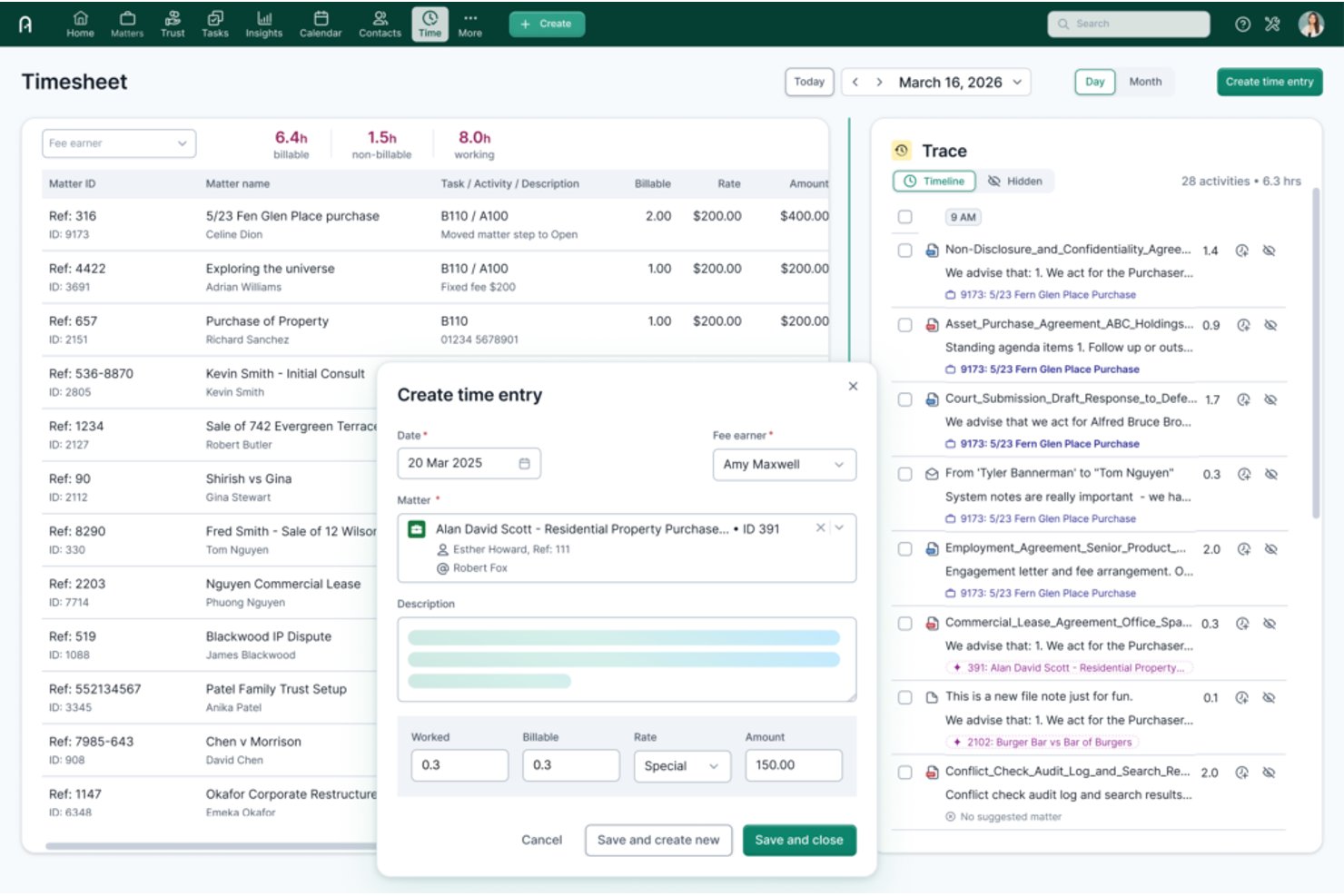
Actionstep is a cloud-based law firm management platform that combines matter management, legal accounting, document automation, client intake, and workflow automation in a single configurable system.
Who Is Actionstep Best For?
Actionstep is a strong fit for small to mid-sized law firms that need a highly configurable platform to match their specific practice workflows.
Why I Picked Actionstep
Actionstep earns its spot on my shortlist because its workflow automation goes deeper than most legal platforms I've used. I can build matter templates by practice area, each with its own automated task sequences, deadline triggers, and document generation steps. The Builder add-on extends this with document automation and dynamic logic tied directly to matter data. I've also used the Trace AI module to passively log billable time across Outlook and Word, removing manual time entry entirely.
Actionstep Key Features
- Full trust accounting: Track trust transactions and segregated client funds with compliance safeguards.
- Advanced document management: Store, version, and organize documents with templates and merge fields tied to matters.
- Client intake forms: Build customizable web-based intake forms to capture new matter data and trigger workflow steps.
- Comprehensive reporting: Generate detailed business, financial, and compliance reports from integrated matter and billing data.
Actionstep Integrations
Actionstep offers native integrations with Microsoft 365, Xero, QuickBooks Online, DocuSign, LawPay, and InfoTrack. An API is available for custom integrations.
Pros and Cons
Pros:
- Passive time capture across Outlook and Word
- Practice-specific templates available out of the box
- Highly configurable matter workflows by practice area
Cons:
- Pricing has increased sharply for solo practitioners
- Initial setup requires significant time investment

Best for document and workflow automation
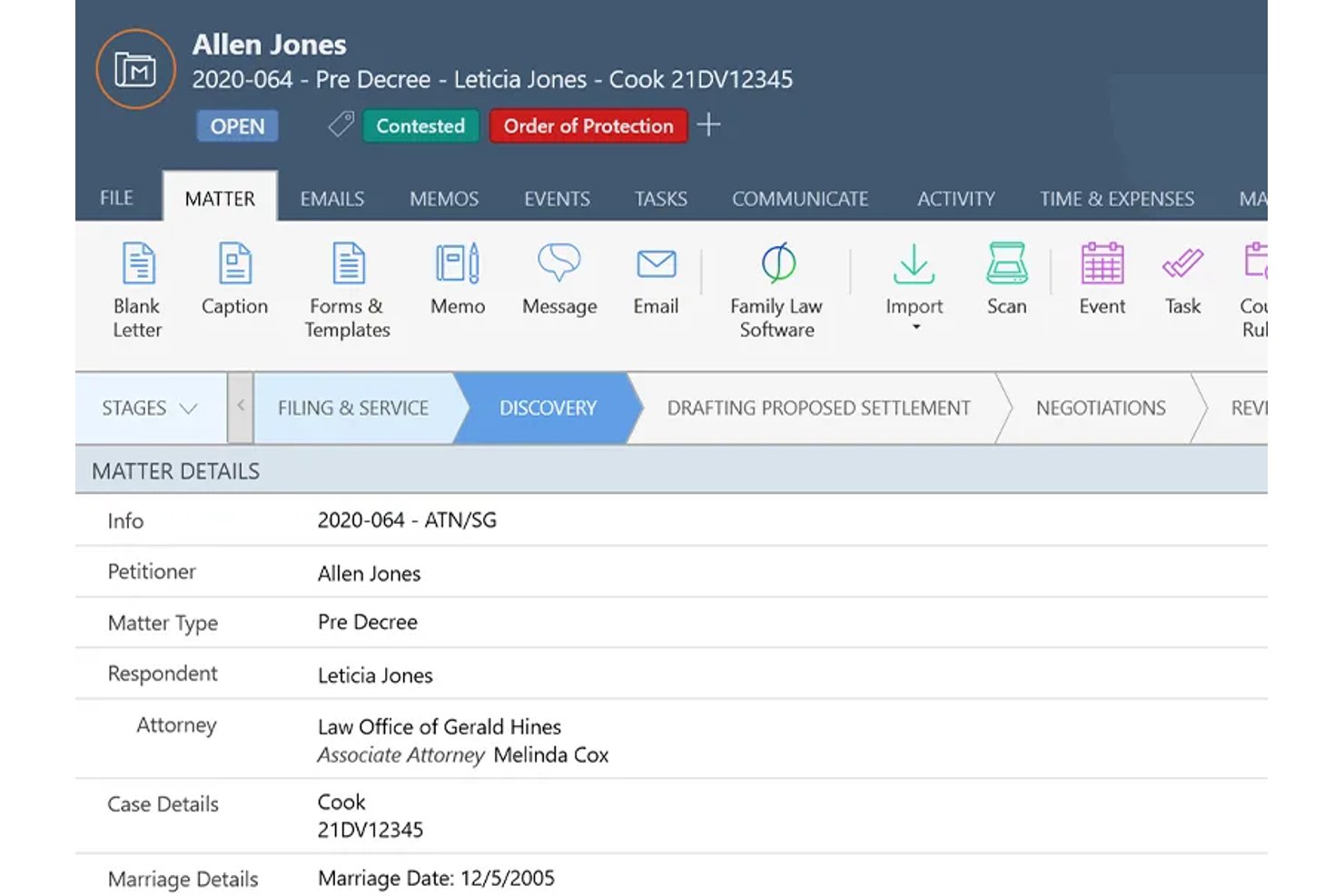
Smokeball is a Windows-based legal practice management platform for small and solo firms that combines matter management, document automation, time tracking, trust accounting, and client intake in one system.
Who Is Smokeball Best For?
Smokeball is a good fit for small law firms with two to ten staff who work across defined practice areas like family law, real estate, or personal injury.
Why I Picked Smokeball
I picked Smokeball as one of the best because its document automation is genuinely unmatched at this firm size. With 20,000+ prebuilt legal forms across 250+ matter types, my team can generate court-ready documents by pulling matter data directly into templates, skipping manual drafting entirely. The AutoTime feature passively logs billable time in the background, so nothing slips through on busy filing days.
Smokeball Key Features
- Customizable matter templates: Create and use tailored templates for over 250 practice areas, helping you quickly set up new cases.
- Three-way trust reconciliation: Manage IOLTA accounts with built-in safeguards and compliance reporting directly from the platform.
- Client portal: Share documents, invoices, and status updates securely with clients using the encrypted web portal.
- Court rules calendaring integration: Sync jurisdiction-specific court deadlines into your calendar with LawToolBox integration.
Smokeball Integrations
Smokeball offers native integrations with Microsoft 365, LawToolBox, QuickBooks Online, InfoTrack, LawPay, and Xero. An API is available for custom integrations.
Pros and Cons
Pros:
- Matter-linked document search across all files
- Prebuilt forms auto-update when laws change
- Passive time capture via background AutoTime logging
Cons:
- Client portal navigation confuses some end clients
- Per-seat pricing becomes costly beyond solo use

Best for all-in-one small firm management
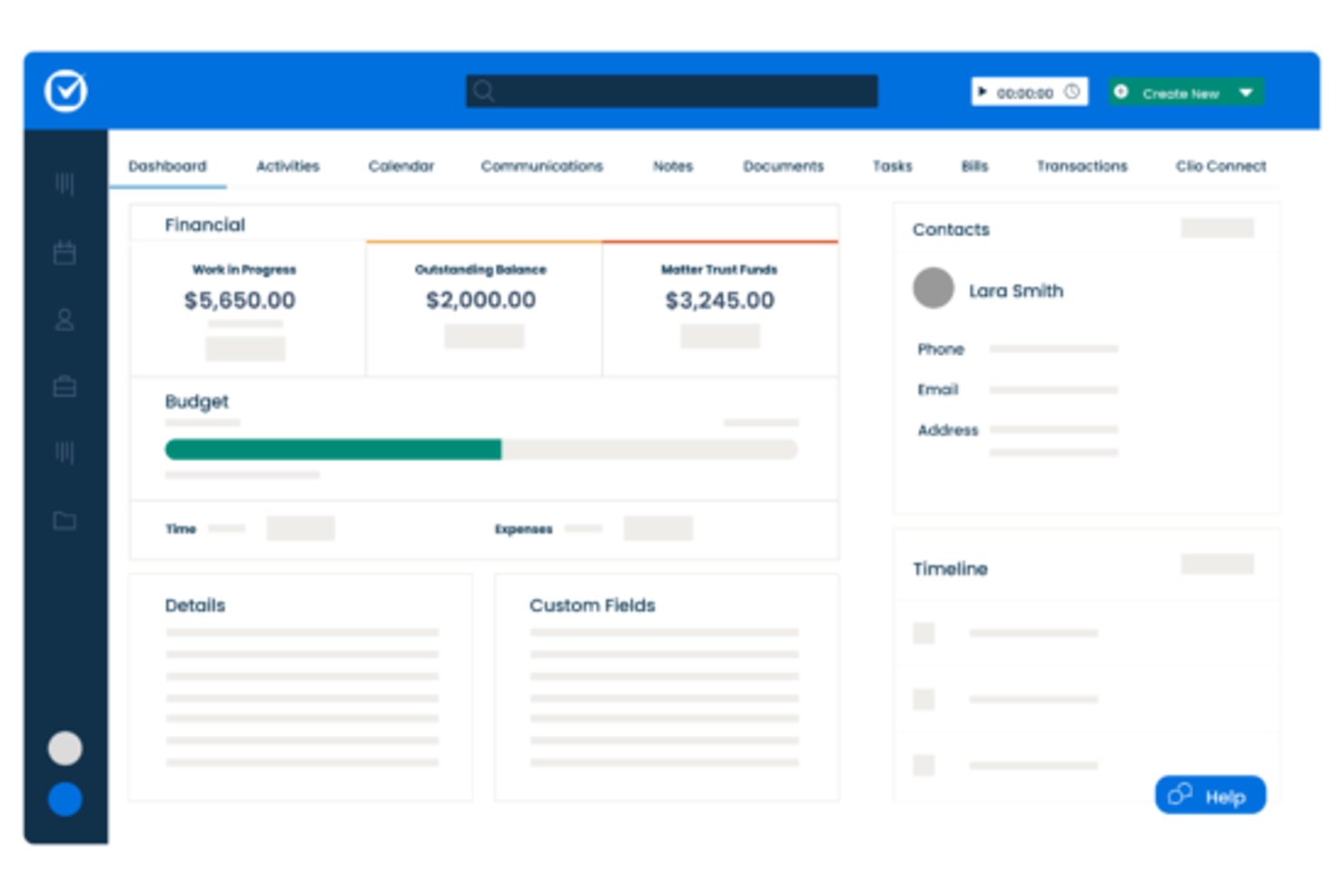
Clio Manage is a cloud-based legal practice management platform that combines matter management, time tracking, billing, trust accounting, document storage, legal calendaring, and client communication in a single system.
Who Is Clio Manage Best For?
Clio Manage is a strong fit for solo practitioners and small law firms that need to replace a patchwork of disconnected tools with one system.
Why I Picked Clio Manage
I've included Clio Manage in my top picks because it's one of the few platforms where trust accounting, court rules-based calendaring, and matter management genuinely share one roof. I use the court calendaring feature to automatically calculate deadline chains from a single trigger date, which small firms previously needed a separate docketing tool to handle. The built-in IOLTA trust ledger includes three-way reconciliation, so I'm not running a separate accounting system alongside case management.
Clio Manage Key Features
- Document automation: Generate pleadings and contracts using templates with merge fields tied to matter data.
- Integrated payment processing: Accept credit card, ACH, and eCheck payments directly through the system.
- Custom matter templates: Configure practice-specific templates and fields for different case types.
- Secure client portal: Share documents and messages with clients through an encrypted web and mobile portal.
Clio Manage Integrations
Clio Manage offers native integrations with QuickBooks Online, Xero, Microsoft 365, Google Workspace, Dropbox, NetDocuments, DocuSign, LawPay, Zoom, and Zapier. An API is also available for custom integrations.
Pros and Cons
Pros:
- Intake forms auto-populate new matter records
- Court rules-based deadline chains across jurisdictions
- Built-in three-way IOLTA trust reconciliation
Cons:
- Mobile app missing some desktop matter features
- Reporting dashboards have limited filter options

MyCase
Best for client communication and case tracking
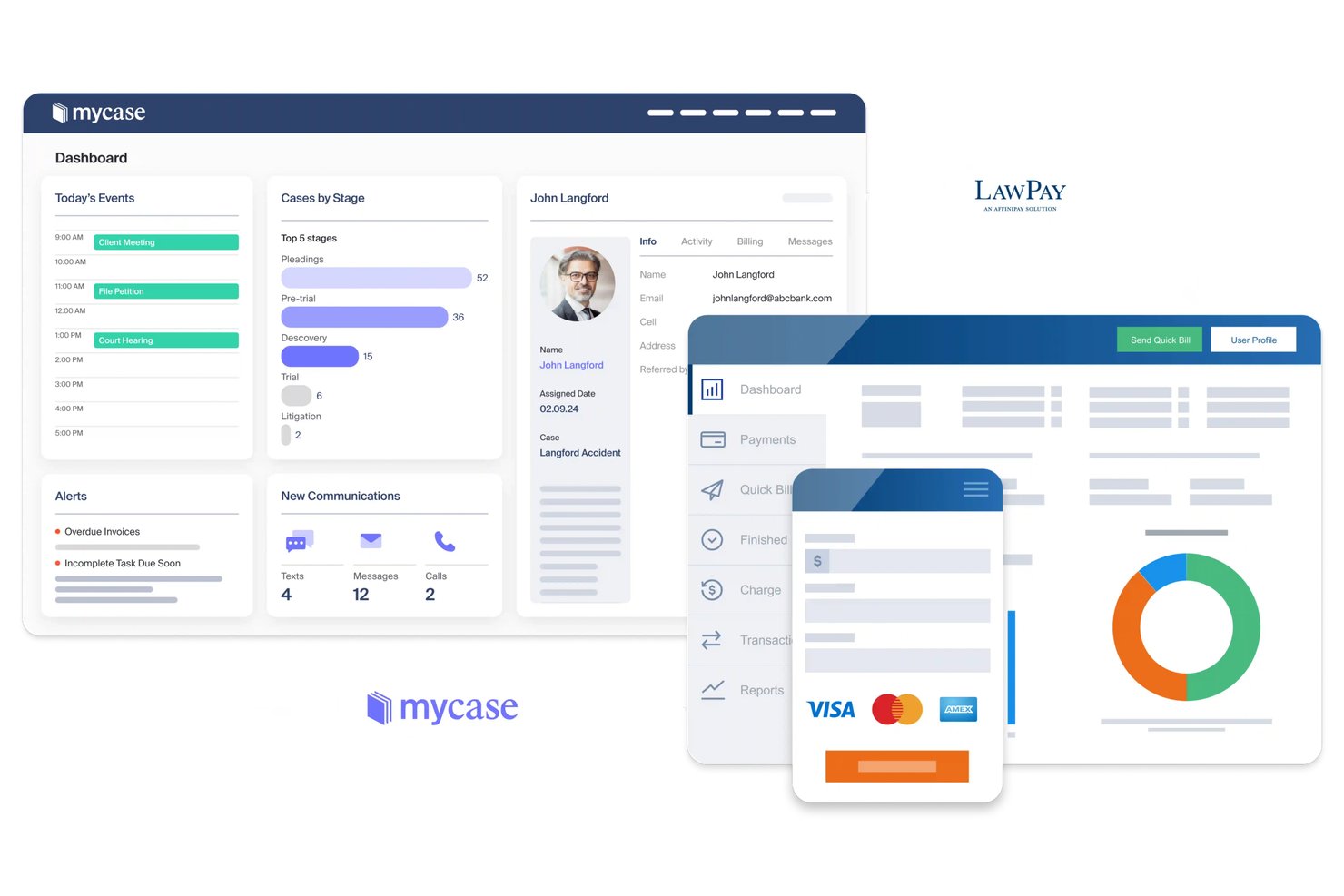
MyCase is a legal case management platform for small firms that combines matter management, time tracking, invoicing, trust accounting, document generation, and client communication in a single system.
Who Is MyCase Best For?
Solo attorneys and small firm lawyers in practice areas like family law, personal injury, and criminal defense will find MyCase fits naturally into how they work.
Why I Picked MyCase
I've included MyCase in my top picks because of how it handles client communication alongside case tracking in one place. The secure client portal gives clients 24/7 access to their case documents and updates. Two-way texting with automated reminders keeps things moving without phone tag. The 8am IQ Case Assistant also lets you query your case data in plain language to surface facts and timelines fast.
MyCase Key Features
- Matter templates: Create and customize matter templates for different practice areas to streamline case setup.
- Three-way trust reconciliation: Ensure compliance with IOLTA requirements using built-in reconciliation and audit reports.
- Automated document generation: Merge client and case data into formatted legal documents using templates.
- Integrated calendar with court rules: Link events to deadlines and statutes using optional court rules integrations.
MyCase Integrations
MyCase offers native integrations with QuickBooks Online, LawPay, Google Calendar, Microsoft Outlook, NetDocuments, Dropbox, and LawToolBox. An API is available for custom integrations.
Pros and Cons
Pros:
- Built-in time tracking tied directly to matter records
- Client portal supports document sharing and e-signatures
- Billing visibility shows if clients reviewed invoices
Cons:
- Contingency fee workflows lack dedicated built-in functionality
- Document manipulation within the platform is cumbersome

CosmoLex
Best for built-in legal accounting
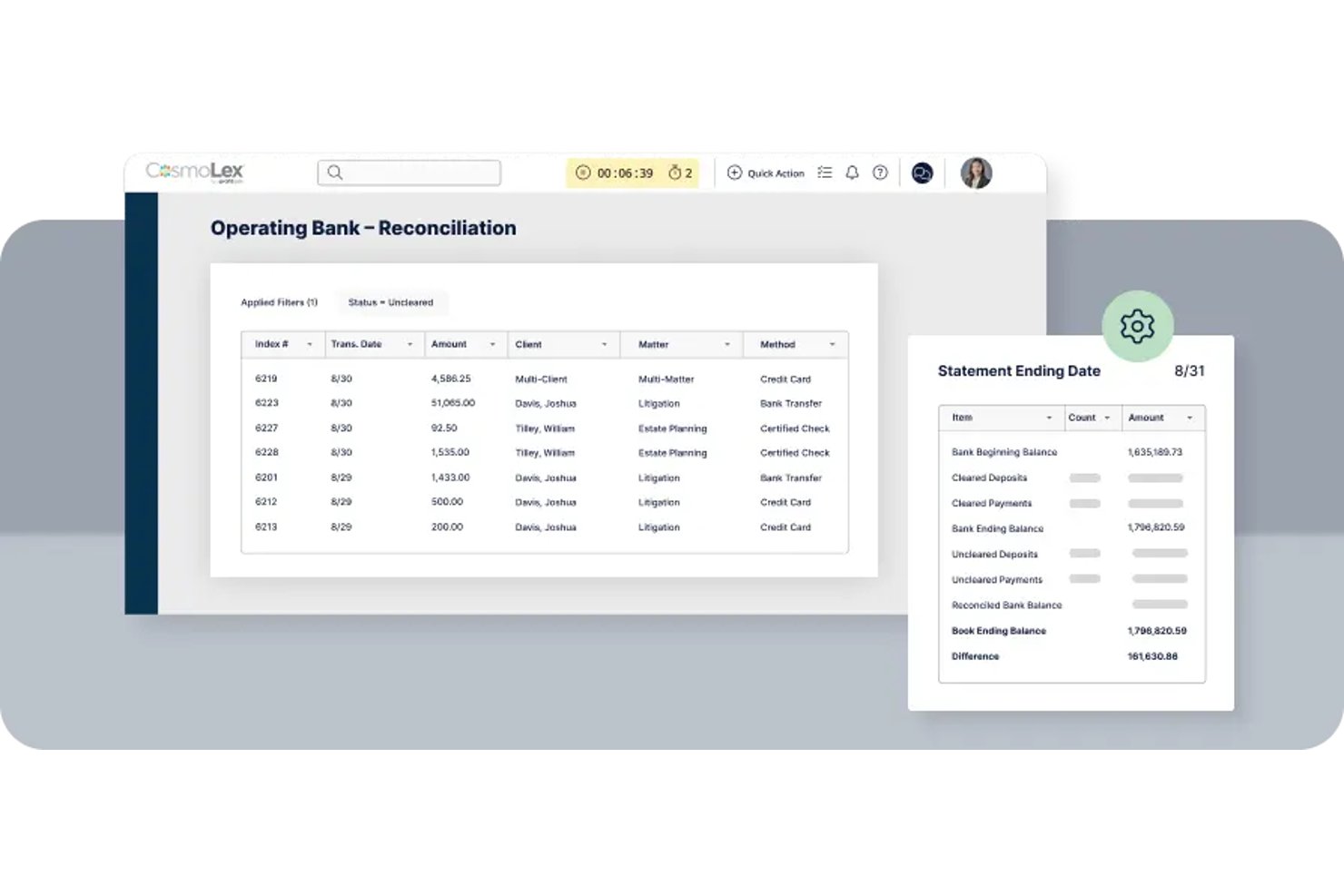
CosmoLex is a cloud-based legal practice management platform for small firms that combines matter management, time tracking, billing, document management, client intake, and fully native law firm accounting in a single system.
Who Is CosmoLex Best For?
Solo practitioners and small firm managing partners who want to consolidate practice management and accounting into one platform will find CosmoLex a natural fit.
Why I Picked CosmoLex
CosmoLex earns its spot on my shortlist because it's the only platform where trust accounting isn't an afterthought. The built-in three-way trust reconciliation runs natively alongside matter management, so I can pull a per-client trust ledger or generate bar compliance reports without leaving the platform. My firm doesn't need a separate QuickBooks subscription. CosmoLex handles both operating and trust accounts with full double-entry accounting built in.
CosmoLex Key Features
- Customizable matter templates: Set up matter types with fields and checklists tailored for your firm’s specific workflows.
- Document automation tools: Auto-generate pleadings, forms, and letters using merge fields from matter and contact data.
- Role-based access controls: Assign granular user permissions for viewing, editing, and managing sensitive firm or client information.
- Secure client portal: Share files, invoices, and updates securely with clients, supporting document exchange and electronic signatures.
CosmoLex Integrations
CosmoLex offers native integrations with NetDocuments, Office 365, Google Workspace, QuickBooks Online, LawPay, and Xero. An API is available for custom integrations.
Pros and Cons
Pros:
- Unlimited support included with every plan
- Eliminates the need for a separate QuickBooks subscription
- Native trust accounting with three-way reconciliation built in
Cons:
- Fewer integrations than most competing platforms
- Interface feels dated compared to competitors like Clio

Best for intuitive case and billing workflows
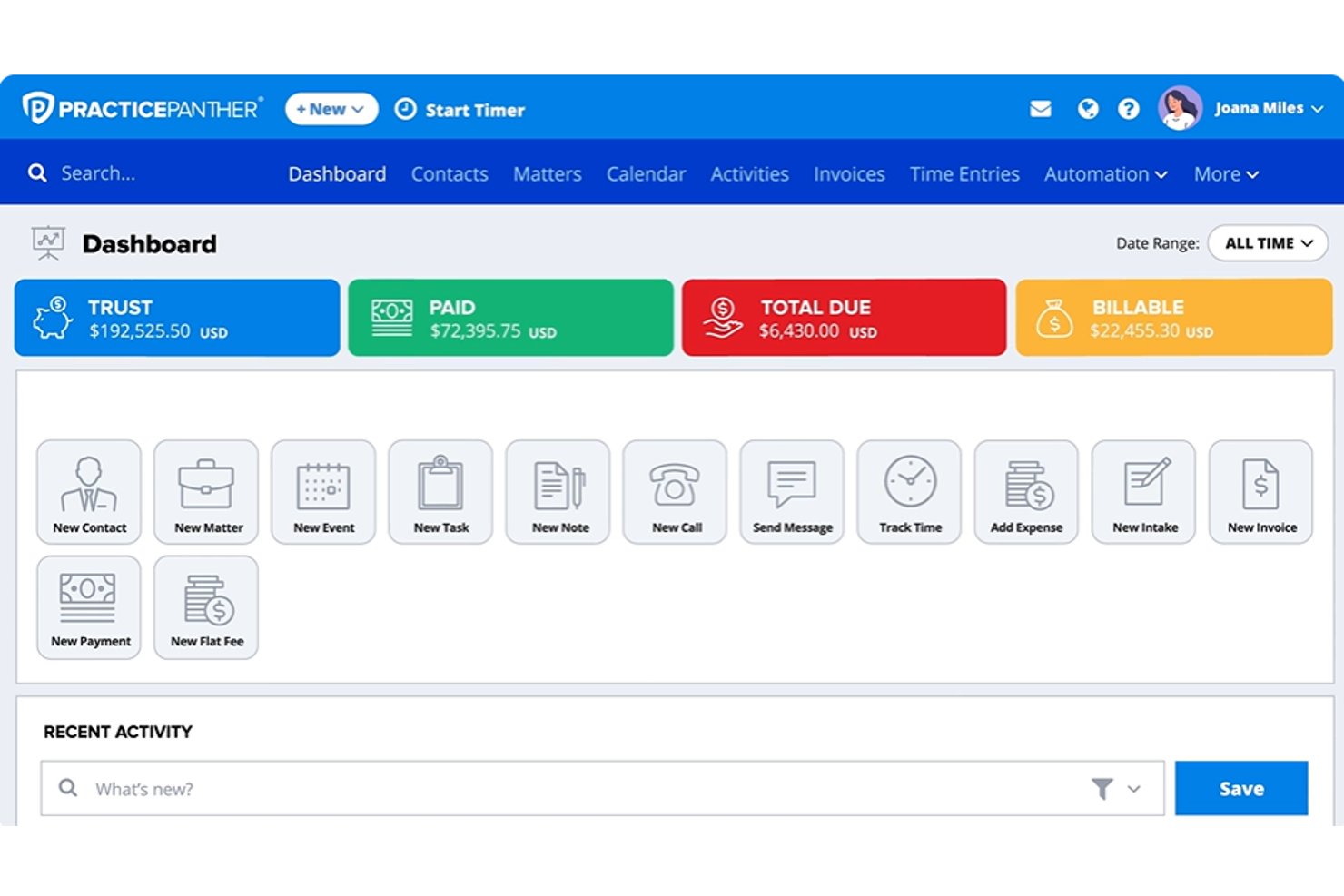
PracticePanther is a cloud-based legal practice management platform built for solo attorneys and small firms, combining matter management, time tracking, billing, trust accounting, client intake, and document management in one system.
Who Is PracticePanther Best For?
PracticePanther is a strong fit for solo attorneys and small law firms that need a single platform to handle cases, billing, and client communication without a steep learning curve.
Why I Picked PracticePanther
PracticePanther earns its spot on my shortlist because of how tightly the case and billing workflows connect. I particularly like the calendar-to-time-entry conversion, where a court appearance automatically becomes a billable time entry without any manual logging. Batch invoicing then lets me process multiple client bills at once rather than one at a time. Task and event workflows also trigger automatically when a matter status changes, keeping casework moving without manual nudges.
PracticePanther Key Features
- Custom matter fields: Add tailored data fields to matters for different practice areas or client needs.
- Three-way trust reconciliation: Complete trust accounting with compliance safeguards for bar association standards.
- Secure client portal: Share documents, updates, and messages with clients through an encrypted platform.
- Document assembly templates: Generate pleadings and letters using templates that auto-populate with matter data.
PracticePanther Integrations
PracticePanther offers native integrations with QuickBooks Online, Xero, Google Workspace, Microsoft 365, LawPay, Dropbox, OneDrive, Box, and specialty tools like LawToolBox and DocuSign. An API is available for custom integrations.
Pros and Cons
Pros:
- Client intake forms auto-populate matter records
- Trust accounting meets bar compliance standards
- Billing and time tracking are tightly integrated
Cons:
- Mobile app has limited functionality
- Reporting features lack depth for complex analysis
New Product Updates from PracticePanther

PantherAccounting Plus Unveiled
PracticePanther launches PantherAccounting Plus, enhancing financial management for law firms. It enables law firms to manage trust and operating accounting directly within the platform. For more information, visit PracticePanther's official site.
 .
.Other Legal Case Management Software For Small Firms
Here are some additional legal case management software for small firms options that didn’t make it onto my shortlist, but are still worth checking out:
- LEAP
For legal documents and case management
- AbacusLaw
For established small law firms
- CasePeer
For personal injury firms
- Filevine
For customizable matter management
- SmartAdvocate
For litigation case management
- CaseFox
For affordable legal billing
- Lawcus
For legal CRM and workflow automation
- Neos
For cloud-based case management
- Bill4time
For legal time and expense tracking
- Amicus Attorney
For traditional law firm workflows


How I Evaluate Legal Case Management Software For Small Firms
I split my evaluation into core requirements—matter management, trust accounting, and billing—and differentiators that tell you which tool actually fits a small firm.
Core Functionality (Table Stakes for This List)
When I'm selecting tools for my list, I rank each one on a scale from 0 (does not offer the functionality) to 5 (excels in this area) for each core functionality listed below. Then, I calculate the tool's total score into a percentage. Each tool needs to achieve a minimum total score of 65% to be considered for inclusion.
- Matter Management: I look for a centralized hub where you can tie contacts, notes, deadlines, and documents to each case—so nothing gets buried in email threads or shared drives.
- Time & Billing: Each tool should handle time tracking, expense capture, and invoicing with support for trust-compliant billing and formats like LEDES that larger clients often require.
- Legal Calendaring: I evaluate whether the calendar links to court rules and auto-calculates deadlines, like response windows after a motion is filed, rather than relying on manual date entry.
- Document Management: The tool should offer version control, templates, and merge fields that pull client or matter data directly into pleadings, engagement letters, or correspondence.
- Trust Accounting: I check for IOLTA-compliant ledgers, three-way reconciliation, and safeguards that help you stay on the right side of bar association audits without needing a separate accounting tool.
- Client Intake & Portal: A good intake workflow feeds form responses into new matter records automatically, and a secure portal lets clients upload documents, view invoices, and sign forms in one place.
Once I have a list of tools that meet the criteria, I consider what sets each platform apart.
Differentiating Factors (What Sets Vendors Apart)
Here's how I compare and contrast different vendors:
Standout Features
Court rules integration is a big differentiator. Some tools auto-calculate cascading deadlines when a triggering event shifts—like a trial date change rippling through discovery cutoffs—while others just offer a shared calendar. I also evaluate document automation depth: the best setups let you merge matter data into pleadings or engagement letters in a few clicks rather than manual copy-paste. Client intake automation matters too, especially for firms handling high-volume consultations where intake forms that auto-create matter records save hours each week.
Beyond Features
Pricing structure matters a lot for small firms. I check whether trust accounting and document storage are included in base plans or locked behind add-ons that inflate costs. Practice area fit is another factor—a family law firm needs different templates, intake fields, and workflows than a criminal defense practice, so I look at how configurable each tool is for mixed caseloads. I also evaluate ecosystem integrations, especially native connections to payment processors like LawPay, accounting tools like QuickBooks Online, and productivity suites like Microsoft 365.
How to Choose Legal Case Management Software For Small Firms
It’s easy to get bogged down in long feature lists and complex pricing structures. To help you stay focused as you work through your unique software selection process, here’s a checklist of factors to keep in mind:
| Factor | What to Consider |
| Scalability | Will the software accommodate growth if you add attorneys or expand practice areas? Check user limits, pricing changes, and plan upgrade paths. |
| Integrations | Consider which tools (accounting, email, e-signature, payment processors) you need to connect and whether integrations are direct or require extra setup. |
| Customizability | Can you tailor templates, fields, workflows, and automations for your firm’s real practice areas and processes, or are you limited to one-size-fits-all? |
| Ease of use | Will new users be able to get up and running quickly? Look for clean navigation and intuitive matter, billing, and document workflows. |
| Implementation and onboarding | What support is offered for data migration, setup, and training? Ask if there’s guided onboarding, tutorials, or dedicated specialists for small firms. |
| Cost | Review not only monthly per-user costs but also whether billing, trust accounting, and storage are included or require add-ons that drive up expenses. |
| Security safeguards | Does the platform use encryption, offer role-based permissions, and comply with legal data privacy requirements? Ask about audit logs and certifications. |
| Compliance requirements | Can the software support IOLTA accounting, jurisdiction-specific rules, and other ethical or bar association-mandated workflows for your region? |
What Are Legal Case Management Software For Small Firms?
Legal case management software for small firms is a specialized platform that helps organize cases, track deadlines, manage documents, and centralize client communications. These tools are built for solo practitioners and small law offices, offering core features like matter management, billing, calendaring, and trust accounting—all tailored for smaller teams and limited resources.
Features of Legal Case Management Software For Small Firms
When selecting legal case management software for small firms, keep an eye out for the following key features:
- Matter management: Organize all case files, contacts, deadlines, and notes in a centralized area for each client or matter, making it easy to find critical information quickly.
- Time and billing: Track billable hours, expenses, and generate professional invoices, supporting legal billing formats and offering tools for accurate time capture.
- Legal calendaring: Automate court deadline calculations, set reminders for statutes of limitations, and manage matter-specific events on shared or individual calendars.
- Document management: Store, version, and generate legal documents using templates and matter data, while keeping files secure and easily accessible.
- Trust accounting: Handle client trust funds with IOLTA-compliant ledgers, three-way reconciliation, and auditing safeguards to ensure ethical and regulatory compliance.
- Client intake and portal: Allow clients to fill out online intake forms that feed directly into new matter records, and provide a secure portal for updates, e-signature, and document sharing.
- Task and workflow automation: Assign, track, and automate tasks across cases, manage case milestones, and streamline common legal processes to reduce administrative burden.
- E-signature integration: Enable clients and attorneys to sign documents electronically, speeding up agreements, filings, or engagement letters without printed paperwork.
- Reporting and analytics: Generate reports on billable hours, collections, caseloads, or trust balances, helping your firm spot trends and support data-driven decisions.
- Compliance management: Maintain audit trails, enforce data privacy, and ensure your workflows meet court, local jurisdiction, and bar association requirements.
Benefits of Legal Case Management Software For Small Firms
Implementing legal case management software for small firms provides several benefits for your team and your business. Here are a few you can look forward to:
- Centralized information: Keep all case files, documents, and contacts organized in one place, reducing lost information and time spent searching for data.
- Greater compliance confidence: Built-in trust accounting, audit logs, and deadline tracking help your firm meet bar association and jurisdictional requirements.
- Reduced administrative workload: Intake automation, task management, and billing tools minimize repetitive data entry and manual processes.
- Improved collaboration: Shared calendars, task assignments, and document versioning make it easy for small teams to stay aligned on every matter.
- Accelerated client service: Secure client portals and automated updates let clients check case status, share files, and communicate without endless back-and-forth emails.
- More accurate billing: Integrated timers and expense capture ensure you record every billable minute and expense, leading to higher realization and fewer billing disputes.
- Easier onboarding and transitions: Guided data migration and built-in templates make it simpler to switch from paper files or legacy systems with less disruption.
Costs and Pricing of Legal Case Management Software For Small Firms
Selecting legal case management software for small firms requires an understanding of the various pricing models and plans available. Costs vary based on features, team size, add-ons, and more. The table below summarizes common plans, their average prices, and typical features included in legal case management software for small firms solutions:
Plan Comparison Table for Legal Case Management Software For Small Firms
| Plan Type | Average Price | Common Features |
| Free Plan | $0 | Basic matter tracking, contact management, limited document storage, and email support. |
| Personal Plan | $20-$40/user/month | Matter management, time tracking, invoicing, document templates, and limited client intake forms. |
| Business Plan | $50-$70/user/month | Advanced calendaring, trust accounting, secure client portal, document automation, and practice area customizations. |
| Enterprise Plan | $80-$120/user/month | Custom workflows, robust reporting, advanced integrations, priority support, and enhanced security controls. |
Legal Case Management Software For Small Firms FAQs
Here are some answers to common questions about legal case management software small firms:
How do small firms benefit from dedicated legal case management software?
Small firms get better organization, improved deadline management, and easier compliance with trust accounting and billing regulations. These tools also save administrative time by automating intake, calendaring, and document workflows designed for small teams.
Can legal case management software integrate with accounting or email platforms?
Yes, most solutions offer integrations with accounting tools like QuickBooks Online and productivity suites like Microsoft 365 or Google Workspace. This lets your firm sync contacts, automate billing entries, and streamline document sharing across platforms.
What should I look for in onboarding and support?
Look for guided data migration, live or on-demand training, and responsive support that fits your business hours. Onboarding help is especially important for firms moving from spreadsheets or legacy software.
Is legal case management software secure enough for client data?
Yes, reputable platforms use encryption, role-based permissions, and regular audits to protect sensitive data. Always confirm that the software meets your jurisdiction’s privacy and security requirements.
How customizable are these solutions for different practice areas?
Most software lets you tailor matter types, workflows, and templates to match your practice—whether you focus on family law, estate planning, or mixed-case portfolios. Customization is key for aligning software with your firm’s daily routines.