

10 Best Relativity Alternatives in 2026

Best Relativity Alternatives Shortlist


A strong Relativity alternative combines agile document review, smooth team collaboration, and flexible eDiscovery configurations to support your firm’s demanding matters. If you’re exploring Relativity alternatives, you likely want tools that adapt to your team’s size, matter complexity, and compliance needs.
Below, you’ll see which options I think fit better for those moving beyond Relativity—and what unique capabilities each brings to the table.
What Is Relativity?
Relativity is an eDiscovery and legal review platform used by law firms and legal departments to manage document review, data processing, legal holds, and compliance workflows. It helps legal teams organize, search, tag, and analyze large sets of data for investigations, litigation, or regulatory matters.
Relativity focuses on simplifying workflows, supporting collaboration, and maintaining secure, defensible processes throughout the eDiscovery lifecycle.
Relativity Alternatives Comparison Table
This comparison table summarizes pricing details for my Relativity alternative selections:
| Tool | Best For | Trial Info | Price | ||
|---|---|---|---|---|---|
| 1 | Best for enterprise-scale case management | Not available | Pricing upon request | Website | |
| 2 | Best for case management and legal analytics | Free demo available | Pricing upon request | Website | |
| 3 | Best for agile litigation and regulatory response | Free demo available | Pricing upon request | Website | |
| 4 | Best for processing complex and diverse data types | Free demo available | Pricing upon request | Website | |
| 5 | Best for seamless Microsoft 365 data integration | 30-day free trial | From $12/user/month (billed annually) | Website | |
| 6 | Best for legal hold and custodian tracking | Free demo available | Pricing upon request | Website | |
| 7 | Best for flexible hybrid deployment | Free demo available | Pricing upon request | Website | |
| 8 | Best for real-time collaborative document review | Free demo available | Pricing upon request | Website | |
| 9 | Best for advanced AI-powered analytics integration | Free demo available | Pricing upon request | Website | |
| 10 | Best for instant self-service data review | Free trial available | Pricing upon request | Website |
Why Trust Our Software Recommendations
Our team has been testing and reviewing software since 2012. As legal practice leaders ourselves, we know how difficult—and important—it is to choose the right software.
For this guide, we evaluated tools using hands-on testing and independent research, scoring tools using our selection criteria.
Our reviews reflect our human editorial judgment, not a sales pitch.
Relativity Alternatives Reviews
Below are my detailed summaries of the best Relativity alternatives that made it onto my shortlist. My reviews offer a detailed look at the features, capabilities, and best use cases of each platform to help you find the best one for you.

OpenText
Best for enterprise-scale case management
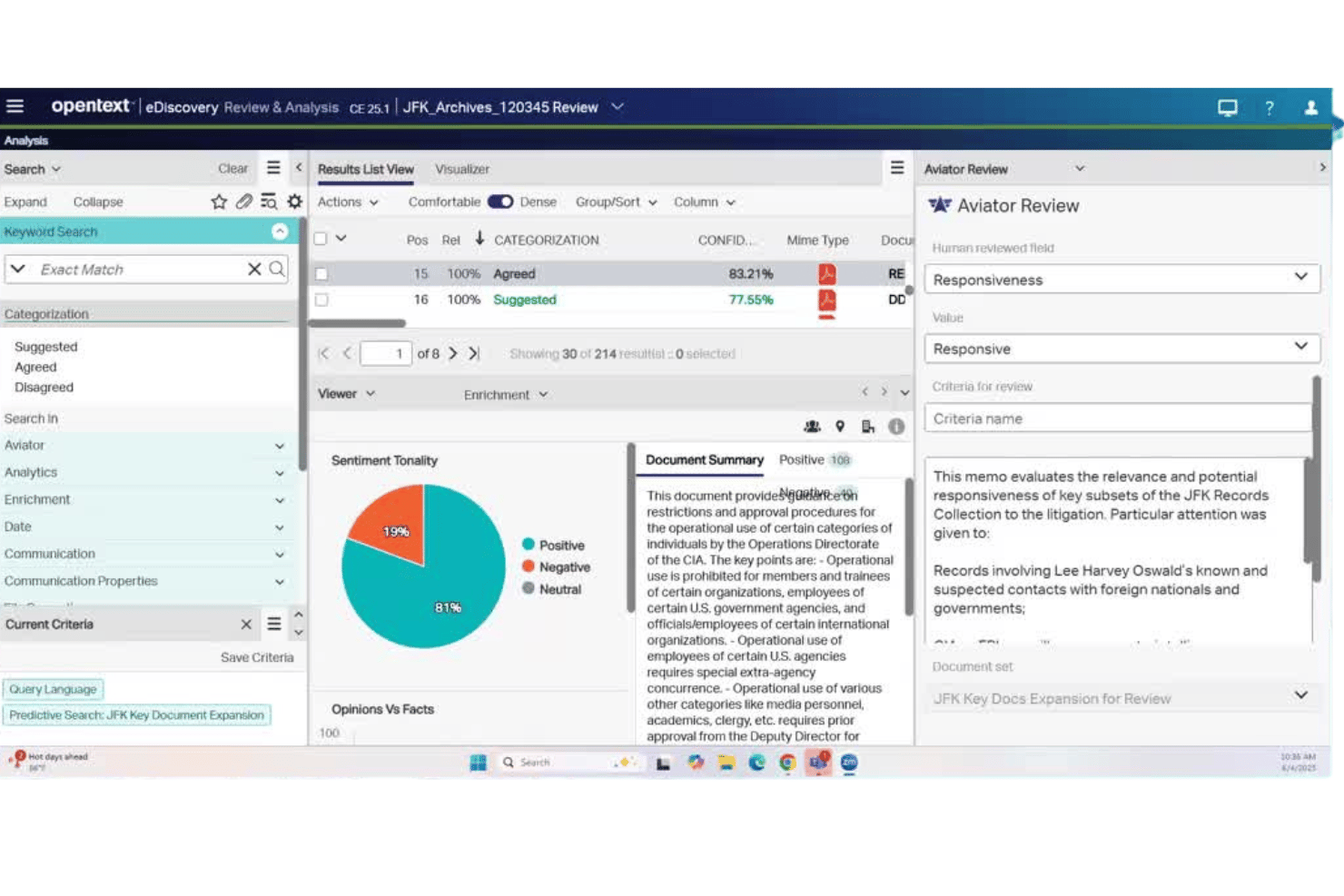
OpenText eDiscovery is an AI-powered platform built for corporate legal teams and litigation support professionals who need end-to-end ESI processing, document review, and case management at enterprise scale.
Who Is OpenText Best For?
OpenText eDiscovery is a strong fit for large enterprises and corporate legal departments managing high-volume litigation, investigations, or regulatory compliance across complex data environments.
Why OpenText Is a Good Relativity Alternative
OpenText eDiscovery earns its spot on my shortlist because it handles enterprise-scale case management end-to-end, from legal hold to production, in a single platform. I particularly like the Aviator Review capability, which applies continuous active learning to large document sets and meaningfully cuts review volume. The 45+ data-source connectors also make ingesting ESI from complex enterprise environments far more manageable than stitching together separate tools.
OpenText Key Features
- GenAI-powered document summarization: Instantly generates concise summaries of lengthy documents to help prioritize review.
- Audio and video content analysis: Ingests, transcribes, searches, and redacts audio and video files as part of discovery workflows.
- Integrated legal hold notifications: Automates custodian notifications and acknowledgment tracking within one platform.
- Flexible deployment options: Lets you choose among public cloud, private cloud, or hybrid deployment to meet compliance and data sovereignty needs.
OpenText Integrations
OpenText eDiscovery offers 45+ native integrations, including Microsoft 365, Google Workspace, Slack, Box, SharePoint, and Exchange. An API is available for custom integrations.
Pros and Cons
Pros:
- Processes 300+ file types including structured data
- Continuous active learning reduces document review volume
- Single platform covers hold through production
Cons:
- Interface feels dated compared to newer platforms
- Setup requires significant IT and admin resources

Best for case management and legal analytics
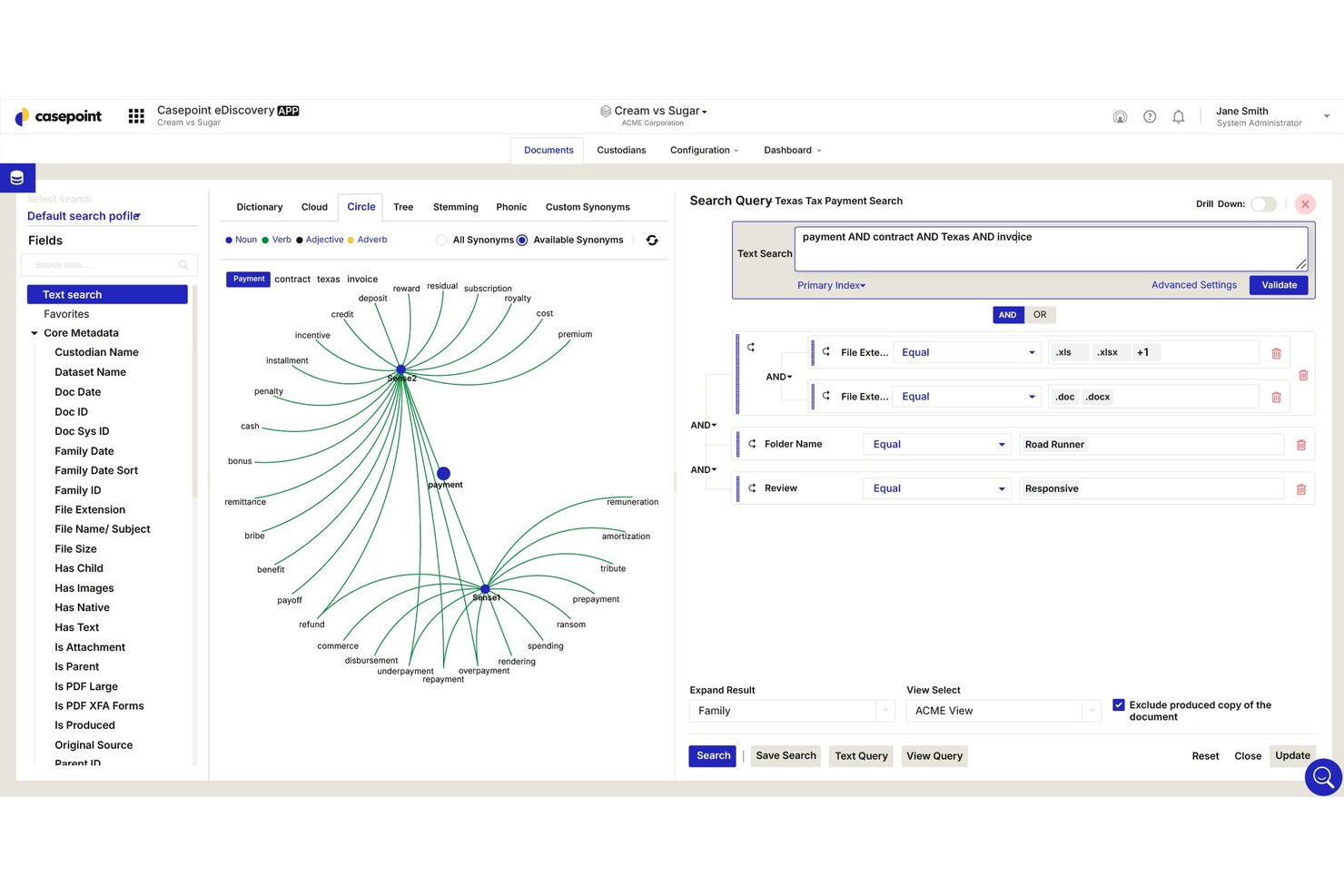
Casepoint is a cloud-based eDiscovery and legal data management platform built for corporate legal teams and government agencies that need defensible ESI processing, AI-powered document review, and integrated legal hold—without Relativity's complex licensing structure.
Who Is Casepoint Best For?
Casepoint is a strong fit for government agencies and mid-market enterprises operating in heavily regulated industries where security compliance and defensible workflows aren't optional.
Why Casepoint Is a Good Relativity Alternative
I've included Casepoint in my top picks because its analytics capabilities genuinely stand out. CaseAssist, its built-in AI, runs predictive coding, concept clustering, and email threading natively, so I'm not paying analytics add-on fees the way I would with Relativity. The legal hold module also automatically flags custodian status changes by connecting directly to HR systems, which closes a gap that manual hold processes consistently miss.
Casepoint Key Features
- FedRAMP High and DOD IL6 certifications: Government-grade security and compliance for sensitive litigation and regulatory data.
- Batch review workflow: Assign, manage, and track large document sets across distributed review teams.
- Cloud data connectors: Collect and preserve data directly from Microsoft 365, Slack, Google Workspace, Box, and more.
- Configurable production tools: Output productions with custom Bates numbering, redactions, and privilege logs for court compliance.
Casepoint Integrations
Casepoint offers native integrations with Microsoft 365, Google Workspace, Slack, Box, and Dropbox, and provides an API for custom integrations.
Pros and Cons
Pros:
- No-code review workflow builder included
- FedRAMP-certified for government-sensitive matters
- Native AI-powered early case assessment built-in
Cons:
- Reporting customization is comparatively limited
- Smaller certified admin community than Relativity

Best for agile litigation and regulatory response
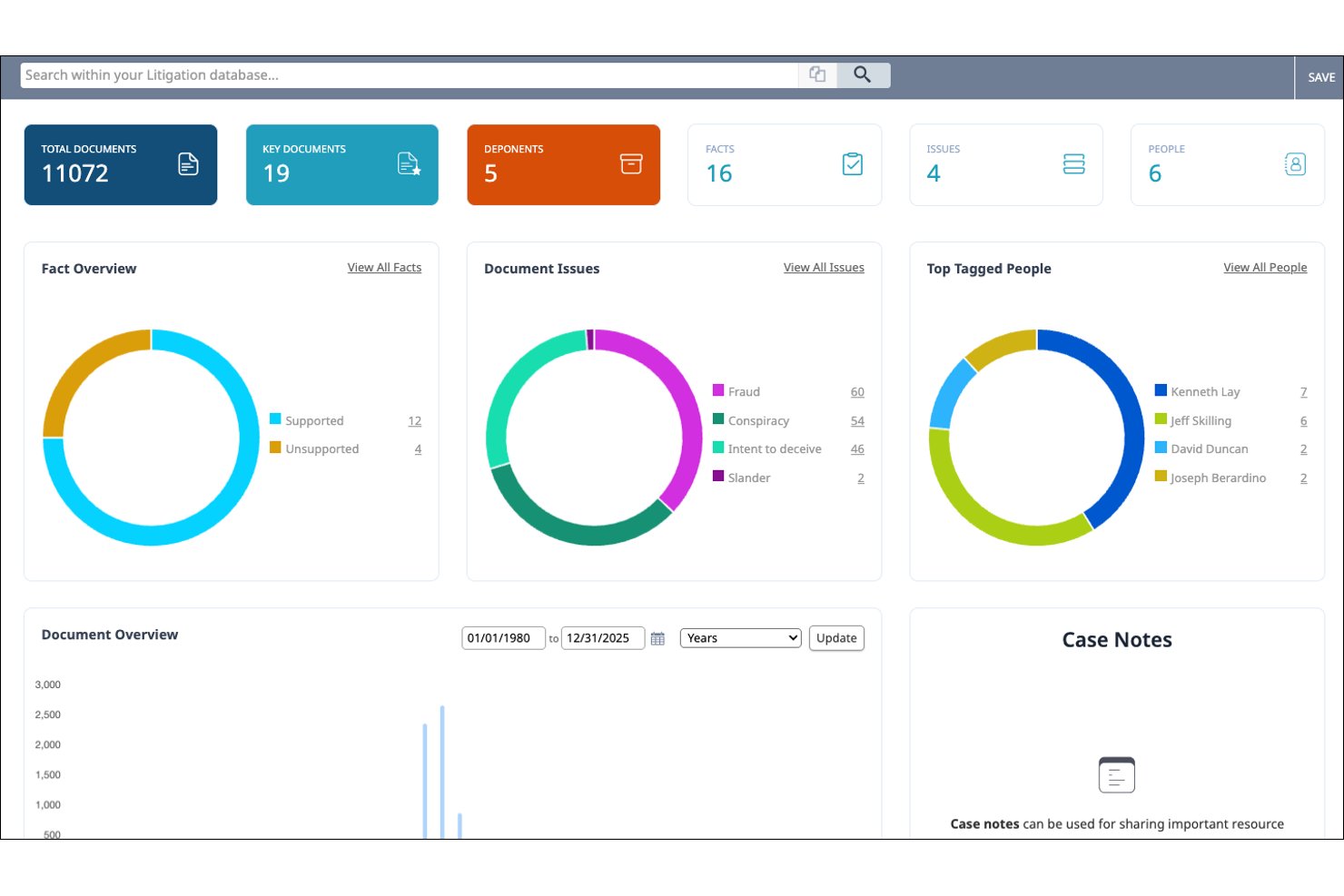
Nextpoint is a cloud-native ediscovery platform built for law firms and legal teams that need to process, review, and produce ESI without the per-GB costs and complexity that come with enterprise tools like Relativity.
Who Is Nextpoint Best For?
Nextpoint is a strong fit for small-to-midsize law firms that handle litigation in-house and need a full ediscovery workflow without enterprise-level overhead.
Why Nextpoint Is a Good Relativity Alternative
I picked Nextpoint as one of the best because its drag-and-drop upload and cloud-native processing let my team move from raw ESI to active review in minutes. I also appreciate the built-in case chronology tools and AI-powered deposition summaries, which mean I can build a factual record and prep for courtroom presentations without switching platforms.
Nextpoint Key Features
- Advanced search and filtering: Run keyword, Boolean, and metadata searches across all uploaded documents for fast data culling.
- Batch redactions and tagging: Apply redactions, highlights, tags, and custom codes to document groups in one action.
- Deposition transcript management: Manage transcripts with synchronized video, designation coding, and connected exhibits.
- SOC 2 Type II certified security: Ensure document confidentiality with audit trails, granular permissions, and encryption in transit and at rest.
Nextpoint Integrations
Nextpoint provides native integrations with Dropbox, Google Drive, OneDrive, and Zoom for direct data collection. An API is available for custom integrations.
Pros and Cons
Pros:
- AI predictive coding included in base plan
- No-code workflow builder for review automation
- Cloud-native with no server administration needed
Cons:
- Reporting lacks depth for complex matter portfolios
- Analytics less granular than enterprise-grade tools
Best for processing complex and diverse data types
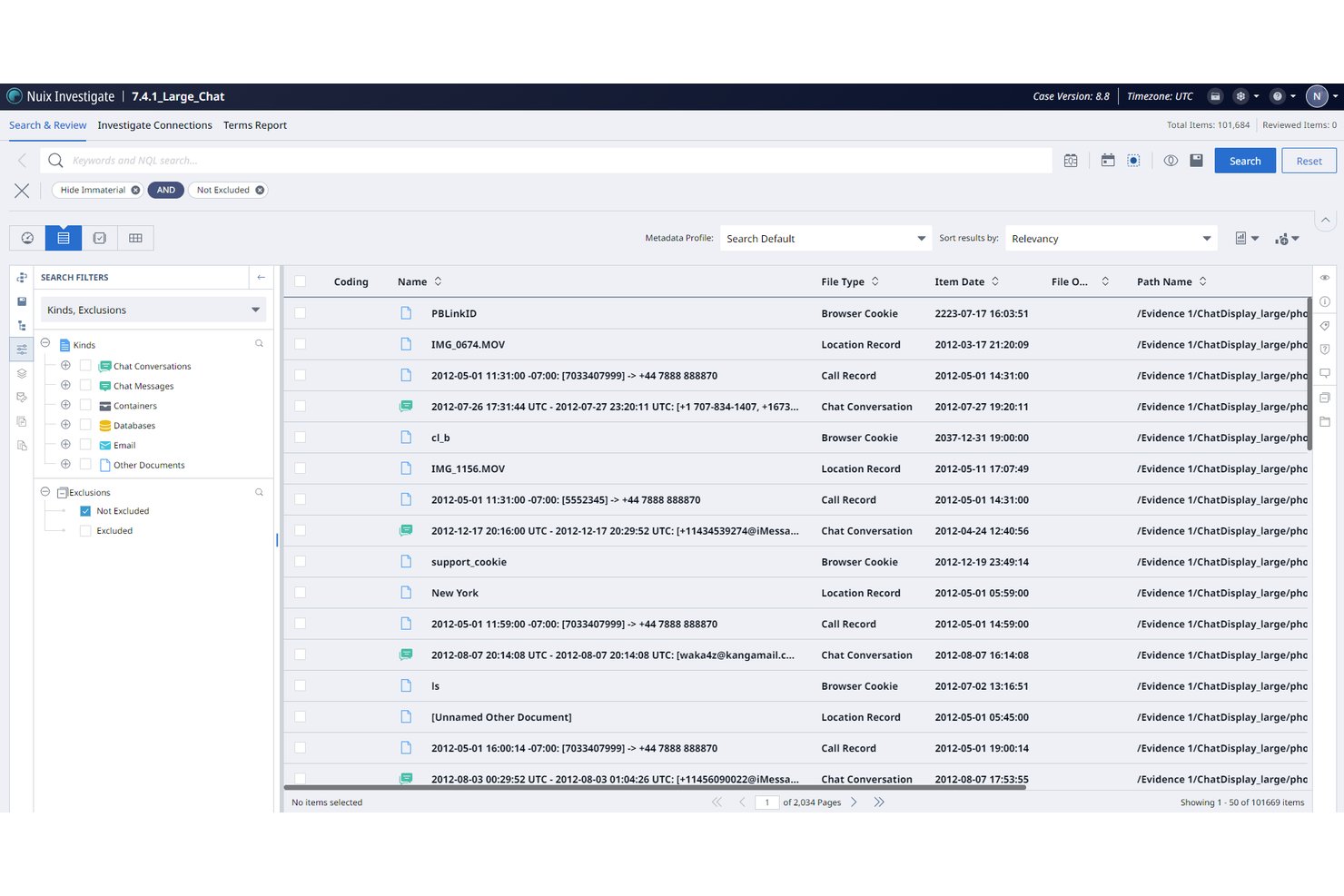
Nuix Discover is an eDiscovery platform built for legal teams and litigation support professionals who need forensic-grade data processing, AI-driven document review, and multi-jurisdictional production capabilities without the constraints of a single-vendor ecosystem.
Who Is Nuix Discover Best For?
Nuix Discover is a strong fit for enterprise legal teams and litigation support professionals managing high-volume, complex investigations across multiple data sources and jurisdictions.
Why Nuix Discover Is a Good Relativity Alternative
I picked Nuix Discover as one of the best because the Nuix Engine processes over 1,000 file types, including forensic data sources most eDiscovery platforms can't handle natively. I particularly appreciate its Cognitive AI (CogAI), which ships with 500+ pre-built eDiscovery-tuned models for concept clustering and continuous active learning, cutting the gap between raw ingestion and a prioritized review set significantly.
Nuix Discover Key Features
- Visual review interface: Delivers document clustering and relevance maps for easier navigation of large data sets.
- Multi-tenant architecture: Allows secure data separation for law firms, enterprises, and government clients.
- Automated PII redaction: Identifies and redacts sensitive information across many data types for compliance.
- Gap identification tools: Flags missing custodians, date ranges, or key documents to enhance defensibility and completeness.
Nuix Discover Integrations
Nuix Discover offers native integrations with Microsoft 365, Google Workspace, Slack, Box, and Relativity. An API is available for custom integrations.
Pros and Cons
Pros:
- Forensic-grade chain-of-custody audit logging built in
- CogAI models drastically reduce manual review volume
- Ingests 1,000+ file types without third-party preprocessing
Cons:
- UI complexity can slow down first-time review teams
- Setup and configuration demands dedicated technical resources
Best for seamless Microsoft 365 data integration
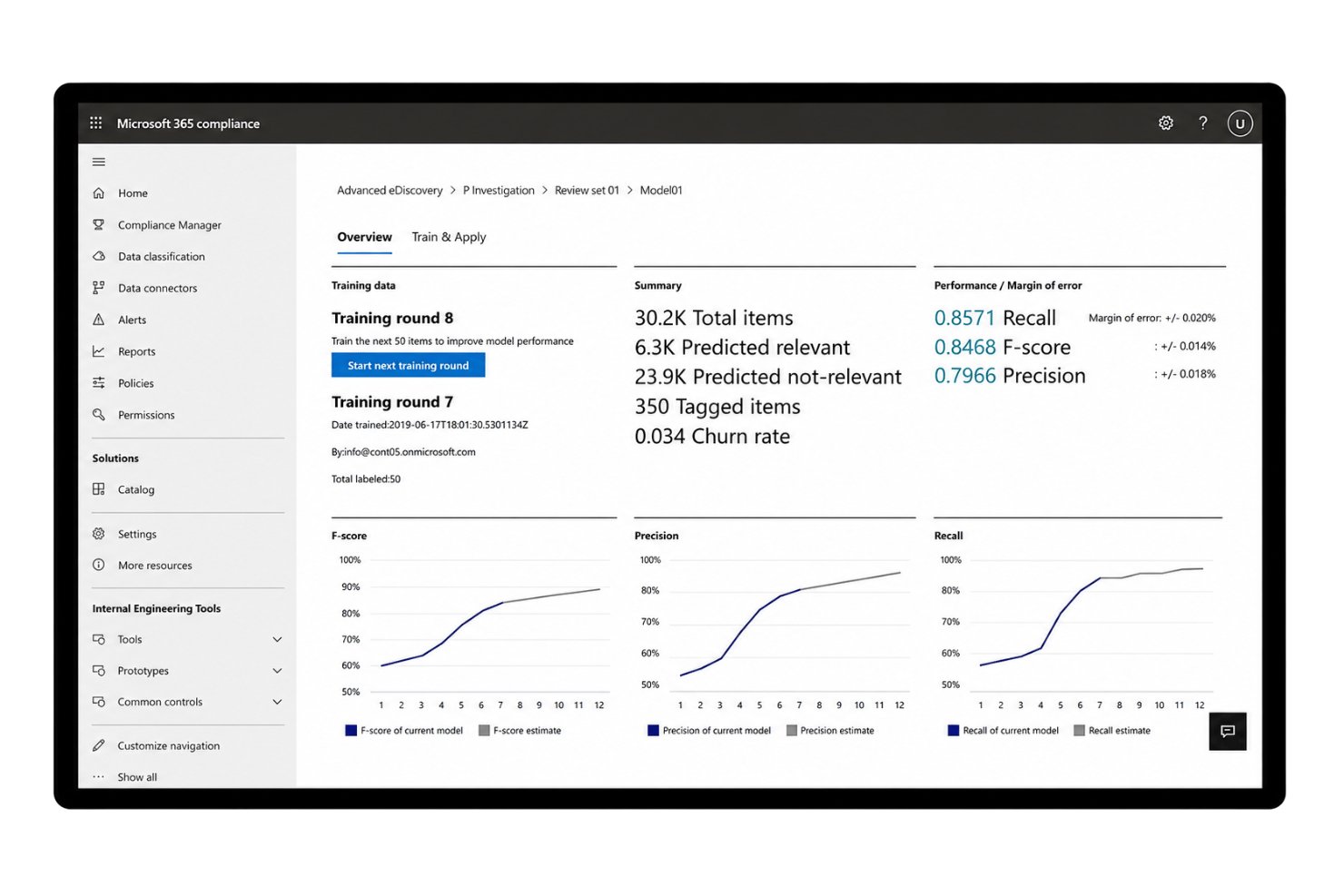
Microsoft Purview eDiscovery is a compliance-native tool built into the Microsoft 365 ecosystem, giving corporate legal and eDiscovery teams a way to search, preserve, and collect ESI without stepping outside their existing Microsoft environment.
Who Is Microsoft Purview eDiscovery Best For?
It's a strong fit for enterprise in-house legal and compliance teams already operating within Microsoft 365 who need integrated eDiscovery without a separate platform.
Why Microsoft Purview eDiscovery Is a Good Relativity Alternative
I picked Microsoft Purview eDiscovery because its in-place discovery model keeps data inside your Microsoft 365 boundary, eliminating the need to copy content out to a third-party platform. When I search across Exchange, SharePoint, and Teams, I'm working against live data rather than a duplicate copy. The built-in custodian mapping automatically links data sources to individuals of interest, and the legal hold notification workflow runs entirely within the same environment.
Microsoft Purview eDiscovery Key Features
- Advanced indexing and search: Search across Exchange, SharePoint, OneDrive, and Teams with keyword, Boolean, and advanced filters.
- Review set management: Copy collected data to review sets where users can tag, annotate, and analyze documents.
- Legal hold notification workflows: Manage automated legal hold notifications and acknowledgment tracking for custodians.
- Machine learning-based privilege detection: Use integrated models to flag content likely containing attorney-client privileged information.
Microsoft Purview eDiscovery Integrations
Microsoft Purview eDiscovery has native integrations across the Microsoft ecosystem, including Microsoft 365 and Azure. An API is available for custom integrations.
Pros and Cons
Pros:
- In-place search across Exchange, Teams, and SharePoint
- Legal hold notifications built into the platform
- Native Microsoft 365 data collection without exporting
Cons:
- Review sets lack advanced QC workflow tools
- Limited TAR and predictive coding capabilities
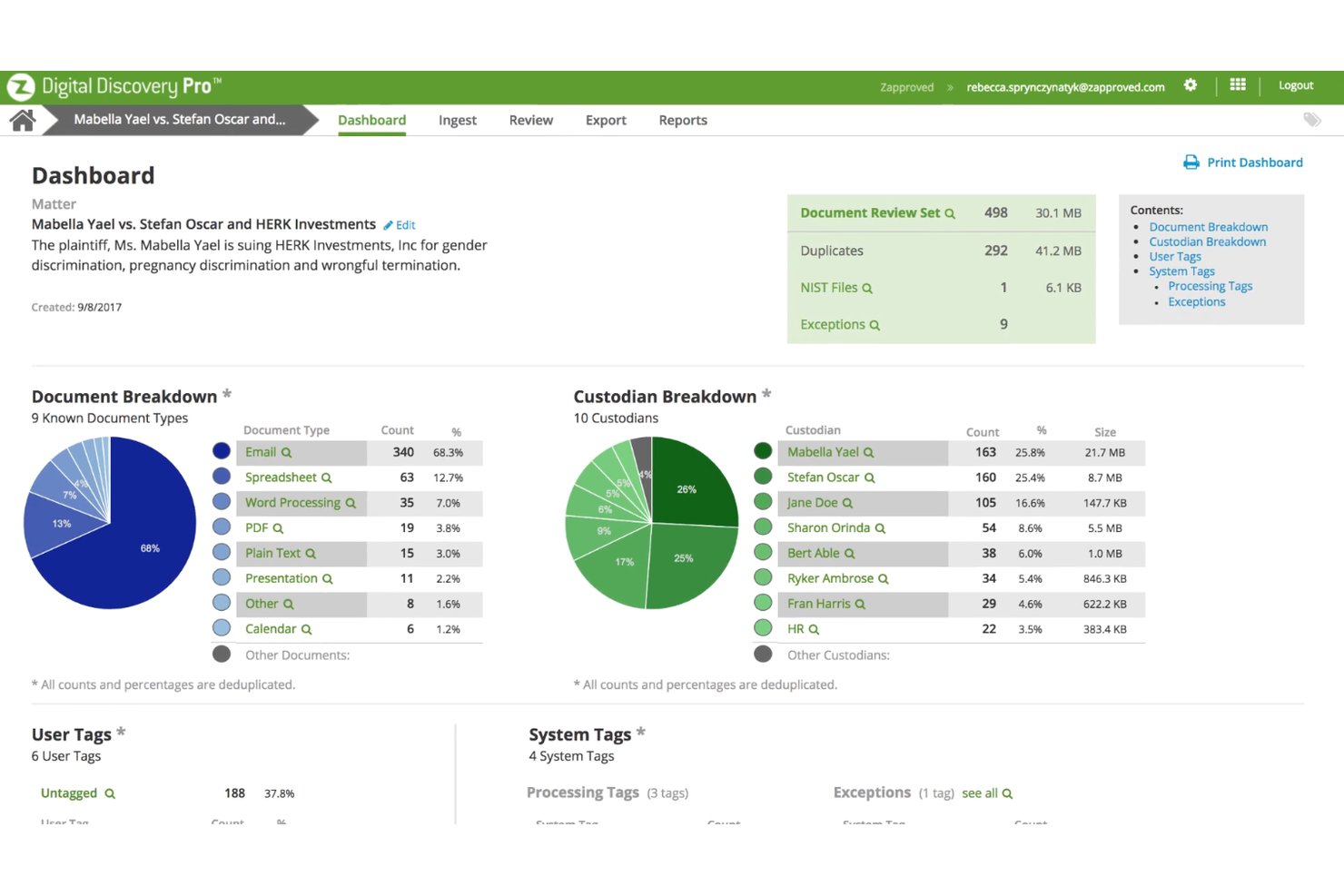
ZDiscovery by Zapproved is a cloud-based ediscovery platform built for in-house corporate legal teams who need to manage legal holds, data preservation, and document review without the complexity or cost of enterprise platforms like Relativity.
Who Is Zapproved Best For?
Zapproved is a strong fit for corporate legal operations teams at mid-to-large enterprises that handle frequent litigation and need a dedicated ediscovery workflow.
Why Zapproved Is a Good Relativity Alternative
I picked Zapproved as one of the best because its legal hold management goes beyond just sending a notice. I appreciate how it automates custodian reminders, tracks acknowledgments, and builds a defensible audit trail in real time. The automated custodian workflows also monitor employee changes, like departures or role shifts, and trigger the right hold actions. That level of custodian visibility is genuinely difficult to replicate in Relativity without heavy customization.
Zapproved Key Features
- Document processing powered by Nuix: Ingests and processes a wide range of file types with automated deduplication and metadata extraction.
- Integrated review workspace: Supports multi-user document review with built-in search, filtering, and coding panels.
- Direct data collection from Office 365: Collects targeted data from Microsoft 365, including Teams chat, with real-time progress updates.
- Configurable document production: Generates productions with Bates numbering, redactions, and export to native, TIFF, or PDF with load files.
Zapproved Integrations
Zapproved offers native integrations across the Microsoft ecosystem, including Microsoft 365, Teams, and Exchange, as well as Google Vault and Slack. An API is available for custom integrations.
Pros and Cons
Pros:
- Purpose-built for corporate in-house legal teams
- Built-in defensible audit trail generation
- Automated custodian reminders reduce manual follow-up
Cons:
- Narrower document review than full platforms
- Limited TAR and predictive coding depth
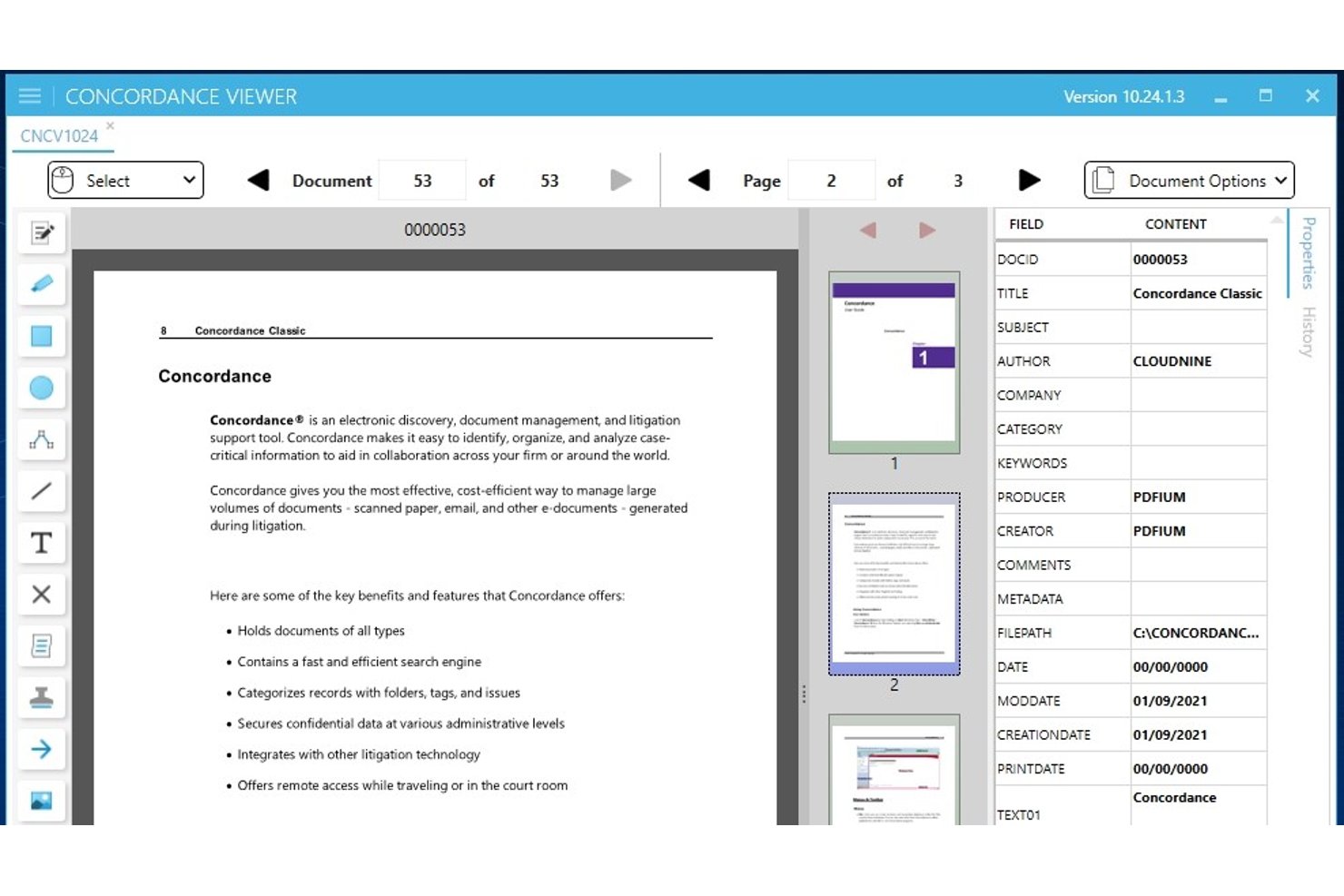
CloudNine is an eDiscovery platform built for law firms, corporate legal teams, and litigation support professionals who need to process, review, and produce ESI without being locked into a single deployment model or enterprise-scale pricing.
Who Is CloudNine Best For?
It's a strong fit for small to mid-sized law firms and legal ops teams that need on-premise control, cloud flexibility, or a mix of both within a single eDiscovery ecosystem.
Why CloudNine Is a Good Relativity Alternative
I picked CloudNine as one of the best because it's one of the few eDiscovery platforms that genuinely spans on-premise and cloud deployment within a single product ecosystem. I can run CloudNine LAW on-premise for processing sensitive data, then push documents into CloudNine Review in the cloud for remote review teams, all without switching vendors. That kind of deployment control is rare and matters when data residency or firm policy restricts what lives in the cloud.
CloudNine Key Features
- Smart Filters: Narrow review populations with real-time filters, OCR, and instant document counts.
- Batch review assignments: Assign document sets to specific reviewers for organized, auditable workflows.
- Native chat and mobile support: Ingest and process SMS, Slack, Teams, and WhatsApp data without conversions.
- Configurable productions: Export court-ready productions in PDF, TIFF, RSMF, or native format with privilege logs.
CloudNine Integrations
CloudNine offers native integrations with Microsoft 365, Google Workspace, Slack, Teams, and Box. An API is available for custom integrations.
Pros and Cons
Pros:
- No certified admin required to operate
- Processes SMS and chat data natively
- Flexible on-premise and cloud deployment options
Cons:
- Reporting tools lack depth for complex matters
- Limited analytics compared to enterprise eDiscovery platforms

Everlaw
Best for real-time collaborative document review
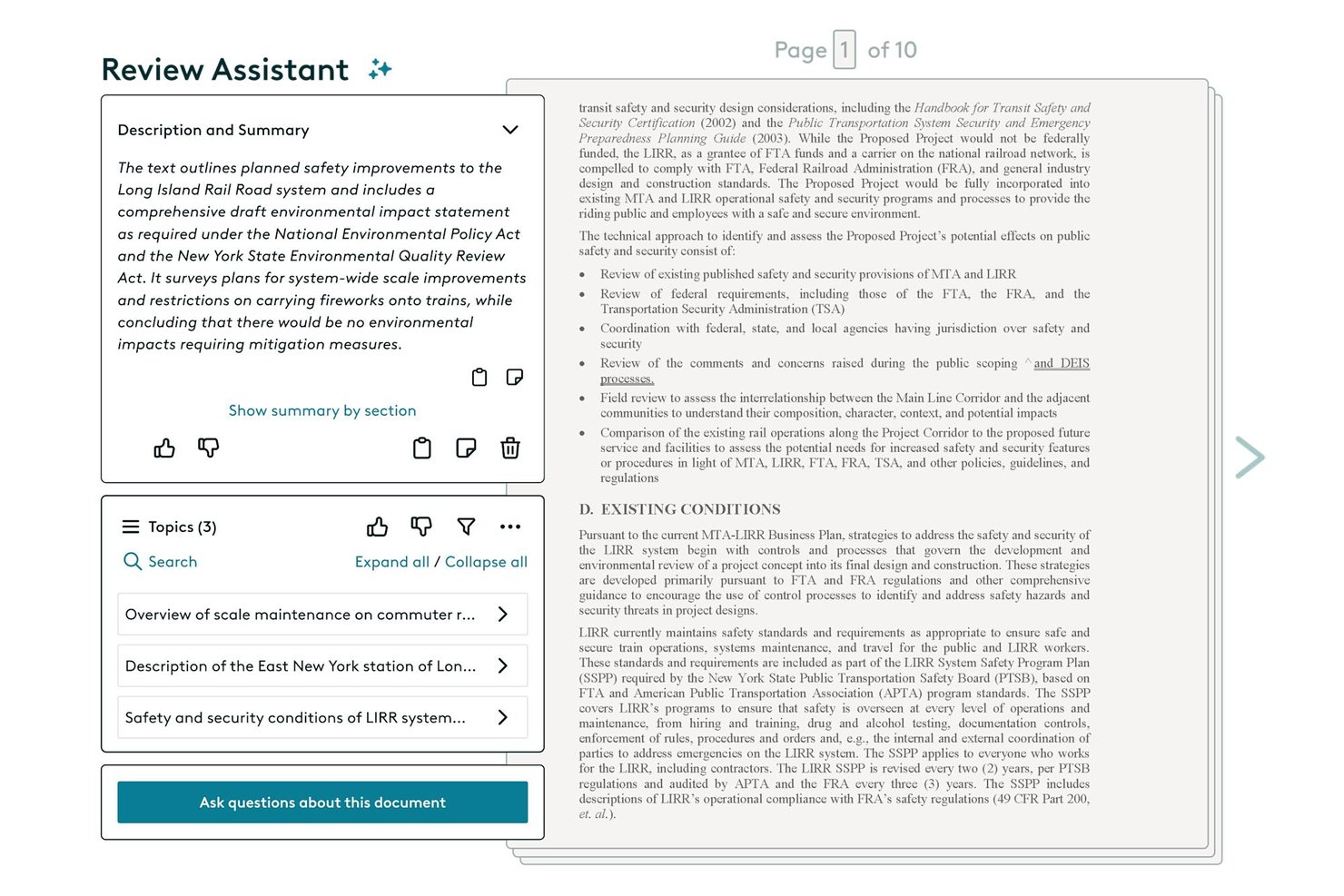
Everlaw is a cloud-native ediscovery platform built for litigation teams and legal operations who need a less complex, more accessible alternative to Relativity for ESI processing, document review, and investigation workflows.
Who Is Everlaw Best For?
Everlaw is a strong fit for law firms and corporate legal teams that handle high-volume litigation and need ediscovery tools that don't require dedicated technical administrators.
Why Everlaw Is a Good Relativity Alternative
I've included Everlaw in my top picks because of how it handles real-time collaborative document review. Multiple reviewers can code documents simultaneously, with AI Coding Suggestions that auto-categorize documents and return rationales based on your coding sheet. Deep Dive layers on natural language querying across entire datasets with direct citations, keeping reviewer teams aligned without constant back-and-forth.
Everlaw Key Features
- Concept clustering dashboard: Visualizes relationships between documents to help surface patterns and connections across massive datasets.
- Integrated legal holds: Manages custodian notifications, acknowledgment tracking, and preservation-in-place directly from the platform.
- Audio and video transcription: Converts spoken content from multimedia files into searchable and review-ready text.
- Unlimited productions: Lets users create and export an unlimited number of court-ready productions with redactions and privilege logs.
Everlaw Integrations
Everlaw offers native integrations with Microsoft 365, Google Workspace, Slack, Box, and Zoom, and provides an API for custom integrations.
Pros and Cons
Pros:
- No dedicated admin required to operate
- AI coding suggestions with explainable rationales
- Real-time multi-reviewer coding on same documents
Cons:
- Steep learning curve for advanced analytics features
- Limited support for on-premise deployment needs
Reveal
Best for advanced AI-powered analytics integration
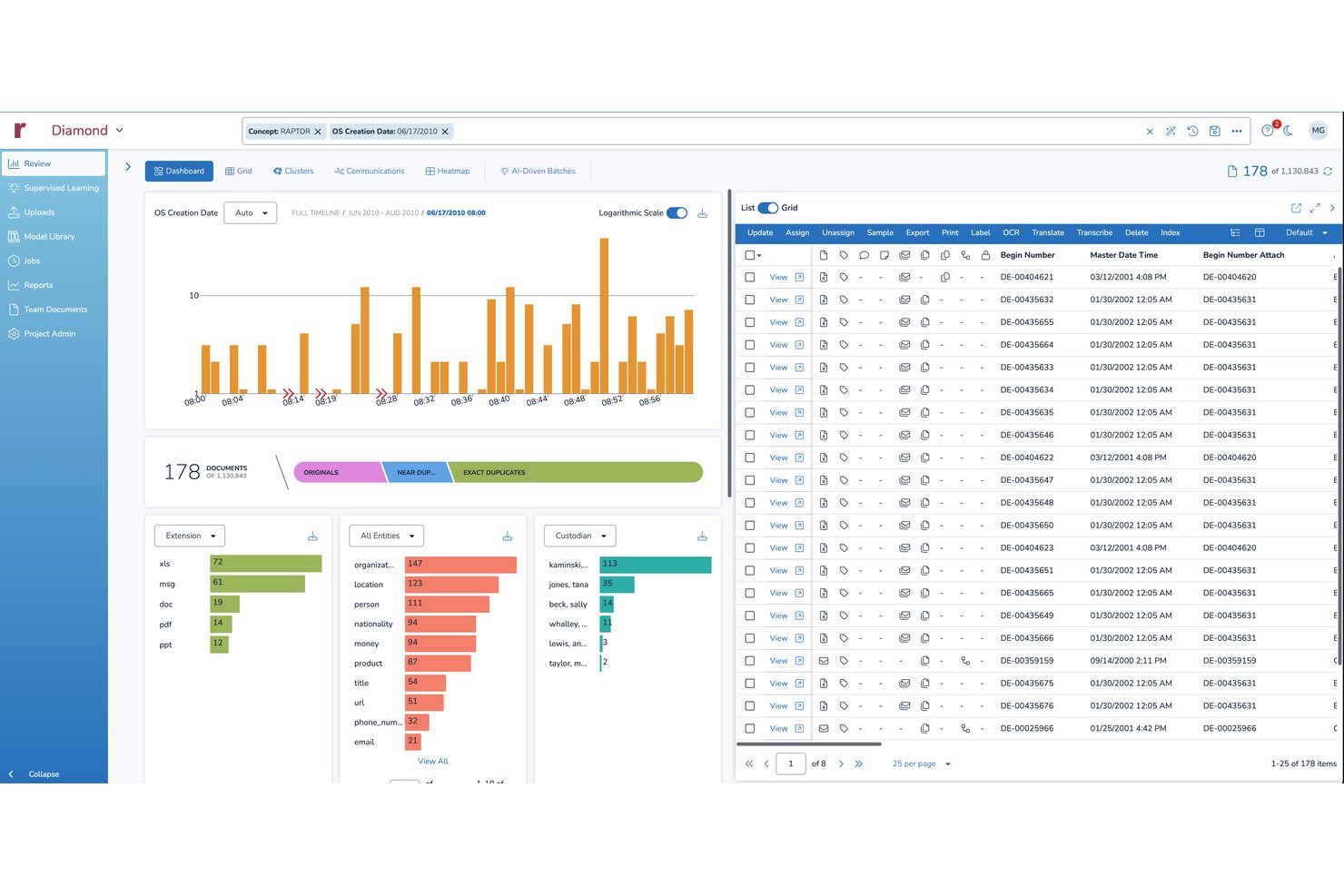
Reveal is an AI-driven eDiscovery platform built for law firms, corporations, and legal operations teams that need enterprise-scale ESI processing, document review, and advanced analytics without Relativity's complex licensing structure.
Who Is Reveal Best For?
Reveal is a strong fit for eDiscovery managers and litigation support teams handling high-volume, multi-language matters that demand deep AI analytics and defensible review workflows.
Why Reveal Is a Good Relativity Alternative
I've included Reveal in my top picks because its AI analytics stack genuinely goes beyond what Relativity offers out of the box. Brainspace delivers conceptual clustering, CAL/TAR 2.0, and sentiment analysis in a single integrated layer, so my team can surface patterns across massive document sets without building separate workflows. The aji agentic review layer and GenAI "Ask" feature return answers with source citations attached, cutting verification time significantly on complex, high-volume matters.
Reveal Key Features
- Multi-language document processing: Automatically processes and translates documents across 14+ major world languages in a single workflow.
- Integrated legal hold management: Centralizes custodian notification, tracking, and defensible collection from sources like Microsoft 365, Google Workspace, Slack, and Box.
- No-code data connectors: Directly imports communications, documents, and cloud content using prebuilt integrations for Teams, Zoom, Dropbox, and more.
- Customizable review dashboards: Lets teams build real-time, role-based dashboards for reviewer performance, issue tagging, and quality control tracking.
Reveal Integrations
Reveal offers native integrations with Microsoft 365, Google Workspace, Slack, Teams, Zoom, Box, Dropbox, Salesforce, and Jira. An API is available for custom integrations.
Pros and Cons
Pros:
- Purpose-built Slack and Teams chat review
- Native legal hold included without add-ons
- Built-in CAL and TAR 2.0 analytics
Cons:
- Reporting customization options feel limited
- Admin configuration requires significant technical expertise
Logikcull
Best for instant self-service data review
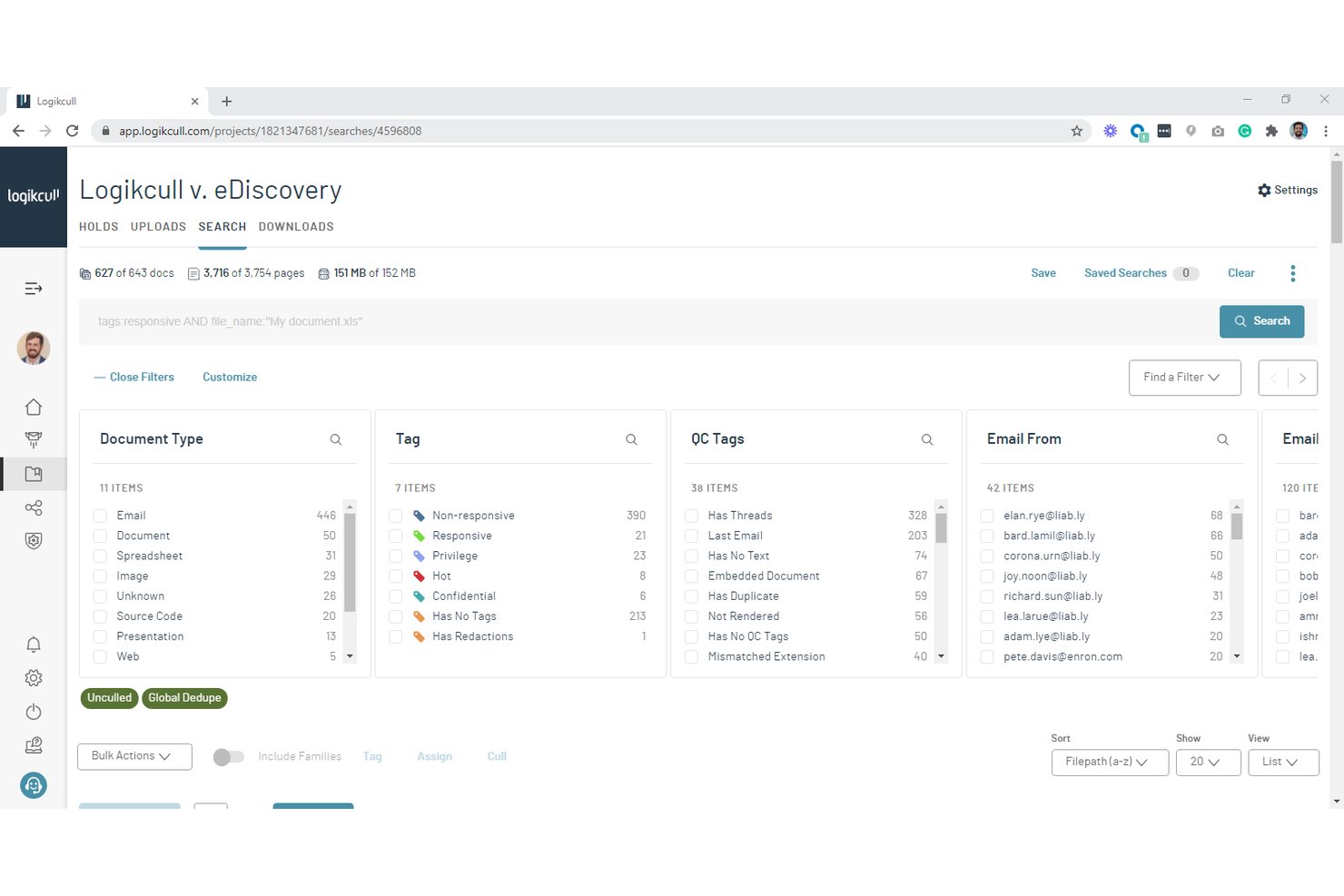
Logikcull is a cloud-based eDiscovery platform that lets legal teams process, review, and produce ESI without the infrastructure overhead or steep learning curve that comes with Relativity.
Who Is Logikcull Best For?
Small to mid-sized law firms and in-house legal teams who need to run eDiscovery in-house without dedicated IT support will get the most out of Logikcull.
Why Logikcull Is a Good Relativity Alternative
I've included Logikcull in my top picks because of how fast my team can move from raw data to a reviewable set. Drag-and-drop uploads trigger 300+ automated processing steps, spinning up a new project in under 30 seconds with no IT involvement. I also like Culling Intelligence™, which lets me drill down to the relevant documents in under 10 clicks, cutting through noise before review even begins.
Logikcull Key Features
- Legal hold management: Centralizes notice distribution, reminders, and tracking for all custodians involved in a matter.
- Integrated chat data review: Supports direct Slack and Teams data imports with full threading and contextual rendering.
- Public records portal: Offers a dedicated portal for managing FOIA and public records requests from intake through fulfillment.
- Onna-powered multi-source collections: Enables collection and search across over 29 data sources, including Zoom, Box, and Salesforce.
Logikcull Integrations
Logikcull offers native integrations with Microsoft 365, Google Workspace, Slack, Box, Dropbox, and Onna for multi-source enterprise data ingestion. An API is available for custom integrations.
Pros and Cons
Pros:
- No Relativity-certified admin needed to operate
- Processes 300+ file types automatically on upload
- Instant project setup with no IT support
Cons:
- Better suited for mid-size matters only
- TAR less advanced than enterprise-grade platforms
Other Relativity Alternatives
Here are some additional relativity alternatives options that didn’t make it onto my shortlist, but are still worth checking out:
- DISCO
For intuitive cloud eDiscovery workflows
- Exterro
For legal hold and compliance
- GoldFynch
For simple, transparent per-case pricing
- Epiq Discovery
For managed global eDiscovery services
- Zylab One
For advanced self-service analytics tools
- Onna
For broad cloud app data collections
- IPRO
For early case assessment workflows
- Digital WarRoom
For desktop and on-premise deployment options
- Consilio Sightline
For secure multi-matter workspace management
- Lighthouse
For AI-powered privilege review automation


How I Evaluate Relativity Alternatives
I look at two layers: baseline capabilities Relativity covers—ESI processing, TAR, and production—and differentiators that set vendors apart. Differentiators include pricing structure, deployment model, and support for modern chat data sources.
Core Functionality (Table Stakes For This List)
When I'm selecting tools for my list, I rank each one on a scale from 0 (does not offer the functionality) to 5 (excels in this area) for each core functionality listed below. I then calculate the tool's total score into a percentage, using 65% as a benchmark to help assess its overall fit for the list.
- ESI Processing: I look for support across diverse file types—emails, PDFs, databases—plus metadata extraction and deduplication at ingestion.
- Document Review: Multi-user coding panels, batch assignments, and QC dashboards matter when you're coordinating contract reviewers on a tight deadline.
- Advanced Search: I evaluate whether the platform supports Boolean, proximity, and fuzzy queries—useful for isolating custodian communications in large datasets.
- TAR and Analytics: Predictive coding, email threading, and clustering reduce review populations. I check how each tool handles continuous active learning workflows.
- Production and Export: Court-ready output with Bates numbering, redactions, and privilege logs matters here. I look at format flexibility and production automation.
- Legal Hold and Collection: I consider how each platform manages custodian notifications, acknowledgment tracking, and defensible collection from sources like Microsoft 365.
Once I have a list of tools that meet the criteria, I consider what sets each platform apart.
Differentiating Factors (What Sets Vendors Apart)
Here's how I compare and contrast different vendors:
Standout Features
AI-powered early case assessment can cut a review population dramatically—I look for platforms where clustering and concept search surface key custodians within hours of ingestion. Modern chat data handling is another area I evaluate closely. Matters increasingly involve Slack or Teams conversations, and tools that preserve threading and context make review far more accurate than those that flatten chat into email-style exports. I also consider no-code workflow automation, which lets smaller teams build review assignments and auto-coding rules without relying on certified admins.
Beyond Features
Pricing transparency matters when you're comparing against Relativity's layered hosting and user fees—I check whether processing, hosting, and production are bundled or billed separately. Deployment model is another factor I weigh carefully. Some clients mandate single-tenant or on-premise hosting, so I look at whether a vendor offers SaaS, private cloud, and hybrid options. Security certifications like SOC 2 Type II and ISO 27001 also factor in, especially for matters involving regulated industries or government data.
Why Look For A Relativity Alternative?
While Relativity is a good eDiscovery platform, there are a number of reasons why some users seek out alternative solutions. You might be looking for a Relativity alternative because…
- Wanting more transparent or predictable pricing
- Needing faster setup for small or one-off matters
- Looking for modern chat or mobile data review support
- Needing lower resource overhead or simpler administration
- Seeking geographic hosting flexibility or compliance options
- Wanting a solution designed for smaller or boutique firms
If any of these sound like you, you’ve come to the right place. My list contains several relativity alternatives options that are better suited for teams facing these challenges with Relativity and looking for alternative solutions.
Relativity Key Features
Here are some of the key features of Relativity, to help you contrast and compare what alternative solutions offer:
- ESI processing: Handles, indexes, and normalizes emails, office documents, structured data, and more for review-ready formats.
- Document review workspace: Provides a robust platform for tagging, coding, annotating, and securely collaborating on documents with flexible access controls.
- Advanced search: Supports keyword, Boolean, proximity, and metadata searching across large databases to quickly isolate relevant information.
- TAR and analytics: Offers technology-assisted review tools like predictive coding, clustering, and data visualizations to streamline and accelerate review.
- Production and export: Generates court-ready productions with Bates numbering, redactions, privilege logs, and custom load files for legal requirements.
- Legal hold and collection: Manages custodian identification, automated hold notifications, acknowledgment tracking, and defensible data collections from major data sources.
- Audit and reporting: Tracks all activity and document histories for defensibility, chain of custody, and maintaining compliance in sensitive matters.
- Custom workflow design: Enables teams to create, automate, and manage custom workflows using built-in tools and Relativity’s extensible app framework.
- Integration capabilities: Connects with systems like Microsoft 365, Google Workspace, DMS platforms, and analytics tools for seamless data movement and process integration.
- Security controls: Provides role-based access, SOC 2 and ISO 27001 certifications, and encryption at rest and in transit for strict regulatory compliance needs.