

30 Best Legal Document Management Software In 2026

20 Best Legal Document Management Software Shortlist


Managing legal documents can be a daunting task. You might find yourself drowning in paperwork, struggling to keep everything organized and accessible. That's where legal document management software comes in. These tools are designed to help you and your team manage documents efficiently, ensuring compliance and saving time.
I've spent years researching and testing these solutions. I understand the challenges you face in the legal practice industry. In this article, I'll share my top picks for the best legal document management software. You'll find unbiased, well-researched reviews to help guide your decision. Whether you're looking for specific features or overall ease of use, there's something here for everyone.
Why You Can Trust Us
We’ve been testing and reviewing legal software since 2023. As legal practice leaders ourselves, we know how critical and difficult it is to make the right decision when selecting software.
We invest in deep research to help our audience make better software purchasing decisions. We’ve tested more than 2,000 tools for different legal practice use cases and written over 1,000 comprehensive software reviews. Learn how we stay transparent & our software review methodology.
Best Legal Document Management Software Summary
This comparison chart summarizes pricing details for my top legal document management software selections to help you find the best one for your budget and business needs.
| Tool | Best For | Trial Info | Price | ||
|---|---|---|---|---|---|
| 1 | Best for automation of daily tasks | 7-day free trial + free demo available | From $49/user/month (billed annually) | Website | |
| 2 | Best for preserving defensible HR record history | Free demo available | Pricing upon request | Website | |
| 3 | Best for Microsoft 365 integration | 30-day trial available | From $10.65/user/month | Website | |
| 4 | Best for smart case management | Free demo available | Pricing upon request | Website | |
| 5 | Best for AI-assisted document drafting | Yes | From $83/user/month (billed annually) | Website | |
| 6 | Best for full spectrum legal practice management | 7-day free trial + free demo available | From $49/user/month (billed annually) | Website | |
| 7 | Best for client communication management | 10-day free trial + free demo available | From $39/user/month (billed annually) | Website | |
| 8 | Best for robust case management | Free trial + free demo available | Pricing upon request | Website | |
| 9 | Best for integrated accounting features | 10-day free trial | From $109/user/month (billed annually) | Website | |
| 10 | Best for AI-driven document management | Free demo available | Pricing upon request | Website | |
| 11 | Best for secure document storage | Free trial + demo available | From $69/user/month | Website | |
| 12 | Best for intuitive timeline visualizations | 14-day free trial | From $30/user/month (billed annually) | Website | |
| 13 | Best for AI-powered document search | Not available | Pricing upon request | Website | |
| 14 | Best for contract automation | Free trial available | From $49/user/month (billed annually) | Website | |
| 15 | Best for automated redaction | Free trial available | From $19/month | Website | |
| 16 | Best for time tracking and billing | Yes | From $55/user/month | Website | |
| 17 | Best for content and data migration | Not available | Pricing upon request | Website | |
| 18 | Best for customizable workflows | Free demo available | From $52/user/month | Website | |
| 19 | Best for document organization | Free trial available | From $95/user/month (billed annually) | Website | |
| 20 | Best for in-house legal team collaboration | Free demo available | Pricing upon request | Website |
-

CARET Legal
Visit WebsiteThis is an aggregated rating for this tool including ratings from Crozdesk users and ratings from other sites.4.5 -
Redactable
Visit WebsiteThis is an aggregated rating for this tool including ratings from Crozdesk users and ratings from other sites.4.8 -
Insightful
Visit WebsiteThis is an aggregated rating for this tool including ratings from Crozdesk users and ratings from other sites.4.8


Best Legal Document Management Software Review
Below are my detailed summaries of the best legal document management software that made it onto my shortlist. My reviews offer a detailed look at the key features, pros & cons, integrations, and ideal use cases of each tool to help you find the best one for you.


PracticePanther offers legal professionals a centralized platform to manage documents, communications, and case details. Its intuitive interface and workflow tools are designed for law firms seeking to reduce manual work and improve digital organization.
Who Is PracticePanther Best For?
PracticePanther suits small to midsize law firms and solo practitioners looking to digitize and automate their legal document workflows.
Why I Picked PracticePanther
I picked PracticePanther for its depth of task automation, which directly reduces the administrative load on legal teams. Its workflow automation lets you set up triggered tasks, events, and checklists that fire automatically as a matter moves through each stage—so your team isn't manually creating follow-up steps after every client intake or case update. I also appreciate the batch document creation feature, which lets you generate, edit, and send multiple legal documents in one sitting using pre-built templates that auto-populate contact and matter details. For firms managing high document volumes, that alone cuts significant non-billable time from the day.
PracticePanther Key Features
- Client intake forms: Collect client contact and case details through automated, on-brand intake forms as soon as a new matter opens.
- eSignature: Send documents for electronic signature and store signed copies directly in PracticePanther without third-party tools.
- Role-based permissions: Assign specific access roles to control which team members can view or edit sensitive matter and client data.
- Two-way business texting: Send and receive text messages with clients directly from the platform, logged alongside other matter communications.
PracticePanther Integrations
Integrations include Outlook, Gmail, Google Drive, OneDrive, Box, Dropbox, QuickBooks, Lawmatics, WealthCounsel, and Smith.ai.
Pros and Cons
Pros:
- Seamless integration with various apps
- Comprehensive case management features
- Strong emphasis on automation
Cons:
- Higher cost compared to some alternatives
- The interface might be overwhelming for first-time users
- No permanent free plan, only a 7-day trial
New Product Updates from PracticePanther

PantherAccounting Plus Unveiled
PracticePanther launches PantherAccounting Plus, enhancing financial management for law firms. It enables law firms to manage trust and operating accounting directly within the platform. For more information, visit PracticePanther's official site.
 .
.
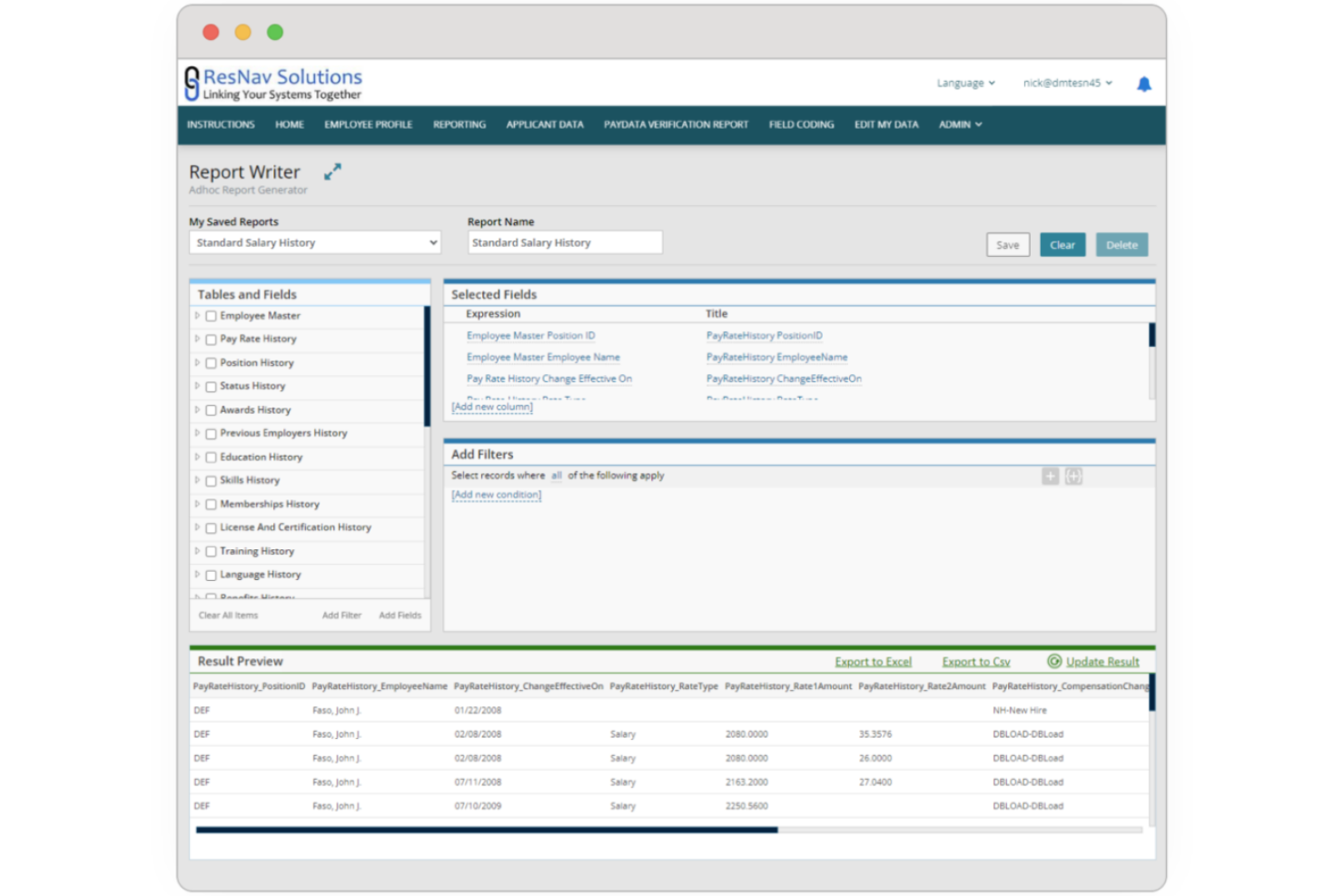
ResNav’s History Link offers legal and HR teams a specialized solution for managing and tracking sensitive employment records. Its focus on maintaining detailed, tamper-evident document histories appeals to organizations needing reliable audit trails for compliance and dispute resolution.
Who Is ResNav Best For?
HR and legal professionals in regulated industries who need to maintain secure, auditable records of employment actions and documentation.
Why I Picked ResNav
I picked History Link because it solves a specific problem that flat-file exports simply can't: maintaining unaltered, auditable HR and payroll records after a system transition. I appreciate that the platform preserves structured data—not just point-in-time snapshots—so records like pay rate history, employee status changes, and benefit history remain intact and queryable. In practice, that means my team can pull a complete, unmanipulated employment record during a wage dispute or regulatory audit without scrambling to reconstruct data from a CSV. The Azure-based architecture also ensures that stored records meet local, state, and federal retention requirements across jurisdictions.
History Link Key Features
- Searchable record portal: Query structured HR and payroll data—including check stubs, tax reports, and benefit history—directly within the platform without exporting files.
- Multi-level data retention: Stores records at both the employee and company levels, covering position history, status changes, and dependent benefit information.
- Joint reporting with HRIS/payroll vendors: Integrates with existing payroll and HRIS systems to enable cross-platform reporting from a single archive.
- State-specific retention compliance: Tracks and applies jurisdiction-specific retention rules across states like New York, California, and Illinois within the same platform.
History Link Integrations
Native integrations are not currently listed.
Pros and Cons
Pros:
- Precise archival structure preserves documentation integrity for legal review.
- Searchable repository gives fast access to employment records during cases.
- Portal centralizes documents needed for audits and investigations.
Cons:
- Not a full general-purpose DMS — focused mainly on HR/payroll records.
- Integration beyond archival extraction may require custom work.

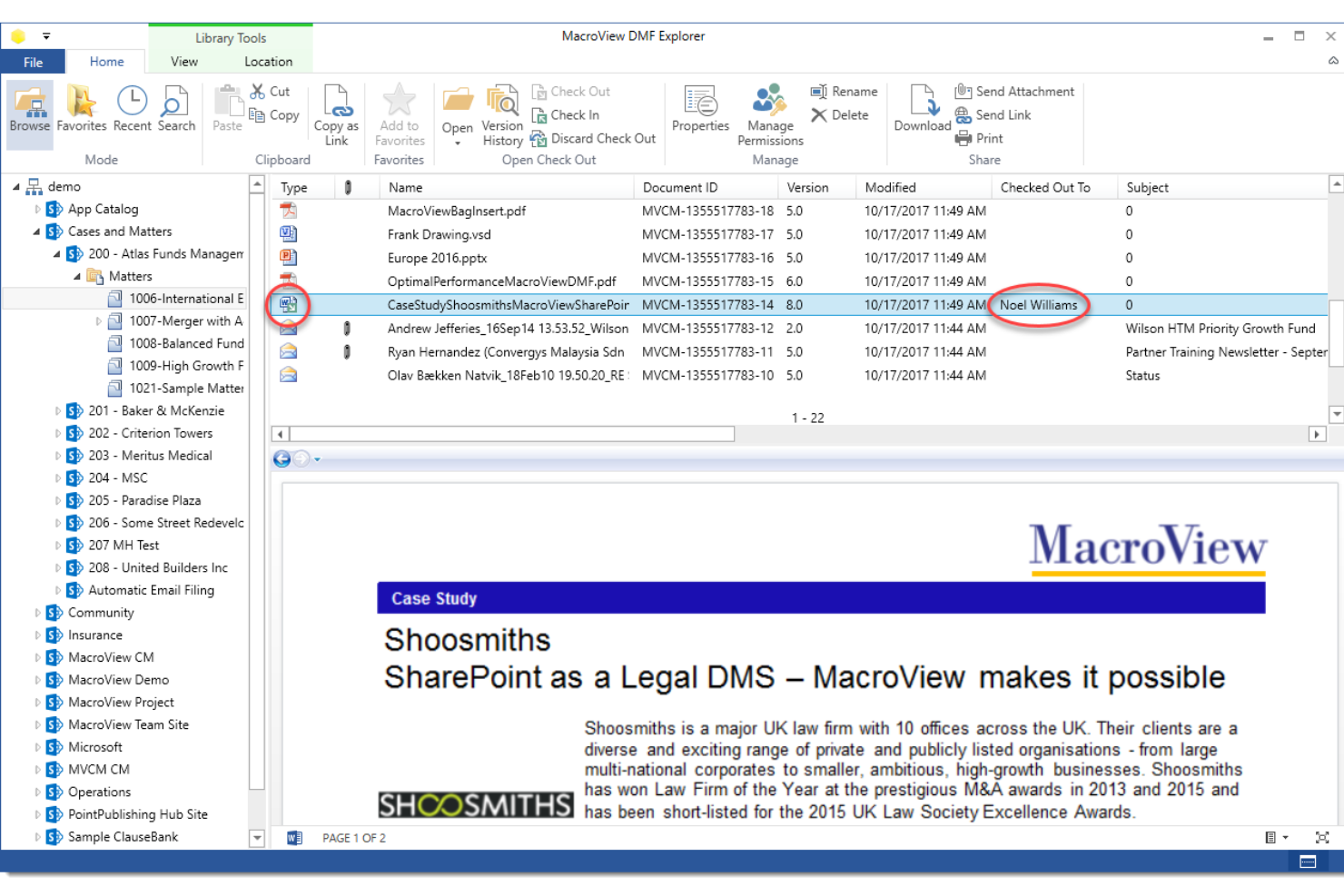
MacroView offers legal teams and law firms a document management solution designed to work natively within Microsoft environments. It appeals to organizations seeking to manage, search, and organize legal documents directly from familiar Microsoft 365 tools, reducing workflow friction.
Who Is MacroView Best For?
Legal professionals and law firms using Microsoft 365 who need advanced document management and compliance features within their existing Microsoft ecosystem.
Why I Picked MacroView
MacroView's deep integration with Microsoft 365 is what makes it stand out for legal document management. I picked it because legal teams can save documents directly from Outlook, Word, and Excel into SharePoint without switching applications—filing happens inside the tools attorneys already use daily. I also appreciate the automated email filing rules, which let my team set up logic to route incoming and outgoing emails to the correct matter folders without manual intervention. On top of that, the Copilot AI-powered search lets me filter across SharePoint by metadata, document type, or location, so finding a specific contract or correspondence takes seconds rather than minutes.
MacroView Key Features
- Version history and restore: Track and revert to previous document versions stored in SharePoint directly from the DMS interface.
- Drag-and-drop filing: Move documents from your desktop or file explorer into SharePoint folders without opening a browser.
- Document generation with compliance templates: Create and customize document templates that automatically meet regulatory standards and maintain brand consistency.
- Batch email filing: Select and file multiple emails at once into the correct matter folders, with metadata captured during the process.
MacroView Integrations
Integrations include Microsoft SharePoint, Microsoft Teams, Microsoft OneDrive, Microsoft Outlook (classic and new), Microsoft Word, Microsoft Excel, Microsoft PowerPoint, Adobe Acrobat, and Foxit Reader.
Pros and Cons
Pros:
- Seamless integration with Microsoft 365 enhances existing tools.
- Familiar file-explorer-style interface simplifies user navigation.
- Automated metadata capture improves document organization.
Cons:
- Limited support for mobile applications restricts accessibility.
- Not ideal for organizations not using Microsoft products.


Smokeball offers legal professionals a platform designed to automate case management and document workflows. Firms seeking to reduce manual tasks and improve collaboration across matters may find its integrated approach to document creation, tracking, and communication especially useful.
Who Is Smokeball Best For?
Smokeball suits small to midsize law firms that need centralized case management and document automation tailored to legal workflows.
Why I Picked Smokeball
Smokeball's legal document automation is what draws me to it most—every contact, party, and case detail entered into the platform automatically populates documents, eliminating manual copy-pasting across matters. I also appreciate AutoTime, which records billable time in the background as my team drafts documents and responds to emails, tying each activity directly to the relevant matter. On top of that, the automated legal forms library covers 20,000+ templates across federal, state, and county jurisdictions, so my team isn't building documents from scratch. For firms managing high document volumes, that combination makes Smokeball a genuinely practical choice.
Smokeball Key Features
- Email management: Automatically tracks and logs every email against its related matter, giving your whole team access to case correspondence in one place.
- Client portal: Lets clients and attorneys exchange messages and documents through a secure, dedicated communication channel.
- Legal calendaring: Displays court deadlines, client meetings, and appointments across week, month, and timeline views.
- Trust accounting: Manages trust accounts and retainers with built-in compliance controls to keep firm finances in order.
Smokeball Integrations
Integrations include Microsoft Word, Microsoft Outlook, LawPay, Birdeye, VXT, CollBox, Aatrox Communications, Accounting Logic, AcroDocz, and Activa Communications.
Pros and Cons
Pros:
- Strong document automation and legal‑forms library.
- Seamless integration with Microsoft Word & Outlook.
- Automatic time‑tracking helps ensure billing accuracy.
Cons:
- Limited customization of templates or workflows for niche use‑cases.
- Reporting/analytics may not be as robust for larger firms.


Gavel offers legal teams and law firms a platform designed to automate and manage complex document workflows. Its focus on customizable automation appeals to professionals seeking to reduce manual drafting, improve accuracy, and maintain compliance in digital legal environments.
Who Is Gavel Best For?
Legal operations teams and law firms that need to automate complex document drafting and streamline workflow processes.
Why I Picked Gavel
I picked Gavel because its AI-assisted drafting capabilities go well beyond basic template filling. With Gavel Exec, I can redline entire contracts directly in Microsoft Word using custom playbooks that reflect my team's preferred positions—no tool-switching required. I also appreciate that Gavel Workflows uses conditional logic to adapt document output based on client intake answers, so complex documents like estate plans or operating agreements generate accurately without manual edits. For legal teams managing high document volumes, that combination of AI-driven review and automated drafting in a single platform is hard to match.
Gavel Key Features
- Legal template library: Access a pre-built collection of automated legal templates and court forms across common practice areas, customizable within your Workflows account.
- Encrypted client intake portal: Collect sensitive client information through a branded, encrypted portal that routes directly into document generation.
- Clause benchmarking: Compare contract clause language against market data to identify off-market positions before negotiation.
- Team Workspaces: Share projects, playbooks, and matter files across your team with granular access controls for consistent, collaborative review.
Gavel Integrations
Integrations include Clio, DocuSign, and Zapier, and Gavel also offers an API for custom integrations.
Pros and Cons
Pros:
- Highly capable no‑code/low‑code legal document automation.
- Strong client‑intake workflows and guided interviews included.
- Integrates with Word, PDF automation, conditional logic, calculations.
Cons:
- Some integration or Zapier connections are weaker/more limited.
- Primarily focused on document generation/automation rather than full‑document lifecycle (storage, archival) management.

Clio offers legal professionals a centralized platform to manage documents, cases, and client communications in one place. Its focus on digital workflows and secure collaboration makes it especially useful for law firms seeking to modernize document handling and streamline daily operations.
Who Is Clio Best For?
Clio suits law firms of all sizes in the UK that need integrated tools for managing legal documents, cases, and client relationships.
Why I Picked Clio
Clio covers the full lifecycle of legal practice management—from document creation and storage to billing and client communication—in a single connected platform. I picked it because Clio Manage lets my team automatically generate documents using live case and client data, which removes the manual re-entry that typically causes errors across matters. I also appreciate that Clio Draft converts existing Word files into reusable templates using AI, so my team can start drafting on day one without building a template library from scratch. Together, these tools mean I'm not switching between disconnected systems to move a matter forward.
Clio Key Features
- Client portal: Lets clients view documents, send messages, and receive updates through a dedicated secure portal linked to their matter.
- E-signature collection: Collects legally binding signatures directly within Clio, without routing documents to a separate signing tool.
- AI-powered questionnaires: Sends clients dynamic intake forms that map responses directly to document templates, reducing manual data entry.
- Law firm performance dashboard: Displays hours captured, billed, and collected across the firm in a single reporting view.
Clio Integrations
Integrations include Outlook, Gmail, Google Drive, OneDrive, DropBox, Box, NetDocuments, QuickBooks, Xero, InfoTrack, and Arken Professional.
Pros and Cons
Pros:
- Offers a free trial for users to evaluate the platform
- Integrates with various essential legal tools, full Windows file system and Mac OS compatibility
- Comprehensive suite of tools for legal practice management
Cons:
- The platform may be complex for small practices with straightforward needs
- Premium features require additional cost
- The starting price is relatively high compared to some other tools


MyCase offers legal professionals a centralized platform to organize case documents, manage workflows, and collaborate securely. It’s especially useful for law firms seeking to streamline document handling and improve coordination across client matters.
Who Is MyCase Best For?
Solo practitioners and small to midsize law firms looking for an all-in-one platform to manage legal documents and client interactions.
Why I Picked MyCase
Client communication is where MyCase genuinely stands out for legal document management. I picked it because the client portal auto-syncs all messages, documents, and case updates in one place—so when a client uploads a signed document or responds to a task, I get an instant notification without digging through email threads. I also appreciate the built-in text messaging feature, which assigns a dedicated number to the firm and automatically syncs every text directly to the relevant case file. In practice, that means my team can send invoice reminders or appointment confirmations without using personal phones, and every exchange is logged and searchable within the case record.
MyCase Key Features
- Advanced document automation: Generate MS Word-based legal documents—like fee agreements or discovery requests—using pre-built templates populated with case and contact data.
- MyCase Drive: Sync files directly from your desktop to MyCase folders, with changes automatically updated across both locations in real time.
- Full-text search: Search across all stored case documents to locate specific files without manually browsing folder structures.
- Rules-based calendaring: Automatically calculate and set court deadlines using a database of court rules across all 50 states.
MyCase Integrations
Integrations include QuickBooks, LawPay, Google Calendar, Outlook, Dropbox, CalendarRules, Infusionsoft, Kenect, CasePeer, Smith.ai, and the 8am™ Visa® Business Card.
Pros and Cons
Pros:
- Transparent pricing with no hidden fees
- Integrates with widely used platforms
- Excellent client communication management features
Cons:
- High cost compared to some competitors
- The user interface advanced search and access control could be more intuitive
- No permanent free plan, only a trial period

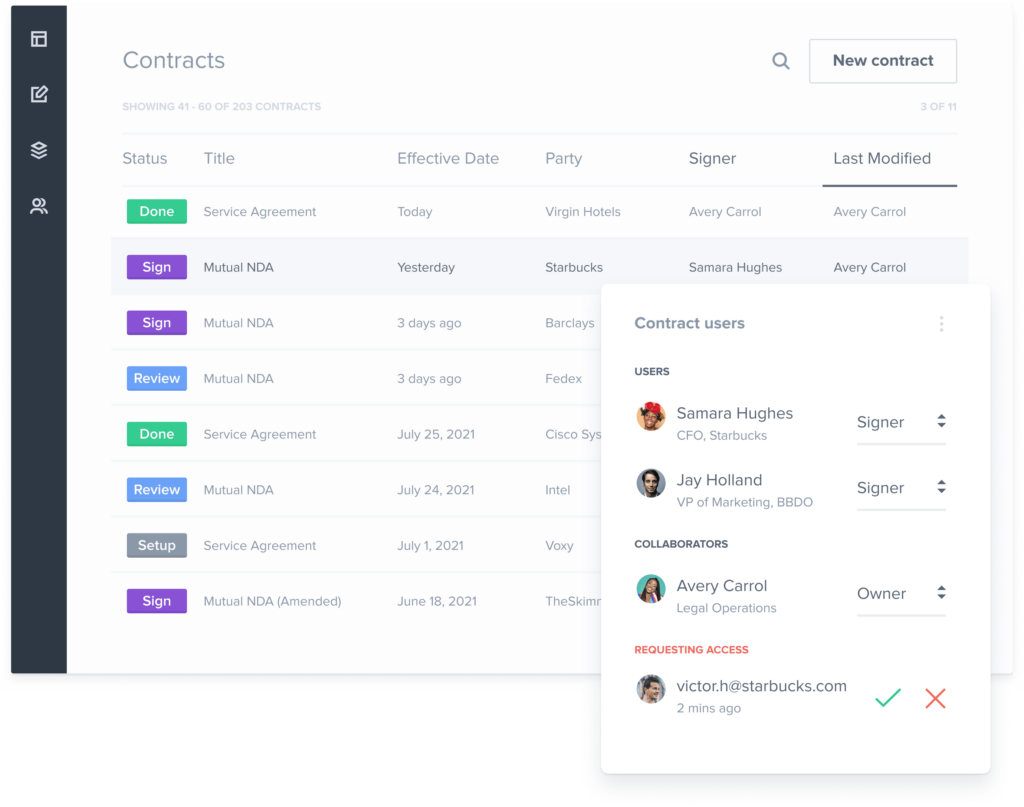
Filevine offers legal teams a centralized platform designed to handle complex case files, document workflows, and collaboration needs. Its flexible interface and automation features make it especially useful for law firms and legal departments managing high volumes of sensitive documents.
Who Is Filevine Best For?
Filevine suits mid-sized to large law firms and legal departments that need to coordinate complex casework and document management across multiple teams.
Why I Picked Filevine
I picked Filevine because its case management goes well beyond basic file organization—it ties documents directly to cases, tasks, and team activity in one workspace. I appreciate how the DocGen feature automatically pulls client and case data into document templates, cutting out the manual data entry that slows teams down on high-volume matters. The platform's customizable workflows also let my team build case-specific processes, so a personal injury matter follows a different path than a criminal defense case without any workarounds. For firms managing dozens or hundreds of active cases at once, that level of structure is hard to find elsewhere.
Filevine Key Features
- OCR search: Searches the full text of every document in your system—including PDFs and scanned images—to locate specific words or phrases.
- Bates stamping: Applies sequential page numbers and footers across multiple documents for organized court filings and client presentations.
- Conflict checker: Scans uploaded documents and compares names and details against existing clients and cases to flag potential ethical conflicts.
- Two-way folder sharing: Lets teams share case folders with clients or external collaborators and receive contributions back within a controlled environment.
Filevine Integrations
Integrations include Sageness, Gemini Legal, InfoTrack, Record Retrieval Solutions, DocuPost, MoveDocs, Copitrak, FedEx, Stamps, and Microsoft Teams.
Pros and Cons
Pros:
- Seamless integration with Microsoft 365 and Google Workspace
- Advanced reporting tools
- Customizable case management
Cons:
- Could have a steep learning curve for some users
- Quote-based pricing lacks transparency
- No free tier or trial period


CosmoLex offers law firms a cloud-based platform that combines legal practice management with document management capabilities. It’s designed for legal professionals seeking a unified system to handle case files, compliance, and workflow challenges in a digital-first environment.
Who Is CosmoLex Best For?
CosmoLex suits small to midsize law firms and solo practitioners who need integrated legal practice and document management with built-in accounting.
Why I Picked CosmoLex
What sets CosmoLex apart for me is that its accounting tools aren't bolted on—they're built into the core of the platform. I picked it because law firms managing client funds need trust accounting that's native to their document and matter management system, not a workaround through QuickBooks. CosmoLex's built-in trust accounting automatically prevents ledger overdrafts and fund commingling, and I can run three-way reconciliations in just a few clicks. The platform also generates audit-ready trust reports—like ledger activity summaries and account balance reports—so my team is always prepared if a bar auditor comes knocking.
CosmoLex Key Features
- Document assembly: Create reusable templates in Microsoft Word using CosmoLex merge fields to generate matter-specific documents.
- Matter-based email management: Automatically files incoming emails to the correct client-matter folder and flags unmatched messages.
- Secure client portal: Lets clients upload documents, view invoices, and send messages, with all activity logged to the relevant matter record.
- Custom workflow automation: Build task workflows and assign them to new or existing matters to manage deadlines and team responsibilities.
CosmoLex Integrations
Integrations include Microsoft 365, Google Workspace, Dropbox, NetDocuments, Box, OneDrive, LawPay, QuickBooks Online, CalendarRules, and InfoTrack.
Pros and Cons
Pros:
- Seamless integration with Office 365 and Box
- Comprehensive legal practice management tools
- Integrated accounting features
Cons:
- Requires a yearly commitment
- Some users may find its interface less intuitive
- Slightly higher starting price


iManage offers legal teams and law firms a platform designed to handle complex document and email management needs. Its focus on security, collaboration, and advanced search appeals to professionals managing sensitive legal content and high volumes of case files.
Who Is iManage Best For?
Legal departments and law firms that need secure, centralized management of sensitive documents and emails across distributed teams.
Why I Picked iManage
What sets iManage apart for me is how deeply AI is built into the document management experience—not bolted on as an afterthought. I particularly appreciate Ask iManage, which lets my team type natural language questions directly into the DMS and get cited answers drawn from our own documents, without moving content outside the platform. I also rely on AI Enrichment, which automatically classifies documents using pre-trained models (each with an F1 score above 90%) and extracts key data points at scale—no manual tagging required. Together, these features mean my team can locate a specific clause across hundreds of matter files or surface documents flagged for data retention, all within a governed, permission-aware environment.
iManage Key Features
- Email filing from Outlook: File emails, meeting requests, and tasks directly from Microsoft Outlook into matter workspaces in iManage Work.
- Need-to-know access control: Restricts document access based on user permissions, limiting visibility to only those with a legitimate need.
- Records retention and disposition: Create and apply retention policies across physical and electronic records, with automated and defensible disposition workflows.
- Threat Manager anomaly detection: Monitors user behavior and flags unusual activity using AI-based threat detection and smart alerts.
iManage Integrations
Integrations include Microsoft 365, DocuSign, NetDocuments, Relativity, Thomson Reuters Legal Tracker, BA Insight, Litera, Intapp, Workshare, and Adobe Acrobat.
Pros and Cons
Pros:
- Secure file-sharing capabilities
- Seamless integrations with Office 365, Gmail, and Adobe
- Exceptional AI-driven document management
Cons:
- Might be over-complicated for smaller firms with simpler needs
- No free plan offered
- Pricing is not transparent


Tabs3 offers legal professionals a document management solution designed to handle sensitive case files and client records. Law firms seeking advanced organization, audit trails, and integration with billing or practice management tools may find Tabs3 especially useful for maintaining control over digital documents.
Who Is Tabs3 Best For?
Tabs3 suits small to midsize law firms and legal departments that need centralized, compliant management of sensitive legal documents.
Why I Picked Tabs3
Secure document storage is where Tabs3 genuinely earns its place on this list. I picked it because PracticeMaster's document management automatically names and stores files linked to the correct matter—so when I pull up a case, every contract, email attachment, and court filing is right there, organized and accounted for. I also appreciate the user-by-user and field-by-field permission controls, which let me restrict who can view, edit, or delete sensitive client records. On top of that, the integration with LexShare adds bank-level encryption for file sharing, which matters when my team is exchanging confidential documents with clients remotely.
Tabs3 Key Features
- Document assembly: Auto-populates templates with client and matter-specific data to generate draft documents.
- Conflict-of-interest checker: Runs partial-word and phonetic searches across matters to flag potential conflicts in seconds.
- WorkFlows automation: Triggers automated tasks—like follow-up emails or appointment scheduling—based on predefined conditions.
- Matter Manager: Displays a full timeline of case activity, including emails, fees, appointments, and research notes, in one view.
Tabs3 Integrations
Integrations include LawPay, LexCharge, BillSync by Scan Logic, ALB, Taskbill, TBDevice, Copitrak, Equitrac, PaperCut, and QuickBooks.
Pros and Cons
Pros:
- Strong billing/time‑tracking features built for law firms.
- Good trust accounting and law‑specific financial modules.
- Document & matter‑management integrated (with matter files, contacts).
Cons:
- User interface and navigation are considered outdated.
- Some integration limitations with third‑party tools and APIs.


CaseFleet offers legal professionals a case management platform designed to organize facts, documents, and evidence for litigation and investigations. Its focus on linking documents to case timelines helps law firms and in-house teams manage complex matters with clarity and precision.
Who Is CaseFleet Best For?
Litigators, investigators, and legal teams handling complex cases that require detailed fact management and document linking.
Why I Picked CaseFleet
I picked CaseFleet specifically for its visual timeline maker, which sets it apart from general document management tools. Each fact in the chronology links directly to its precise location in a source document, video, or audio clip—so when I'm prepping for trial, I can jump from a timeline entry straight to the relevant evidence without hunting through files. I also appreciate the dual-view system: I can toggle between a chronology view and a visual timeline view with a single click, which helps me shift between detailed fact review and big-picture case analysis. The scale slider and Saved Views let me filter the timeline down to specific issues or date ranges, which is especially useful on complex matters with hundreds of facts.
CaseFleet Key Features
- Document highlight reviewer: Highlight text in a document to create facts directly in your case chronology, with each fact linked to its exact source location.
- Litigation-ready report generation: Export case facts into formatted reports including deposition outlines, Rule 26 disclosures, opening statements, and summary judgment motions.
- Custom document tagging: Apply custom tags to documents individually or in bulk to group and categorize files across a case.
- Task assignment and reminders: Assign tasks to one or more team members within a case and set email or popup reminders tied to specific deadlines.
CaseFleet Integrations
CaseFleet doesn't currently have any native integrations.
Pros and Cons
Pros:
- Robust reporting
- Seamless integrations with popular tools
- Unique timeline visualization feature
Cons:
- Requires an annual commitment
- No native accounting or billing module
- Steeper learning curve due to unique features


Guru offers legal teams a centralized platform to organize, verify, and access critical documents and knowledge. Its AI-driven approach appeals to firms and in-house counsel seeking to reduce manual search time and maintain up-to-date, compliant information across their organization.
Who Is Guru Best For?
Legal operations teams and in-house counsel at midsize to large organizations needing fast, reliable access to institutional knowledge and documents.
Why I Picked Guru
I picked Guru because its AI search goes beyond keyword matching—it synthesizes answers across multiple connected sources, like SharePoint, Google Drive, and Confluence, and cites the exact document section behind each result. For legal teams, that means I can ask a question about a regulatory policy and get a sourced, permission-aware answer without manually digging through folders. I also appreciate Guru's Knowledge Agents, which are scoped AI assistants trained on verified company knowledge that flag outdated content automatically. That automated verification loop keeps legal documents accurate without relying on manual review cycles.
Guru Key Features
- Publishing workflows: Route documents through defined review and approval steps before making them live to the team.
- Role-based access control: Assign permissions by user role to restrict or grant access to specific documents and collections.
- Duplicate detection: Automatically identifies overlapping or redundant content across your knowledge base.
- SME verification: Assign subject matter experts to specific documents, who are prompted to review and re-verify content on a set schedule.
Guru Integrations
Integrations include Slack, Microsoft Teams, Google Drive, Confluence, Box, Jira, Notion Pages, OneDrive, Asana, and HubSpot.
Pros and Cons
Pros:
- Provides a system for verifying information
- AI suggestions improve information relevancy and retrieval
- Analytics to track knowledge usage and identify gaps
Cons:
- Can become overwhelming if not properly organized
- Requires ongoing updates and maintenance to keep information accurate


Precisely offers legal teams and in-house counsel a platform designed to simplify and modernize contract workflows. Its focus on automating document creation and approval processes helps organizations reduce manual errors and accelerate deal cycles.
Who Is Precisely Best For?
Legal operations teams and in-house counsel at midsize to large organizations seeking to automate and standardize contract management.
Why I Picked Precisely
Contract automation is where Precisely genuinely stands out, and it's the main reason I picked it. I use Precisely's template and workflow automation to build pre-approved contract templates that non-legal teams can self-serve—so sales can generate and send an NDA in under two minutes without waiting on legal review. I also rely on its conditional approval workflows, which route contracts to the right stakeholders automatically based on rules I define once and apply across every agreement type. On top of that, Precisely AI handles third-party contract intake by extracting key metadata, flagging deviations, and generating clause summaries the moment a document is uploaded.
Precisely Key Features
- Digital contract repository: A centralized, searchable archive where all contracts are stored, tagged with metadata, and filterable by status, date, or contract type.
- Collaboration and negotiation tools: Built-in tools for counterparty and internal team collaboration, letting multiple parties redline and negotiate directly within the platform.
- E-signing: Support for legally binding e-signatures through 15+ e-signing providers, including DocuSign and Adobe Acrobat Sign.
- Automated deadline reminders: Configurable reminders tied to contract dates and obligations to reduce the risk of missed renewals or deadlines.
Precisely Integrations
Integrations include Microsoft Teams, Google Workspace, DocuSign, Adobe Acrobat Sign, Scrive, BankID, Dropbox Sign, Slack, Salesforce, HubSpot, and Outlook.
Pros and Cons
Pros:
- Automated contract creation through customizable templates is highly praised.
- The e-signature feature is noted for speeding up the signing process.
- Smart reminders help users stay on top of contract renewals and deadlines, minimizing risks.
Cons:
- Some users have reported challenges with the initial setup.
- Some users feel it lacks seamless integration with niche legal software.


Redactable offers legal teams and compliance professionals a platform designed to simplify secure document handling and privacy management. Its focus on automating sensitive data protection addresses the growing need for efficient, error-free redaction in regulated industries.
Who Is Redactable Best For?
Legal operations teams and compliance departments in highly regulated industries that require secure, automated document redaction at scale.
Why I Picked Redactable
Automated redaction is what sets Redactable apart, and it's why I picked it for this list. I use the AI Auto Detect feature to scan documents for PII, PHI, and financial data—it flags sensitive content across entire PDFs without me manually reviewing every line. I also appreciate that redactions are permanent: Redactable removes hidden metadata and embedded objects, so there's no risk of data being recovered from a "redacted" file. For high-volume work like FOIA responses or litigation document production, the batch redaction and API access mean my team isn't bottlenecked by document volume.
Redactable Key Features
- OCR for scanned documents: Converts scanned PDFs, TIFFs, PNGs, and JPGs into searchable text so redactions can be applied to image-based files.
- Redaction version control: Tracks document iterations across a redaction project, letting teams manage and review changes over time.
- Smart tagging: Organizes documents within redaction projects using tags for faster retrieval and workflow management.
- Redaction certificates: Auto-generates certificates that log who redacted what and when, supporting compliance and audit readiness.
Redactable Integrations
Integrations include Google Drive, Dropbox, OneDrive, Box, and Clio.
Pros and Cons
Pros:
- Uses AI to enhance its redaction process
- Complies with GDPR and other privacy regulations
- Offers collaboration tools
Cons:
- Limited number of redactions per plan
- Not ideal for those looking for broader document management capabilities


RocketMatter offers legal professionals a cloud-based platform designed to simplify document management, automate workflows, and centralize case files. Firms seeking to improve digital efficiency and reduce administrative overhead may find its integrated approach especially useful.
Who Is RocketMatter Best For?
Small to midsize law firms and solo practitioners looking for a cloud-based solution to manage legal documents and streamline practice operations.
Why I Picked RocketMatter
RocketMatter's time tracking capabilities set it apart for firms where billing leakage is a real concern. I particularly like Rocket Matter Track, which automatically captures time across all office apps and devices—so if I'm drafting in Word or reviewing documents in Outlook, those minutes aren't lost. I also appreciate the multiple simultaneous timers, which let me switch between matters without stopping and restarting a single clock. Together, these features connect directly to more accurate invoices and fewer client disputes over billable hours.
RocketMatter Key Features
- Document automation: Generate legal documents from customizable templates with fields that auto-populate using stored client and matter data.
- Matter budgeting: Set time, expense, and fee caps per matter, with real-time alerts when costs approach or exceed defined thresholds.
- Batch invoicing: Review, approve, and send multiple invoices in a single session directly from the prebill screen.
- IOLTA-compliant trust accounting: Track deposits, disbursements, and transfers per client with audit trails and automatic fund replenishment requests.
RocketMatter Integrations
Integrations include Office 365 Outlook, OneDrive, QuickBooks Online, NetDocuments, Dropbox, Google Calendar, and Box.
Pros and Cons
Pros:
- Offers a variety of additional features like calendaring and document management
- Integrates with Dropbox, QuickBooks, and Evernote
- Exceptional time tracking and billing features
Cons:
- Some users may find it has more features than needed
- Higher price point compared to some competitors
- No permanent free tier, only a 7-day trial


Assembly NEOS offers legal teams a modern platform designed to simplify document management and workflow automation. Its flexible architecture appeals to law firms and legal departments seeking to centralize case files, streamline collaboration, and reduce manual document handling.
Who Is Assembly NEOS Best For?
Assembly NEOS suits midsize to large law firms and legal departments that need advanced document management and workflow automation.
Why I Picked Assembly NEOS
Migration is where Assembly NEOS genuinely stands out for legal teams switching platforms. I picked it because its patent-pending, 7-milestone transition process covers everything from data conversion to role-specific training—so case files, client records, and document history arrive in Neos intact. I also appreciate the DocuFiler feature, which lets my team bulk-import files from SharePoint while preserving metadata and file naming conventions. In practice, that means we're not manually re-tagging hundreds of documents after a migration.
Assembly NEOS Key Features
- Automated document generation: Generate individual or batch documents from pre-built templates, reducing manual drafting across high-volume case files.
- OCR-powered search: Use optical character recognition to search the full text of PDFs and scanned documents directly within the platform.
- Configurable case workflows: Build custom checklists and automated triggers that advance case tasks based on status changes, without manual follow-up.
- NeosAI document summarization: Use AI to extract and summarize key information from case documents, reducing manual review time.
Assembly NEOS Integrations
Integrations include Microsoft Office 365, Outlook, DocuSign, QuickBooks Desktop, QuickBooks Online, LawPay, RingCentral, Lexitas, Mailchimp, and InfoTrack. An API is also available for custom integrations.
Pros and Cons
Pros:
- Integrates with popular content management systems
- Provides comprehensive migration features
- Designed specifically for content and data migration
Cons:
- May be over-featured for small scale migrations
- Pricing details are not transparently listed
- Does not offer a free tier


Centerbase offers a legal document management platform designed for law firms seeking tailored digital efficiency. Its flexible system supports firms with complex processes, helping legal teams centralize documents, automate tasks, and adapt to evolving workflow needs.
Who Is Centerbase Best For?
Centerbase suits midsize to large law firms that need to customize document workflows and manage complex legal operations.
Why I Picked Centerbase
Centerbase stands out for its ability to personalize automated workflows at the client, matter, or firm-wide level—something I find especially useful for firms with layered approval processes. I like that you can configure workflows to trigger document generation automatically for specific instances you define, rather than relying on a one-size-fits-all template. My team also uses the ePre-bill workflow to route pre-bills through a custom approval chain, with parameters that flag excessive discounting before it reaches partners. In practice, that means fewer manual handoffs and tighter control over document and billing processes without adding administrative overhead.
Centerbase Key Features
- Matter management: Organizes all documents, tasks, and case details within a single matter record for each client.
- Advanced search with OCR: Searches the full text of scanned and uploaded documents to locate specific content across the firm's document library.
- Client portal: Gives clients a dedicated space to view updates, share documents, and communicate without requiring attorney intervention.
- Automated time capture: Starts and stops a timer automatically based on activity, logging billable time tied to specific matters.
Centerbase Integrations
Integrations include Microsoft 365, NetDocuments, iManage, QuickBooks Online, LawToolBox, and Plaid.
Pros and Cons
Pros:
- Comprehensive feature set
- Seamless integration with Microsoft Office and QuickBooks
- Highly customizable workflows
Cons:
- Priced higher than some competitors
- Steeper learning curve due to customization options
- No free plan, only a demo


Xakia offers in-house legal teams a centralized platform designed to simplify matter management and reporting. Legal departments seeking clear visibility into workloads and streamlined collaboration will find Xakia especially useful for organizing complex legal projects and communications.
Who Is Xakia Best For?
Xakia suits in-house legal teams at mid-sized to large organizations that need structured matter tracking and centralized legal operations management.
Why I Picked Xakia
I picked Xakia for document organization because it ties every file directly to its corresponding matter—so when I need a contract or email thread, I'm searching in context, not hunting through a shared drive. I appreciate that Xakia's Outlook integration lets me file emails and attachments into the right matter without leaving my inbox, which cuts out a manual step that adds up fast. For teams already using NetDocuments, iManage, or SharePoint, Xakia connects to those systems out of the box, keeping existing workflows intact while centralizing access. That means my team gets one place to find any document, regardless of where it's stored.
Xakia Key Features
- Legal intake forms: Customizable intake forms capture structured information from business users before a matter is created, reducing back-and-forth clarification.
- Internal client portal: A self-service portal lets business users submit requests, track progress, and receive updates without contacting the legal team directly.
- Dispute log: Captures claim amounts, limitation periods, party details, insurance coverage, and multi-stage proceeding information for each dispute.
- Dashboards and reporting: Pre-built analytics dashboards surface workload trends, turnaround times, and team capacity data for reporting to leadership.
Xakia Integrations
Integrations include NetDocuments, iManage, Outlook, DocuSign, Word, Gmail, Josef, SharePoint, Ironclad, and Microsoft Entra.
Pros and Cons
Pros:
- Effective tracking of time and expenses related to legal cases.
- Customizable workflows to fit specific organizational needs.
- Strong reporting features that provide valuable insights.
Cons:
- Pricing may be considered high for smaller firms.
- Some users desire more advanced customization options.


LawVu offers a unified workspace designed for in-house legal teams seeking to centralize document management, matter tracking, and collaboration. Its platform helps legal departments manage workflows, maintain compliance, and gain visibility across all legal work in one place.
Who Is LawVu Best For?
In-house legal teams at mid-sized to large organizations that need to manage complex legal workflows and collaborate across departments.
Why I Picked LawVu
What sets LawVu apart for in-house legal team collaboration is how it connects legal with the wider business through a single workspace. I picked it because its Business Portal gives business users a dedicated interface to submit structured legal requests, check status updates, and generate simple contracts—like NDAs—without emailing the legal team directly. My team can triage and prioritize those requests from the same workspace, which cuts down on back-and-forth significantly. The matter management hub also keeps documents, emails, tasks, and matter history in one place, so nothing gets lost across inboxes or disconnected tools.
LawVu Key Features
- Contract management: Manage the full contract lifecycle with a contract repository, workflow automation, and AI-powered review tools.
- Spend management: Track legal spend with invoice management, e-billing, and outside counsel collaboration tools.
- Insights and reporting: Access visual dashboards that cover matter, contract, and spend data across your legal department.
- Document management: Search and retrieve legal documents through an integrated knowledge base built into the workspace.
LawVu Integrations
Integrations include Microsoft 365, Google Drive, DocuSign, Adobe Acrobat Sign, iManage, NetDocuments, Salesforce, Slack, Microsoft Teams, and Dropbox.
Pros and Cons
Pros:
- Integrates with commonly used office tools
- Robust set of features for comprehensive legal work management
- Fosters effective in-house legal team collaboration
Cons:
- Requires some learning curve for efficient use
- Higher price point compared to other tools
- No free tier available
Other Legal Document Management Software
Here are some additional legal document management software options that didn’t make it onto my shortlist, but are still worth checking out:
- Ontra
For contract automation and analytics
- Document360
For role-based internal content
- Litify
Good for law firms seeking an all-in-one platform powered by Salesforce
- Cobblestone Software
Good for firms needing an AI-powered contract management system
- iCONECT
Good for legal teams handling large volumes of data and documents
- Soluno
Good for law firms looking for cloud-based time and billing software
- Lexbe
Good for law firms dealing with litigation and eDiscovery
- IPRO
Good for legal teams seeking end-to-end eDiscovery processing capabilities
- Lextree
Good for corporate legal departments managing entity data


Legal Document Management Software Selection Criteria
When selecting the best legal document management software to include in this list, I considered common buyer needs and pain points like data security and ease of document retrieval. I also used the following framework to keep my evaluation structured and fair:
Core Functionality (25% of total score)
To be considered for inclusion in this list, each solution had to fulfill these common use cases:
- Document storage
- Version control
- Access permissions
- Search functionality
- Integration with other tools
Additional Standout Features (25% of total score)
To help further narrow down the competition, I also looked for unique features, such as:
- AI-powered search
- Automated document tagging
- Mobile access
- Customizable workflows
- Compliance tracking
Usability (10% of total score)
To get a sense of the usability of each system, I considered the following:
- Intuitive interface
- Easy navigation
- Minimal learning curve
- Clear instructions
- Responsive design
Onboarding (10% of total score)
To evaluate the onboarding experience for each platform, I considered the following:
- Availability of training videos
- Interactive product tours
- Pre-built templates
- Webinars and workshops
- Access to chatbots for support
Customer Support (10% of total score)
To assess each software provider’s customer support services, I considered the following:
- 24/7 availability
- Multiple support channels
- Knowledgeable staff
- Quick response times
- Comprehensive FAQ section
Value For Money (10% of total score)
To evaluate the value for money of each platform, I considered the following:
- Competitive pricing
- Flexible subscription plans
- Free trial availability
- Discounts for annual payments
- Cost-benefit ratio
Customer Reviews (10% of total score)
To get a sense of overall customer satisfaction, I considered the following when reading customer reviews:
- User satisfaction ratings
- Commonly mentioned issues
- Praise for specific features
- Feedback on customer support
- Overall recommendation rates
How to Choose Legal Document Management Software
It’s easy to get bogged down in long feature lists and complex pricing structures. To help you stay focused as you work through your unique software selection process, here’s a checklist of factors to keep in mind:
| Factor | What to Consider |
|---|---|
| Scalability | Will the software grow with your firm? Consider your firm's future size and document volume. Ensure the tool can handle increased data without performance issues. |
| Integrations | Does it work with your existing tools? Check compatibility with software like email clients, CRMs, and billing systems to ensure seamless workflow integration. |
| Customizability | Can you tailor it to your needs? Look for flexible settings that let you adjust workflows, permissions, and document templates to match your firm's specific processes. |
| Ease of use | Is it user-friendly for your team? Evaluate the interface and navigation. A steep learning curve can slow down adoption and efficiency. |
| Implementation and onboarding | How long does it take to get started? Consider the time and resources needed for setup, training, and data migration. Look for quick-start guides and support options. |
| Cost | Does it fit your budget? Compare pricing plans, hidden fees, and total cost of ownership. Consider long-term value over initial cost savings. |
| Security safeguards | How secure is your data? Look for encryption, access controls, and compliance with legal standards like GDPR or HIPAA to protect sensitive information. |
| Compliance requirements | Does it meet industry regulations? Ensure the software supports compliance with legal obligations specific to your jurisdiction or practice area. |
What Is Legal Document Management Software?
Legal document management software is a tool designed to organize, store, and manage legal documents efficiently. Lawyers, paralegals, and legal teams generally use these tools to improve access to documents and ensure compliance. Search functionality, access permissions, and version control help with organizing files, maintaining security, and tracking changes. Overall, these tools save time and reduce errors in document handling.
Features
When selecting legal document management software, keep an eye out for the following key features:
- Document storage: Securely stores files in a centralized location for easy access and retrieval.
- Version control: Tracks changes to documents over time, allowing users to see previous versions and edits.
- Access permissions: Controls who can view or edit documents, ensuring confidentiality and compliance.
- Search functionality: Provides powerful search tools to quickly locate documents based on keywords or metadata.
- Integration capabilities: Connects with other software tools like email or billing systems to streamline workflows.
- Compliance support: Ensures that document handling meets industry regulations and standards.
- Customizable workflows: Allows users to tailor document processes to fit their specific needs and practices.
- Mobile access: Enables users to access and manage documents from mobile devices, offering flexibility and convenience.
- Automated tagging: Automatically categorizes documents with relevant tags for easier organization and retrieval.
- Security safeguards: Implements encryption and other security measures to protect sensitive legal information.
Benefits
Implementing legal document management software provides several benefits for your team and your business. Here are a few you can look forward to:
- Increased efficiency: Automates document handling, reducing manual tasks and saving time.
- Improved security: Protects sensitive information with encryption and access controls.
- Better organization: Centralizes document storage, making it easy to find and manage files.
- Enhanced collaboration: Allows team members to work on documents simultaneously with version control.
- Regulatory compliance: Supports adherence to industry standards and legal regulations.
- Cost savings: Reduces paper usage and storage costs by digitizing documents.
- Flexibility: Provides access to documents from anywhere, thanks to mobile and cloud capabilities.
Costs & Pricing
Selecting legal document management software requires an understanding of the various pricing models and plans available. Costs vary based on features, team size, add-ons, and more. The table below summarizes common plans, their average prices, and typical features included in legal document management software solutions:
Plan Comparison Table for Legal Document Management Software
| Plan Type | Average Price | Common Features |
|---|---|---|
| Free Plan | $0 | Basic document storage, limited search functionality, and basic access permissions. |
| Personal Plan | $5-$25/user/month | Enhanced document storage, version control, basic integrations, and improved search functionality. |
| Business Plan | $30-$100/user/month | Advanced integrations, customizable workflows, enhanced security features, and compliance support. |
| Enterprise Plan | $100+/user/month | Comprehensive security safeguards, full customization options, premium support, and mobile access. |
Legal Document Management Software FAQs
Here are some answers to common questions about legal document management software:
Can legal document management software integrate with other tools?
Yes, many legal document management software solutions can integrate with other tools like email clients, billing systems, and CRMs. This can help streamline your workflows by keeping everything connected and accessible from one place. When choosing software, check for compatibility with your existing tools to avoid disruptions.
How long does it take to implement legal document management software?
Implementation time varies depending on the software’s complexity and your firm’s needs. Some tools offer quick-start guides and templates that can help you get up and running in a few days. Others might require more setup time, especially if you need to migrate a lot of existing data. Evaluate the resources and support offered to ensure a smooth transition.
Is training provided when purchasing legal document management software?
Most providers offer training resources such as webinars, tutorials, and user guides. Some may include personalized training sessions as part of their package, especially for larger firms. Take advantage of these resources to help your team get comfortable with the software and maximize its benefits. Always check what training options are available before purchasing.
What’s Next:
If you're in the process of researching legal document management software, connect with a SoftwareSelect advisor for free recommendations.
You fill out a form and have a quick chat where they get into the specifics of your needs. Then you'll get a shortlist of software to review. They'll even support you through the entire buying process, including price negotiations.