

10 Best MyCase Alternative in 2026



A strong MyCase alternative offers legal case management software with flexible matter tracking, billing, communication, and document management—without the limits you’re hitting in MyCase. If you’re searching for a MyCase alternative, you probably need better features, different pricing, or improved workflows to fit the way your team works. I’ll walk you through the top options in 2026, so you can quickly compare platforms and zero in on the right fit for your firm.
What Is MyCase?
MyCase is a cloud-based legal case management software that helps law firms organize matters, billing, documents, and client communications in one place. It’s designed to streamline daily legal workflows and keep case details accessible for your whole team. MyCase includes features like calendaring, time tracking, and online payments, making it a popular, all-in-one platform for legal practices that want to centralize case and client management.
Compare Specs
| Tool | Best For | Trial Info | Price | ||
|---|---|---|---|---|---|
| 1 | Best for personal injury case management | Free demo available | From $79/user/month | Website | |
| 2 | Best for document-heavy legal practices | Free trial available | From $79/user/month (billed annually) | Website | |
| 3 | Best for legal billing and productivity | 10-day free trial | From $59/user/month (billed annually) | Website | |
| 4 | Best for workflow-driven law firms | Free demo available | Pricing upon request | Website | |
| 5 | Best for established legal practices | Free demo available | Pricing upon request | Website | |
| 6 | Best for automated case workflows | Free demo available | Pricing upon request | Website | |
| 7 | Best for customizable case management | Free demo available | Pricing upon request | Website | |
| 8 | Best for all-in-one legal practice management | 7-day free trial + free demo available | From $69CAD/user/month (billed annually) | Website | |
| 9 | Best for built-in legal accounting | 10-day free trial | Pricing upon request | Website | |
| 10 | Best for intuitive case and billing workflows | 7-day free trial | From $49/user/month (billed annually) | Website |
Why You Can Trust Us
We’ve been testing and reviewing legal software since 2023. As legal practice leaders ourselves, we know how critical and difficult it is to make the right decision when selecting software.
We invest in deep research to help our audience make better software purchasing decisions. We’ve tested more than 2,000 tools for different legal practice use cases and written over 1,000 comprehensive software reviews. Learn how we stay transparent & our software review methodology.
-

CARET Legal
Visit WebsiteThis is an aggregated rating for this tool including ratings from Crozdesk users and ratings from other sites.4.4 -
Redactable
Visit WebsiteThis is an aggregated rating for this tool including ratings from Crozdesk users and ratings from other sites.4.8 -
Insightful
Visit WebsiteThis is an aggregated rating for this tool including ratings from Crozdesk users and ratings from other sites.4.8




Best MyCase Alternative Reviews
Below are my detailed summaries of the best MyCase alternatives that made it onto my shortlist. My reviews offer a detailed look at the features, pricing, and best use cases of each legal case management platform to help you find the best one for you.

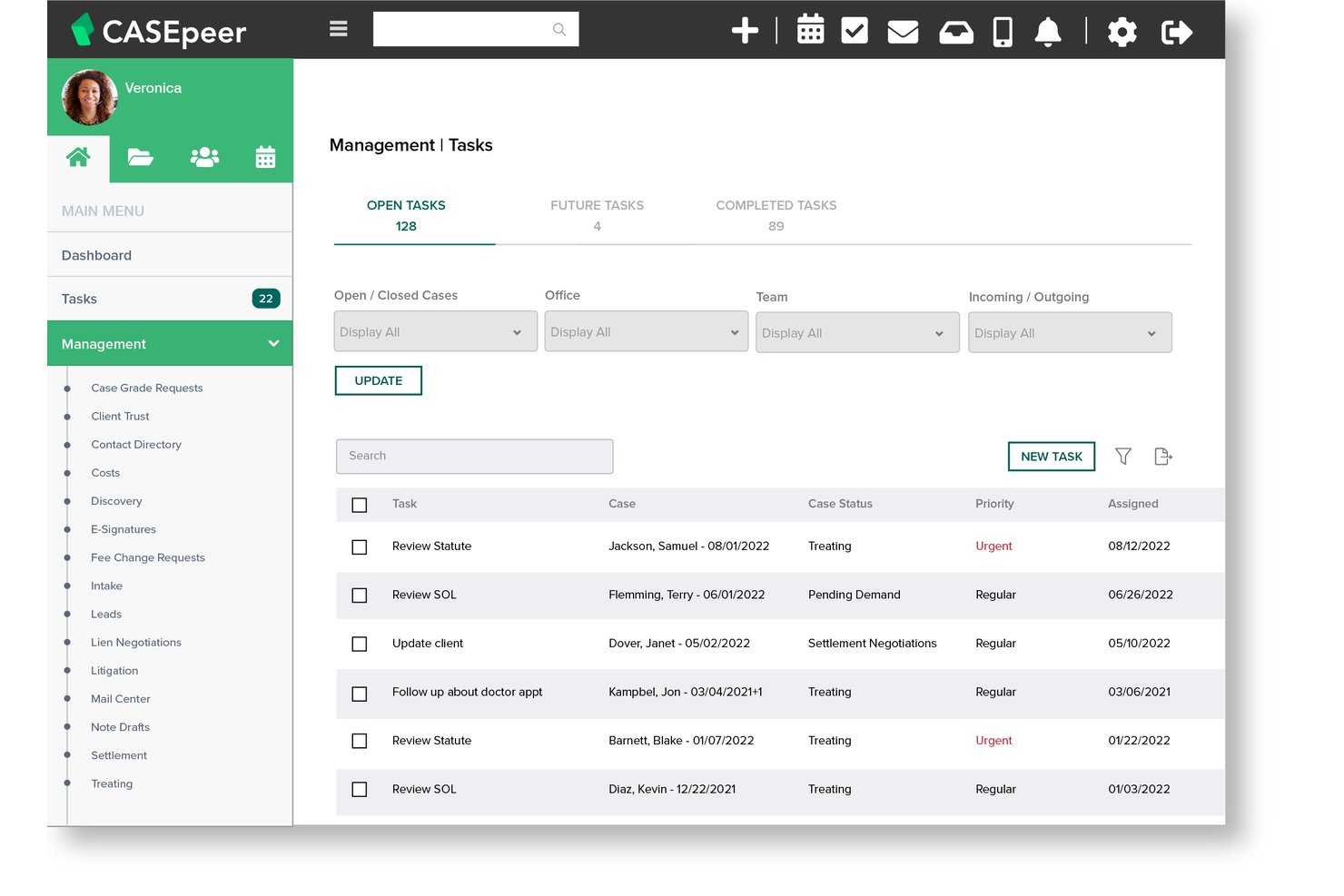
CasePeer is a cloud-based practice management platform built exclusively for personal injury law firms, covering case tracking, medical treatment records, settlement negotiations, and automated statute alerts in one purpose-built system.
Who Is CasePeer Best For?
CasePeer is a strong fit for personal injury law firms of any size that want a purpose-built system rather than a general-purpose tool they'd need to adapt.
Why CasePeer Is a Good MyCase Alternative
I picked CasePeer as one of the best because it's the only tool on this list built from the ground up for personal injury. Where MyCase requires configuration to handle PI workflows, CasePeer ships with settlement calculators, demand trackers, and automated statute alerts already built in. I particularly like the medical treatment tracking, which lets your team log provider visits, monitor lien balances, and flag treatment gaps without any custom setup.
CasePeer Key Features
- AI legal writer: Generate and edit correspondence, demand packages, and summaries directly within your case files.
- Two-way texting with images: Communicate with clients using integrated, trackable SMS messaging that supports attachments.
- LawPay payments integration: Accept client payments and manage IOLTA-compliant trust deposits from within the platform.
- CalendarRules integration: Calculate and apply court deadlines based on jurisdiction-specific rules and trigger dates.
CasePeer Integrations
CasePeer offers native integrations with QuickBooks Online, Dropbox, Microsoft 365, CalendarRules, LawPay, EvenUp, and Case Status. An API is available for custom integrations.
Pros and Cons
Pros:
- Responsive customer support team with live chat
- Intake-to-settlement lifecycle tracked in one place
- PI-specific settlement tab centralizes all financials
Cons:
- Document storage limits can block large demand packets
- Customization options are limited for non-standard workflows

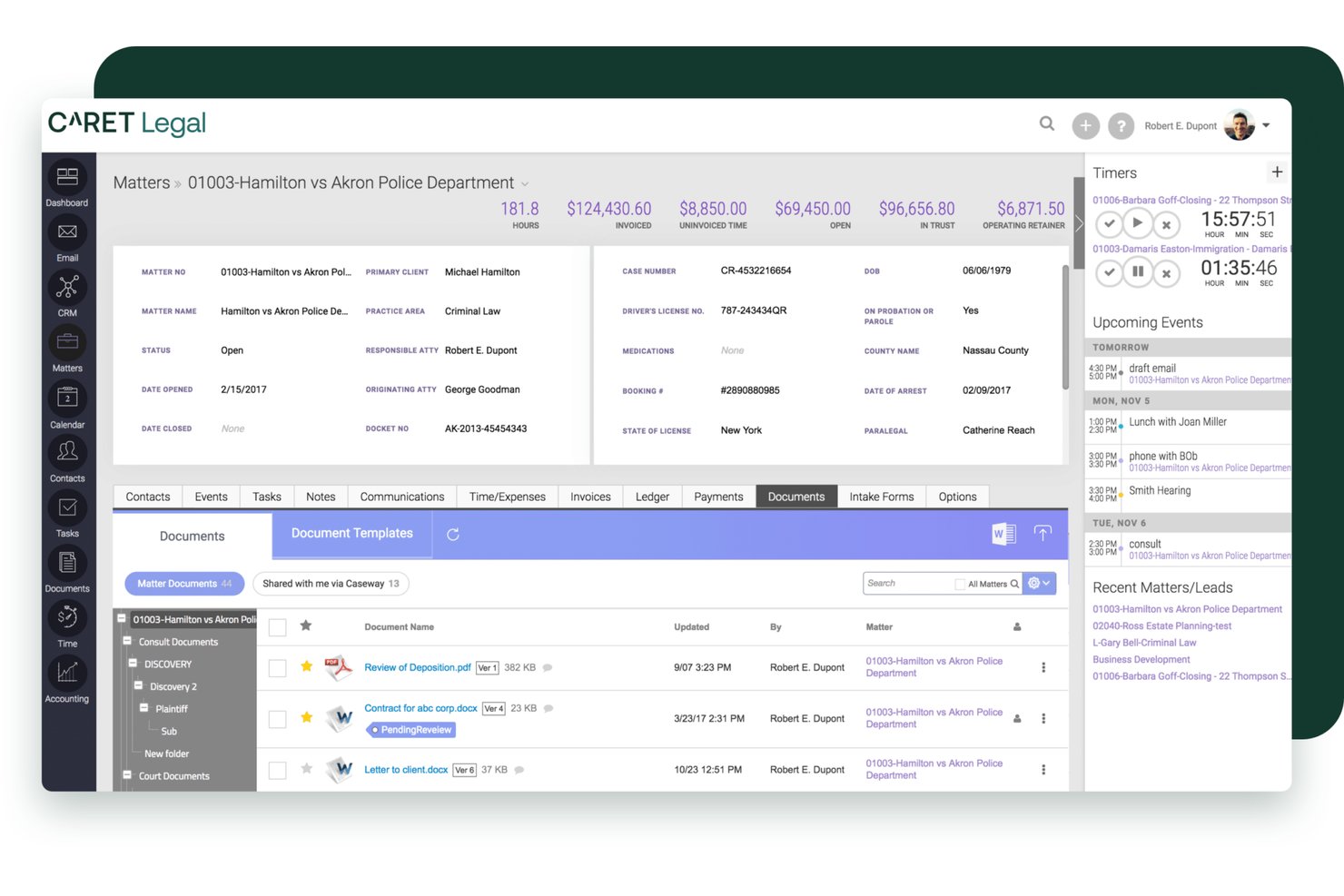
CARET Legal is a cloud-based legal practice management platform built for small to midsize law firms that need tightly integrated case management, trust accounting, and document management without stitching together multiple tools.
Who Is CARET Legal Best For?
CARET Legal suits managing partners and legal administrators at small to midsize firms handling high document volumes across complex, multi-party matters.
Why CARET Legal Is a Good MyCase Alternative
I picked CARET Legal because its document management goes well beyond what MyCase offers. Every file uploaded is immediately indexed for in-document search, so locating a specific clause across hundreds of matter documents takes seconds. The AI-enabled OCR extracts text from handwritten notes and data tables, and the AI Quick Summary condenses lengthy contracts into digestible previews without ever leaving the platform.
CARET Legal Key Features
- Integrated client portal: Let clients securely send messages, share documents, and make online payments all in one place.
- IOLTA-compliant trust accounting: Maintain compliant, segregated client ledgers with built-in three-way reconciliation and audit logging.
- Court rules calendaring integration: Automatically apply deadline rules for select jurisdictions using built-in LawToolBox connectivity.
- Custom workflows and permissions: Build multi-step automations for recurring processes and set user-specific access rights across your firm.
CARET Legal Integrations
CARET Legal offers native integrations with NetDocuments, Worldox, HotDocs, LawToolBox, RPost, LawPay, and Microsoft 365. An API is available for custom integrations.
Pros and Cons
Pros:
- AI tools draft, summarize, and extract from uploaded documents
- Built-in legal and trust accounting in one platform
- Native email integration tags correspondence to matters automatically
Cons:
- Support response times are inconsistent after ticket escalation
- Custom reports require vendor assistance to build

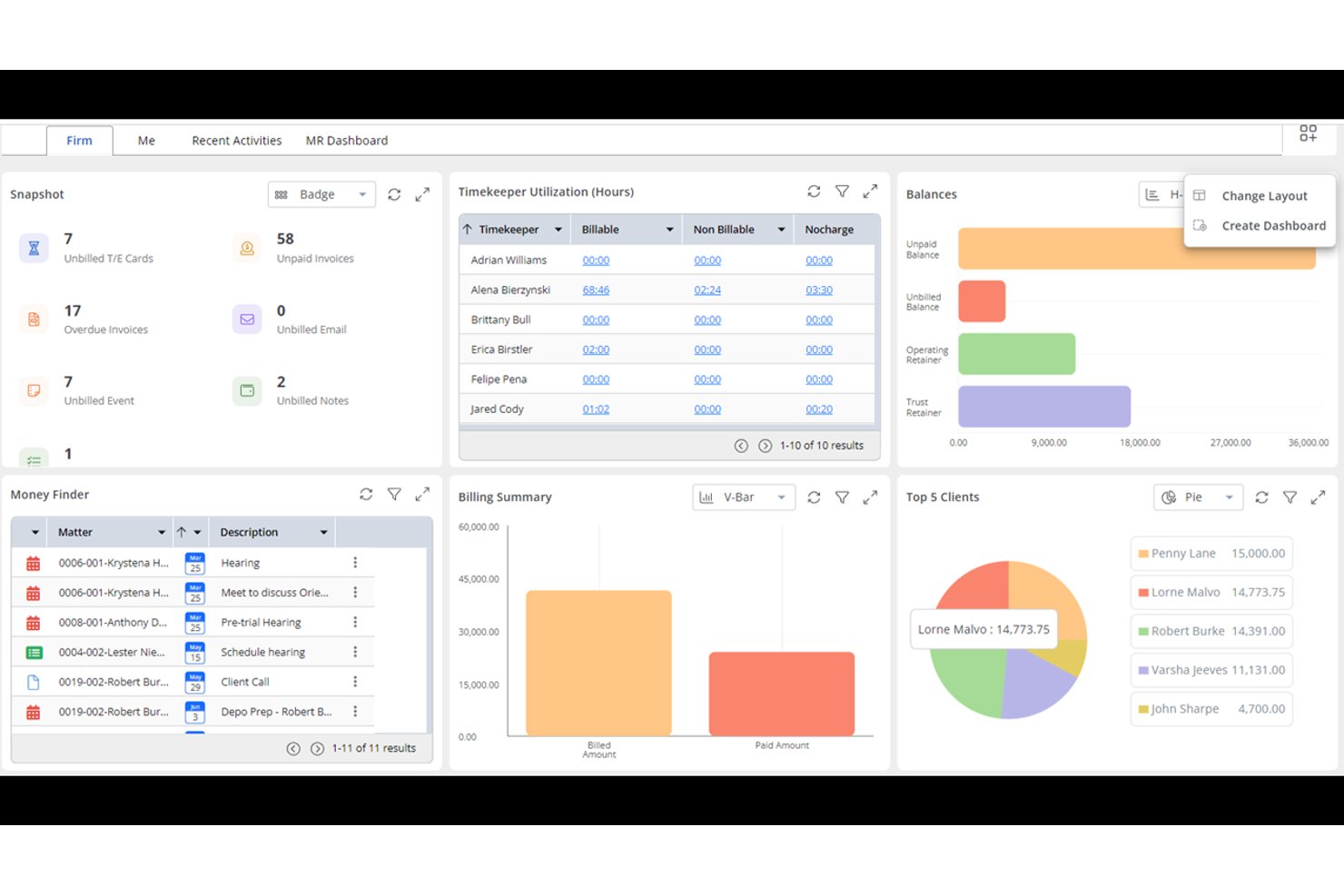
Rocket Matter is a cloud-based legal practice management platform built around time tracking, billing, and trust accounting—making it a natural fit for solo attorneys and small firms that want tighter control over their financial operations than MyCase offers.
Who Is Rocket Matter Best For?
Rocket Matter is a strong fit for small to mid-size law firms where billing accuracy and trust accounting compliance are the top operational priorities.
Why Rocket Matter Is a Good MyCase Alternative
I picked Rocket Matter as one of the best MyCase alternatives because its billing depth is genuinely hard to replicate. It supports LEDES billing, split billing across multiple parties, and batch invoicing with bulk editing in a single workflow. The Elite tier goes further, replacing QuickBooks with built-in legal accounting, including a legal-specific chart of accounts and automatic bank data feeds for trust reconciliation.
Rocket Matter Key Features
- Matter templates: Set up new cases with pre-built workflows, task lists, and custom fields in seconds.
- Kanban-style project management: Visualize matter progress and manage tasks using a drag-and-drop interface.
- Native document automation: Generate legal documents from templates and merge fields directly within the platform.
- Two-way calendar sync: Sync all firm deadlines and events with Google Calendar and Office 365 for consistent scheduling.
Rocket Matter Integrations
Rocket Matter offers native integrations with LawPay, NetDocuments, OneDrive, Dropbox, Box, QuickBooks Online, Office 365, and Google Workspace. An API is available for custom integrations.
Pros and Cons
Pros:
- Detailed time tracking with multiple rate types
- Built-in legal accounting at higher tiers
- Strong LEDES and batch invoicing support
Cons:
- Mobile app has limited functionality on-the-go
- Document management is less developed than billing

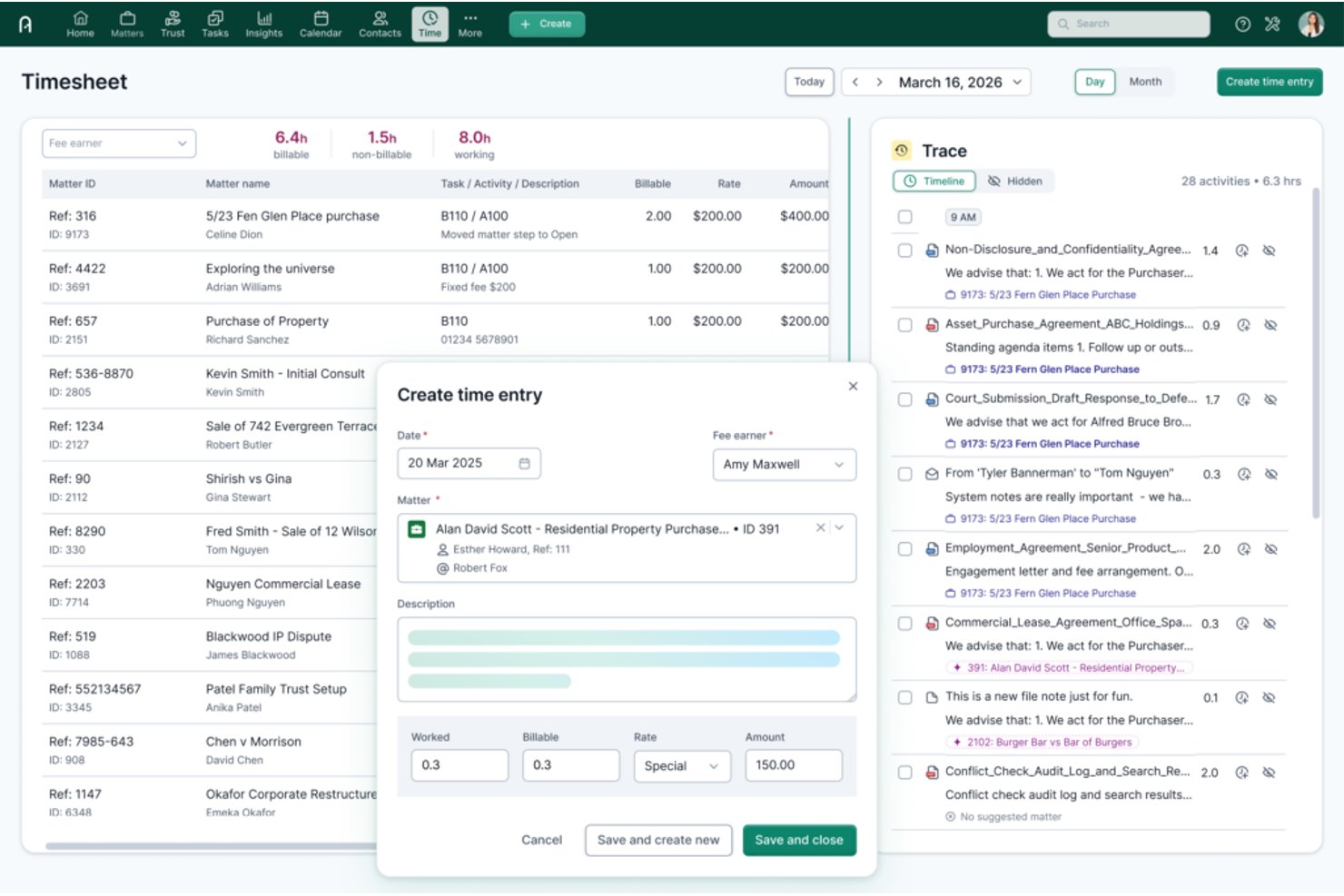
Actionstep is a cloud-based law firm management platform built for small to midsize firms that want to run every stage of a matter—from intake to invoicing—inside a single, workflow-driven system.
Who Is Actionstep Best For?
Actionstep suits process-mature law firms that handle high-volume, multi-step matters and need configurable workflows rather than a fixed, out-of-the-box system.
Why Actionstep Is a Good MyCase Alternative
I've included Actionstep in my top picks because its matter workflow engine goes well beyond what MyCase offers. I can build stage-by-stage workflows that auto-assign tasks, trigger deadlines, and generate documents as a matter progresses. The Builder add-on layers in dynamic document automation, pulling matter data directly into Word templates with conditional logic applied at each step.
Actionstep Key Features
- Client portal: Lets clients securely view documents, messages, and case updates in one branded online hub.
- Trust accounting: Delivers IOLTA-compliant trust accounting with automatic three-way reconciliation and audit reporting.
- In-app document versioning: Tracks history and edits of all documents so teams can roll back or compare changes.
- Advanced calendaring: Syncs with Microsoft and Google calendars and supports reminders and complex legal deadline management.
Actionstep Integrations
Actionstep offers native integrations with Xero, QuickBooks Online, NetDocuments, InfoTrack, Microsoft 365, and LawPay. An API is available for custom integrations.
Pros and Cons
Pros:
- Supports multi-step document automation natively
- Strong trust accounting with three-way reconciliation
- Highly configurable matter workflow engine
Cons:
- Reporting tools feel dated compared to rivals
- Setup requires significant configuration time

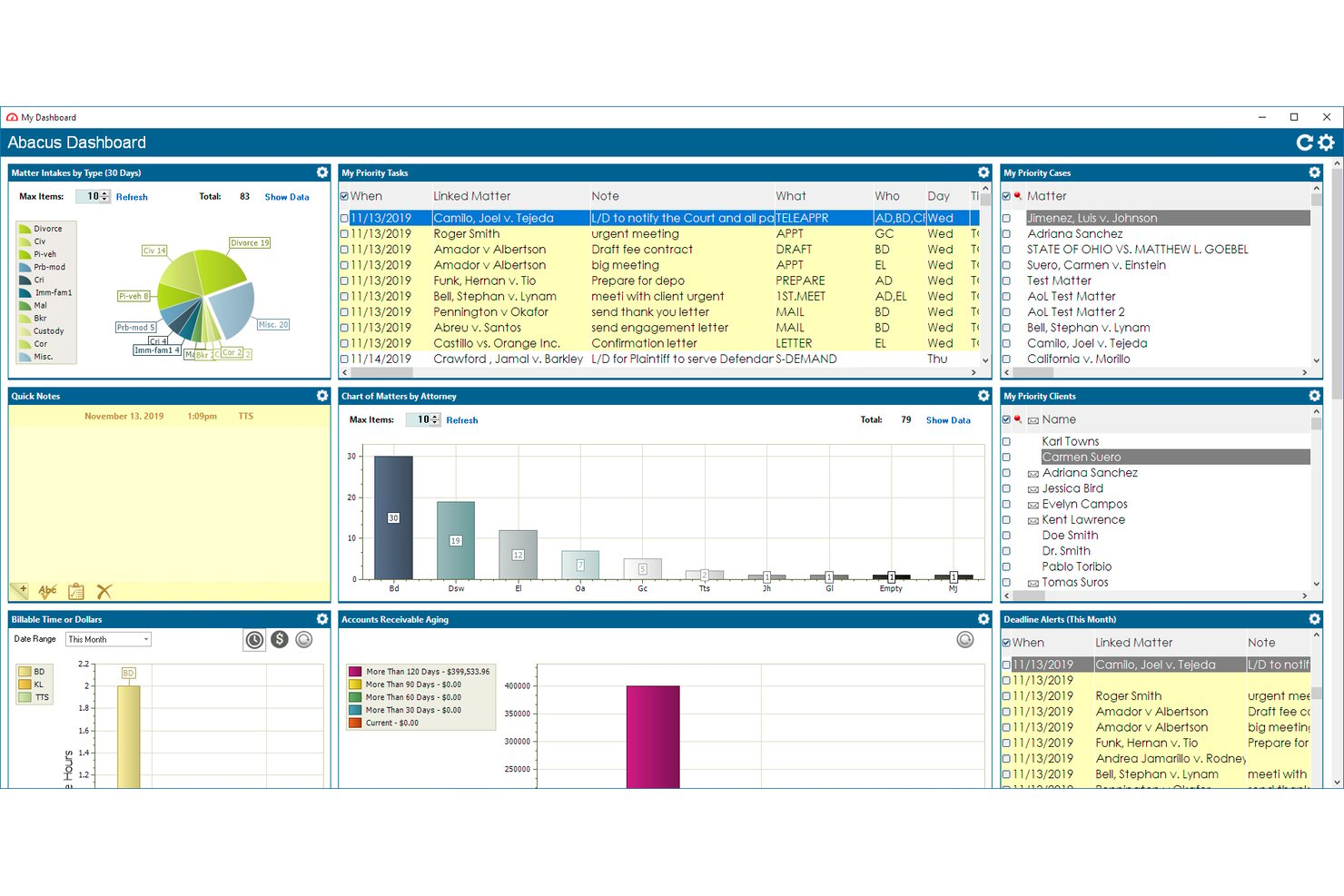
AbacusLaw is a hybrid legal practice management platform built for small and established law firms that need rules-based court calendaring, trust accounting, and matter management in a single, customizable system.
Who Is AbacusLaw Best For?
AbacusLaw is a strong fit for small law firms running high-volume litigation, family law, or personal injury practices that need deep practice-area customization.
Why AbacusLaw Is a Good MyCase Alternative
AbacusLaw earns its spot on my shortlist because of its rules-based calendaring engine, which automatically generates deadline chains from court rules rather than requiring manual entry. I also appreciate the Practice Area Essentials, which ships pre-built intake forms, automation rules, and terminology for practice areas like family law and personal injury. Unlike MyCase's cloud-only model, AbacusLaw supports private cloud deployment for firms with strict data governance requirements.
AbacusLaw Key Features
- Customizable matter workspace: Personalize databases, forms, and input screens for each case type or workflow.
- Integrated document management: Organize, store, and version documents directly within each matter file.
- Built-in conflict checking: Instantly verify any potential conflicts of interest across all contacts and matters.
- Private cloud or self-hosted deployment: Choose between secure private cloud hosting or on-premise server installation for maximum control.
AbacusLaw Integrations
AbacusLaw offers native integrations with Microsoft Outlook, Microsoft 365, QuickBooks Online, DocuSign, and HotDocs. An API is available for custom integrations.
Pros and Cons
Pros:
- Pre-built templates for multiple practice areas
- Private cloud and on-premise hosting available
- Rules-based calendaring generates deadlines automatically
Cons:
- Limited mobile app compared to competitors
- Interface feels dated versus modern alternatives

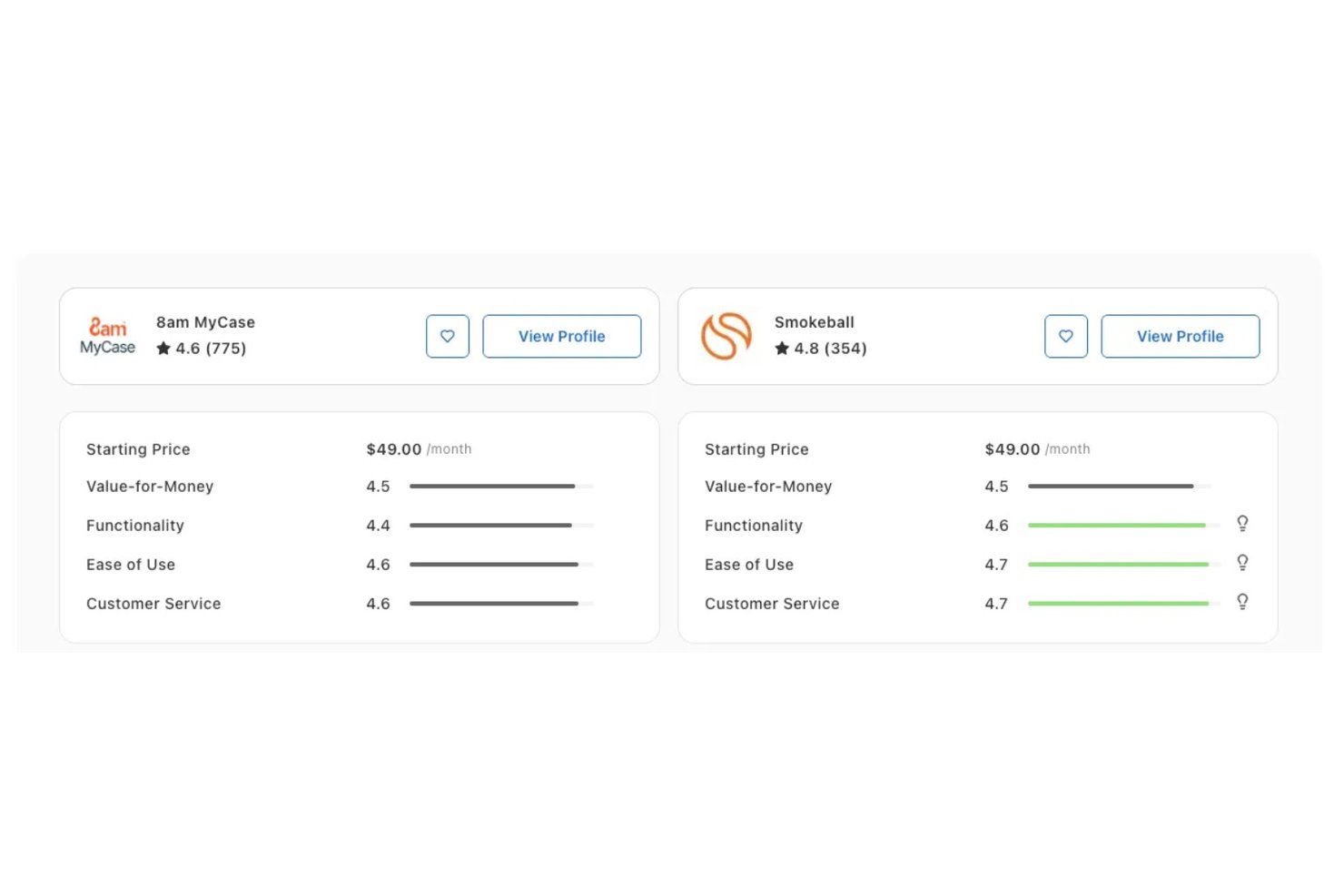
Smokeball is a cloud-based practice management platform built for solo attorneys and small law firms that want to replace manual workflows with automatic time tracking, document automation, and built-in trust accounting.
Who Is Smokeball Best For?
Smokeball is a strong fit for small law firms and solo practitioners who handle high volumes of repeatable work across defined practice areas like family law, real estate, or personal injury.
Why Smokeball Is a Good MyCase Alternative
I picked Smokeball as one of the best because its AutoTime feature captures billable time passively in the background, mapping activity across Word, Outlook, and case files to the correct matter without any manual input. That's a meaningful step beyond MyCase's manual timers. I also appreciate the document automation layer: TemplateLab uses conditional logic to generate matter-specific documents from a library of 20,000+ jurisdictional forms, which cuts drafting time significantly on high-volume, repeatable work.
Smokeball Key Features
- Firm insights reporting: Track matter profitability and staff activity with built-in analytics dashboards.
- Practice-area templates: Use pre-built and customizable templates designed for common legal fields like family law and real estate.
- Branded client portal: Provide secure, firm-branded messaging, file sharing, and payment options to clients.
- IOLTA-compliant trust accounting: Manage segregated trust ledgers and perform three-way reconciliation for compliance.
Smokeball Integrations
Smokeball offers native integrations with Microsoft 365, LawPay, Xero, InfoTrack, CalendarRules, QuickBooks, and DocuSign. An API is available for custom integrations.
Pros and Cons
Pros:
- Court rules-based deadline chains auto-calculate
- Branded client portal with built-in payments
- IOLTA trust accounting built into the platform
Cons:
- Mobile app has limited full-platform functionality
- Windows-focused design limits cross-platform flexibility

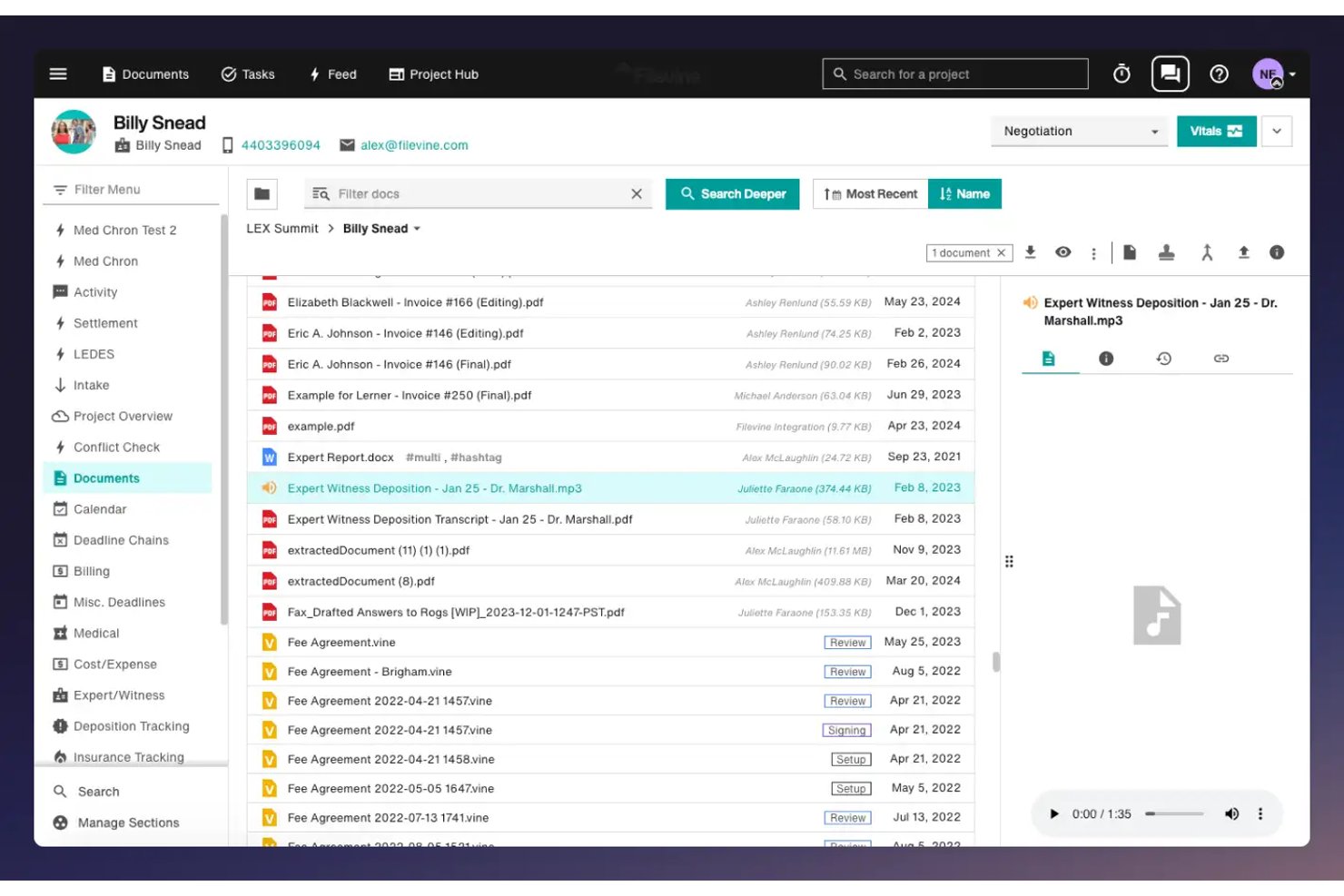
Filevine is an AI-powered legal operating system built for litigation-heavy firms that need deeply customizable matter management, automated document assembly, and client intake workflows in a single platform.
Who Is Filevine Best For?
Filevine suits small to mid-size litigation firms—particularly personal injury and civil litigation practices—that need workflows tailored to their specific case types.
Why Filevine Is a Good MyCase Alternative
I picked Filevine as one of the best because its customization depth genuinely sets it apart. Where MyCase gives you a fixed structure, Filevine lets you build custom fields, custom workflows, and deadline chains that match how your practice actually runs. I especially like AIBlocks, which handles automated document assembly using your own templates and merge fields, and Lead Docket, which turns client intake into a fully automated pipeline with referral tracking built in.
Filevine Key Features
- Periscope analytics dashboard: Generate real-time reports and visualize key metrics directly within your Filevine workspace.
- Vinesign e-signature integration: Collect electronic signatures on documents using a native signature tool with text and email delivery.
- Two-way client texting: Communicate with clients via text messages sent and received directly inside each case file.
- Outlook email sync: Store emails as part of the matter record through seamless integration with Microsoft Outlook.
Filevine Integrations
Filevine offers native integrations with Vinesign, Lead Docket, Microsoft Outlook, Google Calendar, and QuickBooks Online. An API is available for custom integrations.
Pros and Cons
Pros:
- Automated client intake with referral tracking
- Native AI for document drafting and summaries
- Deeply customizable matter fields and workflows
Cons:
- Reporting features lag behind case management tools
- Setup requires significant configuration time upfront

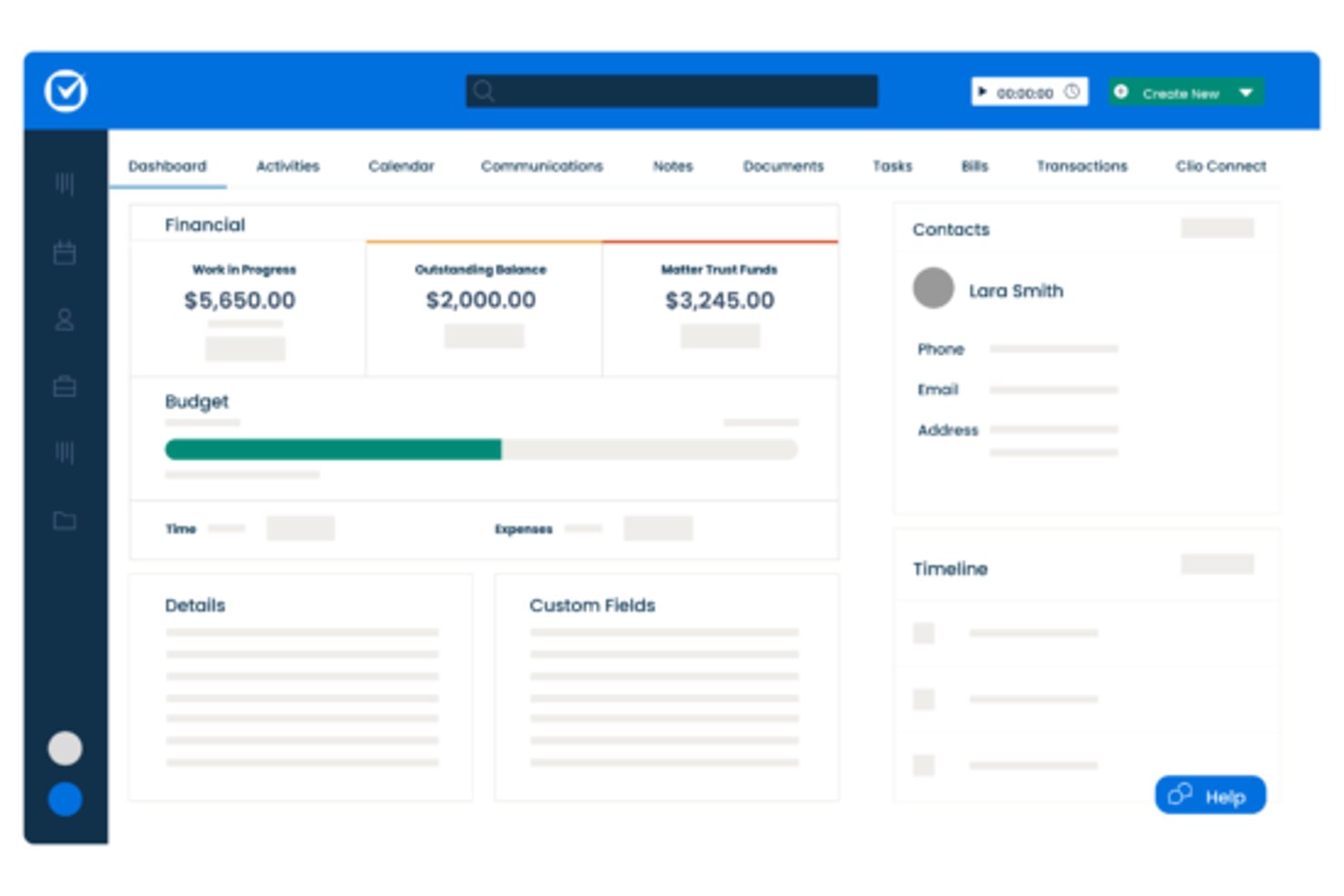
Clio is a cloud-based legal practice management platform for solo attorneys and small-to-mid-sized law firms, combining matter management, LEDES billing, trust accounting, document automation, and a client portal with over 300 third-party integrations.
Who Is Clio Best For?
Clio suits growing law firms that need a single platform to handle billing, compliance, and client communication without stitching together multiple tools.
Why Clio Is a Good MyCase Alternative
Clio earns its spot on my shortlist because the all-in-one depth goes further than MyCase. I appreciate that LEDES/UTBMS billing and three-way trust reconciliation are both available on the entry-level Starter plan. In practice, my team generates court-compliant billing narratives and reconciles trust ledgers from one dashboard. AI-drafted bill generation on Core and above also removes a significant share of billing narrative work from my team's plate.
Clio Key Features
- AI-drafted client updates: Automatically generates client-ready status updates using context from case files.
- Client intake automation: Configurable online forms capture lead data, trigger follow-ups, and kick off matter creation.
- Document template builder: Create and reuse custom legal document templates directly within the platform.
- Court e-filing integration: Submit documents to courts electronically through built-in, pay-per-filing partner connections.
Clio Integrations
Clio offers 300+ native integrations, including QuickBooks Online, Xero, Microsoft 365, Google Workspace, NetDocuments, Dropbox, Box, LawPay, Zoom, and CalendarRules. An API is available for custom integrations.
Pros and Cons
Pros:
- 300+ verified third-party integrations available
- Matters, billing, and trust share one dashboard
- Native e-signature on all paid plans
Cons:
- Document content search returns inconsistent results
- Clio Grow intake is sold as a separate add-on

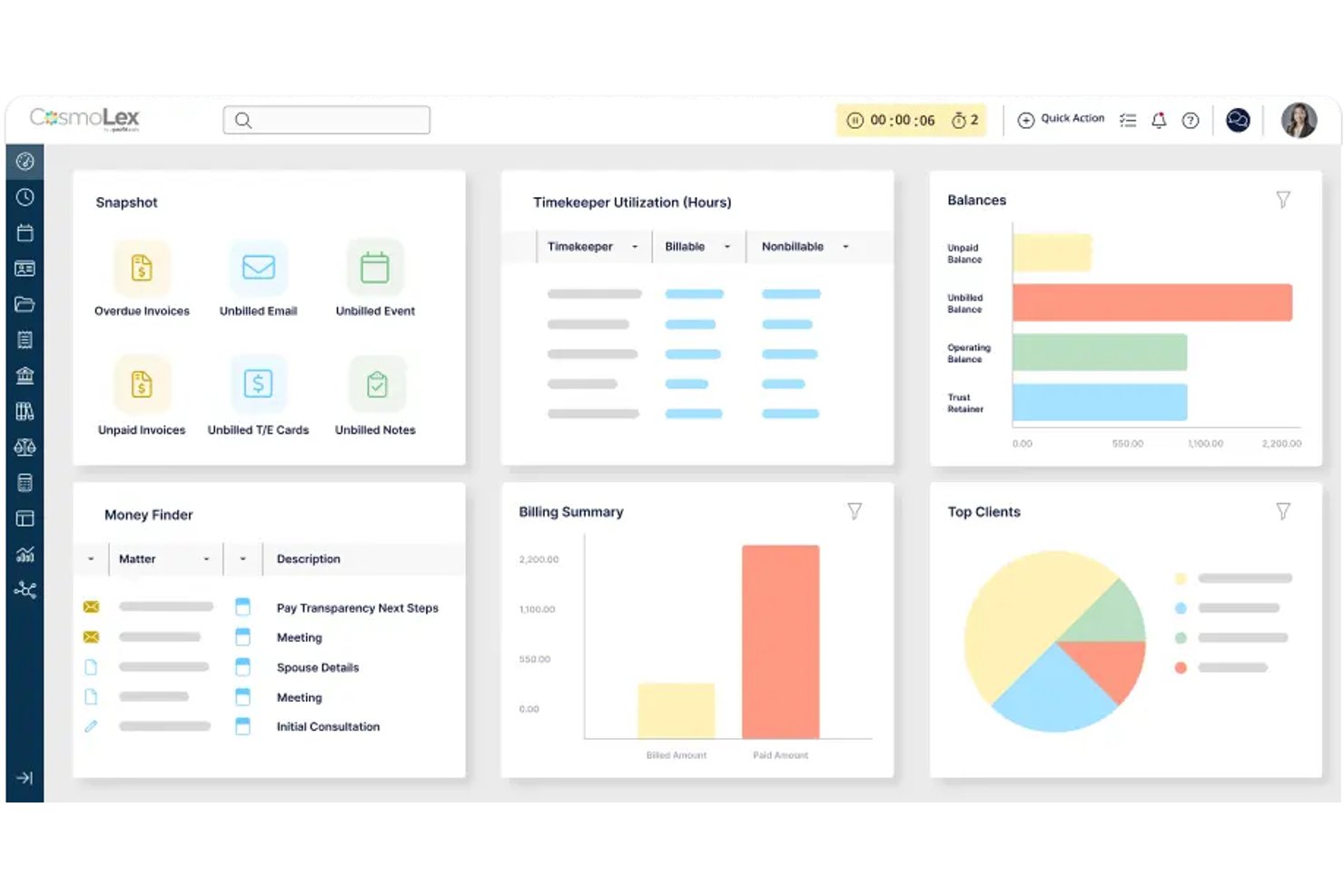
CosmoLex is a cloud-based legal practice management platform built for solo and small law firms that combines case management, billing, and full legal accounting in a single system — eliminating the need for separate accounting software like QuickBooks.
Who Is CosmoLex Best For?
Solo attorneys and small firm managing partners who want practice management and legal accounting handled in one place, without stitching together separate tools.
Why CosmoLex Is a Good MyCase Alternative
I picked CosmoLex for this list because its trust accounting lives inside the same system as billing and case management. That means three-way reconciliation, per-client trust ledgers, and trust-to-operating transfers all happen without switching tools or syncing data across platforms. MyCase requires QuickBooks for full accounting functionality, which creates reconciliation gaps that CosmoLex avoids entirely by design.
CosmoLex Key Features
- Document management: Store, organize, and share documents with built-in e-signature and secure client portal access.
- Matter workflows: Automate tasks and status updates using customizable workflows for each case type.
- Custom reporting: Generate over 100 financial and productivity reports for full visibility across cases and billing.
- Integrated calendar sync: Connect with Outlook, Google Calendar, and iCal for syncing firm-wide deadlines and appointments.
CosmoLex Integrations
CosmoLex offers native integrations with NetDocuments, OneDrive, Google Drive, Dropbox, Box, and QuickBooks Online, plus calendar sync with Outlook, Office 365, Google Calendar, and iCal. An API is available for custom integrations.
Pros and Cons
Pros:
- No separate accounting software needed
- Three-way trust reconciliation meets state bar requirements
- Full legal accounting built into the platform
Cons:
- Document automation tools are less advanced
- Mobile app functionality lags behind competitors

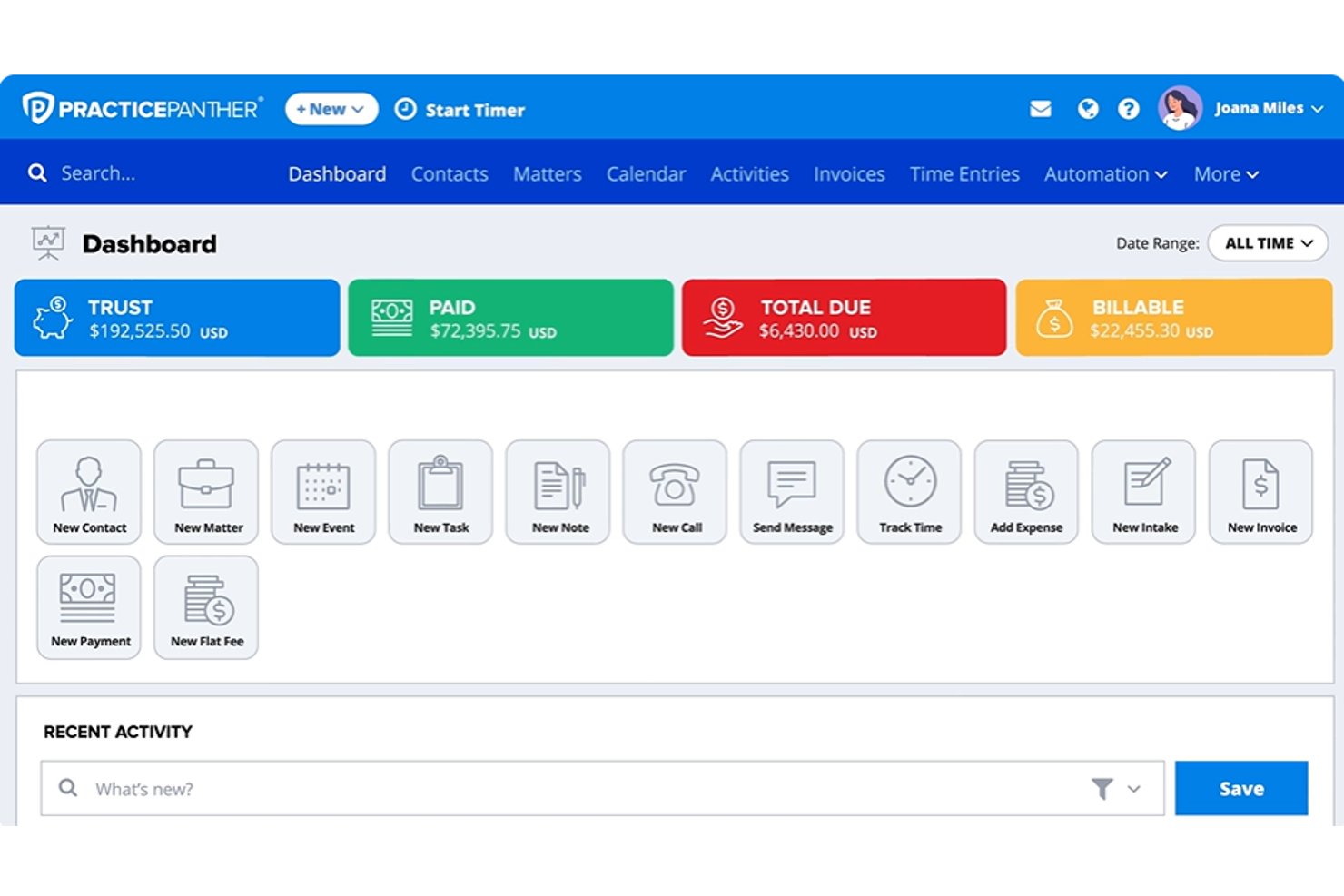
PracticePanther is a cloud-based legal practice management platform built for solo attorneys and small law firms that need native billing, trust accounting, client intake, and case management without patching together third-party tools.
Who Is PracticePanther Best For?
PracticePanther suits growing law firms with two to fifteen attorneys that want a single platform to handle intake, billing, and trust accounting without heavy IT setup.
Why PracticePanther Is a Good MyCase Alternative
I picked PracticePanther as one of the best because its billing workflow is genuinely built in, not bolted on. Where MyCase routes payments through LawPay (a separate subscription), PracticePanther's native PantherPayments handles credit card, ACH, and eCheck billing directly inside the platform. I also appreciate the conditional task and event workflows that auto-trigger follow-up steps when a matter status changes, keeping case progress moving without manual nudging.
PracticePanther Key Features
- Unlimited custom intake forms: Build dynamic intake forms with conditional logic to automate client onboarding and lead qualification.
- Native two-way texting: Communicate securely with clients through the platform using a dedicated business phone number.
- Full trust accounting: Manage IOLTA-compliant trust ledgers with three-way reconciliation and detailed audit trails.
- Court rules calendaring with LawToolBox: Auto-calculate deadlines and sync court calendars by jurisdiction for complete deadline management.
PracticePanther Integrations
PracticePanther offers native integrations with LawToolBox, QuickBooks Online, Google Workspace, Microsoft 365, Dropbox, Box, and OneDrive. Zapier and an API are also available for custom integrations.
Pros and Cons
Pros:
- Workflows auto-trigger when matter status changes
- Built-in e-signature for client engagement letters
- Native trust accounting meets IOLTA compliance requirements
Cons:
- Document assembly less advanced than competitors
- Reporting tools lack depth and flexibility
New Product Updates from PracticePanther

PantherAccounting Plus Unveiled
PracticePanther launches PantherAccounting Plus, enhancing financial management for law firms. It enables law firms to manage trust and operating accounting directly within the platform. For more information, visit PracticePanther's official site.
 .
.Other MyCase Alternative
Here are some additional MyCase alternative options that didn’t make it onto my shortlist, but are still worth checking out:
- Bill4time
For legal time tracking and billing
- Centerbase
For midsize law firm operations
- LEAP
For legal documents and case management
- SmartAdvocate
For litigation case management
- Tabs3
For legal billing and accounting
- Neos
For cloud-based legal case management
- MerusCase
For automated legal workflows
- PCLaw®
For legal accounting and billing


How I Evaluate MyCase Alternatives
I first check whether a platform covers what MyCase already handles—tracking matters, billing clients, managing trust ledgers, and sharing documents through a portal. Then I look at the differentiators that separate one tool from another.
Core Functionality (Table Stakes For This List)
When I'm selecting tools for my list, I rank each one on a scale from 0 (does not offer the functionality) to 5 (excels in this area) for each core functionality listed below. Then, I calculate the tool's total score into a percentage. Each tool needs to achieve a minimum total score of 75% to be considered for inclusion.
- Case Management: I look for structured matter records with custom fields, linked contacts, and deadline tracking—so nothing falls through during active litigation.
- Document Management: Template libraries with merge fields matter here, especially for firms generating high volumes of engagement letters or pleadings.
- Time & Billing: I evaluate time entry flexibility, invoicing options, and support for different fee arrangements like flat-fee, contingency, and hourly billing.
- Client Portal: Secure portals where clients can view case updates, share documents, and message their attorney reduce back-and-forth email threads.
- Trust Accounting: I check for IOLTA-compliant ledgers with per-client tracking and reconciliation reporting that satisfies bar association audit requirements.
- Calendar & Deadlines: Court rules-based calendaring is key—platforms like Clio and Smokeball offer deadline chains that auto-adjust when a hearing date moves.
Once I have a list of tools that meet the criteria, I consider what sets each platform apart.
Differentiating Factors (What Sets Vendors Apart)
Here's how I compare and contrast different vendors:
Standout Features
Native e-signature workflows save your firm from juggling a separate DocuSign or Adobe Sign subscription for engagement letters and retainers. I also evaluate whether a platform includes legal-specific AI tools—summarizing case documents or drafting correspondence inside the matter file is a real time-saver. Client intake automation is another area I look at closely, especially forms with conditional logic and conflict checking that move a lead from first contact to signed client without manual follow-up.
Beyond Features
Data migration matters when you're leaving MyCase—I check whether vendors offer migration services that cover matters, contacts, documents, and billing history. Compliance is another factor I weigh carefully, including SOC 2 Type II certification, encryption, and audit logs that support your duties under ABA Model Rule 1.6. Total cost of ownership also plays a role, since add-on fees for payments, e-signatures, or client portals can quietly push a platform well past its advertised per-user price.
Why Look For A MyCase Alternative?
While MyCase is a good choice of legal case management software, there are a number of reasons why some users seek out alternative solutions. You might be looking for a MyCase alternative because…
- You need more advanced document automation
- You want full IOLTA trust accounting with three-way reconciliation
- You require deeper integrations with existing email or accounting tools
- You find MyCase’s pricing doesn’t fit your budget or firm size
- You work in a practice area that needs more specialized workflows
- You need better client intake or lead management capabilities
If any of these sound like you, you’ve come to the right place. My list contains several legal case management software options that are better suited for teams facing these challenges with MyCase and looking for alternative solutions.
MyCase Key Features
Here are some of the key features of MyCase, to help you contrast and compare what alternative solutions offer:
- Case management: Centralizes all matter details, contacts, notes, and deadlines for easy access and tracking so your team always stays aligned on the progress of every case.
- Document management: Lets you securely store, organize, edit, and share legal documents with version control, so nothing important gets lost or overwritten.
- Time tracking: Enables you to log billable hours directly within each matter, helping capture every minute of work and boost billing accuracy.
- Billing and invoicing: Automatically generates and sends invoices, supports different rate types, and integrates with online payment processors for easier collections.
- Client portal: Offers a secure, branded portal where clients can view documents, messages, and invoices, making communication and information sharing simple.
- Trust accounting: Provides IOLTA-compliant trust management, automatically separating client funds and tracking balances for compliance and audit readiness.
- Calendar and deadlines: Features court rules-based calendaring and deadline tracking to keep your team on top of critical dates and tasks.
- Client intake: Lets you create custom intake forms, automate follow-up, and manage new client leads in one place for a more efficient onboarding process.
- E-signature workflows: Streamlines the signing of engagement letters, retainers, and other documents right from within the platform without third-party tools.
- Reporting and analytics: Allows you to track firm performance, billable hours, collections, and open matters so you can make informed business decisions.